About California Ag Today

This author has not yet filled in any details.
So far California Ag Today has created 2014 blog entries.

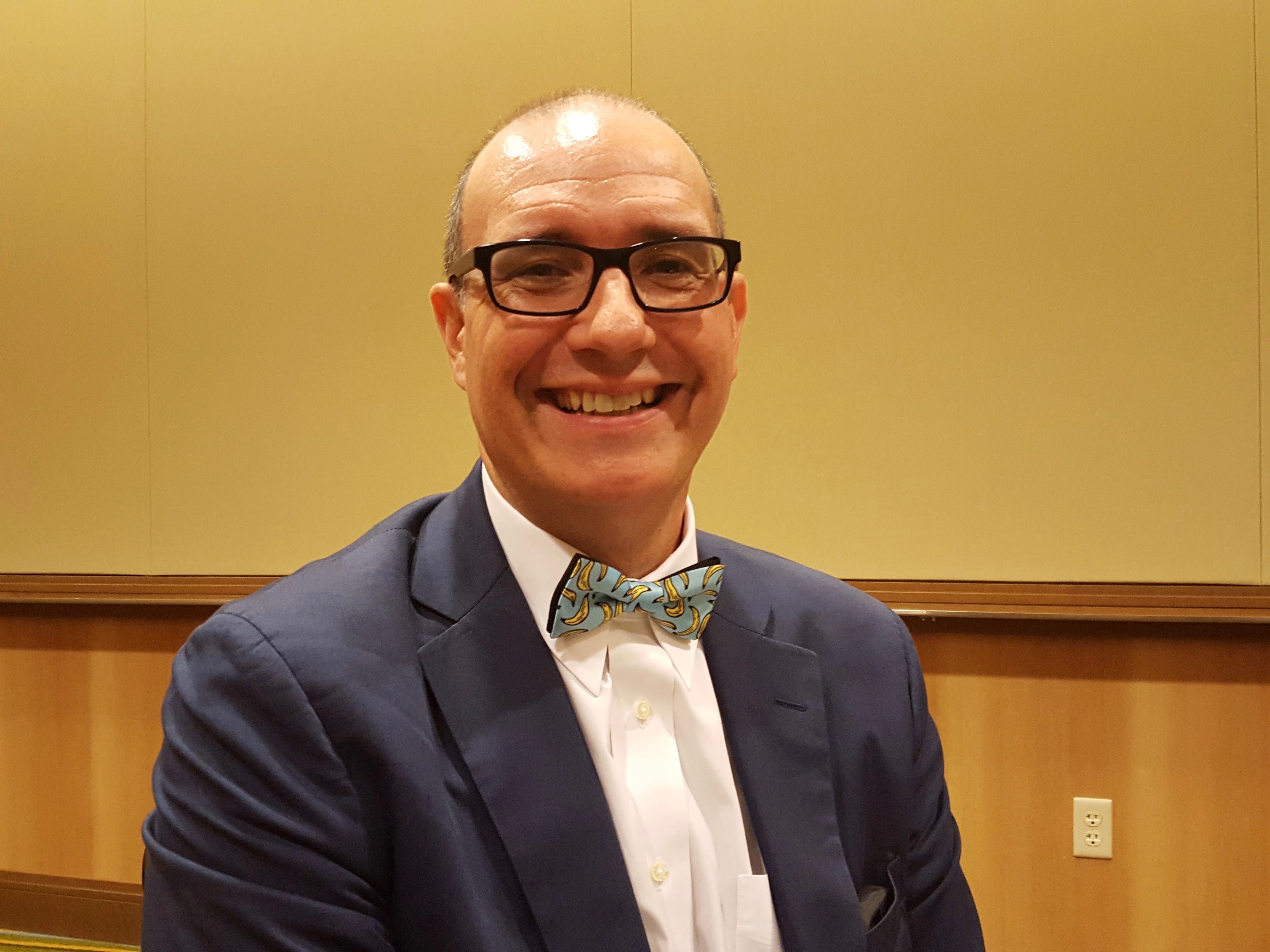
Walnut Farmer Talks Family’s Founding of Crows Landing

Walnut Farmer Norman Crow has Deep Roots in Stanislaus County

By Patrick Cavanaugh, Farm News Director

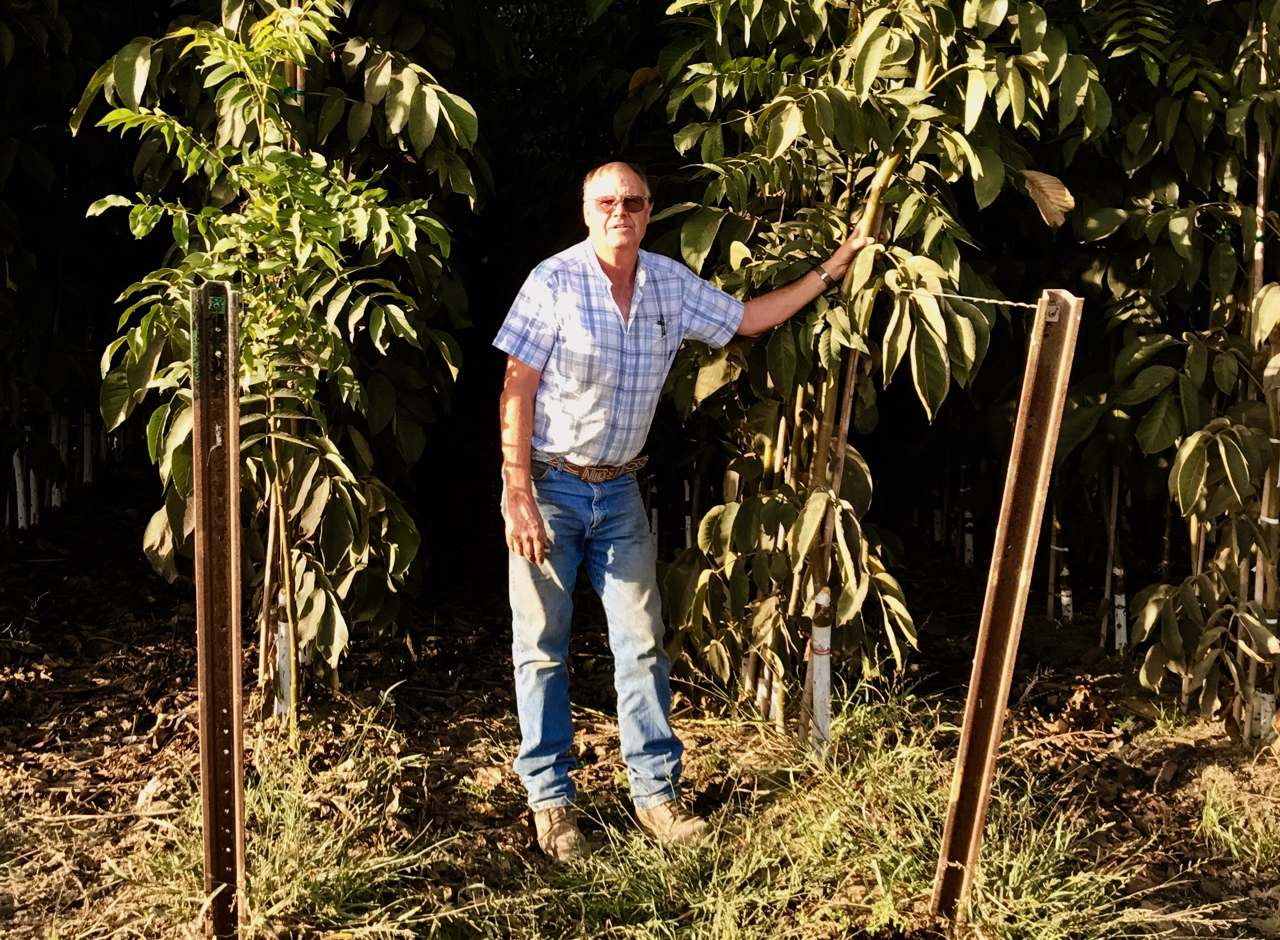
California Ag Today recently had the chance to interview Norman Crow a walnut grower and owner of Orestimba Walnut nursery in the Crows Landing area of Stanislaus County.

We asked him about his walnut harvest. “I think everything is going to be late this year. But it looks like a good crop,” Crow said.

“It’s very interesting because the market for the first time in several years is good. There’s no carryover from last year, so, we’re going to see maybe a 25% increase in price,” Crow said.

Crow explained that walnut plantings are not out of control compared to almonds and pistachios. “So we are very optimistic. Plus the dollar is weaker, there is no carryover and there is strong demand for walnuts

Crow is a descendant of Walter, Crow who came out to California from Missouri in 1849 – obviously, for gold. And he had eight children.

“I’m the descendant of one of his eight children, which is John Bradford,” Crow said. “He was my great-great grandfather.”

“And soon after arriving, my family bought Orestimba Rancho, which was a Spanish land grant. It was about 5,000 acres along Orestimba Creek that goes from the San Joaquin River, up the canyon, to the west of I-5.

Orestimba is a Yokut indian word for “the meeting place”.

“My family began farming barley, and they needed to get it to the buyer,” Crow explained.

The Crow’s built two riverboats, which pulled barges, loaded with sacks of barley. The landing was a warehouse on the San Joaquin River. That’s how it was eventually named Crow’s Landing.

“And then, a good family friend of ours, Jack Grisez took care of the ranch for many years, but they actually had a bean warehouse here that’s called Grisez Warehouse,” Crows said. “ Jack Grisez supplied all the dry beans to the GIs during WWII. He was one of the primary packers of beans. So, WWII came along and people started growing – there was a need and a demand and there was money to be made growing row crops. So some of them grew beans, tomatoes and other crops. And others operated dairies in the area.

In 1865, the Crow family began planting walnuts using seeds that the family brought from Missouri. They were from black walnuts, and today there are still may black walnut trees in the area.

And while walnut plantings were expanding throughout California, Norman Crow established a commercial walnut nursery on his ranch and named it Orestimba Nursery, which lies on Orestimba Creek.

Besides farming walnuts and operating a nursery, Crow noted that his family operates two walnut hullers in the area.

2017-10-16T13:07:31-07:00October 16th, 2017|

Spray Safe Meeting Nov. 17 in Modesto

Event Organized by Stanislaus County Farm Bureau

By Laurie Greene, Founding Editor

Wayne Zipser, executive director of the Stanislaus County Farm Bureau, announced the Farm Bureau will hold a Safe Spray and Safety Event on November 17, at the Modesto Junior College’s West Campus Ag Pavilion, located at 2201 Blue Gum Ave. in Modesto. The Stanislaus County Farm Bureau is a non-profit, volunteer membership organization that provides many programs like Spray Safe to assist its members and to educate the general public.

“The Spray Safe meeting will be a big event,” Zipser said, “not only because will it cover how to safely apply pesticides, but also provide tractor safety training, [pesticide application] mask fit testing and physicals [if needed for mask fit testing] for farm employees.”

“Registration opens at 7 AM,” Zipser explained. “A grower panel will start the day at 8 AM with a discussion of the safety and procedure challenges encountered by some of our folks who do pesticide applications. Given the new rules for pesticide applications around schools and preschools, we want to hear how they cope with and mitigate these new challenges.”

The Safe Spray Meeting will also feature a trade show. Attendance is free, courtesy of event sponsors, and lunch is provided.

Additional topics will include: drift prevention, school notification requirements, calibration, sexual harassment prevention, equipment safety and heat illness prevention. The meeting also offers 4 hours of Department of Pesticide Regulation (DPR) Continuing Education (CE) credit.

The all-Ag committee coordinating the event includes the Stanislaus County Farm Bureau, the Ag Commissioner’s Office, the USDA Natural Resources Conservation Service (NRCS), and the University of California Cooperative Extension (UCCE).

For more information, contact the Stanislaus County Farm Bureau at 209-522-7278.

2017-10-13T15:29:16-07:00October 13th, 2017|

BPIA Executive Director Talks Biological Products

Biological Product Industry Meets in Orlando

By Patrick Cavanaugh, Farm News Director

Nearly 200 individuals from the worldwide biological products industry were in Orlando this week for the Fall 2017 semi-annual meeting of the Biological Products Industry Alliance (BPIA).

The two-day meeting featured experts from the EPA, USDA, universities, major U.S.companies such as Nestlé’s and Coca Cola, and others involved in the biological products industry.

BPIA is made up of manufacturers of bio-pesticides, which control pest and diseases, as well as bio-stimulants, which boost the natural defense of plants in the agriculture.

“We’re also marketers, distributors, service providers, anyone who touches the biological industry as we define it,” said Keith Jones, Executive Director of the BPIA.

“There has been tremendous growth in the association,” Jones said. “When I came on board two years ago we were 85 member companies. As I sit here today, we’re 122 member companies, and our companies range from very small, sole proprietors – a couple of folks at some innovative, new technologies – all the way up to the largest agrochemical companies in the world.”

Some biological products, such as B.ts., have been around for more than 50 years, while others, along with bio-stimulants, are very new and innovative. Some aren’t even on the market yet, but many are making their way to market.

“There’s two big drivers for biological,” Jones said. “One is consumer demand. And really, if you look to Europe, they’re about five years ahead of us.”

“The other driver is increased regulatory pressure. Again, Europe is about five years ahead of us. They’re really ratcheting down on a lot of the traditional tools that were available to growers. They’re going away in Europe. I think here in the U.S., you may see some of that as well.”

Jones noted that the BPIA is a big believer in integrated pest management, IPM.

“We never say that biological are the silver bullet. They’re not. They’re most effective when they’re used in conjunction with traditional chemistries,” Jones said.

“The worst time to start a biological is when you’re having a major problem. The best time is to start early. They’re so effective as preventative. They’re really good in tank mixes, used in combination, because they’ll extend the life of traditional chemicals,” Jones said.

Most biologicals have multiple modes of action, so they help with pest resistance.

“They don’t build up the resistance in the same way that they might to a traditional, but by using them together, you can extend the life of that traditional chemistry,” Jones explained.

2021-05-12T11:01:58-07:00October 12th, 2017|

BioSafe Systems Offers Biological Control Products

BioCeres Beneficial Fungi Kills Important Pests

By Patrick Cavanaugh, Farm News Director

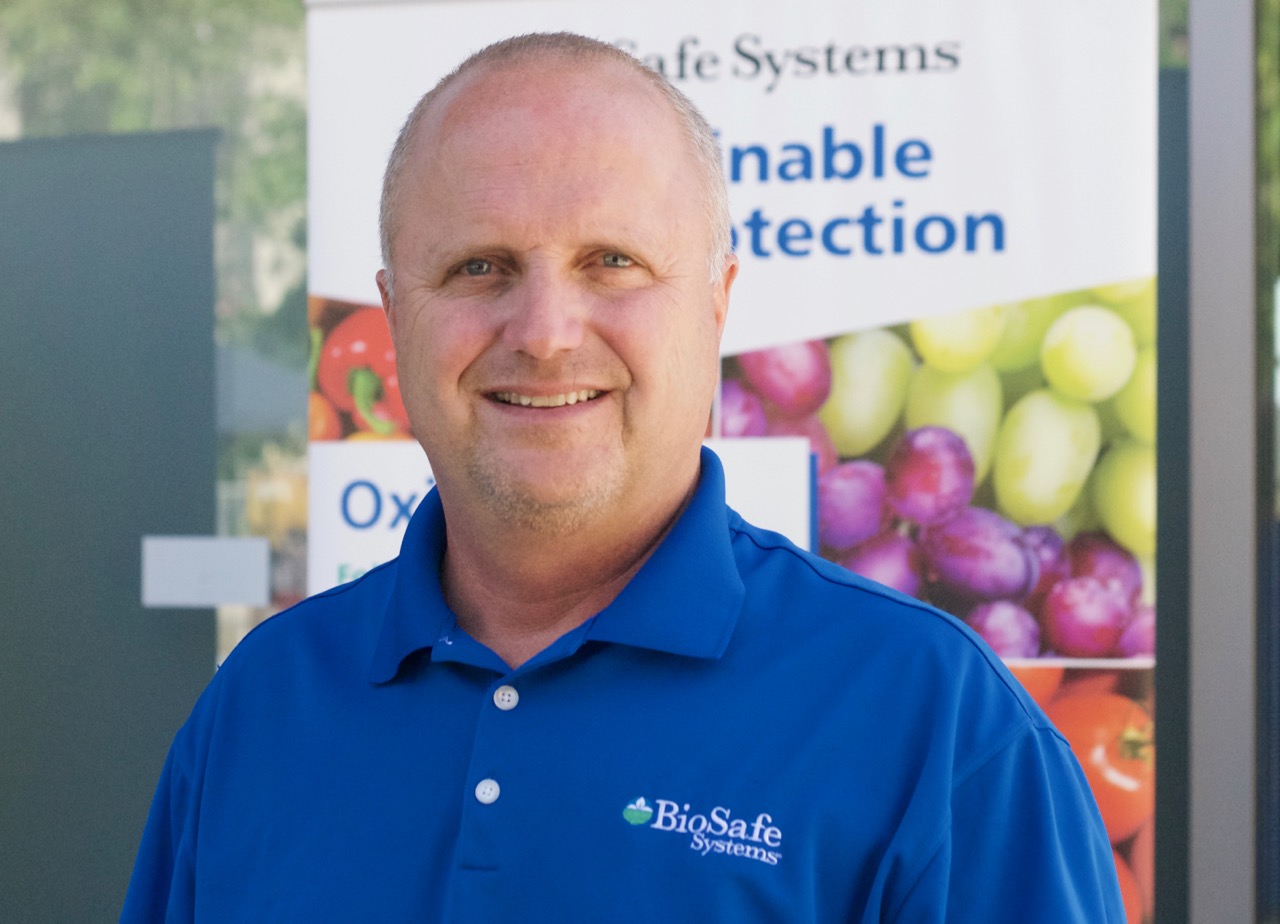
California Ag Today recently interviewed Jay Sughroue, Ph.D. with BioSafe Systems about the new BioCeres WP Biological Pesticide.

BioCeres is new strain of the fungi Beauveria basiana discovered in Italy in 1815. There was a sharp decline in silkworm production and the entomologist back then, Antonio Basiana, discovered  the fungi  that was responsible for white muscarsdine disease causing the decline of silkworm production.

“The new strain, ANT-03, is different from commercially available strains is that it’s more aggressive and more resilient, so it lasts longer in the environment. And it’s more pathogenic when it comes in contact with insects that you want to control,” Sughroue said.

“Fast forward several decades, and now, we have commercially available products that are controlling very important agronomic pests, such as thrips, aphids and white flies,” Sughroue said.

Sughroue noted that it’s important to follow important application strategies.

“You want to apply this prior to high population development. It’s not a knockdown, so you want to be out there scouting fields. As soon as you start to see numbers that are indicative of causing damage, you want to start a spray program that contains BioCeres, and then after about 5 to 7 days, you’ll start to see the pests decline in population.”

The fungi spore germination is the key to the effectiveness.

“The spore lands onto an insect. It doesn’t matter if it’s an egg, a nymph, a larva or an adult. It starts to germinate, and through enzymatic activity and mechanical pressure, it grows inside the insect, and it will start to sporulate so the insects come down with a severe case of the flu. They stop feeding immediately.

Sughroue said while it takes about 3 to 5 days for the pest to die, it stops feeding very soon after the spore germinates inside them.

Sugroue said the list of the pests will only become larger as time goes by

“We’re going to expanding that list to include other important insects, but this is the first generation of this product,” he said.


2021-05-12T11:01:58-07:00October 11th, 2017|

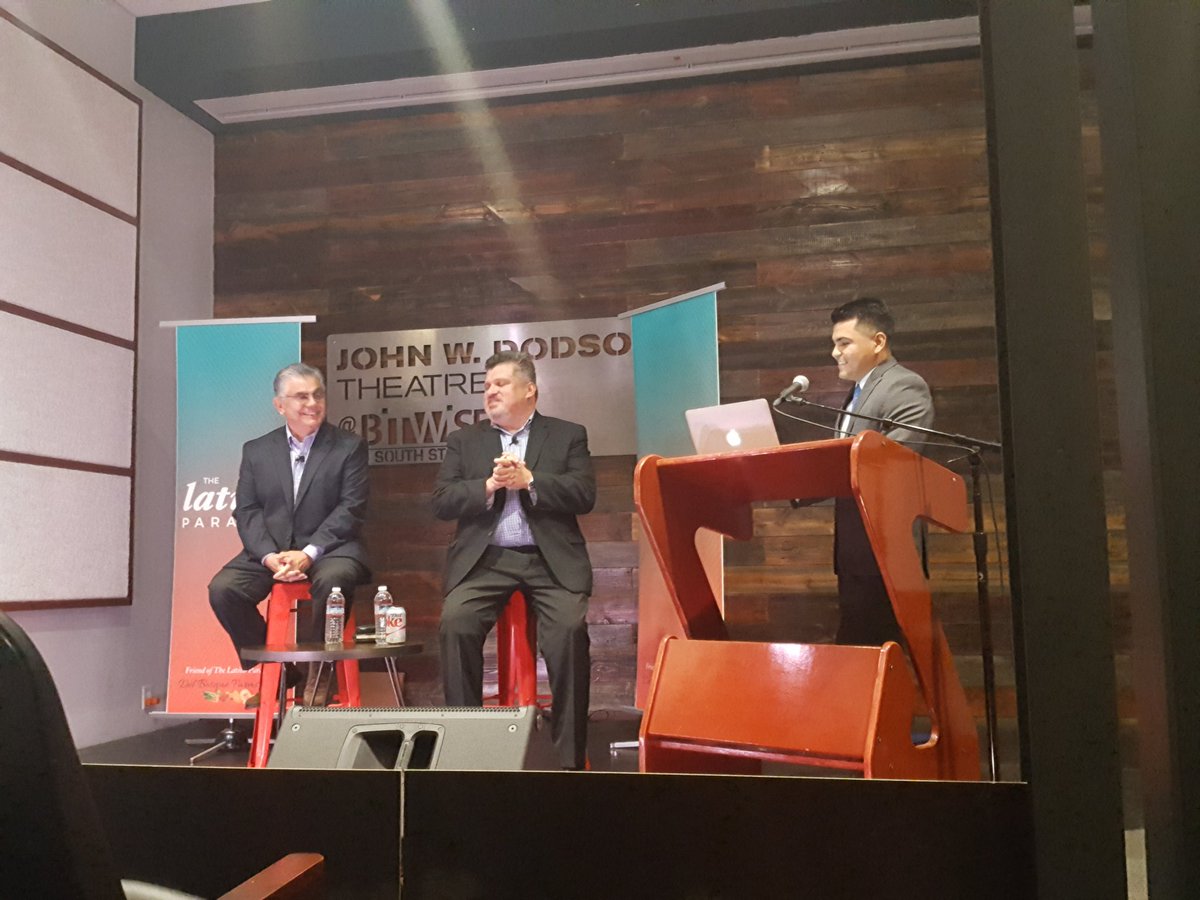
Latino Paradox Needs Attention From Latinos

Latino Paradox: Latinos Have Responsibility

By Jessica Theisman, Associate Editor

The Latino population in the Central Valley is growing, and surpassing the Caucasian population. However, the economic status and general household income of the Latino population is staying about the same, even as Latinos are reaching new political and academic heights. This is known as the Latino Paradox.

California Ag Today spoke with Arnold Torres, a well-respected member of the Latino community, about this paradox.

“The Central Valley has gone through the phenomenal transition of being predominately Anglo, to now being, the Anglo is the in the absolute minority, and that number continues to go down,” Torres said.

There has been a population explosion, and yet, the socioeconomic profile remains the same as it was years ago.

“It is our responsibility to lead now. It is not going to happen just because our population grows; we have to learn how to use it in a constructive way,” he said.

Latinos are looking not to repeat their mistakes of the past and other people, but to set forth a new light and persevere more than ever.

Torres wants Latinos to remain inclusive in positions of power.

“We have to elevate where we’ve been, but now, we can not just elevate it for us, we must elevate it for everyone,” he said.

2017-10-10T15:34:39-07:00October 10th, 2017|

Small Business Development Shines In Truckee

Small Business Development Center is Part of BlueTechValley

By Jessica Theisman, Associate Editor

The BlueTechValley Initiative was established in Fresno in 2011. It strategically leverages the region’s resources and assets to create a fertile environment for entrepreneurs to turn vision into real world solutions. The initiative has spread through an innovation cluster: the 7 hubs collectively serving 39 counties covering two-thirds of California’s geographic areas.

One of those areas is the Sierra Small Business Development Center in Truckee, CA. California Ag Today met with Chelsea Walterscheid, a program manager for the Sierra Business Council, which runs the Small Business Development Center, to talk about the center.

Walterscheid said that they are looking for people with ideas, whether they have products or just a thought.

“They might want to come in and get some help as far as pitching their ideas. And so we’re here to help in a number of ways, and to reach out to people who might have some technologies,” she said.

There are ideas, of course, in the ag water and energy fields.

Kristin York is the vice president of business innovation at the Sierra Business Council. She appreciates Fresno State’s efforts in putting together the Blue TechValley Innovation Cluster.

“The resources and the support that they offer, especially for a rural region of the state, because rural regions are often overlooked, and I feel like we have a true partnership with Fresno State,” she said.

2017-10-09T16:36:16-07:00October 9th, 2017|

“Waters of The State” is Severe for Ag

“Waters of the State” Offers New Regulations

By Jessica Theisman, Associate Editor

California Ag Today spoke with Kari Fisher, counsel with the California Farm Bureau Federation, recently to discuss how the California State’s Water Resources Control Board is aggressively moving to finalize new “waters of the state” procedures and a new wetlands definition by the end of the year. Farmers and industry groups say the action would create new regulatory boundaries.

Farm groups also say the proposal creates mandatory permitting programs for waters of the state, resulting in permit requirements for more proposed projects, operations, and maintenance activities. Legislation is in its final drafting stages.

“This was drafted by the State Water Resources Control Board, released in July. They have been working on different versions of it since before 2008,” Fisher said. “This has been a long-term process and they aim to fix some regulatory gaps.”

Some of these gaps were created by U.S. Supreme Court cases. “That is where the original iteration of this wetlands and dredge and fill policy and procedures came from,” Fisher explained.

The draft was released in July of 2016. “This summer, they released a revised draft, and it does change the direction of where the procedures were from last year,” she said.

Many believe that this has a chance to come light, due the federal government’s position on waters of the U.S.

The Water Resources Control Board has received hundreds of letters from agriculture, building industry and other groups voicing concern over wetlands procedure.

2017-10-06T17:03:11-07:00October 6th, 2017|

Latino Paradox is a Phenomenon

Latino Status Booming But Incomes Not Following

By Melissa Moe, Associate Editor

The Latino population in California is growing, but why is it that the economic status of the population has stayed about the same over the last 60 years even as Latinos are reaching new political and academic heights? Why is it that these accomplishments aren’t mirrored in household incomes? Arnold Torres calls this the Latino Paradox. He is an expert in Latino issues.

“I was born in Sacramento, CA, went to high school in Sacramento, went to University of the Pacific and did a Master’s at American University. I was a Lyndon Baines Johnson Fellow for Congressman Pete Stark. And then, I started working for the only lobbying entity in Washington known as the Congress of Hispanic-American Citizens. I came back home, then I went to work for Senator Tunney,” Torres said.

“I worked for other Hispanic groups, and then I became the national executive director of the League of United Latin American Citizens, which is the country’s largest Hispanic civil rights group founded in 1929 in South Texas,” Torres explained.

From 1979 to 1985, he was the congressional liaison for the first two years and then the national executive director. During that time, he testified close to 200 times on virtually every issue you can imagine during the Reagan years. He was there for the last two years of Carter and the first term of Reagan.

“The Latino paradox is when you have a huge population explosion. We have phenomenal economic consuming power,” Torres said. “We are elevating to the highest positions in the state and local level in politics. And yet, our social economic profile remains so much as it was 20, 30, 40 years ago, and that’s a phenomenal paradox.”

“As we are ascending to power, what are we going to be in charge of? The way things look now is that we’re going to be in charge of a wasteland. Climate change will hurt us. What are Latinos doing about that climate change? Why is it so important for Latinos to play a different role? Because our population is so big now,” Torres said.

2017-10-05T16:43:02-07:00October 5th, 2017|

Raisin Growers Having a Tough Year

Kalem Barserian: Raisin Production is Down

By Patrick Cavanaugh, Farm News Director

The California raisin industry’s having a tough year on production, as well as a few rainstorms that impacted the crop.

Kalem Barserian

Kalem Barserian is CEO of the Raisin Bargaining Association in Fresno, an organization that goes to bat for growers when it comes to pricing. He noted a phenomenon that happens when it rains a lot, just ahead of Thompson seedless bud break as the vines came out of dormancy.

“For some reason, with all the rain – and I could go back 60, 70 years and show where ever there was a heavy rain year, the plants seemed to take a rest – and this was no different than what happened in 1998, when we had 20 inches of rain and we had only 7.5 grain tons, while the average green tonnage is 9.5 tons,” Barserian explained.

“The grape set was among the lowest in history, with only 27 bunches per vine. … The historical average is 39 bunches.”

“And then during the late summer, on Sept. 11 and Sept. 21, two rainstorms came through and tested the rain grower’s patience,” Barserian said. “The moisture did not cause the problem to the drying grapes. However the rain caused sand to bounce up on the trays with the grapes. The sand got into the wrinkles of the grapes and as they dried down further, it became embedded sand.”

“This is where the loss for the grower comes, because the damaged, embedded sand grapes must be reconstituted, reconditioned and cleaned up again. Ultimately, the quality is okay, but it is an additional cost to the grower,” Barserian explained.

According to Barserian, California used to account for 50 percent of the world production of raisins. Today, we are only 20 percent of the production, behind Turkey.

Many growers have traded in the raisin vineyard for other profitable crops such as almond or mandarins.

2017-10-03T16:27:35-07:00October 3rd, 2017|

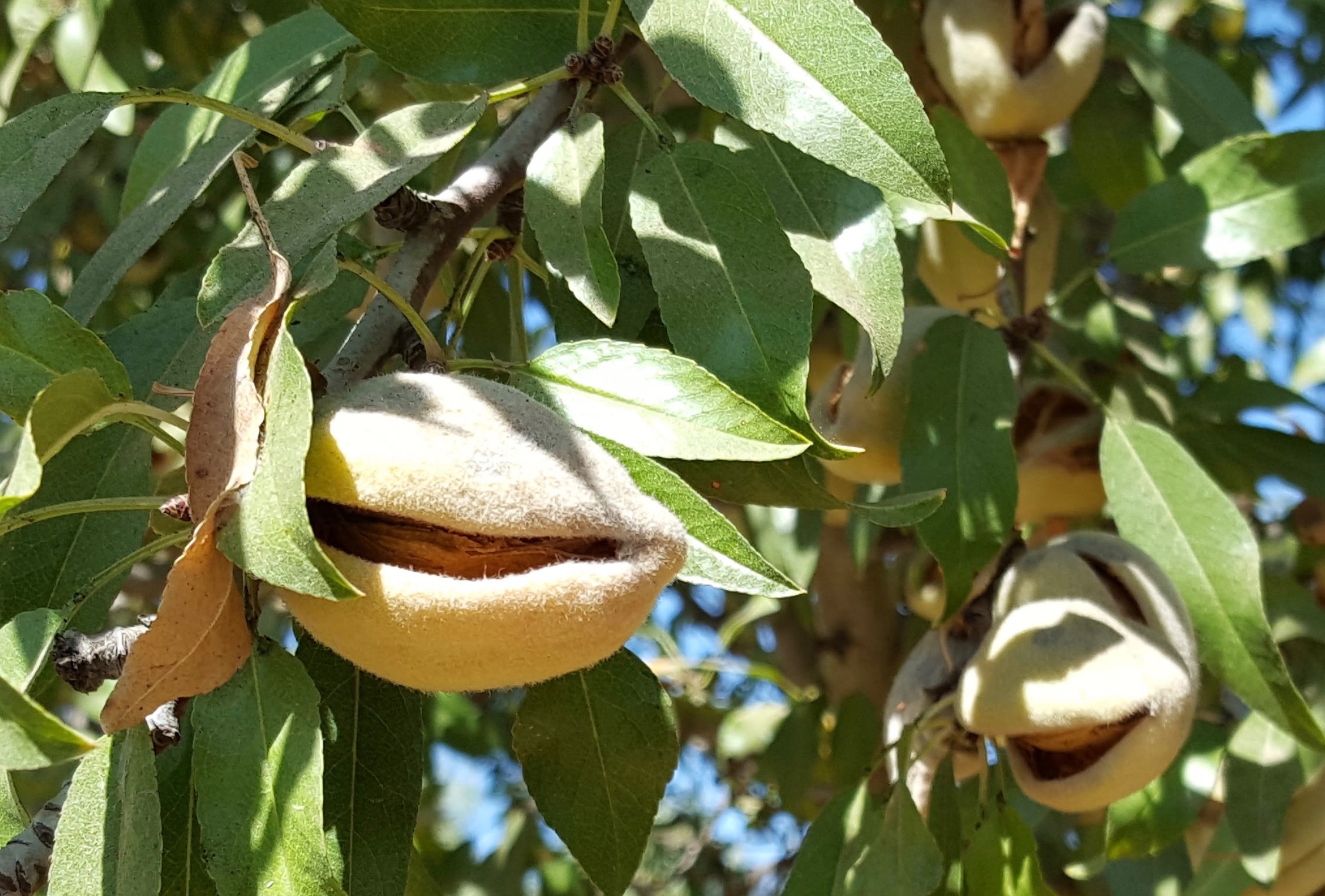
Almond Achievement Award Nominations Being Accepted

Deadline for Almond Achievement Award Nominations is Oct. 19

News Release

Since 2011, the Almond Achievement Award has honored an industry or allied-industry member who has added value to the California Almond industry through long-term service, contributions or innovations.

Nominations for the Almond Achievement Award are being accepted now. Winners must:

  • Be an individual with long-standing and direct involvement with the California Almond industry.
  • Demonstrate lasting impact on and commitment to the California Almond industry.
  • Have a record of proven service to the visibility and growth of the industry.
  • Contribute to California Almonds becoming a Crop of Choice and supporting California Almonds becoming the Nut of Choice.

Almond Board of California’s (ABC’s) Industry Services Sub-Committee will evaluate the candidates and make a recommendation to the Board of Directors. The 2017 recipient will be selected by ABC’s Board of Directors and recognized during the gala dinner at The Almond Conference by ABC President and CEO Richard Waycott.

The names of the award winners are placed on the wall of the Nonpareil Conference Room at the Almond Board of California office.

Nominating an almond industry professional for the 2017 Almond Achievement Award is easy. Simply email Jenny Nicolau (jnicolau@almondboard.com) and state your nominee’s name and company, as well as your reasons for the nomination. Applications must be received on or before October 19 for consideration.

2017-10-02T16:40:01-07:00October 2nd, 2017|
Go to Top