Celebrate National Ice Cream Month!

Celebrate National Ice Cream Month with California Ice Cream and Flavors!

By Lauren Dutra, NAFB Summer Intern and Assistant Editor

Jennifer Giambroni, director of communications, California Milk Advisory Board

Jennifer Giambroni, director of communications, California Milk Advisory Board

First established in 1984 by Ronald Reagan, the 40th President of the United States, National Ice Cream Month was scheduled for the month of July, with the third Sunday of the month designated as National Ice Cream Day.

Jennifer Giambroni, director of communications, California Milk Advisory Board, explained why Californians, in particular, have so much to celebrate during National Ice Cream Month. “As the number one ice cream state,” she said, “we produce 126 million gallons of ice cream a year.”

Thats a lot of scoops!

California also leads the nation in milk production, and 99 percent of dairies in the state are family-owned. Including milk production on farms and milk processing, the California dairy industry, supports about 190,000 jobs in the California economy and contributed about $21 billion in economic value added in 2014, according to “Contributions of the California Dairy Industry to the California Economy,” by the University of California Agricultural Issues Center (May 14, 2015). 

Blueberry Ice Cream Float

Blueberry Ice Cream Float (Source: California Milk Advisory Board, Kristina Vanni Blogger, 2012)

Ice cream, being both timeless and innovative, has evolved in flavors and varieties over the years, according to Giambroni, while still holding true to the traditional treat you grew up with as a kid. “Ice cream is an important category that represents a lot of the milk produced on California’s more than 1,400 family dairy farms and carry the Real California Milk seal,” she noted.

“We’re seeing adult-friendly milkshakes with the addition of spirits, ice cream sandwiches made with more than cookies, and sundaes with everything from balsamic vinegar reductions to red bean paste,” Giambroni elaborated. Other new ice cream trends include hyper-indulgent flavor combinations, including nuts and fruits grown in California, and “better for you” versions with probiotics, varying levels of fat and sugar, added calcium, lactose-free, and different kinds of oils. “We’re loving the olive oil and walnut oil ice creams for their subtle flavors,” Giambroni noted.


Approximately 12 pounds of Real California Milk are used to make just one gallon of California ice cream.


Watermelon Chill Ice Cream (California Milk Advisory Board)

Watermelon Chill Ice Cream (California Milk Advisory Board)

The California Milk Advisory Board works with bloggers on how to incorporate ice cream into events for children of all ages:

TomKat Studio – DIY Ice cream Sandwich Bar

Hostess with the Mostess – Healthy Milkshake Bar

Hostess with the Mostess – How to Set Up a Cocktail Milkshake Bar

Hostess with the Mostess – Kids Sundae Party


Check it out:

Ice Cream Sandwich (California Milk Advisory Board)

Ice Cream Sandwich (California Milk Advisory Board)

Rick’s Ice CreamBlue Moon-A fruit loops tasting ice cream with super-secret natural ingredients

McConnell’s Boysenberry Rosé Milk JamCentral Coast, grass-fed milk & cream and cane sugar, slowly-simmered to a thick, rich and decadent milk jam – then churned into house-made, boysenberry & rosé wine preserves. 

Breyer’s Strawberry Ice Cream-packed with sun-ripened California strawberries picked at the peak of happiness!

Gilroy Garlic Festival Garlic Ice Cream-July 29-31, 2016
The Orange Works‘ Orange Ice Cream and Chili Mango Ice Cream

Where Is the Best Ice Cream in California? (PBS, 2014)

2016-07-23T17:33:15-07:00July 22nd, 2016|

RECYCLED WATER PROJECT FOR WATER STABILITY, PART 4

Recycled Water Project for Water Stability: Takes Shape, Part 4

By Brian German, Associate Editor and Broadcaster

As part of our ongoing coverage on the North Valley Regional Recycled Water Program (NVRRWP), we spoke with Anthea Hansen, general Manager of the Del Puerto Water District. Over the next few months the project will start to take shape following the U.S. Bureau of Reclamation signing the Record of Decision last month, the high level of cooperation taking place among all the different entities, and positive public response.

Del Puerto Water District dpwdHansen commented, “I can’t speak enough about our good experience thus far. The cities, partners and consultants on the project have come together to really advance this concept—which was all it was seven or eight years ago —into something that will become a reality.

When demands are low in the Del Puerto water district, specifically in the winter months, water deliveries can flow to storage facilities or the San Luis Reservoir for later usage when demand is high. While many areas have already been using recycled water for agricultural needs, the progress by the North Valley program has inspired some communities to improve their own water policies.

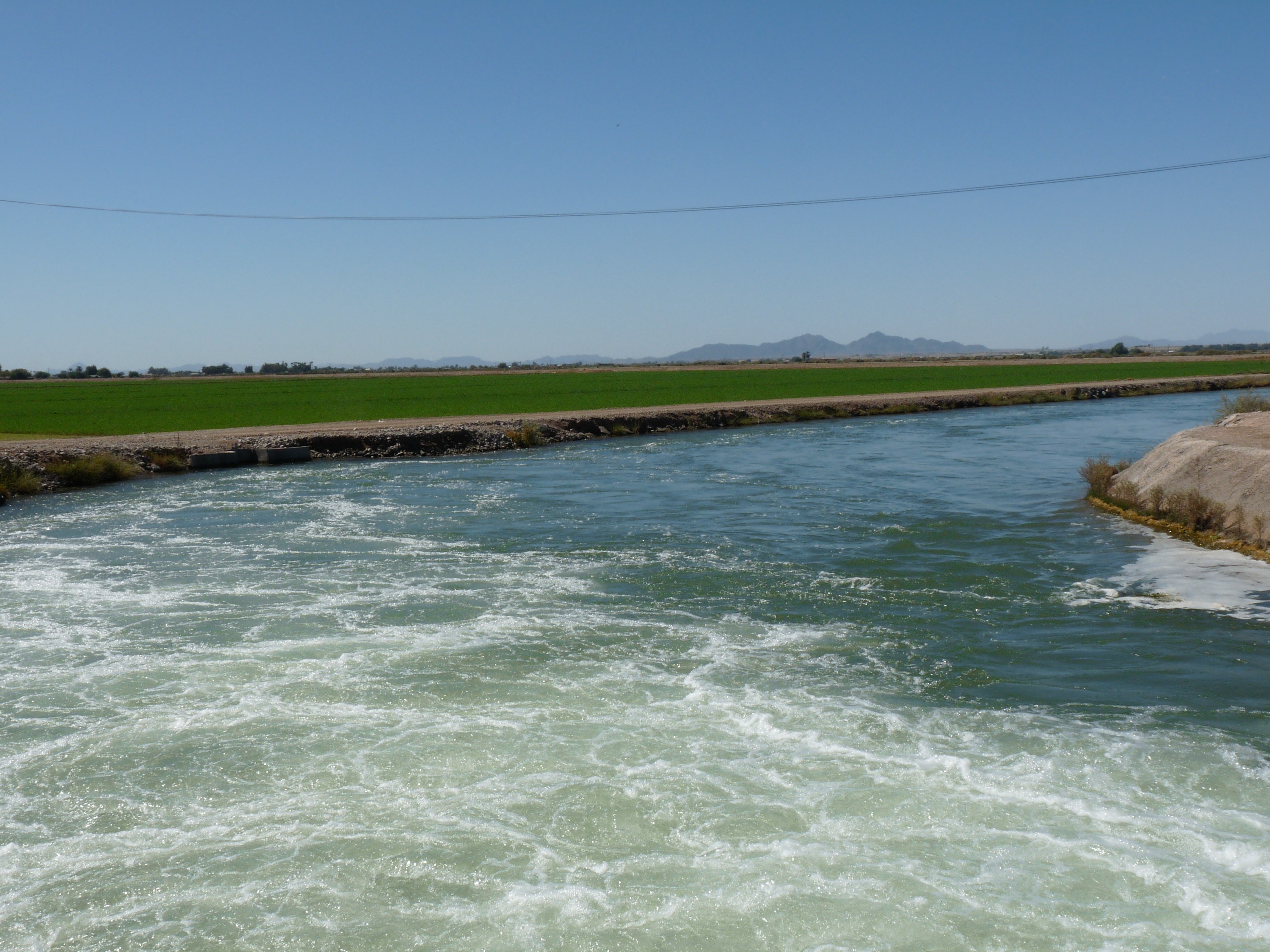
Recycled water has long been used in agriculture in other areas of the state, most notably the Salinas Valley and in the south, maybe a little bit up in the north in the winegrape country. The Del Puerto Water District currently relies on water delivered through the Central Valley Project, which had zero deliveries for the previous two years, and are only providing 5% this year. This new program has the potential to produce more than 30,000 acre-feet of water per year as soon as 2018.

NVRRWP map recycled water

NVRRWP map (Source: www.nvr-recycledwater.org/description.asp)

Among an estimated 100 recycled water projects in various stages of development throughout the state, Hansen stated, “For the Central Valley, I think this is definitely a big first. We received about 14 public comments on the joint environmental document. Of those 14, three or four were letters of support, and we received some broad support from the environmental community. 

A project of this magnitude to deliver needed water stability could also be accomplished in other dedicated communities, according to Hansen. “We believe this project to be a model for other municipal and agricultural agencies in ways to regionally solve issues together, and hopefully, it will be a model for the nation.”

Anthea_Hansen

Anthea Hansen, general Manager of the Del Puerto Water District

“Hopefully,” said Hansen, “people are looking at this as a good example of ways to think outside the box and use available technology to solve problems locally and regionally, which is what we have been forced to do here on the Westside.

“With all the complexities of California’s plumbing,” explained Hansen, “it would be impossible for a small district like Del Puerto to really affect any of the big picture changes, but we certainly do have the ability to affect how we act locally and regionally. I also think the Central Valley has not historically been a magnet for a lot of assistance, programs or changes that work to our benefit, so we have to devise these for ourselves or we’ll be out be of business. I’m very thankful that the two cities—Modesto and Turlockon the east side of the river in our county, were willing to work with us, and I think we have a good partnership going forward.”


AAEES logo Leadership and Excellence in Environmental Engineering and Science


The North Valley Regional Recycled Water Program (Phase 3) won the 2015 Excellence in Environmental Engineering and Science™ Competition – Honor Award – Planning from the American Academy of Environmental Engineers & Scientists.

2021-05-12T11:05:52-07:00July 19th, 2016|

Wilson Vineyards Fully Mechanized

Mechanization is Future for Winegrapes

Ken Wilson, winegrape grower and owner of Wilson Vineyards in Clarksburg, just south of Sacramento, farms 12 different winegrape varieties and has been enjoying a productive season despite hot weather. Wilson’s top winegrape varieties are Chardonnay, Petite Sirah and Pinot Grigio (Italian), also known as Pinot Gris (French), and Chenin Blanc.

Presently, Wilson’s winegrapes are past veraison, a stage of ripening in the physical grape maturation cycle in which the berry starts to soften and take on sweetness and color. Veraison is an excellent phase for the winegrapes to be in at this point in the season.

Wilson elaborated, “Pinot Noir and Pinot Gris are probably the furthest ahead, then Pinot Noir at 50 to 60%, and finally, Chardonnay around 30%. We’re getting good color and size now.”

Despite hot weather this year, Wilson says, “it hasn’t been too bad.” Most of his grapes are already contracted, and he anticipates a good vintage. “There are a couple of tons here and there, but [the winegrapes] have been pretty much sold out since early spring,” Wilson commented.

Wilson warned the higher cost of labor due to the recent minimum wage increase in California from $10 per hour currently to $15 in 2020. “We get pretty good winegrape prices. I’m not speaking for the district. I don’t know how some of these guys are going to survive,” he explained.

“We’re going to be forced into mechanization, and the wineries are just going to have to accept it. I think they are going to accept it, if they don’t want to pay [labor increases] anymore,” Wilson said.

Nevertheless, Wilson is more fortunate than some other growers because his vineyard is completely mechanized. “We’re 100 percent machine—other than a couple of special jobs where the winery who wants the grapes will pay for workers for hand harvest.

In comparison to Wilson Vineyards, vineyards in the Napa and Sonoma regions will experience significant wage increases because their winegrapes are hand-harvested. “The only hand harvesting we do amounts to less than one percent,” Wilson said.

Though Wilson evaluated this year’s crop as better than last year, “I think, overall, it is probably not much better than an average harvest, and yields may even be a little lighter than the average. I would say overall about 7.5 tons of winegrapes,” Wilson noted.


2016-08-08T20:06:08-07:00July 18th, 2016|

JUST RELEASED: Monterey County Ag Value Up Nearly Eight Percent

Monterey County 2015 Crop Report Shows Ag Value Up 7.75 Percent

By Patrick Cavanaugh, Farm News Director

Monterey County Ag Commissioner Eric Lauritzen announced TODAY the production value by farmers in Monterey County for 2015 is $4.84 billion, an increase of 7.75% or $348 million over the previous year. According to the the 2015 Monterey County Crop Report released TODAY, the Monterey is again the fourth highest Ag producing county in California, following Tulare, Kern, and Fresno Counties.Lettuce fields

“Crop values vary from year to year based on production, market and weather conditions,” said Lauritzen. “As often the case, there was much fluctuation in the 2015 values, with 22 commodities down and 29 commodities increasing in value.

Notable results include:

  • head values increased 12% on better pricing.
  • Head lettuce showed a decline of 2% with fewer acres planted but higher prices.
  • Spring mix and salad products also declined in overall value.
  • Strawberry values increased by 21% on increased acreage and higher production.
  • Cauliflower and celery each saw values increase by approximately 25%. Celery showed a decrease in production with stronger pricing and cauliflower posted increases in both production and pricing.
  • Winegrapes declined 25% in 2015, after above-average production in previous years. This followed the statewide trend, with lower production and slightly higher prices.
  • Despite reduced acreage related to the drought, the value of nursery products increased by 11% on stronger pricing for many products.
Monterey County Strawberries

Monterey County Strawberries

“It is always important to note that the figures provided here are gross values and do not represent or reflect net profit or loss experienced by individual growers or by the industry as a whole,” Lauritzen clarified. “The numbers are big and only tell part of the story. It’s really about diversity and the ability to withstand changes, whether it is commodity change or Mother Nature,” said Lauritzen. 

“Growers do not have control over increased input costs such as fuel, fertilizers and packaging, or drought and labor shortage conditions,” Lauritzen explained, “nor can they significantly affect market prices. The fact that the gross value of agriculture increased reflects positively on the diversity and strength of our agriculture industry and its ability to respond to the many challenges,” he noted.

“The mainstays in Monterey County are the cool season vegetables,” said Lauritzen. “County growers are able modify planting programs even within the same year depending on market strengths or changes in consumer needs. When the cable food shows or restaurants decide to feature certain vegetable there is suddenly increase demand so Monterey County growers are often flexible in their planting schedules to meet demand.

“The Salinas Valley floor is very tight on acreage and available land planted out on the bench lands,” he said. “And growers are being asked to produce more with the same amount or even less ground and we are seeing that it increases prices,” he noted.winegrapes

“Each year we like to highlight a component of the industry in our report,” Lauritzen elaborated, “and this year we chose Certified Farmers Markets. We include a short piece on some of the people who produce and sell their own products directly to consumers at the 14 markets in Monterey County and elsewhere,” he said. “This important segment of our industry lets consumers meet farmers face-to-face and to become more directly connected with the food they eat.”

“Monterey County is proud to produce the crops that are healthy for the nation,” Lauritzen said, “and if consumer demand really matched what we need for a healthy diet, there would not be enough vegetables produced. We produce the food that consumers need to eat and it’s not just an economic driver for our region, but for the health of our nation,” he added.

“This 2015 Crop Report is our yearly opportunity to recognize the growers, shippers, ranchers, and other businesses ancillary to and supportive of agriculture, which is the largest driver of Monterey County’s economy,” Lauritzen summarized. “Special recognition for the production of the report goes to Christina McGinnis, Graham Hunting, Shayla Neufeld, and all of the staff who assisted in compiling this information and improving the quality of the report.”

2021-05-12T11:05:54-07:00June 28th, 2016|

Mohr-Fry Ranches Honored

Mohr-Fry Ranches is CAWG Grower of the Year

By Laurie Greene, Editor

The California Association of Wine Grape Growers (CAWG) has selected its 2016 Grower of the Year, Jerry and Bruce Fry of Mohr-Fry Ranches, who will be presented with the award at the CAWG Awards of Excellence Program in Monterey on July 20, 2016. The Grower of the Year Award is the highest honor given by the association to an individual, family, or company that represents an outstanding example of excellence in viticulture and management.

John Aguirre, president of the organization, offered some background on this year’s award winners. “Jerry and Bruce are icons of the Lodi wine grape growing community. They do not own a winery, but they are long-time vineyard agriculturalists and have a long history of community leadership, and involvement in agricultural organizations,” Aguirre said.

Mohr-Fry Ranches Logo, CAWG


Mohr-Fry Ranches was one of the original six Lodi growers to certify their vineyard under the Lodi Rules for Sustainable Wine Growing. Jerry Fry is the president and CEO, and Bruce Fry is the vice president of operations of the family-run Mohr-Fry Ranches. The father and son are two of the most respected growers in the Lodi wine grape community and also dedicate an enormous amount of time serving the industry in their community.

“Jerry was a past chairman of CAWG, and Jerry and Bruce have both been deeply involved not only with CAWG, but with the California Farm Bureau Federation, the Lodi District Grape Growers Association, and the Lodi Wine Grape Commission,” said Aguirre. “They really embraced the idea that working as a community is essential to the strength of agriculture.”

“Jerry was really visionary in terms of developing Lodi into the powerhouse that it is today. Arguably, Lodi occupies one of the most critical positions in the winegrape industry in its ability as a region to produce high-quality grapes that are sought by Napa winemakers to blend into Napa wines,” noted Aguirre.

2016-06-26T15:39:32-07:00June 21st, 2016|

Drone Technology Benefits Agriculture

Drone Technology Useful for Calif. Ranchers and Growers

by Laurie Greene, Editor

Fifth-generation Parkfield rancher in southern Monterey County and 2016 Vice President of the National Cattlemen’s Beef AssociationKevin Kester, was introduced to the viability of potentially beneficial uses of owning and using a drone on his ranch for agricultural purposes.

Yamaha Drone

As owner and operator of Bear Valley Ranch & Vineyards, the family’s cattle and winegrape operations, Kester anticipated the biggest benefits of drone ownership would be the capability to check on cattle and ensure their safety from a bird’s eye view, and to determine water levels in reservoirs—a task that in the past could be completed only on foot or by vehicle. Cattle safety is especially important for ranchers, according to Kester, as the cattle industry has been experiencing stagnation in production.

Kester said having a drone would also helpful for security issues. He wants to detect human intrusion on his land, a problem that he experienced recently. “There have been some hunter-related trespass issues and people coming onto the ranch,” he said. “We’ve actually had cattle and horses shot.”

Kester, who is also a member of the California Association of Winegrape Growers, Paso Robles Wine Country Alliance and the Central Coast Vineyard Team, will purchase a commercial drone package and believes this modern technology will give not only cattlemen, but growers in California, a new way of assessing safety, production and maintenance.

2021-05-12T11:05:56-07:00June 9th, 2016|

The Fight Against Food Misinformation

Kavin Senapathy: Correcting Food Misinformation and Alarmism

By Patrick Cavanaugh, Deputy Editor

Kavin Senapathy, science communicator/advocate and contributor to Forbes Magazine, among others, is tightly focused on her goal to debunk miscommunication about human health, as well as genomic, food, and genetic engineering. Senapathy stated, “There is this culture of alarmism,” about food safety and food misinformation versus the science-based reality of our food safety management. “The alarmism and fear is so amplified, people don’t realize how very safe we are right now.”

Senapathy gets her facts from the source, “I speak to as many scientists as possible, and I know how to read and dissect a scientific paper. I know there is a very important difference between cherry picking from one study to support a bias, and looking at the weight of scientific evidence,” she said.FDA, FSMA Food Safety

“I also talk to farmers and I’m learning more about the hands-on practices,” Senapathy said. “California farmers produce a wide variety of fruits and vegetables,” she said, “and we all should be eating more of them.”

“I think a lot of the fear and misinformation take away from the message of eating the right things,” continued Senapathy. “Thinking, ‘I should avoid MSG, I should avoid GMOs or xyz additive,’ really detracts from the most important message—that we should be eating less unhealthy things like sodium and saturated fat, and not too many calories,” noted Senapathy. “We should be eating lots of fruits and vegetables and whole grains.”

And though she lives in Wisconsin, Senapathy says she is amazed by how many fruits and vegetables are available, even in the wintertime. “I can go to the grocery store in February and come home with grapes, strawberries, bananas, and all kinds of fruits and vegetables,” Senapathy said. “You know, we should marvel at the bounty of this more often.”

She’s quick to thank farmers for feeding her family and those of everyone, everywhere. “We forgetwith all the fear and misinformation in social mediathat our food supply is more abundant and safer than it has ever been,” she noted. “We should all be appreciative and thankful for that.”

2021-05-12T11:00:54-07:00May 12th, 2016|

Union Advances Fair Market Access

National Farmers Union Advances Fair Market Access for Growers

By Brian German, Associate Editor

Chandler Goule

Chandler Goule, senior vice president of Programs for the National Farmers Union (NFU)

Chandler Goule, senior vice president of Programs for the National Farmers Union (NFU), introduced his organization,”The National Farmers Union is the second largest general farm organization in the United States. We represent about 200,000 family farmers and ranchers. We have membership in all 50 states, but we’re organized in 32.”

Goule described NFU membership, “We were founded in 1902 down in Point, Texas, so we represent everybody from row crops, to dairymen, to ranchers, to specialty crops, to those who are selling in Community Supported Agriculture (CSAs) . You name it, we’ve got somebody. Bee collectors and honey producers are also in our organization.”

Since its inception, the NFU has been an advocate for helping the family farmer address profitability issues and monopolistic practices by increasing cooperative rights along with advancing fair market access for growers. “We are a federation of states,” Goule said, “so we’re a grassroots organization. NFU could not exist without California Farmers Union and North Dakota Farmers Union and Minnesota Farmers Union. So when you bring all the state farmers union devisions together, that’s what makes up National Farmers Union. It’s a very bottom-up approach.CA Farmers Union

“Of course, with California being the bread basket for the United States and by far the largest in gross domestic product (GDP) in agriculture,” Gould stated, “California Farmers Union membership is very heavy in dairy, has a little bit of viticulture and then specialty crops.”

____________________________________

National Farmers Union is a grassroots, producer-driven organization that believes good opportunities in production agriculture are the foundation of strong farm and ranch families, and strong farm and ranch families are the basis for thriving rural communities. Vibrant rural communities, in turn, are vital to the health, security and economic well-being of our entire national economy.

2016-05-31T19:24:04-07:00May 9th, 2016|

New FFA State Stars Honored

Halley Lauchland Wins FFA Star State Degree in Agriscience Award

By Charmayne Hefley, Assistant Editor

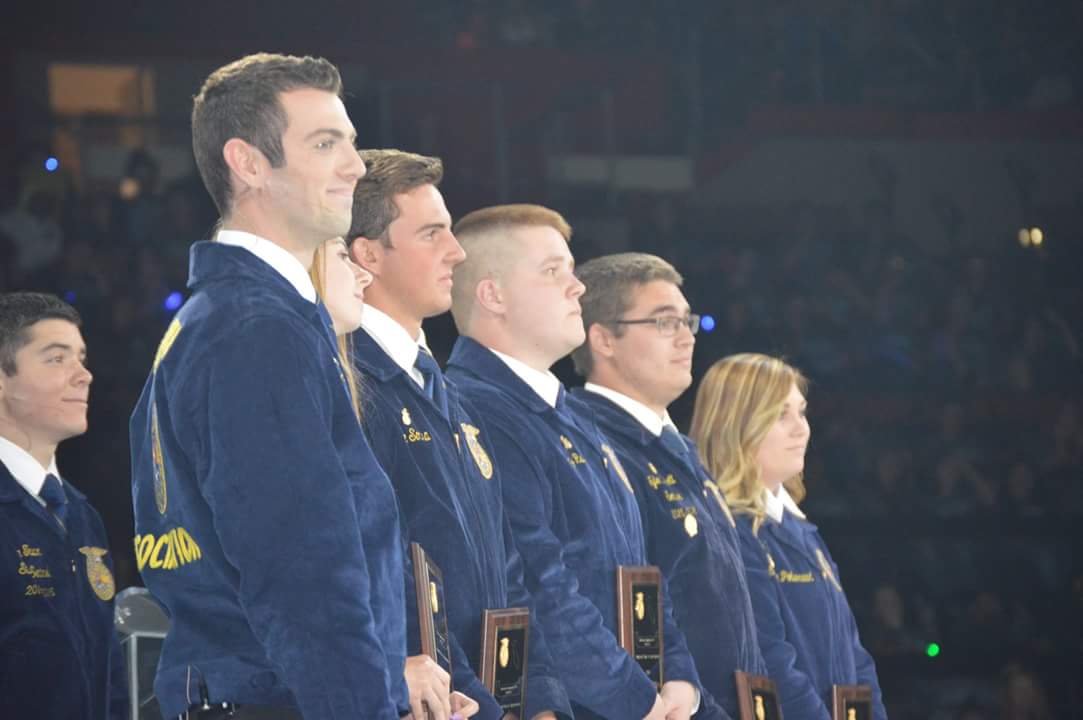
During the opening session of the 88th California Future Farmers of America (FFA) State Convention in Fresno last Saturday night, four California FFA members were honored with the top Star Awards during an onstage ceremony. As reported by the California FFA Association in a press release, each of them excelled in one of four areas:

Andrea Thomas from the Colusa FFA chapter was named the California Star Farmer state winner in recognition of proven leadership skills for an aspiring young farmer. Thomas raises and maintains hogs, cattle and hay.

Halley Lauchland, 2016 FFA Star State Degree in Agribusiness Award winner

Halley Lauchland, 2016 FFA Star State Degree in Agriscience Award winner (Photo Credit: California FFA)

Nitin Gupta from the Tulare FFA chapter was named the California Star in Agribusiness state winner, the highest achievement for a person pursuing a career in agribusiness. Gupta started the business Simple Sand three years ago in which he collects, markets and distributes sand from his family’s ranch to local businesses.

Paul Barcellos, also from the Tulare FFA chapter, was named the California Star in Agricultural Placement state winner, the highest recognition in the state for a young person excelling in job placement in the agricultural industry. Barcellos works alongside his dad at Cain Trucking as a Foreman in the Composting and Air Pollution Control Operations in recycling agriculture products and preventing air pollution.

Halley Lauchland, a high school junior from the Lodi FFA chapter received the 2016 FFA Star State Degree in Agriscience Award, the highest achievement for a person pursuing a career in agriscience.

“My project was cane pruning for the control of Eutypa Dieback in winegrapes,” A fifth-generation winegrape grower, Lauchland told CalAgToday, “The disease is commonly found in cabernet franc finds.”

Lauchland conducted her research in part to help her family’s 18-year-old vines with the Eutypa Dieback disease,  which she defined as “a fungal spore that enters the vine through pruning wounds. This will eventually kill the vine, causing the farmer to have to replant, which costs a lot of money and isn’t efficient.”

Lauchland tested cane pruning versus the commonly-used method of spur pruning to keep the disease at bay. “We tested two rows and found [cane pruning] was a more efficient way to do it, and it was going to save us more money in the long-run.” Spotting her research catching on in local vineyards, Lauchland said  “It seems people are going to the cane prune.”

Lauchland’s research was published in the Lodi District Grape Growers Association Update last year as, “Lodi High School Student to Compete in State FFA Agriscience Fair with Eutypa Dieback Research Project.” Lauchland stated, “That helped put out the word, what this [method] does and how it helps farmers.”

Overjoyed to have been selected to win the Star in Agriscience award, Lauchland said, “Words can’t really describe how I feel right now.”

The California Future Farmers of America (FFA) State Convention was sponsored by PG&E and the J.G. Boswell Foundation, as a special project of the California FFA Foundation.

2021-05-12T11:00:55-07:00April 27th, 2016|

Winegrape Quality In SJV

Nat DiBuduo: Valley Winegrape Growers Must Produce Quality

By Laurie Greene, Editor

Nat DiBuduo, president of Fresno-based Allied Grape Growers believes there are good opportunities for Central San Joaquin Valley winegrape growers. “I think the San Joaquin Valley [winegrape growing industry] will survive because growers are working at producing winegrapes at a higher quality and at a higher price,” said DiBuduo.

“Overall, I think the industry is doing well,” stated DiBuduo, “and we just have to work with our San Joaquin Valley growers to produce a better quality grape. It’s like a chicken and an egg; they’ve got to be able to get paid for that better quality. And of course, growers need a solid contract with a good price to make it worthwhile,” he noted.Allied Grape Growers logo

DiBuduo noted that the Bureau of Reclamation’s initial announcement at the beginning of this month that federal water users will receive merely a five percent water allocation, fortunately, does not affect many of his grower-members. “Most Allied growers are not Westside growers; but they will be severely affected by the groundwater regulations soon to be in place.”

DiBuduo explained the Sustainable Groundwater Management Act is predicted to create major issues for production agriculture. “Oh yes, we’ve got guys who have sold their property because they didn’t have enough groundwater,” he said.

2016-05-31T19:24:06-07:00April 21st, 2016|
Go to Top