Weather

Breaking News: The 5 Percenters May Not Receive All of Their Water Allocation

5 Percenters and Endangered Fish May Both Lose 

By Patrick Cavanaugh, Farm News Director


Will the 5 Percenters—the Federal water users in California who were restricted by a 95% water allocation reduction this year—actually receive the promised 5% allocation? This scenario follows a more-than-average winter rainfall and snowfall throughout the state.

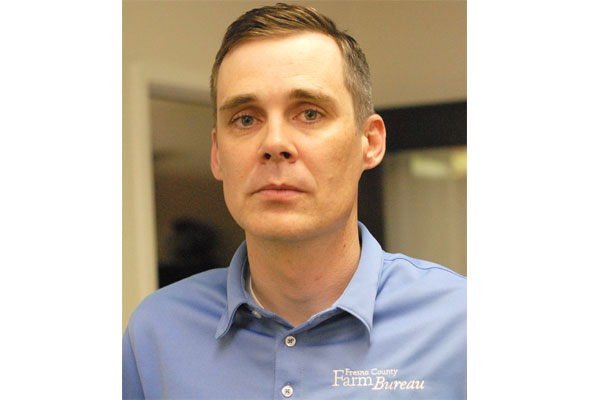
Ryan Jacobsenexecutive director and CEO of the Fresno County Farm Bureau, said, “arguably it’s turned out to be much worse. Right now, for the initial 5% allocation to even be questionable right now is just absolutely insane. It all boils down to the amount of water being held up in Lake Shasta for fish purposes, which has put a major stranglehold on what’s happening down here at this point,” noted Jacobsen.

Central Valley Project (CVP) Water

Central Valley Project (CVP) Water

At Shasta Reservoir, a keystone reservoir of the Central Valley Project, the U.S. Bureau of Reclamation essentially discharged flood releases earlier this year just to make room for the water that was expected to come in.  Shasta now stands at a above average full for this time of year, because the Feds are holding all the water for release for salmon later.

This is part of the plan to have cold water available to release for the salmon. And Shasta actually has 30 percent more cold water than what they thought, and water leaders are pushing hard to get the Feds to release it for agriculture.

San Luis Reservoir dead pool

San Luis Reservoir at Dead Pool Status

And San Luis Reservoir is  at a dead-pool status, which insures no more water can be sent south from that reservoirDead pool means no more water can be drawn from San Luis Reservoir, which does not bode well.

Jacobsen said, “This means our federal contractors’ 5% is in question. And that’s the irony: we were looking at such a strong year—or at least an average year [of precipitation]—and ending up now where our meager water supply is in jeopardy. This is incomprehensible and inexcusable from the federal side.”

Shasta has both federal and state water, and the federal side is essentially nothing at this point, explained Jacobsen. “Farmers rely upon San Luis Reservoir water for July and August irrigation, “and the water is essentially gone at this point,” he said. “It just shows you the major mismanagement we’re seeing from the federal side and the inability to capture water even when it is available, and not at the demise of any of these species.”

Jacobsen reiterated, “Back when the precipitation was falling [last winter], water was available at some extraordinarily high levels; yet, we never saw the increase in pumping that we would have expected under the normal conditions. “Of course, we’ve seen less pumping this year for the farmers and the cities south of the Delta,” noted Jacobsen. “During the times of the rainfall this year, it was essentially excuse, after excuse, after excuse. Some newer excuses pertained to why the pumps were not operating or operating at a very reduced capacity,” explained Jacobsen.

“The situation has been frustrating for a couple of years, but the anger continues to build because right now, this is not a ‘Mother Nature’ issue. It is completely a man-made regulatory drought that is, again, just incompetency at its best.”

“When we talk about the water stored behind Shasta [Dam] right now, really it is for the fish,” noted Jacobsen. “The most-watched fishery, at this point, is the salmon fishery. We’re in year four of this drought, but when it comes to the critical side of fish, the salmon essentially operates in three-year cycles. The last two years have been arguably two of the worst years on record for them, and this potential third year is a kind of make-it-or-break-it for salmon fisheries in the Delta region.”

Unfortunately, per Jacobsen, many decisions have been based on guesstimates. “There are a lot of folks who think we need to reserve all of this cold water for a fishery that may or may not be responding to what has been done in the past for this [contracted irrigation] water that has been given up for those purposes,” Jacobsen explained. “Right now, I think we’re doing a lot of experiments at the cost of jobs and employment, and most importantly, the farms here in the San Joaquin Valley. The frustration is that science is really not playing a big part in it. A lot of decisions are just simply, ‘We think we should be doing this versus what the science actually says we should be doing.’”

Jacobsen’s leading frustration is that all that water taken from farmers and given to fish has not helped the fish at all. In fact, the smelt and salmon numbers continue to decline. “I talk about growing frustration and anger from so many folks in the last couple of years… specifically because it hasn’t made a difference,” said Jacobsen. “An exorbitant amount of water has been given up for these fisheries, [endangered fish populations] continue to decline and crash, and as we’ve been saying for years, it is beyond time to look at just the water exporters,” he added.

Jacobsen maintains other stressors should be seriously investigated. “Many other issues taken place in the Delta should be pulled into play here, but again the regulators and the environmentalists continue to look only at the exporters as the sole issue for fish decline. There are so many other factors out there that need to be looked at,” he said.


Highly recommenced reading: “We are the 5 percenters, stretching our water supplies to get by,” by Joe Del BosqueContributing writer, The Orange County Register, July 14, 2016.
2021-05-12T11:05:50-07:00August 3rd, 2016|

Duarte Nursery v. U.S. Army Corps of Engineers Update

PLF Attorney Reports Duarte Appeals Court Decision—Once Again

By Patrick Cavanaugh, Farm News Director


Damien Schiff, principal attorney at Pacific Legal Foundation (PLF) who has been representing the Duarte family in their legal battle with the U. S. Army Corps of Engineers (Corps), provided this update after Judge Kimberly J. Mueller, U.S. District Court for the Eastern District of California dismissed their summary judgment motions on June 10, 2016, and ruled the Corps’ February 23, 2013 cease and desist order did not deprive Duarte of liberty or property. Schiff said his client’s next course of action is filing for an appeal of the judgment.

“It’s disappointing, in particular, because earlier in the case, we had received a very favorable decision from U.S. District Judge Lawrence K. Karlton, the original Federal Judge assigned to our case who ruled in our favor on our due process challenge to the Army Corps’ cease and desist order.” Judge Karlton retired from the bench in 2014 and passed away in 2015. “It was particularly disappointing to see Judge Mueller reverse Judge Karlton’s decision.”

“Launching the appeals process will take some time,” Schiff explained. “Unfortunately, the case is complicated because there are a lot of claims going on and not all of them have been resolved by Judge Mueller’s decisions. The general rule in Federal Court is that you cannot appeal until a final decision has been made that decides all the claims against all the parties.”

Damien M. Schiff

Damien M. Schiff, Principal Attorney, Pacific Legal Foundation’s National Litigation Center

Considering the preponderance of hills and valleys across the United States, the magnitude of this case has growers—not just from California, but nationwide—concerned about the outcome and precedents resulting from this case, as well as the significance of future Army Corps-issued cease and assist orders.  “It is an amazing assertion of power by the United States Environmental Protection Agency (EPA) and the Corps,” Schiff said, “and I think that’s why we see not just farming groups and property rights groups, but also a majority of the states, challenging the Agency’s Waters of the U.S. (WOTUS) Rule.”

EPA Fact Sheet Clean Water Rule_Page_1A significant point of contention in the case, Schiff explained, stems from Judge Mueller’s ruling that because the Duarte property had not seen any farming activity since 1998, the Clean Water Act’s farming exemption was no longer applicable. “That’s, in part, why we challenged the cease and assist orders,” said Schiff, “because the Corps issued this directive without giving any prior notice, much less any opportunity to present contrary information. The reality is, this property, and the other properties in the entire area, have traditionally been used for agriculture, and are, in fact, zoned for agricultural use.” EPA Fact Sheet Clean Water Rule_Page_2

The Duarte case is so multifaceted,” Schiff said. “The land was always agricultural, and what was done on the property is consistent with normal agricultural farming practices; there is really nothing exceptional about what went on. What’s particularly problematic for the Corps here is that Duarte went above and beyond the call of duty by having a wetlands consultant ensure that all of the areas assessed to have vernal pool or wetlands characteristics were marked and avoided entirely.”

Whatever the outcome, the Duarte case will have far reaching effects on legal precedent throughout the agricultural community as well as on the cease and assist orders issued by the Army Corps to families throughout the country. “Surprisingly, there isn’t very much case law on what process, if any, is owed to the landowner before the agency issues these orders,” Schiff remarked. “However the Duarte case ends up, I think that will have to be litigated in other parts of the country.”

2021-05-12T11:05:50-07:00August 2nd, 2016|

Poultry Industry Doing Well, for Now

Poultry Industry Shines, Like a Canary in a Coal Mine

By Patrick Cavanaugh, Farm News Director


Bill Mattos, president of the California Poultry Federation, based in Modesto, reported the state’s poultry industry is doing well despite new regulations and wage increases. “First of all,” he explained, “it looks like chicken has taken over as the [category of] highest meat consumption now in the United States. It’s getting more and more popular, so that’s good,” Mattos noted.

“Also, the best thing is the industry seems to be weathering the Highly Pathogenic Avian Flu (HPAI) A (H5N1) storm,” he continued. “In California, we’re doing our due diligence with biosecurity. We don’t have any Avian Influenza. We’ll knock on wood for that.”

California Poultry Federation logo“The industry is also enjoying lower feed costs. That’s 60% of our cost, so that’s good news,” he added.

And, poultry industry employees have job security. “It doesn’t look like there will be fewer employees in the industry over the next few years, and we’d like to have more,” he said.

Notwithstanding the good news, challenges loom on the near horizon. “The Air Quality and Water Quality Control Boards are regulating a lot of different industries,” Mattos observed. “They’re starting to look at the poultry industry now that they have completed the dairy rules. We’re very concerned about those issues, so we are trying to work with the boards to explain to them what we do and how our business runs,” noted Mattos.

The updated minimum wage requirement may hurt the California poultry industry, another big concern of Mattos. “We supply half the chicken consumed in California. The other half comes from out of state. Without the same minimum wage requirements, we’re going to be at a disadvantage. We’re looking into the different possibilities—what we can do—to offset that.”

“You will be seeing some new things coming out from the poultry industry as we look at the ramifications of the new minimum wage,” explained Mattos. “We can’t compete with that. They are going to be taking a lot more percentage away from us, which may cost us some jobs if we don’t work this out.”

“With the minimum wage hike, California lawmakers are trying to appease workers. But it really affects businesses. Ours happen to be mostly in the Central Valley, which is the hardest-pressed area for unemployment. It isn’t a good place to have to follow wage requirements like you’re seeing in San Francisco and Los Angeles. It frankly makes no sense in the Central Valley,” said Mattos.

2021-05-12T11:17:13-07:00July 21st, 2016|

Lt. Governor Newsom Supports Calif. Agriculture

Calif. Lt. Governor Newsom Says Ag is at a Hinge-Moment in History

By Patrick Cavanaugh, Farm News Director


In an exclusive interview with Gavin NewsomLieutenant Governor of California, during the recent Forbes AgTech Summit in Salinas, Newsom declared, “It’s interesting about California—outside of Hollywood—no two more iconic industries exist than Silicon Valley’s technology, and the agricultural industry.

“It seems self-evident to everybody here that we have a unique opportunity to collaborate,” Newsom said about the event which joined the Silicon Valley high tech industry with the state’s farming industry to create digital solutions for agriculture. “We have the unique opportunity based on proximity and based on history. It is also a cultural opportunity as it relates to relationships that have been formed over the course of generations to begin to build bridges and connect some dots.”

Newsom said he believes in bottom-up inspiration, not top-down. “I don’t think you can sell down your vision from Sacramento. It’s about regions rising together and creating conditions for just these type of collaborations,” he said.

Newsom particularly appreciated comments about innovation. “I wrote a book, [“Citizenville”] and I’m not here to promote that book,” said Newsom, “but the whole idea was about platform thinking. The concept is the federal government, state government, and even local government cannot prescribe a federal, state or local pill for every problem,” he said.

“The point is,” he continued, “if we’re going to solve the big problems of the day, we have to create an environmenta platformto engage folks like yourselves to deliver the applications, literally and figuratively, to solve big problems. It’s self-evident to anyone who lives here in California, that we’ve got some big problems.”

Citizenville, by Gavin Newsom

Citizenville, by Gavin Newsom

“We have regulatory challenges in this state, and I say this as a business person with many businesses. I have a sense of kindred connection in spirit to the entrepreneurial ways that are here today,” he commented. Owner of three wineries, several restaurants and hotels, Newsom stated, “I am in the Ag business, of sorts. My point is, we could do a lot better to make a point that [agriculture] matters and we care,” he said.

“At the same time,” he added, “Silicon Valley is center-tip of the spear—all the innovation and discovery, and the change in the way we live, work and play,” Newsom said.

“We’re here on a hinge-moment in history where we are going from something old to something new, a world of mobile, local, and social; and cloud and crowd. It’s a moment of anxiety for a lot of people, a moment of mergerthe detonation of globalization and technology coming together. Again, there’s a lot of anxiety,” he noted.

Newsom suggested this is an opportune time to try to connect dots and address challenges, not just on the regulatory side and on the economic development side in this state, but also on the self-evident issues of water scarcity in this state. “You may have different opinions about climate change, global warming or violent disruption,” said Newsom, “but, as a guy who told me the other day up in Dutch Flat, Placer County, ‘I don’t care about all you folks from San Francisco talking about climate change, but something just ain’t right.’ Which is another way of describing a connection that things have changed,” Newsom explained.

Newsom said that kind of predictive nature, in terms of how we construct a water system for a world that no longer exists, and for a population that is twice the size; self-evidently, we have to do things differently. “We’ve got to be more creative and we’ve got to be more strategic,” he noted.

“It’s a long way of saying we are grateful for the work [California farmers] are doing. The goal for us in California is to make these conversations sustainable. ‘Not just situational and not just one annual conversation, but these are dialogs that must continue every day in this state,” Newsom said.

“I’m one of those people who believes in the combination of nature and technology, bringing cross-disciplines together,” Newsom said. “Cross-pollinating, literally and figuratively, ideas and people—values. “I think we have an incredible opportunity here in California, not just to survive in the agricultural industry but to truly thrive in a growing, competitive environment.”

2021-05-12T11:05:51-07:00July 20th, 2016|

RECYCLED WATER PROJECT FOR WATER STABILITY, PART 4

Recycled Water Project for Water Stability: Takes Shape, Part 4

By Brian German, Associate Editor and Broadcaster

As part of our ongoing coverage on the North Valley Regional Recycled Water Program (NVRRWP), we spoke with Anthea Hansen, general Manager of the Del Puerto Water District. Over the next few months the project will start to take shape following the U.S. Bureau of Reclamation signing the Record of Decision last month, the high level of cooperation taking place among all the different entities, and positive public response.

Del Puerto Water District dpwdHansen commented, “I can’t speak enough about our good experience thus far. The cities, partners and consultants on the project have come together to really advance this concept—which was all it was seven or eight years ago —into something that will become a reality.

When demands are low in the Del Puerto water district, specifically in the winter months, water deliveries can flow to storage facilities or the San Luis Reservoir for later usage when demand is high. While many areas have already been using recycled water for agricultural needs, the progress by the North Valley program has inspired some communities to improve their own water policies.

Recycled water has long been used in agriculture in other areas of the state, most notably the Salinas Valley and in the south, maybe a little bit up in the north in the winegrape country. The Del Puerto Water District currently relies on water delivered through the Central Valley Project, which had zero deliveries for the previous two years, and are only providing 5% this year. This new program has the potential to produce more than 30,000 acre-feet of water per year as soon as 2018.

NVRRWP map recycled water

NVRRWP map (Source: www.nvr-recycledwater.org/description.asp)

Among an estimated 100 recycled water projects in various stages of development throughout the state, Hansen stated, “For the Central Valley, I think this is definitely a big first. We received about 14 public comments on the joint environmental document. Of those 14, three or four were letters of support, and we received some broad support from the environmental community. 

A project of this magnitude to deliver needed water stability could also be accomplished in other dedicated communities, according to Hansen. “We believe this project to be a model for other municipal and agricultural agencies in ways to regionally solve issues together, and hopefully, it will be a model for the nation.”

Anthea_Hansen

Anthea Hansen, general Manager of the Del Puerto Water District

“Hopefully,” said Hansen, “people are looking at this as a good example of ways to think outside the box and use available technology to solve problems locally and regionally, which is what we have been forced to do here on the Westside.

“With all the complexities of California’s plumbing,” explained Hansen, “it would be impossible for a small district like Del Puerto to really affect any of the big picture changes, but we certainly do have the ability to affect how we act locally and regionally. I also think the Central Valley has not historically been a magnet for a lot of assistance, programs or changes that work to our benefit, so we have to devise these for ourselves or we’ll be out be of business. I’m very thankful that the two cities—Modesto and Turlockon the east side of the river in our county, were willing to work with us, and I think we have a good partnership going forward.”


AAEES logo Leadership and Excellence in Environmental Engineering and Science


The North Valley Regional Recycled Water Program (Phase 3) won the 2015 Excellence in Environmental Engineering and Science™ Competition – Honor Award – Planning from the American Academy of Environmental Engineers & Scientists.

2021-05-12T11:05:52-07:00July 19th, 2016|

Solving Central Valley Water Salinity

Mizuno on Water Salinity Solutions

By Laurie Greene, Editor


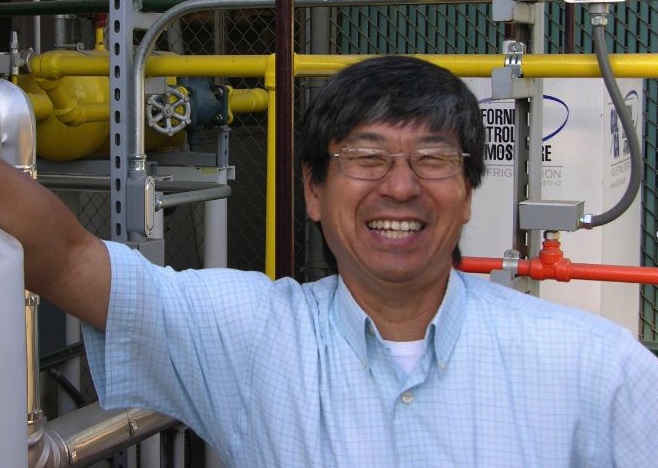
According to a Central Valley Salinity Alternatives for Long Term Sustainability (CV-SALTS) report, rising salt levels in the soil and groundwater threaten the potable water supply and agricultural productivity for the entire region. Walter Mizuno, longtime lecturer in mechanical engineering at Fresno State and director, Valley Industry Partnership for Cooperative Education (VIP) Program, researches increasing salinity conditions in Central Valley soil and groundwater, as well as methods of desalination.

Mizuno explained, “As the salt level rises, and if the soil salts aren’t leached out periodically, the ground becomes unsuitable for cultivating several crops. Growers either shift to high salt-tolerant crops or essentially idle that land.”CV Salts

Central Valley salinity conditions are serious, according to Mizuno. “Growers have already taken a lot of land out of production on the Westside,” he said, “and they’ll continue to do that until the salt mitigation measures have been implemented. Essentially, we need to get back to where we can currently sustain the amount of farming we have with the type of water that we have.”

“We are looking at desalination of agricultural drainage water,” Mizuno stated. “We’re trying to reclaim water that’s suitable for even human consumption; but right now, we’re looking at reclaiming water that is suitable for Ag use through a desalination process called vapor compression distillation, which takes drainage water from the Ag fields, distills it to make it pure and recovers some of the salts on the backside.”

Mizuno explained salt recovery would enhance the economic viability of this project by eliminating the cost of trucking or disposing the resulting brine and by possibly converting it into a revenue stream. “We’re trying concentrate that brine to a point, using solar evaporation, where we can find other uses for the highly concentrated form or maybe even sell it to a chemical processing company. We are also focusing on minimizing the energy cost to distill the water, to make the process more efficient.”

“We’re trying to combine multiple technologies, using ion exchange as our front end process,” Mizuno explained, “to get rid of some of the hardness in the water. We get rid of calcium and magnesium in the water, which helps the distillation process and protects the equipment for a longer period of time before requiring cleaning or eventual replacement. We’re using the brine stream of the distillation process to actually regenerate, upfront, the ion exchange units—similar to a home water softener.”

Pipe without waterMizuno explained, “When you look at the reasons why desal isn’t used more often—just the cost of energy makes the cost of the water expensive. So, we do a lot of energy recovery. Just take the basic process of distillation in which you heat up the water solution, boil it off, and condense the residue. A lot of that water you use, or a lot of the energy used to boil off the water, is lost; so we recover the heat from that steam to save energy. In other words, we don’t discard that energy; we try to reuse it.”

“We have been conducting studies on some Westside ranches,” he continued, “with our pilot plant that processes only one thousand gallons per hour. A series of ditches on those ranches collect the drainage water to be purified. Now, we have moved everything back to the Fresno State Center for Irrigation Technology (CIT),” said Mizuno, “because we’re building a brand new redesigned unit, which should be operating by the end of this year.

“The second phase of the project,” Mizuno commented, “is to move the unit out to Panoche, and conduct field testing out there. We will evaluate the energy efficacy and also the economics of the unit and process, and we will field-test to determine how rugged and dependable it is out in the actual service area.”

“This is actually a research project,” Mizuno clarified. “We’re still fairly far away from commercializing it. Basically, we will evaluate the scalability of these units so that depending on the size of the farm and everything else, you can either put multiple units out there or design a single-unit system very similar to ours. You could size the system to meet whatever the demands are, but you need a reservoir or holding area, and you’d like to be able to operate 24/7.”

“We are considering using solar to power this,” Mizuno mentioned. “The issue with solar is, obviously, it tends to work during the daylight hours but doesn’t do much during the evening hours. We’re looking at using batteries, electricity, natural gas or some other energy source to keep the process running when the sun goes down, but it’s a matter of economics.”

Mizuno said the research team is optimistiCIT Logoc about the process itself, but he does not anticipate it will be a cure-all. “It is a research project,” Mizuno reiterated, “and we’re trying to see if we can drop the energy cost, and lower the water cost. I think the economics will change though. Water will cost more for everybody in the next few years. As that changes, I think some of these technologies are going to become feasible from an economic standpoint.”

The entire state shoud be aware of these water issues, according to Mizuno. “I think there are still a lot of issues that the common person isn’t aware of and how they fit in, and Ag is no exception. I would like people to understand that we are working to stretch the available amount of water supplies we have and we are working on technologies that are yet unproven. But some of these technologies will require a few more years—to many years to solve. Others are not economically feasible today, but they may be in the future as water supplies get tighter.”

Mizuno has observed that farmers are already doing a lot to conserve water, particularly employing the use of new technologies such as drones to evaluate water stress and nutrient stress in plants. “Right now,” he offered, “we are looking at another piece of the puzzle; we’re trying to stretch the amount of water supply we have, utilize it in multiple-use scenarios, and use it more intelligently to make some waste streams into revenue streams.”

Mizuno urges the general population to just be aware. “Conservation is the first step for a lot of people,” he said. “That’s the easiest way to stretch water supplies, and so I think people need to understand that water is a finite resource in the state of California. The water situation is not likely to get better anytime soon, even if we have normal rainfall and so forth. We are in an overdraft situation with our water supply.”


CV-SALTS participants collaborate to develop a workable, comprehensive plan to address salinity, including nitrates, throughout the region in a comprehensive, consistent, and sustainable manner.

Center for Irrigation Technology (CIT) celebrates 35 years!


2021-05-12T11:05:52-07:00July 18th, 2016|

Wilson Vineyards Fully Mechanized

Mechanization is Future for Winegrapes

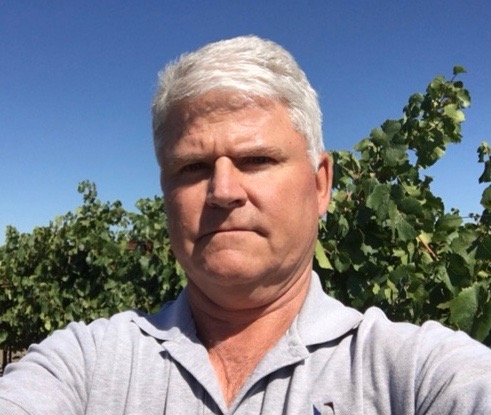
Ken Wilson, winegrape grower and owner of Wilson Vineyards in Clarksburg, just south of Sacramento, farms 12 different winegrape varieties and has been enjoying a productive season despite hot weather. Wilson’s top winegrape varieties are Chardonnay, Petite Sirah and Pinot Grigio (Italian), also known as Pinot Gris (French), and Chenin Blanc.

Presently, Wilson’s winegrapes are past veraison, a stage of ripening in the physical grape maturation cycle in which the berry starts to soften and take on sweetness and color. Veraison is an excellent phase for the winegrapes to be in at this point in the season.

Wilson elaborated, “Pinot Noir and Pinot Gris are probably the furthest ahead, then Pinot Noir at 50 to 60%, and finally, Chardonnay around 30%. We’re getting good color and size now.”

Despite hot weather this year, Wilson says, “it hasn’t been too bad.” Most of his grapes are already contracted, and he anticipates a good vintage. “There are a couple of tons here and there, but [the winegrapes] have been pretty much sold out since early spring,” Wilson commented.

Wilson warned the higher cost of labor due to the recent minimum wage increase in California from $10 per hour currently to $15 in 2020. “We get pretty good winegrape prices. I’m not speaking for the district. I don’t know how some of these guys are going to survive,” he explained.

“We’re going to be forced into mechanization, and the wineries are just going to have to accept it. I think they are going to accept it, if they don’t want to pay [labor increases] anymore,” Wilson said.

Nevertheless, Wilson is more fortunate than some other growers because his vineyard is completely mechanized. “We’re 100 percent machine—other than a couple of special jobs where the winery who wants the grapes will pay for workers for hand harvest.

In comparison to Wilson Vineyards, vineyards in the Napa and Sonoma regions will experience significant wage increases because their winegrapes are hand-harvested. “The only hand harvesting we do amounts to less than one percent,” Wilson said.

Though Wilson evaluated this year’s crop as better than last year, “I think, overall, it is probably not much better than an average harvest, and yields may even be a little lighter than the average. I would say overall about 7.5 tons of winegrapes,” Wilson noted.


2016-08-08T20:06:08-07:00July 18th, 2016|

Family Tree Farms Enjoys Exceptional Tree Fruit Year

Tree Fruits and Hybrids Are Bountiful and Delicious This Season

By Emily McKay Johnson, Associate Editor

Tree fruits this year for Daniel Jackson, a seventh-generation farmer and partner, Reedley-based Family Tree Farms, are thriving and delicious. “The quality is just exceptional right now,” Jackson said. “I think the industry is taking a little bit of a lull in volume right now for the last two days, but it looks like it’s going to pick up again. The fruit coming off late season is going to be exceptional from an eating quality standpoint,” he indicated.

Family Tree grows various tree fruit hybrids, as well as blueberries and grapes—everything from plumquats (a hybrid between an apricot and a plum) and apriums (a similar hybrid that is more apricot than plum) to fresh white peaches and nectarines, yellow flesh peaches and nectarines, and apricots.

Daniel 1

Daniel Jackson, seventh-generation farmer and partner of Family Tree Farms in Reedley, Calif.

Although hot weather can be challenging to growers, trees in the Central
Valley have evolved to adapt to the heat. “Tree fruit genetics here in the Valley are used to that heat,” Jackson elaborated. “Other than a mid-season apricot that may get some tip burn, we’re not seeing too much damage,” he explained. “We may see some sunburn here and there; but for the most part, as long as you have a good leaf ratio on your tree, everything seems to be looking good. We’re happy with the way things are turning out.”

Jackson also reported some minor labor shortages, but their numbers are staying pretty strong. “It was short early on; now we’re pretty stout,” he commented. “I think our crews are up 25 guys, which is a good full crew. We may run into some challenges as we enter the table grape season, but right now things are looking good. We’re staying positive.”

Family Tree Farms has an optimistic attitude about their labor crews. “We just want to be able to provide a consistency of work out there so that people are happy and can stick around with us. I think most farmers are trying to do that same thing,” he said.

Springtime, this year, gave them an early bloom but a cool and mild spring, conditions that can impact the size of produce, come harvest season. “I don’t think we gathered enough heat units to grab the size that we typically have,” Jackson explained, “but I think we’re catching up now. A lot of times, that’s what happens in a season; the size may be a little bit off [early on], but it catches up and becomes more of a normal year,” he said, and other growers have experienced the same problem with their commodities,

“We were probably about a half size to a size off early on in the season, but are seeing sizing come back a little bit and we’re happy about that,” Jackson described. He attributed this impact on fruit size experienced by most California fruit growers, “because we lost a couple of early season growing days that are so important in the early-season varieties.”

The Family Tree crew remains positive; they take pride in the exceptional color of their fruit and picking has stayed consistent. “I think color has been one of the best years we’ve had. Especially with plumcot varieties, we see the ripening happening a little bit more evenly, so are able to pick more consistently as well.”

Jackson handles the fluctuating challenges in farming with stride. “There are a lot of positive things going on,” he commented. “There will always be challenges every year but we don’t let those slow us down. Farmers are more resilient than that.”

2016-07-15T12:32:37-07:00July 15th, 2016|

Breaking News: Contracted Contractual Water Deliveries Could Plummet

Breaking News: 

Promised Water Deliveries Could Plummet

Delta Smelt Among Many Reasons for Pumping Constraints

By Emily McKay Johnson, Associate Editor

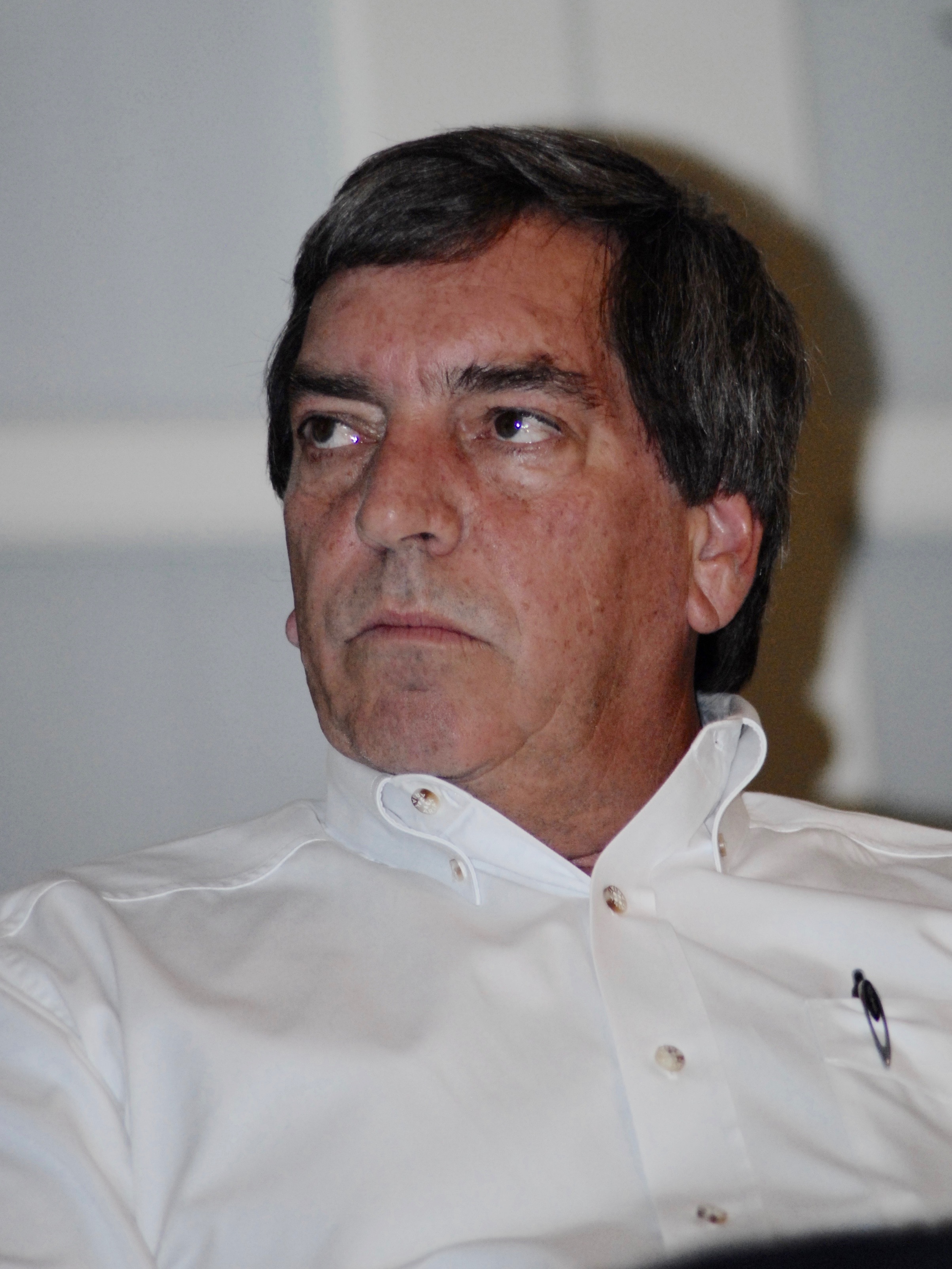
Farmers in the federal water districts of Fresno and Kings Counties were granted only five percent of their contracted water this year; yet they are at risk of getting even less due to pumping constraints. Jason Peltier, executive director of the San Luis & Delta-Mendota Water Authority, a Los Banos-based federal water district explained, “The original forecast had full pumping in June, July, August, and September.

“Because of the temperature constraints and because of the water quality standards,” Peltier stated, “we’ve been operating only one or two pumps. There’s just not enough water flowing south to meet the U.S. Bureau of Reclamation’s (Reclamation) obligations to the exchange contractors, the [wildlife] refuges and the urban agencies, along with the 5% allocation to the ag services contractors,” he noted.

SLDMWAPeltier is concerned for those in the Central Valley, and water agencies are working frantically to find answers. “We’re working on it,” Peltier affirmed. “We’ve got a lot of engineers and operators preparing spreadsheets and analyzing both the variables and what changes could be made to avoid lower water levels at San Luis Reservoir.”

Commenting on this year’s deliveries, Peltier stated, “No doubt we’re in an unprecedented operating environment. Here we are, eight months into the water year, and we just got a temperature plan for Lake Shasta—that is driving the whole operation—the project. Limiting releases like they are in the temperature plan [designed keep the water cold to protect winter-run salmon eggs]at least we thoughtwould allow Reclamation to hold the commitments they made. But we’re on razor’s edge right now,” Peltier explained.

Peltier described how the process is holding up water release, “The National Marine Fisheries Service wants to keep as much water in storage as possible, in order to keep the cold water cool as long as they can. This is all to protect the winter-run salmon eggs that are in the gravel right now, protect them until the weather turns cool and things naturally cool down. Then they can release water. Shasta’s been effectively trumped by another million-acre feed because of this temperature plan.”

Peltier further noted that the Lake Shasta temperature plan has not allowed water to flow into the Sacramento River. It has severely impacted growers in Northern California on a year when the northern part of the state received above average rain and snowfall during the winter.

“People diverting off the river in the Sacramento Valley have had their own water level issues. There hasn’t been enough water coming down the river to get elevation enough adequate for their pumps. There’s been a lot of ground water pumping,” he said.

The nearly extinct Delta Smelt has been a longstanding issue for those affected by California’s drought. After the past five years of sacrifice, even more water is being taken from agriculture and cities to help save the fish from extinction.

“We’ve got the California Department of Fish and Wildlife wanting significant increases in delta outflow over the summer, supposedly for the benefit of delta smelt, another operational complexity that is sadly not based on any science that we could see. The agencies have their beliefs, and they have the power,” said Peltier.

Featured photo: Jason Peltier, executive director of the San Luis & Delta-Mendota Water Authority.


California Ag Today will update readers on Bureau of Reclamation announcements about the 5% contracted water delivery federal water district growers were expecting.

2021-05-12T11:05:53-07:00July 12th, 2016|

Duarte Nursery Loses Battle Against Army Corps Of Engineers

Ruling in Favor of Army Corps is Game Changer for Agriculture

By Patrick Cavanaugh, Farm News Director and Laurie Greene, Editor


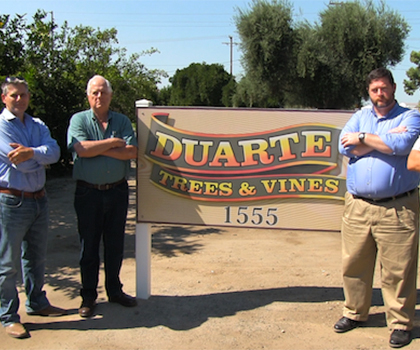
Startling California family farmer, John Duarte, president of Duarte Nursery, Inc., his attorneys, and others who have also kept a close watch on the case, Duarte was dealt a serious blow recently in the biggest fight of his life—the right to farm his own property. This legal outcome may portend a game changer for American agriculture as a whole.


Background

Duarte Nursery and the U.S. Army Corps of Engineers (Army Corps) have been engaged in a long legal dispute over private property rights since the family purchased a 450-acre agricultural property in Tehama County in 2012 and planted wheat that fall.

As reported in, “Duarte Farmland Under Siege,” (California Ag Today, March 11, 2016), John Duarte recalled, “The property is in some slightly rolling grasslands, and has some minor wetlands on it, vernal pools, vernal swales. Like most grasslands, wheat areas and wheat plantings, we had a local contractor go out and plow the field for us, 4-7 inches deep, and we flew on some wheat seed for a winter wheat crop in 2012.”

The U.S. Army Corp of Engineers accused the farm of “deep ripping” the property (three feet deep), “which we were not,” Duarte said. Legal action ensued with the Army Corps issuing a cease and desist notice in early 2013, according to Duarte, without evidence or basis for their accusation. Duarte Nursery attorneys, under the Freedom of Information Act, requested evidence of deep ripping, the assumption that apparently warranted a cease and desist notice.

Without responding, according to Duarte, the Army Corps sustained the cease-and-desist notice without a hearing and without evidence. “They obstructed our farming operations indefinitely,” Duarte said in March 2016.


Current Scenario

Duarte’s attorneys are now scrambling to prepare and file appeals to Eastern District Federal Court Judge Kimberly Muller’s June 10 ruling that by plowing his land to grow wheat, Duarte could pollute vernal pools on his land, violating the Clean Water Act.

Pacific Legal FoundationOn behalf of Duarte Nursery, Pacific Legal Foundation attorneys have moved for reconsideration or certification for immediate appeal on several Clean Water Act issues. “We expect a decision from the court any day on this motion, which will determine whether Duarte Nursery can immediately address the trial court’s legal errors in the appellate court, or will have to go through a trial first on whether the government is entitled to a penalty.” (Source: “Duarte Nursery seeks immediate appeals in Clean Water Act case,” Tony Francois, Pacific Legal Foundation, June 30, 2016)


Reaction to the Ruling

California Farm Bureau Federation and Pacific Legal Foundation attorneys had great confidence that Duarte would be vindicated in the action brought by the Army Corps several years ago. “They are just astounded,” Duarte said. “I thought we might have to go to trial on some of our issues, but I did not think we would lose our issues and have the judge rule against us on the other side,” he said.

Duarte clarified, “We are talking about farming activity that only occurred on rolling land—land with dismal vernal pools and flails.” Duarte noted there is no controversy as to whether this tillage was four to six inches deep. “Both sides agreed this is four to six inch deep tillage. Both sides agree that this property had farmed wheat before,” he said.


Legal Implications

“The Army Corps’ position is they don’t know how long is too long, but at some point if you haven’t farmed wheat, you lose your ability to continue farming wheat,” Duarte continued. “As it is a rangeland, you cannot plow your ground without a permit from the Army Corps, which they’re not going to grant because there are wetlands,” he said.

John Duarte, president of Duarte Nursery.

John Duarte, president of Duarte Nursery.

“All of the Food Security Act protections for farming—our ability to idle ground and then bring it back into production—to ensure available food production resources—are gone,” Duarte said. “This is a very extreme ruling. It’s extreme of the law in a lot of different ways. It’s a game changer for agriculture. We’re meeting with Paul Wenger, the president of the California Farm Bureau and seeing what they want to do. I think it’s on a lot of folks’ radar,” said Duarte.

“According to the Clean Water Rule definition of “Waters of the United States” (WOTUS), everything is a wetland and farmers are not exempt,” Duarte stated. “Any tillage that the Army Corps, by their own standards, does not deem to be an ongoing agricultural operation, farmers have liability. Their settlement discussions were in the $5 million to $6 million range, and we’re talking about shallow tillage through vernal pools that covered maybe fourteen or sixteen acres over this property. We can show that those vernal pools are completely intact,” noted Duarte.

Duarte noted that consultants have been at the land to inspect the vernal pool wetlands that concern the Army Corps of Engineers, and have confirmed that all the biology has been restored. “It’s all wetland plants across the vernal pools. They’re not topographically damaged,” said Duarte. “We didn’t re-contour them, we didn’t till them, we didn’t grade them, we didn’t deep rip them such that the restrictive layers of soil no longer perched water—none of that,” he emphasized.


A Game Changer for Ag

“Every property owner should be concerned,” Duarte warned. “Basically, what they’re saying is if wheat is profitable for a window of time because of whatever market or geopolitical reasons, you can farm wheat. If you stop farming wheat for a decade because it’s not profitable, or because you have a lease with a cattleman who’s paying you decent money, or you just don’t have the capital to plant wheat, or you just don’t want to plant wheat, then you will lose the right to farm it in the future. You cannot adjust your farming enterprises to the markets or to your business plans or you will lose your right to farm.”

Duarte believes that the ultimate goal of the Army Corps of Engineers is to be able to tell you what you can and can’t do with your land on any given day. “They want simple control over how you use your property and discretion over what property is put into permanent habitat and what property remains rangeland. They do not believe that private landowners have any inherent right to farm their property to meet market demands.”

As for the ruling, Duarte said he plans to appeal it. “This ruling is in many ways right in the face of several completions that have come down in court last week,” he said. “A lot of this ruling hinges on the opinion in Rapanos v. United States, where senior Associate Justice of the Supreme Court of the United States Anthony Kennedy said wetlands either have to be navigable waters of the United States or tributaries or related.

As summarized in, “The Practical Application of the Significant Nexus Test: The Final Waters of the US Rule,” (by Lowell M. Rothschild, National Law Review, June 8, 2015):

The significant nexus test requires a determination of whether the water in question – alone or in aggregation with other similarly situated waters in the region – significantly affects the chemical, physical or biological integrity of a traditionally navigable or interstate water or the territorial sea (with “significant” meaning “more than speculative or insubstantial.”). The “region” is the watershed that drains to the nearest traditionally navigable or interstate water or the territorial sea, and waters are “similarly situated” when they function alike and are sufficiently close to function together in affecting downstream waters.
supreme court building

“That was one judge, who had none of the other eight judges agreeing with him,” said Duarte. Nevertheless, Duarte said Justice Kennedy was not correct. “We had four judges that said navigable is navigable. If the Clean Water Act says it exempts, it defines what jurisdictional waters are navigable waters in the United States, and then it defines what jurisdictional waters are. If you look in the Clean Water Act, it says that plowing shall never result in a discharge into waters of the United States,”  said Duarte.

“The language in the exclusion of the Clean Water Act is very clear. What this case tells us is that no regulatory legislation can be created with language that is durable to give private parties any protection with the government,” Duarte explained. “There’s no language clear enough that over time will be undermined by agency rule making and judges that give American public any protection against the government.”

“I don’t know how we will solve problems legislatively in the future,” he remarked. “I don’t know that any responsible Congress can pass a law that restricts activity, no matter what the protections,” Duarte said, clearly frustrated. “The Clean Water Act’s protections are incredibly clear. It is not badly worded. The protections are in there. The protections are careful; they’re clearly articulated; they’re very strong, and they’re completely obliterated,” he said.

Duarte is disappointed and has a long way to go in the appeals process. “All I can say is: Warning to all farmers across the land—this is what can happen. We’re just not strong enough, nor is it right for us to carry this entire thing; my family has already spent $1.5 million defending this case, and it’s likely to go to $2 million. We are going to be looking for help.”

___________________

2016-07-23T17:16:17-07:00July 7th, 2016|
Go to Top