About California Ag Today

This author has not yet filled in any details.
So far California Ag Today has created 2014 blog entries.

National Ag Week Art Calendar Shines!

National Ag Week Art Calendar Contest Winners Announced!

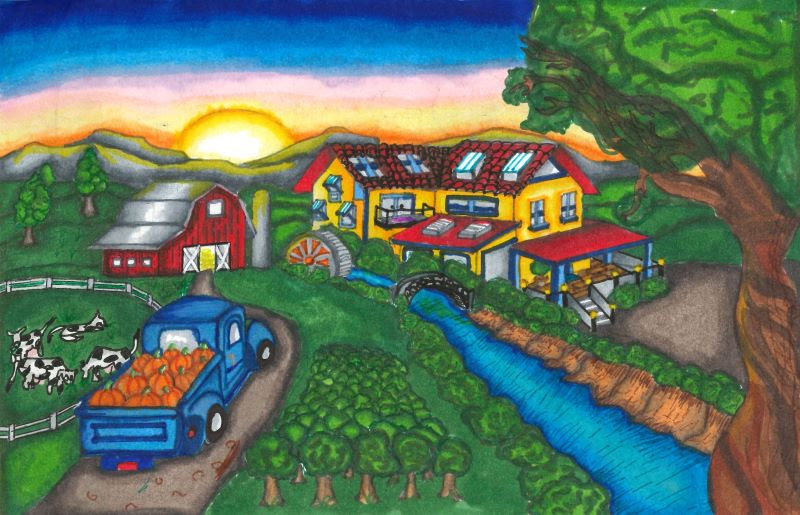
Each year Tulare County Farm Bureau hosts an art contest for local K-12 students. We congratulate the students that participated in our 2020 Farm Bureau Art Calendar Contest, which we host in partnership with the Tulare County Office of Education.  While the awards ceremony was postponed in light of COVID-19 and schools being closed, we still want to celebrate the awesome talent in this year’s submissions.

Calendars will be printed and distributed later this summer once normal school and business activities resume.

National Agriculture Week is celebrated March 22-28, so this is still the perfect time to celebrate all things AG, and congratulate this year’s top 14 winning entries. 

Cash prizes and calendars will be awarded to the student artists, and copies of the calendar will be printed by the Tulare County Office of Education and distributed later this year. We hope to be able to present the awards before June 15, but that will be subject to schools re-opening.


Featured art is the overall Cover Winner by Jasmin Rivas, 9th Grade, Redwood High School.


Want more info on National Ag Week?  Visit https://www.agday.org/promote

First Name
Last Name
Grade School  Award
Jasmin Rivas 9 Redwood High School Overall Cover Winner
Rebecca Acevedo 9 Redwood High School Back Cover Winner
Oralia Velasco 6 Tipton Elementary School Monthly Winner
Mia Gonzalez-Verdin 3 Snowden Elementary School Monthly Winner
Catricia Alvarez 8 Washington Intermediate School Monthly Winner
Mary Froula 6 St. Anne’s School Monthly Winner
Ella Boiano 6 Three Rivers Union School Monthly Winner
David Gonzalez 8 La Joya Middle School Monthly Winner
Ashley Carrion 8 Tipton Elementary School Monthly Winner
Lainey Hooper 3 Hot Springs School Monthly Winner
Emma Nicholson 10 Redwood High School Monthly Winner
Anita Fiorino 2 Three Rivers Union School Monthly Winner
Axel Miller 7 St. Anne’s School Monthly Winner
Mason Sowers 5 Denton Elementary School Monthly Winner


2020-03-25T19:51:59-07:00March 26th, 2020|

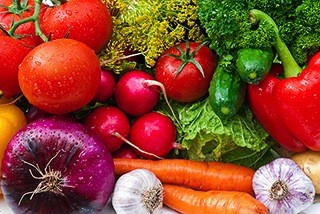
Dirty Dozen List Hurts Consumption of Healthy Food

“Dirty Dozen” Promotes Fear, Discourages Consumption

Peer reviewed research and a recent survey of registered dietitians nutritionists has shown the potential negative impact on fruit and vegetable consumption caused by the so-called “dirty dozen” list.  Further, the “dirty dozen” list has been repeatedly discredited by the scientific community and peer reviewed studies.

“Why continue to perpetuate misinformation and create another barrier to consumption, when you’ve been shown the negative impact it has on consumers,” says Teresa Thorne, Executive Director of the Alliance for Food and Farming (AFF).  “With only 1 in 10 Americans eating enough fruits and vegetables each day, we should be promoting consumption to enhance immune function and prevent illness, not discouraging it by inaccurately disparaging popular and safe produce.”

Scientifically Unsupportable
Peer reviewed research found that the substitution of organic  forms of produce for conventional forms, as suggested in the “dirty dozen” list, does not result in any decrease in consumer risk because residues, if present at all, are so low.  This study also found that the list authors follow no established scientific procedures in developing this list.

The AFF also asks that reporters, consumers and others review the United States Department of Agriculture’s (USDA) Pesticide Data Program (PDP) Report, which the list authors state they base the “dirty dozen” upon.  The most recent USDA PDP report found over 99 percent of the samples tested had residues well below the safety standards established by the EPA with almost half having no detectable pesticide residues at all.

Discourages Consumption
A peer reviewed study published in Nutrition Today found that misleading messaging perpetuated in the “dirty dozen” list which inaccurately describes certain produce items as having “higher” pesticide residues results in lower income consumers stating they would be less likely to purchase any fruits and vegetables – organically or conventionally grown.

Further, a recent survey among registered dietitians found that 94% agreed that inaccurate, fear-based messaging regarding pesticide residues has a negative impact on consumers because it causes misplaced concern about whether conventionally-grown fruits and vegetables are safe to eat. And, when shown infographics from the “dirty dozen” list authors, an overwhelming 95% of dietitians agreed that the group’s misinformation about residues discourages consumption.

“Fresh, dried, canned and frozen fruits and vegetables comprise the only food group health experts universally agree we need to eat more of to improve health, boost immunities and prevent illness and disease,” Thorne says.  “This recommendation is supported by decades of nutritional science.  Knowing this, why would you choose to perpetuate misinformation about produce safety and raise needless fears among consumers, especially under our current circumstances?” Thorne says.

Consumers who are concerned about residues are advised to simply wash their fresh produce – organic and conventionally grown.  According the Federal Food and Drug Administration, washing fresh fruits and vegetables under running tap water is a healthful habit and can help remove or eliminate any residues that may be present on fruits and vegetables.

“We simply want people to know that whatever produce they choose – organic or conventional – both are safe and can be consumed with confidence,” Thorne says.  “Be reassured that the correct and healthy choice is to always eat more.  Don’t let unfounded safety fears or baseless shopping lists get in the way of healthy eating.”

-end-

2020-03-25T10:27:23-07:00March 25th, 2020|

Corona Virus and the Farm Economy (Part 1)

Wine Purchasing Habits Might Change Because of Corona Virus

By Tim Hammerich with AgInfo.net

How will food supply and demand change as a result of the Corona virus? Consumers in uncertain economic times will adjust their purchasing habits, even for essentials like food. This according to UC Davis Economist Dr. Daniel Sumner, who says different agricultural products will be effected in different ways.

“You do have to think about it commodity by commodity. Which ones are most sensitive to income.  Which ones aren’t,” noted Sumner.

“Let me just give you a quick example from the wine industry. The premium wine industry here in California, which means the grapes that are grown along the coast. Higher proportion is sold in restaurants. Higher proportion is income sensitive. And people that still want to drink wine, they now drink it at home,” explained Sumner.

“They’re a little worried about their job. They say, ‘gee am I going to get laid off?’ whatever. ‘My company’s not making any money’. ‘I don’t get my bonus’, whatever.,” said Sumner. “They move down and move in the direction of Central Valley wines. So you could have the Central Valley wine industry be better off at the same time, the coastal wine industry is hurt. And we saw that in a recession 10 years ago,” Sumner said.

Dr. Sumner says staple goods are more likely to see strong demand while those perceived as luxury items may struggle. This is especially true for products that are sold through restaurant or food service channels.

2020-03-23T22:02:53-07:00March 25th, 2020|

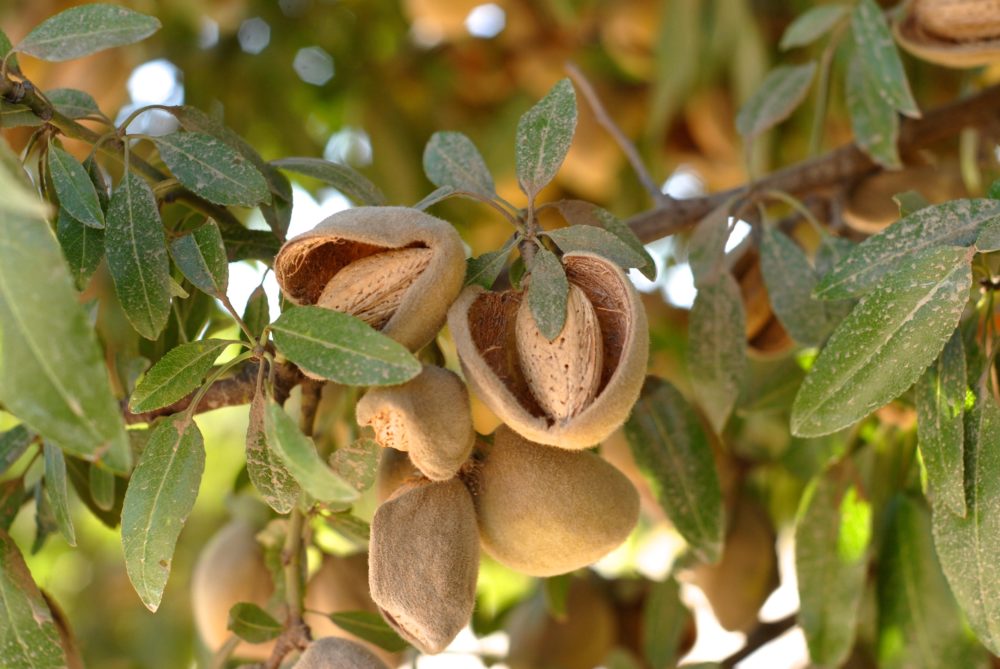
Almond Buyers Are Curious About The Farm

Buyers of Almonds Are Asking More Questions About Farm Practices

By Patrick Cavanaugh, AgInfo.net

Ben Goudie is membership development with Blue Diamond Growers, who move a lot of almonds around the word.

He noted that buyers of their products for distribution are interested in sustainability growing practices. “You know, in the past sales conversations have been pretty basic, with general questions about price and availability,” said Goudie. “Now, a lot of the sales meetings start with conversations about sustainability, start with conversations about corporate social responsibility and what we’re doing with our growers. What we’re also doing in manufacturing, looking at energy savings, looking at all aspects of sustainability on the corporate level,” h explained.

And the Almond Board of California’s Almond Sustainability Program (CASP) where growers fill out information on their growing practices is part of the information Blue Diamond Growers share where their buyers. “We are using the CASP survey as the basis for our grower information. We are also working on a full and comprehensive sustainability program with our sustainability manager, Catherine Campbell, and she has put together a full package that we supply to our buyers,” Goudie said.

Goudie noted that the in-house sustainability program they’re putting together is comprehensive. “It is pretty robust—everything from energy savings to looking at our distribution and supply chain, how we’ve made savings and looking at our carbon footprint,” he said.

2020-03-18T22:15:16-07:00March 23rd, 2020|

Ag Is Critical Infrastructure—Essential!

Ag Critical Statement from California Farm Bureau President Jamie Johansson:


With agriculture designated “critical infrastructure” by federal and state governments, the California Farm Bureau Federation continues its commitment to assist the state’s farmers, ranchers and agricultural businesses during the statewide stay-at-home order issued by Gov. Gavin Newsom.

“As people who work in a sector defined as critical, farmers, ranchers and people working in agricultural businesses recognize our special responsibility to maintain normal work schedules,” CFBF President Jamie Johansson said. “We encourage local, state and federal agencies to interpret the guidelines as broadly as practicable, to be sure everyone in agriculture can stay on the job, producing food and farm products during this crisis.”

As with any decisive action, Johansson said, there will likely be some confusion and questions about definitions, but he said he has been reassured agencies remain committed to smoothing the production, marketing and transportation of food and farm products.

“The state Office of Emergency Services has made it clear: People involved in agriculture, food production, distribution and transportation of food or agricultural products—anyone working in the food supply chain—people in those critical jobs are allowed and should continue to show up for work,” Johansson said.

To ensure people working in agriculture can do their jobs safely, Farm Bureau has redoubled its work with employers to make sure they’re aware of the latest guidelines from health officials and government agencies.

“Based on the questions we’ve been receiving from farmers, we know they’re being diligent in having employees engage in sanitary practices,” Johansson said. “That’s already a high priority for reasons both of food safety and employee health. Farmers take a number of steps on a regular basis to protect themselves, their employees, their families and their crops.”

County Farm Bureaus around California and CFBF will remain operational, in order to support their members.

“County Farm Bureaus provide a critical local resource for farmers, ranchers and people in agricultural businesses,” Johansson said. “County Farm Bureaus and those of us at CFBF will remain available to respond to our members and work with government agencies to assure continuity of critical food and agricultural activity.”


2020-03-20T14:41:58-07:00March 20th, 2020|

“Dirty Dozen” List is UnTrue and Fear Mongering

How Registered Dietitions Can Stop Food Fears Before They Begin Due to the “Dirty Dozen” List

By Elizabeth Shaw, MS RDN, CPT, CLT

Guess what? It’s that time again when media outlets will start covering the release of this year’s “Dirty Dozen” and “Clean Fifteen” produce lists. As a registered dietitian nutritionist in the media, this season is always a busy one.

I must first disclose I am an EOPP (equal opportunity produce pusher), a term I coined after realizing one in every 10 Americans is falling short of meeting their fruit and vegetable intakes. Being someone who has devoted their entire career to ensuring the public feels safe and informed about their food intakes, lists like the “Dirty Dozen” always make me feel like my messaging and the work I’ve strived so hard to do is taking three giant steps backwards.

Thankfully, the Alliance for Food and Farming invited me here today to share with you how we can stop the food fears before they even start!

Let’s rewind first, shall we?

The “Dirty Dozen” is a list produced by the Environmental Working Group (EWG) that is released every spring with claims about produce items and “high” pesticide residues. I won’t repeat exactly what Dr. Carl Winter, toxicologist and professor emeritus, University of California Davis, had to say on the topic in this post here, but I highly encourage you to check it out.

Basically, there is flawed methodology not being conveyed to the consumer when the report is released. When this happens, an immediate fear is embedded into minds, leaving consumers apprehensive to purchase some of their favorite fruits and vegetables (like strawberries and kale, two of last years so-called “dirty” contenders.)

Here’s the deal: the produce picks included in the dirty dozen don’t tell consumers that the actual percentage of pesticide residue left on the items is so negligible, if present at all, that it poses NO POTENITAL RISK to humans, both adults and kids alike.

To me, that is just crazy! Right?

Not only do reports annually confirm the safety of both conventionally and organically produced produce (like the California Department of Pesticide Regulation (DPR) 2018 and the USDA Pesticide Data 2018 Report), but so do organizations like the Environmental Protection Agency (EPA.)

And, for those who are still uneasy and need more proof, the Alliance has a robust, state-of-the-art Pesticide Residue Calculator that allows consumers to identify the number of servings they would have to consume for their gender and age group each day to remotely come close to having pesticide levels present to pose a concern.

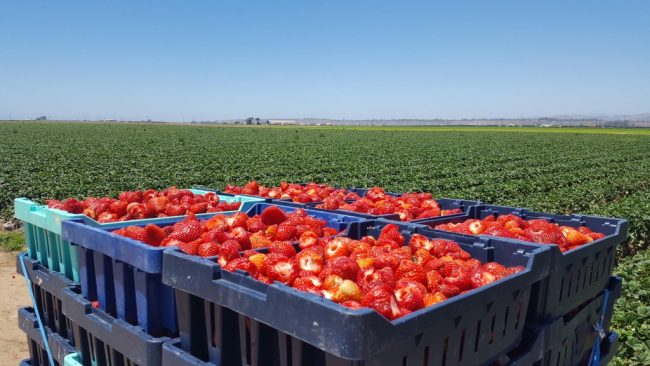
For reference, as an adult female myself, I would have to consume 453 servings of strawberries to be a concern! My daughter, a young toddler, would have to consume 180 servings! While she is a strawberry addict, it’s hard to ever imagine she would get close to meeting that number of servings in a month, yet alone a day.

As much as we know produce is safe to consume and the above studies are valid and based upon peer-reviewed resources, it’s inevitable the fear messaging will come out rampant with the “Dirty Dozen” release.

To jump ahead three steps, I’m here to show you how you can actively use messaging to support produce consumption (both organic and conventional) and ease the minds of your followers as well as consumers at large that ALL produce IS safe to enjoy!


2020-03-18T16:04:48-07:00March 20th, 2020|

Safe Food Alliance on COVID-19

How Safe Food Alliance is Addressing COVID -19

SFC 2020 Has Been Canceled

As Safe Food Alliance grapple with these unprecedented circumstances, our team would like you to know that we are taking the COVID-19 outbreak very seriously.

The safety of our customers and consumers is our top priority, which is why it remains our primary focus to provide services to the greatest extent as practicable to ensure a safe food supply. We know you may have questions regarding next steps and we will do our best to help. To assist you during this difficult time, we have taken the following actions:

  • COVID-19 Resource Page –Created an online page with links, articles, guides, videos, and news to provide you with straightforward answers and updates. This page will be updated daily with the latest information.
  • Coronavirus Guidance for Food Facilities – An article written by Jon Kimble, Senior Food Safety Manager detailing steps a food processing facility should take under these circumstances.
  • Safe Food California – Unfortunately, we have canceled SFC 2020. An email has been sent to all attendees regarding refunds options. In light of the cancellation, we will still host the HACCP Refresher and Internal Auditor conference courses virtually on Monday, March 30th and Tuesday, March 31st. There will be no charge for these courses for any attendees that registered for our “all-access” pass.
  • Public Training – To stop the spread of the virus, all March and April training courses have been canceled. If you have registered for one of these courses, please reach out to our team to process your refund.
  • Laboratory Services – At this time, our laboratories remain open for business. We are aware that the demand for food has gone up, and we will continue to do our part to ensure that the food you produce is safe.

We understand this is a fluid situation and assure you that our team is addressing the outbreak constantly. As we know more, we will remain vigilant in communicating that information to you, likely on a daily basis. We must now all work together to contain COVID-19 and keep everyone safe.

2020-03-17T21:15:28-07:00March 19th, 2020|

LGMA Audits Continue Through COVID-19 Crisis

LGMA Food Safety is 24/7 365 Day Effort

The California Leafy Greens Marketing Agreement (LGMA) is sharing information to inform retail and foodservice customers, as well as consumers, that activities in place to ensure the safety of leafy greens are fully operational during this rapidly changing COVID-19 situation.

“First and foremost, we want to assure people that LGMA audits conducted by state government personnel are continuing as usual,” said Scott Horsfall, CEO of the LGMA. “Audits are scheduled for the desert growing areas as the season wraps up there and will move with the harvest to the central valley and central coast regions.”

Horsfall noted that producing, harvesting and shipping of ag products are considered essential services and the requirements being placed by the federal and state governments recognize that food industries must continue to provide healthy food to the nation’s consumers.

“We are asking auditors and members to take all precautions necessary,” he said. “This is a rapidly changing situation, but when it comes to LGMA audits, they are expected to continue for the foreseeable future.If anything changes the LGMA will keep people updated.”

Over 90% of the leafy greens consumed in the U.S. are produced under the LGMA food safety program. On average each member company of the LGMA is audited by the government five times per year to verify food safety practices are being followed on leafy greens farms.

The LGMA has also issued information to several stakeholder audiences explaining the efforts in place under the LGMA program in the area of health and human hygiene.

“While all public health officials are emphasizing there is no evidence that fresh produce or any other food can transmit the virus, we think it’s important that people understand what happens on our farms each and every day,” said Horsfall.

Some of the measures in place through the LGMA to ensure the safety of leafy greens include:

Bathroom and handwashing facilities are required to be present anytime harvest crews are working in leafy greens fields.

Bathrooms must be clean and must always have water, soap, toilet paper, hand drying towels. Hand sanitizers are also provided on many farms.

Workers must wash hands before and after breaks or whenever they use the bathroom.

LGMA member companies who grow leafy greens are required to train workers on the required practices, including how to properly wash their hands. The LGMA provides a hand-washing training that is free to download. Use your smartphone for access: English iOS | Spanish iOS

People who are sick are not allowed to come into contact with leafy greens products.

No one is allowed to consume food, chew tobacco or spit near leafy greens fields.

Harvest equipment and tools must be sanitized regularly.

Member companies of the LGMA are audited by government officials to verify these required practices are being followed. During on-farm visits, government auditors observe activities of work crews to make sure they understand and follow required hygiene practices. The auditors will test workers’ knowledge by speaking to them directly asking questions such as, “Did your employer check with you today to make sure you weren’t feeling ill before you began work?”

Last, but not least, the LGMA is working with the Produce for Better Health Foundation (PBH) and its team of registered dietitians to encourage consumption of fruits and vegetables, like leafy greens, and to inform people about the safety measures in place on farms. PBH has just published a post titled Remain Calm and Eat Your Leafy Greens, by Neva Cochran, MS, RDN, LD, FAND. PBH is sharing this information via its popular ‘Have a Plant’ social media channels.


2020-03-17T15:08:50-07:00March 18th, 2020|

More Surface Water For Farmers

The Need for More Water South of the Delta

By Patrick Cavanaugh, Editor

With the initial allocation of only 15% on the federal side for water deliveries for farmers, it’s more important now that more water come through the Delta instead of being needlessly sent to the ocean.

Michael Frantz who owns Frantz Wholesale Nursery, along with his brother in the town of Hickman (Stanislaus County). He also sits on the board of the Turlock irrigation district, which delivers water to thousands of acres of almonds and walnuts.

“Increasing flows South through those Delta pumps. So critical this year. Clearly we need to be able to export as much water out of the Delta as we can environmentally and scientifically do, is a net win for all the people in California,” said Frantz.

“I’m sensitive to the Delta farmers who need to see Delta outflow to keep the salinity from building up in their channels. I recognize that’s a concern of theirs, but the reality is this state allows millions, tens of millions of acre-feet on some water years to escape out to sea,” said Frantz. “Those pumps should be turning at full speed, pushing water down into the South Valley where it could be applied on farms and allowed to percolate down into the aquifer and help recharge and rebuild a healthy aquifer.”


2020-03-17T21:52:48-07:00March 17th, 2020|

Karoun Dairies Get’s Top Honors

Karoun Dairies, Iconic Hand-Braided String Cheese Wins World Championship

The first cheese made by Turlock based – Karoun Dairies, the iconic Hand-braided String Cheese, was awarded 1st Place in the String Cheese, Flavored Category at World Championship Cheese Contest 2020. Dairy experts from around the world gathered at the Monona Terrace in Madison Wisconsin, judging a record-breaking 3,600 cheese, yogurts, butters and other dairy products from 26 countries.

Karoun Marinated String Cheese, the company’s original, classic-style String, marinated to perfection with extra virgin olive oil, garlic and herbs, was one of 16 entries for String Cheese, Flavored and scored an impressive 99.70 Best of Class. The Karoun Cheese line of handcrafted braided string cheeses are made with Real California Fresh Milk.

“We are thrilled that our first product category, released over 25 years ago, has won gold in this distinguished competition,” said Rostom Baghdassarian, CEO at Karoun Dairies. “We’re honored that our other cheeses also placed high in their categories, but the win for our string cheese, which is still braided by hand to this day, is especially appreciated. We work tirelessly to make sure that the solid reputation of Karoun delivers for our loyal customers across the country.”

“It is such a competitive contest that you’re really looking for even the most minor defects,” said judge Chad Caler. “You’re looking at the packaging, the surface–is the color even? And then, of course, the flavor everyone cares about, and the texture.”

The 2020 judging team consists of 55 experienced cheese graders, cheese buyers, dairy science professors, and researchers hailing from 19 nations and 14 American states.

About Karoun Dairies

Founded in 1992, Karoun is a family-owned manufacturer, distributor and marketer of specialty-branded, ethnic food and beverage products, including cheeses, yogurts, yogurt beverages, spreads and dips. Through a diverse base of retailers and distribution channels, the Company’s products appeal to the fast-growing multicultural population, as well as to mainstream consumers who are increasingly adopting ethnic cuisines.

Winners of over 170 best-in-class awards, Karoun’s high-quality, branded products have a loyal following around the world. The Company is strategically located in the dairy-rich state of California, with a distribution center in San Fernando and a manufacturing plant in Turlock.

Karoun still maintains their original network of local, artisan merchants, but now also has distribution through nationwide and international mainstream retailers. Karoun cheeses and yogurts are made with Real California Milk from cows free of growth hormones.

Specialty brands include Karoun Mediterranean, Arz, Queso Del Valle, Gopi and Yanni. For more information, please visit www.karouncheese.com and www.blueislespread.com.


2020-03-13T21:08:07-07:00March 16th, 2020|
Go to Top