About California Ag Today

This author has not yet filled in any details.
So far California Ag Today has created 2014 blog entries.

New Officers Elected for Milk Advisory Board

Newly Elected:

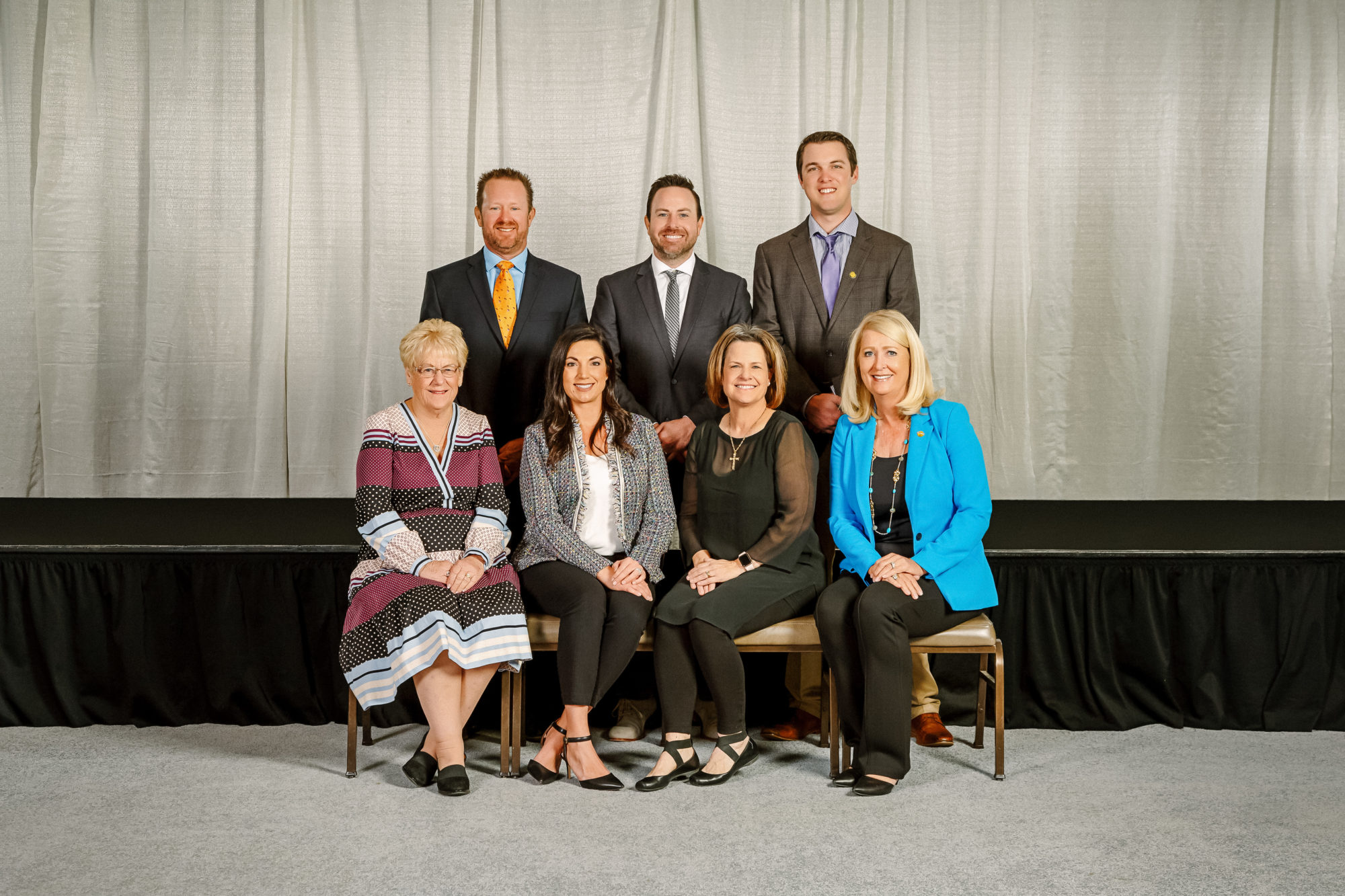
California Milk Advisory Board 2020 Executive Committee Officers

Newly elected 2020 officers of the California Milk Advisory Board Executive Committee are (top row, left to right): Vice Chairman Tony Louters of Merced, Chairman Josh Zonneveld of Laton, Treasurer David Vander Schaaf of Stockton, Shown in the bottom row (left to right): Member-at-Large Essie Bootsma of Lakeview, Secretary Megan Silva of Escalon, Member-at-Large Kirsten Areias of Los Banos, and Member-at-Large Renae DeJager of Chowchilla.


San Joaquin County dairy producer, David Vander Schaaf, has been elected to serve as treasurer to the Executive Committee of the California Milk Advisory Board (CMAB), the promotional arm of the state’s dairy farmers.

David is a fourth-generation dairy farmer at Vander Schaaf Dairy, which was established in 1929. David joined the family business in partnership with brothers Joey and James, as well as father John Vander Schaaf in 2013. He is a member of the Milk Producers Council.

Dairy producer Renae DeJager of Merced County has been re-elected as Member-at-Large to the Executive Committee of the California Milk Advisory Board (CMAB), the promotional arm of the state’s dairy farmers.

Renae and husband Art are owners of 1500-acre Vista Verde Dairy, which was established in 1977 and where they currently milk 3,200 Holsteins. She is an active member of her community and serves a variety of community groups including California Women for AG, Stone Ridge Christian School Board and Cornerstone Community Church in Chowchilla. She previously served on the board for the U.S. Dairy Export Council and the National Dairy Promotion and Research Board where she traveled extensively to promote dairy in domestic and international markets.

Lakeview dairy producer Essie Bootsma has elected to serve as Member-at-Large to the Executive Committee of the California Milk Advisory Board (CMAB), the promotional arm of the state’s dairy farmers.

Essie milks 2,000 Holsteins with her son Jason at the John Bootsma Dairy that she started with her husband, John, in 1979. She is a member of a variety of community groups, including the Western Riverside Ag Coalition, where she serves as secretary, the Eastern Municipal Water District Advisory Committee and the Eastern Municipal Dairy Water Supply, where she serves as chair. She previously served as Secretary to the CMAB’s Executive Committee. In her free time, Essie enjoys representing CMAB in promotional trade shows, spending time with her five grandchildren and cooking for and entertaining family and friends.

Fresno County dairy producer Josh Zonneveld has been re-elected to serve as Chairman of the Executive Committee of the California Milk Advisory Board (CMAB), the promotional arm of the state’s dairy farmers.

Josh and his wife Cassie along with other family members currently milk 8,500 Holsteins at the 7,000-acre Zonneveld Dairies that his grandfather founded in 1968. He joined the family business in 2005. He is a member of the Ag Executive Council for Land O’ Lakes and also serves on the board for the California Dairy Research Foundation.

Dairy producer Kirsten Areias of Los Banos in Merced County, has been re-elected to serve as Member-at-Large to the Executive Committee of the California Milk Advisory Board (CMAB), the promotional arm of the state’s dairy farmers.

Kirsten has been a dairy producer since 1980 and currently milks 320 Holsteins with husband Dennis at the 360-acre Den-K Holsteins, Inc. She is a member of a variety of industry groups, including Western United Dairyman, serves as an advisor for the California Holstein Association and Merced County Junior Holstein Association, and is a Dairy Bowl Coach.

Dairy producer Megan Silva of Escalon in San Joaquin County has been elected to serve as Secretary to the Executive Committee of the California Milk Advisory Board (CMAB), the promotional arm of the state’s dairy farmers.

Megan graduated from Cal Poly in 2006 and is a 4th generation dairy farmer. Megan and husband Johnny Silva, along with her father Frank Rocha, currently milk 2100 Holsteins at the 900-acre Frank N. Rocha Dairy L.P., where she has worked since 2006. Megan and Johnny started their own dairy, R & S Dairy LLC. in May of last year. She is also extremely passionate about the fitness and wellness industries, and shares these passions through her two businesses in Escalon; EscalonFIT and Wellness by EscalonFIT.

Merced dairy producer Tony Louters has been re-elected to serve as Vice Chairman to the Executive Committee of the California Milk Advisory Board (CMAB), the promotional arm of the state’s dairy farmers.

Tony and his wife Corinna own T & C Louters Dairy in Merced where they currently milk 600 Holsteins. They have been in business since 2003 and have four children: Alexis, Bryce, Tyler and Breann. Tony is a member of Western United Dairymen.

California is the nation’s leading fluid milk producer and a leader in sustainable dairy practices. The state also produces more butter and nonfat dry milk than any other state and is the second-largest producer of cheese and yogurt. Dairy products made with California milk can be identified by the Real California Milk seal, which certifies that the products are made with milk produced on California dairy farms.

 

2020-04-12T21:34:02-07:00April 10th, 2020|

Action Needed To Keep Healthy Produce Moving

Members of Congress, Produce Industry Urge Immediate Financial Relief for Produce Supply Chain Damaged by COVID-19 Economic Impact

United Fresh Produce Association and a number of industry partners have presented to the U.S. Department of Agriculture a comprehensive Produce Market Stabilization Program to immediately support critical financial needs in the produce supply chain. In addition, 108 members of Congress have sent a letter to USDA Secretary Sonny Perdue urging USDA to support this immediate relief.

“Since the beginning of this crisis, our association has worked to help our industry keep produce moving to consumers,” said Michael Muzyk, President, Baldor Specialty Foods, and Chairman of United Fresh. “And, we’ve worked to help our members actually survive following the devastating financial impact of this crisis. Today is an important day on a path toward some stability for our industry to be able to serve consumers when we’re finally past this terrible time.”

“There is a long road still ahead,” said United Fresh President & CEO Tom Stenzel. “But this is a critical step – our industry has come together to support a consensus proposal to USDA, and Congress has come together to let our national decision-makers know how important this is across the country and every sector of our business.”

“I especially want to thank Representatives Jimmy Panetta (D-CA), Fred Upton (R-MI), Jim Costa (D-CA) and Doug LaMalfa (R-CA) for spearheading the Congressional support for this letter, and all of my colleagues in produce associations around the country who’ve worked together. Most organizations represent specific sectors and members who are suffering, but we’ve set aside competitive interests to support a common approach that gets us the best chance of securing real relief for our industry.”

“The first step was encouraging Congress to pass the CARES Act devoting $2 trillion to the economy, and some $9.5 billion specifically carved out for fruits and vegetables, livestock, dairy and local food systems. Now, comes this urgent proposal with a roadmap of how USDA can support our industry immediately. Next will come deep discussions and analysis within USDA in channeling resources to multiple interests. And eventually, we believe there will have to be continuing additional financial relief from Congress if our economy is going to be able to pull out of this crisis and grow again,” he said.

2020-04-08T08:30:52-07:00April 8th, 2020|

Governor Newsom Gets Letter from Congress

Statement on Congressional Letter to Governor Newsom on Incidental Take Permit

Earlier this week, Members of Congress representing nearly every region of California sent to Governor Gavin Newsom a letter imploring the State administration to reconsider the incidental take statement issued on March 31, 2020, by the California Department of Fish & Wildlife for operations of the State Water Project.
Dan Errotabere, President of Westlands Water District, made the following statement in reaction to the Members’ letter:
“On November 21, 2019, when the State of California announced it would sue the federal government challenging the adequacy of biological opinions issued under the federal Endangered Species Act for operations of the Central Valley Project and the State Water Project, the State proclaimed that its plan to protect species listed under the California Endangered Species Act would “not seek to increase SWP exports.” 
In their letter, Members of Congress correctly point out that “actions taken to protect both State and Federally listed species in the Sacramento-San Joaquin River Delta and surrounding ecosystem must be based on the best science,” not an arbitrary cap on levels of export. 
The Members also observed correctly that conflicting operations criteria imposed under the federal biological opinions and the State incidental take permit will frustrate coordinated operations of the CVP and SWP, will lead to new conflicts, and will make it impossible finalize Voluntary Agreements. Westlands hopes Governor Newsom will respond to the Members’ request positively so that we can work collaboratively to ensure the State’s long-term water resilience and ecosystem health. The District appreciates the Members weighing in on this important issue.”
A copy of the Members’ April 7, 2020, letter to Governor Newsom can be found here.
2020-04-07T21:01:07-07:00April 8th, 2020|

Be Aware of Yield Robbing Ants in Almond Orchards

Late April and May Are a Crucial Time to Survey Orchard for Ants

By Patrick Cavanaugh, with AgInfo.net

Ants potentially can be a serious problem in almond orchards said Kris Tollerup a UC Cooperative Extension Area Wide IPM advisor based at the Kearney Agricultural Research and Extension center in Parlier, southeast or Fresno. “Ants can be a very serious problem,” Tollerup said.I’ve had growers get up to 12% damage, but the interesting thing is that there’s only a couple of ant species that are really important.”


And Tollerup said that’s the Southern fire ant and the pavement ant. And we asked Tollerup how a grower would go about identifying these ants. “You can go out and collect some ants using corn chips in vials and put out several vials into the orchard and collect them in the morning and throw them in the freezer and the next day, put them out on a plate and look at them with a hand lens. And there’s some very good resources on the University of California IPM website that’ll help identify those ants,” he said.

Tollerup noted sampling should be done anytime through April and May.It gives you plenty of time to get out there, identify those ants, and see what you got,” he said. “And the interesting thing is that you don’t have to sample, but just one time a year or maybe even one time every couple of years because ants don’t reinvest orchards very, very quickly.”

And if you have an ant issue, go to the UCI PM website on ants where they also have recommendations on control products. Again, over the next six weeks is a good time to be looking for those yield-robbing ants.

2021-05-12T11:01:44-07:00April 7th, 2020|

California Farmers Deliver During Crisis

Farmers and their Employees Do Social Distancing But Still Deliver Food For the Masses During COVID-19

From California Farm Bureau

Broadcasted By Tim Hammerich, with AgInfo.net

In fields, orchards and vineyards around California, farmers and their employees have been observing new social-distancing protocols to avoid spread of the novel coronavirus. Training sessions have been held to reinforce the need for additional precautions. Where necessary, farmers have adjusted operations to allow for distancing. Hand washing and other sanitary procedures are already routine to ensure food safety.

As people hunker down and cook more meals at home, they’ve been buying more beef. That has led to surging demand, particularly for hamburger. But demand for higher-end cuts has suffered, due to restrictions on restaurants and on export sales. The turbulent markets, combined with dry weather in recent weeks, have left cattle ranchers facing complicated decisions about how to manage their herds and when to send animals to market.

The closure of most retail florists and postponement or cancellation of public events and weddings has caused flower sales to plummet. Flower growers say they saw demand fall by 90% or more after stay-at-home protocols took force. The California Cut Flower Commission says at least one large farm has closed permanently. Others have suspended operations or are trying to find new outlets for their blooms.

2020-04-06T08:19:25-07:00April 6th, 2020|

Is AgTech Making it to the Farm?

Yes, AgTech Investment is Used by Many Farmers

By Tim Hammerich, AgInfo.net

According to AgFunder, over $6.5 billion was invested in agtech companies in 2019. This brings the total up to somewhere around $30 billion since 2012. But how much of this investment is actually leading to tools farmers are actually using?

Aaron Magenheim of Growers Insight believes the technology is out there that growers need. But, he says, most agtech companies don’t go far enough to help customers fully integrate the technology into their operations.

“I just about guarantee the technology is out there for farmers for the next five years, anywhere in the world. We track through Agtech Insight, our other company, we tracked 3,000 digital technology companies around the world that work in ag,” said Magenheim. “So we know who’s out there globally, what they’re doing, where they’re at. So we really believe that in order to utilize those technologies that are already being paid for and on the farm.

“But to utilize them more, there’s the cultural aspect of these farming organizations. And that’s the challenging piece and nobody’s addressing that. Startups want to sell their technology and train one or two people and, and that’s it. But if you have one or two people in an organization of 300 using a technology, it’s not being utilized anywhere near as much as it could be,” he said.

Magenheim is helping growers understand where technology fits on their operations. Then, he makes sure the technology is fully integrated so growers maximize the return on their investment.

2020-04-01T08:25:53-07:00April 3rd, 2020|

Keeping Spotted Lanternfly Out of State

Spotted Lanternfly is An Invasive Pest

By Tim Hammerich with AgInfo.net

The spotted lanternfly is a colorful insect pest that has been infesting vineyards and orchards in the eastern U.S. So far, we have been effective in our efforts to keep the pest away from California’s multi-billion dollar ag industry. But we must remain diligent in these efforts, says Dr. Surendra Dara, Entomology and Biologicals Advisor in San Luis Obispo and Santa Barbara Counties.

D“Spotted lanternfly is an invasive pest because of the reason we don’t have any natural enemies that can suppress their populations in a natural way in a new environment,” said Dara. “And it can actually infest grapes and several other hosts in California of commercial importance. So it is important for us to be aware of the potential impact and do the need to prevent the damage.”

Researchers are trying to develop potential control methods, but the pest is known to spread very quickly and can be very damaging to vineyards and orchards.

“So they mainly feed on the stems and trunks, so they insert their stylets. Then they suck the plant uses. And they also excrete large amounts of honeydew, which can promote the growth of a sooty mold,” he said.

Keeping pests like this out of the state and developing control measures is of the utmost importance to California’s ag economy.

2020-04-03T17:17:31-07:00April 2nd, 2020|

Liriomyza Leafminer Management on Spring Melon

Leafminer is Quite Active in Desert Melons

By John Palumbo, Professor/Extension Specialist, University of Arizona Department of Entomology

With spring melon production well under way, PCAs should be on the lookout for Liriomyza leafminer on cantaloupes, honeydews and watermelons.

Recent sticky trap catches from our area-wide monitoring network indicate that leafminer adults are becoming quite active and beginning to disperse where melons are being grown. In these trap locations, both Liromyza sativae and L. trifolii were found on traps. This is important because L. trifolii is typically more difficult to control with insecticides. Furthermore, the 10-day forecast calls for temperatures in the 80’s which will enhance leafminer larval development.

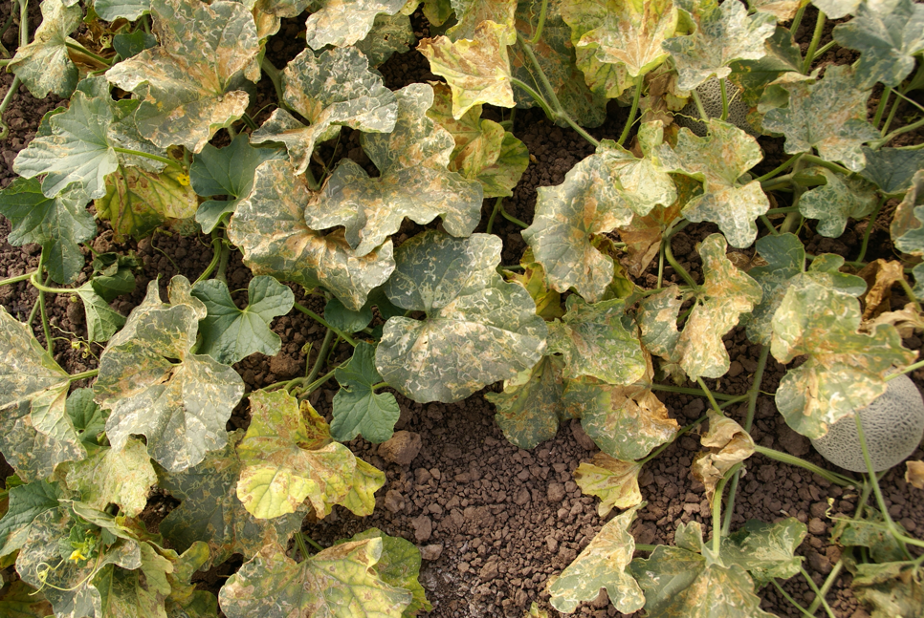
Leafminers can cause significant economic damage to melon plants, particularly on later planted spring melons. Mining of leaves by the larvae can cause direct injury to seedling plants by removing chlorophyl and reducing the plants photosynthetic capacity.

Mines and feeding punctures can also produce an entrance for pathogenic organisms. In severe infestations, leafmining may cause plant death, particularly to seedlings or transplant watermelons. During May and June, excessive leaf mining on older plants can cause leaves to dessicate and defoliate, resulting in sun burning of fruit and reduction in yield and quality.   Damage to mature plants can occur when attempting to hold the crop longer for extended harvests.

The good news is that several insecticide products are available that can effectively control both leafminer species.   Our research has shown that the most effective products are those that work via translaminar activity and can penetrate the leaf surface where they contact or are ingested by the developing larvae. These include Radiant (5-7 oz/ac), Coragen (5-7 oz/ac), Besiege (8-9 oz/ac), Exirel (15-20 oz/ac), Agri-Mek SC (3.5 oz) and Minecto Pro at 10 oz. These compounds can effectively kill newly emerged larvae in the leaf mines before they cause significant damage.

Because these products are selective, they have minimal impact on beneficial parasitic wasps that can be important in naturally suppressing leafminer populations. It is recommended that a penetrating adjuvant (e.g., MSO or MSO/Silicone blend) be added to these products to enhance translaminar movement of the product. For more information on leafminer biology and management please go to Leafminer Management on Desert Melons.


2021-05-12T11:01:44-07:00April 1st, 2020|

Sanitation for Navel Orangeworm Critical

Mandatory Sanitation and Almonds and Pistachios to Fight Navel Orangeworm?

By Patrick Cavanaugh AgInfo.net

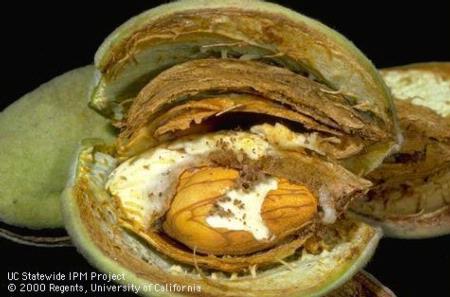
In the cotton pink bollworm program sanitation, a mandatory plow down of cotton stubble was a big part of the bollworm eradication strategy. Similarly in tree nuts the mummy nuts left in the tree post-harvest must be removed as they often harbor navel orangeworm larvae.

Joel Siegel is a USDA ARS entomologist based at Kearney near Fresno. He spoke recently at the American pistachio growers annual conference.

“Sanitation was a key element of the pink bollworm program. In fact, it was mandatory sanitation complete with people going out and checking and there were penalties for people that didn’t sanitize.,” noted Siegel. “One of the things that government does is they like to repeat all of the elements of what they think of as a successful program. If APHIS is making the investment, which they are in terms of providing the sterile insects for this navel orange worm program, logically they’re probably going to want mandatory sanitation as well.”

Again, it may be required to follow through with mandatory sanitation.

“There are challenges because we don’t have a standard. So what I tell people is to plan on getting everything out of the tree,” Siegel said.

2021-05-12T11:01:44-07:00March 31st, 2020|

Corona Virus and the Farm Economy (Part 2)

With Corona Virus, Farms Stay Strong As People Must Eat

By Tim Hammerich with AgInfo.net

How should agricultural producers be preparing for a slowdown in the global economy, due to the Corona Virus? That’s the question many are asking. UC Davis Economist Dr. Daniel Sumner has a simple reminder: people still need to eat.

“Don’t forget, agriculture is hardly ever cyclical with the rest of the economy. There are booms in the economy when agriculture is struggling, like last year or the year before,” said Sumner.  “There are times when the rest of the economy is not doing well and agriculture is doing okay. And even within agriculture, there are times when the dairy industry and the almond industry aren’t necessarily in sync, to pick the two biggest commodities in California.”

People still eat. People still spend money on food even as incomes fall.”A good bit of what we produce, even in California agriculture is pretty basic products for people. And if they’re stuck at home, they’re buying more of it, not less of it. So we’re going to have some gains here in California agriculture, even if the rest of the economy’s not doing well,” Sumner said.

Sumner adds that animal agriculture supplies have been hit especially hard with issues such as African Swine Fever before coronavirus. This may add to potential agricultural gains even in the midst of a slowdown or even a potential recession in the economy.

2020-03-25T19:48:38-07:00March 27th, 2020|
Go to Top