About California Ag Today

This author has not yet filled in any details.
So far California Ag Today has created 2014 blog entries.

How COVID-19 Has Affected Farms

California Agriculture Adapts To COVID-19

Source: California Farm Bureau

By Tim Hammerich, with the AgInfo Network

How is California agriculture adapting to the new reality of COVID-19 and social distancing?

Small farms that lost business from restaurants and other food-service clients have been looking for alternative customers or business models. More farms now offer food-box options for pickup or delivery, and a number have collaborated with other farms to lend variety to their food-box offerings. Some farms have also tried e-commerce as a potential way to expand their customer base.

Shelf-stable foods such as canned peaches and pears have seen demand leap during the pandemic. The head of the California Canning Peach Association says retail demand the past month has been “unprecedented.” Processors have changed their operations to replenish depleted store shelves and ship products quickly to retail customers. School districts are using fruit cups in the “grab and go” school meals they provide to students.

The pandemic has brought a sharp shift in demand at retail nurseries and garden centers. Sales of landscaping plants have slumped, but sales of vegetables, herbs, fruit trees and other edible plants have skyrocketed. Nurseries say many of their sales have been to first-time gardeners who hope to avoid trips to the supermarket by growing more of their own food.

2020-04-16T07:27:24-07:00April 20th, 2020|

iTrade To Help Move Food and Supplies

iTradeNetwork Launches iTradeMarketplace:

A Trading Exchange to Connect Vital Food Supply With Demand During The Time of COVID-19

The free new service establishes trading connections with new partners to match and move food and supplies where they are needed. The Produce Marketing Association signs on as an industry launch partner.

iTradeMarketplace is a new service for buyers, suppliers, packaging companies, and industry associations to gain visibility into where food supplies exist, and demand gaps lie. Designed by iTradeNetwork, it specifically addresses the food supply chain trading gap created by COVID-19 to facilitate new trading partnerships.

COVID-19 immediately impacted the food supply chain, rendering many traditional trading relationships temporarily obsolete.

To respond to the critical need to connect global food supply with demand, iTradeNetwork is offering iTradeMarketplace for free to any company in the food and beverage supply chain, and it only takes a moment to register at the iTradeMarketplace website.

For more than 20 years iTradeNetwork, the leading global provider of supply chain software for the food and beverage industry, has connected over 8,000 companies and facilitated more than $100 billion in annual industry spend. As the platform enabling the industry’s greatest volume of perishables transactions daily, iTradeNetwork recognized it was in a unique position to expand beyond legacy trading relationships and create a marketplace that allows the industry to identify and establish vital new trading partnerships during a particularly extraordinary time.

“Technology can be a powerful ally in times of crisis, and we are putting our platform to use in a new way that helps companies in the food and beverage supply chain navigate these uncertain times. The agility of iTradeMarketplace empowers participants to move at the speed of the crisis and respond to local, as well as global, food supply chain needs,” comments Rhonda Bassett-Spiers, CEO of iTradeNetwork.

The Produce Marketing Association was quick to recognize the importance of this approach and is the first industry body to support iTradeMarketplace and share it with its membership.

“At PMA, we appreciate the opportunity to partner with iTradeMarketplace to give our membership another important resource to help them work through the industry impacts of COVID-19. The connections made through this platform will help alleviate massive supply chain challenges brought on by this crisis, and we commend iTradeNetwork for addressing these needs and collaborating to ensure our industry’s great products are available to consumers,” says PMA CEO, Cathy Burns.

iTradeMarketplace is open to any company or industry association in the food supply chain. To learn more about it, visit itradenetwork.com.


2020-04-14T19:10:16-07:00April 17th, 2020|

Urban Ag, Farmers Markets Must Follow CDC Guidelines

Urban Ag and Farmers Markets Supplies Fresh Fruits and Vegetables, Part of a Healthy Diet

By Pam Kan-Rice, UCANR Assistant Director, News and Information Outreach

Even as Californians shelter in place to contain the novel coronavirus that causes COVID-19, nutritious food remains vital to the health and well-being of our communities.

“Eating fruits and vegetables is known to benefit our overall health and help our immune system,” said Lorrene Ritchie, director of the UC Nutrition Policy Institute. “At a time when we need to be especially vigilant about staying healthy, eating healthy is essential.”

To help minimize exposure and risk of spreading of the virus, urban farms need to follow some key guidelines from the CDC, said Jennifer Sowerwine, UC Cooperative Extension metropolitan agriculture and food systems specialist in the Department of Environment, Science, Policy and Management at UC Berkeley.

UC Cooperative Extension has compiled a list of resources for farmers, community gardeners and other people working in the food system to ensure that they can continue supplying fresh, healthy and affordable food to Californians.

“Social distancing, heightened health and hygiene practices and cleaning and disinfecting procedures reduce the risk,” said Sowerwine.

Although eating a nutritious diet can boost our immunity, the Los Angeles Times reported produce sales plummeted by 90% or more at Southern California produce markets after the statewide shelter-in-place rules went into effect.

“It’s worrisome to see that sales of fruits and vegetables are dropping so sharply, but not surprising,” said Rachel Surls, UC Cooperative Extension sustainable food systems advisor for Los Angeles County. “As people shop during the crisis, they may be prioritizing groceries that can be stored for a longer time in the fridge or pantry. And they may be on a very limited food budget, even more so than usual, so they are likely prioritizing essentials like bread and rice and baby formula.”

To support farmers in California, the UC Sustainable Agriculture Research and Education Program created a directory at http://www.calagtour.org for consumers to find local farms to purchase produce directly.

For families who have lost jobs and income, the risk of food insecurity increases. Some families could supplement their food from gardens and urban agriculture during this crisis.

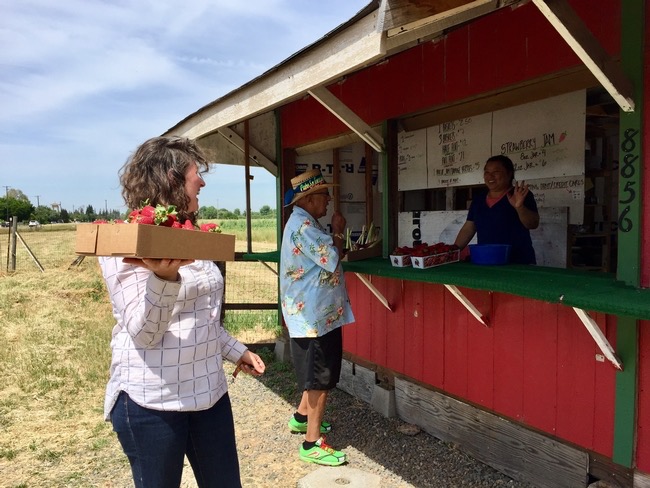
Consumers must practice safety, too, when visiting farmers markets and farm stands. UC Cooperative Extension small farm advisor Ruth Dahlquist-Willard explained, “Things like keeping the minimum six-foot distance from customers, not touching any produce that you’re not planning to buy, leaving as soon as you’ve made a purchase and washing the produce when you get home would be some good guidelines.”

The virus is thought to be spread mainly from person to person, however there is evidence that COVID-19 can last for days on hard surfaces, thus the need to ramp up good health and hygiene practices, social distancing and cleaning and sanitizing of surfaces.

University of California research and extension faculty have compiled a list of helpful fact sheets and resources for farmers, community gardeners and other food system workers to ensure fresh, healthy and affordable food for communities across the state:

All of these resources are posted on the UC Urban Agriculture website at https://ucanr.edu/sites/UrbanAg.

“During this challenging time, I am heartened by the quick and thoughtful responses by many extension, grassroots and institutional efforts, including Community Alliance with Family Farm’s COVID-19 Responses and Resources for California Family FarmsMutual Aid organizations where groups of young, healthy and lower-risk people are bringing food and services to vulnerable people who shouldn’t be in public at all, and Bayareafood.info that seeks to support local restaurants, farmers, and food systems workers as they weather this latest storm,” said Sowerwine.

2020-04-16T15:31:45-07:00April 16th, 2020|

USDA: Cattle Price and Box Beef Inquiry

USDA to Expand Cattle Price Inquiry

By Russell  Nemetz with AgInfo Network

The USDA is expanding its investigation of the cattle market to include a recent disparity between boxed-beef prices and cattle futures prices, a United States senator from Nebraska announced in a tweet Wednesday afternoon.

A few weeks ago, boxed-beef prices spiked $45 during a four-day span. At the same time, cash cattle trade was sparse and traded sideways, while the board traded limit lower four out of the five trading days of the week.

USDA has been investigating price movements following an August 2019 fire at the Tyson Foods packing plant in Holcomb, Kansas, that caused cattle prices to fall and boxed-beef prices to climb.

Sen. Deb Fischer, R-Neb., said in a tweet Wednesday USDA is expanding the investigation.

“I spoke with the @USDA who confirmed that the agency will be expanding its Holcomb fire plant investigation to include COVID-19 market disruption,” she tweeted. “This is what I called for in my letter to USDA yesterday. This is a good decision to address potentially unfair practices.”

In a letter to Trump on Wednesday, Marty Smith, National Cattlemen’s Beef Association president and a Florida rancher, asked President Trump to take immediate action to investigate the market.

“After weeks of striking disparity between boxed-beef price increases and declines in both the cattle futures and cash price, we fear this trend could have devastating long-term impacts on cattle producers,” the letter said.

Smith’s letter pointed out the discrepancy between boxed-beef and cattle prices is not limited to COVID-19.

DTN Livestock Analyst ShayLe Stewart said cash prices were “all over the place” during the week of March 20 as ranchers became anxious.

“Fat cattle usually sell toward the latter part of the week, but that week, cash cattle trade developed as early as Monday for sharply lower prices,” she said.

“In the Northern Plains, cattle sold for $168 to $180, and in the Southern Plains, cattle sold for $105 to $113.”

The April and June live cattle contracts have each fallen roughly 15% in the past month of trade as well.

Fischer, a member of the Senate Agriculture Committee, on Tuesday called on USDA to expand its ongoing investigation.

In addition, Fischer asked the Senate Judiciary Committee to hold a hearing on the issue.

“I’ve heard concerns from Nebraskans across the state about the impact COVID-19 is having on their cattle operations and on the industry as a whole,” Fischer said in a statement.

“Americans are purchasing more beef products at grocery stores, which is resulting in another round of windfall profits for meatpackers,” Fischer said. “Meanwhile, producers are taking price losses that threaten the viability of their businesses. Something must be done now.”

In its letter, the NCBA asked the administration to address a variety of issues. That includes asking Trump to make sure packing plants keep operating during the COVID-19 crisis.

The coronavirus has been putting increasing strain on the meatpacking industry.

Earlier this week, Tyson Foods announced it was suspending operations at a pork processing plant in eastern Iowa after the plant reported 24 positive cases were tied to its workforce. National Beef announced it was accelerating a cleaning process at the Iowa Premium Beef plant in Tama, Iowa, after a worker tested positive. At least 13 workers at a JBS SA beef packing plant in Grand Island, Nebraska, have tested positive.

The meatpacking industry is deemed as essential by the federal government to keep food processing going.

“We ask that USDA work closely with the Department of Justice throughout this process, conclude this investigation quickly, and release the findings to the industry as soon as possible,” NCBA said in its letter.

“We also ask the Commodity Futures Trading Commission to study the influence of speculators on the CME Group’s Live and Feeder Cattle futures contracts to determine whether the contracts remain a useful risk-management tool for cattle producers,” NCBA said in its letter. “The market woes for cattle producers will only grow if packing plants shut down or slow down for an extended period. As cattle producers, we are the beginning of the beef supply chain, and we need continued vigilance and oversight of all cattle market participants — for the benefit of America’s cattle producers and all Americans.”

2020-04-16T07:26:15-07:00April 16th, 2020|

Labor Shortage Leads to New Technology

Automation Replaces Helps with Labor Shortages

By Tim Hammerich, with the AgInfo Network

What will it take to solve agriculture’s labor shortage? Many say technology and automation are the future, but often these technologies are expensive and the payback periods can be too long.

Parker Jones saw this as an opportunity and in 2019 he launched Hermanos Automated Service. The company purchases expensive labor-saving equipment and offers it as a service to Salinas Valley vegetable growers. Jones says it all started with an automated weeder.

“Our weeder is called a Garford InRow Weeder. It uses vision sensors to detect the planting pattern and just kind of goes in between and outside of the plants with a little half-moon disc,” said Jones.

And the way it takes the weeds out in between the plants is the most natural, almost identical to how a human uses a hoe. In the motion where yes, it does go around the plant, but the way when it cuts into the ground, it’s almost dang-near identical to a hoe,” he said.

The service has caught on. Jones has added machines and is trying out new equipment to expand his offerings.

“We started out with, with one machine, and now we’re up to three machines that would be working every day if it would stop raining,” he explained.

2020-04-11T15:19:47-07:00April 16th, 2020|

Almond Board Wants More Efficient Irrigation

Almond Board Goal: More Crop Per Drop of Water

By Patrick Cavanaugh, with the AgInfo Network 

Jossett Lewis has Chief Scientific Officer with the Almond Board of California. And this is a big goal of the Almond Board more efficiency in water use for almonds.

“We’re tackling this from two directions. One is to improve irrigation efficiency and to get more crop per drop,” said Lewis. “So our goal of decreasing the amount of water by 20% needed to grow a pound of almonds is our Orchard 2025 goal in this area. And we’ll focus attention on how to improve the efficiency of operating irrigation systems. We’ve had really great adoption already of high efficiency systems like micro sprinklers and drip,” she said.

And the almond board is funding research and doing grower outreach to find out when an almond tree actually needs the water.

“We have a goal of more precise timing of the application of that water, which can pay off, particularly in getting more yield for the same amount of water,” Lewis said. “A large part of achieving that goal is actually improving the efficiency of how we time irrigation so that it matches up closely with the needs that the tree, so we can get more yield for the same amount of water. So that’s an area of continued work and a lot of outreach,” Lewis explained.

2021-05-12T11:05:01-07:00April 15th, 2020|

Helping Dairy Operators Protect Groundwater

UCCE Advisor Helps Dairy Operators Strike a Delicate Balance to Protect Groundwater


By Jeannnette Warnert, Communications Specialist, UCANR

UC Cooperative Extension advisor Nick Clark is helping farmers in Fresno, Kings and Tulare counties.

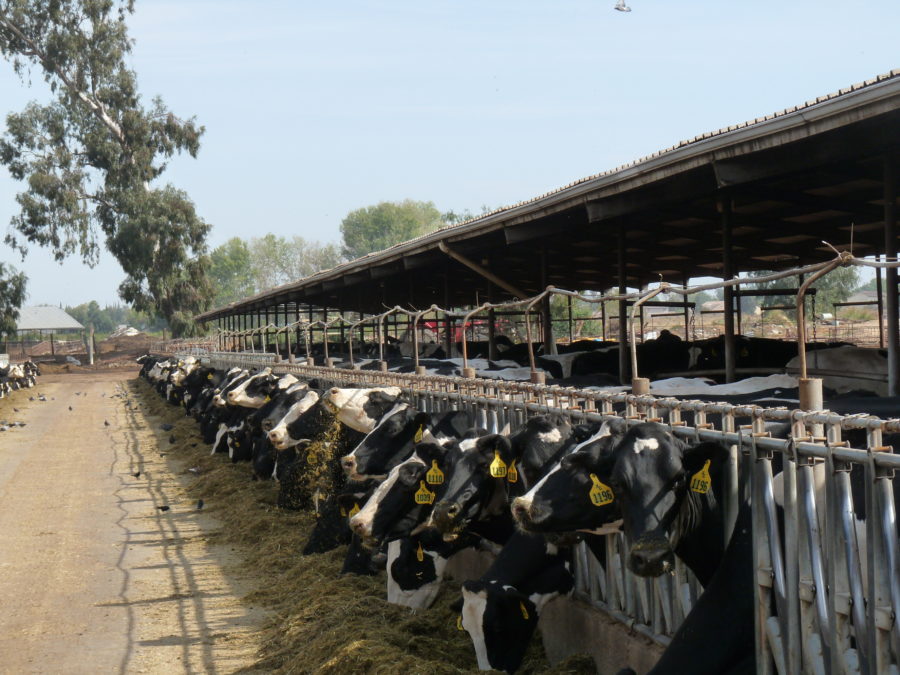
Over the last 20 years, UC research has shown that dairies in the San Joaquin and Sacramento valleys are potentially major contributors of nitrate and salts in groundwater. To maintain the quality of this irreplaceable natural resource, the California Water Resources Control Board has ramped up regulations to ensure that diary manure and wastewater application isn’t contaminating the aquifer.

UC Cooperative Extension advisor Nick Clark is helping farmers in Fresno, Kings and Tulare counties work through the process and continue producing crops sustainably now and in the future. He was hired in 2015 as the agronomy and nutrient management advisor, a title that reflects the importance of understanding the nutrient cycle and extending information to producers. Three other UCCE advisors are also focused on nutrient management.

Clark is working with dairy farmers who are producing crops to feed their herds, as well as farmers who are producing agronomic crops – such as silage corn, forage sorghum, wheat, triticale, alfalfa, rye and oats – to sell to dairies.

“These farmers operate under the microscope of several agencies for complying with environmental regulations and ordinances,” Clark said. Clark informs growers about the fate of nutrients in plants and soil and rules in place to protect water quality, helping them stay in compliance with government regulations. “Water quality regulations are becoming more strict, more complex and more specific.”

At the same time, some of the finer details about nutrient availability are not yet well understood.

Working closely with Luhdorff and Scalmanini Consulting Engineers, a groundwater engineering and consulting firm, Clark and colleagues have set up research trials on four commercial dairies in the San Joaquin Valley and one semi-research dairy farm to replicate a variety of treatments.

“The idea is to take a much closer look at nitrogen cycling in soil and plants to develop precise data about when plant development allows the crop to take up nitrogen,” Clark said. “The nitrogen application needs to be made so it is in the form plants need when the plants can use it. Otherwise, there is an increased chance it can percolate below the root zone and, eventually, into groundwater.”

Nutrient cycling involves advanced science. The majority of nitrogen content of manure is bound up in an organic molecule, which is not plant available. Plants only take up mineral forms of nitrogen – ammonium or nitrate. When the manure is in the soil, its chemistry changes. Timing by which this happens, Clark said, is extremely variable. Composition of manure, air and soil temperature, soil moisture, and soil microbiota all come into play.

“The research is trying to elicit information for Central Valley dairy farmers as to the best time, best rate and methods of application in order to fertilize crops without losing nitrogen to the groundwater,” Clark said.

Another factor that dairy farmers will have to consider is the implementation of the Sustainable Groundwater Management Act. The law, passed by the California Legislature during the 2011-2016 drought, creates local agencies to monitor groundwater extraction and bring that into balance with groundwater replenishment.

Diary operators are facing these new groundwater quality and quantity regulations at the same time new pressures from climate change are impacting their operations. Clark and his colleagues are also addressing climate change mitigation, adaption and resilience.

“We are looking into alternative feed crops for dairies that might help reduce the amount of irrigation water required to grow crops without sacrificing animal nutrition and milk yield,” Clark said.

One promising option is sorghum. UC Cooperative Extension scientists Jennifer Heguy, Jeffery Dahlberg and Deanne Meyer have been collecting data for a number of years on the crop’s nutritional value and impact on milk yield. Another potential feed crop is climate-resilient sugar beets.

“Sugar beets have been used in other parts of the United States and the world as cattle feed, but not as much in the San Joaquin Valley,” Clark said.

He is working with UC Cooperative Extension agronomy specialist Steven Kaffka and UCCE animal science specialist Peter Robinson to refine knowledge about sugar beet production under Central California conditions.

“Sugar beets grow readily in the winter in California, so we can take advantage of winter rainfall and a low irrigation requirement. That may help mitigate climate change impacts,” Clark said.

Climate change mitigation may also be achieved on dairy farms by modifying manure application timing and procedure. Applications of manure to cropland has an impact on emission of nitrous oxide, a greenhouse gas 300 times more potent than carbon dioxide. Reducing the amount of manure applications on cropland and incorporating manure solids into the soil may be ways for dairy farmers to reduce their facilities’ greenhouse gas emissions.

“We need to know a whole lot more to help farmers to stay in compliance and to deal with farming under new constraints,” Clark said. “Our research objectives are never static, because everything is shifting so quickly.”

2021-05-12T11:17:07-07:00April 14th, 2020|

Sakata Seed America Acquires Vanguard Lettuce Program

Sakata Will Gain Vanguard Lettuce Genetics

Sakata Seed America has acquired Vanguard Seed, a prominent lettuce seed Company, based in the Salinas Valley.

The purchase of Vanguard provides Sakata Seed America with all existing Vanguard lettuce genetics. Vanguard’s seed team, dedicated to bringing quality lettuce genetics to the market, will join Sakata Seed America and Vanguard’s breeding, seed production, sales and marketing will be fully integrated under the Sakata brand.

“This is a mutually advantageous decision that allows us to bring top quality lettuce varieties to the market,” stated John Nelson, Vice President of Sakata Seed America. “Sakata is a market leader in multiple segments, including broccoli, and has an excellent reputation for quality, reliability and service in the Salinas Valley, and beyond. We believe this opportunity will create great synergy for both the lettuce and broccoli markets,” explained Nelson.

Sakata Seed America will integrate the Vanguard team into daily operations and retain Vanguard’s Salinas warehouse and office location. ‘We are excited for this opportunity to expand our product line into the lettuce segment”, continued Nelson. “Lettuce is a widely consumed vegetable globally and this acquisition will enable

Sakata to accelerate development of lettuce varieties for global markets and position our company as a major player in the lettuce market segment,” noted Nelson.

“The Vanguard team is excited to integrate operations with the Sakata team, and we look forward to continuing to develop the lettuce program backed by Sakata’s reputation for quality, reliability, and service,” said Dave Henson, Co-owner of Vanguard Seed. “Sakata is a leader in the broccoli segment in the Salinas Valley and beyond; together we can create a similar success story for lettuce,” Henson said.

2020-04-11T13:39:52-07:00April 14th, 2020|

LGMA Food Safety Webinar Scheduled April 17

LGMA to Hold Webinar for Produce Buyers on Food Safety Practices and Audits

 The California Leafy Greens Marketing Agreement (LGMA) will update retail and foodservice buyers about government audits and the process for making changes to strengthen food safety practices for growing leafy greens during a webinar Friday, April 17 from 10 to 11 a.m. PDT.

“First and foremost, we want to assure everyone that LGMA government food safety audits are taking place during the current COVID-19 situation,” said Scott Horsfall, CEO of the California LGMA.  Horsfall emphasized the California Department of Food and Agricultural (CDFA) considers these audits essential and they are continuing as normal. “The LGMA is working with CDFA to offer solutions that allow for enhanced social distancing during audits but, as always, LGMA member companies will be audited an average of five times this year to verify required food safety practices are being followed on farms.”

Scott Horsfall

The webinar will also feature important information on the process for strengthening LGMA required food safety practices in the aftermath of the latest outbreak associated with romaine.

“A lot is happening that we want to share with the produce buying trade,” said Horsfall. “LGMA Subcommittees are meeting regularly to review all facets of our required food safety practices. The subcommittee dealing with water used in growing leafy greens has completed its review of the current LGMA required practices and is recommending over 30 separate changes to strengthen existing practices.”

The LGMA’s proposed changes to water metrics have been submitted as part of a collaborative process designed to gather input from stakeholders throughout the industry.  The process is being facilitated by Western Growers. A new website was launched last week to serve as the hub of this important effort.  Representatives from Western Growers will participate in the LGMA webinar to explain how the system to update metrics and how others can get involved.

“Efforts to improve the safety of leafy greens must go on – even in the midst of a pandemic,” said Horsfall. “We know your schedules are hectic and a lot is already on your minds, but we hope you’ll take 60 minutes to learn how the industry is working together to improve safety. More importantly, we hope you’ll engage as part of our leafy greens community.”

To register for the webinar, please visit the link below:

Collaborating for Safer Leafy Greens Webinar || Apr 17, 2020 10:00 AM PDT:
https://attendee.gotowebinar.com/register/4865354752159968526

2020-04-13T17:11:47-07:00April 13th, 2020|

Patience on Irrigating Almonds

When To Start Irrigating Almonds


By Tim Hammerich, with the AgInfo Network

When to start the irrigation on those almond orchards? Most growers want to get out there early to get the trees the water they need and to apply nitrogen through fertigation. However, there are risks associated with starting irrigation too early. This according to Dave Doll, who spent 10 years as a UC Farm Advisor in Madera County and is currently managing a farming operation in Portugal.

“The risks you have about starting the irrigation season too early is that you apply too much water that reduces the amount of oxygen within the root zone that depletes the ability for the tree to develop feeder roots or find feeder roots, which help with nutrient and water uptake,” said Doll. “So as such, what we would recommend and what still is a recommendation from my perspective and what we’re doing on an operation here, is to evaluate these trees for water demand in the spring before we start our application.”

“And this can be done through the use of a pressure chamber, which measures stem water potential, or even watching soil moisture probes to make sure that you’re getting a depletion in your top two feet of in soil moisture before you start applying in irrigation,” noted Doll.” And this in essence, will help you have better water management or more resiliency in your water management as a tree continues to grow and the temperatures pick up.”

2020-04-11T13:37:33-07:00April 13th, 2020|
Go to Top