About California Ag Today

This author has not yet filled in any details.
So far California Ag Today has created 2014 blog entries.

Corona Virus Disaster Help is On The Way For Farmers

Congressman Harder Successfully Includes Farmers in Corona Virus Disaster Emergency Grants Program


 After leading a bipartisan effort alongside over 80 of his colleagues, Representative Josh Harder (CA-10) announced that farmers are now explicitly qualified to receive emergency aid assistance under the Small Business Administration’s (SBA) Economic Injury Disaster Loan (EIDL) program. This is due to the Corona Virus disaster. This change will allow farmers to access up to $10,000 in grants and $2 million in super low-interest loans.

“Farmers all over the Valley are losing contracts and worrying about their financial future – we all have to eat so this is something everyone should care about no matter their political party,” said Rep. Harder. “Some bean-counting bureaucrat decided farmers should be kept out of this program – but we fought back and won. I look forward to working with our farmers to make sure they get this vital funding.”

“Given the essential role family farms and ranches fulfill in maintaining food supplies, it makes sense to give them as many options as possible for sustaining their businesses during this highly uncertain time,” said California Farm Bureau Federation President Jamie Johansson. “We appreciate inclusion of agricultural enterprises in the Economic Injury Disaster Loan program and will work to make sure our members have the information they need to participate.”

“Yesterday’s changes to PPP and the EIDL program are critical steps for removing the obstacles dairy producers and other farmers face when trying to access COVID-19 small-business support,” said Jim Mulhern, President and CEO, National Milk Producers Federation. “We are especially pleased that Congress made clear that farmers are eligible for disaster loans through the EIDL program, and thank Congressman Harder for leading a bipartisan effort to secure these changes. We look forward to continuing to work with him to provide California’s Central Valley dairy farmers the support they need during the pandemic and beyond.”

Rep. Harder’s office was contacted by dozens of farmers concerned about their financial futures after many lost contracts to supply schools and restaurants. In response to these concerns and an unnecessary bureaucratic decision to exclude farmers, Rep. Harder led the effort to ensure they’re included.

The CARES Act expanded the EIDL program to enable small businesses – including farmers –  to access immediate, emergency grants. Following the bill’s passage, SBA issued guidance making small farm operations eligible for assistance through its Paycheck Protection Program but excluded them from EIDL loan or grant eligibility.
2020-04-24T11:44:29-07:00April 24th, 2020|

Soil Health for the Common Good

California Healthy Soils Program Helping Farmers

By Jeff Mitchell, Ph.D., UC Cooperative Extension vegetable crops specialist and director of the Conservation Agriculture Systems Innovation center, http://casi.ucanr.edu

Though humans thrived here for millennia without planting seeds or herding animals, the phenomenal success of California’s short-lived agricultural experiment is staggering on a planetary scale, and represents barely over a century of building the highly productive food systems that benefit us all today. The farmers who manage the fields, orchards and vineyards of our Golden State contribute greatly to the common good by providing abundant food from an astonishing variety of crops.

Yet, present and looming challenges of water supply, climate change, air quality and the long-term fertility and sustainability of California’s agricultural soils threaten continued productivity. Such challenges compel farmers, researchers and the private sector to pursue creative soil management innovations that harmonize with the biological foundations of resource use efficiency if California agriculture’s future productivity is to be safeguarded.

Jeff Mitchell, Cropping Systems Specialist, UC Davis

This soil health initiative – which is based on principles including deliberate reduction of soil disturbance, generating and preserving surface residues from a broadened diversity of plant species that are grown to enhance active soil biology and capture maximum solar energy over time – is undoubtedly having a clear impact in many regions of the country. Within California, over the past four years, the Natural Resources Conservation Service has provided some $5.4 million in cost-share payments for soil health-related conservation practices to 172 applicants.

The California Department of Food and Agriculture’s Healthy Soils Program, launched in 2017, is designed to generate similar impacts and benefits. Indeed, CDFA has invested over $50 million to support 307 projects that incentivize adoption of these core soil health management practices. These two government programs are complementary, with NRCS incentivizing voluntary adoption and CDFA supporting a broader range of on-farm research and activities beyond simple practice implementation.

Observing our state’s annual cropland – the many bare, open fields we drive by when we’re out in the country – we see woefully few examples of the successful integration of these basic soil health principles across California’s immense farmscape. By and large, the very same tillage-intensive, high-disturbance soil management practices that have been employed for 90 years in most crop fields are still being used today.

When is the last time that you actually saw a no-till, high-residue field anywhere in California? Whenever we host out-of-state folks who’ve themselves pioneered soil health practice implementation back home, they are astonished by the outright sheer intensity of tillage disturbance and lack of protective residue cover in our state’s annual crop fields.

Government programs take a piecemeal approach. The full complement of integrated soil health principles are not being implemented in very many of either USDA’s or CDFA’s programs. Where cover crops are encouraged, they end up typically being plowed back into the soil by full-on disruptive tillage. That costs money and it flies in the face of the avowed comprehensive systems goals for soil health management that these agencies endorse. Piecemeal government incentives might contribute to very gradual forward movement of California’s food production systems, but they represent incremental “practice substitution” progress at best. These efforts lack a broader systems rationale for change.

A far more ambitious effort is now underway that goes well beyond these fragmented government initiatives. It involves a small group of organic farmers who themselves realize that core soil health, or conservation agriculture principles, can make not only ecological, but also economic sense.

These folks are looking far beyond cashing in on government rewards. They understand that evolution toward a natural systems agriculture has been their modern organic movement’s Holy Grail since its 20th century inception. On all fronts, this group realizes what Pennsylvania no-till and cover crop farmer Steve Groff points out, “You’ll become obsolete if you’re not future-proofing your farm ahead of not only environmental imperatives, but also market and consumer demands.”

This California farmer group might be leading a revolution, but as David Montgomery – author of Growing a revolution: Bringing Our Soil Back to Life – says, it is a movement that “is growing bottom-up, fueled by individual farmers rather than governments, universities or environmental advocacy groups.”

Their innovation – which involves year-round soil cover, greatly reduced disturbance tillage and integration of grazing animals into crop fields – aims to enhance the health of their soils, the health of their farms and the quality of the food they produce. Data compiled from project’s early stages demonstrate that sustained long-term “natural systems mimicry” these farmers have used over decades resulted in improvements in a number of key soil health properties, including carbon storage, water holding capacity and crop nutrient availability.

An underlying challenge that these farmers face, as does all of agriculture, was addressed by Guinda organic vegetable farmer and member of the project, Paul Muller:

“We are at a point where many people are asking how our farming systems can do more for the common good. Long-term stewardship and soil health is a common good; careful water stewardship enhances the common good; finding economic strategies to support and nurture those who grow our food and steward our resources for the long-term is a common good; capturing more carbon with cover crops and reduced tillage to feed a teeming microbial universe underfoot is a common good. Clothing naked soil, and minimizing dangerous pesticides in our food system is a common good; growing nutrient-dense food is a common good. It is all related, and companies can invest in an equitable supply chain where these common good values are properly rewarded. The question remains: ‘Who pays for the defense and enhancement of the common good?'”

This is not going to be an easy question to answer. Three members of the group recently met with representatives of 15 major U.S. restaurant chains to begin a dialog aimed at exploring what will be needed to reform our current food system in ways that promote soil, farm and human health, all while enabling farmers to continue to innovate and develop the alternative systems that we will all need. Project farmer Tom Willey may have surprised the listeners with his summation: “We find ourselves in the current predicament because we get what we pay for. Good food isn’t cheap, and cheap food isn’t good.”

2020-04-22T15:19:48-07:00April 24th, 2020|

The Reason Farmers Are Destroying Crops Etc. During COVID Crisis

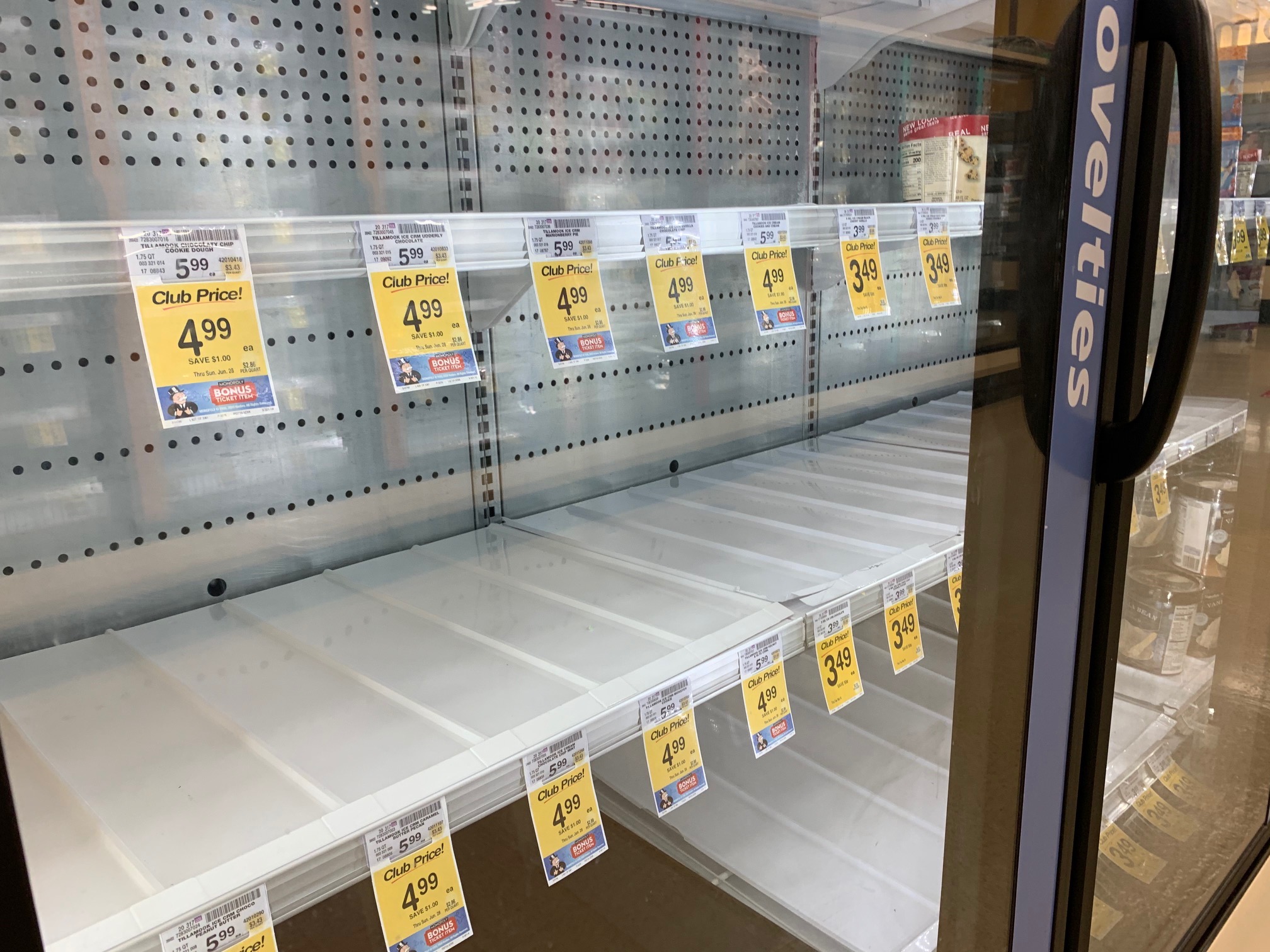
Why Are Farmers Destroying Crops While Store Shelves Are Empty?


By Pam Kan-Rice UCANR Assistant Director, News and Information Outreach

Empty grocery store shelves are troubling enough to California consumers who are accustomed to abundant supplies. To hear about farmers dumping milk, crushing eggs and plowing under crops when demand for food is strong just doesn’t make sense to most consumers.

Although the new coronavirus crisis has currently derailed the connection between supply and demand, “the food system in the United States is resilient and there is little reason for alarm about food availability,” write University of California agricultural economists.

Overall, neither food consumption nor the amount of food supplied by farms have changed much, they write in a new article published by UC’s Giannini Foundation of Agricultural Economics. The authors explain that the sudden closure of schools, restaurants and other institutions, coupled with residents in many states sheltering in place to reduce the spread of COVID-19, has disrupted normal patterns of where people buy food.

“Price changes, surpluses and shortages along the food supply chain are likely the result of recent and temporary shocks to supply, demand or both,” said co-author Ellen Bruno, UC Cooperative Extension specialist in the Department of Agricultural and Resource Economics at UC Berkeley.

“On the demand side, we have seen customers shift to buying more food at the grocery store as restaurants and other food service businesses have closed. Plus, consumers have changed what they consume and stockpile during these times,” she said.

Initially, worried consumers stocked up on staples such as rice and pasta that store well. Then, with more free time, they started cooking at home and baking their own bread and pastries, buying up eggs, flour, sugar and other baking supplies.

“On the supply side, there are challenges in trying to rearrange production and packaging to service grocery stores, as opposed to restaurants, schools, etc. which often purchase items in different quantities,” Bruno said. “Plus, there are the obvious health concerns and potential disruptions due to the impact of the virus on the workers themselves.” 

How quickly the food supply system will adapt to changing demand depends on the product, according to Bruno and her co-authors Richard J. Sexton, UC Davis professor, and Daniel A. Sumner, director of the UC Agricultural Issues Center and UC Davis professor, both in the Department of Agricultural & Resource Economics.

Canned fruits and vegetables are often processed shortly after harvest and can be moved from storage to retail fairly quickly. To increase egg production, farmers have to add to the number of laying hens, which takes months. Many perishable produce items are planted, harvested, packed and shipped according to a precise schedule to replenish grocery store inventories “just in time” so farmers can’t quickly increase the amount of fresh fruit and vegetables they supply.

Produce Isles are Full Across the country

Produce wholesalers who sell to food service have products and packaging specifically designed for that market. For example, packing plants that prepare large bulk salad packages for restaurants aren’t set up to pack salad into retail-ready bags that require consumer labels. While adjustments were made, some fresh produce rotted or was plowed under.

After the COVID-19 disruption ends, the authors expect the food supply chain to evolve as the economy gradually recovers.

“In the longer term, even after restaurants and the food service industry are back and running, reduced incomes due to the recession will change our consumption patterns,” Bruno said. “Demand for food consumed at home doesn’t change much with income, but demand for food at restaurants does. In many ways, food service and the growers that supply directly to food service will be hardest hit by all of this because they suffer both in the short run with mandatory closures and in the long run with an economic recession.”

Although it’s uncertain how long the pandemic will last, the authors say Americans will have an adequate supply of safe, healthy food.

“Despite these disruptions, overall our food supply chain is robust and adaptable,” Bruno said. “Nothing in the underlying economics suggests that there will be a lack of food available.”

To read “The Coronavirus and the Food Supply Chain,” visit https://bit.ly/covidimpactonfood

2020-04-22T20:08:51-07:00April 24th, 2020|

Tough Market for California Lemons


Lemons are Ready, but Markets are Not

By Tim Hammerich, with AgInfo.Net

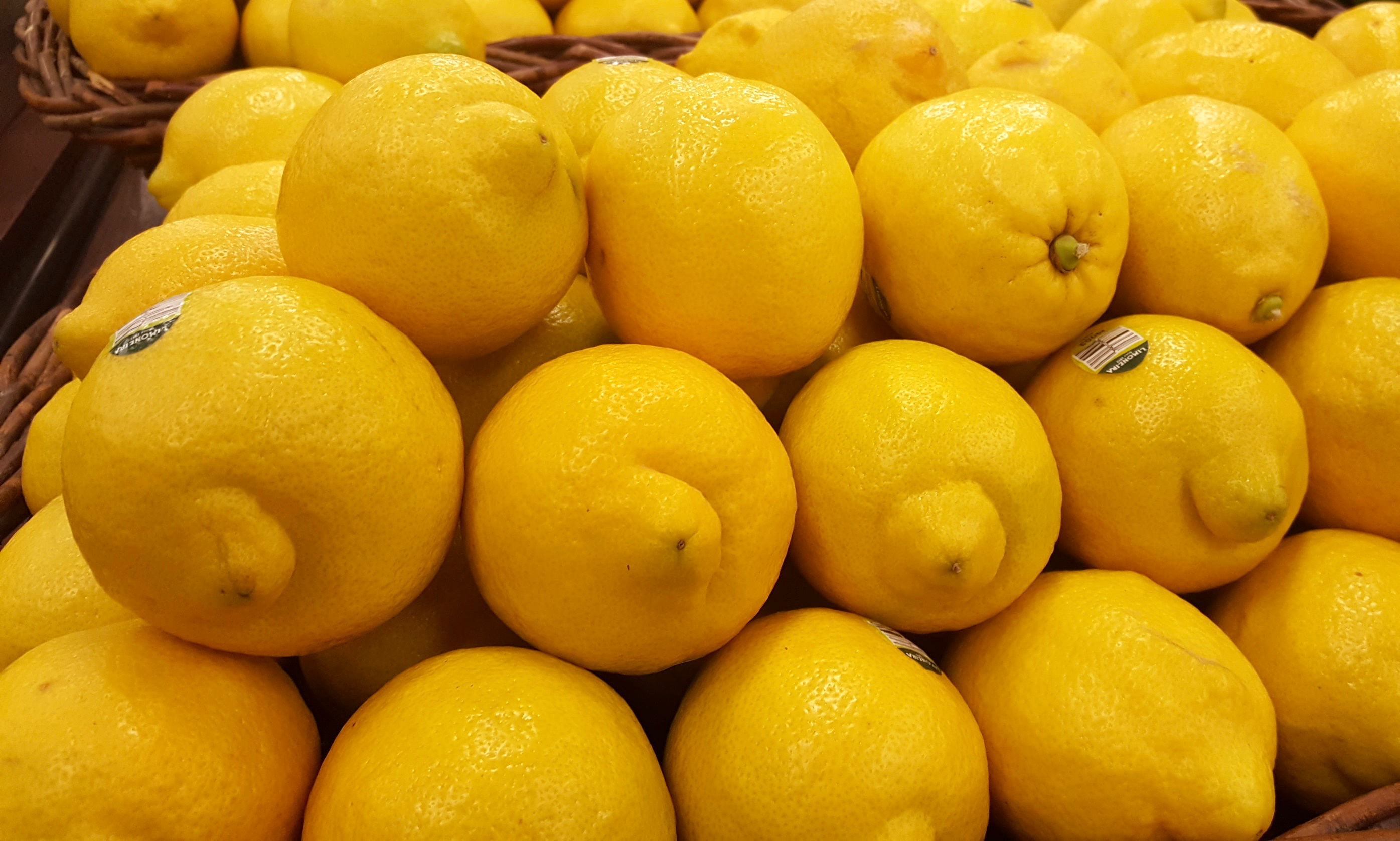
Recent weeks have been tough for the restaurant and food service industries, and for the farmers that supply them. This could not come at a worse time for the California lemon industry, who harvests this time of year and relies on these markets.

Chris Sayer is a lemon producer in Ventura County. “It’s raining. Hopefully this delay of a week will allow them to start to clear the packing house out and then maybe we can get moving on selling some fruit. About half the lemons go to restaurants. And witch that shut down and this being the peak of lemon harvest season, basically all the storage is at capacity and they can’t pick more unless they sell or dump something to get things moving again.”

Without restaurant demand and very little processing or long term storage capability, packers and producers like Chris are left with very few options.

“Usually Ventura County gets picked over the course of about six or eight weeks. I mean, we’re already a little bit behind.,” said Sayer. “I would say that I’ve probably got two more weeks before we start losing fruit, either just from dropping or just sort of gets overripe. And of course, even once we get it harvested and into storage, you know, prices are awful at the moment.”

Sayer knows it won’t be a good year for lemons, but hopes that he can at least get something for harvesting a crop.

2020-04-21T16:37:11-07:00April 23rd, 2020|

California Pear Farmers Will Harvest in July

California Pear Farmers Set to Begin Harvest in Early July

 As the nation’s food industry is working hard to keep food on our tables, California pear farmers are preparing to harvest a crop of fresh pears in early July.

“California pear harvest appears to be on a normal schedule this year after two years of late harvest timing,” said Matt Hemly of Greene and Hemly in Courtland. “We’ve seen pear category sales affected in recent years during July because of our late harvest. This year we expect to be picking Bartlett pears in the River District within the first weeks in July. Retailers will have no problem getting American grown pears into their stores this year.”

“We want to thank retailers and all of their employees for keeping our food supply moving during this difficult time,” said Richard Elliot of Stillwater Orchards. “As we move out of this pandemic, we hope that retailers will support local growers, families and communities to put America first.”

California pear growers are taking extra steps in the orchards and packing facilities to ensure a safe, healthy supply of fresh pears during this time.

“We employ 450 people in our farms and packing house,” explains Chiles Wilson, owner of Rivermaid Trading Company, based in Lodi, CA. “We want to make sure we can give them their jobs back this year. It’s not just about us as farmers but all the people we employ and their families.”

“Flavor is most important to consumers,” explains Pat Scully of Scully Packing in Lake County. “California pear farmers take care to pick pears at a point when they have plenty of sugar, and we never treat our pears with anti-ripening products like 1-MCP.”

1-MCP is a product that impedes fruit ripening. Producers in many growing regions use 1-MCP to extend a pear’s storage life. Unfortunately, a 1-MCP treated pear may not ever ripen properly.  It may turn yellow and appear to be ripe but never soften. This disappoints consumers and prevents repeat sales.

“What we’ve found in repeated experiments in our lab is that pears treated with 1-MCP take as long as three weeks to ripen and, in fact, they may never get soft and juicy,” explains Dr. Beth Mitcham, a postharvest researcher at the University of California, Davis.

“We don’t believe that 1-MCP is a smart choice for pears like Bartletts that must ripen off the tree,” said Rivermaid Trading company’s Wilson. “We know 1-MCP inhibits the fruit’s ability to ripen, meaning no flavor and no softening.  With the increased use over the past few years, we think there is a direct correlation to retail pear category decline.”

Because Bartlett pears are picked green off the tree, they ship well and will ripen naturally.  Once a consumer brings them home, they will become a ripe juicy flavorful piece of fruit.

“We’re committed to producing pears that offer the best eating experience for our consumers,” said Hemly. “In early July, shoppers should begin seeing new crop Bartlett pears in-store grown by local farmers. Our California Pear Advisory Board representatives will soon be reaching out to retailers — even if it’s only virtually — to set up promotions for the new season. “

The California Pear Advisory Board is based in Sacramento, CA and represents all producers of pears in the state. More information about California pears, pear varieties and pear farmers can be found at www.calpear.com.

2020-04-21T16:35:13-07:00April 22nd, 2020|

Karen Ross on 2020 Earth Day


Every Day is Earth Day in Agriculture

By Karen Ross, CDFA Secretary

As we take this moment to note the 50th anniversary of Earth Day, I’d like to call attention to our farmers, ranchers and farm workers; and the great work they do every day, no matter what Mother Nature throws at them. The twist that they—and all of us—are dealing with this year brings a whole new test of their adaptability and resiliency.

CDFA Secretary Karen Ross

CDFA Secretary Karen Ross

They are meeting the challenge the only way they know how – through hard work and dedication in working with their employees to deliver food to grocery stores and food banks while simultaneously contending with a collapse of other parts of the supply chain. And they’re doing all that while maintaining all-important environmental stewardship.

The livelihood of farmers and ranchers is tied to the land and to our communities – the understanding of natural cycles; sowing, tending and harvesting; conserving, recycling and streamlining; learning and improving. These cycles and so many more are at the heart of farming.

Every day is Earth Day in agriculture. Our farmers and ranchers are restoring the health of our soil, turning dairy emissions into energy, conserving water, reducing and optimizing fertilizer use, protecting pollinators, incorporating wildlife conservation into their business plans, and doing dozens of other things that contribute in real, quantifiable ways to combating climate change. And because of California’s leadership role in agriculture, we are also a beacon for other growers around the world to learn about what works and multiply our successes on their own land.

I’m proud of everything our farmers and ranchers and farm workers are doing, and I’m honored to be part of a department that helps them achieve these goals. I want them to know that we’re here for them through this crisis, and we will move forward with them when it’s over.

I wish you all a 50th anniversary of Earth Day that is full of progress and optimism.

2020-04-22T08:31:25-07:00April 22nd, 2020|

USDA to Help Dairy Producers with Big Purchase

COVID-19 Crisis

Families First Coronavirus Response Act To $3 Billion in Commodities, Including Fresh Milk

On Tuesday, USDA’s Agricultural Marketing Service (AMS) hosted a webinar on the new Coronavirus Food Assistance Program (CFAP) USDA Purchase & Distribution Program, also known as the “food boxes” distribution program. The webinar will be posted to the page by the end of the week, and USDA AMS will host a second webinar in the very near future.


Last Friday, USDA announced that it is exercising authority under the Families First Coronavirus Response Act to purchase and distribute up to $3 billion of agricultural products to those in need. USDA will partner with regional and local distributors, whose workforce has been significantly impacted by the closure of many restaurants, hotels, and other food service entities, to purchase $3 billion in fresh produce, dairy, and meat products. USDA AMS will procure an estimated $100 million per month in fresh fruits and vegetables, $100 million per month in a variety of dairy products and $100 million per month in meat products to provide boxes of fresh produce, dairy, and meat products to food banks and other non-profits serving Americans in need.


USDA will issue a solicitation within one week to invite proposals from offerors to supply commodity boxes to non-profit organizations, identified by the offeror, on a mutually agreeable, recurring schedule. USDA will award contracts for the purchase of the agricultural products, the assembly of commodity boxes and delivery to identified non-profit organizations that can receive, store and distribute food items.


In addition to the summary of the program above, IDFA would like to share our notes from today’s call with USDA AMS. For questions about the program, please reach out to Cary Frye, senior vice president of regulatory affairs, at cfrye@idfa.org, or email coronavirus@idfa.org.


  • The new concept for this program is that contractors will supply a pre-approved portfolio of commodities to non-profit 501(c)(3) entities. The contractors will be solely responsible for establishing a network of recipients that can distribute USDA-procured foods to end users. The contractors are responsible for all supply chain and logistics and activities necessary to ensure boxes are distributed to persons in need in the United States.


  • Those who submit proposals must have a good understanding about what foods are in demand by the non-profit, what quantities may be distributed by the non-profit, and preferred packaging of individual food items. Container and packaging sizes and types is not an issue as long as the non-profit can handle them; however, the distributor must know in advance which sizes/types the non-profit can handle.


  • All food products must be 100% U.S. origin, meaning the products were grown and processed in the United States. USDA AMS will release a list of the pre-approved foods. According to today’s webinar, a broad array of food items will be included in the solicitation, but food items must fall within six box categories:


  • Box 1: Fresh Produce
  • Box 2: Variety of Dairy Products
  • Box 3: Pre-Cooked Chicken and Pork Products
  • Box 4: Fresh Fluid Milk (can be included in Dairy Variety box or by itself)
  • Box 5: Any combination of 1-3, above


  • USDA AMS mentioned that some products are priority, including fresh fluid milk, instant and UHT milk, natural and processed cheese, yogurt, and butter. Other traits that will determine priority, more generally, include product variety, shelf-life, value, and packaging size. Products can be retail or food service items based on the need and ability of the non-profit to handle.


  • Awards will be distributed among seven geographic regions across the United States. Distributors may submit proposals for business in more than one region.


  • The important dates to remember: Acquisition – the request for solicitation will be released on April 24, 2020
  • Due Date – the due date for proposals is May 1, 2020
  • Award – awards will be announced on May 8, 2020
  • Delivery – delivery of boxes will stretch across four date ranges:beginning May 15 – June 30
  • July 1 – August 31
  • September 1 – October 31
  • November 1 – December 31


In addition to this new program, USDA will continue to solicit bids for food and commodity purchases, including dairy products, through the traditional Section 32 program, inclusive of Emergency Food Assistance Program (TEFAP) and trade mitigation. Participants must be an approved AMS vendor to participate in the traditional Section 32 program. Please learn more here: https://www.ams.usda.gov/selling-food/becoming-approved. To that point, yesterday, USDA announced bid solicitations for procurement of Process CheeseButter, and Cheddar Cheese Shreds. The deadline to submit bids for this solicitation is Monday, April 27 at 1:00 p.m. CT / 2 p.m. ET.


IDFA will continue to follow the new Coronavirus Food Assistance Purchase & Distribution Program as well as the traditional Section 32 program, and we will share solicitations and bid opportunities as they become available.

2020-04-22T08:15:20-07:00April 21st, 2020|

Dire Situation for Dairy Producers Pt 1

COVID-19 Farm Crisis

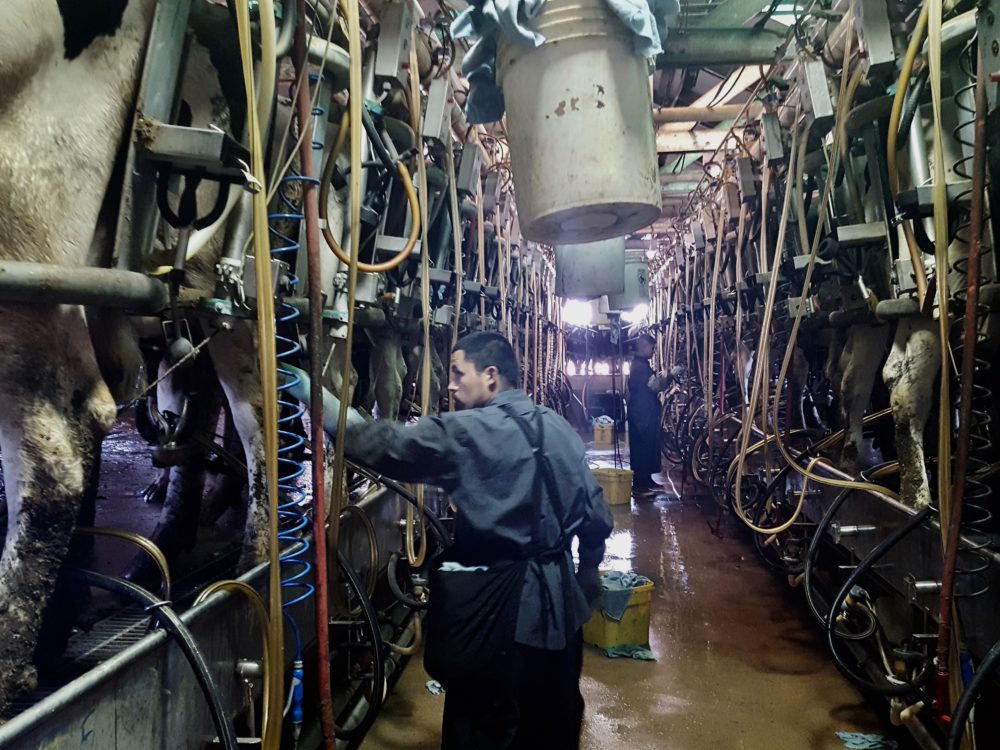
With Restaurants and Other Food Service Providers Shutdown, Dairy Producers Have No Place to Send Their Milk


By Rick Worthington, with AgInfo.net

Kristi Spence is with Dairy West, and works with dairy in both Idaho and Utah. She says- it’s as bad a situation as she has seen.

CNN reports, Milk dumping isn’t just devastating for the farmers. For Americans who can’t afford food or are unable to buy enough milk because grocery stores are out or capping purchases, the images are painful.

Pouring out milk is another example of how major disruptions in the supply chain, caused by the pandemic and efforts to contain it, are preventing food from getting to where it needs to go.

The pandemic has delivered a major blow to several sectors, from the airline industry to retail. For the milk industry, the setback is particularly painful.

Both dairy farmers and milk processors were struggling even before the pandemic hit. Such a major disruption has only made things harder. And the rigid supply chain means neither farmers nor processors can switch gears quickly enough to avoid waste.

Nobody wants to dump milk. But doing that now — along with other efforts — could help farms pull through later on, and could help make sure that Americans have enough milk, cheese, butter and ice cream in the future.

2020-04-21T21:13:05-07:00April 21st, 2020|

Oak Trees Coming Back Following Atlas Fire in Napa County

Atlas Fire: Reality of Fires, Oaks, Vineyards and Napa’s Agricultural Future


By Igor Sill, Atlas Peak, Napa California

Almost three years after the devastating Atlas Peak firestorms, we begin to see our mountain landscape recovering and the once blackened oaks return to life on their own, essentially a re-birth.

Many woodland oaks survived the wildfires because they are a hearty, native hardwood species which have adapted to survive droughts and wildfires that have swept over Napa’s terrain for thousands of years.

The fires brought us an unpredictable but welcomed outcome. Today, Napa County has the greatest density of oak trees of any county in California. These oaks when combined with the beauty of vineyards are one of the defining features of Napa‘s scenery.

With the spring’s warmth, these reinvigorated oaks have thrown off pounds of acorns, showing their resiliency, adaptation and recovery to fire. Here at least, there will be no need to bring in new trees sprouted from acorns not native to this biota.

It’s been proven that fire directly promotes the establishment of oak seedlings by reducing competing understory vegetation, releasing needed soil nutrients and reducing numerous pathogens. Wildfire can also increase the regeneration of fire-adapted native species in the understory of oak woodlands while reducing the parasitic oak mistletoe.

Interestingly, Native Americans are thought to have set frequent fires in oak woodlands up until the 1800s so as to rejuvenate the land. We lost 27 oaks due to the fires on our Atlas Peak property. Today, I’ve counted well over 400 newly established healthy oak sprouts flourishing throughout the property, essentially “re-oaking” the property. A new, better post-fire era for Napa oak forests.

From a factual statistics point, oak woodlands and forests are not being eliminated within Napa County. According to David Morrison, Napa’s Director of Planning, Building & Environmental Services, nearly 42 percent of the county (or 213,000 acres) consists of oak woodlands, riparian forest, or conifer forests.

In comparison, only 13 percent of the county is used for farmland, and 6 percent is developed with urban uses. Trees cover more than twice as much land in Napa as agriculture and cities combined. The Conservation Regulations already require stream buffers and tree retention. Setbacks of 35 to 150 feet are mandated for vineyards, depending on the surrounding slopes.

Setbacks may also be applied to vineyard replanting and previously disturbed areas may be required to be re-vegetated. A minimum 60 percent of all tree canopies must be retained on any parcel where a vineyard is proposed. When biological studies are also applied, 90 percent of on-site trees are protected.

The amount of carbon absorbed by the average mature oak tree is 48 tons per year according to the Environmental Protection Agency (EPA). In comparison, cherry trees absorb approximately 20 tons of carbon per year.

So, oaks in general are incredibly important, both ecologically and economically. Nature has been lending us Napans a hand.

We all recognize that our Napa agriculture has a unique heritage. The 1968 agricultural preserve was passed by Napa’s then Board of Supervisors and later strengthened by a majority of voters to preserve, promote and protect agricultural land in Napa Valley for future generations.

The ordinance established agriculture as the “best use” of these lands and kept Napa from being overdeveloped. This was long before Napa County’s future as a prosperous wine country was assured, when many felt Napa Valley might go the way of urbanized Silicon Valley.

Napa County’s Ag Preserve was a visionary land-zoning ordinance, the first of its kind in the USA and, our farming legacy thrives today because of it, having become one of the most productive counties in the entire nation.

If governmental growth projections are correct, Napa Valley will remain a regional oasis of agriculture 50 years from now. With it, Napa’s vineyards have become the most regulated agricultural industry in California. The cost of compliance results in significant additional expense and time for us farmers, property owners as well as the County.

All farmers that I know in Napa, especially those in Atlas Peak, are tremendously diligent, responsible, eco-conscientious and concerned about always doing the right thing with their farms and surrounding lands.

It has become obvious that certifications of National Wildlife Federation, Fish Friendly Farming, CCOF and NapaGreen have become abundant and virtually posted everywhere, just note the number of vineyard signs attesting to prevention of water pollution, limited or total non-use of chemical fertilizers and pesticides to protect our surrounding waterbodies, wild life, air quality and our oaks.

This is a voluntary, conscientious movement by Napa farmers to continue to “do the right thing” for Napa’s oaks, land and community, without the need for further excessive governmental bureaucratic involvement. Napa vintners wish to protect the continued presence of trees, plants, wildlife and their habitats.

Napa is well known for its outsized share of activists that have alarmed the community with deceptive and erroneous reporting of false information surrounding Napa’s long-term strategic plan. Let’s consider the science-based facts, and not alter, change or add restrictions to an already restrictive and functioning policy.

Stay safe, stay sequestered, stay healthy and appreciate our wonderful lands from inside our homes until this health crisis passes and heals us all.


2020-04-17T16:58:11-07:00April 21st, 2020|

Water and Ag Organization Urge Congress To Help Western Water

From California Farm Bureau

150 Water and Agricultural Organizations Urge Congress and the White House to Address Western Water Challenges


A coalition of 150 organizations representing water and agricultural interests in the western U.S. urged Congress and President Trump today to address aging Western water infrastructure as further measures are considered to help the U.S. economy recover from the ongoing coronavirus crisis.

“The COVID-19 pandemic underscores the importance of safety and stability provided by domestic food production,” the groups stated in separate letters to Congress and the president. “As this crisis has pointed out, a stable domestic food supply is essential and of national security interest. For farmers and ranchers to survive, and for food to continue to be produced here in the American West, a stable water supply is a necessary part of any conversation about our national food security.”

President Trump has stated his belief that renewed efforts to meet the systemic infrastructure demands of the nation will be an important step in combating the long-term impacts of the pandemic.

“We strongly agree,” the organizations stated in the letter to the White House. “In particular, we urge you to advance critically needed investments that address the shortcomings of our aging Western water infrastructure.”

Existing water infrastructure in the West needs rehabilitation and improvement. Most of the federally funded water infrastructure projects that benefit the large cities, rural communities and small farms in the West were built more than 50 years ago. As hydrological conditions in the West change and populations continue to expand, failure to address water security has become increasingly critical.

“Failing to improve water infrastructure and develop supplies will inevitably result in additional conflict as pressure grows to ‘solve’ urban and environmental water shortages,” the groups stated. Page 2 of 2 “Moving water away from Western irrigated agriculture will surely contribute to the decline of our national food security.”

The coalition letters—spearheaded by the California Farm Bureau Federation, Family Farm Alliance and Western Growers—emphasize that water conservation, water recycling, watershed management, conveyance, desalination, water transfers, groundwater storage and surface storage are all needed in a diversified management portfolio.

“If and when additional infrastructure funding is discussed as part of a larger economic stimulus package, we need your help to ensure that federal dollars flow to the water infrastructure needs mentioned above,” the letters conclude.

2020-04-20T16:31:49-07:00April 21st, 2020|
Go to Top