About California Ag Today

This author has not yet filled in any details.
So far California Ag Today has created 2014 blog entries.

California Pear Growers Committed to Growing Flavorful Pears that Ripen Naturally

California Pear Growers Say No to Anti-Ripening Treatments

California pear farmers have united as an industry with a pledge to never use post-harvest treatments like 1-MCP that impede ripening and create a disappointing experience for consumers.

“California pear farmers are committed to producing pears that offer the best eating experience for our consumers,” said Richard Elliot of Stillwater Orchards. “This is why we’re pledging never to treat our pears with 1-MCP. Which would you rather have–a fresh Bartlett pear that has been allowed to ripen as nature intended or one that’s been treated to last for months in storage and may never ripen? The choice should be pretty clear.”

“What we’ve found in repeated experiments in our lab is that pears treated with 1-MCP take as long as three weeks to ripen and, in fact, they may never get soft and juicy,” explains Dr. Beth Mitcham, a postharvest researcher at the University of California, Davis.

The desire for longer shelf life and waste reduction in the fresh produce industry has resulted in suppliers’ use of 1-MCP. It might work well on items that develop their sugar and ripeness during growth, like apples, but for pears and fruits that ripen after picking, 1-MCP can have adverse effects on fruit quality.

“When a consumer buys a pear treated with 1-MCP it won’t ripen properly,” said Matt Hemly of Greene and Hemly in Courtland. “Unfortunately, the consumer has no way of knowing if the pears they’re buying have been treated with 1-MCP. And they won’t know until they buy the pear, take it home to ripen it only to find it never does.”

California pear season starts in July every year. That’s when shoppers should begin seeing new crop Bartlett pears in-store grown by local farmers. This is also the time of year when imported pears from growing regions in the southern hemisphere or domestic fruit harvested nearly a year ago — often treated with 1-MCP — may still be available and on stores shelves.

IRI/Freshlook retail scan data analyzing the pear category over the past five years shows that since 2015, the pear category overall has seen continued decline. National retail dollar sales have declined $79 million (-16.1%) and volume also declined 62 million pounds (-19.2%)

“We just don’t believe that 1-MCP is a smart choice for pears like Barletts that must ripen off the tree,” said Chiles Wilson of Rivermaid Trading Company.

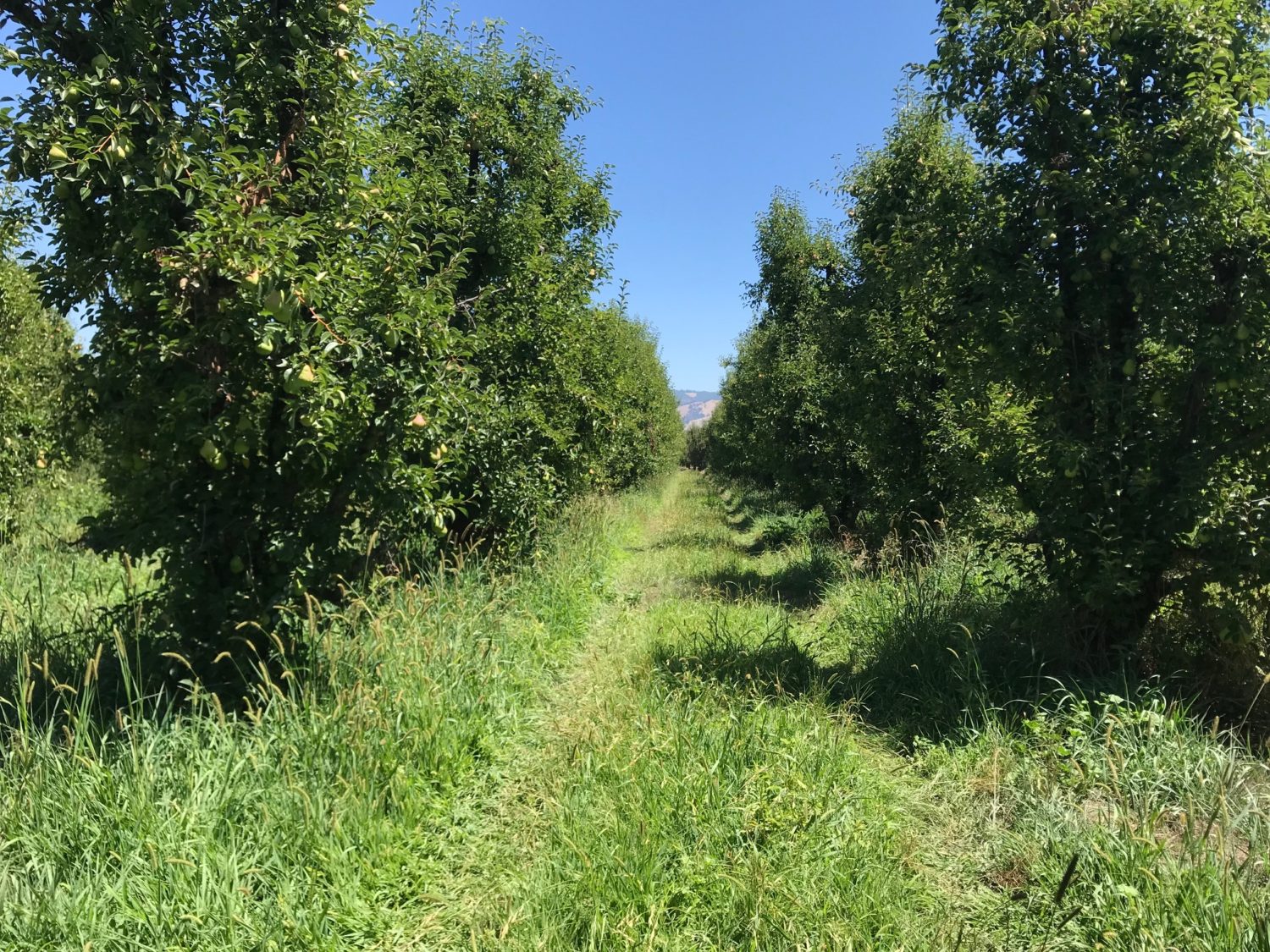
California pear farmers take care to pick pears at a point when they have plenty of sugar, but they’re still green. Bartlett pears actually won’t ripen on the tree, which means they can be shipped without damaging the fruit. And because California Bartletts are not treated with anti-ripening products, these pears will ripen naturally. Once a consumer brings home a California pear, they can expect to enjoy a ripened pear full of flavor within a few days.

“Reducing waste is a great goal for and is something we should all be doing to help the environment,” said Chris Zanobini, Executive Director of the California Pear Advisory Board. “But all too often we waste food in our own homes when we throw things away instead of eating them. Pears are a wonderful fruit in this respect. Consumers can ripen them on the counter to the desired state of ripeness and then store in the refrigerator until they want to eat them. Pears treated with 1-MCP may be thrown away because they never ripen. This can actually create more waste.”

The California Pear Advisory Board is based in Sacramento, CA and represents all producers of pears in the state. A short video explaining the California pear industry’s pledge can be found here. More information about California pears, pear varieties and pear farmers can be found at www.calpear.com.

###

2020-05-06T19:47:38-07:00May 7th, 2020|

West Hills College Farm of the Future Part 2

Students Test New Agricultural Technologies and At Farm of the Future

By Tim Hammerich, with the AgInfo.net

West Hills College’s Farm of the Future is a unique program that provides students with practical, hands-on farming experience.

Director Terry Brase also envisions it as a chance to work with companies where in addition to hands-on learning, students can test new agricultural technologies.

“We also have another side of the farm where we’ve got close to a hundred acres that are made up of smaller plots. Those are the areas that are reserved for student projects,said Brase. And that currently we’re actually looking for funding where the project or the company that wants to maybe demonstrate a product will pay us. And pay a group of students to run a demonstration on one of these fields. And the students are directly responsible for the decisions and using the product, coming up with little research demonstration against the control part of the plot to see if it works or not.”

Brase said this gives companies early exposure for up-and-coming products, and the students a career related job during school.

“But I think what it really provides, the real value, is that the students are being paid through like a scholarship to work here on the farm. So they’re making money while they’re working on the farm. This way they’re getting the experience and we’re helping them through school,” Brase said.

Interested students or companies can visit West Hills College’s website for more information.

AgInfo.net is the largest Radio Network in the West with 140 Affiliate Radio Stations.

2020-05-04T20:44:44-07:00May 6th, 2020|

Ag Industry Asked for Fairness In Guest Worker Wage Reforms


Farmer Co-ops Press Fairness for All Producers in Guest Worker Wage Reforms

The National Council of Farmer Cooperatives today asked White House officials to ensure that efforts to reform wages paid under the H-2A agricultural guest worker are equitable for farmers across the country. The call came in a letter to the National Economic Council.

“[T]he Adverse Effect Wage Rate (AEWR) has been one of the greatest barriers and limitations for farmers to successfully utilize the H-2A program due to its extremely volatile and unpredictable methodology. In fact, we have spent many years developing and analyzing various wage alternative proposals,” the letter states.

“We must ensure, particularly in these uncertain times, that we are not artificially creating additional expenses or burdens to the detriment of farmers in certain states,” the letter continues. “There are many farmers that would not be able to survive any additional wage expenses at this time.”

The letter comes after White House Chief of Staff Mark Meadows recently stated in media reports that Administration officials were looking at reforming how wages in the H-2A program are calculated.

About NCFC
Since 1929, NCFC has been the voice of America’s farmer cooperatives.  Our members are regional and national farmer cooperatives, which are in turn composed of nearly 2,000 local farmer cooperatives across the country.  NCFC members also include 26 state and regional councils of cooperatives.  Farmer cooperatives allow individual farmers the ability to own and lead organizations that are essential for continued competitiveness in both the domestic and international markets.

America’s farmer-owned cooperatives provide a comprehensive array of services for their members.  These diverse organizations handle, process and market virtually every type of agricultural commodity.  They also provide farmers with access to infrastructure necessary to manufacture, distribute and sell a variety of farm inputs.  Additionally, they provide credit and related financial services, including export financing.

2020-05-06T11:54:05-07:00May 5th, 2020|

Practical Hands-On Farm Ed Experience

Farm Ed for the Future  Part 1

By Tim Hammerich with the Ag Information Network

As millions of people are losing their jobs, community college are preparing to help many of them find new skills and new careers.

West Hills College in Coalinga has a unique program that provides students with practical, hands-on farming experience. It’s called the Farm of the Future. Here is Program Director Terry Brase.

“Our goal is that every student that comes through our educational academic classes and courses will get some type of experience on the farm. And as such, it’s a working farm. So we have 23 acres of pistachios,” said Brase. We have little over 80 acres of row crop that we produce, our own irrigation system. So my role as the Director is to kind of oversee the farm and the academic programs. We try to make the Farm of the Future a demonstration of how technology is used in California agriculture.”

The program has two different pathways. One for agricultural science which includes studies like plant science, irrigation, integrated pest management, and precision agriculture. The other is for more industrial studies like truck driving, heavy equipment operation, food safety, and welding.

As we’ve seen recently these are essential careers that required proper training, Brase said.

Please go to West Hills College for more information.

AgInfo.net is the largest Radio Network in the West with 140 Affiliate Radio Stations.
2021-05-12T11:05:00-07:00May 4th, 2020|

Big Funding for Specialty Crop Multi-State Programs


California Awarded More Than $3.8 Million to Support The Specialty Crop Industry Through Multi-State Initiatives


The California Department of Food and Agriculture (CDFA) is pleased to announce that four projects submitted by California were selected for funding for the 2019 Specialty Crop Multi-State Program (SCMP).


The SCMP is a federal grant program offered by USDA’s Agricultural Marketing Service. SCMP strengthens food safety; seeks new ways to address plant pests, disease, and other crop-specific issues; and increases marketing opportunities for fruits, vegetables, tree nuts and dried fruits to horticulture and nursery crops, including floriculture. Funding is awarded competitively to state departments of agriculture that partner with stakeholder organizations in two or more states.


The California Department of Food and Agriculture will partner with:


  • The University of California, Davis, Oregon State University, University of California Agriculture and Natural Resources, University of Washington, Utah State University, and University of Arizona to create a non‐biased plant trials network that assesses plant performance under different irrigation regimes. Awarded $999,992.
  • The University of California, University of Florida’s Gulf Coast Research and Education Center, Texas A&M University, California State University, and the USDA – Agricultural Research Service’s National Clonal Germplasm Repository ‐ Tree Fruit & Nut Crops & Grapes, to develop strategies to increase marketable yield of pomegranate in California and Florida. Awarded $885,801.
  • The University of California, Davis, University of Maryland Eastern Shore, USDA Agricultural Research Service, University of Minnesota and the Organic Center to evaluate the food safety impacts of sheep grazing cover crops, compared to tilled termination of cover crops and winter fallow, before spinach and cucumber. Awarded $999,985.
  • The University of California and Texas A&M University to conduct large‐scale trials of improved (high‐yielding, high‐quality, more resilient) varieties under conventional versus modified environmental conditions in the San Joaquin Valley and in Central California and the Lower Rio Grande Valley. Awarded $962,804.


A complete list of funded projects is available here. Additional information about the SCMP can be found on the USDA and CDFASCMP websites.

2020-04-30T17:25:21-07:00May 1st, 2020|

Minimizing Food Waste During These Difficult Times


Food Waste Becoming a Bigger Problem

By Tim Hammerich, with  AgInfo.net 

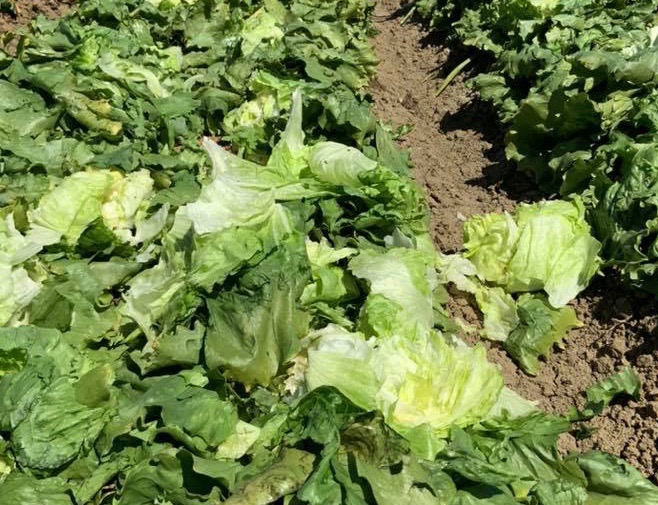
We typically waste about ⅓ of all of the calories our farmers produce, and the pandemic has likely made that number even higher. When the food service market all but disappeared, fresh produce in warehouses had nowhere to go.  Crops that had already been planted are now ready, and the market has not yet returned, typically leading to enormous food waste.

Sarah Hulick is responsible for Grower Innovation at Full Harvest Technologies, which facilitates markets for food that would otherwise be wasted.

“Right when this all started in like mid- to late March, it was actually more like they were already harvested and sitting in warehouses. And that’s really hard because every single cost is already sunk in that product, including the plastic wrap on the cauliflower heads, the cooling, the energy, everything is already in that product,” noted Hulick.  You know, right now it’s more like maybe they planted for higher demand and now it’s sitting out in a field and they have to make that tough choice to till it in. Or if they have a good relationship with a food bank, they could harvest it and send it to a food bank. But yeah, there’s a lot of food being wasted right now, said Hulick.

Hulick said the logistics of getting fresh produce to a food bank can be complicated, and in California it cannot be taken to a landfill. Some farmers are being forced to till their harvest in due to lack of markets.

AgInfo.net is the largest Radio Network in the West with 140 Affiliate Radio Stations.


2020-04-29T19:21:54-07:00April 30th, 2020|

Lawsuit filed Against California To Protect Central Valley Project

Joint SLDMWA, FWA & TCCA Statement on a Lawsuit to protect California’s Central Valley Project

This week, a coalition of water providers filed suit to protect the Central Valley Project (CVP) and the farms, businesses, residents and wildlife refuges it serves in 17 California counties.

As California embarks on an unprecedented effort to rebuild our economy, we strongly encourage the State of California to recognize the importance of CVP water deliveries to every facet of our economy and social fabric in California’s Central Valley, the Bay Area and the Central Coast. Rather than efforts that will limit our economic recovery, we urge the State of California to sit down with the operators of the CVP and State Water Project (SWP) and develop a joint operations plan that is not in conflict with the federal Biological Opinions (BiOps) and can advance voluntary agreements as a long-term solution to meet multiple objectives in the Bay-Delta.

It is disappointing that State officials have not, to date, engaged with their federal counterparts to resolve these issues after first announcing their intent to sue last fall, and today’s action is the unfortunate result of an environment of escalating legal conflicts over issues that need not be resolved in a courtroom.

As background, the State of California recently filed suit challenging the operations of the CVP and now, through its Incidental Take Permit (ITP), the State could further limit the ability of the CVP to deliver water to its customers. These actions have compelled today’s legal filing in Fresno County Superior Court, which reflects concerns by the water suppliers and citizens that depend upon the CVP that the State’s Environmental Impact Report (EIR) supporting the ITP does not address impacts to the CVP. The lawsuit also reflects concerns that implementation of the ITP will lead to disruptions in water deliveries and prevent meaningful progress on collaborative efforts to secure long-term water supply reliability for millions of Californians while also achieving the reasonable protection of fish and wildlife beneficial uses in the Bay-Delta watershed.

Through our legal action, we are aligning with the water suppliers that depend upon the State Water Project (SWP), who have separately challenged the State’s action this week. The parties now challenging this action supply water to more than 29 million Californians, nearly 75% of California’s population, more than 4 million acres of farmland, and hundreds of thousands of acres of managed wetlands and habitat of critical importance to threatened and endangered species and migratory waterfowl. We are collectively committed to rebuilding our economy and ensuring water deliveries to all Californians.

The parties to the suit include nearly all parts of the CVP throughout California, as the case is brought by the Tehama Colusa Canal Authority, San Luis & Delta-Mendota Water Authority, Friant Water Authority, and several Sacramento River Settlement Contractors.

2020-04-29T17:14:05-07:00April 29th, 2020|

Almond Board Election Underway

Voting Starts Today for Many Positions on Almond Board

 Voting will begin April 29 to select one independent grower member and alternate position and two independent handler members and alternate positions on the Almond Board of California (ABC) Board of Directors. These positions will serve terms beginning on August 1, 2020.

Candidates for the independent grower position are:

Position One, Member (One-year term):
Paul Ewing, Los Banos (petitioner)
Louie Ott, Modesto (petitioner)
Mike Mason, Wasco (petitioner)

Position One, Alternate:
Joe Gardiner, Earlimart (petitioner)
Brad Klump, Escalon (petitioner)

Candidates for the independent handler positions are:
Position One, Member (Three-year term):
Terry Boone, Modesto (petitioner)
Alexi Rodriguez, Caruthers (petitioner)
Micah Zeff, Modesto (petitioner)

Position One, Alternate:
Ron Fisher, Modesto (incumbent)

Position Three, Member (One-year term):
Jonathan Hoff, Denair (petitioner)
Darren Rigg, Le Grand (petitioner)

Position Three, Alternate:

Chad DeRose, McFarland (petitioner)
Dave Phippen, Manteca (petitioner)
Ballots and instructions have been mailed to all independent growers whose names are on file with ABC. The Almond Board must receive ballots by May 27, 2020, for them to be counted. If an independent grower or a handler does not receive a ballot, one may be obtained by contacting ABC’s Bunnie Ibrahim, senior analyst, Government Affairs, at (209) 343-3228 or bibrahim@almondboard.com.As a governing body for the industry, the ABC Board of Directors is comprised of five handler and five grower representatives who set policy and recommend budgets in several major areas including production research, global market development, public relations and advertising, nutrition research, statistical reporting, quality control and food safety.
2020-04-29T11:37:52-07:00April 29th, 2020|

Cover Crops May Help Sequester Carbon in Vineyards

Carbon Sequestration in Vineyards

By Tim Hammerich, with the AgInfo Network

Agriculture has drawn attention in recent years as one potential solution for climate change. Sequestering carbon in soil is one of our few options for removing it from the atmosphere. But measuring carbon sequestration can be tricky.

However, Extension Specialist Kaan Kurtural and his team at the Oakville Experiment Station are currently evaluating the impact cover crops can have on carbon sequestration in vineyards.

Growers came to us. A couple of the questions they had was how can we sequester the carbon and how can we mitigate the amount of greenhouse gases we emit from the vineyards? So that was some background work done on it, said Kurtural.

Cover crops do sequester carbon and will store it in the soil. But as you till them, if you till the row middles, all this stuff is release back into the atmosphere. So we worked with a couple of private companies and we were able to get this new type of cover crop using a perennial system, said Kurtural. Meaning that it doesn’t have to be tilled or mowed, it just goes dormant. So we’re comparing now till versus no-till systems using perennial and annual cover crops. So that’s how that began.”

The study requires the use of infrared gas analyzers, measuring photosynthesis and respiration, and an analysis of methane and nitrous oxide emissions.

Kurtrual hopes to have results for growers by the end of this year.

2020-04-29T10:37:47-07:00April 29th, 2020|

New Bt From Vestaron Will Help With Worm Pests

A New Bt Innovation For Worm Pests

Tree nut growers – large/small, conventional/organic – are familiar with Bt, or Bacillus thuringiensis. This spore-forming, gram positive bacterium has played a role in insect pest management since soon after isolation in 1901 by a Japanese biologist investigating a disease of silkworms.

Targeting lepidopteran larvae (caterpillars, loopers, “worms”), EPA has registered commercially available products such as DiPel, Javelin, XenTari and most recently Leprotec, a liquid formulation alternative. Among these are two lep-active subspecies, Bt ssp kurstaki and ssp aizawai.

Acceptance by modern-day growers partially stems from advantages common to most bioinsecticides: 4-hour REI, 0-day PHI and exemption from residue tolerances. Compared to conventional chemistries, Bt products have an excellent safety profile for workers, pollinators, natural enemies and the environment. Furthermore, most meet NOP guidelines for use in organic production.

Bt products also bring a distinct mode of action for managing the development of insecticide resistance. Classified as a Group 11 insecticide, Bt officially operates as a “Microbial Disruptor of Insect Midgut Membranes.” The bacteria produce proteinaceous crystals that are denatured in the digestive tract, liberating toxins that bind to receptors on the midgut surface, forming pores in the membrane, causing ionic imbalance, septicemia, feeding cessation, paralysis and death.

Modern Bt formulations are the outcome of decades of research and discovery. Among thousands of strains, the few commercially available have been carefully selected for efficacy against pest targets. Performance is driven by the Bt strain’s unique Cry toxin profile as well as the quality and quantity of fermentation products yielded by the manufacturing process.

An exciting new innovation in the use of Bt goes well beyond strain selection and fermentation advances. In 2019, EPA approved Spear®-Lep, a bioinsecticide from Vestaron that makes use of Bt’s midgut-disrupting activities to deliver a potent target-specific active ingredient to receptors in the insect nervous system. The active ingredient in this bioinsecticide (a 40-amino acid peptide called GS-omega/kappa-Hxtx), may be 30 times smaller than Bt, but is 10-20 times larger than conventional active ingredients. How to get it to target sites on receptors in the insect nervous system? Tank mix with a low rate of Btk, apply to foliage for ingestion by lepidopteran larvae, and open pathways through the midgut for the Spear peptide.

The partnership between Spear peptide and Btk translates to high performance with much less active ingredient. Add in proven field efficacy (such as against navel orangeworm), plus a novel mode of action (with no cross resistance to current insecticides), and Spear-Lep emerges as a versatile and innovative tool for tree nuts and other high-value field crops.


2021-05-12T11:00:35-07:00April 27th, 2020|
Go to Top