About California Ag Today

This author has not yet filled in any details.
So far California Ag Today has created 2014 blog entries.

PioneerLine For Hemp Irrigation

Hemp Industry Gets Specific Dripline


By Tim Hammerich, with the Ag Information Network of the West


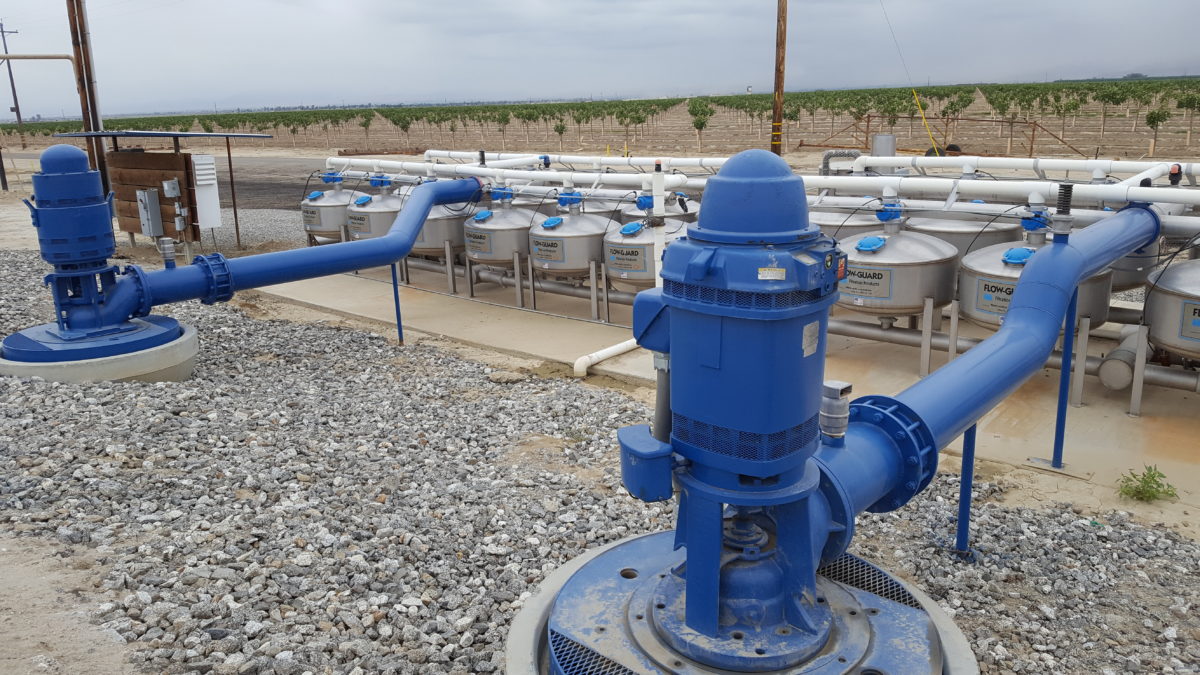
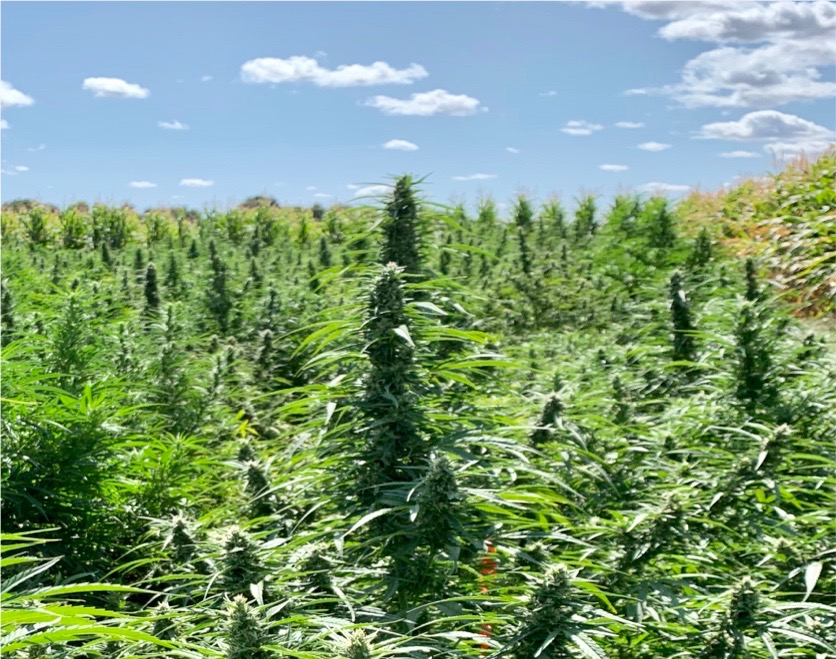
The hemp industry is still in its early days, and many growers are trying to find the systems that work best for efficiency and sustainability. Netafim, who invented drip irrigation over 50 years ago, recently unveiled PioneerLine™, the industry’s first dripline specifically designed for use in hemp applications.

Director of Marketing Ze’ev Barylka says the system is built specifically to meet hemp growers needs.

“We have basically two types. One that is called non-pressure compensating, which is for flat ground. And one that is called pressure compensating, which is for hilly ground, said Barylka.Basically ensuring that when you are growing hemp you have uniformity of water application, which means all of your plants are going to look alike. So they’re going to be the same height, the same size, and you’re not going to have a situation where you have a bunch of beautiful plants at the beginning of your field and very tiny plants at the end of the field.”

In addition to maximizing yield, hemp growers are very concerned with sustainability. Netafim has chosen to source recycled plastics for this product line.

“There’s a lot of stewardship in the hemp industry. PioneerLine is the first product for the hemp industry that ever contained recycled plastics, which is a big concern for growers,” noted Barylka.

For more information, visit www.netafimusa.com/pioneerline.

2020-05-17T22:08:54-07:00May 18th, 2020|

Survey To Help Determine COVID-19 Farm Stress in Imperial County

Survey To Assess COVID-19 Stress on Farms and Ranchers In Imperial County

Given the unprecedented circumstances we are faced with COVID-19, your perspectives are extremely valuable in order to develop farm-community programs and outreach that directly support your health and safety needs in Imperial County.

Annie Keeney, Ph.D., MSW  and  Paola J. Hernandez MSW Candidate/Graduate Research Assistant San Diego State University – Imperial Valley, designed the  10 minute survey

We would feel very fortunate to understand your farm-related stress and its impact in Imperial County. In addition, we have some COVID resources available if you are interested.

We will be offering $20 gift cards for participants’ time spent on this. 

Survey can be found at the link below:

http://colostate.az1.qualtrics.com/jfe/form/SV_3O7ztvK2gfjC5I9


2020-05-15T14:16:42-07:00May 15th, 2020|

SGMA is Risky Business


Farming Life Will Be Difficult With SGMA

From Families Protecting the Valley


The Sustainable Groundwater Management Act (SGMA) is going to make life increasingly difficult for farmers and water districts.  Each water district will have to prove it is sustainable within a certain time.  Translation:  The amount of groundwater overdraft must be reduced to zero over a definite time period.

In order to accomplish this, there are basically two solutions.  One, idle (fallow) enough land to reduce the amount to groundwater pumping until the basin is in balance.  Or, two, access new surface water supplies to increase the amount available to the basin until it is in compliance.  Most basins will probably use a combination of the two methods.

Water districts have the additional task as public agencies to balance their budgets.  Water districts that sometimes have extra surface water use that extra supply to sell water to balance the budget.  The article referred to below addresses that situation.  Merced Irrigation District (MID) is seeking State Water Resources Control Board (SWRCB) approval to sell water outside its basin.

The California Sportfishing Protection Alliance has protested the transfer before the SWRCB.  The reasoning as we understand it is that if MID has water to sell outside the basin, then MID can afford to release more water for the environment.

Is there a solution to this dilemma?  We suggest that districts that sometimes have excess supplies try to work within their basin, or with neighboring basins to mitigate the impact of SGMA on the local area.  Of course, this will require the potential beneficiaries of this water to pay a fair and equitable price to MID.  The MID directors have a responsibility to their constituents who have paid taxes for decades and brought in millions of acre-feet of surface water during MID’s existence.

We hope the Valley and its people can work together to maximize the utilization of our available water.  Sadly, as we have seen over the past 30 years or so, that once Valley water is appropriated for environmental purposes (whether legitimate or not), it is lost to the Valley forever.

2020-05-14T16:13:39-07:00May 15th, 2020|

California Agriculture Reeling From Pandemic

Pandemic Continues to Affect California Agriculture

By Tim Hammerich with The AgInformation Network of the West

Through this challenging time for all of us, we have been bringing you weekly roundups of how the pandemic is affecting agriculture around the state. We have a few more of these stories here for you again today.

Most farmers responding to a California Farm Bureau survey reported they had lost sales or customers during the COVID-19 pandemic. In the voluntary survey, 57% said they had seen sales drop, mainly due to stay-at-home orders that reduced restaurant demand. Another 42% of respondents to the survey said they or a family member had seen their off-farm income decline.

The economic impacts of the pandemic include a drop in home construction, which has hurt sales of timber. One California sawmill operator says he has had to cut production in half as a result. Though housing starts have dropped, market analysts say lumber sales at home-improvement stores have been rising, as people take on remodeling projects, including conversion of rooms into home offices.

The flow of U.S. farm exports to China has increased since the two nations signed a “Phase 1” trade agreement in January, but an American Farm Bureau Federation analysis says sales to China have so far not kept pace with commitments in the agreement. The COVID-19 pandemic has played a role, AFBF says, in part because it has slowed U.S. meat processing for export.

(Source: California Farm Bureau)

2020-05-14T14:00:57-07:00May 14th, 2020|

Dairy Farmers Need More Help

Resources from SBA Not enough to Meet Dairy Demand

By Rich Worthington, with the AgInformation Network of the West

Current federal aid programs available to dairy farmers are considered good first steps in helping them navigate the ongoing pandemic and related demand issues, but more will be needed, according to the National Milk Producers Federation.

Chris Galen with the National Milk Producers Federation says the resources provided to the Small Business Administration are not enough to meet demand.

“It looks like that there’s been so much demand on lenders and the SBA that either the websites have crashed, or banks don’t have access to the money because it’s already gone. So, that’s certainly very frustration for a lot of groups like ours that worked very hard to get the money initially a few weeks ago, and then to get this second supplement of money here this past week. But, what I think it illustrates is that there’s a lot of government programs out there to help various entities in the business community, including agriculture, and right now the demands for that, whether it’s the PPP or USDA assistance, are much greater than what the supply of money is.”

“We’re looking at disastrously low prices here this spring for dairy farmers. And unfortunately, the payment formula that USDA has is more weighted towards the first few months of this year, not towards the spring and summer, when we know that farm level milk prices will be at their worst.”

Resources for dairy farmers to learn more about aid programs are available online at www.nmpf.org.

2021-05-12T11:17:07-07:00May 13th, 2020|

Important Leafy Greens Webinar Scheduled for May 14

Process Underway to Further Strengthen Food Safety Requirements for Leafy Greens


Although leafy greens farmers are facing new challenges created by the Coronavirus pandemic, efforts to strengthen required food safety practices are still moving forward with numerous actions taking place this month.

“California’s leafy greens farmers are hard at work every day implementing new, more stringent food safety practices on their farms,” said Scott Horsfall, CEO of the California Leafy Greens Marketing Agreement (LGMA). “At the same time, we’re all focused on further strengthening the food safety standards required under the LGMA to protect consumers and prevent future outbreaks.”

Under a new process created to review and update required food safety practices for farming leafy green, the first in a series of webinars is being held May 14 at 10:00 a.m. to gather input on proposed changes to required practices, or metrics, for ag water. To register, click here.

A subcommittee of industry experts and scientists has been reviewing existing LGMA water metrics since August and has proposed changes to existing requirements. A summary of the proposed changes can be found here.

“Some 30 suggested changes for water use have been recommended by this subcommittee on water,” said Sharan Lanini, of Pacific International Marketing, who chairs the LGMA’ Technical Committee. “The recommendations include updated requirements for drip and furrow irrigation as well as water used for chemical applications. These updates are in addition to enhanced water metrics adopted by the LGMA last year for sprinkler applied water treatments during the last 21 days prior to harvest.”

Below is a detailed list of additional actions being conducted by the LGMA to strengthen food safety practices:

  • The LGMA has appointed subcommittees to address several topics including water,

equipment sanitation, soil amendments/crop inputs, adjacent land use and proximity to

animals.

  • These subcommittees include industry experts from both California and

Arizona who are systematically reviewing each section of the accepted food safety

practices as well as other potential food safety issues of concern from a scientific perspective.


  • The LGMA’s subcommittee on soil amendments/crop inputs has met several times since

December 2019, and is looking to develop more detailed standards to address requirements for existing best practices that include compost applications; other crop and soil inputs; storage, handling and transportation; container ID and tracking; and inputs applied to neighboring properties.

  • A subcommittee on equipment, packing materials and field sanitation is looking to develop enhanced standards related to harvest equipment, harvest personnel and training that also encompasses human vectored pathogens such as Cyclospora and COVID-19.
  • The public comment period for water has just ended, and the one on harvest related equipment sanitation practices is open through the end of May. Future comment periods will cover the topics of soil amendments/crop inputs and adjacent property/CAFOs. LGMA subcommittees will make recommendations in all of these areas.

The process for updating the LGMA standards is being facilitated by Western Growers, as an independent party to solicit and collect input from all stakeholders. A public website has been created so all interested parties can engage. A calendar outlining when various food safety topics will be reviewed has been posted.

“The goal is to create unified standards for how leafy greens are farmed using the best science and expertise available from throughout the leafy greens community,” said Horsfall. “Water is just the first topic to be addressed. This same process is planned for other areas of the LGMA metrics.”

Once recommended changes have been finalized through this collaborative process, they will be presented to the LGMA for adoption. Approved updates will become part of the required food safety practices and included in mandatory inspections for LGMA members.

Horsfall emphasized that government food safety audits conducted through the LGMA program are taking place even with the COVID-19 situation. As usual, every LGMA member will be audited about five times this year, with both announced and unannounced field audits, and every farmer will be audited at least once. These audits are already more stringent than they were last year.

“The real work of implementing food safety practices is being done every day by leafy greens farmers,” said Horsfall. “The role of the LGMA is to unify the industry under one common set of science-based food safety practices.”


2020-05-12T12:33:31-07:00May 12th, 2020|

Survey Respondents Needed To Assess Value of Cover Crops

Researchers Launch Survey on Cover Crops to Expand Use and Policy Incentive Programs

University researchers and the Western Cover Crops Council are conducting a survey of western farmers to improve understanding of cover crop use throughout the U.S. West. The survey results will provide valuable feedback on current use of cover crops in the west, future outreach and research needs to expand use, and inform federal cover crop incentive programs to better serve farmers.

Western farmers are asked to take this brief survey to share their perspectives on cover crops—whether they currently use them, have planted them in the past, or have never planted them. This survey research is being conducted by partners at the University of Idaho, Oregon State University, and Boise State University with funding from a USDA Sustainable Agriculture Research & Education (SARE) grant. This brief, confidential survey will take approximately 5-10 minutes to complete. Upon completion you will have the opportunity to enter a drawing for one of 10, $50 Amazon gift cards.


Survey Link: http://bit.ly/2U1GUvk

2020-05-12T12:06:48-07:00May 12th, 2020|

USDA To Buy Surplus Food

COVID-19 Surplus Food To Be Purchased By USDA


By David Sparks with AgInfoNetork of the West


As part of the Coronavirus Food Assistance Program the USDA is fulfilling a request by the American Farm Bureau Federation and in doing so is helping to Feeding America.

The Coronavirus Food Assistance Program includes $3 billion of commodity purchases for food banks. Farm Bureau Economist Megan Nelson says the purchases are part of the aid package to help farmers and consumers.

“This is a really great step in the right direction. This program will definitely help get excess food into food banks, which is going to help out our farmers and help food banks facing huge increases in demands. And, it’s something that American Farm Bureau and Feeding America have partnered to ask USDA to do so. So, we’re very happy that this program is getting legs under it and getting moving,” said Nelson.

The program includes fresh produce, dairy and meat. Nelson says USDA will partner with regional distributors to purchase the commodities:

“The procurement process will follow a more streamlined version of the Commodity Assistance program that’s been in place at USDA for some time now and it’s estimating that it’s going to try to be buying about $100 million per month of each product line item,” said Nelson.

The COVID-19 pandemic has consumers purchasing more food for use at home, than away from home. Through the program, food distributors will provide pre-approved boxes of fresh produce, dairy, and meat products to food banks to keep up with demand.

“This is something that is going to be really helping our farmers to get a streamline supply chain to get products that they are producing in abundance, and get it where it’s needed most and where the demand is. And, that’s why these pre-approved boxes of some of the most perishable foods is really going to help out our farmers,” concluded Nelson.

2020-05-09T15:48:50-07:00May 11th, 2020|

California Cattle Leaders Stay Strong During Pandemic

Cattle Leaders Launch Resilience 2020 Campaign

By Tim Hammerich with the Ag Information Network

In the face of a food system that is under tremendous pressure, the California Cattle Council, in conjunction with the California Cattlemen’s Association, launched a Resilience 2020 Campaign.

Dave Daley is a Northern California Cattle Rancher and Chair of the California Cattle Council. “We just need people to understand how committed we are to continue to do what we’ve done, forever. We’re pretty sustainable. We’re very resilient. We’re in this for the long haul, just like Californians are. And the key there is that we actually continue to produce the food in a safe and wholesome manner, nutritious and environmentally sound. So we’re really proud of what we do. It’s important for California to know that we aren’t going anywhere.”

The combined effort seeks to reassure consumers that California ranchers are well-positioned to produce an ample supply of the safest, most sustainable beef anywhere in the world.

“The challenge we have right now is the processing piece. It’s not raising the beef, it’s getting it processed into market. But it’s there; no need to hoard. There’s beef available and it’s going to continue to move through the system and the pipeline. It’s just a very unusual time. To try and re-tool that on the fly, we’re facing a lot of unknowns is the best way to put it. But the key to the campaign is to recognize we’re in this together, we respect what Californians are dealing with it. We’re going to work with it, we’ll come through it on the other end,” said Daley

Visit www.calcattlemen.org/resilience for more information.

2021-05-12T11:17:07-07:00May 8th, 2020|

COVID-19 Continues to Reverberate Through Calif. AG


California Agriculture and COVID-19

By Tim Hammerich, with the Ag Information Network

In recent weeks, we’ve been sharing stories of how California agriculture is adapting under the current circumstances stemming from COVID-19. I have a few more for you here today.

The impacts of the COVID-19 pandemic reverberate through California agriculture, according to speakers at an online forum. During a virtual town hall hosted by chairs of the Legislature’s agriculture committees, economists said changes in diets and buying habits have disrupted every aspect of the farming business. One analyst said agriculture faces a “one-two punch” from the pandemic shutdown and a slow economic recovery.

By mid-May, the U.S. Department of Agriculture plans to begin shipping food boxes to food banks through a new program in response to the COVID-19 pandemic. An analysis by the American Farm Bureau Federation says the food boxes will be packaged for household use, and will contain fresh produce, dairy and meat products. AFBF says more Americans will likely need food assistance due to pandemic-related job losses.

Though classes have transitioned to virtual instruction, the student farm at Fresno State University continues operating, while observing social-distancing protocols. The university says its Agricultural Laboratory has maintained a “near-normal pace” the past month. Students continue to care for livestock and to manage orchards, vineyards and vegetable crops on campus. The farm market at Fresno State has remained open as well.

AgInfo.net is the largest Radio Network in the West with 140 Affiliate Radio Stations.

2020-05-06T20:06:25-07:00May 7th, 2020|
Go to Top