About California Ag Today

This author has not yet filled in any details.
So far California Ag Today has created 2014 blog entries.

A Second Major Blow For Temperance Flat Dam

Water Commission Staff Again Slaps Down Temperance Flat Project

Editor’s note: In a stunning decision, California Water Commission staff, once again, rejected the Temperance Flat Dam Proposal. The San Joaquin Valley Water Infrastructure Authority, which is managing the planning and building of Temperance Flat Dam, issued the following statement:

Water users, counties, and cities across much of the San Joaquin Valley have again found the California Water Commission staff to be unbending over efforts led by the San Joaquin Valley Water Infrastructure Authority (SJVWIA) to both develop Temperance Flat Dam and create badly-needed additional San Joaquin River water storage in a major new Central California reservoir.

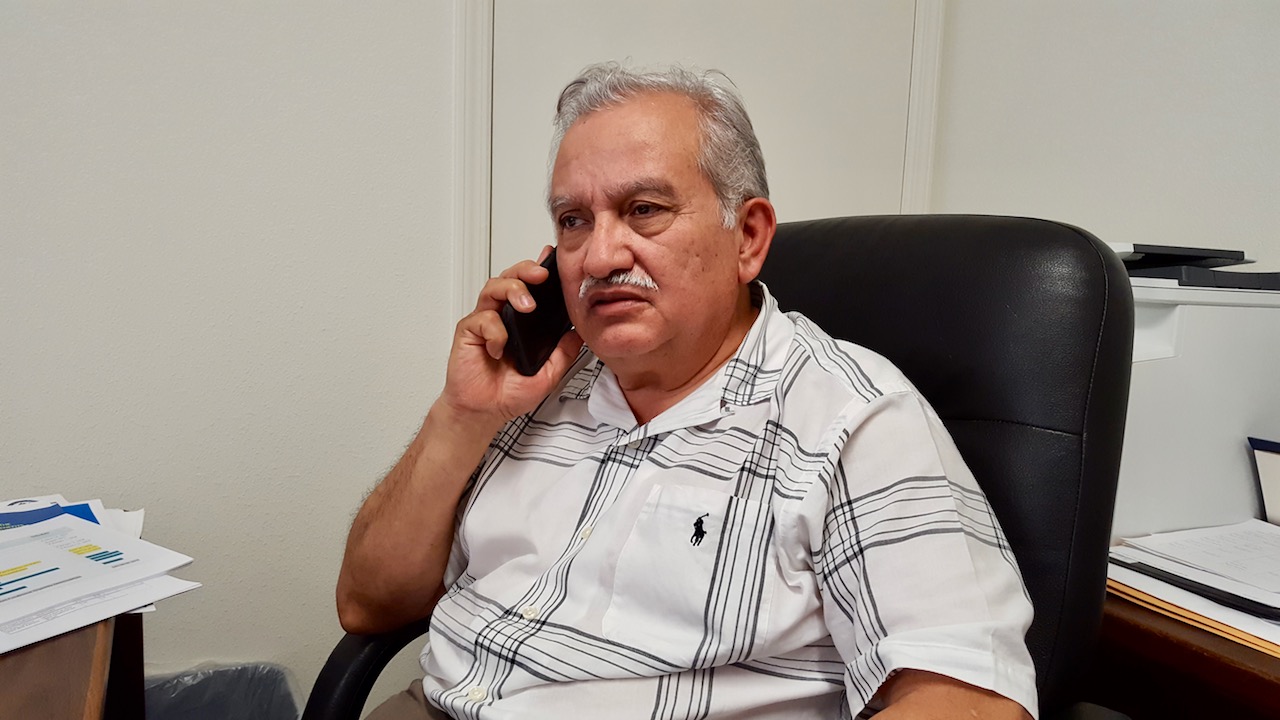
Mario Santoyo, the Executive Director of the SJVWIA is stunned by the California Water Commission’s staff’s decision.

The Water Commission staff today reacted to the SJVWIA appeal in February of an earlier very low public benefit ratio score by assigning only a token improvement in point totals. Temperance Flat’s public benefit ratio was increased from 0.10 to 0.38. A score of 1.0 has been generally considered a minimum for an application to advance, reflecting the bond measure’s emphasis on benefits stressing the environment and flood protection.

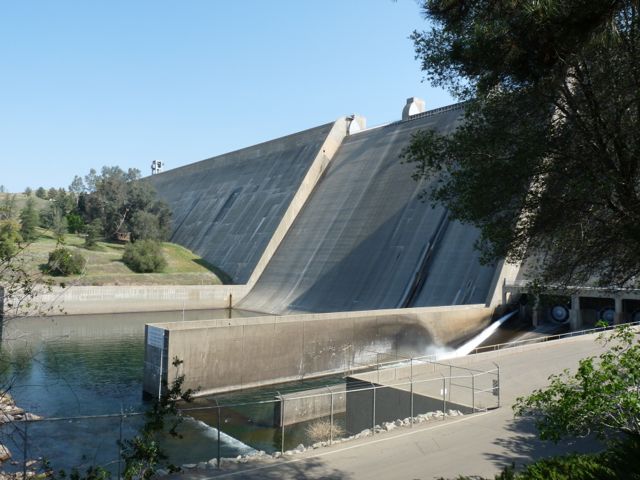
Temperance Flat, which would be a reservoir containing 1.3 million acre-feet of new storage space above Millerton Lake northeast of Fresno, is one of the state’s two largest proposals seeking to be awarded some of the $2.7 billion in Proposition 1 funding for new storage projects.

The SJVWIA, in its application, calculated the Temperance Flat Project should have a public benefit ratio of 2.38. In its appeal, the SJVWIA sought a total of $1.055.3 billion in Proposition 1 funding under the Water Storage Investment Program but the latest CWC staff action would yield, if granted by the full commission, just over $177 million.

The other large proposed project, Sites Reservoir in Northern California, was similarly rebuffed.

“Once again the California Water Commission staff has hijacked what the people of California wanted and voted for,” said SJVWIA Executive Director Mario Santoyo. “The Water Commission staff has again failed to recognize the value of large storage projects by keeping Temperance Flat and Sites Reservoirs well below the 1.0 scoring level.” He noted only two of the remaining 11 projects had scores higher than 1.0. Both are small surface storage proposals. “We are, to say the least, disappointed and dumbfounded by this action.”

“This scoring is devastating but the San Joaquin Valley Water Infrastructure Authority is not giving up,” said Steve Worthley, SJVWIA president and chairman of the Tulare County Board of Supervisors. “We’re going to take our case directly to the Water Commission staff next Wednesday (April 25) and then to the water commissioners themselves May 1-3.

The commissioners were assigned by Proposition 1 to make the decision on this. It’s important to remember that two-thirds of those casting ballots on Proposition 1 in the 2014 general election favored these bonds and what really attracted that level of support was the bond’s much-needed funding for major new storage projects such as ours.”

In fact, Worthley said, Proposition 1’s major storage provisions were written by the Legislature with big projects such as Temperance Flat and Sites specifically in mind.

In a lengthy letter today to the SJVWIA, the Water Commission staff indicated it accepted many of the arguments raised on appeal by the Temperance Flat project’s planners but increases in benefit scoring that were awarded on each item were merely minimal.

Santoyo said the SJVWIA has spent more than $2 million to date on the Water Commission application, utilizing what he said were the most qualified engineers to develop the technical data required by the commission staff. The U.S. Bureau of Reclamation, which administers the Central Valley Project for the Interior Department, has invested more than $38 million in studying the project. He said those studies resulted in a finding that the selected Temperance Flat site is the most preferable location for such a project.

The SJVWIA was organized as a multi-jurisdictional joint powers authority in order to meet the need for coordinated Valley-wide leadership and collaboration in developing the Temperance Flat Project. The SJVWIA was formed by boards of supervisors in Tulare, Fresno, Kings, Madera and Merced Counties and also includes representatives from Valley cities and water agencies.

Worthley said the joint-powers agency’s “focus on our region’s water infrastructure needs is based upon a desire to help resolve the continuing San Joaquin Valley’s water supply crisis, and to capture floodwater flows that can be utilized regionally to help comply with the state’s new Sustainable Groundwater Management Act. For too many years, the Valley has been enduring water shortages that adversely affect many of our counties’ constituents and the region’s economy. Temperance Flat represents a common sense approach and the Valley’s best opportunity to address these issues.”
2018-04-21T18:43:23-07:00April 20th, 2018|

Jason Phillips Talks Water Issues

Jason Phillips on Groundwater Recharge, Water Bond, and Subsidence

Editor’s Note: Jason Phillips is the CEO of the Friant Water Authority, as well as a member of the Board of Directors with the San Joaquin Water Infrastructure Authority (SJWIA), which is behind the building of Temperance Flat Dam. Editor Patrick Cavanaugh sat down with Jason Phillips, and this interview reflects the topics discussed.

Cavanaugh: The California Water Commission rejected all of the storage proposals for Prop 1 money due to all applicants not showing enough in the public benefit ratio. They have all appealed to the Commission, and their decision will be at the end of July. It’s extraordinary that the California Water Commission does not see groundwater recharge as a public benefit.

Phillips: The law was written in such a way that groundwater recharge, which is what we desperately need, is not considered a public benefit. But I must say that the SJWIA team putting together the application did a great job of using water out of Temperance for multiple benefits, including salmon and keeping water in the valley for groundwater recharge, and I hope the Water Commission can see that.

Cavanaugh: The Commission requires a 1:1 ratio, meaning for every $1 spent on the project, it must benefit the public by $1. Temperance Flat Dam was shown that for each $1 spent, it would give back $3.

Phillips: That’s right, and that’s what is necessary. Anybody who looks into what salmon requires surviving—well, it’s cold water. So the ability to generate more cold water in the upper San Joaquin River is nearly impossible. So if you can get a new reservoir over 600 feet high and have a cold water pool, that would provide a benefit. And that’s what the consultant looked at. The commission in their initial analysis assigned zero benefits to salmon, so that’s why we got such a low score.

But if you look at alternatives to trying to provide that salmon benefit in the river, there aren’t a lot of other options, which is why it’s such a significant benefit for Temperance. And again, it’s not sending the water out of the valley by sending it to the San Joaquin River and recirculating it back to growers and cities … so that we can get the groundwater recharge.

Cavanaugh: Of course, Temperance Flat Dam will triple the current storage of Millerton Lake, and a significant benefit will be groundwater storage?

Phillips: It would almost exclusively help groundwater storage because the surface supplies that are generated in Temperance would be used to supplement what’s being pumped, so people can put that water in groundwater recharge basins or they’re able to use the water and not have their groundwater pumps running. That is the absolute best form of recharging, is somewhat able to shut their groundwater pump off, have a delivery of surface water instead of that, and let the natural recharge take place.

Cavanaugh: Let’s talk about the new $8.9 billion water bond that will be on the November 2018 ballot and written by Jerry Merel, a former deputy director of the California Department of Water Resources and a longtime water-project advocate.

Phillips: About 18 months, Jerry had a conversation with me about what would the San Joaquin Valley need in a water bond to help get it out of the problem that … it’s in with groundwater overdraft? And recognizing that Prop 1 was the state’s path for Temperance Flat and that there’s a different path for the tunnels, north of the Delta. So those two are not part of this November 2018 bond.

And I told Dr. Merel at the time that we needed to fix our canal system. We have to be able to move water when it’s available to the growers, into the cities, and never miss a drop of available surface water. And to do that, we have to fix the Friant–Kern canal and the Madera canal. We have to expand the conveyance between the existing canals. And he thought that was a great idea. It’s something that should have broad statewide support. It has support from conservation groups up and down the valley.

Cavanaugh: Is this specifically for canal infrastructure repair?

Phillips: It is specifically for infrastructure for conveyance projects that would help recharge the groundwater aquifer.

Cavanaugh: The $9 Billion has a lot of water for all regions of state?

Phillips: it’s broader than just infrastructure. It targets the different regions of the state for what they need most. Recycling and desalination are huge for the southern California coastal community. So it targets cost sharing money there. If you go to northern California, there are things that Sacramento rice growers really need to support their water needs. In the central valley, it’s more water infrastructure for conveyance that can complement new storage and water conveyance in the Delta. It also includes a lot of money to help the groundwater sustainability agencies fund their plans that are required under the groundwater law.

Water in Friant-Kern Canal

Water in Friant-Kern Canal

Cavanaugh: Prop 1 was $2.7 billion, and this one is nearly $9 billion.

Phillips: That is… it is real money. And I think what California will realize is that there’s a real need for that. And when you look at the size of California, and it’s projected that the bond money will be used as far south as San Diego and the Salton Sea and as far north for repairs at Oroville.

When you look at the scope of the state of California … you see that the need is much bigger than that, when it comes to the state’s water infrastructure.

And regarding the $2.7 for storage—on top of that, the projects will require substantial private investment. And we are all looking at that, and I think there’s a lot of interest. There’s still a need for more storage to the extent that even the water agencies themselves and the growers that are part of those agencies are willing to fund. And we’re still looking at whether the state or federal governments will help cost share it.

Cavanaugh: if the California Water Commission never funds Temperance Flat, is it possible to get it privately funded?

Phillips: Friant Water Authority and other water agencies in the valley are actively and aggressively looking at that right now, doing our feasibility studies to look at whether privately financing the reservoir would make sense. I think it probably will, but it’s a very complicated analysis that we have to do. So by the end of the summer, we’ll hear from the Water Commission, and we should know more about the feasibility of private financing will be available.

Cavanaugh: Regarding the Jerry Merel water bond, where can people go to get more information?

Phillips: People can go to waterbond.org. You can see whether you want to look at it in one page or whether you want to look at the actual text of the bond. It’s straightforward on that website.

Cavanaugh: From where would the investment for the new water bond come?

Phillips: It will all be state dollars and depending on the different categories of where the funding goes. Some of it is for cost-shared work, in the San Joaquin Valley on infrastructure, where it would 100 percent bond funded. No reimbursement required and the money would come straight to the Friant Water Authority for immediate use. We’ve already worked with Department of Water Resources to make sure that, that when the bond passes, we could start submitting requests for some of that funding immediately to begin working on the canal, as early as November 2018.

Cavanaugh: How bad is the subsidence along the Friant Kern Canal?

Phillips: It’s a big problem, and it’s growing. The worst part of it is near the middle of the 152-mile canal, where it has subsided three feet and continues to subside. That subsidence is since 2015. The capacity of the canal has been reduced by about 60%, due to subsidence.

To pass the same amount of flow through that section, the elevation of the water in the canal is very near the top of the canal. And five bridges are impacted by that section where the water comes right up to the bridge, and we’re only at 40 percent of the design capacity there.

2018-04-20T20:49:34-07:00April 19th, 2018|

AVIV, A New Tool for Growers

AVIV Low-Dose Biofungicide Now Available in California

By Patrick Cavanaugh, Editor

STK Bio-ag technologies, the innovative Israel-based leader in biopesticides, announced that its new biofungicide AVIV, which has already been approved by 25 states in the US, has now been approved for use by California for a wide range of fruits and vegetables and TNV crops, including grapes, strawberries, and leafy vegetables.

AVIV biofungicide’s active ingredient is the most potent strain of Bacillus subtilis (AB/BS03) currently available, providing broad-spectrum disease control in both soil and on plant surfaces. In addition to its efficacy, AVIV can be used in low-dose rates. It also has a shelf-life of 36 months.

According to Neal Job, STK USA Business Manager, “We are happy that California has approved AVIV for use on fruits and vegetables. AVIV will be an effective and sustainable new tool for California growers, enabling them to lower chemical residues, increase yields and be more competitive in US and export markets.”

STK CEO Guy Elitzur added, “STK is pleased to bring new AVIV to California and other growers across the US. STK is providing innovative bio-based solutions in over 30 countries to meet the world’s food protection needs from field to fork.”

Biofungicides are considered the new frontier of insect and disease control in that the materials have no re-entry or pre-harvest intervals and do not carry any maximum residue levels (MRLs).

2021-05-12T11:01:55-07:00April 19th, 2018|

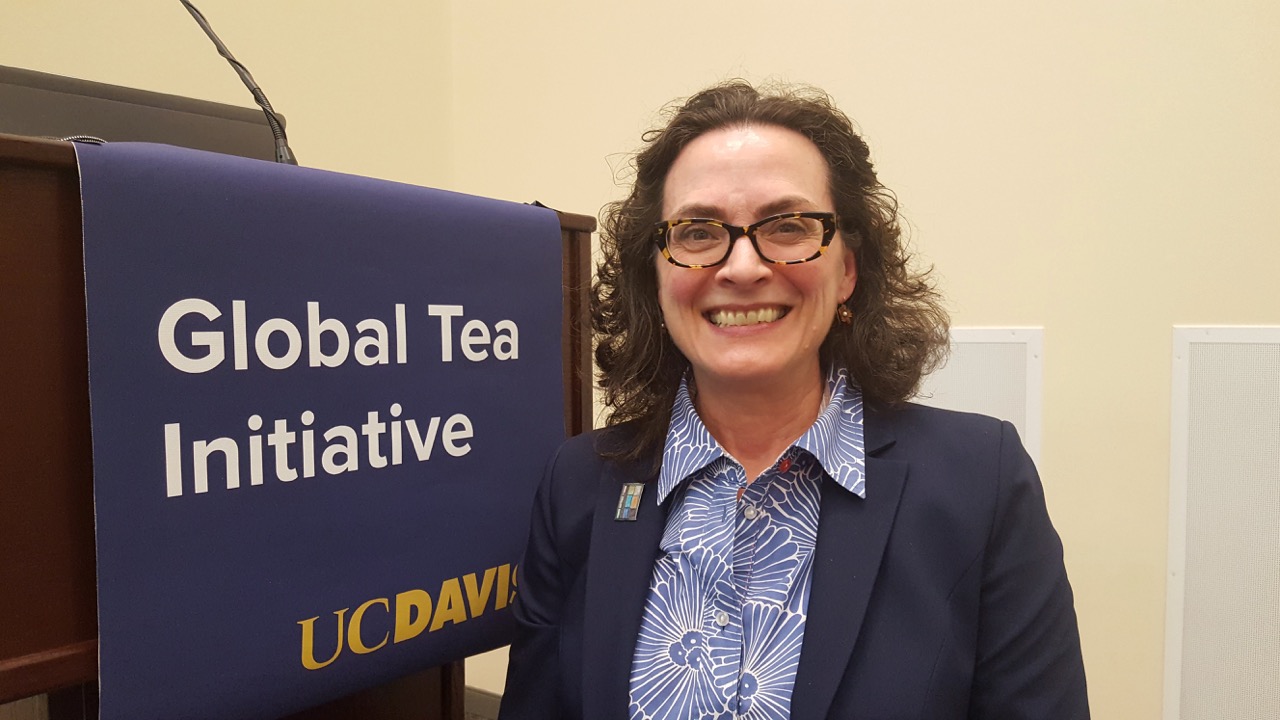
Tea Initiative Becoming Reality At UC Davis

Katharine Burnett Pursuing All Things Tea at UC Davis

By Laurie Greene, Founding Editor

Katharine Burnett wears many academic hats at UC Davis: associate professor and co-chair of the Department of Art and Art History; director, East Asian Studies Program; and founding faculty director, Global Tea Initiative for the Study of Tea Culture and Science. In this last endeavor, Burnett is spearheading UC Davis’s global, intellectual and cultural exploration of tea, including hosting its annual tea symposium and researching the possibility of growing tea here in California.

“We started in 2012 as an idea and a research cluster called ‘All Things Tea,’ ” Burnett said. “After a couple years of working and pushing forward with support from the community, we broached the topic of an initiative to the Ralph Hexter, UC Davis provost and executive vice chancellor. The Provost gave us his blessing and said, ‘Make it blossom.’”

“And, so our initiative was born,” Burnett explained. “The recent 2018 Global Tea Initiative Symposium, the program’s third symposium, commemorates our third year of being an initiative. We are gradually transitioning from an initiative into an actual institute.”

Burnett foresees the institute’s role as, “to tell the story of tea and all its dimensions. It will encourage tea research in any discipline, any field, any approach, including both interdisciplinary and transdisciplinary research and teaching. We want to develop a curriculum for our undergraduates and graduate students and also develop international partnerships so that we can conduct faculty and student exchanges.”

To hear Katharine Burnett tell the story of the Tea Initiative at UC Davis click here: goo.gl/bf7svf

2018-04-18T17:03:35-07:00April 18th, 2018|

Urgent Need To Oppose AB 2975

Urgent Need to Call CA Legislators and Suggest Opposition to AB 2975 (Friedman)

Below is a letter sent by the San Joaquin Valley Water Infrastructure Authority to Valley Legislators,  requesting their help in stopping AB 2975. As you may be aware, this legislation is a slightly different version from last years AB 975 by the same author.

Mario Santoyo is Executive Director of the SJVWIA

Please do not believe the author’s staff if they state that this legislation is not targeting the Temperance Flat Reservoir project; it is.  Not only would the TFR project be in jeopardy, but other future projects in other tributaries would be as well.  Again, they may suggest “approve with amendments.” Just say “NO.” If this door is opened even a fraction, we will not be able to close it when they decide to enhance it.

Simply put, it is a means by which the State of California could override Federal actions.

Our understanding is that the bill is heading to the Assembly Appropriations Committee, so please communicate with committee members with concerns.

Dear San Joaquin Valley Members of the Senate and Assembly:

On behalf of the San Joaquin Valley Water Infrastructure Authority (SJVWIA), I am writing to express our opposition to AB 2975 (Friedman). As you may know, this bill is very similar to legislation, AB 975, proposed in 2017 by Assembly Member Friedman, legislation which the SJVWIA also opposed.

This latest bill again seeks to expand the scope of the state’s Wild and Scenic Rivers Act with potential adverse impacts on the state’s water supply system, water supply development, water rights and drought response.

Steve Worthley, Tulare County Supervisor and President of the SJVWIA, signed the letter to key valley legislators.

It is obvious that a particular (although unnamed) target of the legislation is the proposed Temperance Flat Project on the San Joaquin River, northeast of Fresno. Under the previous federal administration, the U.S. Bureau of Land Management (BLM) proposed to include much of the San Joaquin River within the footprint of Temperance Flat Reservoir under the federal Wild and Scenic River Act. That proposal has been withdrawn by the Trump Administration.

Temperance Flat is a project that enjoys wide public support within the San Joaquin Valley in recognition of benefits it would provide in implementing the state’s new Sustainable Groundwater Management Act (SGMA) and addressing water supply needs that are so evident because of California’s continuing water crisis. As you well know, our region is Ground Zero for the worse of the state’s water crisis impacts and negative effects.

The SJVWIA was organized by five San Joaquin Valley counties, plus cities and special districts, with the objective of applying for state bond financing under the Water Storage Investment Program (WSIP) directed toward Temperance Flat development and constructively address these problems.

We know you understand Temperance Flat would provide a vitally-needed source of additional surface water storage. A large dam would be constructed within the upper reaches of existing Millerton Lake to form the new reservoir, which would have a capacity of 1.3 million acre-feet. More than 20 years of federal investment and study, directed and carried out at a cost of more than $36 million to date by the Interior Department and U.S. Bureau of Reclamation, have gone into the Temperance Flat project since 1995. This analysis has scrutinized project needs, benefits, operational challenges and related issues. The project would provide much needed additional water for San Joaquin River restoration.

Unfortunately, the SJVWIA has found it necessary to act and devote limited resources to opposing not only an obstructionist federal wild and scenic rivers proposal, but these state bills proposed by Assembly Member Friedman. This bill’s language could be a complete, permanent and fatal obstruction to developing Temperance Flat’s vastly increased and vitally-needed water storage capability, which is so essential for complying with SGMA, solving the valley’s water crisis and meeting regional environmental needs.

Ironically, the San Joaquin River reach within the Temperance Flat footprint can never attain “wild” or “free flowing” conditions. Upstream are seven major dams and nine smaller dams, developed over the past century by Southern California Edison Company and Pacific Gas and Electric Company to store and divert water into a dozen power plants where electricity is generated. Under most conditions, what some are proposing as a “wild” and “free-flowing” river carries just a tiny flow for fish because most of the river’s discharge is routed through two PG&E power plants.

The Friedman bill’s provisions are nothing less than a poorly-disguised ploy to hamper and discourage further surface water development. We see no reason why current state law should be broadened to expand designated “wild and scenic” areas as this measure purports to intend doing.

For these reasons, the San Joaquin Valley Water Infrastructure Authority opposes AB 2975 and respectfully requests your “NO” vote when the bill is taken up. If you or members of your staff have any questions, please contact Executive Director Mario Santoyo at (559) 779-7595, or by electronic mail at Msantoyo@sjvwia.org.

Thank you for your consideration.

2018-04-17T16:42:34-07:00April 17th, 2018|

Consumers Get More Information with iTrade Fresh

More Transparency On Produce Available through iTrade Fresh

By Patrick Cavanaugh, Editor

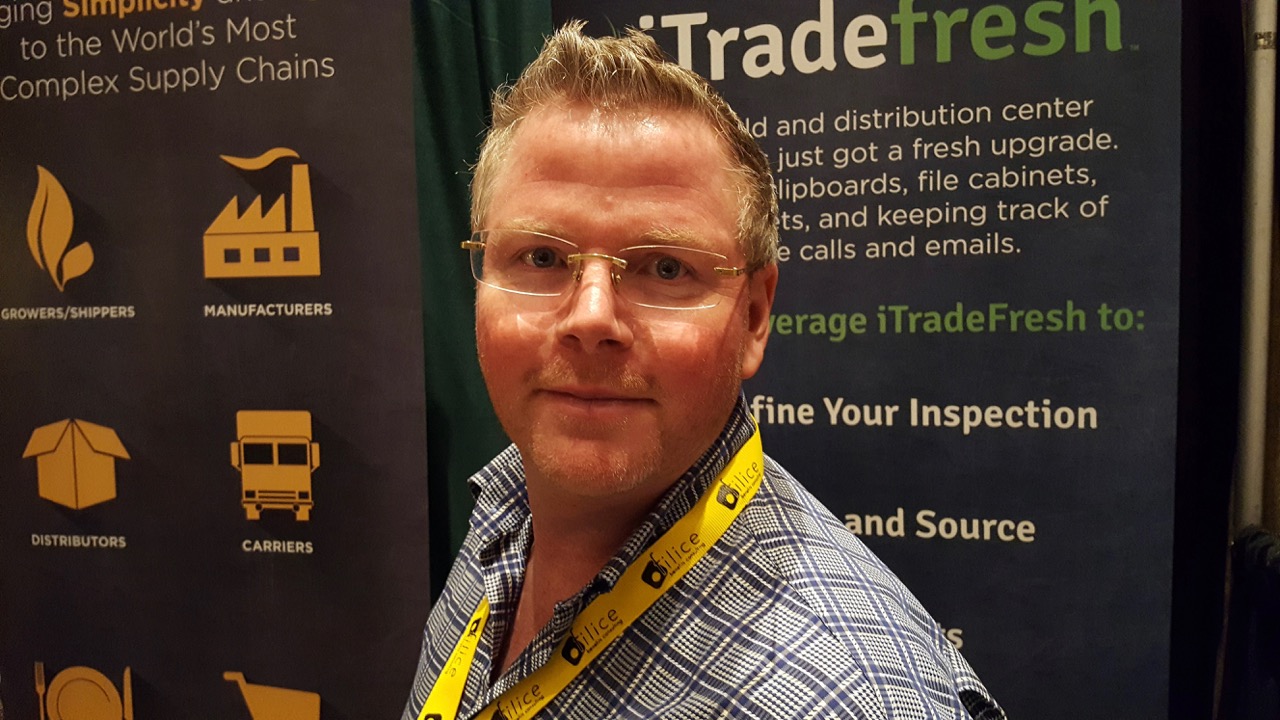
There is more transparency available now in produce sales, according to Dan Reighn, director of grower/shipper sales with iTrade Fresh. He explained how iTrade works with the entire supply chain for produce and perishables, providing scanning information for the customer.

“People know iTrade as a portal between buyers and sellers, so a buyer like Safeway is transacting with a supplier like Dole, … [and] we handle the purchase order, invoice, advance ship notice for them, but also we extend across the entire supply chain,” Reighn said.

“We’re offering full visibility at the very first mile supply chain where a case is either packed in the field or packed in the packing shed, and we can put a PTI traceability sticker or an item traceability sticker on a clamshell of berries and we’re able to track that product all the way to the other end of the supply chain,” he explained. “So when a consumer scans the product at the other end, they can learn more about where the product came from, and it’s a way for increased consumer engagement.”

The stickers placed on the packaging are for the customer to learn more about the grower and the local communities where the product was grown.

“There is information about the grower, so whether the product is picked in Mexico or South America, there’s a lot of growers that do a lot for local communities, and so consumers can learn about giving back and how they support the community,” Reighn said.

Because consumers are voting with their dollar, learning and feeling good about products that they’re buying can support the grower who might be providing community services or hospitals or other educational opportunities in Mexico.

“Alerts can also be sent,” Reighn said. “Our system allows us to send alerts out to consumers, so if as a clamshell of berries is part of the food recall, they’re able to understand it and follow instructions on what to do. They can call a number, turn the product in and so forth. So it’s a way for consumers to feel good about what they’re eating and making sure that they’re eating safe produce.”

2018-04-18T21:12:50-07:00April 16th, 2018|

Farmers Add Emotional Connection to Food

Bayer Reports Consumers Still Trust Farmers

By Laurie Greene, Founding Editor

Adrian Percy, Global Head of Research and Development for Bayer Crop Science, told California Ag Today recently that he believes the public still trusts farmers.

“There’s a high degree of trust,” he said, “and I think that comes from the fact that there is an emotional connection with food and the fact that growers are known to be trying to work sustainably. Growers look from generation to generation in terms of passing the farm down, oftentimes, and I think that is still understood by the public, even if people have a few reservations about some of the technologies we use in agriculture.”

According to a recent Bayer global study about consumers, Percy reported, “We are seeing, not just in the U.S., but also in the Europe, South America and Asia, a lot of questions coming up around agriculture. As an agricultural input company, we think it’s our role to help understand this [phenomenon], first of all. We think it is very important for us to help activate—be it farmers or other folks in the industry—to come out and talk about agriculture, enter into dialogue with consumers and explain what we do.”

Commenting on some of the study’s most interesting revelations, Percy said, “It was interesting just asking the general question, ‘Do you believe that innovation in agriculture is actually important?’ And people came back, ‘Yes, we do believe that we need to innovate. We do see that there is a need to feed a growing population and that we need to help farmers farm more sustainably with better tools.’”

On the other hand, Percy explained that consumers drew the line, “when we quizzed them about the individual tools. People don’t necessarily like the idea of chemicals on the farm or GM technology in certain cases in certain parts of the world. So those are the types of discussions that we need to really go into.”

2021-05-12T11:05:12-07:00April 13th, 2018|

California Blueberry Growers Fit a Profitable Gap

Blueberry Production in California

By Patrick Cavanaugh, Editor

California blueberries are harvested from more than 5,000 acres in the state, but it took quite a bit of work in the early 1990s to make the crop viable for the area.

“We took a lot of varieties that had been developed for the early season low-chill areas of the southeast, and then we had to modify the pH of the soil and water, which was important. They were also finicky with heavy soils and would not tolerate drought,” said Mark Gaskell, a UCANR Cooperative Extension Small Farm and Specialty Crop Advisor for San Luis Obispo County who was very involved in establishing the early blueberry industry in California.

“We had to come up with a growing regime, and that took a few years, but there was enough success in the early years and the crop price would be at transitional periods between the northern and southern hemisphere,” Gaskell explained. “This is because, historically, most of the blueberries were grown in relatively few states and started being harvested in April and went to maybe October or September. And then it all shifted to the Southern hemisphere.”

At the time of a shift in the production area, there is a huge price incentive. And California growers filled that in.

“Soon, there was a lot of interest in producing for the fresh markets and as a result of having more blueberries in the market, more of a year, consumption has gone up,” Gaskell said. “At the same time, blueberries had become a super food for health.”

Other specialty small food crops are diversifying growers’ fields after the great success of introducing blueberries as a profitable crop.

“Much of the same kinds of things had been happening with other specialties, small fruit crops,” Gaskell explained. “California used to be primarily a strawberry-producing state. And many of those strawberry growers now have diversified in a wide range of other berries. And so those raspberries, blackberries, and blueberries have all increased in acreage and value.”

More information on California Blueberries can be found here.

2018-04-12T16:33:56-07:00April 12th, 2018|

GMO Technology Can Help Prevent Starvation

First World Activists Dictate to Third World

By Patrick Cavanaugh, Editor

Needed GMO technology to help citizens in Third World countries is being thwarted by activist groups in First World countries who are anti-GMO, said Alison Van Eenennaam, a UCANR Cooperative Extension Specialist focused on Animal Genomics at UC Davis.

“If the African people choose to use this to develop better bananas, they should have the right to use that and not be dictated to by activist groups in the First World promoting fear around this technology,” she said.

GMO technology could greatly benefit those in the developing world, especially those who struggle with starvation on a daily basis.

“Most people have never seen starvation. People take food for granted, and when you see people that have problems in their agricultural production systems that are actually affecting the food security, you have to address those problems, whether they be drought or disease problems,” Van Eenennaam explained.

“And I’m all for using whatever technology that works best to address a problem. Maybe it’s conventional breeding or maybe its GMO, or gene editing. I don’t really care. I just want to use the best tool that is available. But it doesn’t make sense to take some tools off the table for no reason, and I think that’s what’s happening around the debate of genetic engineering,” she said.

And the use of GMO crops in a third world country has dramatically decreased the use of pesticides, which should be celebrated by activists.

“About 90 percent of the farmers growing GMO crops are on small acreage producers in the developing world, that are growing insect-protected Bt cotton. And the dramatic decrease of insecticide use resulting from that—well environmentalist should be singing this from the rooftops,” Van Eenennaam said.

“It’s incomprehensible to me that if your real intent is to decrease pesticide use in agriculture, to not appreciate what those Bt crops have done for global insecticide use is to be willfully ignorant of what the data shows,” Van Eenennaam said. “It’s just a win-win for everyone.”

2021-05-12T11:05:12-07:00April 11th, 2018|

BioConsortia To Bring New Tools to Ag

BioConsortia Continues Growth and Success, Securing $10 million in Series D Funding

By Patrick Cavanaugh, Editor

Getting even closer to helping California agriculture, BioConsortia, Inc., an innovator of microbial solutions for natural plant trait enhancement and yield improvement, has closed a further round of equity financing to support its continued growth, research achievements, and development of superior products.

Three new PhD scientists working on plants in lab: (from left) Jorge Santiago, Jenna Lang and Steve Wu

The $10 million round was led by Otter Capital and contributed to by Khosla Ventures, both of which are long-term backers of the biotechnology company and experienced ag tech investors.

The completion of Series D will further support the increased momentum BioConsortia saw in 2017, with three strategic new hires, the addition of a sixth U.S. patent, and the planting of fall and winter field trials. Funds raised will be used for the commercial development of a number of novel microbial consortia products — focused toward corn, wheat, soy, tomatoes, and leafy vegetables.

Marcus Meadows-Smith

BioConsortia will also continue to build upon its proprietary discovery process Advanced Microbial Selection (AMS) including supporting the expansion of the AMS platform itself, incorporating deeper and more specialized analytics. Collectively, these steps will drive the company towards the establishment of an original and proven platform for the development of more efficacious and consistent microbial products for a wide range of agricultural crops.

“We are excited by the progress that we have made in product development, for both biostimulants and biopesticides, and the recognition from our investors.” says Marcus Meadows-Smith, CEO. “This new funding allows us to increase our annual spend on R&D, adding more tools from genomics, microbiome and machine learning to our already powerful discovery platform.”

A portion of BioConsortia’s planned development has been and, will continue to be, driven by the key hires made last year: Drs. Jenna Lang and Steven Wu providing scientific leadership in Microbiome Ecology and Computational Biology, respectively. Microbiome analysis and computational modeling underpin BioConsortia’s AMS process. When combined with the extensive physiological data collected throughout the discovery program, microbiome insights enable identification of the functional microbes benefiting high-performing plants, either as individuals or as consortia.

“Collectively, Jenna and Steven have a tremendous wealth of experience and expertise,” says Dr. Sue Turner, Sr. VP of Research. “Throughout the AMS process, we are capturing huge amounts of data; knowing how best to efficiently manipulate and analyze it is crucial for advancing leads and finding new, superior microbial solutions.”

In addition to adding big-data expertise to its research group, BioConsortia has been developing a strong fermentation team as it reaches the final steps in developing leads for commercial launch. Dr. Jorge Santiago-Ortiz joined the company as lead Fermentation Scientist early last year and has worked closely with Dr. Hong Zhu, Sr. VP Lead Development and Manufacturing, to lead scale-up and formulation experimentation in the newly built formulation facilities at the company’s Davis headquarters.

The drive to commercialization is now under way as several microbial treatments transitioned from second and third year field trials across a range of crops and geographies last year. A select number were entered into repeat field trials by major industry players, and these are moving forward to further testing and development. The early-stage biopesticide program also saw many remarkable successes in greenhouse and field trials, and so will be expanded onto many more crops in 2018.

“The expertise that we have added really reflects the comprehensive nature of our discovery and development platform,” Zhu said. “It has set us up for success as we ramp up our 2018 R&D program and move ever closer to product launch.”

2021-05-12T11:05:12-07:00April 10th, 2018|
Go to Top