About California Ag Today

This author has not yet filled in any details.
So far California Ag Today has created 2014 blog entries.

Laurie Greene Wins Journalism Award

Greene Wins Fresno County Farm Bureau Award for Series on Farm Workers’ Rights


By Patrick Cavanaugh, Editor


The Fresno County Farm Bureau (FCFB) recognized Laurie Greene, founding editor of CaliforniaAgToday.com,  with a First Place Journalism Award in the Farm Trade Print category on May 3. Her nine-part series published on our Google News-recognized CaliforniaAgToday.com website entitled, “Who Safeguards California Farm Workers’ Rights?” focused on recent, predominantly legal developments that illustrate the increasingly complex quagmire that masquerades as protecting farm employees’ rights in the state.

Laurie Greene wins Journalism Award

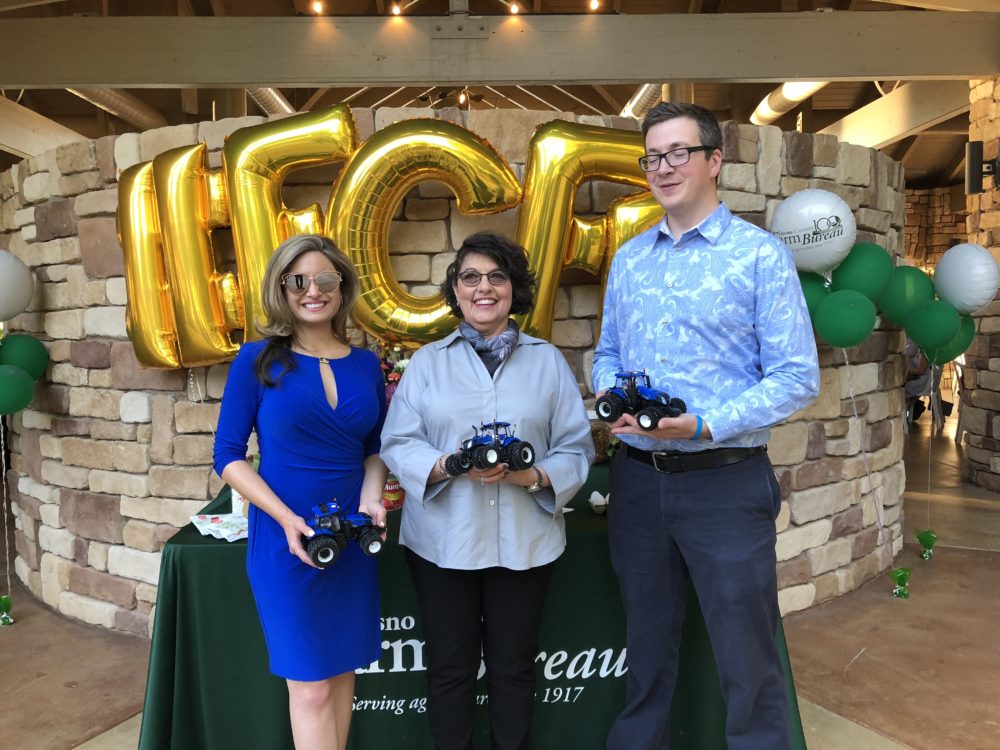
Ryan Jacobsen, FCFB CEO; Laurie Greene holding tractor award; and Donny Rollin, FCFB President.

According to the FCFB, “The annual awards recognize excellence in reporting on agricultural issues from journalists throughout the region. The criteria for the awards were: awareness of agriculture’s importance in the Valley; use of visuals to tell the story, where applicable; thorough and objective coverage of the issues, given time and space limitations; and portraying the ‘human side’ of the industry, making the issues relevant to consumers and/or producers.”

Laurie’s careful coverage of a complicated story was unrelenting in its meticulous research and thorough in cultivating numerous sources to tell the complete legal story of Gerawan’s farm employees. Laurie has been cited as a journalist with a sharp legal mind and is a strong asset to the company.

“When I moved to the Central Valley,” Greene said, “I was shocked to discover that Cesar Chavez’s legacy was tarnished. His UFW had evolved to mandate that farm employees submit to mediated union representation and payment of dues—all this by a union elected a quarter century earlier that subsequently abandoned the workers for two decades.

Gerawan Employees

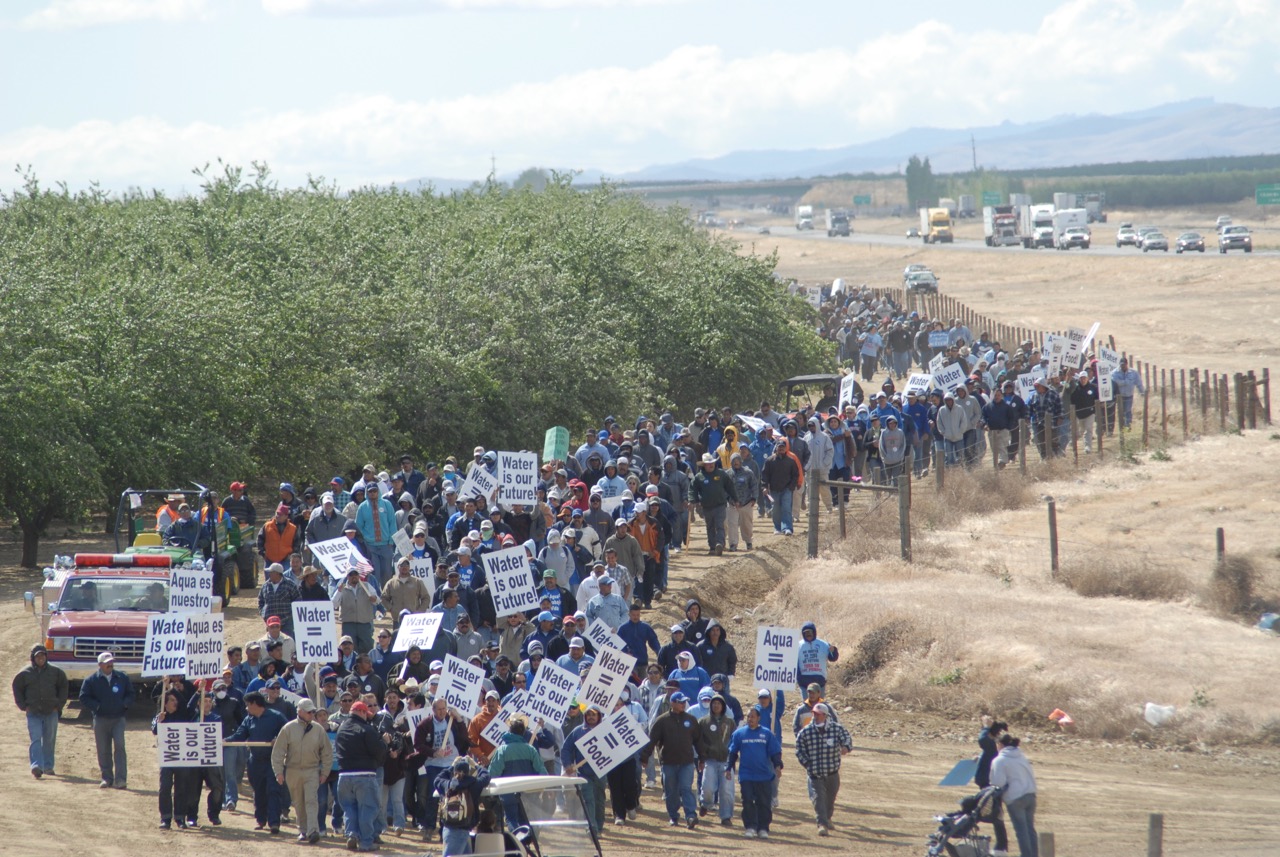
Gerawan Farm Workers Protest against UFW at California Supreme Court.

Greene explained, “Current farm employees have had to fight to have their voices heard, to gain access to pertinent court hearings, to work unimpeded for the employer of their choosing, to face employment termination if they refuse to pay union dues, to exercise their right to vote to decertify the union in a sanctioned election and to have their votes publicly counted. I felt compelled to relay the facts in this important story.”

FCFB 2018 Journalism Award Winners Alex Backus, CBS47; Laurie Greene, CaliforniaAgToday.com; and Dominic McAndrew, 580AM KMJ. (Absent was Maria G. Ortiz-Briones, Vida en el Vale)


Greene’s work in the series was shared across the California Ag Today’s social media platforms and broadcasted across the California Ag Today Radio Network of 22 radio stations. She is also the owner of Cultivated Words, which provides professional editing services and college application essay coaching.


Other award winners were:

Audio:  Dominic McAndrew, News Talk 580AM, KMJ, “Signing the application for state funding of Temperance Flat Dam,” August 14, 2017.

Video:  Alex Backus, CBS47, “Fear in the Fields,” May 19, 2017.

General Print:  Maria G. Ortiz-Briones, Vida en el Vale, “Farmers, immigration rights advocates push back after ICE checks in the Central Valley,” February 12, 2018.


Who Safeguards California Farm Workers’ Rights?  (abridged)

Greene focused on the ongoing pressure the United Farm Workers (UFW) and the California Agriculture Labor Relations Board (ALRB) has placed on Gerawan farm workers in an attempt to force them to accept mandatory fee-based union representation by the UFW. Gerawan employees voted in favor of UFW representation in 1990, an election the ALRB certified in 1992. UFW never reached a contract to represent Gerawan employees in wage negotiations with their employer and never collected union dues. The UFW effectively abandoned the farm workers for 20 years.

The California Legislature amended the Agricultural Labor Relations Act in 2012 to impose a mandatory mediation and conciliation process for union contracts. The UFW offered Gerawan employees a new contract proposal via this forced legal process.

On Oct. 25, 2013, Gerawan employee Silvia Lopez filed a petition to decertify the UFW as the bargaining representative for the company’s workers. Gerawan voted in an historic, ALRB-sanctioned election on November 4 or 5, 2013; however, the ALRB impounded the ballots, reportedly without having counted them.

Silvia Lopez, Gerawan farm worker spokesperson

The twists and turns of who actually safeguards California farm employees’ rights have been strikingly dramatic, undemocratic, political, and arguably unconstitutional. And yet, the conflict remains legally unresolved.

Click here to read the series.

Click here to search for California Ag Today’s multimedia coverage since 2013 of this ongoing battle.  Search suggestions:  Gerawan Farming, Silvia Lopez, UFW, and ALRB.

2019-12-25T16:01:33-08:00May 7th, 2018|

Additional Chinese Tariff on Ag is Disruptive

Growers Concerned Over Added Tariff into China

By Patrick Cavanaugh, Editor

Trade to China is so important to California, and for that reason, the 15 percent added Chinese tariff on ag products is devastating. It’s due to the retaliation of the Trump administration tariff, which he put on steel and aluminum exported by China.

Jeff Colombini with Lodi Farming Co.

It’s worrisome for growers such as Jeff Colombini, the president of Lodi Farming, with partners that grow cherries, apples, walnuts, and olives. He noted that apples and walnuts are an essential crop to China and he’s concerned.

“Trade is significant to the apple crop for California apples, but particularly for Washington state. Apples in Washington state is the largest producer of apples. They export greater than 25 percent of their crop,” Colombini said.

“Both China and Mexico take apple varieties that have fallen out of favor for U.S. consumers. So really, it’s a match made in heaven,” he said.

Colombini said growers have made decisions over the last 10 to 15 years on planting orchards based on these growing export markets.

“Then when the markets slam shut, what do we do with all this excess production/ This becomes disruptive to the markets … not to mention it significantly affects the farmer’s bottom line,” he explained.

Colombini said apples require a lot of labor—a big economic boost to many communities—and disruption in getting that crop to China is not good.

There’s a lot of people employed in the apple industry throughout the United States, and so a trade war can have a significant impact on many thousands of families.

Colombini said it took many years to get that China market open, and when it finally got opened in 2015, it has grown to be their sixth largest export market.

“Similarly, the export disruptions for walnuts is extremely concerning to that industry,” he said.

2018-05-04T14:42:44-07:00May 4th, 2018|

Temperance Flat Denied Funding

All Hope Dries Up

By Patrick Cavanaugh, Editor

Again, it came down to fish, specifically Chinook salmon, that forced the proposed Temperance Flat Dam out of the race for Proposition 1 funding for building new water storage projects.

Mario Santoyo and Temperance Flat Denied Funding

Mario Santoyo fought hard for Temperance Flat Dam funding.

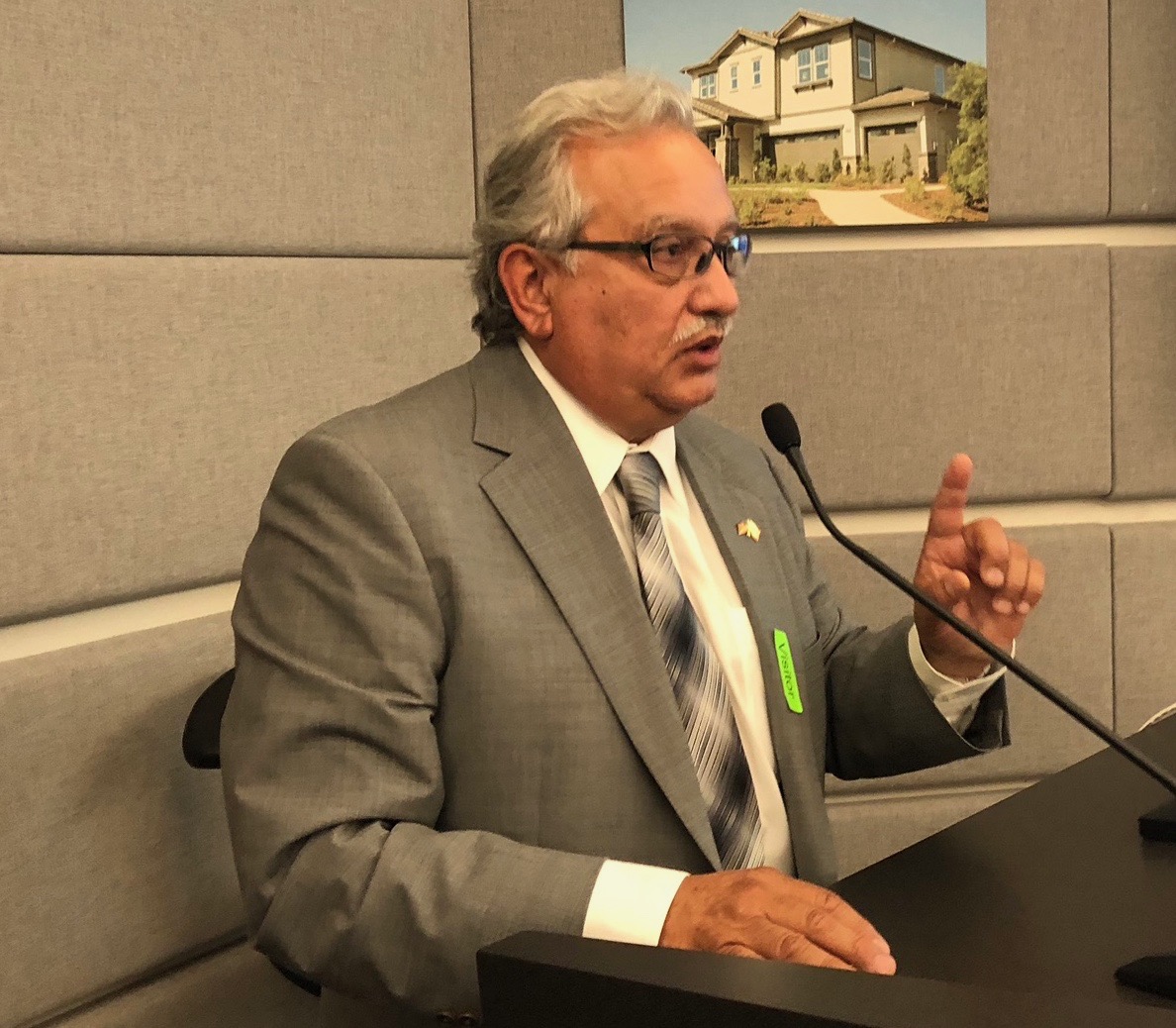
For more than 20 years, the Temperance Flat Dam proposal was passionately advocated with unwavering support by Central Valley cities and the San Joaquin Valley Infrastructure Authority (SJVIA) who were behind the application. Temperance Flat came crumbling down Wednesday at the California Water Commission (CWC) meeting in Sacramento on the second day of discussion.

On Tuesday, CWC staff members assigned to crunch the Public Benefit Ratios for the project were solidly encased in concrete, refusing to grant the project any consideration for its ecosystem restoration benefits. The Dam would provide critical cold water to flow down the San Joaquin River, thus helping the salmon spawn.

CA Water Commission kills Temperance Flat funding

CA Water Commission denied funding for Temperance Flat Dam.

And while the official public benefit calculation came up short today, proponents already saw that the project was already on life support Tuesday, with a dire prognosis.

“Stunned is an understatement,” said Mario Santoyo, executive director of the SJVIA, who has worked for more than 18 years on the project. “Temperance Flat is the most critical water project ever proposed for the Central Valley, which is ground zero for significant water shortages that will not go away.”

It all boiled down to the Ecosystem Diagnosis and Treatment (EDT) model that was approved by Bureau of Reclamation and the California Department of Water Resources. Despite both approvals, that model did not jive with the Commission staff’s model, which undervalued the project’s public benefit ratio, killing the opportunity for Temperance Flat Dam to receive funding of more $1 billion for construction.

“We are working in an area of great uncertainty in professional judgment,” Bill Swanson, vice president, Water Resources Planning & Management for Stantec, a global planning and engineering firm, who presented data for the SJVIA. “We do not have fish in the river. We do not have empirical data. The only issue available to us is a comparison of how the system would respond to changes in flow, temperature and habitat,” Swanson said.

“That’s the reason we used the EDT model, the same model that the Bureau of Reclamation has used in their models of flow,” Swanson explained. “The SJVIA’s challenge was how to take the results of that model and analyze them to a level of detail that distinguishes the precision that we might want to have around the results,” said Swanson.

Bill Swanson

Stantec’s Bill Swanson advocated for Temperance Flat Dam funding.

“I’m very disappointed with the way they scored a great project that needed to be built,” noted Santoyo. “And I am not happy about one commissioner from Orange Cove who stabbed us in the back and scolded us on why we did not meet the Public Benefit Ratio. We did meet and exceed that ratio, but the CWC disagreed with our ecosystem restoration model that had been used by both the state and the feds.”

Several Water Commissioners publicly wrangled with their staff on how they could make the project work. They sought areas to increase the project’s cost-benefit evaluation to get it funded.

Commissioner Joe Del Bosque read the ballot text of Prop 1, approved by California voters by 67 percent in 2014. He reminded those present that voters expected a water storage project to be built, adding, “We need to find more certainty in order to get Temperance Flat built.”

Commissioner Daniel Curtain distinguished two parts to the discussion—physical and monetary. “Take a look and see if there is a physical benefit for ecosystem restoration. Finding a potential benefit and attaching a potential monetary benefit could be helpful,” he said.

The project was also short on points for recreation opportunities on what would be a new lake behind the 600-foot high dam east of Fresno, behind Friant Dam. Commissioner Joseph Byrne said he hoped for more thought given to the recreation cost benefit. “Intuitively, zero benefit does not make sense. We need a higher level of confidence in the estimated recreation cost-benefit,” he said.

CWC staff stipulated that while the newly created lake behind Temperance Flat Dam would accommodate boating activity, the lack of camping, hiking, and other activities within the existing San Joaquin River Gorge neutralized any recreation benefits.

If built, the Temperance Flat Reservoir would contain 1.26 million acre-feet of new water storage above Millerton Lake, northeast of Fresno. Temperance would have helped provide a more reliable supply of fresh drinking water for disadvantaged Valley communities. It would have enabled below-surface groundwater recharge, addressed extreme land subsidence and provided critical help to farmers facing severe groundwater restrictions due to the Sustainable Groundwater Management Act (SGMA).

Santoyo said the SJVWIA spent more than $2 million on the California Water Commission application, utilizing what he said were the most qualified engineers to develop the technical data required by Commission staff. The U.S. Bureau of Reclamation, which administers California’s Central Valley Project for the U.S. Department of the Interior, has invested more than $38 million in studying the project. Santoyo said those studies supported the finding that the selected Temperance Flat site is the most preferred location for such a crucial project.

2018-05-03T15:42:58-07:00May 3rd, 2018|

UC Davis Tea Initiative Will Include Research and Teaching

Tea Initiative is First of Its Kind

By Jessica Theisman, Associate Editor

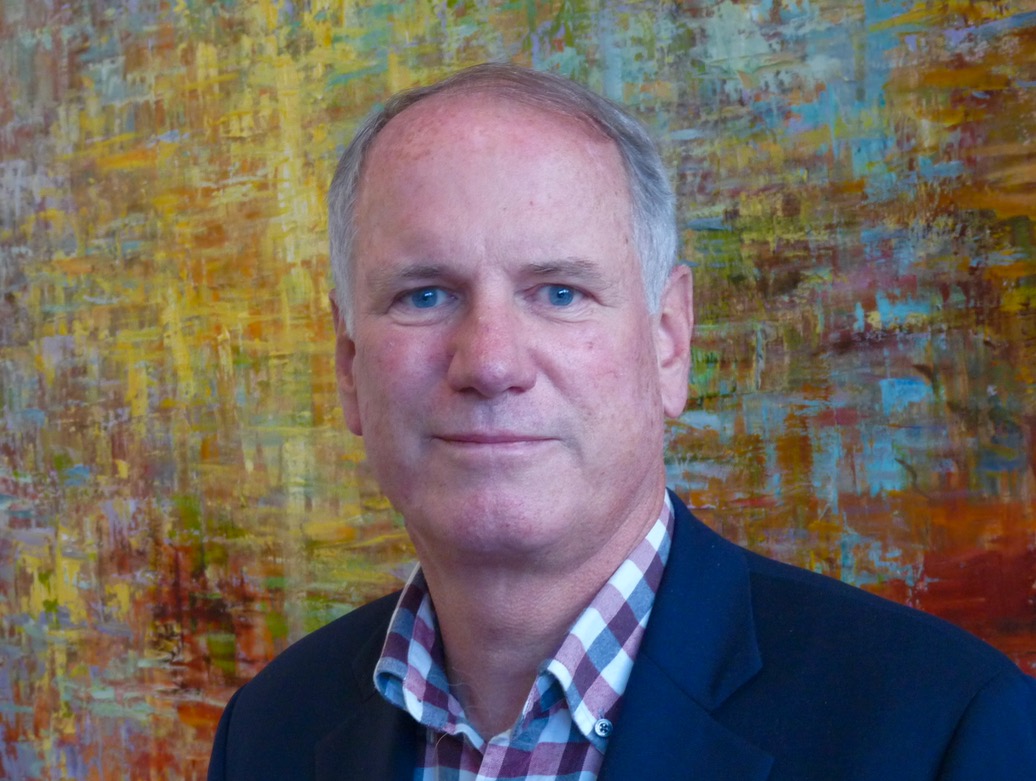
Katharine Burnett is a professor of Chinese Art History and Asian Art History at UC Davis. She spoke with California Ag Today recently about the Global Tea Initiative; a group focused on the culture and science of Tea through research outreach and teaching.

Katharine Burnett Will Head Up Tea Initiative

“The role of the Institute will be to tell the story of tea and all its dimensions, it will be to encourage research and to encourage interdisciplinary and transdisciplinary research along with teaching,” she said.

The Global Tea Initiative wants to develop a curriculum for undergrads and grads. They plan on developing international partnerships as a research institution.

“We want to be the … institution that can help the researcher, scholar, industry member, and community member to be able to access evidence-based knowledge about tea and to help the consumer and industry better understand what it is and what it can do for us,” Burnett said.

The Global Tea Initiative is the first of its kind.

“Other institutions study their national product or their local product either from the perspective of science or from culture, but they don’t bring science and culture together and they do not study from a global perspective,” Burnett explained.

California does not have very much tea production. UC Davis hopes to be a neutral site that can be trusted by the industry, farmers, and scholars.

2018-05-02T16:35:52-07:00May 2nd, 2018|

Almond Industry is Strong at 1.3 Million Acres

Almond Industry’s Vision is Continued Strength

By Patrick Cavanaugh, Editor

The vision and the overall business model of the almond industry in California are looking very strong. Richard Waycott, president and CEO of the Almond Board of California, expanded on these strengths in a recent interview with California Ag Today.

“One way that the almond industry has achieved success is the fact that we are very resource rich, and the Almond Board of California is blessed by very strong support financially and strategically for the industry,” Waycott said.

Richard Waycott, Almond Board

Richard Waycott, Almond Board President and CEO

“We have the ability to work on very serious projects and programs for California agriculture and because of our size, just over 1.3 million acres, we can have a tremendous impact on the ecology of the state, on environmental practices, on ag practices that can then obviously be disseminated and taken advantage of by other California agriculture,”  Waycott explained.

Waycott said the almond industry’s role is to produce this wonderful food product for human consumption.

“The hulls and shells [are used] for other purposes, and we’re working very hard on that to determine new applications for those co-products, but then again to use the financial and the talent and treasurer of the industry and the size of the industry to innovate more rapidly and provide for constructive change,” Waycott explained.

Excellent business practices is a part of the Almond Board of California’s mission.

“We do see almonds as being a crop that should be grown in California, and it’s producing a product that should be consumed more by humans,” Waycott said. “The industry strives to farm more sustainably in the future than we do today and to provide for more automation in the industry, better grow our practices is what our mission is, and we’re very much on a road to executing that in a very responsible, in an innovative way.”

2018-05-01T16:34:14-07:00May 1st, 2018|

“The Fight For Water” Film On Amazon Prime

Award-Winning film by Juan Carlos Oseguera Expands

By Patrick Cavanaugh, Editor

An award-winning documentary film on the California water crisis, The Fight for Water, has made its debut this week on Amazon Prime. This is its largest release, as Amazon has over 90 million Prime members in the U.S. alone.

Since its release in 2012, the documentary film has gone on to screen at numerous national and international film festivals, where it also won awards, and has continued to hold numerous community, library and college screenings around the nation. Because of this ongoing success, the film’s distributor, Passion River Films, felt the film could still find a greater audience through this online venue as well.

The 78-minute long movie features interviews with farmworkers and farmers, many who were members of the Latino Water Coalition. The Fight for Water film spotlights the 2009 historic Water March from Mendota to the San Luis Reservoir, as well as telling the stories of two central San Joaquin Valley farmers, Joe Del Bosque and George Delgado.

“Understanding water issues have captured the attention of many, not only in California but also around the nation and the world, the documentary serves not only as an educational film on water, but also offers a historical perspective on environmental issues,” said filmmaker Juan Carlos Oseguera.

The film specifically chronicles an environmental decision that affected a community, united an entire region and galvanized the entire state into action, all to fight for their right to water.

For more on the film, visit www.thefightforwaterfilm.com now.

2018-04-27T22:18:30-07:00April 27th, 2018|

Stolen Property Easily Detected With SmartWater

From SmartWater to Smart Farms

By Mikenzi Meyers, Associate Editor

There’s a new tool that could lead to a significant decrease in crime rates, starting in the Tulare County. The tool is called SmartWater, and Detective John Nicholson of the Tulare County Ag Crimes Unit said that the Tulare County Sheriff’s Department has begun using it to track stolen property.

Detective John Nicholson

Nicholson said that SmartWater comes from a company based out of England that has been around for about 20 years and decided to open up a branch in Fort Lauderdale, FL. Word came about the tool’s dramatic effect on crime rates, with double-digit reductions in the neighborhoods where it was used.

“The sheriff was excited about it and thought it could be something that would protect the local farmers and ranchers of Tulare County,” Nicholson said.

Nicholson said growers could get their own vial so that they can mark equipment with a mark that is made visible by a particular light only the sheriff’s department has access to, so the criminals do not know it is there.

Nicholson explained it as working similar to identifying people by DNA, as a sample is taken back to the lab so it can come back registered to the property owner.

“It’s a mineral-based tool that can not only stand up to the elements, but even if bleach is poured onto it, the SmartWater will remain there as evidence against criminals in court,” Nicholson said.

“If someone is caught with a tool, jewelry, firearm or anything—and even if the serial number is ground off—if the item was marked with SmartWater, it comes back registered to a victim who has had the item stolen. Then we can identify that item in court,” he said.

This should ultimately lead to an arrest or conviction due to possession of stolen property.

The SmartWater program is available for free at the Tulare County Sheriff’s department.

2021-05-12T11:05:12-07:00April 27th, 2018|

iTrade Helps Growers

iTrade makes Growing and Shipping more Efficient

By Jessica Theisman, Associate Editor

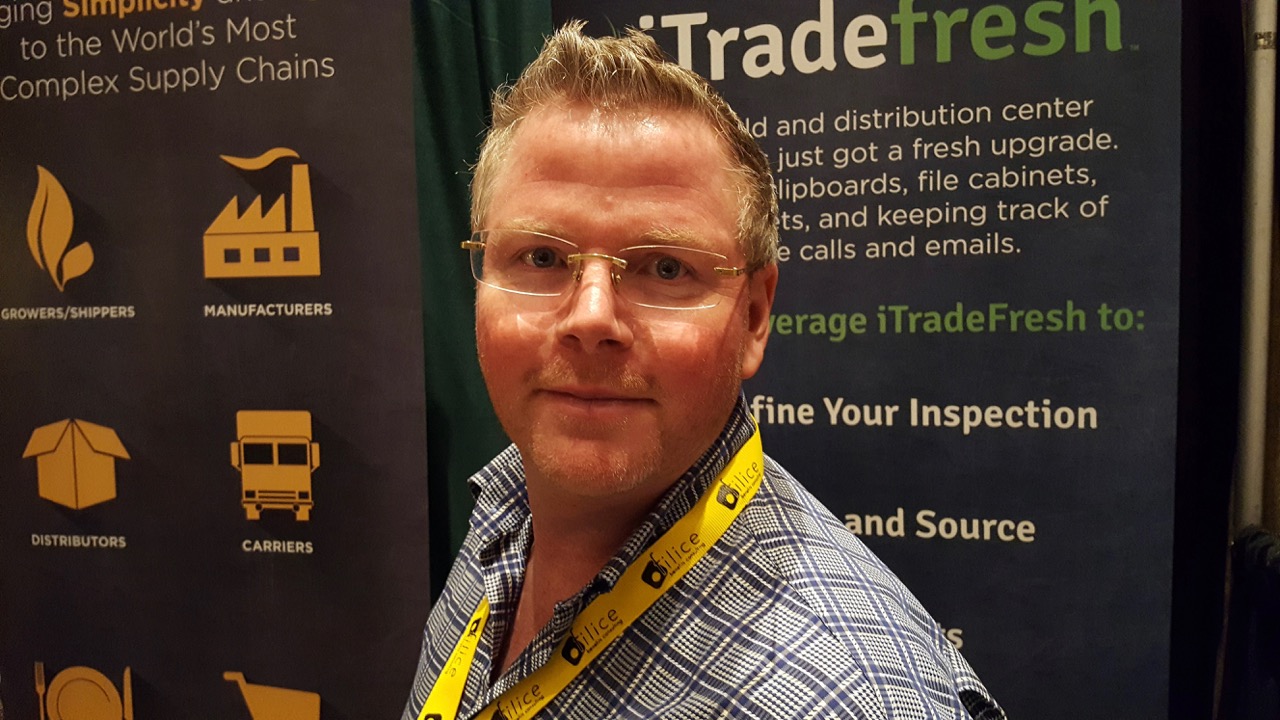
In a recent interview with California Ag Today, Dan Reighn, director of grower/shipper sales for iTrade, discussed how being a part of the system is helping the grower, shipper, supplier, and customers with iTrade’s efficiency by streamlining the process.

Cloud-based solution is key to the success of its speed. This will allow the information to flow quicker through all the channels by effectively being more beneficial to the grower, supplier, shipper, and inevitably the customer.

“The grower, shipper, and the supplier earn a lot of benefits when they are on our network every day transacting with 40 or 50 of their customers using an easy-to-use system, and we are able to handle that transaction for them rather than a purchase order being emailed or faxed or phone call,” Reighn explained.

iTrade is an efficient way to transact with buyers. It is a cloud-based software solution. There are carriers on the network to assist as well as field mobile systems that a grower can use at the source of picking. From that point, inventory can be done from the field to storage to assist the distribution.

“There are users in South America, Mexico, U.S. and Canada that are using our software on rugged mobile devices in the field,” Reighn said. “These customers are able to print off a PTI label, apply it to a case in the field as well as an electronic harvest tag. This also allows the supplier to know exactly what pallets, how much is in the field, when it is going to be received to the cooler, and when they can get that load off to Walmart or Safeway or Kroger.”

2018-04-26T15:27:39-07:00April 26th, 2018|

To Feed the Nation, Farmers Need Water

California Water Alliance is Good for All

By Patrick Cavanaugh, Editor

Founded in 2009, the California Water Alliance is the leading educational voice and authority on California water. The Alliance is a 501c4 nonprofit, nonpartisan organization that advocates for the water needs of California families, cities, businesses, farms, and the environment. The California Water Alliance is working to assist the farming community in multiple ways. Being transparent is at the forefront.

William Bourdeau

William Bourdeau is executive VP of Harris Farms and a board member of the Alliance. The alliance is telling the truth and being transparent, and that is very important, he said.

Bourdeau explained that California farmers, need water to feed the nation, and it is important to take an interest in the agricultural industry.

“The farmers in the San Joaquin Valley are the most regulated, the most skilled, and the hardest working people I’ve ever met in my life,” he said. “Water and food are critical to any nation, and it’s not only important so we can provide the food for our children, but it’s important for national security reasons.”

“And this is not a California-centric issue. We grow food that people eat all across the country, and so everybody needs to take an interest in this and understand that it’s important that we have a vibrant agricultural industry because, without it, we will become vulnerable,” Bourdeau said.

The understanding of what factors are associated with farming in California is important for the general public to be educated. Anyone that is consuming safe, affordable, nutritious food needs to better understand where that food comes from and what effort is required to produce it.

“This isn’t easy. There are many, many factors that increase the challenge and risk associated with growing food. It’s capital intensive. It requires water. There are many, many opportunities to fail and we’re underappreciated and over-regulated,” Bourdeau said.

2018-04-25T16:45:32-07:00April 25th, 2018|

Young Dairy Owner Plans to Thrive in Future

Nevin Lemos Prefers Jersey Cows

By Patrick Cavanaugh, Editor

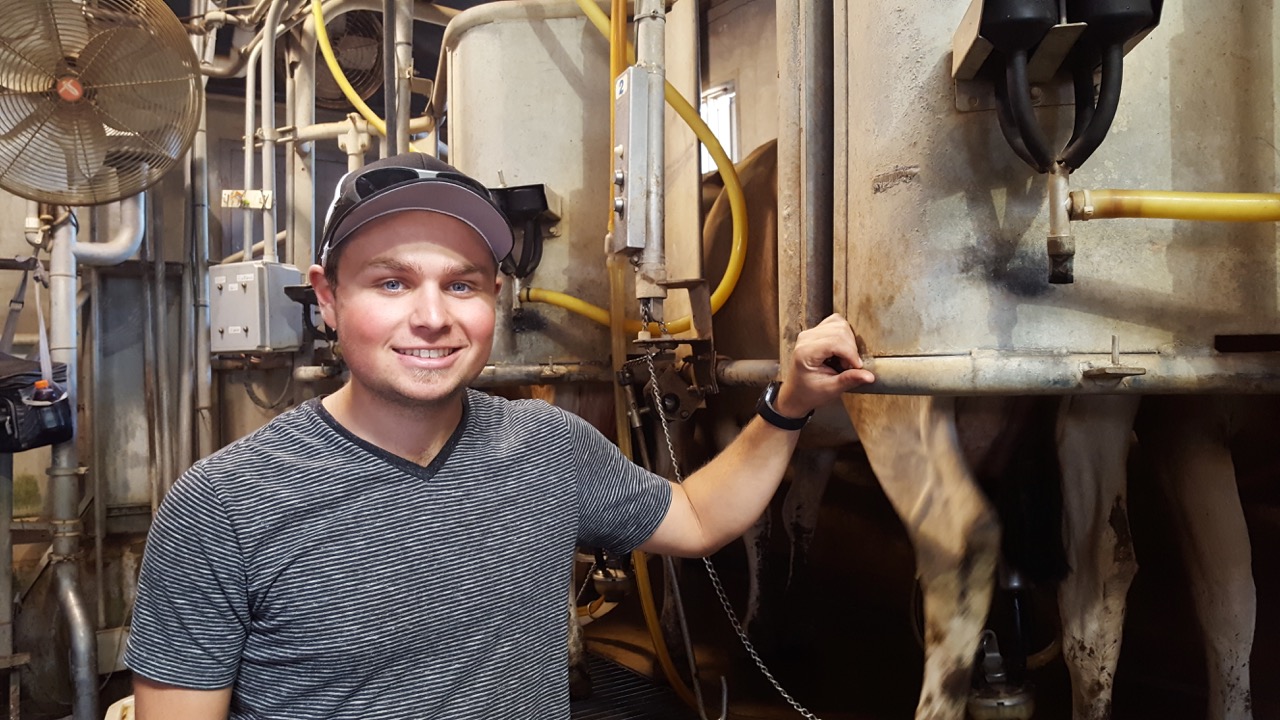
Nevin Lemos could be the youngest person to own a dairy in California. The 21–year-old owns Lemos Jerseys in Stanislaus County.

Lemos is a fourth-generation dairyman east of Modesto in the community of Lockwood. He grew up on his family’s dairy, and now he’s on his own. His family’s dairy is Lockwood III dairy, which is about five miles from his dairy.

“I’m 21 years old, and I decided to start my own. I wanted to expand the business, and get a little bigger so we can all stay in business, be competitive,” Lemos said.

“We have a plan someday to consolidate the two, and this was our way to grow.”

“It’s my baby here, my business, my passion here,” Lemos explained.

He thinks that it’s a good time to get into the dairy business.

“I’ve had some dairyman that I look up to, and they gave me some advice that even though the milk price is down, this is the best time to get started,” he said.

“That’s if you can … weather through some of the bad times because it’s a long-term investment. This is not a business that you get into for a short while, so if you can buy the cattle at a reasonable price and keep that input down, you’re in pretty good shape,” Lemos said.

His operation is 400 Jersey cow dairy with a double six-herringbone parlor.

“You know, my parents have the Holsteins. I’ve grown up around the Holsteins all my life. I showed Holsteins in 4-H growing up and love the Holstein breed but decided to go with the jerseys for a few reasons. One is they’re high in fat and protein components. I ship to Hilmar Cheese, so there’s good incentive there to get a premium off the fat and protein. Also with the reproduction, the Jerseys breed back so well.”

Lemos said he gets a 30% pregnancy rate.

A lot of the dairy cow feed is grown around the dairy operation.

“My landlord farms the 50 acres with the dairy. And I purchase the feed from them,” Lemos said. “Of course, that’s one of the significant inputs into the dairy. Feed is a bit of a high right now with exports. I put all my corn silage in Ag-Bags … to minimize my shrink, and that’s been going pretty well.

Lemos said in June, he can say he’s been going after it and his dairy for one year, and he knows he’s going to keep on going.

“I will most definitely keep going. Just getting started is the most challenging part, especially in a year like this year. I’m breaking even … if not slightly in the black. But I look forward to seeing what it does in years to come,” Lemos said.

Just building the herd and establishing it, Lemos is going to sit on some money for a little while before he starts to see it again.

Still, he said of operating his own dairy at 21 years old, “It’s the dream, my passion, it’s really what I love, and I would not have it any other way.”

2021-05-12T11:17:09-07:00April 24th, 2018|
Go to Top