About California Ag Today

This author has not yet filled in any details.
So far California Ag Today has created 2014 blog entries.

A Different Perspective on the Immigration Controversy

Mexico Has a Responsibility Regarding Immigration, Expert Says

By Mikenzi Meyers, Associate Editor

With immigration becoming a hot-button issue within the political arena, those in agriculture have a deeper insight into this controversial topic. Arnoldo Torres, of the National Institute for Latino Policies out of Sacramento and partner with the public policy consulting firm Torres & Torres, has long been a leading voice for immigration within the ag sector—while realizing both countries (America and Mexico) need to do their part.

immigration reform

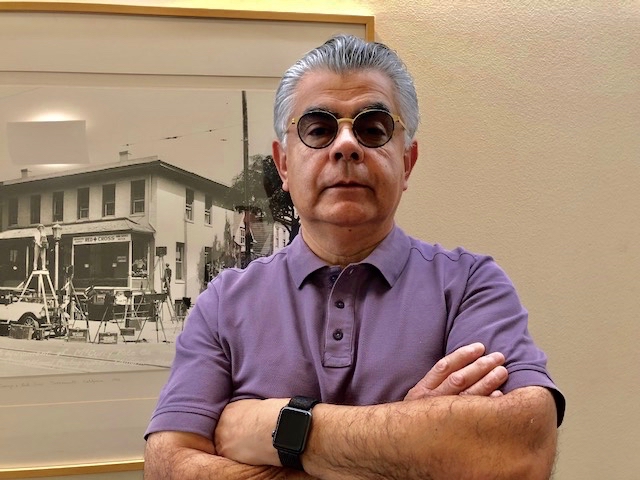
Arnoldo Torres

“Mexico has a responsibility to its people. The Central American countries have a responsibility. We’ve got to make sure that those countries are doing what they have to do to keep people from having to go elsewhere to make a living and to live,” Torres explained.

He knows this from personal experience, when his grandfather made a move to America from Mexico, with no opportunity to go back.

“They realized that if they had gone back, there was never going to be a life for them back home,” he said.

Torres further added that the desire for immigrant workers purely correlates with their unique work ethic.

“There’s that saying that necessity is the mother of invention. Well, necessity is the mother of work. I mean, we work to address a necessity.”
2018-09-14T16:25:21-07:00September 14th, 2018|

CA Supreme Court Rejects ALRB’s Effort to Avoid Counting Gerawan Farm Votes

California Fresh Fruit Association Applauds CA Supreme Court Order To Count Votes

George Radanovich, President of the California Fresh Fruit Association, applauded the recent decision by the California Supreme Court, upholding the earlier decision by the 5th District Court of Appeals ordering the California Agricultural Labor Relations Board (ALRB) to count the employee ballots cast in their 2013 decertification election.

George Radanovich

Radanovich stated, “Today we welcomed this long overdue decision. We are pleased and encouraged by the recent decision by the California Supreme Court, which affirms that the most important opinion in this entire matter, the prerogative of the employees will be heard.”

Gerawan employees voted in a decertification election in November of 2013 to decide whether or not to decertify from the United Farm Workers Union. Despite the fact the ALRB ordered and oversaw the decertification election, they impounded the ballots, denying recognition and acceptance of their decision.

Radanovich continued, “Today’s court action would not have occurred without the determined effort of Gerawan Farming, Inc., the Gerawan family, and in particular, company President Dan Gerawan for defending his company and his employee’s right to choose. This fight has been long and arduous, but

2018-09-13T16:44:54-07:00September 13th, 2018|

Marin County Farm Bureau Fights Back on Water Grab

More Water For Fish Will Not Work

By Jessica Theisman, Associate Editor

Recently in Sacramento, over one thousand farmers and other stakeholders attended a rally outside the Capitol building to protest the State Water Resources Control Board water grab. Over 40 percent of the water from Stanislaus, Tuolumne and Merced rivers may be sent to increase flows for salmon. California Ag Today spoke with Sam Dolcini with the Marin County Farm Bureau about the issue.

“I am here because water is critical to the entire agricultural infrastructure in the state of California. We have many dairies in our county that depend on the water from other parts of the state,” he said.

Marin County Farm Bureau

Sam Dolcini

The proposal would dedicate 40 percent of unimpaired flows along the Tuolumne River alone between February and June. This water would be used for fish, wildlife, and salinity control. This would be a huge increase in water currently used for environmental purposes, with water already in short supply.

“This can be devastating for valley farmers, which is why they flock this week to the Capitol building to be sure their voices are heard,” Dolcini said.

Ronda Lucas, General Counsel with the Modesto Irrigation district, agrees that this water grab could be devastating.

“We are one of the six senior water rights holders,” she said. “They are taking the waterfront, and the impact that will have on the Modesto irrigation district will just be devastating.”

2018-09-12T16:56:11-07:00September 12th, 2018|

Calmer Minds Must Prevail for Trade Talks

California Growers in a World Market

By Patrick Cavanaugh, Editor

Paul Wenger, a Stanislaus County almond and walnut grower told California Ag Today recently  that California growers have often suffered with tariffs. “The proposed trade agreements such as TTIP and TPP along with NAFTA would have helped solve tariff problems,” he said. “But TTIP and TPP are gone.”

“The Trump administration may try to negotiate a bilateral agreement with other countries, and he seems to be working on NAFTA with Mexico,” noted Wenger, who is also the past president of the California Farm Bureau Federation.

At the end of the day, Wenger hopes that calmer minds will persevere and we’ll see these trade negotiations get done and we’ll move forward.

“Because we are in a world market,” Wenger explained. “As much as President Trump puts tariffs on steel and aluminum … saying that we’re going to bring back our rust belt, well, we’re not, because it’s not the market that has killed the steel industry, it has been the regulations. Our steel industry can’t produce at a level that people are willing to pay.”

There are a lot of crops that can only be grown in a Mediterranean climate. There are only five Mediterranean climates in the world; California is one of them and the largest producer of specialty crops.

The central part of Chile can produce a lot of the crops that we have today. But other than that, it’s the south tip of Australia and South Africa and the Mediterranean region itself.

“When you really think about who can produce, as long as we have the water, not only do we have to worry about marketing our product, we have to also fight for our water so we can produce those crops. And long-term, people are going to find a path to California for the crops that we grow here,” Wenger said.

2018-09-11T15:59:43-07:00September 11th, 2018|

Halting the Sacramento Water Grab

Rep. Denham calls on Congress to halt Sacramento Water Grab by enacting Denham Amendment

News Release Edited By Patrick Cavanaugh, Editor

 Recently, U.S. Representative Jeff Denham (R-Calif.), along with thirteen of his California colleagues, sent a letter to Speaker of the House Paul Ryan (R-Wis.) to make sure Rep. Denham’s House-passed amendment to stop Sacramento’s water grab is included in the next spending bill that is signed into law.

“My amendment halts the disastrous Bay-Delta Plan that would see 40 percent of our water flushed out into the ocean,” Rep. Denham said. “Congress must act to protect the Valley.”

Rep. Jeff Denham, photo courtesy of his Facebook page

 Rep. Denham’s amendment to stop the state’s dangerous water grab passed the U.S. House of Representatives in July as part of a Department of the Interior appropriations bill and put a major spotlight on this issue. The amendment, currently awaiting a vote in the Senate, prohibits federal agencies from participating in the state’s plan to deplete the federally-owned New Melones reservoir, which provides water for the Central Valley Project and generates hydropower.

Sacramento’s plan would drain significantly more water from New Melones each year, potentially leaving it completely dry some years.

Sacramento’s planned water grab would do irreparable damage to Central Valley communities, directly interfering with the New Melones Project’s ability to store water and the Central Valley Project’s ability to deliver water.

The plan would subvert the will of Congress and jeopardize a significant portion of the nation’s agricultural productivity. Following a visit to New Melones at the request of Rep. Denham, Secretary of the Interior Ryan Zinke sent a letter to the State Water Resources Control Board highlighting serious concerns with the plan and directed his agencies to propose a new plan to maximize water storage and resolve issues with the state, among other directives. 

Rep. Denham will continue fighting to protect Central Valley water, support science-driven river management plans that revitalize our rivers without recklessly wasting water, and push major policies like the New WATER Act that will solve California’s water storage crisis and keep the Valley fertile and prosperous for generations to come.

2018-09-10T16:47:28-07:00September 10th, 2018|

Central Valley Innovation & Entrepreneurship Forum, Nov. 1, 2018

Big Event Expands Innovation In Water and Energy Savings

By Patrick Cavanaugh, Editor

Following the success of last year’s Innovation and Entrepreneurship event, the Forum will take place on Thursday, November 1, 2018, at the Clovis Veterans Memorial District.

The Forum combines the Central Valley Venture Forum and Central Valley Stock Exchange – two events that in the past have shaped the entrepreneurial landscape in the valley and became the most significant event for innovation and entrepreneurship in the Central Valley.

Laura Ramos is the Communications and Marketing Manager for the Water, Energy, and Technology (WET) Center at CSU Fresno. She noted that Forum has three distinct sections.

“First, we want anybody that’s interested in entrepreneurship and investment to come and learn about entrepreneurship and what technologies and services are available to them and just to learn about investment opportunities for them,” Ramos said.

Secondly, there is the popular Showcase for Ag Tech Entrepreneurs with a goal of saving water and energy on the farm. “Applications are due Sept. 15th. And from those that apply, we’re going to select the top five. And representatives from these five companies are going to get to pitch at the forum,” Ramos said. “And while they pitch, we have a panel of investors and judges that will select the winner. The winner will receive an award either from the investor and the judge’s award, or a potential investment from an angel group.”

Thirdly, is what’s known as the Central Valley Stock Exchange. It’s very similar to a trade show where your company can exhibit. However, the exhibitors are vying for Bulldog dollars from the audience. Ramos said $1 million of bulldog monopoly money is given to each person that attends. “The entrepreneur’s job is to try to get the most investment from the attendees. And at the end of the night, the company with the most bulldog investment dollars gets to win the audience award.

For more information on the Central Valley Innovation & Entrepreneurship Forum go to cvieforum.com.

2021-05-12T11:05:09-07:00September 7th, 2018|

Food Bloggers, Dietitians Learn More About Produce Safety in Salinas

“Facts Not Fear” Educates Participants on Vegetable Production

News Release Edited By Patrick Cavanaugh

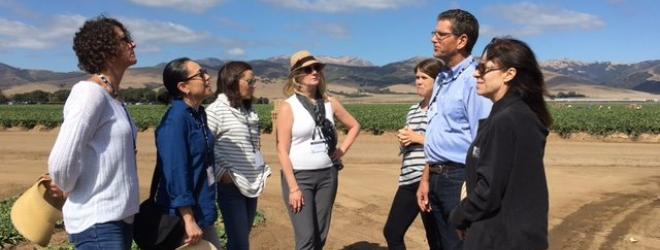
The Alliance for Food and Farming, in conjunction with Markon Cooperative, hosted its second “Facts Not Fear” Produce Safety Media tour last week in the Salinas Valley.

“Our goal is for … [registered dieticians], health and nutrition writers and bloggers to see firsthand the care and commitment farmers have for producing safe and wholesome foods.  We believe we met that goal.  But, what we learn from our tour guests continues to be just as valuable,” said Teresa Thorne, Executive Director of the Alliance for Food and Farming, based in Watsonville.

In addition to farm and facility tours, the AFF and Markon facilitated a round table meeting where tour guests were joined by farmers and farming companies, scientists, regulators and chefs for a free-flowing discussion that encompassed food safety, farming practices, food waste, pesticide use, food safety regulations, new technologies, health and nutrition, and consumer outreach.

The RDs, bloggers, and writers attending the tour reported they enjoyed the chance to tour the farms one day and then discuss what they saw with these experts.  They also appreciated the opportunity to share their information needs and concerns directly during the round table discussion.

And, what were some of our key takeaways from guests?  Consumers want transparent and honest communication regarding food safety and food production practices.  The RDs, bloggers, and writers share The Alliance for Food and Farming’s concerns about produce safety misinformation and appreciate and need access to scientists and experts that can assist them when addressing consumer questions and correcting misconceptions.

“And, they were very impressed with the technological advancements they saw in the harvesting and processing of produce,” said Thorne.

“While the importance of seeing the fields and harvest and touring processing facilities cannot be underscored enough, meeting and connecting with the people growing our food, directly sharing concerns with farmers and scientists in a group and one-on-one setting and the expansion of their produce industry network is of equal importance for our guests,” Thorne explained.

“Our sincere thanks to everyone who allowed us to visit their farms, watch the harvest, view their processing facilities as well as joined us for the round table discussion,” Thorne said.  “And, our thanks and appreciation to our tour partner, Markon Cooperative, for making this tour possible as well as our tour sponsors Cal-Giant Berry Farms, the California Strawberry Commission and the Produce Marketing Association.”

Thorne also praised the 2017 and 2018 tour alumni.

“We will keep the conversation going and look forward to learning more from the attendees as we all work toward our shared goal of increasing daily consumption of organic and conventional fruits and veggies,” she said.

The host, The Markon Cooperative, supplies the food service industry fresh fruits and vegetables.

2018-09-06T16:01:40-07:00September 6th, 2018|

Does UFW Cause Farm Closures?

Legal Explanation of Anecdotal Farm Closure Reports

By Laurie Greene, Founding Editor

Scores of farms in California have gone out of businesses over the last four decades, and many suspect that UFW pressure was to blame for farm closures. But there is no definitive reported evidence that this has happened.

“There are no specific facts that you can cite or any empirical evidence you will find that growers who closed down their businesses did so because of the UFW,” responded Robert Roy, president/general counsel for the Camarillo-based Ventura County Agricultural Association, when asked about such verbal reports.

Roy explained that it is not illegal for a business to claim it shut down, such as a farm closure, due to a union, according to a recent Supreme Court of the United States decision.

“But people just don’t talk about that in general,” he clarified.

“Generally, if someone’s been under a UFW or other union contract for a number of years, you see the cost of that contract makes them very noncompetitive with other non-union employers, both in-state and in other states,” Roy said. “In the past, UFW contracts had considerably more costly items in their employment packages, usually starting with higher wages, plus [non-wage] costs such as paid vacation, paid holidays, a union pension plan, and a union medical plan. So cumulatively, as the years go by, these costs are a pretty heavy hit for a lot of these employers.”

“Such costs are probably the only thing you can look to determine whether a farm went out of business because of the union,” he explained. “Of course, this is anecdotal evidence because you are not going to find people out there who will tell you directly they went out of work specifically to avoid the union.”

food safetyRoy said the public would not encounter those types of situations in which a business owner will assert the UFW caused their farm closure.

“I would think if a business had to stop operating,” Roy said, “maybe the owner of the business might put out a statement that explains what caused the farm closure. But we did not see that either.”

“When I first came here to Ventura County as a young attorney back in 1977,” Roy recalled, “there were somewhere between 30 to 40 UFW contracts in this area. Now there is only one—Muranaka Farms,” the largest U.S. grower and shipper of bunched green onions, according to their website. I think they have a very small workforce of perhaps 50 people here in Moorpark, California. I believe the rest of their operation is in Mexico, but I do not know if that operation is covered under the UFW contract.”

Roy continued, “Then last year, you had the closure of all of the strawberry operations for Dole Food Co. They shut down all of their strawberry operations in Ventura, Santa Maria and Watsonville. At one time, they had a very large UFW contract with over 1500 workers since the mid-1990s.”

“It is a tough deal for a union to convince workers to pay three percent of their wages in dues,” Roy said, “for many of the benefits that farmers now provide. I think farmers have basically caught up with many of the provisions covered in these UFW contracts. So, selling the union to the workers is a much more difficult proposition, especially when they have to pay three percent of their wages.”


Ventura County Agricultural Association is a business trade association that concentrates on providing services to agricultural employers, packing sheds, and labor contractors in Ventura and Santa Barbara Counties since 1970. The organization’s services include training, dealing with union matters such as grievances and arbitrations,  representing members in administrative and court proceedings, and creating handbooks and policies. The Association keeps its members up-to-date on any federal, state or local laws that affect their operations.


Resources

Guild, Todd. (Updated 2017, July). Dole Berry Co. to close doors,” Register Pajaronian.

Mohan, Geoffrey, (2017, Sept. 3). Pulling back from strawberry market, Dole Food Co. to lay off 402 workers in Northern California,” Los Angeles Times.

2018-09-05T17:00:01-07:00September 5th, 2018|

Lessening Negative Feelings Over Trade War

Walnut Processors Maintain Optimism

By Patrick Cavanaugh, Editor

California Ag Today recently spoke with Paul Wenger, past president of the California Farm Bureau Federation. He farms 700 acres of almonds and walnuts in Stanislaus County. He said that California Farmers and other stakeholders of the industry need to be less negative about the current trade war with China.

Almond and Walnut Grower Paul Wenger

“The more we talk negatively, the more that negative things are going to happen,” he said. “As I talked to walnut processors. They’re optimistic. That’s good news. I’ve talked to some walnut processors and said, ‘Well, what’s going to happen this year?’ We shouldn’t expect much as far as prices.”

“Marketing is always a self-fulfilling prophecy and it’s more psychology than it is anything,” Wenger said. “We are one of the largest producers now. Certainly, China is the largest producer. But China had a terrible crop and so they need walnuts, and so strange things can happen and the Chinese are always one that can bend the rules when they need.”

“We know that’s why President Trump has been going after China supposedly over some of these intellectual properties. Certainly, those aren’t the things that hurt agriculture, but we in agriculture are paying the price as we look at these countervailing tariffs that are coming on,” Wenger said.

Wenger explained that the Chinese know that, throughout the Midwest, it was the farm vote that helped and the rural states that helped bring home a victory for the president, so they’re going to go after President Trump.

A large amount of product was sold last season at a low price.

“We just go through the Affordable Care Act and then the port slowdown on the 2015 crop, which went into the 2016 crop, which was a little better We got a little bit better than 2017 crop was a good year for us,” Wenger said. ‘So you’re looking at a pretty good ’18 and now this happens.”

2018-09-04T13:42:28-07:00September 4th, 2018|

State Water Resources Control Board Grab for Salmon Will Impact Federal Water

Feds and State Usually Do Not Work Well Together

By Jessica Theisman, Associate Editor

California Ag Today continues our report on the recent water rally in Sacramento at the capital building. Farmers and stakeholders attended to protest the California State Water Resources Control Board Proposed Water Grab 40 percent of the water from the Stanislaus, Tuolumne, and Merced rivers redirected to increase flows for salmon.

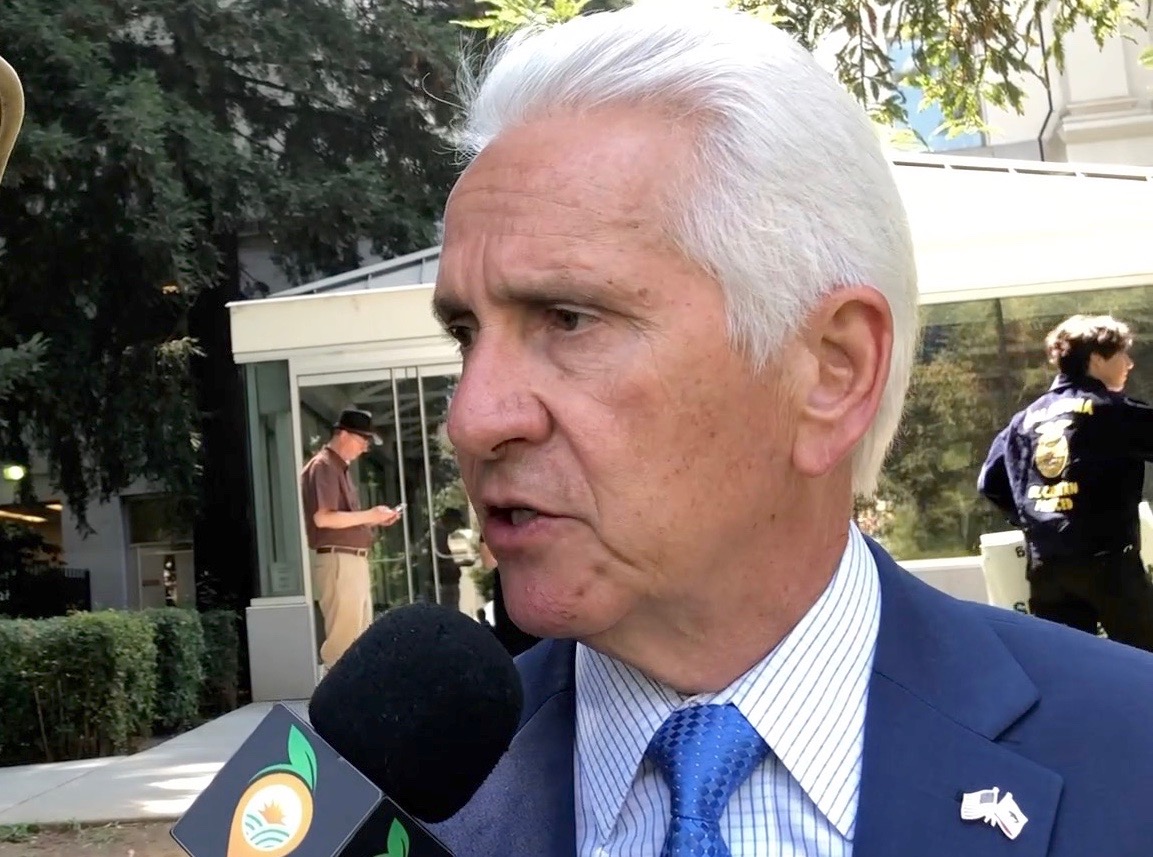
U.S. representative for the 16th district Jim Costa explained how federal and state water projects would be drastically impeded.

There are distinctions between state and federal laws as relates to water. However, there are federal water projects. In this case, New Melones  Dam, a Federal Central Valley Water Project site, will be severely impacted, which could be a problem for the Water Board’s plan,” Costa said.  “With all of the challenges in water, none in the last 20 years have worked together between the Central Valley Water Project and the State Water Project.”

 Adam Gray, 21st district assemblymen representing Merced and Stanislaus counties, explained the fight with the water resources board over the years.

“For the six years I’ve been in the assembly, we have been fighting this fight with the state water board, and despite repeated concerns that we have raised, testimony that I provided and members of my community have provided, the state continues to ignore the concerns and the farmers are not happy,” Gray said. “We are going to raise our voices as loud as they need to be and talk to whoever we need to talk to to get a fair deal on this.”

“The irrigation districts have science-based plans that involve habitat restoration, water, rebuilding a river, and dealing with non-native predators,” he said. It is not going to be easy, and it is going to take sacrifice to make a fair deal. All they want to do is take, take, take, and it is all water with no consideration for those other things.”

2018-09-03T16:47:21-07:00September 3rd, 2018|
Go to Top