About California Ag Today

This author has not yet filled in any details.
So far California Ag Today has created 2014 blog entries.

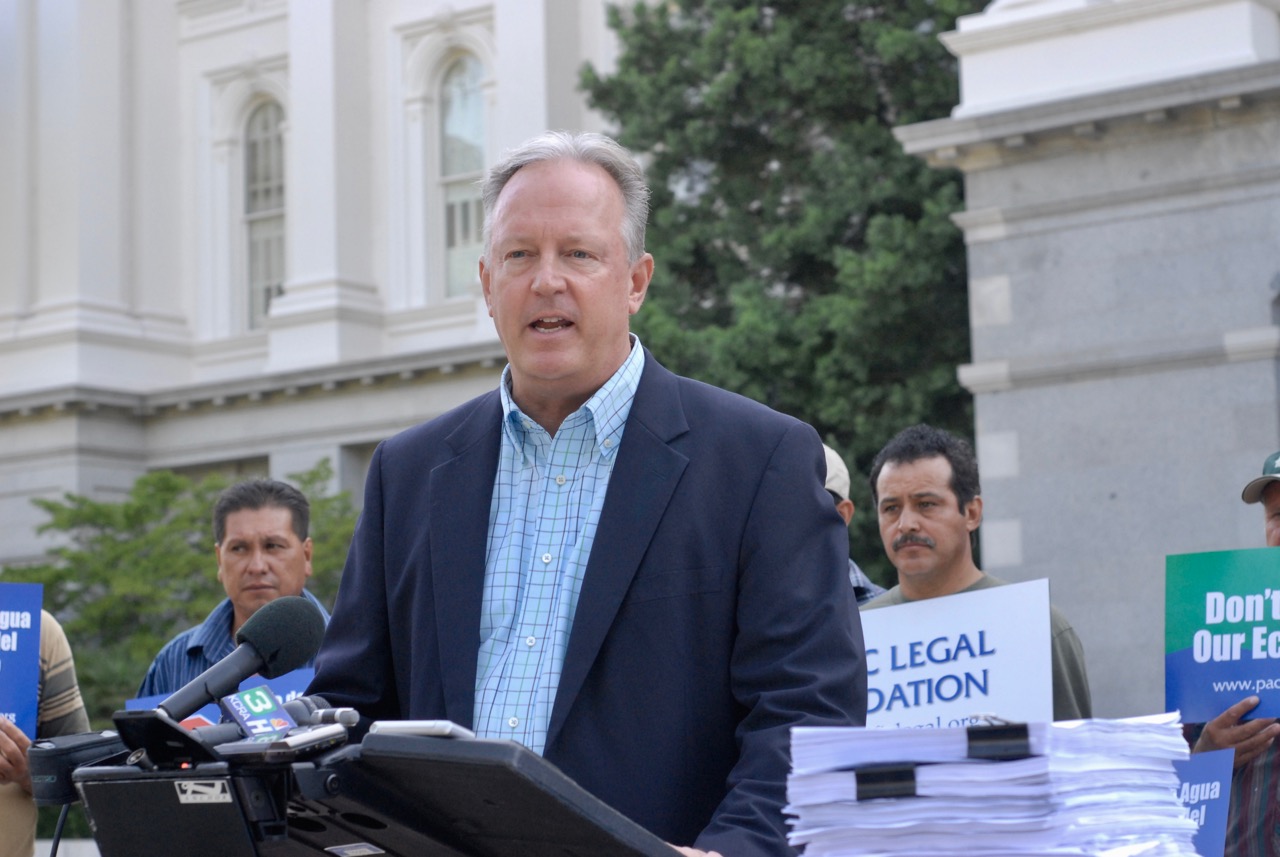
Steve Malanca Voices Frustration Regarding Water Grab

More Water Storage is What is Needed

By Jessica Theisman, Associate Editor

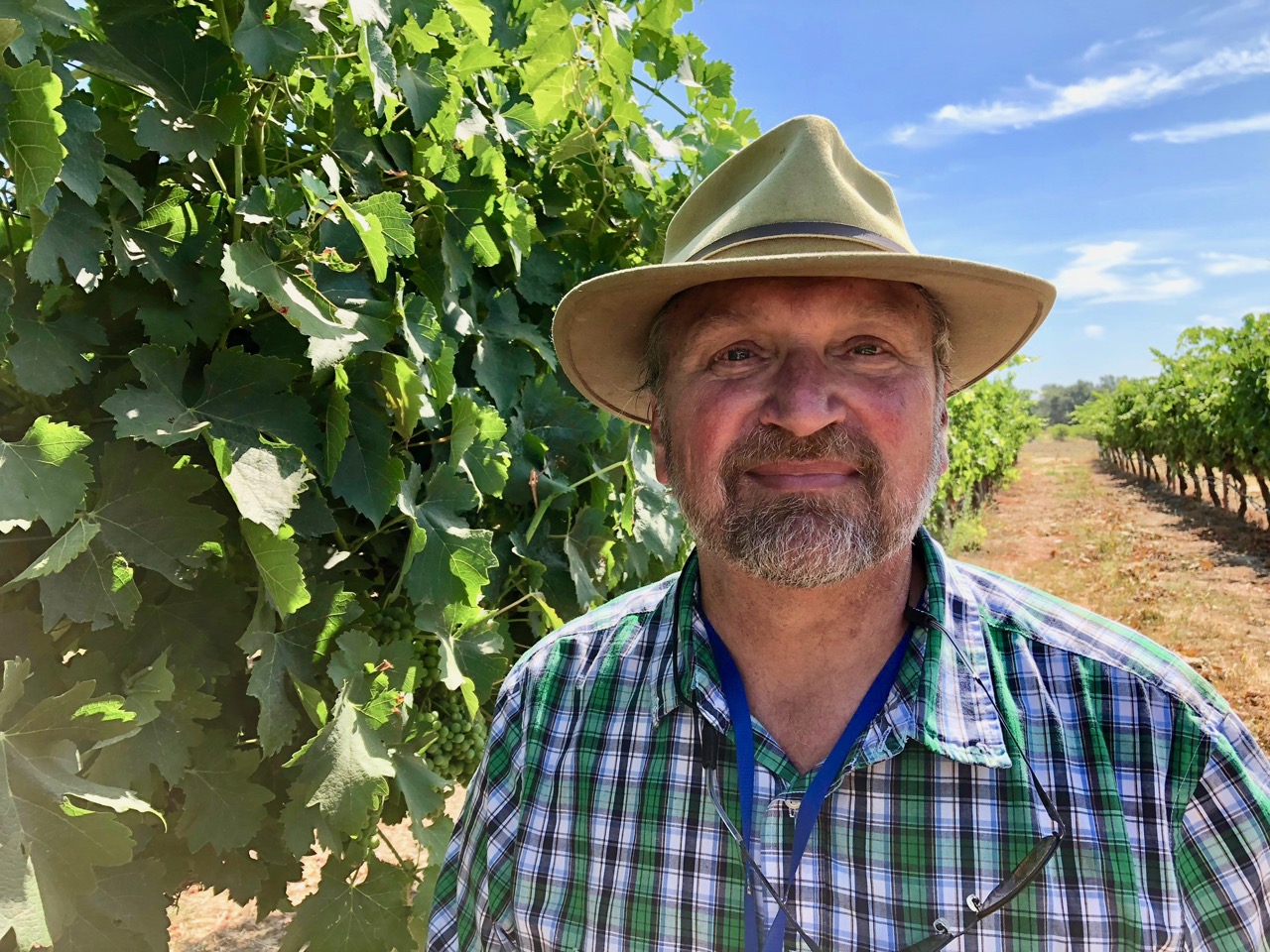
At the capitol building in Sacramento, more than one thousand farmers and other stakeholders attended a big rally to protest the California State Water Resources Control Board’s proposed water grab of 40 percent of the water from the Stanislaus, Tuolumne, and Merced rivers to increase flows for salmon. California Ag Today met with Steve Malanca, co-founder of My Job Depends on Ag, as he explained the concerns for water storage.

“Being in western Fresno County at Ground Zero, where the water take has been going on for 30 years, we have continually asked for more storage,” he said.

Steve Malanca

Steve Malanca

The lack of surface delivery water and the lack of storage in the state of California is not good for anyone.

“The fish need water. The farms need water. We need fresh drinking water, and the problem continues to get worse with the amount of water we lose every winter out to the ocean,” Malanca said. “If that water could be saved and properly stored … this would generate more cold water for the salmon to live and spawn in. We just want them to know that we need help, but we need more water.”

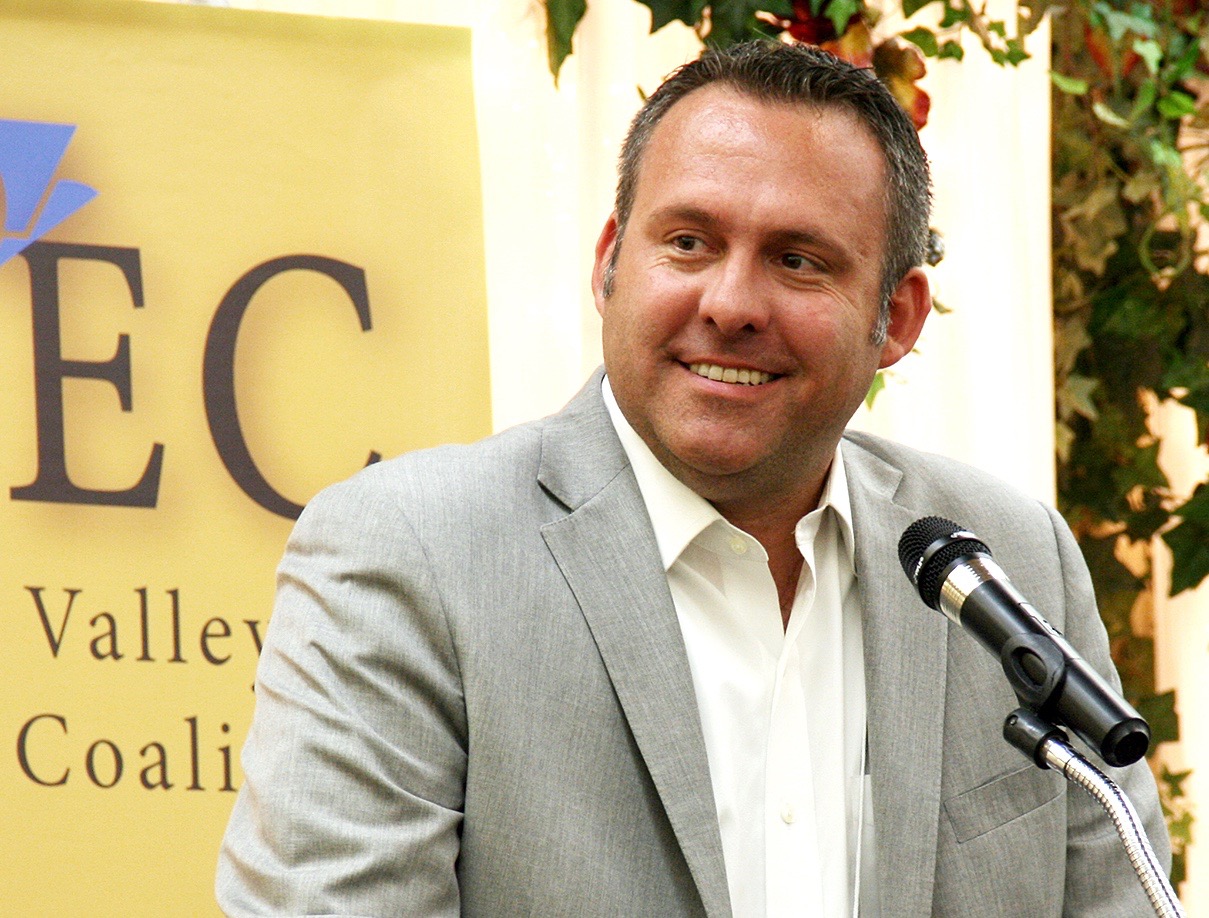
U.S. Representative for the 16th district Jim Costa also attended the water rally and explained the devastating impact of the water restrictions.

“If there are 40 percent unimpeded flows were allowed to go through, it would have a devastating impact on those counties,” Costa said.

Jim Costa

California has reallocated water in the past and has not had very good results.

“What we have really got to do is talk about other proposals that take into account habitat, non-native predator species, non-point discharge and a balance that makes sense,” Costa said.

2018-08-31T16:38:58-07:00August 31st, 2018|

Oriental Fruit Fly Quarantine Expands in Northern California

New Quarantine Measures 123 Square Miles

News Release Edited By Patrick Cavanaugh

A portion of Sacramento and Yolo Counties have been placed under quarantine for the Oriental fruit fly following the detection of 15 flies in and around the southern part of the City of Sacramento near the Lemon Hill community.

The quarantine zone measure 123 square miles, generally bordered on the north by El Camino Avenue; on the south by Laguna Boulevard, on the west by the Sacramento River; and on the east by Bradshaw Road. A link to the quarantine map may be found here: https://www.cdfa.ca.gov/plant/off/regulation.html.

To prevent the spread of Oriental fruit flies through homegrown fruits and vegetables, residents living in the quarantine area are urged not to move those items from their property. However, they may be consumed or processed (i.e. juiced, frozen, cooked, or ground in the garbage disposal) on the property where they were grown, or disposed of by double-bagging and placing in the regular trash bin, not green waste.

Following the principles of Integrated Pest Management (IPM), CDFA primarily uses the “male attractant” technique to eradicate this pest.  Trained workers squirt a small patch of fly attractant mixed with a very small dose of pesticide approximately 10 feet off the ground on street trees and similar surfaces; male fruit flies are attracted to the mixture and perish after consuming it. This approach has successfully eliminated dozens of fruit fly infestations from California over the last several decades.

The Oriental fruit fly is known to target 230 different fruit, vegetable, and plant commodities.  Damage occurs when the female fruit fly lays her eggs inside the fruit.

Small larvae generally enter the fruit at the stem end, although entry can be made anywhere on the fruit, particularly where two fruits touch. Larvae immediately bore to the center of the fruit and feed around the pit. After reaching maturity, they exit from the fruit and pupate.

While fruit flies and other invasive species that threaten California’s crops and natural environment are sometimes detected in agricultural areas, the vast majority are found in urban and suburban communities.

The most common pathway for these pests to enter the state is by “hitchhiking” in fruits and vegetables brought back illegally by travelers when they return from infested regions of the world or ship infested produce through the mail. Help protect California’s agricultural and natural resources; please Don’t Pack a Pest (www.dontpackapest.com) when traveling or mailing packages.

The Oriental fruit fly is widespread throughout much of the mainland of southern Asia and neighboring islands, including Sri Lanka and Taiwan, and it has invaded other areas, most notably Africa and Hawaii.

Residents with questions about the project may call CDFA’s Pest Hotline at 1-800-491-1899. Additional information may be found here: https://www.cdfa.ca.gov/plant/off/.

2021-05-12T11:01:53-07:00August 30th, 2018|

Almond Farmer Fights Back Against the State Water Grab

“Hundreds of Years of Property Rights Taken Away”

By Hannah Young, Associate Editor

More than 1,000 farmers, stakeholders, and supporters attended a rally in Sacramento protesting the California Water Resources Control Board’s proposed water grab.

This water grab will affect the Stanislaus, Tuolumne, and Merced rivers, redirecting 40% of the water to increase flows for salmon population.

Tim Sanders, an almond grower in Stanislaus County, described the catastrophic effects this water grab will have on Valley farmers.

“The scarier part about this, they’re trying to change hundreds of years of water rights,” Sanders said. “If they can take our water rights with this grab, they can take anybody’s water rights, so everybody in California should be concerned about this.”

Sanders explained how this is proposed water grab is a real government overstep.

“Our area is one of the few areas in the state that aren’t in extreme overdraft of groundwater, and it’s because we can do irrigation,” Sanders said. “We can recharge our aquifers all the time.”

If the state takes surface water from these growers, they will have to rely on their pumps extracting water from the ground, which could put them in a situation where they’ll be impacted by the Sustainable Groundwater Management Act.

“We’ve got a good system working. They just need to leave us alone or come to us at the table and be willing to compromise, talk to us,” Sanders said.

2018-08-29T16:36:15-07:00August 29th, 2018|

Assemblyman Adam Gray Speaks Out on Water Grab

Water Board Must Understand the Impact of Taking Water from Farms and Communities

By Patrick Cavanaugh, Editor

At the recent Water Rally in Sacramento, more than 1000 farmers and other stakeholders were protesting the California Water Resources Control Board, which is proposing a water grab of 40 percent of the water from the Stanislaus, Tuolumne, and Merced Rivers to increase flows for salmon. According to Adam Gray —21st District State Assemblyman, representing Stanislaus and Merced—counties said that large losses would occur in jobs and profits if the water grab is implemented.

“This is thousands of jobs and billions of dollars of economic loss to agriculture, to California, and we can’t afford that,” Gray said. “Not to mention the impact on drinking water in communities. Most of the communities in my district are on well water, and what people don’t think about is when you take water away from farmers and that water doesn’t go back into the ground. That further depletes our groundwater and our aquifers, and it creates more subsidence and environmental issues.”

Gray said that this is not about the environment versus business, or fish versus people. This is about the whole community, the schools, the ag economy and a lot of job losses for the people he represents.

“It’s dishonest; the Water Board is not admitting that there’s going to be an impact in the affected areas. They say farmers are going to offset the water losses by pumping more. Well, you and I both know with the implementation of SGMA and all of the other challenges, that’s not a reality,” he said.

“So how about we sit down and come up with a water plan that takes everybody’s needs into consideration and again, I’m not an us versus them advocate,” he said. “Southern California needs water, the coast needs water, northern California needs water and the San Joaquin Valley needs water. How about we sit down and make a water infrastructure plan for the next hundred years that serves all Californians.”

Gray said the farming community will stand up for the investments made to secure water.

“We are not going to lie down. We’re not going to apologize for being a farming community,” he said. “We’re going to stand up; we’re going to defend the investments we’ve made and the long-term planning we did, and we’re going to ask the state to step up and do some of their own.”

2018-08-28T16:40:28-07:00August 28th, 2018|

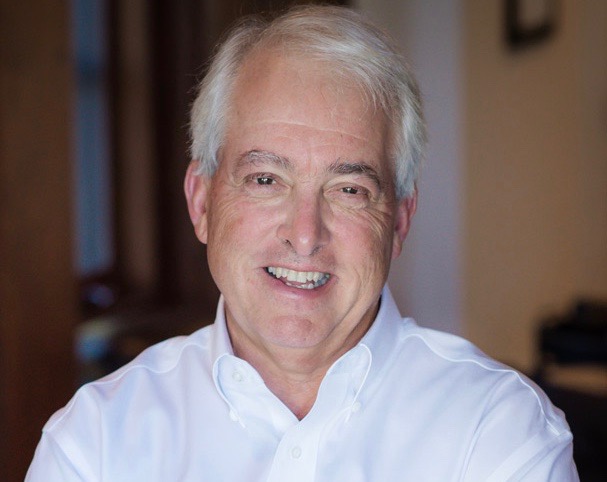
Gubernatorial Candidate John Cox Denounces State Water Resources Board

John Cox Joins Farmers and Agricultural Community in Calling to #StoptheWaterGrab 

News Release Edited By Patrick Cavanaugh

Gubernatorial candidate John Cox issued the following statements on the California State Water Resources Control Board’s recently proposed water plan that would divert between 350,000 and 1.7 million acre-feet of water away from Central Valley farmers annually.

The California Farm Water Coalition estimates the financial impact to Valley communities could be over $3 billion annually, with 6,500 jobs lost as a result.

Cox visited Fresno County last month to express support for the proposition 3 water bond. This announcement was ahead of visits to Fresno and Bakersfield.

“I am deeply disappointed yet sadly not surprised by the decision by the State Water Resources Control Board addressing flows on the San Joaquin river,” Cox said. “The complete failure of the Sacramento establishment to provide the necessary funding, authorization, and will to build adequate surface water storage is the single greatest reason California continues to suffer unnecessary water shortages. Even the most recent approval of funds by the California Water Commission for both the Sites and Temperance Flat reservoirs are but a fraction of the funds needed to complete these two vital water storage projects.”

“The time for action is long overdue and they need to stop the water grab,” Cox said. “As Governor, I and my appointments to all California boards and commissions—but in particular the State Water Resources Control Board and the California Water Commission—will take the steps necessary to develop sufficient water storage for California’s residential, agricultural, and business needs, while protecting our aquatic environment, the Delta, and our oceans.”

“Gavin Newsom is the very embodiment of the ‘Sacramento political class’ that ignores the plight of everyday Californians,” Cox said. “He will continue to spend countless billions of hard-earned tax dollars on proven failures like the so-called High-Speed Rail project rather than demand construction of essential water storage infrastructure to meet California’s needs—including environmental purposes, which today already use more water than all California agriculture.”

2018-08-27T16:18:00-07:00August 27th, 2018|

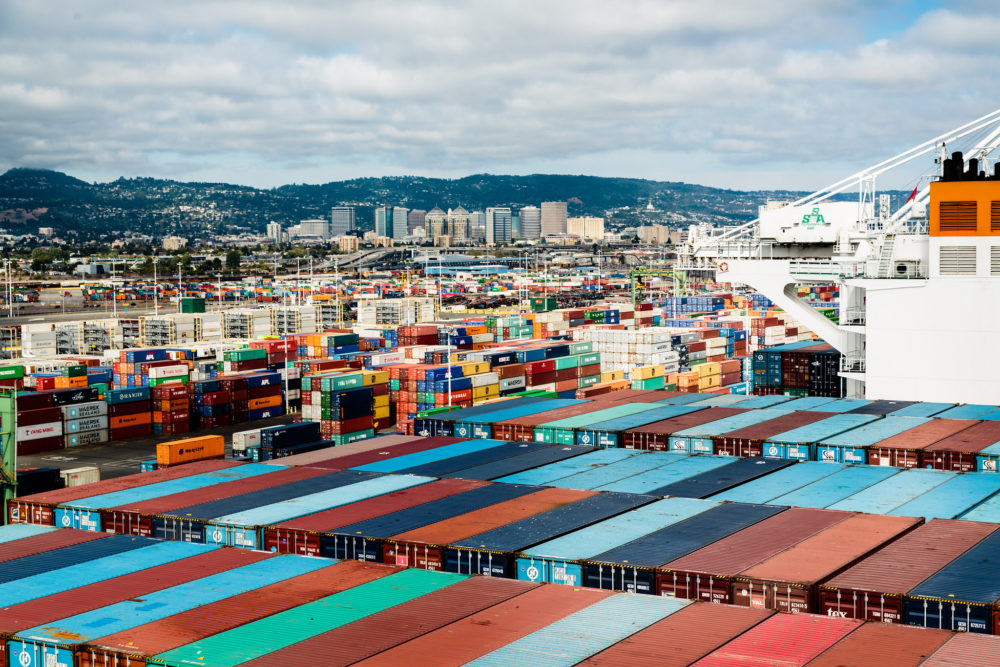
Tariffs Causing Problems for U.S. Trade

Long-Term Problems May Be Ahead

By Jessica Theisman, Associate Editor

If a market is lost, it takes time to get it back. California Ag Today recently spoke with Brian Kuehl, executive director of Farmers for Free Trade, about the topic. A concern is that competitors are entering the markets that we currently occupy.

“No farmers invest huge amounts of time and energy trying to open markets or trying to develop trade relationships, and they’re being torn up in a matter of months,” Kuehl said.

Tariffs will cause long-term problems. One major issue is that when tariffs are established, other countries will begin put to put tariffs on our food. Those countries then begin to plant more crops to adjust. Soon, those countries become their own producers instead of relying on the U.S. Those countries then look to other countries that are more dependable, which in turn becomes a competitor to the United States.

The renewal of NAFTA will help.

“If this is not resolved soon, we certainly are doing lasting damage to agriculture. It could trigger the next farm crisis,” Kuehl said.

It looks like the U.S. is moving toward a deal with Mexico on a renewal of NAFTA.

“Hopefully that would quickly lead to a deal with Canada,” Kuehl explained. Mexico and Canada are our biggest trading partners.

For many of our products, China is one our largest trading partners, and certainly one of the ones that is growing the fastest in terms of population.

“We do not want to squeeze ourselves out of the Chinese market for a decade to come; that that would be a colossal error,” Kuehl said.

The U.S. has routed products in the past. Some countries including Vietnam and Hong Kong route products into China.

“There might be a tariff on product going into China directly, but we know some of our growers are able to avoid the product that tariff by selling first to Vietnam and then Vietnam shifts into China,” Kuehl said. That same tactic with Hong Kong is being shut down. China is getting much smarter at saying you can not circumvent our tariff, so we are going to hold you to these tariff rates.”


2018-08-24T17:05:06-07:00August 24th, 2018|

Idea to Reduce Glyphosate Use with Grapes

Use Glyphosate When Absolutely Needed

By Mikenzi Meyers, Associate Editor

There is an effort underway to minimize glyphosate use before bud break in grapes. It doesn’t need to be used all the time. A lot of annual weeds can be controlled with several herbicides. Keep the glyphosate for hard to control perennials.

John Roncoroni, a UC Cooperative Extension Weed Science Farm Advisor in Napa County, has made strides toward meeting this challenge. Many times, growers will do two applications of herbicides during the year … but what I’m trying to do is push it back to post-leaf fall after the season to clean up and come back with a pre-emergent material right before bud break then maybe skip that last glyphosate treatment after bud break.

Roncoroni explained that the idea is for grower not to use glyphosate on weeds during the growing season.

Reserve Glyphosate for tough weeds such as field bindweed.

Roncoroni mentioned that he works with school districts and municipalities, and there are many of them want to ban the use of glyphosate.

“It’s not so much the glyphosate molecule; it’s that we have all used so much of it over the years,” he said. “Rely on preemergent materials early in the season and reserve glyphosate as a clean up at the end of the season.”

“My philosophy when I talk to people is to not ban it but to save it for needed use. Maybe we pretend that there are no herbicide alternatives available. We have annual grasses that are easy to kill, then use an alternative herbicide for that. But when you have weeds where you need that systemic benefit of glyphosate, then use it. It is a good molecule, and it has an important fit in weed control, but it does need to be used all the time,” Roncoroni said.

And of course, reading and following the herbicide label will maintain its safety.

2021-05-12T11:01:53-07:00August 23rd, 2018|

2017 Fresno County Crop Report Totals $7 Billion

Fresno County’s Ag Value Increases Significantly in 2017 Crop and Livestock Report


The Fresno County Department of Agriculture’s 2017 Crop and Livestock Report (Crop Report) was presented to the Fresno County Board of Supervisors Tuesday. Overall, the 2017 agricultural production value in Fresno County totaled $7.028 billion, showing a 13.58 percent increase from 2016’s $6.18 billion.

“Once again, Fresno County farmers and ranchers have produced an agricultural bounty for the world,” stated Fresno County Agricultural Commissioner Les Wright. “While much of this food and fiber goes towards feeding and supplying our nation, the Fresno County Department of Agriculture also issued 18,604 phytosanitary certificates for 133 commodities destined for 97 countries around the globe in 2017.”

“This Crop Report is comprised of nearly 400 commodities, of which 73 crops exceed $1 million in value,” Commissioner Wright continued. “Crop values may vary year-to-year based on production, markets and weather conditions, but our farmers and ranchers, their employees and all those who support their efforts work tirelessly year-around to bring in the harvest.”

With the great diversity of crops in Fresno County and the many variables in agriculture, it’s a given that some crops will be up in value while others are down. Increases were seen in a majority of the Crop Report segments, including field crops, seed crops, fruit and nut crops, livestock and poultry, livestock and poultry products, apiary products and pollination services, and industrial crops. Decreases were seen in vegetables and nursery. Surface water supplies were significantly better in 2017, although many Westside federal water contractors received much of that good news too late to benefit them with additional annual plantings.

Fresno County’s Top 10 Crops in 2017 (Source: 2017 Fresno County Agricultural Crop and Livestock Report)

Too often, the Crop Report gets summarized down to just a single overall number, but it yields a significant amount of information, such as the ability to examine changes and trends in crop acreage and yields. Amounts in the report reflect the gross income values only (income before expenses) and not the net return to producers.

“The San Joaquin Valley is the food capital of the World, and Fresno County is the region’s heart,” said Fresno County Farm Bureau (FCFB) CEO Ryan Jacobsen. “Daily, millions of food servings unceremoniously originate within our backyard, the result of generations of families and agricultural infrastructure that has been built to furnish an unbelievably productive, wholesome and affordable food supply.”

“The annual Crop Reports are more than numbers,” Jacobsen continued. “They provide the industry, the public and policymakers, regardless of the overall number, the opportunity to salute local agriculture and give thanks for the food and fiber, jobs and economic benefits, agriculture provides Fresno County.”

One popular component of the report is the review of the county’s “Top 10 Crops” that offers a quick glimpse of the diversity of products grown here. In 2017, these crops accounted for three-fourths of the report’s value. Almonds continue to lead the way as Fresno County’s only billion-dollar crop in 2017, representing 17.4 percent of the total gross value of the Crop Report. Added to this year’s list was mandarins at number six. Dropping out of the “Top 10 Crops” was garlic.

This year’s Crop Report was a salute to the Fresno-Kings Cattlemen’s Association. The organization is one of 38 affiliates of the California Cattlemen’s Association, a non-profit trade association that represents ranchers and beef producers in legislative and regulatory affairs.

2021-05-12T11:17:09-07:00August 21st, 2018|

Bee Sweet Citrus Joins National Campaign to Support Healthy Eating

Bee Sweet Creates Everyday Healthy Eating Habits

News Release Edited By Patrick Cavanaugh

For the third consecutive year, Bee Sweet Citrus is eager to help kick off the Power Your Lunchbox Promise with Produce for Kids. The Power Your Lunchbox Promise, a national campaign, aims to encourage families and their children to eat healthier lunches, afterschool snacks and everyday dinners.

“Bee Sweet Citrus is very excited to take part in such an amazing, health-oriented campaign,” said Bee Sweet Citrus Director of Communications Monique Bienvenue. “For the past five years, Produce for Kids has done an amazing job of sharing healthy tips and recipes with families and educators. We’re eager to see how our combined efforts can help encourage healthy habits at home and in the classroom.”

The Power Your Lunchbox campaign  ends on September 23rd. Throughout the campaign, families will be encouraged to take an online promise that supports healthy eating at home and at school. For every promise made, sponsors of the Power Your Lunchbox Promise will make a collective $1 donation to Feeding America programs that support families and children.

In addition to the online promotion, Produce for Kids will be marketing register dietitian-approved recipes and nutrition tips on their online and social media platforms. Supporters are encouraged to use the #PowerYourLunchbox hashtag throughout the campaign to help spread awareness on their own social media accounts as well.

“As we celebrate the 5th year of the Power Your Lunchbox Promise, and over 1 million meals donated to Feeding America through the program, we could not have made such an impact without the support of passionate partners like Bee Sweet Citrus,” said Amber Bloom, the digital marketing manager for Produce for Kids. “Together, we’re creating a healthier generation one promise, lunchbox and meal donated at a time.”

2018-08-20T16:31:29-07:00August 20th, 2018|

Radanovich: President Trump Needs to Enact Immigration Reform

Congress Will Not and Cannot Do it Alone, Radanovich Says

By Hannah Young, Associate Editor

The future does not seem bright for California farmers who are desperately searching for labors to harvest crops. California Ag Today spoke with George Radanovich, president of the California Fresh Fruit Association and former U.S Congressman, about the need for immigration reform.

George Radanovich

Radanovich spent 16 years in Washington, D.C, and from his experience is not convinced that Congress alone will make immigration reform right for California farmers.

“I think that we need to get to President Trump and suggest that he intervene by direct talks with Mexico and create a system that will not leave our farmers high and dry,” Radanovich said.

In order to assure that farmers have enough labor for harvest, immigrants should be allowed to stay in the country as long as they are working during the time the government is implementing a new system, affirming border control, and e-verifying immigrants, Radanovich explained.

However, getting a system of this type will be tough to get past Congress due to a large portion feeling that every farmer worker is probably illegal and needs to go back to Mexico or any other foreign country.

“They don’t get it because they don’t live here, most of them, so they don’t understand how the system works,” Radanovich concluded.

2018-08-17T16:37:35-07:00August 17th, 2018|
Go to Top