About California Ag Today

This author has not yet filled in any details.
So far California Ag Today has created 2014 blog entries.

Labor Seminar in Bakersfield On Developing Trends

Many Big Labor Topics to be discussed 

By Patrick Cavanaugh, Editor

The Redd Group is offering a labor seminar for owners, operators, HR team members, farm labor contractors and administrators on Aug. 22nd from 8 a.m.to 4 p.m. at Hodel’s Country Dining in Bakersfield.

“We’re going to discuss hot topics in agriculture, oil, and transportation, such as I-9 audits—what to do when ICE show us up and the onerous wage and hour traps,” said Jesse Rojas, with the Redd Group. “We will focus on all that red tape, and burdensome regulations that businesses in California deal with every day.”

The keynote speaker will be former Assemblywoman Shannon Grove, who also owns Continental Labor & Staffing.

Registration required. For more information and to register for the workshop, call Jesse Rojas at 844-946-7333 or email jesse@reddgroup.org.
2018-08-16T15:06:06-07:00August 16th, 2018|

Spotted Wilt Virus Light This Season on Tomatoes

Thrips Widespread But Yields are High

By Patrick Cavanaugh, Editor

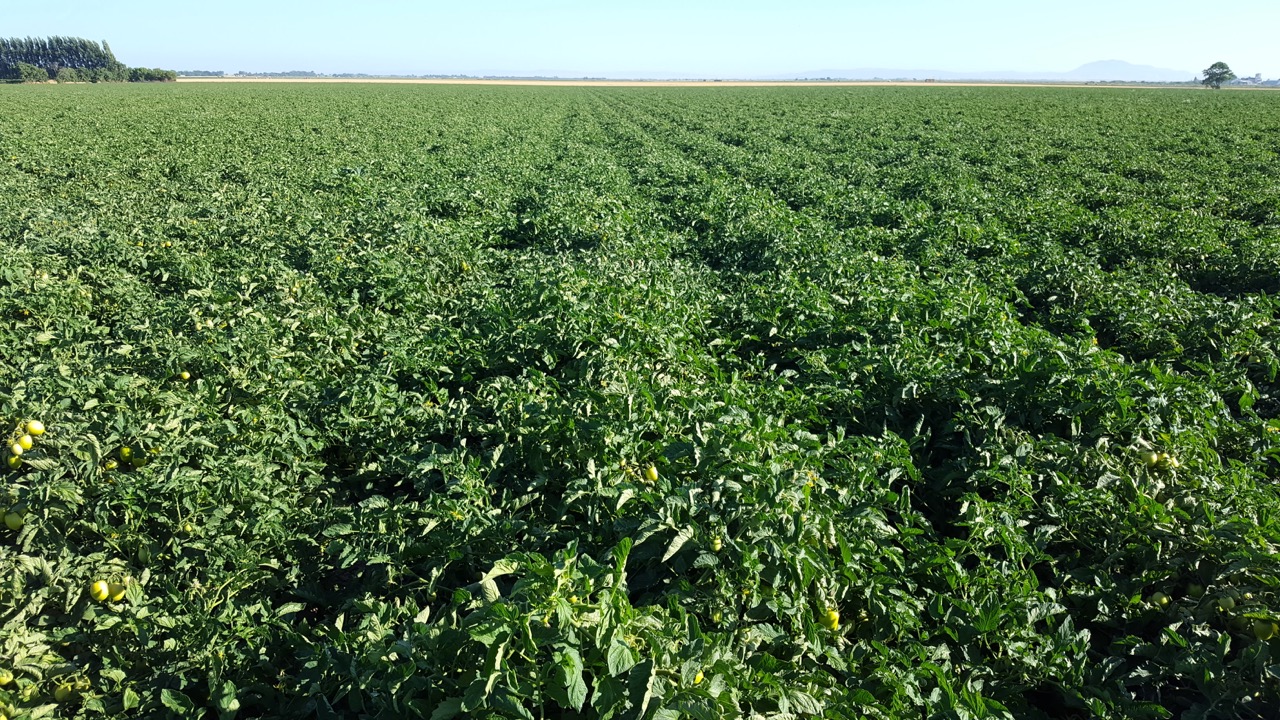
Spotted wilt virus on tomatoes was a big concern at the beginning of the season. California Ag Today spoke with Tom Turini, vegetable crops farm advisor for the University of California Cooperative Extension in Fresno County, about the topic. We caught up with him on the west side of Fresno County. He said despite the potential virus pressure, tomato yields have been very high this year.

“Thrips are the vector of tomato spotted wilt, and while the thrip distribution is much wider than it was last year, it doesn’t look like we’re seeing the level of economic damage,” Turini said.

Tom Turini

“We had had concerns initially about problems, and of course that could get worse as we get later in the season, but so far our yields have been very, very high,” Turini said.

He explained that the strong yields is in part due to the mild temperatures during the spring, so there was good early fruit set. “Even that, I would expect that now with these higher temperatures over the last six weeks, we’re going to start seeing the effects of the yield-robbing virus with a later harvest, he said.

Last year, the concern was with fresh market tomatoes.

“We had concerns late last year in the fresh market, but this year it’s at moderate levels of economic impact. “It doesn’t mean it couldn’t happen in the future, but at this point, it looks like we were spared, at least for the early season crop.

2021-05-12T11:01:53-07:00August 15th, 2018|

Monsanto: Jury Got it Wrong on Glyphosate

A Statement from Monsanto Following San Francisco Verdict

No Evidence that Glyphosate Causes Cancer

By Scott Partridge, Monsanto Vice President

Like everyone else following the Dewayne Johnson v. Monsanto Co. trial, my colleagues and I have deep sympathy for Mr. Johnson’s plight. Our hearts go out to the Johnson family, and we understand their desire for answers. Glyphosate is not the answer. Glyphosate does not cause cancer. The jury got it wrong. We will appeal the jury’s opinion and continue to vigorously defend glyphosate, which is an essential tool for farmers and others. We are confident science will prevail upon appeal.

The jury’s opinion does not change the science. Glyphosate has a more than 40-year history of safe use. Over those four decades, researchers have conducted more than 800 scientific studies and reviews that prove glyphosate does not cause cancer.

The National Institutes of Health (NIH) and the Joint FAO/WHO Meeting on Pesticide Residues (JMPR) both recently reaffirmed glyphosate does not cause cancer. The U.S. Environmental Protection Agency (EPA) and other regulatory authorities in Europe, Canada, Japan, Australia, Korea, and elsewhere routinely review all approved pesticide products and have consistently reaffirmed that glyphosate does not cause cancer.

Rather than arguing the science, the plaintiff’s lawyers repeatedly crossed the line, distorted the facts and used baseless and egregious emotional appeals to inflame the jury. We are deeply troubled by the conduct of the plaintiff’s lawyers in this case. The judge admonished this conduct on several occasions and instructed the jury to ignore these statements. However, we are concerned that this conduct unduly influenced the jury’s deliberations, and we will be raising this issue in our appeal.

The plaintiff’s lawyers know they cannot win on the science. This lawsuit is based solely on the opinion of one organization called IARC. IARC is not a regulatory authority and did no independent studies. IARC is the same organization that determined beer, meat, cell phones, and coffee cause cancer. Investigative reports by Reuters and the Times of London have uncovered that IARC members reviewing glyphosate concealed important scientific data, edited out the conclusions of key studies, and were closely aligned with U.S. trial lawyers.

After IARC’s opinion was announced in 2015, U.S. trial lawyers started running advertising campaigns to recruit people for their lawsuits against Monsanto. There were no lawsuits blaming glyphosate for cancer until after IARC’s opinion. A federal judge overseeing some of these lawsuits recently stated that plaintiffs’ evidence is “shaky” and any lawyer faces a “daunting challenge” in bringing a case to trial based on IARC’s opinion.

Our next step is to file post-trial motions with the Court. Following the Court’s ruling on the motions, we will file our appeal with the California Court of Appeals if needed. We are fully confident that science will prevail in the end. Glyphosate-based herbicides are too important to farmers and others for these baseless lawsuits to go unchallenged.

2021-05-12T11:05:09-07:00August 14th, 2018|

Agriculture Struggles Unnecessarily, According to Steve Forbes

Forbes Chairman Has Suggestions to Help

By Jessica Theisman, Associate Editor

Water and labor are major agricultural issues in California. California Ag Today recently spoke with Steve Forbes, chairman and editor in chief of Forbes Media, about the topics.

“I think that the more people are realizing the enormous opportunities of technology in agriculture. They think that it is going to get better and better in the future,” Forbes said.Everything from reservoirs to desalination plants should be modeled after Israel. They have been building desalination plants because Israel is in a desert where they have been getting rainfall.

Steve Forbes

“This is a very sophisticated use of water in agriculture where they are a real global power,” Forbes said.

Today, Israel uses 10 percent less water as a whole, not per capita, than they did 70 years ago despite the economy being 60 times larger.

Forbes thinks labor is also an issue.

“We are hurting ourselves, our food production, not just in agriculture but construction as well,” he said.

Forbes said we should recycle the programs that we once had, programs where returning people come in for specific time periods for specific jobs. This would help prevent the illegal immigrant problem because workers know they can come back.

On another note, he discussed the current trade war that the U.S. is in with China.

“If you hear 10 percent tariff on aluminum, that’s a 10 percent sales tax; put it that way and people’s eyes go up and they get it right away,” Forbes said.

Putting sales taxes on American consumers, agriculture, farmers, and businesses is not the best way to resolve very real trade abuses.

“Everyone knows from the disaster and the depression of the 1930s what trade wars can lead to,” Forbes said.

Forbes also explained that GMOs greatly benefit producers and should not be attacked as harmful to consumers.

“GMOs have been studied fairly well, and they are making food more plentiful. It makes food a safer in terms that you don’t have to use as many pesticides,” he said. “GMOs make a better use of water, and there is a lot less loss to diseases and insects. We are using human ingenuity to make the human condition better.”

2021-05-12T11:05:10-07:00August 13th, 2018|

Irrigation Improvement Continuum Part of Almond Board’s CASP

California Almond Sustainability Program Offers Big Help to Growers

By Patrick Cavanaugh, Editor

The Almond Board of California has an Irrigation Improvement Continuum, which is part of the California Almond Sustainability Program (CASP). California Ag Today recently spoke with Spencer Cooper, senior manager of irrigation and water efficiency with the Almond Board of California, about the program.

CASP

Spencer Cooper, Almond Board

The Irrigation Improvement module allows growers to move through from the most basic to the most advanced.

“We’re key on growers understanding the fundamentals and foundation of irrigation management practices,” Cooper said. “The more we can get out there with growers understanding the basics, the more we can advance and continue to be progressive and leaders in the industry.”

Cooper said if growers sign up for CASP at SustainableAlmondGrowing.org and complete all nine modules, growers will receive a copy of the Almond Irrigation Improvement Continuum, a 154-page of soup to nuts on irrigation management that has taken more then 40 years of research that almond growers have funded.

2018-08-10T15:26:54-07:00August 10th, 2018|

UFW Breaks Law on Public Hearing But Will Appeal ALRB Ruling

Pick Justice Video Evidence Proves UFW Wrongdoing

By Laurie Greene, Founding Editor

Jesse Rojas, the spokesperson for Pick Justice, summarized the July 24, ALRB decision in favor of the Gerawan farm workers as “amazing.” The ALRB ruled the UFW broke the law and violated the rights of Gerawan farm workers on September 9, 2015, at a public hearing conducted by the ALRB in a hotel in Fresno.

At the 2015 public hearing, Nancy Oropeza, a UFW organizer, instructed hotel security to ban Gerawan Pick Justice employees from attending—in violation of their protected concerted activity. ALRB Administrative Law Judge Mark R. Soble (ALJ) issued the decision that the UFW violated the Agriculture Labor Relations Act by temporarily excluding a group of pro-decertification, anti-UFW farm workers of Gerawan at the recent hearing based on witness interviews and, more importantly, a video that captured everything.

“As you know, with these legal matters,” Rojas explained, “the UFW unfortunately still has the right to appeal it, even though a remedy has been issued. The remedy includes posting notices, just like typical unfair labor practices, to let employees know the UFW broke the law and that it is not supposed to happen again.”

“Ultimately, the ALRB—an unelected, governor-appointed board—has the authority to make the ultimate decision to uphold the ALJ’s full decision, to change it, or to deny it,” Rojas remarked.

“What is a bit disturbing, especially if you compare other cases where the ALRB is very strong against a company or a grower for violating employees’ rights,” he continued, “is the three ALRB members in Sacramento did not want the UFW to advertise the Judge’s remedial message that the UFW broke the law on the UFW’s La Campesina Radio Network. Furthermore, the ALRB did not uphold the ALJ’s recommendation to retrain their organizers so this does not happen again.”

“But because Judge Sobel publicly claimed that the video was a very persuasive piece of evidence,” said Rojas, “the ALRB still upheld that the UFW violated the law. So, the ALRB toned down the severity of the issue and basically just gave [the UFW] a slap on the hand. But we are hopeful that eventually, even if the UFW appeals, this will get remedied and the employees at Gerawan will know that the UFW broke the law and that they have the right to attend a public government hearing.”

Pick Justice is an organization that advocates for 99 percent of the farm workers in the state of California to protect both their freedom to choose their own labor representation as well as their constitutional rights. Pick Justice has supported the Gerawan farm workers in their ongoing legal attempt to mandate the courts to force the ALRB to count their votes from a 2013 election to decertify the UFW as their labor representative.

2018-08-09T16:05:45-07:00August 9th, 2018|

Fighting Asian Citrus Psyllid On and Off the Farm

Fighting ACP on Farms and Residential Areas Critical

By Hannah Young, Associate Editor

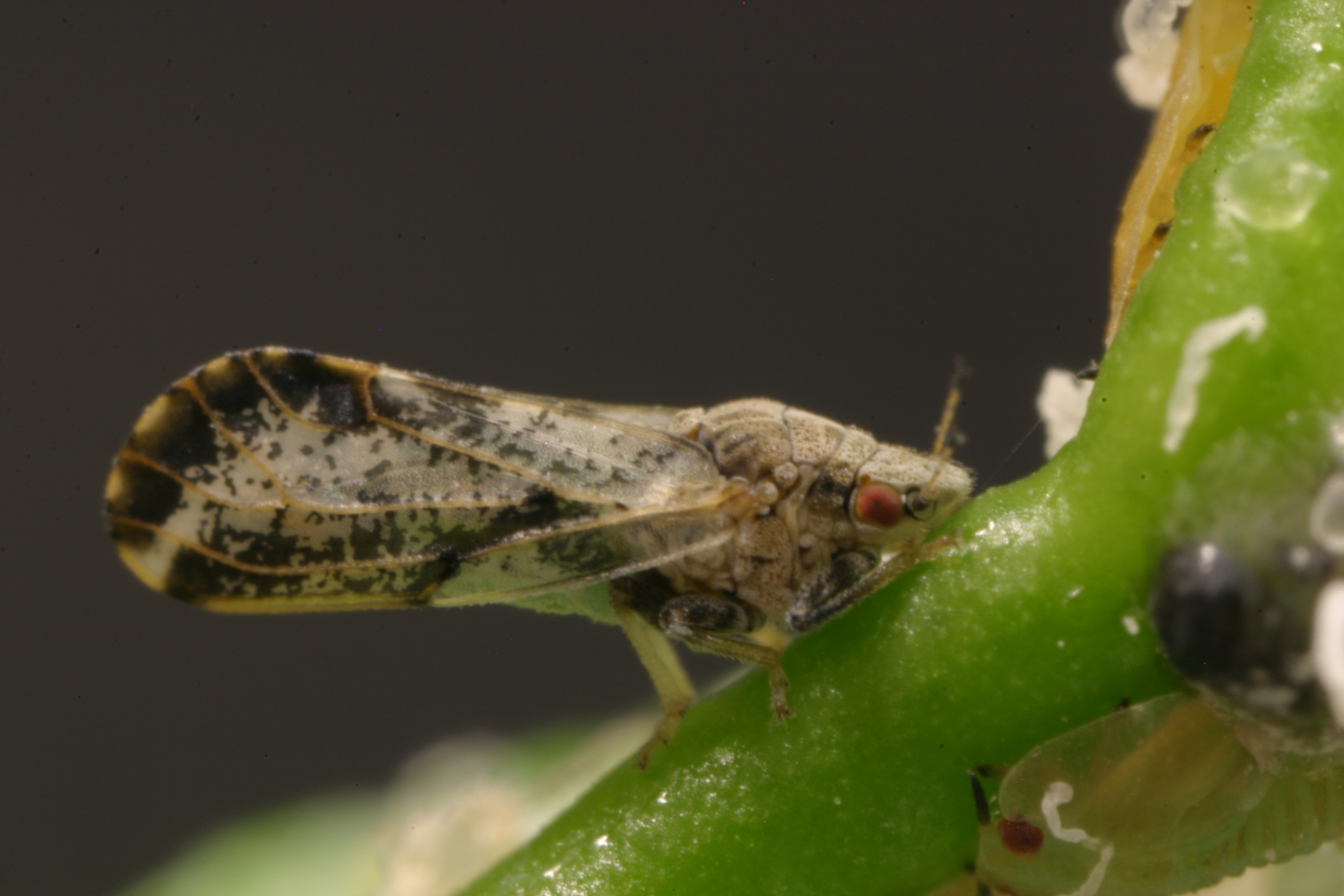
Pests and diseases are as prominent as ever not only for California farmers but in residential areas as well. California Ag Today recently spoke with Rick Westcott, a senior sales rep for Bayer Crop Science, about preventative materials for pests and diseases and the importance of controlling the spread of those diseases, particularly Asian citrus psyllid.

Westcott explained that the advantage of Movento, a powerful insecticide, is that it is systemic, it’s applied early, and it will translocate throughout the entire tree.

“It’s both phloem and xylem movement, so it’ll go down into the roots and then back up so it constantly recirculates within the plant,” Westcott said. “That’s what gives it the longevity of control.”

In citrus trees, Movento typically takes about 65 to 70 days to start working after circulating through the plant which helps with the longevity of the product, Westcott added.

Although Movento is not used specifically for Asian citrus psyllid, it has proved to aid in controlling the pest.

Westcott said Movento is currently being used against citrus red scale and applied during pedal fall along with thrip sprays, which farmers are applying anyway.

“It will take care of your red scale, your early red scale spray, and of course, because it also controls Asian citrus psyllid, it’s a bonus to do that too,” Westcott said. “Then the other thing that they’re doing with the thrip spray as well for katydid control, which is also an issue in citrus at that thrip timing.”

By patrolling and monitoring for ACP, the spread of HLB can also be controlled.

“The key is to keep the ACP at the lowest level possible or zero if that’s possible. [The] fortunate thing for us in the San Joaquin Valley is the fact that we do a lot of spraying for other pests throughout the year that almost everything that we put in the tank happens to also control ACP at the same time,” Westcott explained.

Westcott said that this is the reason we have not seen a huge outbreak of ACP in the San Joaquin Valley, unlike other parts of California.

“The problem isn’t in any commercial grove at this point, but it’s all residential,” Westcott continued. “It’s all concentrated in the residential areas, so there are certain products that you can use an ag that you can’t use there, but most of them, fortunately, you know, they have a label for both residential and agriculture, so they do crossover to stop them there so they don’t get here.”

HLB is still posing a threat in California, but most specifically in the Los Angeles area.

“The total amount of trees currently that are infective with HLB in the counties of LA, Orange and Riverside County is 645. And then if you compare that from a year ago: a year ago, there were only 73 trees that they had infected, and it’s changing every day,” Westcott said.

2021-05-12T11:01:53-07:00August 8th, 2018|

Navel Orangeworm Pressure Could Be Increasing in Almonds

Lack of Good Sanitation Leads to High Navel Orangeworm Numbers

By Jessica Theisman, Associate Editor

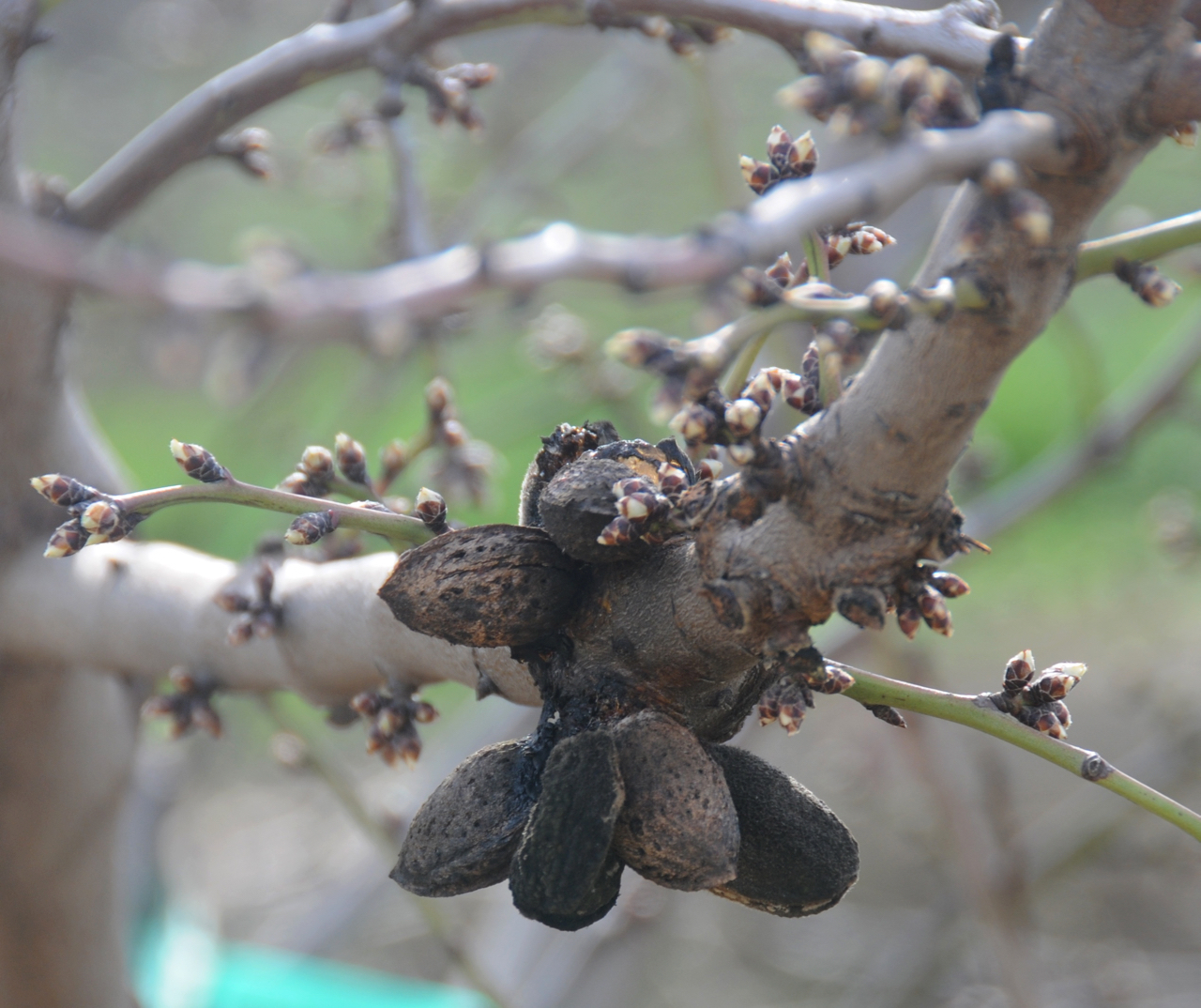
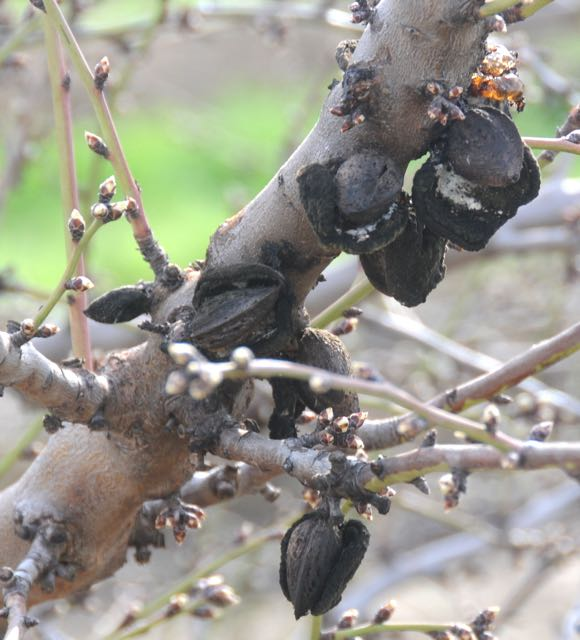
It could be another heavy year for Navel Orangeworm (NOW). David Haviland, UC Cooperative Extension farm advisor for Kern County and entomologist told California Ag Today that sanitation in almond orchards over the winter was not as good as it could have been.

“Everything right now is about trying to prevent a repeat from last year, and it is a little tricky so we know that sanitation wasn’t as good this winter as it generally should be,” he said. “The best time to shake NOW mummy nuts from an almond tree is after a rain when the nuts are heavier.”

David Haviland on Pyrethroid Review

David Haviland

However, rains came late this season, and by the time the rains left, there was only a few weeks before spring.

“This left a very short window to get any shaking done, and some people did an excellent job during that window to sanitize and other people just couldn’t get around all their acreage,” Haviland said. “On average across the whole industry, sanitation was not up to where it should have been, and it gave growers a difficult start to the season.”

NOW could be early this year, but the crop is on time.

“With all of this prolonged hot temperatures, particularly high night-time temperatures, the trees are shutting down a little bit at night compared to what they would do if the nighttime temperatures were cooler,” Haviland explained.

As a result, harvest is not coming as quickly as people would like.

“The problem is that the longer the nuts are in the orchard, the greater chance there will be NOW damage,” he said.

Timely crop protection sprays are recommended.

2021-05-12T11:01:53-07:00August 7th, 2018|

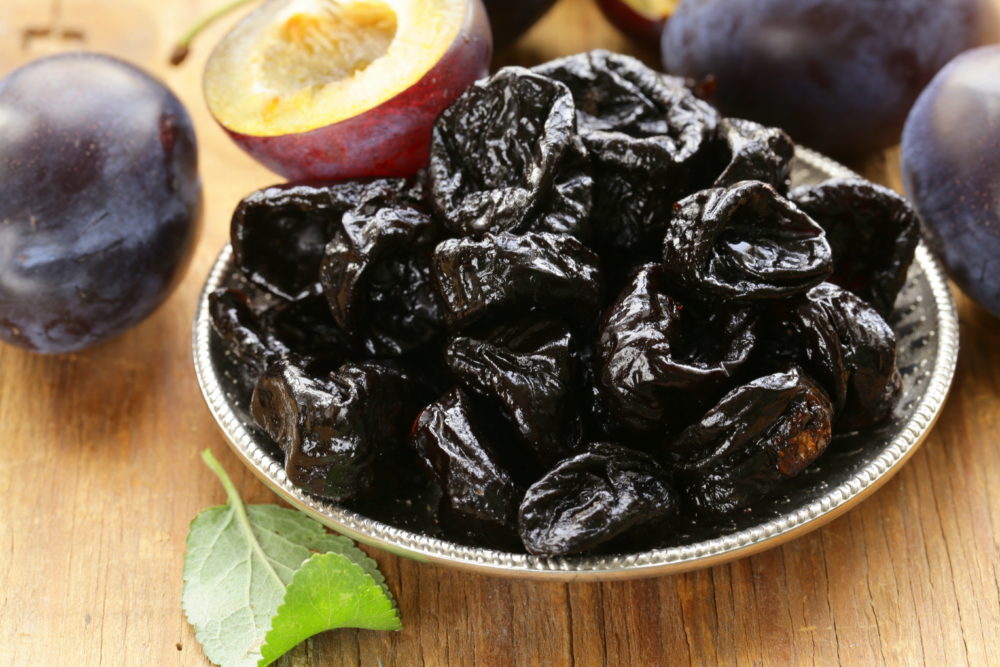
Dried Plums or Prunes? Name Debate Continues.

Important Research Continues on Dried Plums

By Jessica Theisman, Associate Editor

Gary Obenauf oversees the production research programs for the California Dried Plum Board. California Ag Today spoke with him recently about the work that he does with the fruit, also known as prunes.

Gary Obenauf, Production Research Manager

Obenauf helps with post-harvest issues in storage and handling. He also helps the industry with technical issues such as maximum residue limits, also known as MRLs.

“We ship to 135 different countries around the world,” said Obenauf. “We are the largest producer in the world of dried plums—most of the rest of the world still calls him prunes instead of dried plums.”

Obenauf said prunes are now being called dried plums due to a marketing issue about 10 to 15 years ago.

“We noticed that the younger millennials preferred dried plums over prunes, and we made the name change, but we are probably going change it back to prunes,” he said.

Obenauf said that insects, diseases, production cost, and pruning costs are some of the big challenges in the industry. “Essentially, 95 percent of our production is one variety; we need multiple varieties,” Obenauf said.

“We have an active breeding program, but we have not yet come up with good alternatives to the French prune,” he said. “The improved French prune is a good variety, and it is hard to find replacements, and that’s the problem we are having.”

2021-05-12T11:05:10-07:00August 6th, 2018|

Navel Orangeworm Prevention Critical

High Navel Orangeworm Numbers Statewide

By Jessica Theisman, Associate Editor
mycotoxins

Bob Klein

Almonds are deep into hull split, and it is absolutely critical to control any damage from navel orangeworm (NOW), the number one pest in almonds and pistachios. California Ag Today spoke with Bob Klein, manager of the California Pistachio Research Board, about the issue.

“One of the big control strategies for NOW should have happened many months ago during the winter, such as cold sanitation,” he said.

Pest programs start with orchard sanitation. Many growers are lax on sanitation or spend low amounts.

“Those who do stringent jobs are spending $200-$250 an acre on sanitation. And so growers need to be prepared to pay that as far as insecticide applications,” Klein said.

Critical questions that need to be addressed are what you are going to choose to apply and how you are going to time it. When growers are gearing up to put on protective sprays, there are things to remember to increase efficacy. There are always ways in which application can be improved.

If you have a ground rig with fan sprayers, you can get a high kill rate on the lower canopy. You may have to make multiple applications to be able to penetrate the higher portions of the trees.

“You need to look at where your NOW is and maybe make multiple applications. So you can cover both the lower two-thirds of the tree and the top third,” Klein said.

2021-05-12T11:01:54-07:00August 3rd, 2018|
Go to Top