About California Ag Today

This author has not yet filled in any details.
So far California Ag Today has created 2014 blog entries.

Pistachios Need Potassium

Low Potassium Leads to Low Yields

By Jessica Theisman, Associate Editor

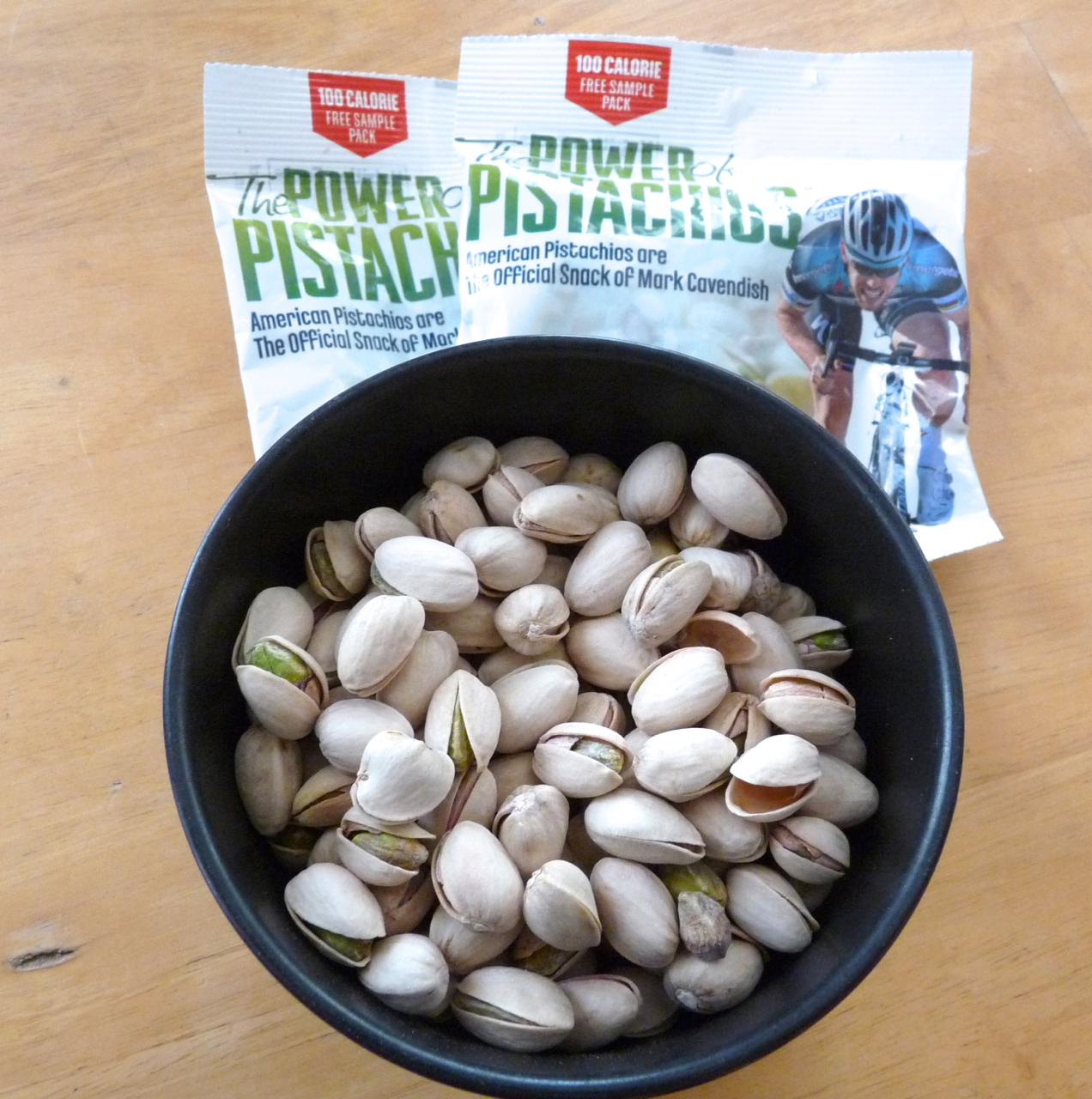
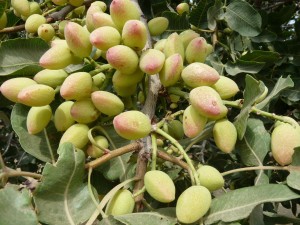
Potassium is a needed element in pistachios, so keep that in mind for the next season’s production.

Phoebe Gordon, Orchard Farm Advisor from Madera and Merced counties. She explains how low potassium can lead to low yield in pistachios.

“Aside from nitrogen, potassium is needed in the highest concentration of plants compared to all the other essential nutrients,” she said. It may be hard to diagnose a deficiency, especially if leaf samples are not taken. Low yields are a symptom of this deficiency. That’s why farmers need to make sure that they are taking their yearly or bi-yearly leaf samples from their trees.

Applying potassium is specific to the grower’s preference. “I would say the source doesn’t really matter as long as you pick what works for you and your situation,” she said. But there can be differences. Growers might want to pick a higher soluble fertilizer if they like to fertigate because they can put more in over a shorter period of time. Banding works as well. It fixes soils where potassium can be trapped in clay particles. The bands saturate the soils and leaves the potassium available for uptake.

Applications of potassium are needed year-round. “About 29 pounds of potash is removed per thousand kernel yield and about 27 is needed to supply tree growth,” Gordon said. You want to be able to replace what was lost in previous years. Potassium is a little bit easier because growers are not going to lose it because it is not negatively charged. Potassium sticks around in the soil.

2019-08-16T08:17:57-07:00August 20th, 2019|

ASTA Fills Big Void

ASTA Counteracted Free Seed Giveaway by USDA

By Patrick Cavanaugh, Editor

The American Seed Trade Association is one of the oldest trade associations in the United States. We spoke with Jane DeMarchi, Vice President of government and regulatory affairs with the American Seed Trade Association (ASTA).

“We were founded in 1883, and we represent all different kinds of seeds. So amongst our 700 members, we have row crops, vegetables, grasses and forages, and also conservation seed,” DeMarchi said.

And the seed trade association was created out of necessity when those in the seed sales industry were upset that the USDA was giving away free seed.

“Regionally in its history, USDA used to give away seed. And so there was a feeling amongst businesses that were selling seed that is was not appropriate for the government actually to be giving away seeds. So I think that it was the impetus for founding the association way back in the day,” said DeMarchi. “But now we deal with a wide range of issues that are related to the seed industry. We have such a diverse group of members, so within each of those different crops, there are different issues. And then there are some overarching things that we’re working on as an association.

California is a hotbed for the seed industry concentrated in the Salinas Valley. ASTA has several companies that have operations there within the tomato, broccoli, onion, and carrots. “These are some massive seed industry players that are working in California to support the California industry,” said DeMarchi.

And one of the things that are so interesting also about the vegetable seed production that goes on in California is that the U.S. is both the most significant market and the biggest exporter seed. “And some of those seeds might take a path of moving between several countries before they are commercialized. And then they may be processed in California and then shipped out to Mexico and Canada or other places to be grown for their agriculture sector,” DeMarchi said.

2019-08-20T07:17:29-07:00August 19th, 2019|

Women Are Big Part of AgTech Generation Innovation

 A New Generation of Women-Focused on AgTech

By Amy Wu

It would be overly simplistic to state that this is a tough time for growers in the U.S. The number of farms and ranches continues to decline, with a growing number of farms being sold off as farmers are faced with the rising costs of doing business, weather and climate fluctuations, limited land, and water supply and the reality that future generations of youth are turning away from agriculture as livelihood.

There are some 2 million farms and ranches down 3.2 percent from 2012, according to the 2017 Census of Agriculture. Many farms, especially large ones that have depended on thousands upon thousands of farmworkers, struggle to find field workers to plant and harvest the crops especially against a backdrop of uncertain immigration policies. Add to that data that points to a world population of 10 billion by 2050.

Growers are under tremendous pressure to produce and maintain their own livelihood. A friend, who is a grower, made an additionally thoughtful point. Most consumers are not willing to pay over a certain amount for food. A carton of strawberries, for instance, maxes out at $10 and a carton of eggs at a similar price range. Climate change and weather fluctuations add tremendous stress to what has always been a stressful career.

This is why innovation and technology are both considered a silver lining when it comes to agriculture in the 21st century. The burgeoning agtech sector, once a niche and somewhat looked upon cynically by growers, is increasingly accepted by growers at mid-sized to larger farms and in both the east and west coasts.

AgFunder reported that 2018 was a “record-breaking year” for the agtech industry with $16.9 billion in funding spread across 1,450 investments, many of them bigger deals than previous years. AgTech startups tackled a wide range of areas including vineyard and pest management to AI and blockchain software that addresses food traceability and soil testing kits based on genomic sequencing technology.

Other innovations include autonomous self-driving tractors, robots that can pick fruit and vegetables. The innovations are designed to make farming more productive and efficient.

Every year the headlines containing agtech seem to expand. The Forbes AgTech Summit held in Salinas since 2015 has seen the number of attendees steadily rise. And as an example, some of the biggest players in leafy greens including Taylor Farms, Tanimura & Antle and Driscoll’s are embracing agtech.

Taylor Farms, for example, teamed up with agtech accelerator Plug and Play that connects the company with new innovations. The cherry on top is that a growing number of women who are innovators and entrepreneurs in this space. These women are launching or co-launching agtech tech startups, or in decision making positions. Since 2016 I have been focused on telling the stories of women entrepreneurs in agtech, and have found they share numerous common threads. The majority are young, in their 20s and 30s, and come from a STEM background. Most are fueled with a passion for using their knowledge in science and technology to solve some of the growers’ problems.

And every week there are more female innovators as part of the mix. AgFunder reported earlier this month that Inari, an Indianapolis-based agtech company that focuses on expanding seed diversity, raised $89 million. Inari’s CEO is a woman Ponsi Trivisvavet.

The St. Louis Business Journal announced that Qiaoni Linda Jing was named CEO of Missouri-based agtech company Genective. Jing came to Genective from Bayer Crop Science where she was senior director of global corporate affairs, and previous to that was a director at Monsanto. Ellie Symes, the CEO, and founder of The Bee Corp is in her 20s, has achieved early success by creating a bee-monitoring app including inventory tracking. The Bee Corp was one of the 10 companies chosen as part of this year’s THRIVE cohort, a competitive accelerator program for agtech.

This reality is also part of the silver lining. Traditionally agriculture has been male-dominated sector as has the technology. Nearly 96 percent of producers in the U.S. are men with an average age at 57.5. Moreover, the average age of farmers continues to inch upwards.

When it comes to technology the story has been almost parallel when it comes to the dearth of women leaders especially in venture capital. Just 2.5 percent of all venture-capital-backed startups have an all-female founding team. Only 9 percent of the venture capitalists investing in tech startups are women, according to a recent study by Ian Hathaway a leader researcher at the Center for American Entrepreneurship. Could this change with the continued rise of the agtech sector, and the increased challenges that growers face?

The Chinese word for “crisis” consists of the two characters “danger” and “opportunity.” This sums up the importance of not only bridging innovation and farming but accepting that moving forward they are inseparable in agriculture.

Amy Wu is the CEO and founder of From “Farms to Incubators: Telling the stories of women entrepreneurs in agtech,” which uses multimedia to highlight women leaders and innovators in agtech.

Amy Wu

Amy Wu is the CEO and founder of From “Farms to Incubators: Telling the stories of women entrepreneurs in agtech,” which uses multimedia to highlight women leaders and innovators in agtech. Amy is a resident of the Western Growers Center for Innovation and Technology in Salinas and continues on its mission of expanding the profiles of women in food, farming, and technology. 

2021-05-12T11:05:02-07:00August 16th, 2019|

Turning up Heat on More Dam Storage

“Dam Water Grows Food” Road Signs Supporting Water Storage Appearing in Five Counties

GAR  Tootelian and Families Protecting the Valley, are rolling up their sleeves to put up several hundred road signs calling for action to build more dam storage and the message is simple: DAM WATER GROWS FOOD
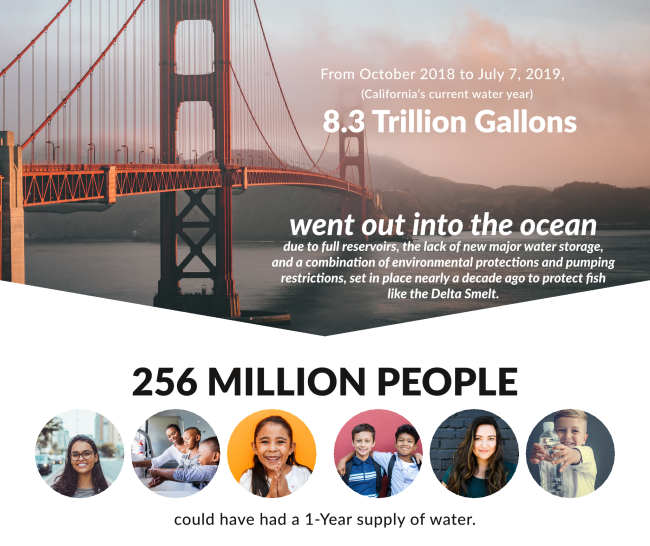
“We’re all tired of political inaction,” said Greg Musson, GAR President/CEO. “Voters approved Prop 1 long ago and yet here we are, wading in the water of a heavy rainfall and snowpack year, while millions of gallons of water flows into the ocean every day. We’ll need this water when Mother Nature isn’t so generous.”temperance flat
The road signs supporting more water storage are a direct message to remind drivers in the Central Valley how important water storage is to food production. The “DAM WATER GROWS FOOD” message will appear in Fresno, Kings, Tulare, Madera and Kern counties. The signs will be visible on major Highways including 99, 41, 156, 152 and Interstate 5. 
“A long-term solution to California’s water struggle includes more dam storage,” Musson goes on to explain. “Our state needs more storage to provide safe and reliable water for families, agriculture, businesses and wildlife to flourish. We know dam water grows food, but it’s also vital to flood control, recreation, improving species’ habitat and overall economic growth.”
We’re asking you to support the campaign for #moreDAMstorage by taking action online and submitting a prewritten letter to their elected officials at www.moredamstorage.com
2019-08-11T17:37:15-07:00August 15th, 2019|

Imperial County Hemp Summit & Expo to be Held September 2019

Topic is the  Local Business Opportunities for Industrial Hemp

The County of Imperial in coordination with Imperial Valley Economic Development Corporation will host the inaugural Imperial County Hemp Summit & Expo (IC Hemp 2019) on September 27-28 at the Imperial Valley Fairgrounds.

The event is being organized by Imperial Regional Alliance, Inc. IC Hemp 2019 will be the largest gathering for the hemp industry in Imperial County, bringing together industry leaders, growers, legislators, manufacturers, vendors and more from across the nation to discuss the wide range of business opportunities for industrial hemp in the Imperial Valley. Attendees will hear from speakers of leading organizations, global corporations and regional stakeholders related to the hemp industry.

Throughout the Summit, guest speakers and panelists will cover pressing issues over a range of topics including best farming practices, local resources and opportunities, incentives, legislation and compliance, banking, financing, insurance, processing and manufacturing. The Summit will be dedicated to providing an all-encompassing educational experience of the hemp industry for its audience.

IC Hemp 2019 will be a two-day event, starting with a full day of expert panels, expo with local and visiting vendors, luncheon and networking reception. Summit participants will also embark on regional tours of local growing and processing operations the following day. On Saturday afternoon, the expo will be open to the public free of charge with networking, shopping and entertainment.

To register for the Imperial County Hemp Summit & Expo, please visit ICHemp.org. Follow along on social media at #ICHemp2019. For more information on sponsorship opportunities, exhibit packages and registration, please contact Alessandra Muse at (760) 353-8332 or alessandra@ivedc.com.

If you would like more information about this topic, please contact Timothy Kelley at (760) 353-8332

2019-08-11T17:28:36-07:00August 14th, 2019|

SB1… Fix It or Nix It

California Water Alliance Opinion on SB1

By William Bourdeau, Chair, California Water Alliance

Water is life in California. Earlier this year, Sacramento politicians introduced Senate Bill 1 (SB1) which seeks to inject politics into California’s environmental regulations. SB1 will restrict water deliveries to the Central Valley and make California even more unaffordable. SB1 puts our communities in danger.

The California Water Alliance is a non-profit and non-partisan organization with a mission to increase the water supply for municipal, agricultural and environmental needs. We have been working with a digital public affairs company to raise awareness about this dangerous piece of legislation.

SB1 will be considered in the California Assembly Appropriations committee later this month. Time is Short.

William Bourdeau

As written, SB1 would freeze the existing federal biological opinions. Future permits would be subject to outdated science and ineffective federal baseline measures, thus permanently, constraining the coordinated operations of the Central Valley Project and the State Water Project.

SB1 will hurt disadvantaged communities throughout California with inconsistent state and federal regulations. This bill will compromise access to drinking water and limit economic prosperity. The California Water Alliance is leading the charge on SB1 by engaging voters and demanding that Sacramento politicians Fix or Nix SB1.

We need your help. Please consider donating to the California Water Alliance by clicking here.

Related Story

Califonia Chamber of Commerce: SB1 is A Job Killer

The California Chamber of Commerce today announced the second job killer of 2019 — SB 1 (Atkins; D-San Diego). The bill would give broad and sweeping discretion to state agencies to adopt rules and regulations that they determine are more stringent than federal rules and regulations adopted after January 19, 2017.

According to CalChamber, SB 1 (Atkins) is a job killer because the uncertainty created by the bill’s vague, ambiguous, and broad language and lack of due process in the rulemaking process would negatively impact the growth, employment, and investment decisions of almost every major California business. Due to costs and anticipated litigation associated with SB 1 (Atkins), companies doing business in the state would be hard pressed to hire more workers or expand California operations.

The proposal seeks to create an expedited administrative procedure not subject to the California Administrative Procedure Act when promulgating emergency rules pursuant to SB 1. Should the measure become law, it will likely instigate a wave of new litigation from interested parties wishing to compel a state agency to perform an act required by, or to review a state agency’s action for compliance with, any of the laws subject to SB 1. Businesses would inevitably be forced to intervene in these lawsuits in order to ensure that their interests are adequately represented.

2019-08-15T13:17:56-07:00August 13th, 2019|

Courtney Razor is New Communications Manager at CFFA

California Fresh Fruit Association Announces New Director of Member Services and Communications

The California Fresh Fruit Association (CFFA) today announced the hiring of Courtney Razor as its new Director of Member Services and Communications.

Razor comes to the Association after serving as the Chief Operations Officer for the Fresno County Farm Bureau for the last six and a half years. In her role at the Fresno County Farm Bureau, Mrs. Razor managed their Future Advocates for Agriculture Concerned about Tomorrow (FAACT) program, supported the needs of the Board of Directors and Executive Committee and oversaw special event planning.

The Chairman of the Board for the Association, Randy Giumarra of Giumarra Vineyards Corp.,stated, “We are very pleased that Courtney has agreed to become a part of the team at CFFA. Her personal background and education, as well as her extensive experience working for a peer agricultural association, should translate into real value for our membership.”

Association President Ian LeMay added, “I have had the pleasure of working with Courtney for a number of years in her role with the Fresno County Farm Bureau, and I have always found her to be an articulate and vocal advocate for California agriculture. We believe she is a natural fit, along with our current staff, to continue to bring value to our members and to serve the California fresh fruit industry.”

Razor grew up in Sanger and is the daughter of third-generation fresh fruit farmer Craig Sorensen. She is a graduate of California State University, Fresno where she earned her bachelor’s degree in mass communications and journalism along with a certificate in marketing.

Her first day at the Association will be Tuesday, September 3rd.


2019-08-12T12:02:17-07:00August 12th, 2019|

SB 1 Is the Same Bad Legislation in a New Dress

SB 1: Bad legislation is bad legislation

Opinion From GVwire

By Bill McEwen

It doesn’t matter how many times you try to dress it up. Or bring it back with a new number.

SB 1 is not only redundant, anti-science, and a barrier to environmental progress, it would put a brake on California’s economy, too.

We’re talking about Senate Bill 1, which is officially titled the California Environmental, Public Health, and Workers Defense Act of 2019.

Senate President Pro Tem Toni Atkins (D-San Diego) says the bill is an “insurance policy against the exploitation of our natural resources and our people.”

Related Story: ‘Job Killer’ Bill Nears Final Vote. Who Supports, Who’s …

SB 1 Is Flawed Overreaction to Trump Administration

But, at its heart, SB 1 is a highly flawed overreaction to a Trump administration that many state Democratic leaders and their environmental allies have called “anti-science.”

If it passes the Legislature and is signed by Gov. Gavin Newsom, the bill would empower state agencies to adopt rules and regulations that they determine are more stringent than federal rules and regulations adopted after Jan. 19, 2017.Tuolumne River-Modesto Irrigation District

For the record: Donald Trump was sworn into office Jan. 20, 2017. That’s not a coincidence.

This bill has little to do with ensuring clean water and air, protecting wildlife, and standing up for workers. The real goal is to provide a legislative vehicle for Democratic lawmakers to polish their “Trump resistance” credentials ahead of the 2020 elections.

We are confident in saying that because many of California’s environmental and labor protections already are more stringent than their federal counterparts. Moreover, California has ample tools to fend off unwise decrees from the Trump administration.

This bill has little to do with ensuring clean water and air, protecting wildlife, and standing up for workers. The real goal is to provide a legislative vehicle for Democratic lawmakers to polish their “Trump resistance” credentials ahead of the 2020 elections.

SB 1 Rolls Back Scientific Advances

One big problem with SB 1 is that it would wipe out the gains the scientific community has made since 2017 in understanding what has contributed to the decline of the Sacramento-San Joaquin River Delta. This new knowledge is opening the door to helping imperiled fished populations such as salmon while freeing water for cities and industries, including agriculture.

“Over the last 30 years, several fish species have continued to decline despite significant expenditures and diversion curtailments mandated by Endangered Species Act rulings,” writes Rick Gilmore, general manager of the Byron-Bethany Irrigation District spanning Alameda, Contra Costa, and San Joaquin counties.

“New procedures and agreements (negotiated by the Brown administration), which incorporate new species management science, are currently being incorporated and scrutinized by the federal and state fish agencies. These updated methods should be deployed and evaluated rather than stymied and derailed. The new science and better practices present the best available option for species recovery.”

And, although Atkins says revisions have allayed fears that voluntary environmental agreements praised statewide won’t be handcuffed by SB 1, the bill’s opponents rightfully continue to be skeptical of such claims.

Bill Is a ‘Job Killer’

SB 1 is not only redundant, anti-science, and a barrier to environmental progress, it would put the brakes on California’s economy, too.

“Due to costs and anticipated litigation associated with SB 1, companies doing business in the state would be hard-pressed to hire more workers or expand California operations,” says the California Chamber of Commerce, which calls the bill “a job killer.”

Earlier Version Died, So Should This One

Two years ago, then-state Senate President Pro Tem Kevin de León pushed SB 49, a bill nearly identical to SB 1. Just like Atkins’ bill, it passed the upper house. However, de León’s version nose-dived in the Assembly.

SB 1 deserves the same fate. It’s flawed legislation driven by a knee-jerk reaction to President Trump. And it’s bad for California — especially those inland regions, like the Valley, that Newsom has promised to help.

Newsom should weigh in immediately to fix SB 1’s substantial flaws. If it reaches his desk without those revisions, he should veto it.

https://gvwire.com/2019/07/24/editorial-sb-1-is-the-same-bad-legislation-in-a-new-dress/

2019-08-11T13:45:50-07:00August 11th, 2019|

Generic Pistachio Marketing Has Big Value

Analysis: Export Markets Shows Nearly $3 billion Post-Tariff Shipment Increase Resulting From U.S. Pistachio Industry’s Generic Program.

American Pistachio Growers’ (APG) efforts to reduce or eliminate trade barriers in several key overseas markets have been a significant boon to pistachio exports and to growers’ bottom-line. A new study, “An Analysis of the Effects of the American Pistachio Growers’ Program to Reduce/Eliminate Tariffs on U.S. Pistachios,” has quantified, for the first time, the direct benefit to the U.S. pistachio industry from APG’s strategic program to vanquish trade barriers.

The analysis from Dr. Dennis H. Tootelian, an emeritus Professor of Marketing, sought to determine what shipments of U.S. pistachios would have been if tariffs had not been lowered or eliminated in Israel, Mexico, China and Hong Kong, and the European Union which are the export markets prioritized for focus by APG. Many of his analyses centered on the period from 2009 through 2017 — the period in which tariffs were reduced in all five geographic areas.

Tootelian’s study showed that actual shipments of U.S. pistachios after the tariffs were reduced or eliminated for each export market were more than 2.3 billion pounds greater than what would have been expected had the tariffs remained in place. Equated in economic terms, the boost in export volume after the trade barriers had been removed amounted to nearly $3 billion greater value than what would have been expected had the tariffs remained in effect.

While Tootelian did not have any prior expectations of what his study would show, he was surprised by the findings.

“To see this kind of an increase in shipments on a before and after basis with the tariffs did surprise me. I did not expect this kind of result in the marketplace. These are not small numbers,” Tootelian said.   “What the data tell me is that there is latent demand for U.S. pistachios and once the tariffs come down, foreign markets want to buy them.”

Tootelian said the projected economic boon to U.S. growers is even more profound if the fluctuations in prices in China and Hong Kong were eliminated from the analysis.

“If you take the price fluctuations in China and Hong Kong out, the increase in value of pistachio shipments amounts to nearly $355 million more dollars per year — nearly $4.5 billion in total from the time when tariffs were in effect to after they were reduced or eliminated,” said Tootelian.

Data from the analysis estimated that more than 1.7 billion pounds of U.S. pistachios in total, or an average of more than 192 million pounds annually, may  have gone into storage if they were not diverted to other markets. While the effect of the projected added supply on the world market is unknown in terms of lower prices, Tootelian said that it would surely have had a detrimental impact on U.S. growers.

“It is unknown what that would have done to the price,” he said. “In order to divert from storage and into other markets, prices probably would have had to come down considerably and whether they would have been able to market that much supply is an unknown.”

Underlying Tootelian’s analysis is the fact that price is not the sole determinant of the volume of U.S. pistachio exports. He said when tariffs are lowered or eliminated, traditional economics would dictate that increased shipments would lead to lower prices, but his data show demand for U.S. pistachios in some key markets remained high in the post-tariff era.  Several factors, he said, appear to be in play.

“One is the reputation of U.S. pistachios, which carries a very positive market image with consumers and importers. Second, it could be the quality of the product is better or more consistent, or both, for what consumers can buy from other countries,” said Tootelian. “And third, there are a lot of reputable health studies that show nuts are healthy and nutritious.  APG has invested considerable resources raising consumer awareness of the healthful attributes of pistachios, and consumers appear to be willing to pay a higher price. That is pretty clear from the data.”

APG has aggressively worked in the halls of Congress, with U.S. trade officials and with foreign governmental bodies to alleviate burdensome trade barriers and create a more open market for U.S-grown pistachios.

“Quantifying the value of APG’s efforts to growers has been difficult up to now, but this new study gives us some tangible answers to the importance of the work we are doing on behalf of the U.S. pistachio industry,” said Richard Matoian, APG’s executive director. “Frankly, we were quite surprised at the magnitude of these numbers.  It’s our strong belief that whenever and wherever trade barriers exist to the free flow of American-grown pistachios around the world, we will confront them vigorously.”

In a postscript to his analysis, Tootelian added, “If I were a grower, I would be encouraging APG to be doing this more in other markets because the greater the demand there is for the product, the less goes into storage and that helps boost the price.”

2019-08-10T09:33:07-07:00August 10th, 2019|

China Threatens All US Agriculture

Trade War Escalates Into Worse Case Scenario

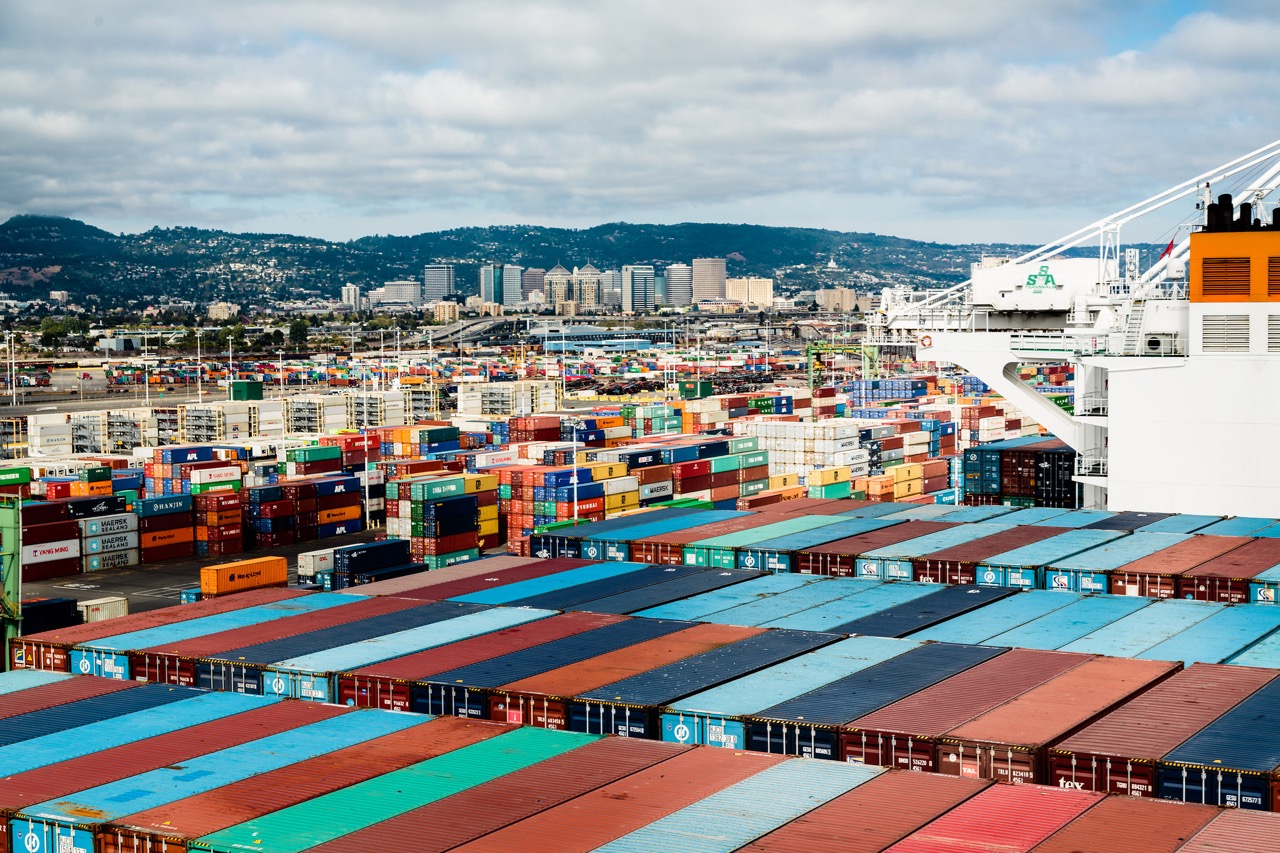
This week, China announced that state-owned companies have suspended purchases of U.S. agricultural products.  Additionally, China may impose import tariffs on newly purchased U.S. agricultural products after August 3. This announcement, so far, does not pre-empt purchases from non-state-owned enterprises.

The Chinese Ministry of Commerce says that this action is in retaliation for the proposed ten percent tariffs announced by the U.S. on $300 billion of Chinese imports, which may be in place on September 1.

A trade meeting between US Trade Representative Robert Lighthizer, US Treasury Secretary Steven Mnuchin and Chinese officials was held last week in China. The goal of the meeting was to restart the trade negotiations that had ended in May. Another meeting is planned for early September.

In 2017, California farmers/ranchers exported $2.27 billion in agricultural products to China/Hong Kong. The market ranked third for California farm exports, behind the European Union ($3.4 billion) and Canada ($3.3 billion).

Top California farm exports to China in 2017 were:

Pistachios – $663.3 millionAlmonds – $500.8 millionWine – $185.3 millionDairy and products – $174.9 millionOranges and products – $123.8 million

The full list can be found here, on Page 11 of the 15-page PDF file. 
Lastly, USDA recently rolled out updated trade data that indicated the U.S. exported $19.5 billion of agricultural products to China in 2017.  As a result of retaliatory tariffs, agricultural exports were reduced to $9.1 billion in 2018 and have continued to decline, with a $1.3 billion drop in the first half of 2019. 
Source: CFBF Federal Policy Division
2019-08-11T13:43:26-07:00August 8th, 2019|
Go to Top