About California Ag Today

This author has not yet filled in any details.
So far California Ag Today has created 2014 blog entries.

Action Needed to Amend SB1

Urge your Representatives to AMEND SB 1

From California Citrus Mutual

This week the Assembly will consider Senate Bill 1 by Senate Pro Tem Toni Atkins.

SB 1 proposes dangerous changes to how the state implements the Endangered Species Act (ESA) and will have devastating impacts on how water is managed in California.

The bill seeks to preserve environmental regulations against perceived rollbacks by the Trump Administration by empowering state agencies to immediately adopt the “baseline” standard in place before January 19, 2017 (the day before President Trump was inaugurated).

As currently written, SB 1 would lock in the existing biological opinions that determine how much water must flow out of the Delta to protect native fish species. This directly influences how much water is available to ALL water users south of the Delta.

The State and Federal agencies are currently in the process of updating the biological opinions, which will result in lower flows and more water for communities and agriculture. But, by locking in the existing biological opinions, SB 1 prohibits State from using the best available science to manage how water moves through the Delta.

Recent amendments do not go far enough to address the ESA provisions.

California Citrus Mutual and many other agricultural and business-sector groups have proposed constructive amendments to address these concerns.  The Pro Tem’s office, however, did not make substantive changes to the bill before it was passed out of the Assembly Appropriations Committee on Friday despite pressure from the Governor’s Office.

The Legislature will adjourn next Friday and it is imperative that SB 1 be amended THIS WEEK.

We are calling on our Assembly Members and Senators to urge the Senate Pro Tem to accept amendments to the ESA section.

Please click on the link below to send a letter to your representatives asking them to support amendments to the ESA section in SB 1.

California Citrus Mutual Action Center

2021-05-12T11:05:02-07:00September 4th, 2019|

Calif. Ag Leaders Chosen for 50th Class

CA Ag Leadership Considered the Premier Leadership Program in U.S.

Twenty-four individuals have been selected for Class 50 of the California Agricultural Leadership Program, an advanced leadership development experience for emerging agricultural leaders. The new fellows will be inaugurated into the program on Oct. 10 at the Clovis Veterans Memorial District. The program, which inaugurated its first class in 1970, will celebrate its 50th anniversary in Monterey in October 2020.

Through dynamic seminars during an intensive 17-month program, fellows will study leadership theory, effective communication, motivation, critical and strategic thinking, change management, emotional intelligence and complex social and cultural issues. Seminars are delivered by four partner universities: Cal Poly Pomona, Cal Poly San Luis Obispo, Fresno State and UC Davis. Fellows will participate in 55 seminar days, including an eight-day national travel seminar and a 15-day international travel seminar.

“After an application and alumni-assisted interview process that witnessed a record number of applicants, we are very pleased to announce the 24 individuals making up Class 50,” said Barry Bedwell, president of the California Agricultural Leadership Foundation (CALF). “This distinguished group, made up of 12 women and 12 men, will begin their 17-month formal leadership program shortly, but more importantly, this is the start of a lifelong leadership process that will not only make them better leaders but benefit California agriculture as well.”

CALF invests approximately $55,000 per fellow to participate in the program, which is underwritten by individual and industry donations. Ag Leadership is considered to be one of the premier leadership programs in the United States. Since it was first delivered in 1970, more than 1,300 men and women have participated in the program and have become influential leaders and active volunteers in the agriculture industry and other areas.

Class 50 Fellows:

Celeste Alonzo, Junior Enterprises LLC, Coachella

Leeann Bettencourt, Bonipak Produce, Santa Maria

Tyler Blackney, Wine Institute, Sacramento

Adrian Calixtro, Wonderful Orchards, Selma

Yezmin Carrasco Valle, Reiter Affiliated Companies, Oxnard

Mitch Coit, Marv Coit Inc., Firebaugh

Kris Costa, California Milk Advisory Board, Turlock

Natasha Crivelli, Chris and Natasha Crivelli Farms, Dos Palos

Rocco Cunningham, R.O. Shelling & Barlas Feeds, Petaluma

Brian Gill, Gill Cattle/Nielsen Insurance, Exeter

Erin Gorter, Cal Poly San Luis Obispo, Templeton

Megan Grima, Stephens Ranch Inc., Yuba City

Ted Kingsley, Vann Bros., Williams

Lindsey Liebig, Sacramento County Farm Bureau, Galt

Holly Little, Acadian Seaplants, Walnut Grove

Julian Lopez, Imperial County, Imperial

Megan Marques, California Farm Bureau Federation, San Luis Obispo

Jonathan Merrill, Merrill Farms LLC, Salinas

Michael Newton, Newton Farms, Stratford

Erin O’Donnell, The Sun Valley Rice Company, LLC, Arbuckle

Brian O’Neill, Huron Orchard Services, Fresno

Matt Peyret, First Northern Bank, Woodland

Priscilla Rodriguez, Western Ag Processors Association, Fresno

Trevor Tagg, West-Gro Farms Inc., El Centro

2019-09-04T08:02:20-07:00September 4th, 2019|

Public Trust Important in Ag

Calming Public Trust on Agricultural Production

By Patrick Cavanaugh, Editor

So over the last 50 years, there have been enough violations of public trust by all kinds of institutions, be they government, be they religious institutions, educational institutions, dating all the way back to 1968.

Charlie Arnot is the CEO of The Center for Food Integrity.He said consumers have questions about food — where it comes from, who’s producing it and how. Their healthy curiosity and skepticism is why The Center for Food Integrity exists.

“As a society, we’ve been conditioned to be skeptical about whether or not institutions are worthy of trust,” said Arnot. “Over that same period of time, we’ve seen phenomenal consolidation integration and the application of technology in agriculture, which results in food being safer, more available and more affordable than it’s ever been before.”

“It really is a marvel, but yet in now causes people to think of the food system as an institution and therefore really questioned whether or not we’re still worthy of trust,” noted Arnot.

Arnot explained the fundamental bias we see against size and scale is a belief that the larger companies, the larger entities will put profit ahead of public interest. “We know that’s not true. Those of us who work in agriculture know that the people, the men and women who work in ag are, are terrific. They’ve got values that really resonate. They’re committed to doing what’s right. But because of the size of scale of agriculture today, it raises greater questions,” he said.

“So what it means is we have to embrace that consumer skepticism and be willing to address those questions, not be defensive and help people understand that yes, societal scale has changed, but our commitment to do what’s right has never been stronger,” noted Arnot.

For more information on The Center for Food Integrity click here.

2019-08-31T17:58:53-07:00September 3rd, 2019|

California Oak Trees Harbor Insect-Eating Bats

Oak Trees in Vineyards a ‘Win-Win’ For Bats and Growers

By Pam Kan-Rice  UC ANR Assistant Director, News and Information Outreach

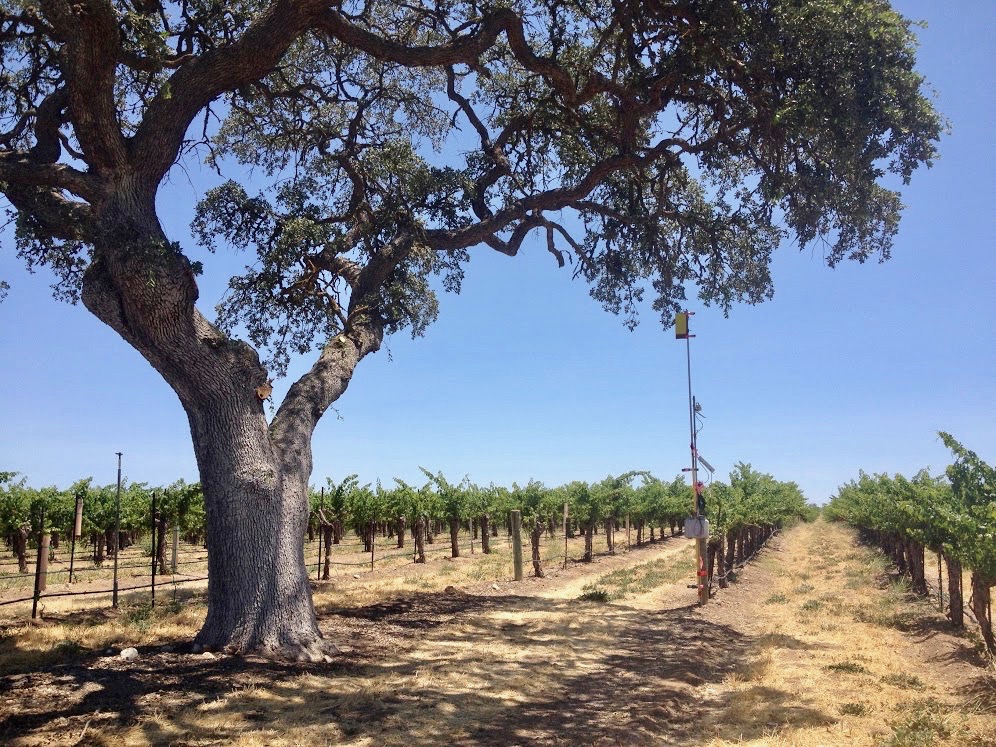
Californians love their oak trees. During vineyard development, Central Coast grape growers often feel compelled to leave an old iconic oak standing, even if it ends up right in the middle of their vineyard. While driving through the Central Coast, it’s not unusual to see the pattern of vineyard rows broken by a majestic oak tree. Aside from their beauty, what are some of the ecosystem services that these majestic trees provide?

To find answers, a UC Cooperative Extension scientist in San Luis Obispo County collaborated with a U.S. Forest Service scientist to study how bats use blue oak and valley oak trees in vineyards. UC Cooperative Extension specialist Bill Tietje, a co-author of the study, says they focused on bats that eat insects because bat populations have declined dramatically in some areas due to habitat loss and disease. “And bats don’t hurt grapes. As a matter of fact, thanks to the huge number of bugs they consume, bats could be very good for a vineyard.”

To understand the potential value of remnant oak trees for insectivorous bats, the researchers placed microphones to detect bat calls within 14 Central Coast vineyards. The recordings revealed 11 species of insectivorous bats foraged within the vineyards. Bat foraging activity was 1.5 times greater at the trees compared to open, tree-less areas within the vineyard. And the bigger the tree, the bigger the number of bats it attracted.

“The study results suggest that the large oak tree in my vineyard not only increases the beauty and biodiversity of the agricultural landscape, but also attracts insect-eating bats that can provide natural pest control—a win-win,” said grape grower Jerry Reaugh, who cooperated with the researchers.

In fact, the trees more than doubled the number of insectivorous bats called woodland-adapted bats within the vineyards. The study indicates that the oak trees attracted woodland-adapted bats that would normally be absent from vineyards.

Tietje hopes that the free insect-reduction services provided by bats will increase grape growers’ incentive to manage and maintain the trees, and even to plant new oak trees in suitable areas around their vineyard, in mutual benefit to both agriculture and biodiversity.

“In addition to their value for insectivorous bats, remnant trees maintain bird and insect diversity by providing food, habitat, cover and stepping stones that facilitate the movement of wildlife within agricultural landscapes,” said Tietje.

This study comes at a time when declining blue oak and valley oak populations are of great concern.

“We hope the study will increase awareness of these beautiful and beneficial trees and make the case for conservation and restoration,” Tietje said. “Preserving and enhancing biodiversity in the midst of climate change is key to ensuring resilience in our landscapes and communities.”

The study by University of Washington graduate student Anne Polyakov, Theodore Weller of USDA Forest Service and Tietje is published in the September 2019 edition of Agriculture, Ecosystems and Environment.


2021-05-12T11:05:02-07:00September 2nd, 2019|

SB1 Advances in Sacramento

SB1 Advances to California Assembly

The California Water Alliance announced today California Senate Bill 1, or SB1, by Senator Toni Atkins (D-San Diego), advanced from the California Assembly Appropriations Committee. SB 1 will now be considered on the California Assembly floor before the Legislature adjourns on September 13th.

Assemblyman Frank Bigelow (R-O’Neals), Vice-Chair of the Assembly Appropriations Committee, shared with the California Water Alliance, “I am disappointed that SB1 was released off suspense file with amendments that make it much worse for farming and California as a whole.”

SB1 effectively declares that California would adhere to laws governing clean air, water, endangered species and labor that were in place in January 2017, before the beginning of the Trump Administration.

“SB 1 is bad for farmworkers, farmers, and communities throughout the state of California,” said William Bourdeau, Chairman of the California Water Alliance. “Our environmental laws and regulations should be defined by current, sound science, not petty politics.”

SB1 would freeze the existing federal biological opinions. Future permits would be subject to outdated science and ineffective federal baseline measures, thus permanently, constraining the coordinated operations of the Central Valley Project and the ç.

Action Needed

The California Water Alliance has led effort to demand that the California Legislature “Fix or Nix SB1”: https://californiawateralliance.org/fix-it-or-nix-it/. The California Water Alliance is a non-profit, non-partisan organization that advocates for an increase in water supply for municipal, agricultural and environmental needs: https://californiawateralliance.org/.

2019-08-30T18:16:06-07:00August 30th, 2019|

Grants Available for Biological Integrated Farming

CDFA Offering Grants for Biological Farming Systems

 The California Department of Food and Agriculture (CDFA) is now accepting grant applications for its Biologically Integrated Farming Systems (BIFS) Program and its Proactive Integrated Pest Management (IPM) Solutions Program, administered by the Office of Pesticide Consultation and Analysis (OPCA).

BIFS GRANTS
The goal of the BIFS grant program is to fund on-farm demonstration and evaluation of innovative biologically-based farming systems that employ Integrated Pest Management (IPM) strategies. CDFA is responsible for supporting agricultural production in California by fostering innovative, efficient and scientifically sound practices.

Applications are due on 5 p.m., October 31, 2019. Detailed information on the Biologically Integrated Farming Systems program, including the application process and requirements, is available at https://www.cdfa.ca.gov/oefi/opca/bifs.html.

OPCA received a one-time appropriation of $2 million for BIFS as part of the 2019-2020 budget that will be allocated in two blocks: $1 million in the current solicitation and another $1 million in 2020-2021.

PROACTIVE IPM SOLUTIONS GRANTS
The goal of the Proactive IPM Solutions Program is to anticipate exotic pests likely to arrive in California and to identify and test IPM strategies which can then be quickly implemented if the pests are detected. CDFA is responsible for preventing and mitigating invasive pests. Techniques resulting from this proactive approach will allow for rapid deployment of management plans.

Applications are due at midnight, October 31, 2019. Detailed information on the Proactive IPM Solutions Program, including the application process and application requirements, is available at https://www.cdfa.ca.gov/oefi/opca/proactive-ipm.html

A total of $1.2 million amount is available for Proactive IPM Solutions in this grant cycle. Funds for the current Request for Proposal (RFP) come from two sources. First, OPCA received an annual appropriation of $544,000 for this and other research as part of the 2019-2020 budget. An additional $3.5 million was allocated in the 2019-2020 budget to specifically help California’s farmers transition away from chlorpyrifos, an insecticide that has long been used to combat newly-arrived invasive pests but is being phased out in California.

OPCA provides consultation to the California Department of Pesticide Regulation (DPR) on pesticide regulatory matters. The office’s consultative activities focus on potential pesticide regulatory impacts and pest management alternatives that may mitigate or prevent such impacts on production agriculture. OPCA staff is also involved in other projects relating to pesticide use and alternatives. Information on the Office of Pesticide Consultation and Analysis is available at https://www.cdfa.ca.gov/oefi/opca/.

2021-05-12T11:05:02-07:00August 29th, 2019|

Arnoldo Torres Helping Farm Employees Seek Doctors

Mexican Doctors Coming to California to Help Farm Worker Communities

By Patrick Cavanaugh, Editor

Arnoldo Torres has worked hard for nearly 20 years to get doctors from Mexico to rural farmworker areas of California. Torres wrote the bill in 2000, which former California Governor Gray Davis signed in 2002. But no medical schools wanted to do the orientation program for the doctors in Mexico.

“The medical schools avoided the program, but we found other ways to do what we need to get done and should have 29 doctors coming in October,” said Torres a journalist, consultant, partner in the Sacramento, California based public policy consulting firm Torres & Torres, and the executive director for the California Hispanic Health Care Association.

“We have funding on both sides of the border from private foundations, that will not be public funding,” noted Torres.

This all came about after Torres met with the president of the Mexican Foundation who happened to know the Mexican Ambassador to the U.S. Torres requested that the Mexican Ambassador seek approval for the Visas of the 29 doctors.

The problem is that California, as well as the United States since the 1970s when this data was collected, has had significant doctor shortages primarily in rural and farmworker communities.

“The problem is even worse today than it was even ten years ago. California produces 700 doctors a year. Close to 600 doctors practice in California, but they do not practice in the areas where they’re the most needed,” Torres said. “And so this program is designed to be a pilot to garner enough experience to decide whether this program should be expanded, and we ought to be bringing in more doctors.”

“The whole idea is that this is only a pilot program. We’ve never wanted this program to be permanent because California should be developing the doctors who have cultural, linguistic competency, said Torres. “When we did this bill in 2000, the largest population of non-English speakers were from Latin America, primarily Mexico. But California’s diversity has grown significantly since then. Rural and farmworker areas are still the most difficult to serve. The state now has much more diversity with languages and cultures, and the doctors in the California medical school system are not being educated on culture and language, and so, therefore, it’s tough for them to serve these communities,” he said.

This speaks to Trump’s recent decision on legal immigration. The reality is that many undocumented people, as well as legal residents, work in agriculture. “They work full time in most cases. And despite the increase in salaries that many in agriculture have extended to the farmworker population, illegal and undocumented, the reality is that it’s not a year-round job in most cases, it’s seasonal,” said Torres. “There are so many months out of the year in which they’re going to work, and they’re never going to earn enough money to be able to pay for insurance.”

What I think Trump is doing flies in the face of the argument that this population comes in to take benefits from the public. “They work. They do invaluable work. Growers are providing greater care. They are providing much better benefits, but they can only do it for so long in a year. And then you have a terrible economic policy with this president. You don’t have enough labor. He doesn’t want to bring any labor to work in these areas. The reality is that our bill underscores so many of the things that so many people get wrong about immigration,” explained Torres.

Torres noted that the Mexican doctors would come in only for three years and then they would have to return. Their visas would be for only three years. “The clinics where the doctors will work will have to pay them all of the salaries. This is in the law that we wrote. They have to pay them the salaries and the fringe benefits that they pay their current doctors, but they can only work for three years,” noted Torres.


“We are seeking are only three-year visas, and we have made an agreement with Mexico that we would only borrow them for three years. The idea is that we don’t want to be taking doctors from Mexico on a permanent basis. That is the responsibility that California has, as well as this country has, to develop enough doctors to work in the areas where they’re needed the most,” said Torres. “But Mexico has agreed to lend them to us. Because going back, they’re going to be even better doctors than they were before they came.”
And they’re all going to be very fluent in English as well. So they’re going to be serving all patients that come in for care, not just the Mexican workers.


2019-08-25T21:24:47-07:00August 27th, 2019|

UCR’s Dr. Charles Coggins Memorial Service Sept. 7 2:00 pm

Coggins Served As Long Time Citrus Plant Pathologist

The family of Dr. Charlie Coggins would like to welcome all citrus industry friends to attend his memorial service at First Baptist Church 51 West Olive Avenue Redlands, California 92393

Charles W. Coggins, Jr. passed away on Aug 18, 2019 at the age of 88. Coggins served as Chairman of the Board of Directors for the California Citrus Quality Council from November 1992 to January 2008. In 2003, he was presented with CCQC’s highest honor, the Albert G. Salter Memorial award which recognizes an individual who has made outstanding contributions to and achievements in the citrus industry.

Charles Coggin

Coggins was an industry pioneer who recognized the potential advances with plant growth regulators (PGRs), beginning with gibberellic acid (GA) and continuing with programs to retain 2,4-D. It was said that his research on PGRs has been described as the single most economically beneficial research result of the last century. He authored more than 100 technical publications and nearly 50 semi-technical publications that have proved to be invaluable tools for citrus growers worldwide. He was the recipient of numerous awards for his leadership, agricultural excellence and research accomplishments.

Coggins, Professor Emeritus of Plant Physiology, officially retired from the University of California Riverside in 1994. During his 37 years at the University, he served as Chairman of the UC Riverside Department of Plant Sciences and helped create the Department of Botany and Plant Sciences. He also served 15 years as Executive Secretary/Treasurer for the International Society of Citriculture. To help succeeding generations of researchers, Coggins created The Coggins Endowed Scholarship Fund at UCR to provide financial assistance for graduate students in the College of Natural and Agricultural Sciences who demonstrate academic excellence, quality research and benefit to the citrus industry.

Charles Coggins inspecting citrus earlier in his career at UCR

He was born November 17, 1930 in North Carolina. He was proceeded in death by two sons from cystic fibrosis. He is survived by his wife Irene of 68 years, a son and four grandchildren. A memorial service is pending. In lieu of flowers, contributions can be made to support his scholarship at UCR in honor of him, to the Parkinson’s disease foundation or cystic fibrosis charities. Cards can be sent to 819 Alden Road, Redlands, CA 92373.

2019-08-23T22:35:10-07:00August 26th, 2019|

Alliance For Food and Farming Hosts Food Safety Media Tour

RDs, Health and Nutrition Writers and Bloggers Join AFF’s Third Produce Safety Tour

The Alliance for Food and Farming (AFF), in conjunction with Markon Cooperative, hosted its third “Facts, Not Fears” Produce Safety Media Tour for registered dietitians, health and nutrition writers and bloggers on August 19, 20 and 21 in the Salinas Valley. Tour participants visited fruit and vegetable fields as well as engaged with farmers, chefs and scientists with expertise in nutrition and food safety during the three-day event.

“It was another great group and we shared many meaningful conversations and dialogue,” said Tim York, Markon President and AFF Management Board Chair. “Our goal is to provide our guests with a firsthand look at farming and how we strive to provide safe and healthy foods for consumers. But, all of us walk away learning so much from our tour guests, including how we can communicate better with consumers about produce safety.”

Alliance for Food and Farming tour guests are joined by host Tim York of Markon, along with Markon’s food safety team, Dr. Carl Winter of U.C. Davis and tour sponsors Lisa Lochridge, Florida Fruit and Vegetable Association, Carolyn O’Donnell, California Strawberry Commission and Dr. Bob Whitaker of Produce Marketing Association. (Tour sponsors also included California Giant Berry Farms and First Fruit Marketing)

“The opportunity to build one-on-one relationships with these influencers is so important. Our tour guests have a direct connection to consumers so their efforts to share information about farming and food safety are always impactful,” said Teresa Thorne, AFF Executive Director. “We want to thank our tour partner, Markon, for making this experience possible, as well as the farmers and scientists who provided information and perspectives,” Thorne said.

In addition to the farm tours, the AFF and Markon facilitated a Roundtable discussion where tour guests were joined by farmers and farming companies, scientists, chefs and trade groups for a free-flowing discussion that encompassed food safety, organic and conventional farming practices, produce consumption, food waste, pesticide use, food safety regulations and consumer outreach. “Nothing is off the table during this discussion and everyone is encouraged to ask questions, provide their perspective, agree or disagree,” York says. “This has become among the most popular components of the tour for everyone involved,” York said.

The eight RDs, writers and bloggers involved in the tour provide content and articles to media outlets including, Washington Post, Today’s Dietitian, Shape Magazine, U.S. News and World Report, Dr. Oz, Sirius XM’s Dr. Radio program, CNN, Huffington Post, Buzzfeed, Glamour, Health Magazine, LA Times and Prevention, among others. The tour participants’ social media properties also reach thousands of followers each day.

“We have seen the benefits of engagement and sharing of AFF social content by these influencers over the last couple years,” York says. “We strongly believe their efforts in mainstream and social media has contributed to a recent and steady decline in one-sided coverage of the annual release of the ‘dirty dozen’ list,’” York says.

The “dirty dozen” list recommends avoidance of popular and healthy produce items based upon scientifically unsupportable claims about pesticide residue levels. When the AFF began its Safe Fruits and Veggies campaign in 2010 to counter inaccurate produce safety messaging, the “dirty dozen” list enjoyed widespread coverage each year in major newspapers, national news broadcasts and online news outlets. “Since 2010, overall coverage of the list release has declined significantly and now only 25% of the coverage is one-sided,” Thorne said.

The goal of the AFF is to provide science-based food safety information about organic and conventional produce so that facts, not fears, can guide consumers’ shopping choices. The cornerstone of the AFF’s outreach efforts is the newly updated safefruitsandveggies.com website, which includes information about farming, nutrition, health, toxicology and risk analysis for consumers, media and nutritionists and dietitians.

“We want to extend our sincere thanks to all of our guests for joining us, sharing their insights and suggestions on how we can all work together to reassure consumers about the safety of produce,” York said.

“We also extend our appreciation and thanks to the California Strawberry Commission, California Giant Berry Farms, First Fruits Marketing, Florida Fruit and Vegetable Association and the Produce Marketing Association for their sponsorship and participation in the AFF’s 2019 tour,” Thorne concluded.

2019-08-22T12:59:10-07:00August 22nd, 2019|

Weed Science Society on Glyphosate Safety

Following Hundreds of Global Studies Glyphosate Found Not to be Carcinogenic

Glyphosate is a uniquely effective and generally nonselective herbicide with a wide range of uses in both agricultural and nonagricultural settings. It has been widely adopted in conjunction with glyphosate-resistant (‘Roundup Ready’) crops and is also commonly used to manage weeds in conservation tillage crop production, resulting in significant soil improvement and savings.  Glyphosate is used in orchards and vineyards, aquatic settings, fallow and noncrop fields, and around homes and gardens. Because of its effectiveness and other desirable characteristics, glyphosate has become the most widely used synthetic herbicide in human history.

In 2015, glyphosate was classified as a “probable carcinogen” by the International Agency for Research on Cancer (IARC). IARC has applied the same classification to red meat, hot beverages, and emissions from high-temperature frying, as well as to more than 70 other chemicals. This designation has caused widespread public concern about the safety of glyphosate while being the recent focus of multiple lawsuits.

Although WSSA members are not experts in human toxicology and epidemiology, we appreciate the rigorous, transparent, and risk-based review process undertaken by the U.S. Environmental Protection Agency (EPA) as mandated by the Food Quality Protection Act (FQPA) and the Federal Insecticide, Fungicide, and Rodenticide Act (FIFRA). These statutes specify that when setting exposure tolerances, any proposed use of a pesticide should provide a “reasonable certainty of no harm” and that using the pesticide as directed “will not generally cause unreasonable adverse effects” to humans or the environment. FIFRA states that when considering these risks, the EPA must consider “the economic, social, and environmental costs and benefits of the use of any pesticide.” The EPA review process is substantially broader in scope than the more limited hazard-based assessment conducted by IARC.

After reviewing the best evidence available, regulatory bodies around the world have consistently concluded that glyphosate-based herbicides are not likely to be carcinogenic. These agencies include the U.S. Environmental Protection Agency (EPA), the Canadian Pest Management Regulatory Agency, and the European Food Safety Authority (EFSA). Additionally, an independent 2018 Agricultural Health Study supported by the U.S. National Cancer Institute found no association between glyphosate-based herbicides and cancer. That conclusion was drawn by researchers who followed the health of more than 50,000 licensed pesticide applicators over more than 20 years.

As part of its standard periodic assessment of previously registered herbicides, the EPA issued a proposed interim registration review decision on glyphosate in April 2019 (Case Number 0178). EPA reiterated that glyphosate is ”not likely to be carcinogenic to humans” and that “[t]he EPA thoroughly assessed risks to humans from exposure to glyphosate from all uses and all routes of exposure and did not identify any risks of concern.”

Extensive reliance on any single tool or technology can be cause for concern. As scientists and weed managers, our membership encourages diversification of weed management practices, including both chemical and nonchemical controls. For that reason, reducing the heavy reliance on glyphosate for weed control is certainly a desirable long-term outcome.

If, though, glyphosate is banned by policy or public outcry, other tools will be used to manage weeds, and many come with their own potential for negative impacts on health and the environment.

Prohibiting glyphosate use may also result in less effective weed control that could lead to reduced crop yields and quality, buildup of weed seed banks, weed-clogged waterways, degraded wildlife habitats, risks to human and animal health from toxic weed species. It is possible that labor costs may go up and that tillage may increase along with fossil fuel use and soil erosion. In addition, hand-labor can carry the very real risk of musculoskeletal injuries and of skin cancer from overexposure to the sun.

The WSSA supports the scientific evaluation conducted by EPA to determine the safety of properly applied pesticides. When determining whether to allow or discontinue use of any pesticide, it is important to not only weigh the costs and benefits of that pesticide, but also to understand the risks and benefits of the most likely alternatives. Decisions related to glyphosate use are no different. Ongoing research and evaluation are justified, and our society will remain current on further developments related to carcinogenic risk and glyphosate as new information becomes available.

About the Weed Science Society of America

The Weed Science Society of America, a nonprofit scientific society, was founded in 1956 to encourage and promote the development of knowledge concerning weeds and their impact on the environment. The Society promotes research, education and extension outreach activities related to weeds, provides science-based information to the public and policy makers, fosters awareness of weeds and their impact on managed and natural ecosystems, and promotes cooperation among weed science organizations across the nation and around the world.  For more information, visit www.wssa.net.


2019-08-20T07:19:16-07:00August 21st, 2019|
Go to Top