About California Ag Today

This author has not yet filled in any details.
So far California Ag Today has created 2014 blog entries.

Almond Harvest Underway

A Whole Lot of Almond Shaking is Going On Throughout California

By Patrick Cavanaugh, Editor

It’s a busy time of year for the almond industry as harvest is going strong. It starts in Kern county and moves all the way north or Chico. It will take nearly two months to get across 1.4 million acres, and it’s going to be about a 2.2 billion pound crop, which is down 3.5% from 2018 where the production was about 2.28 billion pounds. It was less than ideal weather conditions in the spring, which caused us dip in production.

However California remains the best place in the world to grow almonds. It’s all about the Mediterranean climate in California— long hot summers with the rain and cold in the winter, ideal for almond trees.

Navel Orangeworm is a critical pest in almonds, pistachios and in a lesser way for walnuts. And they continue to be a significant pest during  almond harvest season as the adult moths can lay eggs, which can pupate later in almonds turning them off-grade. Once shaking is done and the almonds are picked up out of the field, it’s important to get that crop out of the orchard as soon as possible to minimize navel orange worm infestation.

Almonds are the first tree nut to be harvested. Later on, pistachios will start, following that we’ll be walnuts.


 

2019-08-08T10:54:00-07:00August 7th, 2019|

Cheese From CA Bring Home Awards

They Earn 50 Awards at American Cheese Society Competition in Richmond, VA

 Cow’s milk cheese and dairy processors that use the Real California Milk seal brought home 50 awards from the 2019 annual cheese competition held by the American Cheese Society (ACS), July 31-August 3, 2019 in Richmond, Va. 

The American Cheese Society recognizes the finest cheeses and dairy products made in the Americas. A total of 1742 cheese and cultured dairy products were entered the competition. Cheeses made with 100% California cow’s milk had another strong showing this year in a field of 257 processors representing the United States, Canada, Columbia and Venezuela.

California cheesemakers won a total of 81 awards – the second largest showing in the competition – with Real California cow’s milk cheeses bringing home 50 prizes: 19 first-place, 20 second-place and 11 third-place awards in this year’s judging. Highlights from these wins include:

  • Marquez Brothers International, Inc., San Jose – 15 awards: 1st place each for Panela (Hispanic and Portuguese Style Cheeses), Crema Agria, Plain Stir Yogurt (Cultured Milk and Cream Products), Guava Drinkable Yogurt, Mango Drinkable Yogurt, Strawberry Banana Drinkable Yogurt, and Strawberry Drinkable Yogurt (Flavored Cheeses/Yogurts & Cultured Products with Flavor Added); 2nd place each for Jocoque (Cultured Milk and Cream Products), Queso Fresco Casero Cheese, Queso Fresco Cremoso Cheese (Hispanic and Portuguese Style Cheeses), Peach Drinkable Yogurt, Piña Colada Drinkable Yogurt, and Strawberry Banana Cereal Smoothie (Flavored Cheeses/Yogurts & Cultured Products with Flavor Added); and 3rd place each for Queso Cotija (Hispanic and Portuguese Style Cheeses) and Guava Stir Yogurt (Flavored Cheeses/Yogurts & Cultured Products with Flavor Added),
  • Karoun Dairies, Inc., Turlock – five awards: 1st place each for Brinza Feta (Feta – Cow’s Milk) and Masala Yogurt Dip (Flavored Cheeses/Yogurts & Cultured Products with Flavor Added); 2nd for Bulgarian Yogurt (Cultured Milk and Cream Products); and 3rd each for Whole Milk Yogurt and Armenian Yogurt (Cultured Milk and Cream Products).
  • Point Reyes Farmstead Cheese Co., Pt. Reyes – five awards: 1st place each for Point Reyes Bay Blue (Blue Mold Cheeses), The Fork Pimento Cheese and The Fork Original Blue & Date Spread (Flavored Cheeses); and 3rd each for Point Reyes Toma (American Originals) and Point Reyes Tomaprovence (Flavored Cheeses).
  • Cowgirl Creamery, Petaluma – four awards: 2nd place each for Fromage Blanc (Fresh Unripened Cheeses), Pierce Point (Flavored Cheeses) and Mt. Tam (Soft Ripened Cheeses); and 3rd for Cottage Cheese (Fresh Unripened Cheeses).
  • Rizo-Lopez Foods Inc., Modesto – four awards: 1st place each for RBCC Oaxaca (Hispanic & Portuguese Style Cheeses) and RBCC Queso Cotija (Hispanic & Portuguese Style Cheeses – Ripened, Aged > 90 Days); and 2nd each for Cotija (Hispanic & Portuguese Style Cheese – Ripened, Aged > 90 Days) and RBCC Grilling Cheese (Hispanic & Portuguese Style Cheeses, Cooking Hispanic – Cheeses).
  • Sierra Nevada Cheese Company, Willows – four awards*: 1st place for Heroes Greek Yogurt (Cultured Milk and Cream Products); 2nd each for Crème Fraîche (Cultured Milk and Cream) and Russian-Style Fresh Farmer Cheese (Fresh Unripened Cheeses); and 3rd for Organic Traditional Jack (American Originals).
  • Oakdale Cheese & Specialties, Oakdale – three awards: 1st place for Aged Gouda (American Made/International Style); and 2nd each for Mild Gouda (American Made/International Style) and Cumin Gouda (Flavored Cheeses).
  • Bellwether Farms, Petaluma – two awards*: 1st place for Fromage Blanc (Fresh Unripened Cheeses) and 2nd for Plain Organic Cow Yogurt (Cultured Milk and Cream Products).
  • Cal Poly Creamery, San Luis Obispo – two awards: 1st place for Smoked Grand Gouda (Smoked Cheeses) and 3rd for Grand Gouda (American Made/International Style).
  • Nicasio Valley Cheese Company, Nicasio – two awards: 2nd place for San Geronimo (Washed Rind Cheeses) and 3rd for Foggy Morning with Garlic and Basil (Flavored Cheeses).
  • Central Coast Creamery*, Paso Robles: 2nd place Holey Cow (American Made/International Style).
  • Marin French Cheese Company, Petaluma – one award: 3rd place for Triple Crème Brie (Soft Ripened Cheeses).
  • Rogue Creamery*, Oregon: 2nd place for Organic Smokey Blue Cheese (Smoked Cheeses).
  • Rumiano Cheese Company, Crescent City – one award: 1st place for Dry Jack (American Originals).

In total, 14 cow’s milk cheese and dairy companies won awards for products made with 100% Real California milk from the state’s more than 1200 family dairy farms. California is the second largest cheese producing state in the nation, responsible for more than 2.5 billion pounds of cheese in 2017. Real California cheeses and dairy products can be found at retailers throughout the U.S., Mexico and Asia. For more information, visit: RealCaliforniaMilk.com. For more information on ACS competition winners and the ACS Conference, go to: cheesesociety.org.

* Bellwether Farms, Central Coast Creamery, Rogue Creamery and Sierra Nevada Cheese Company also received awards for cow’s milk and non-cow’s milk cheeses that do not carry the Real California Milk seal.

2019-08-05T21:40:27-07:00August 5th, 2019|

Westlands Water District Helps Mendota Boys/Girls Club Stay Open

Westlands Board of Directors Contribute $36,000 To keep Club Open

Edited By Patrick Cavanaugh

Recently, Westlands Water District Board of Directors voted unanimously to contribute $36,000 to the Boys & Girls Club of Mendota. In a letter to Westlands’ Board, Kathryn Weakland of the Boys & Girls Club explained that without immediate funding the Club was at risk of closing,

“The shortfall is due to: increased operating costs, minimum wage increases and lack of sustainable funding sources.” Robert Silva, the Mayor of the City of Mendota, addressed the Board during the meeting expressing the importance of the Boys & Girls Club providing services to children in the City. Westlands Water District Board President Don Peracchi thanked Mayor Silva, City Manager Cristian Gonzales and the Boys & Girls Club of Mendota for allowing Westlands the opportunity to support the community.

Robert Silva, mayor of Mendota

Robert Silva, Mendota Mayor

The Boy & Girls Club of Mendota serves over 300 children, 95 percent of whom live in public housing near the club. All the children served have families residing well below poverty level, with an average income of $16,000 a year. Approximately 85 percent of the children served by the club have a parent or parents who work for farmers in Westlands. The Club provides a safe and welcoming space for children to learn, grow, play and are provided with nutritious meals daily.

Tom Birmingham, general manager of Westlands, expressed the need to support the children who attend the Boys & Girls Club of Mendota, and he noted this was one means of mitigating socioeconomic impacts resulting from the District having retired approximately 40,000 acres of land near the City of Mendota. The Boys & Girls Club of Mendota is continuing to work diligently to establish relationships with potential donors and create a fundraiser, intended to ensure annual contributions keeping the Club operational.

“We are so thankful to Westlands Water District Board of Directors for this generous gift to keep the doors of the Mendota Club open to children who rely on the services, positive environment and diversified educational programs provided by the Club every day,” said BGCFC Kathryn Weakland, VP of Development. “We are still working to secure permanent funding, but this will help us seek the right opportunities in the meantime.”

2019-08-02T13:58:34-07:00August 2nd, 2019|

Cover Crops Research

Cover Crops Increase Iron Availability

By Jessica Theisman, Associate Editor

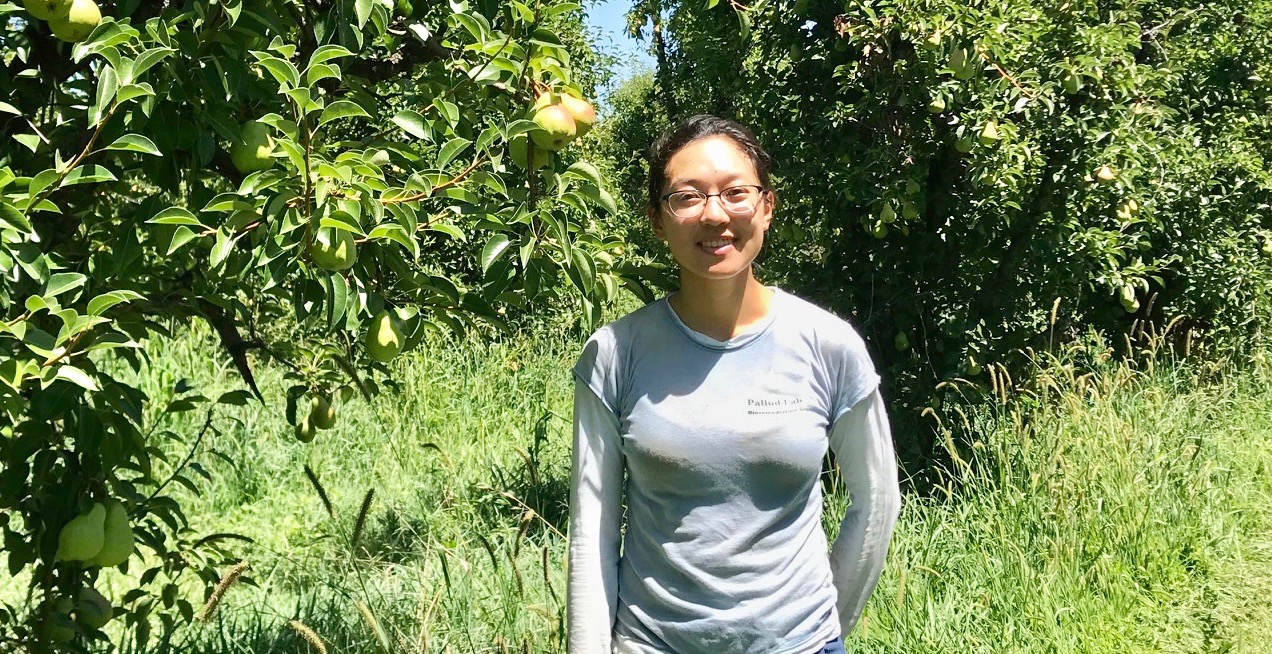
How can cover crops be a benefit to pear orchards? Juliana Wu was in the horticulture and Agronomy Graduate Program at UC Davis Study studying the benefits of cover crops.

“You’re looking at how the cover crop can benefit the pear roots and also the pear nutrition potentially as well as soil health,” said Wu.Cover crops as well as legumes which can fix nitrogen, will help in increasing nutrient uptake in crops.” 

Cover Crops in Pears Can Help with Nutrient Uptake

“I think the unique piece that I am adding is that cover crops such as legumes can acidify the soil which could potentially change nutrient availability,” said Wu. This is beneficial particularly in Lake County where their soils tend to have a lot of calcium carbonates and are more alkaline. There is low iron availability that can lead to chlorosis. “We are hoping to see that the cover crops can increase iron availability either through releasing chelators or through decreasing pH,” she said.

Wu’s main goal is to prove how cover crops such as legumes can have a benefit to pear orchards rather than compete with them for nutrients.

For more information on cover crops click here.

2019-08-01T09:58:58-07:00August 1st, 2019|

Daniel Royer Joins the AgTech Insight Consulting Team

Royer Has Been Exposed to AgTech on Farms


Aaron Magenheim, CEO of AgTech Insight states, “Danny has been great to work with over the years as a grower customer so its exciting to have him join our team! He brings years of innovative, hands-on farming experience to our clients and knows how to get things done around the farm!”

Daniel Royer says, “I am extremely excited to be working with AgTech Insight! While I have built a good understanding of systems and relationships across the West Coast, AgTech Insight broadens my network and the scope of the work I do. I am looking forward to seeing where our work takes us and the impact we can have on the projects we work on!”


Meet Daniel Royer:
I love to build systems and have spent my career in places that have exposed me to a variety of systems that grow, process and package food. Most of my tangible experience has been in California’s San Joaquin Valley working for and with large growers and processors. During my 15 years of experience, my roles and projects have been focused on improving information workflows and improving process efficiencies in field operations. Integrating digital systems that serve field operations and also create information systems that feed administrative needs is a foundational component to experience.

Through my experience, I have developed modulated processes to evaluate an organization’s current state, prioritize it’s opportunities & gaps, provide strategic plans and support the implementation of those plans. Lastly, I am on a never-ending quest to learn more about how growers are building their own solutions to problems and using solutions that are available on the open market.

To help tell that story I have started a YouTube Channel called the #AgTech_Trek. In each episode, I visit a different grower and take a look at how they are handling fundamental components of their operations like Irrigation, Pest Control & Crop Nutrition. I then break those episodes down into smaller segments I share on me @agtechleader Instagram TV Channel. A project of passion, but with a goal of helping growers find ways of overcoming common struggles.

About AgTech Insight:
AgTech Insight is a global leader in full-spectrum agriculture technology consulting services. We have an elite team of subject matter experts around the world, each of whom has a unique skillset to help our clients execute on both short and long-term strategy. 

We deliver distinctive consulting and advisory expertise to a variety of companies and large corporates, governments, investors, farmers, industry leaders, and more. Our team tracks over 3,000 digital AgTech companies around the globe and get past the smoke and mirrors to work with real companies to make a huge impact on the world’s food supply. In 2014 we saw the Agriculture and Tech industries starting to collide and were inspired to start AgTech Insight as a bridge to help these two very different industries collaborate. We specialize in sharing deep, on-the-ground experience in the emerging AgTech space that is necessary for success in this evolving industry.

2019-07-31T07:48:01-07:00July 31st, 2019|

Employee Satisfaction is Key

Farm Employee Satisfaction: It’s Not Money, It’s Respect

By Jessica Theisman, Associate Editor

Showing respect to your field and farm workers and can really pay off. According to Raul Calvo of Employers Services, he’s all about leadership, management development, human resources, and employee relations training. Calvo described a situation recently in the central valley. It was a farm operation with two Labor contractors contributing.

California Fresh Fruit Association

California farm workers harvesting tree fruit

The employees from both farm labor contractors are interested in the same thing. “We want more money and we want more benefits. We want to improve our lives.’ So, they all wanted this,” said Calvo. The UFW union showed up and was able to latch on some of the employees of one of the Labor contractors.

“The UFW was able to convince almost all of the employees from farm labor contractor one to walk out of the field,” he said. These employees basically went on strike until they get higher pay. After seeing one group walk, Calvo decided to talk to employees from another company to see their views on the subject. “It got down to yes, we want a better life. Yes, we would like this company to pay us more and to give us more benefits, but we’re willing to give them the benefit of the doubt,” Calvo said.

The other companies treated their employees with respect and that is why they did not walk out. The company relates to their employees and treats them as individuals.

2019-07-31T21:12:33-07:00July 30th, 2019|

UC Rice Weed Course, Sept. 6, 2019

3rd Rice Short Course is at the Hamilton Road Field and Rice Experiment Station in Biggs


This year will mark the third rice-specific weed course at the Hamilton Road Field and the Rice Experiment Station in Biggs, CA on Friday, Sept. 6, 2019.

The day will begin with an interactive field tour of the research plots (Hamilton Road Field) where attendees can get up close to the weeds and rice (bring your boots!) The course will include a hands-on weed identification session on emerging and mature weeds. In the afternoon, speakers will address several pertinent topics in CA rice, including algae, weedy rice, regulatory update, best management for grasses, and how to construct a weed management program.

The course is a collaborative effort between UC Cooperative Extension (UCCE), UC Davis, and the California Cooperative Rice Research Foundation (CCRRF.) “This course provides a strong foundation for weed management in California rice, as well as a chance for discussion of ideas for dealing with resistance and emerging weed species” said Whitney Brim-DeForest, UCCE Rice Farm Advisor. The event is a great opportunity for pest control advisers, growers, industry, extension, and interested students to gain a deeper understanding of topics that affect rice weed management.

Enrollment is limited, so register early. The cost is $80 if received by 8/15/2019, $90 if received by 8/30/2019, and $100 if received after 8/30/2019 (if there is space.) The cost for students with a valid student ID is $50/$60/$70. For more details or to register, visit http://wric.ucdavis.edu and click on RICE WEED COURSE.


If you have questions, contact Whitney Brim-DeForest [wbrimdeforest@ucanr.edu or (530) 822-7515.]


2019-07-29T12:59:09-07:00July 29th, 2019|

Field Bindweed is A Struggle to Control

Field Bindweed Difficult to Manage

By Jessica Theisman, Associate Editor

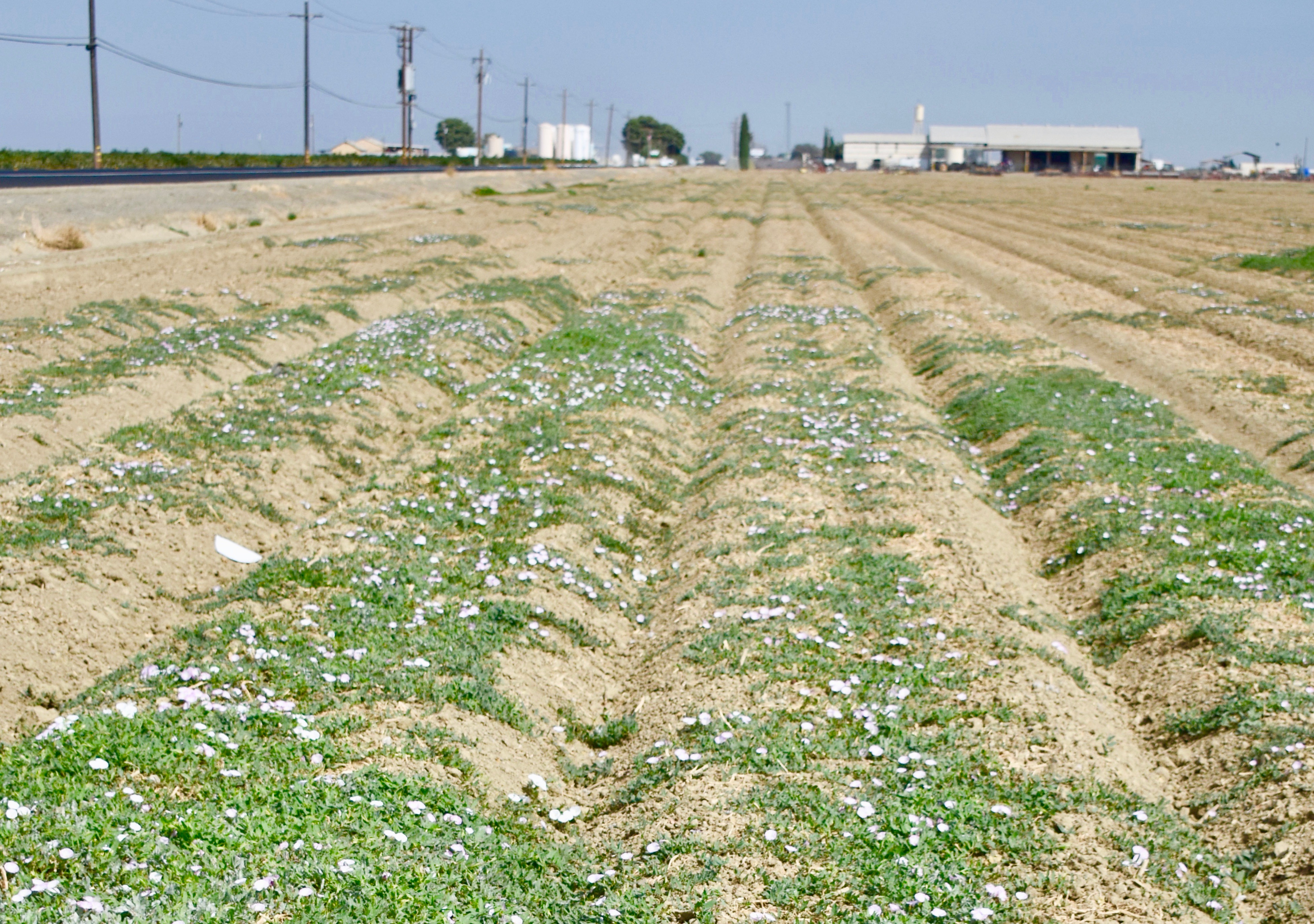
Field Bindweed is a struggle in the summer months. Scott Stoddard, UCANR Cooperative Extension Farm Advisor, Merced County, discussed with California Ag Today how to manage the weed during the summer in annual crops.

“Field Bindweed is predominantly a summer weed, so we are trying to manage it more in our summer annual crops such as cotton, corn, melons, and tomatoes,” Stoddard said.

This weed has been documented back 100 years but only recently has become more of a problem for farmers.

“It did not seem to be as universally impacting people as much as it does now,” Stoddard said.

Farmers are asking themselves what they are doing irrigation-wise that impacts the weeds.

“Does drip irrigation favor this weed? Does conservation tillage favor this weed? There are all kinds of unknowns,” Stoddard explained.

Stacking herbicides can help and control the Field Bindweed.

“Herbicides in the annual crop systems are marginal and you have to stack them. You have to combine the Roundup with something like a Treflan and then combine that maybe with some applications of other herbicides,” Stoddard said.

Even with stacking the herbicides, they are still marginal. On the herbicide angle, this is one of the things that makes weeds so challenging.

2021-05-12T11:01:46-07:00July 26th, 2019|

Abnormal Weather, Temperatures, and Pests

A Year of Unusual Weather Affects Vegetable Crops

By Mikenzi Meyers, Associate Editor

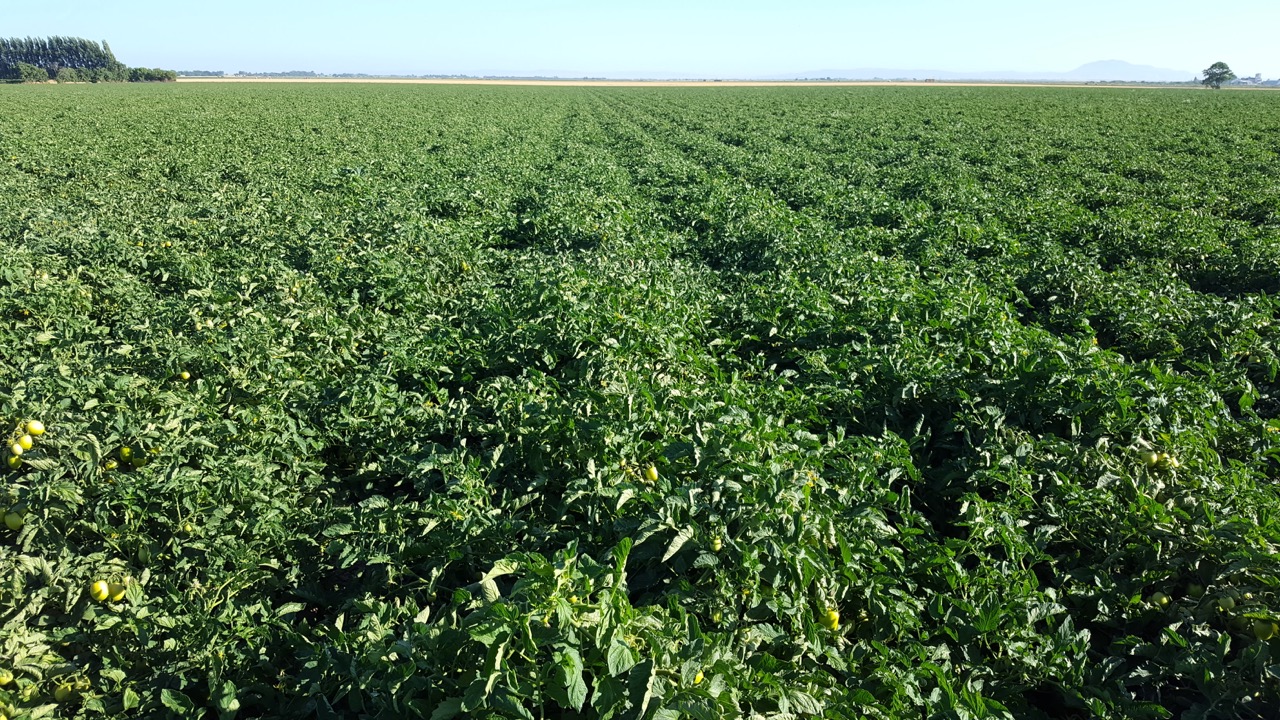
A year filled with abnormal weather is starting to show its effects on vegetable crops. Tom Turini of the University of California Cooperative Extension Fresno County, who is a plant commodity specialist, shared some of the early seasonal problems he has witnessed.

“We had unusual weather this year—a very cool, late spring—and with the rains we’ve had, we expected to see some issues that are unusual. We just didn’t see the incidence of those problems that we would have expected,” Turini said.

Turini added that levels of beet curly top are relatively low and tomato spotted wilt is densely populated in some areas. He also noted that the early appearance of the consperse stink bug seems to be having a measurable impact on crops, specifically on the west side of Fresno County.

2021-05-12T11:01:47-07:00July 25th, 2019|

Calif. Dairy Organizations Collaborate Regarding Quota Program

Groups Launch Exploratory Effort to Solicit and Analyze Proposals

News Release

Recently, the United Dairy Families of California, California Dairies, Inc., Land O’Lakes, Inc., Dairy Farmers of America, and the STOP QIP organization announced a multi-phase process aimed at soliciting and analyzing industry input on California’s historic quota program.

Included in this process is a series of meetings, starting later this month, open to all dairy producers and interested parties. These meetings are intended to solicit various pathways for the state’s quota program.

1) This multi-phase process includes three key parts: The Think Tank, Producer Feedback, and Analysis.

2) The Think Tank phase is for information-gathering from various segments of the dairy industry. This will include the meetings identified below, where producers will be able to voice their opinion and contribute ideas or concepts.

3) The Producer Feedback phase will allow producers to comment and challenge the ideas developed in the Think Tank phase.

In the Analysis phase, dominant ideas from the Producer Feedback phase will be analyzed for economic impacts, and legal pathways to adoption will be determined.

This process will be implemented with the assistance of dairy industry economist Dr. Marin Bozic and dairy market analyst Matt Gould. Dr. Bozic and Mr. Gould will be conducting an economic analysis of the proposed ideas.

The first series of meetings associated with the Think Tank phase are as follows:

● Tuesday, July 30 – 2 pm to 4 pm – Embassy Suites, Ontario

● Wednesday, July 31 – 9 am to 11 am – Heritage Complex, Tulare

● Wednesday, July 31 – 2 pm to 4 pm – Turlock Ballroom

● Thursday, August 1 – 9 am to 11 am – Washoe House, Petaluma

Meeting space is limited. All participants are strongly encouraged to register at

www.dairyfamilies.org/events

2021-05-12T11:17:08-07:00July 24th, 2019|
Go to Top