Ag Uses Sound Science to Help Fish

Ag Collaborates to Help Endangered Fish


By Patrick Cavanaugh, Farm News Director


Don Bransford, president of the Glenn-Colusa Irrigation District (GCID) as well as a member of the State Board of Food and Agriculture, expressed major concerns with the proposed State Water Resources Control Board (SWRCB) diversion of 40% of the water from many irrigation districts on rivers that drain into the San Joaquin River to increase flows in the Delta to protect endangered fish.


“It’s a very difficult challenge because it appears that the SWRCB wants to increase the flows in the Sacramento River. That water has to come from somewhere, and it looks like it’s going to come from the irrigation districts. Unless we can do environmental projects on the River to improve habitat for fish and re-manage our water, we have water at risk,” said Bransford.

Don Bransford, president, Glenn-Colusa Irrigation District

Don Bransford, president, Glenn-Colusa Irrigation District


Bransford, who is also a rice farmer, said “Everyone has their own science regarding protecting those species. We’re talking about salmon, steelhead trout, and of course the smelt.”

“The difficulty is, we believe they’re using a lot of old science. There is newer science that suggests there are better ways to manage this. And, if something does not work, then you change. You just don’t throw more water at it,” he noted.

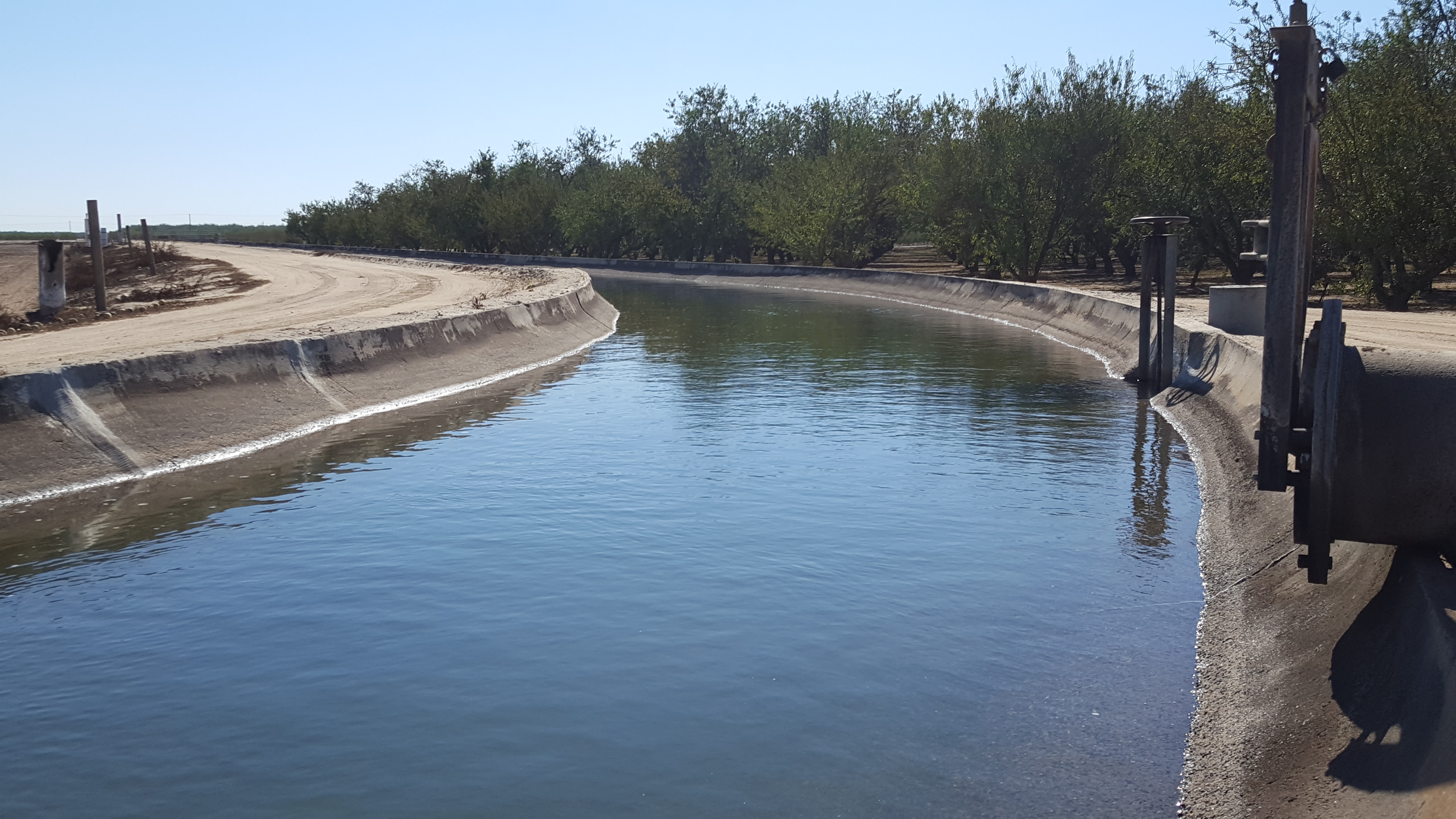
“We think habitat improvements are important in providing refuge for the fish,” Bransford explained. “We’re looking at flushing rice water into the rivers to provide food. Currently, the rivers are pretty sterile because they are just channels now. If we could apply flows from rice into the rivers like we did for the Delta Smelt this summer, you’re providing food for smelt.”

Bransford noted the Northern California irrigation districts work with the U.S. Bureau of Reclamation to increase flows in certain areas of the Sacramento River at certain times. “Our irrigation district managers work with the Bureau to provide flushing flows on the upper Sacramento.” These flows clean out diseased gravel beds in the absence of natural high water flows.”

“So they used some extra water late March of this year,” Bransford elaborated, “to just turn the gravel over to freshen it up. It did help the fish, particularly the salmon,” said Bransford.


Glenn-Colusa Irrigation District (GCID), according to its website, is dedicated to providing reliable, affordable water supplies to its landowners and water users, while ensuring the environmental and economic viability of the region. As the largest irrigation district in the Sacramento Valley, GCID has a long history of serving farmers and the agricultural community and maintaining critical wildlife habitat. The District fulfills its mission of efficiently and effectively managing and delivering water through an ever-improving delivery system and responsible policies, while maintaining a deep commitment to sustainable practices. Looking ahead, GCID will remain focused on continuing to deliver a reliable and sustainable water supply by positioning itself to respond proactively, strategically and responsibly to California’s ever-changing water landscape.
2021-05-12T11:05:45-07:00October 24th, 2016|

Farm Water Coalition Shames State Water Resources     

Farm Water Coalition Shames SWRCB Over Proposal 

By Patrick Cavanaugh, Farm News Director


The California Farm Water Coalition (Coalition) was formed in 1989 to increase public awareness of agriculture’s efficient use of water and to promote the industry’s environmental sensitivity regarding water.

Mike Wade, executive director of the Sacramento-based Coalition, has major concerns about the State Water Resources Control Board (SWRCB)‘s proposal of taking 40% of the water from many irrigation districts along three rivers that flow into the San Joaquin River to protect an endangered fish. The SWRCB proposes to divert water from the Stanislaus, Tuolumne and Merced Rivers to increase flows in the Sacramento Delta.

Mike Wade, executive director, California Farm Water Coalition

Mike Wade, executive director, California Farm Water Coalition

Wade explained, “The Endangered Species Act (ESA) is important for the United States, and we want to see it work. However, it’s not working. It’s not helping fish, and it’s hurting communities.” But Wade wants to revise the ESA “in how we deal with some of the species management issues.”

Wade said SWRCB is doubling down on the same tired, old strategy that is not going to work any more now than it has in the past. “What happened in the past isn’t helping salmon. What’s happened in the past isn’t helping the delta smelt. You’d think someone would get a clue that maybe other things are in play, there are other factors that need to be addressed.”

The State Water Resources Control Board estimated the proposed 40% diversion of river flow would decrease agricultural economic output by 64 million or 2.5% of the baseline average for the region.

Ag officials warn that if the proposal goes through it would force growers in the area to use more groundwater—which they have largely avoided because the Turlock Irrigation District and Oakdale Irrigation District historically met the irrigation need of local farms.

This is the only agricultural area in the Central Valley that does not have critical overdraft problems. If the state takes away 40% of water available to growers, it could lead to a critical overdraft issue there as well.

2021-05-12T11:05:45-07:00October 21st, 2016|

@AlmondGirlJenny AgVocates on Social Media

@AlmondGirlJenny Urges Everyone in Ag to AgVocate on Social Media


By Laurie Greene, Editor


Digital platforms—not newsprintlead the information superhighway-world we live in. Beyond news websites, everyone in the agricultural industry who is able should engage and agvocate on a few social media platforms such a Twitter, Facebook, Instagram or blogs, according to @AlmondGirlJenny.


Jenny Holtermann, aka @AlmondGirlJenny, fourth-generation almond farmer in Kern County, is fully engaged with social media. Social media has become the news source for her, her friends and her generation. “I think it’s important to be involved in social media to tell your story,” Holtermann explained. “That’s how people are getting their news; that’s how people are getting their information these days.”

@AlmondGirlJenny is engaged on such social media platforms as FacebookInstagram, Twitter and YouTube.

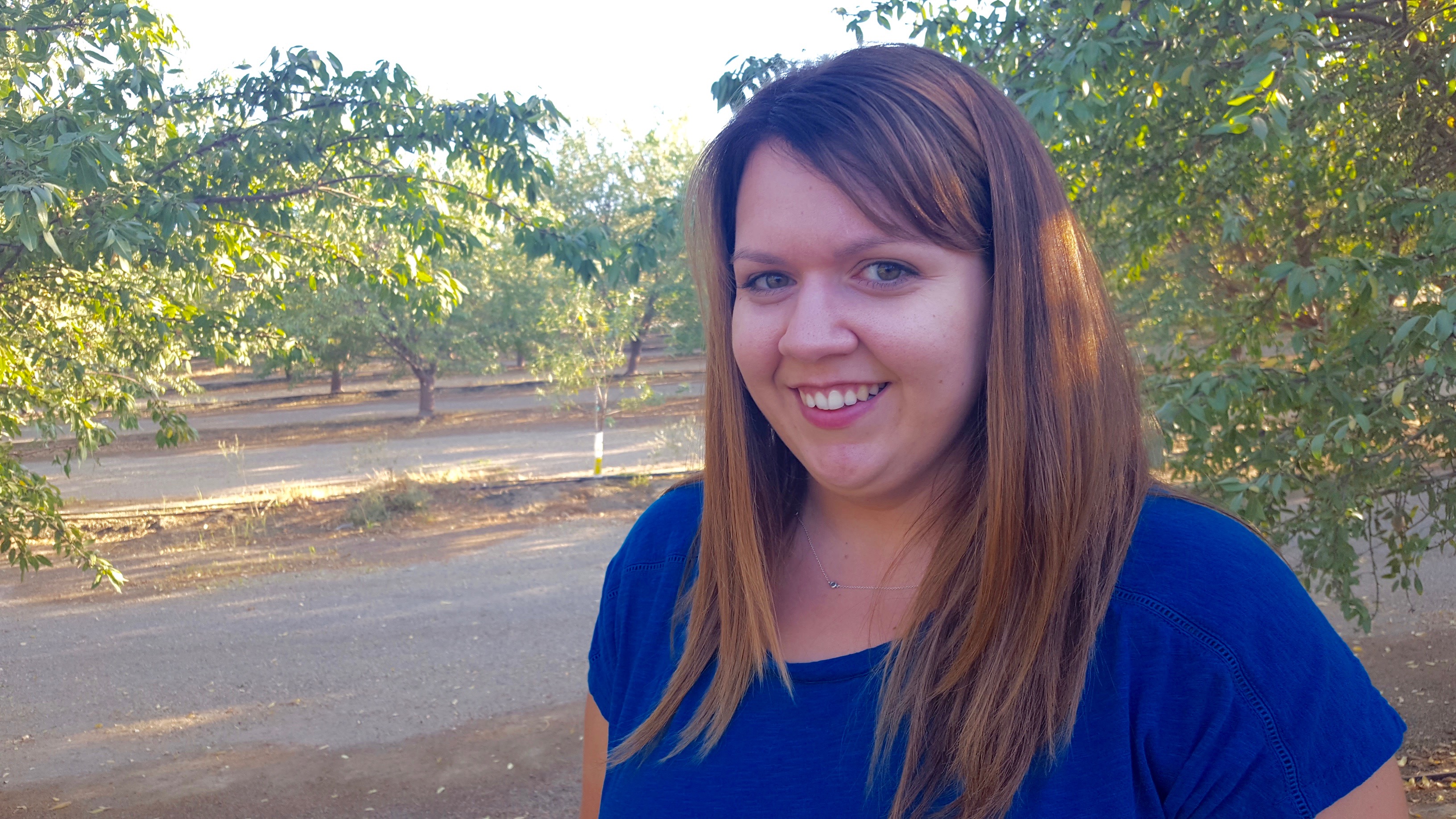
Tim Holtermann and son, Henry, @AlmondGirlJenny

Tim Holtermann and son, Henry


“It’s critical for us to be out there,” she added, “showcasing what we’re doing and highlighting the benefits of agriculture and how it’s multi-generational, how it’s family oriented. Get people to relate to it and become engrossed in it,” Holtermann said.

Last year a reporter from the Los Angeles Times asked Holtermann about water use in farming almonds. “I was able to set the reporter straight regarding all the myths about almonds and water use,” she commented. “I told her that over the last 10 years, almond growers have reduced their water use by 30 percent and we are working on saving even more.”

Jenny and her husband, Tim Holtermann, have a big story to tell. “I’m a fourth generation California farmer” she began. “My family farms almonds and walnuts in northern California. Then I married a fourth generation California farmer as well.

“We farm together with my husband’s family in the Wasco area. It’s very important to us to care for our land and treat it as best as we can so that it can be passed down to future generations. We’re raising the fifth generation, and we hope that someday, if he so chooses, our son has the opportunity to farm here as well,” she said.

“All of us in agriculture should tell our story,” Holtermann said, so others who are not involved with Ag can learn. “If social media is not your game, hire someone to help you get started.”


Resources:

Bayer CropScience AgVocate

2016-10-19T16:21:47-07:00October 19th, 2016|

Initial Walnut Irrigation Can be Delayed

Walnut Irrigation Research Update

By Brian German, Associate Broadcaster


First springtime walnut irrigation can be delayed, according to a UC Cooperative Extension team in Tehama County working on some fascinating research regarding irrigation practices. Allan Fulton is an Irrigation and Water Resource Advisor who covers Tehama, Colusa, Shasta and Glenn counties. “We actually just finished one of our irrigation experiment harvests this weekend. It was looking at early season water management decisions, basically deciding when to begin the irrigation season,” Fulton said.

allan_fulton

Allan Fulton, UC Cooperative Extension Irrigation Specialist

Growers typically begin irrigating their walnuts sometime between late April and early May. In order to be as thorough as possible in their experiment, Fulton and his team have been pushing the limits beyond what most growers would ever consider. “We had some treatments that got no irrigation until almost the end of June,” Fulton explained.

Now in its third year, the research experiment is generating information that will provide a variety of benefits. “The whole motivation is to avoid possible injury to the trees from irrigating too much, too early, from lack of aeration and damage to the root system,” Fulton said. Delayed irrigation, while having no impact on yield or nut size, can also provide a bit of water savings. “We’re trying to look for the sweet spot,” with less intensive early season irrigation in favor of root health, tree health and disease prevention.

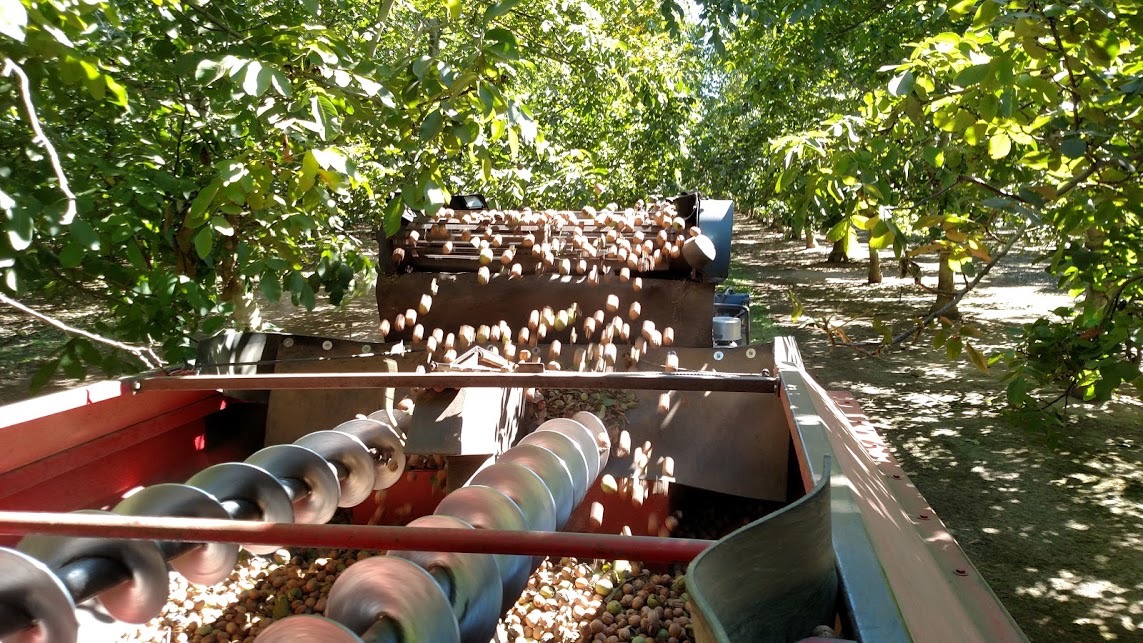
California walnut orchard, walnut irrigationThe research is being conducted in the northern Sacramento Valley primarily using the Chandler variety of walnut trees. Fulton has spent some time working in the San Joaquin Valley as well and understands different weather conditions can be a significant factor when applying their findings to other regions. “Our spring rainfall is quite a bit different than other walnut growing areas. Usually we’ve got an added source of water that sometimes you might not have in the southern San Joaquin Valley,” Fulton noted. From his experience, he suggested growers could usually wait until “the first week of May in most years, before really getting pressed for irrigation.”

The location of the research exposes groves to the opportunity to receive “more rain during the dormant season with a better chance at a deeper profile in moisture before you ever break dormancy,” Fulton said. More regional rainfall is possible in the spring as well, while the trees are growing.

The information gathered so far indicates growers should not jump the gun on springtime irrigation, particularly if there is still any kind of standing water issues. “The data is starting to suggest that you’ve got some room. You don’t have to irrigate at the first sign of heat; you can use a little bit of the stored moisture coming out of winter,” Fulton said. He also noted “It’s a lot more difficult to recover from a damaged tree with a sick roots system,” than it is to recover from a lack of early season irrigation.

2021-05-12T11:05:46-07:00October 11th, 2016|

Working with Agriculture to Meet Environmental Goals

Working with Stewards of California’s Farmland to Meet Environmental Goals

By Patrick Cavanaugh, Farm News Director


If you give a farmer a goal, they will most likely strive to meet it—even exceed it—as long as it fosters great stewardship of their land and allows them to sustainably farm into the future.

Environmental Defense Fund (EDF) logo

Eric Holst, associate vice president of the Environmental Defense Fund‘s working lands program, and an expert in developing strategies for environmental management on working forest, farms, and ranches, has an important view of the California Agriculture industry. “It’s an incredibly important industry. It’s greater than $56 billion net for California farmers. I think, even more important than the monetary value, is the land and the water that it touches,” said Holst.

Holst’s career has focused on improving livelihoods and environmental conditions in rural places in the U.S. and Latin America. Appointed as a member of the California Board of Food and Agriculture by Governor Jerry Brown for his ability to effectively communicate with a wide variety of constituents on difficult environmental issues, Holst elaborated, “Farmers and ranchers in California have a lot of influence on how we manage land, how we manage our landscapes, how we manage our waterways. It’s incredibly important to weigh in on policy issues that relate to agriculture in California.” california-farmland

Based in Sacramento, Holst knows how pervasive California agriculture is, spanning the state from the Mexican border to the Oregon border. “About 45% of California is in privately-held working lands—land managed by farmers, ranchers, and forestland owners,” Holst noted. Holst and his team interfaced with these private landowners to map a big part of it.

Holst, who also serves as director of the Forest Stewards Guild and American Wind Wildlife Institute (AWWI), explained, while these landowners have a lot of freedom about how to manage their land, “It’s probably the most highly regulated place in the world in terms of environmental performance.” Despite regulatory constraint on land management decisions, Holst believes, “there’s a lot of room to make decisions that can either help or harm the environment.”

Holst reflected, “It is really an important role that we have on the CDFA Board to weigh in and try to push California in the right direction.” Ultimately, in Holst’s experience, “If you set a goal and then allow farmer, rancher or forest landowner to figure out how to meet that goal, that’s probably the best way,” said Holst.

“Conditions are different on every farm, every ranch,” Holst stated. “I think it’s important to set standards high. I think California has higher standards than just about anywhere else. We want to develop policies and implementation of policies that will give a lot of flexibility to the individual operator. That tends to be, in my experience, the system that works best,” he noted.

2016-10-06T14:22:50-07:00October 6th, 2016|

Celebrating California Agriculture . . .  An Ongoing Series: Marketing

Marketing, Almond Board Style

A Rallying Cry for Ag PR on Billboards

By Laurie Greene, Editor


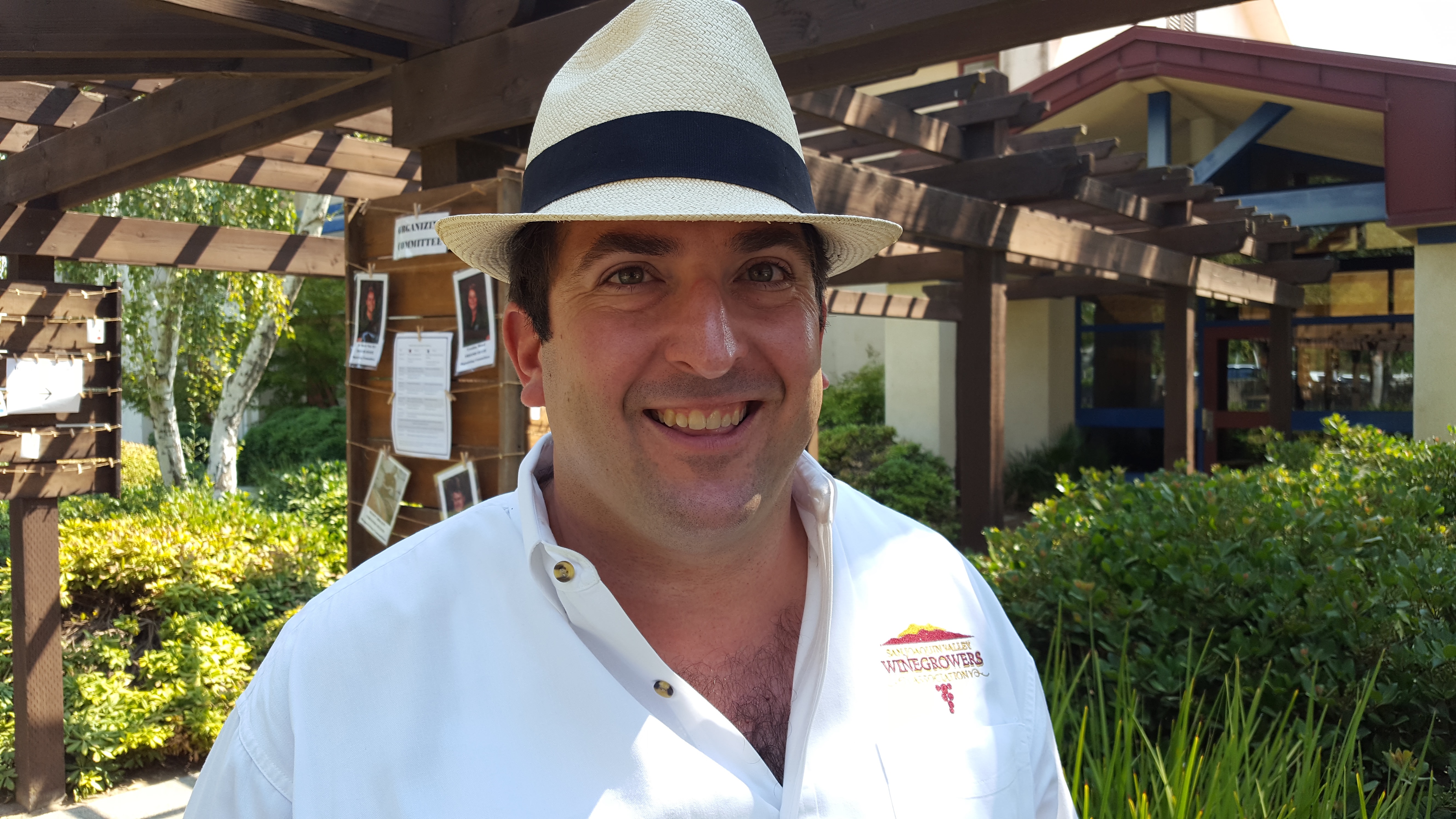
Celebrating California Agriculture is a refreshing perspective. In an ongoing series on CaliforniaAgToday.comPeterangelo Vallis, executive director of the Fresno-based San Joaquin Valley Winegrowers Association (SJVWA), shares his optimistic viewpoint on California agriculture. In our original article, “Celebrating California Agriculture . . .  An Ongoing Series,” published on September 13, 2016, Vallis offered this goal:

SAN Joaquin Valley  Winegrowers Association, (sjvwa) logo“This is basic, basic stuff because, realistically, we’re marketing the fact that we need help to make more food,” Vallis noted. “We’re making safe domestic food, but if we don’t engage with the people that are our customers, we’re never going to be able to get our ideas and our needs across, because we’re just not talking to the right audience.”

“They’re not enough people here in the valley to move the needle. We’ve got to figure out a way to get San Francisco and L.A. appreciating our position, loving what we do, and trusting that we’re doing the very best job possible,” said Vallis.

Vallis is urging California agriculture “to put some dollars together for a major billboard campaign in Los Angeles and in the Bay Area, celebrating our agricultural industry as part of a big PR campaign.”

Almond Board of California, marketing almond board style“Just imagine,” Vallis suggested, “the power of billboards with California farmers and the fruits, nuts or vegetables they produce. The billboard could be up in prime city areas for several months for less than a few million dollars.”

Vallis commended the Almond Board of California for their example of a great starting point. “You know, the Almond Board of California (Board), I think, represents the most progressive part of California agriculture today because the Board understands how much money it takes to penetrate the market. We’re not living in 1932; we need to spend money on this stuff. I mean what does a Super Bowl commercial cost—6-7 million dollars for 30 seconds? It’s an insane amount of money, but that’s what it takes to really move the needle.”

“Billboards around the California’s urban centers or even across the nation, could carry the message of the importance of the California

ALMOND SUSTAINABILITY ECOSYSTEM (Almond Board of California, AlmondSustainability.org), Celebrating California Agriculture

ALMOND SUSTAINABILITY ECOSYSTEM (Almond Board of California, AlmondSustainability.org)

farmer,” Vallis proposed. “We could campaign on every billboard in America for one month and call it, ‘Hey, We Like to Eat Month’ or ‘Your Stomach Depends On Ag,’” noted Vallis.

“The message must connect with people,” Vallis insisted. “It would probably cost 20 or 30 million just to make that happen, but if you look at the success the Almond Board has had, that is a perfect pathway—a perfect roadmap—for what all of us in California can do at pennies per pound,” he said.

“There are some commodities that don’t make pennies per pound; but on the whole, a couple pennies per pound, put in the right space and put in front of people … Guess what? They’re going to go nuts over the product. Look what almonds have done. If that isn’t a rallying cry for what could happen. . . it would be killer! And it would be killer for our industry,” Vallis said.

2016-10-04T18:38:02-07:00October 4th, 2016|

First the Feds, Now The State Plans More Water Diversions From Farms

More Planned Water Diversions From Farms to Fish-Not Just by Federal, but Also State Officials

By Patrick Cavanaugh, Farm News Director


California’s State Water Resources Control Board (SWRCB), regulators and environmental organizations want more water diversions to flow into the San Francisco Bay Delta Watershed to help save the declining Delta Smelt and Salmon. They have targeted three tributaries of the lower San Joaquin River; one of which is the Tuolumne River. Phase 1 of the Bay-Delta Plan is a real threat to all Modesto Irrigation District (MID) and Turlock Irrigation District (TID) customers including ag, urban water, and electric.

Coalitions for a Sustainable Delta, water diversionsMichael Boccadoro a spokesperson for the Coalition for a Sustainable Delta, commented on the SWRCB: “They need to be pushed back. They need to be told no.” Boccadoro explained the water in question represents about 400,000 acre-feet taken from communities, businesses and farms. Ironically 400,000 acre-feet is roughly equivalent to the capacity of Hetch-Hetchy Reservoir (360,400 acre-feet) that funnels water, unabated, to San Francisco.

“This is only Phase One of the Boards’ decision,” said Boccadoro. “This is going to eventually encompass the Sacramento River; this is just the beginning. This isn’t by any stretch of the imagination the only potential impact agriculture would feel,” he said.

Boccadoro, like other people in the industry, cannot fathom why the SWRCB needs to take this water when it doesn’t seem to be doing anything beneficial for the endangered fish species. “This issue of continuing to take water that is providing no benefit—or no clear benefit—for fish, while we do nothing [to mitigate] the other stressors that are having a huge impact on the fish, has to stop,” Boccadoro said.

Boccadoro noted, “It looks like Governor Brown has it in for farmers. We have problems with groundwater and increasing water scarcity in the state, and the result of this [plan] would be increased groundwater pumping—until they tell us we can’t pump groundwater. At that point, they are basically telling us, ‘You can’t farm any more.'”

“It’s a huge problem, said Boccadoro. “For whatever reason, it appears that the Brown administration has declared war on California agriculture. Enough is enough. We need to push back hard against the Water Board’s decisions,” noted Boccadoro.

“This is as good a place to fight as any as I can think of,” Boccadoro explained. “We need to start the fight and continue the fight, which is the only way it’s ever going to be turned back. The regulators and environmental groups must address the other stressors [to the endangered species]. Taking water from agriculture has not corrected the problem.

In the meantime Boccadoro hopes the farmers are taking notice. “I sure hope they’re willing to come up here [to Sacramento] and demand that the state not take their water,” he said.

2021-05-12T11:05:46-07:00September 28th, 2016|

CULTIVATING COMMON GROUND: Water Use Efficiency Grants

Water Use Efficiency Grants: Beneficial or Double Jeopardy for California Farming? Or both?


By Patrick Cavanaugh, Farm News Director


Through a competitive joint pilot grant program, the Agricultural Water Use Efficiency and State Water Efficiency and Enhancement Program, the California Department of Water Resources (DWR) and the California Department of Food and Agriculture (CDFA) jointly intend to demonstrate the potential multiple benefits of conveyance enhancements combined with on-farm agricultural water use efficiency improvements and greenhouse gas reductions.

The grant funding provided in this joint program is intended to address multiple goals including:

  • Water use efficiency, conservation and reduction
  • Greenhouse Gas Emissions Reduction
  • Groundwater Protection, and
  • Sustainability of agricultural operations and food production
Agricultural Water Use Efficiency & State Water Efficiency and Enhancement Program – DWR/CDFA Joint RFP Public Workshops

Agricultural Water Use Efficiency & State Water Efficiency and Enhancement Program – DWR/CDFA Joint RFP Public Workshops

Are these competitive grants promoted by DWR and CDFA providing financial support for further compliance or insulting to farmers who have already met and exceeded these stockpiling regulations? Or both?

I would like to address each goal, one by one.

Water Use Efficiency

I challenge DWR and CDFA to find one California farmer who is using water inefficiently or without regard to conservation. Grant or no grant, many farmers in the state have lost most of their contracted surface water deliveries due to the Endangered Species Act, which serves to save endangered species, an important goal we all share, but does so at any cost.

In addition, DWR is now threatening to take 40 percent of the surface water from the Tuolumne River and other tributaries of the San Joaquin River from February 1 to June 30, every year, to increase flows to the Delta to help save the declining smelt and salmon. This will severely curtail water deliveries to the Modesto Irrigation District (MID) and Turlock Irrigation District (TID)—population centers as well as critical farm areas.

MID TID Joint LogoThis proposal, which disregards legal landowner water rights and human need, would force MID and TID to dedicate 40 percent of surface water flows during the defined time period every year, with no regulatory sunset, for beneficial fish and wildlife uses and salinity control. The proposal disregards other scientifically acknowledged stressors such as predatory nonnative non-native striped bass and largemouth bass, partially treated sewage from Delta cities, and, according to the Bay Delta Fish & Wildlife Office of the U.S. Fish & Wildlife Service Pacific Southwest Region, invasive organisms, exotic species of zooplankton and a voracious plankton-eating clam in the Delta from foreign ships that historically dumped their ballast in San Francisco waters.

While many farmers have fallowed their farmland, other farmers across the state have resorted to reliance on groundwater to keep their permanent crops (trees and vines) alive. The new DWR proposal to divert 40 percent of MID and TID surface water will force hundreds of growers in this region—the only groundwater basin in the Valley that is not yet critically overdrafted—to use more groundwater. 

In a joint statement, MID and TID said, “Our community has never faced a threat of this proportion. MID and TID have continued to fight for the water resource that was entrusted to us 129 years ago.”

The deadline for submitting public comments is September 30, 2016.

Greenhouse Gas Reduction

Have regulators forgotten Assembly Bill (AB) 32, the Global Warming Solutions Act of 2006, that requires the state to reduce its greenhouse gas emissions by 25 percent (back to 1990 levels) by 2050? Ag is already accommodating this regulation.

U.S. Greenhouse Gas Emissions (Source: EPA) https://www.epa.gov/ghgemissions/sources-greenhouse-gas-emissions

U.S. Greenhouse Gas Emissions (Source: EPA)

Now Governor Brown has signed SB-1383, “Short-lived climate pollutants: methane emissions: dairy and livestock: organic waste: landfills” into law that mandates a 25 percent reduction in methane emissions from cow burps, flatulence and manure from all dairy cows and other cattle to achieve the 1990 statewide greenhouse gas emissions level by 2020.

Now CDFA and DWR are asking for grant requests to reduce greenhouse emissions even further. Really?

The deadline for submitting public comments is September 30, 2016.

Groundwater Protection

Ironically, farmers want to reduce their groundwater needs because groundwater has always functioned in the state as a water savings bank for emergency use during droughts and not as a primary source of irrigation. But massive non-drought related federal and state surface water cutbacks have forced farmers to use more groundwater.

Golden State farmers are doing everything possible not to further elevate nitrates in their groundwater. Some nitrate findings left by farmers from generations ago are difficult to clean up.

But the DWR and CFA grant wants California agriculture to do more!

The deadline for submitting public comments is September 30, 2016.

Sustainability of Agricultural Operations and Food Production

Virtually, no one is more sustainable than a multi-generational farmer. Each year, family farmers improve their land in order to produce robust crops, maintain their livelihoods, enrich the soil for the long term, and fortify the health and safety of their agricultural legacy for future generations.

California farmers will continue to do all they can to improve irrigation methods and track their crop protection product use.

And so, I ask again, is this beneficial or double jeopardy for California farming? Or both?

The deadline for submitting public comments is September 30, 2016.

2021-05-12T11:17:12-07:00September 26th, 2016|

Agricultural Water Use Efficiency & State Water Efficiency and Enhancement Program

Agricultural Water Use Efficiency Grant Program


Through a competitive grant program, the Agricultural Water Use Efficiency & State Water Efficiency and Enhancement Program, the California Department of Water Resources (DWR) and the California Department of Food and Agriculture (CDFA) jointly intend to demonstrate the potential multiple benefits of conveyance enhancements combined with on-farm agricultural water use efficiency improvements and greenhouse gas reductions.

The grant funding provided in this joint program is intended to address multiple goals including:

  1. water use efficiency, conservation and reduction,
  2. greenhouse gas emission reductions,
  3. groundwater protection, and
  4. sustainability of agricultural operations and food production.

It is also anticipated that there will be benefits to water and air quality, groundwater security, surface water conservation, and improved nutrient management and crop health through this program. Excellent proposals will demonstrate the specific regional needs and benefits of their proposals.

Deadline for submitting public comments is September 30, 2016.

Agricultural Water Use Efficiency & State Water Efficiency and Enhancement Program – DWR/CDFA Joint RFP public-workshops

Agricultural Water Use Efficiency & State Water Efficiency and Enhancement Program – DWR/CDFA Joint RFP Public Workshops

The program will be administered as a competitive grant program and will include a joint application process involving agricultural water suppliers and agricultural operators within the service area.

Projects that enhance and upgrade the supplier’s water conveyance, delivery and water measurement system to allow on-demand and flexible farm-gate deliveries, reduce spills and losses, increase the efficiency, and improve water management. A water supplier’s proposed project must generate State benefits to be eligible for grant funding.

Benefits to the State include:

  • water savings
  • increased in-stream flow or improved flow timing
  • improved water quality; increased energy conservation
  • reduction of greenhouse gas (GHG) emissions
  • increased local water supply reliability.

The project must be located within California.
On-farm agricultural operations must achieve both GHG emission reductions and water savings to be eligible for funding. In addition, projects must: (i) use the associated improvements made to the surface water conveyance system proposed by the associated agricultural water supplier as part of the joint application, and (ii) eliminate on-farm groundwater pumping.

To be eligible for funding, projects are not required to be in an adopted Integrated Regional Water Management Plan or to comply with that program, but preference will be given for projects that are.

Save-our-waterThe following entities involved with water management are eligible to apply:  Public agencies, public utilities, federally recognized or state Indian tribes on California’s Tribal consultation list, nonprofit organizations, mutual water companies, and investor-owned utilities regulated by the California Public Utilities Commission.

Applicants that are agricultural water suppliers and/or urban water suppliers should inquire for further information.

DWR has set aside $3 million from Proposition 1 to incentivize the water conveyance component of this joint agricultural water use efficiency and enhancement program. Proposition 1 requires that agricultural water suppliers provide a 50% cost share of total project costs.

CDFA has also set aside $3 million from the Southwest Energy Efficiency Project (SWEEP) to incentivize the installation of irrigation systems that save water and reduce greenhouse gases on farms in the area that will directly benefit from the conveyance system incentivized by DWR. The maximum grant award per agricultural operation is $200,000 with a recommended, but not required, 50% match of the total project cost. CDFA reserves the right to offer an award different than the amount requested.

Separate contracts with each department will be necessary to receive both sets of funds. A joint proposal may include a request for up to $3 million for the water supplier’s conveyance upgrades (to be funded by DWR) and up to $3 million for enhancements of on-farm agricultural operations to be funded by CDFA (with a cap of $200,000 per operation). This would allow for 15 agricultural operations (at $200,000 each) to partner with the water supplier to submit the joint proposal at the maximum award amount of $6 million. More than 15 agricultural operations could be funded if amounts lower than the cap are requested in individual agricultural operator applications.


2021-05-12T11:05:47-07:00September 23rd, 2016|

Almond Assessment Increase Comment Period Reopened

Comment Period Reopened for Almond Assessment Increase Through October 12.


Julie Adams, vice president global, technical, and regulatory affairs with the Almond Board of California, commented in an exclusive interview with California Ag Today on the proposed additional one cent almond assessment increase from 3 cents to 4 cents a pound by the Board of Directors to use in marketing the anticipated crop increases over the next three years, starting this season.

The proposed rule change was first published in the Federal Register on July 18, 2016. The comment period was reopened on Sept. 12 with an announcement in the Federal Register. The comment period is open for 30 days, ending Oct. 12, 2016, at midnight, Pacific Standard Time (PST).

California Ag Today (CAT): Where do almond growers go to make comments about the increased almond assessment?

Adams: Growers can go to www. regulations.gov and search for almonds.

Click here for the direct link to the Assessment entitled, Almonds Grown in California: Increased Assessment Rate.

CAT: The first comment period in August was only two weeks. How long will this one last?almond assessment increase

Adams: The new comment period is now open and will be stay open until Oct. 12. We have also sent out notifications to handlers and we’ve included it in our communication to growers. 

CAT: Why did the comment period reopen?

Adams: Basically this discussion has been going on for quite some time, actually, and started with planning and strategic meetings within the production and environmental research committees. Some of this discussion also started back a year ago when we were talking about all of the challenges facing the industry related to environmental issues, water requirements, and sustainability issues. And then, of course, with the anticipated increase in crop size, what was that going to mean in terms of keeping demand growing ahead of supply?

Discussions at strategic planning meetings underway and within our global market development committees, started feeding up to the Board recommendations that we really needed to get ready both for the challenges facing growers as well as building that [market] demand. It was at that time that the Board started talking about an increase in the assessment for a specific period of time.

We recognized that crops were increasing, and to get us through this period, we really needed to accelerate our activities. The increased assessment was approved by the Board several months ago and was published in the Federal Register. It was, at that point, a two-week comment period. While there had been a lot of communication out to the industry, the comment notification had not been sent out in a timely fashion as it needed to be since it was such a short comment period.

Based on that, as you’ll see from the reopened comment period, USDA determined that they would go ahead and reopen the period for 30 additional days. That’s the process we’re in right now.

Almond Board of California CAT: One argument against the assessment is that the almond industry is heading into big record crop, and the 150,000 to 200,000 non-bearing acreage will soon be bearing—and that alone is sure to increase the Almond Board’s marketing budget.

Adams: It does. What we have found throughout our programs is that the more we can start building consumer awareness and demand for the product, it’s going to be ready as those crop sizes increase. We really want to be ahead of that supply situation so that we’re not trying to chase the opportunities in the market. We want to make sure there’s a strong foundation. As crops are more available, customers are ready to take in that product, really ready to put more on the shelf for consumers, and hopefully [meet] increased demand from consumers.

I think the other part of this assessment increase is about what’s happening on the production side. Research takes time and growers are facing more challenges now in terms of water availability, water quality, production issues, and environmental concerns. There’s more pressure on growers now than ever before. Part of this assessment increase for this three-year period is really to accelerate a lot of the research and work that’s underway on irrigation practices and harvesting practices, and to ramp up our food safety education. We’ve got the Food Safety Modernization Act (FSMA) coming on board now—a  requirement starting to put additional burdens on the industry.

With all of that happening, the concern is that we really need to get in front of all of this. The idea is to do that with some additional funding, so while we’re keeping up our ongoing programs, accelerating some of this research over the next three years will put us in a position, when we do come into those larger crops, where we will already have a lot of those programs in place and we will have accelerated the research so we can continue to meet a very demanding market.

California AlmondsCAT: We can see the need to increase our momentum in research and marketing. Of course, the vast majority of the Almond Board’s budget is for marketing right? Will the vast majority of this extra assessment go toward global marketing?

Adams: The global marketing demand portion of the budget is over 70%. That includes more than just market development. It includes a lot of consumer research, attitudes and awareness research It also includes a lot of the investment we’ve made lately on reputation management—how consumers really perceive almonds and how we need to best communicate back to consumers about what our industry is doing.

CAT: Obviously there is not going to be a vote on the added assessment. There is going to be a comment period, and if the USDA approves the assessment, it will go forward.

Adams: It was a unanimous recommendation coming forward from the Board of Directors and from a number of committees that included industry members that made recommendations to the Board of Directors. Obviously the Board is responding to the strategies and recommendations coming through the committee process. That’s what the Board unanimously endorsed and put forward in a recommendation to the Agricultural Marketing Service (AMS), and USDA. Now based on the comments that start to come forward through this period, then USDA will assess all of that and publish a final rule, a final determination, after the comment period closes.

CAT: If the added assessment is for this season, the USDA will have to turn it around very quickly?

Adams: They would. Obviously the USDA is monitoring this comment period and will respond to the comments and the issues expressed by individuals who are commenting on the rule. They will reflect their thinking as they come forward.

CAT: If there is a big mixture of No and Yes comments, is it possible that the comment period will stay open past the 30 days to get a consensus?

Adams: I think the USDA will look at the issues and the context of the comments. If the comments are more about clarifications and they feel what has been proposed will deal with those concerns or areas of focus, then they will look at that and make a determination. I really couldn’t say whether they would go forward with an additional comment period.

CAT: And the additional assessment will automatically sunset in crop year 2018/2019?

 Adams: Exactly, and it would go back to the current 3 cent assessment. Really nothing has to be done for that to happen and that’s why the industry put in that sunset period. The Board does not have to vote on it; there does not have to be any further consultation. It will automatically go back to the 3 cent assessment.


2016-09-22T12:30:01-07:00September 22nd, 2016|
Go to Top