Urgent Need To Oppose AB 2975

Urgent Need to Call CA Legislators and Suggest Opposition to AB 2975 (Friedman)

Below is a letter sent by the San Joaquin Valley Water Infrastructure Authority to Valley Legislators,  requesting their help in stopping AB 2975. As you may be aware, this legislation is a slightly different version from last years AB 975 by the same author.

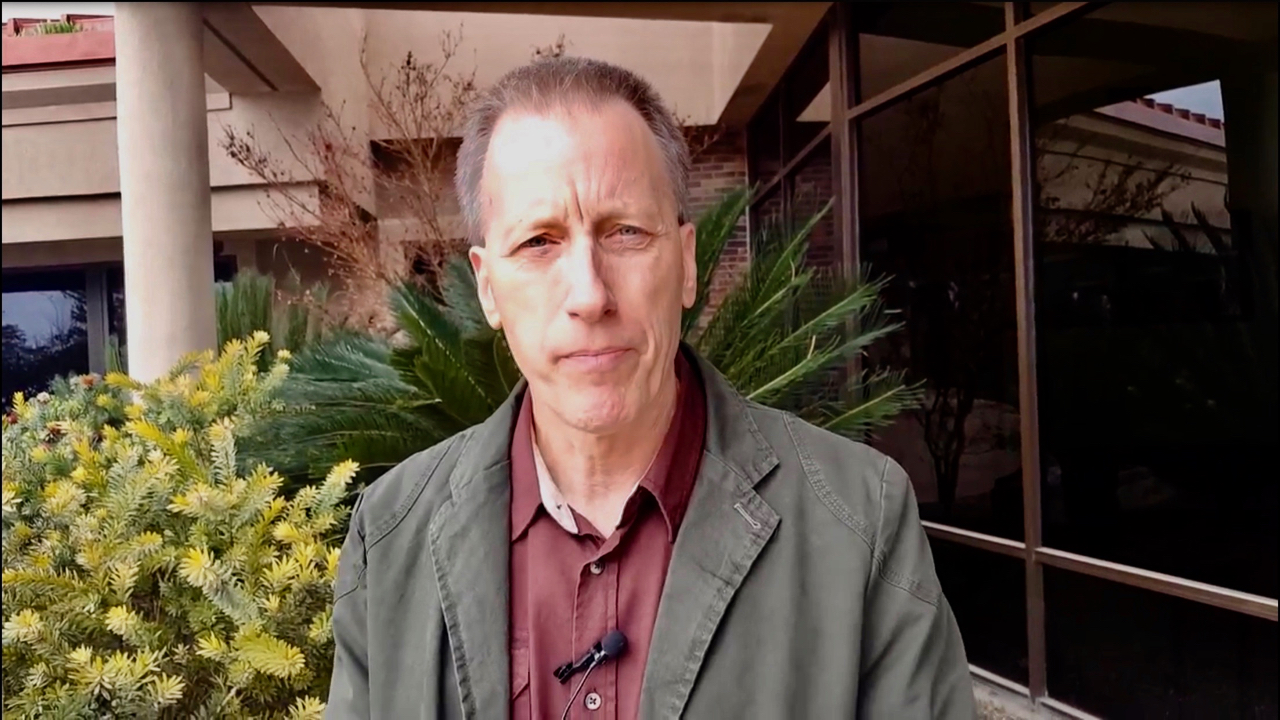
Mario Santoyo is Executive Director of the SJVWIA

Please do not believe the author’s staff if they state that this legislation is not targeting the Temperance Flat Reservoir project; it is.  Not only would the TFR project be in jeopardy, but other future projects in other tributaries would be as well.  Again, they may suggest “approve with amendments.” Just say “NO.” If this door is opened even a fraction, we will not be able to close it when they decide to enhance it.

Simply put, it is a means by which the State of California could override Federal actions.

Our understanding is that the bill is heading to the Assembly Appropriations Committee, so please communicate with committee members with concerns.

Dear San Joaquin Valley Members of the Senate and Assembly:

On behalf of the San Joaquin Valley Water Infrastructure Authority (SJVWIA), I am writing to express our opposition to AB 2975 (Friedman). As you may know, this bill is very similar to legislation, AB 975, proposed in 2017 by Assembly Member Friedman, legislation which the SJVWIA also opposed.

This latest bill again seeks to expand the scope of the state’s Wild and Scenic Rivers Act with potential adverse impacts on the state’s water supply system, water supply development, water rights and drought response.

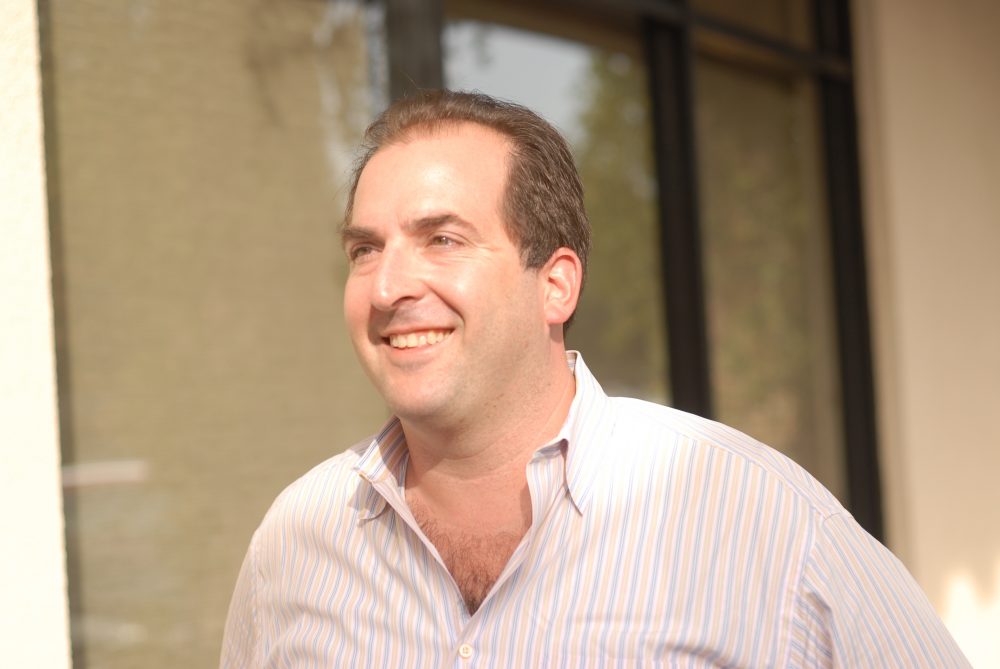
Steve Worthley, Tulare County Supervisor and President of the SJVWIA, signed the letter to key valley legislators.

It is obvious that a particular (although unnamed) target of the legislation is the proposed Temperance Flat Project on the San Joaquin River, northeast of Fresno. Under the previous federal administration, the U.S. Bureau of Land Management (BLM) proposed to include much of the San Joaquin River within the footprint of Temperance Flat Reservoir under the federal Wild and Scenic River Act. That proposal has been withdrawn by the Trump Administration.

Temperance Flat is a project that enjoys wide public support within the San Joaquin Valley in recognition of benefits it would provide in implementing the state’s new Sustainable Groundwater Management Act (SGMA) and addressing water supply needs that are so evident because of California’s continuing water crisis. As you well know, our region is Ground Zero for the worse of the state’s water crisis impacts and negative effects.

The SJVWIA was organized by five San Joaquin Valley counties, plus cities and special districts, with the objective of applying for state bond financing under the Water Storage Investment Program (WSIP) directed toward Temperance Flat development and constructively address these problems.

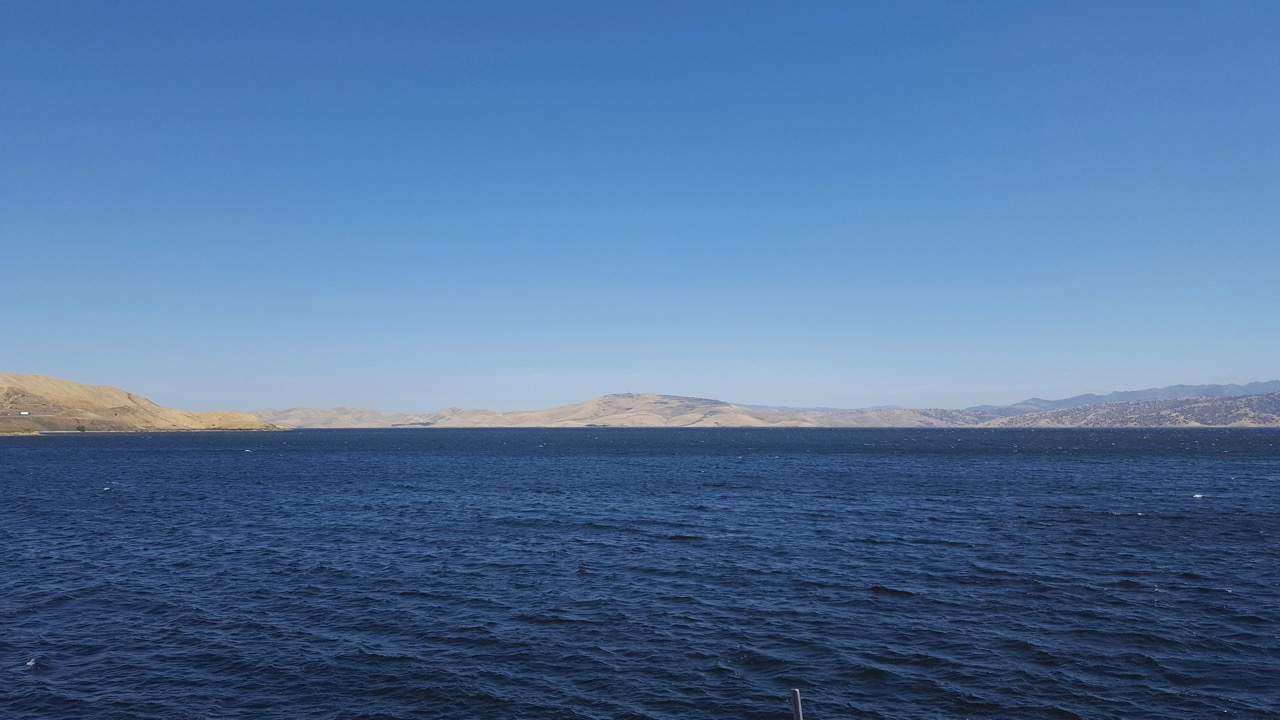
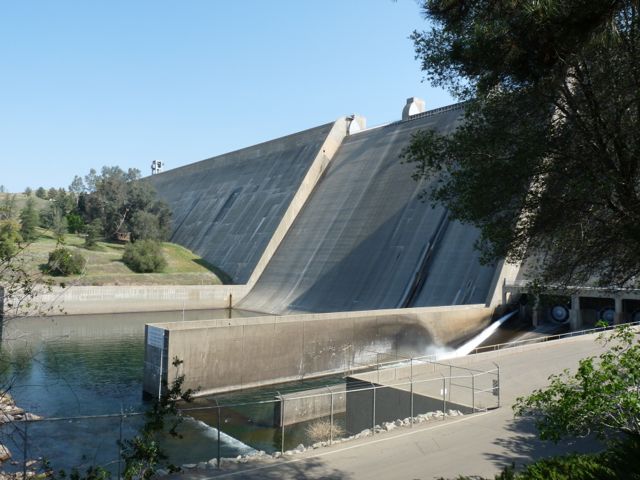
We know you understand Temperance Flat would provide a vitally-needed source of additional surface water storage. A large dam would be constructed within the upper reaches of existing Millerton Lake to form the new reservoir, which would have a capacity of 1.3 million acre-feet. More than 20 years of federal investment and study, directed and carried out at a cost of more than $36 million to date by the Interior Department and U.S. Bureau of Reclamation, have gone into the Temperance Flat project since 1995. This analysis has scrutinized project needs, benefits, operational challenges and related issues. The project would provide much needed additional water for San Joaquin River restoration.

Unfortunately, the SJVWIA has found it necessary to act and devote limited resources to opposing not only an obstructionist federal wild and scenic rivers proposal, but these state bills proposed by Assembly Member Friedman. This bill’s language could be a complete, permanent and fatal obstruction to developing Temperance Flat’s vastly increased and vitally-needed water storage capability, which is so essential for complying with SGMA, solving the valley’s water crisis and meeting regional environmental needs.

Ironically, the San Joaquin River reach within the Temperance Flat footprint can never attain “wild” or “free flowing” conditions. Upstream are seven major dams and nine smaller dams, developed over the past century by Southern California Edison Company and Pacific Gas and Electric Company to store and divert water into a dozen power plants where electricity is generated. Under most conditions, what some are proposing as a “wild” and “free-flowing” river carries just a tiny flow for fish because most of the river’s discharge is routed through two PG&E power plants.

The Friedman bill’s provisions are nothing less than a poorly-disguised ploy to hamper and discourage further surface water development. We see no reason why current state law should be broadened to expand designated “wild and scenic” areas as this measure purports to intend doing.

For these reasons, the San Joaquin Valley Water Infrastructure Authority opposes AB 2975 and respectfully requests your “NO” vote when the bill is taken up. If you or members of your staff have any questions, please contact Executive Director Mario Santoyo at (559) 779-7595, or by electronic mail at Msantoyo@sjvwia.org.

Thank you for your consideration.

2018-04-17T16:42:34-07:00April 17th, 2018|

Hanson: No Investment in Water Infrastructure

Victor Davis Hanson: Water Projects Not Close to What’s Needed

By Laurie Greene, Founding Editor

California Ag Today recently spoke with Victor Davis Hanson, a Martin and Illie Anderson Senior Fellow at Stanford University’s Hoover Institution. Hanson was the keynote speaker at the March 22 World Water Day event, facilitated by the California Water Alliance (CalWA) and held at Harris Ranch in Coalinga. He discussed the need for more water infrastructure.

Hanson explained, “When the federal Central Valley Project (CVP) was envisioned in the forties, fifties, and sixties, and the California State Water Project (SWP) in the sixties and seventies, there was a consensus that the state was growing, agriculture was important and two thirds of the people lived where one third of the rain and snow was. To fix the state’s water needs, they had to transfer water. We built the aqueducts. They were brilliantly engineered and we did not have a water problem.”

“The entire model changed in the 1980s,” Hanson said. “A decade I have picked because the New Melones Dam was [filled in] 1983. New Melones was the last major reservoir that was almost not built. Two or three issues happened. One, the state’s population grew rapidly, up to 30 million, and now 40 million people, so it became more crucial to have water. However, more and more water was diverted from agriculture for municipal usage. Then, for a variety of complex reasons, the demography changed. We had a lot of immigration into California; one out of every four Californians was not born in the United States. Also, 4 million people over 20 years of age who were conservative left the state, so we went from a red to a blue state model. Our population went from 25 million to 40 million.”

“Not only did we not invest in infrastructure, such as general roads, freeways, and airports,” Hanson said, “but specifically in the California water project. This third and final phase of water infrastructure would have given us, depending on how many of the reservoirs such as Sites, Temperance Flat or Shasta Dam raising would be constructed … enough water. If we did not have to talk about it. It would have been fine.”

2018-04-04T17:21:57-07:00April 3rd, 2018|

Tim Pelican Says Be Watchful When Spraying

Safety When Spraying

By Jessica Theisman, Associate Editor

California Ag Today recently spoke with Tim Pelican, Agricultural Commissioner for San Joaquin County, about spray safety.

“We want to make sure that we’re not spraying anywhere near water, especially standing water or running water, because then it could run off and eventually show up in our work reports of our local water coalition,” he said.

“One reason sprays could be getting into the water is due to drift. There could be large gusts when farmers do not turn off their rigs at the ends of their rows,” Pelican said. “These spray safety hazards have been coming from a variety of materials such as sulfur and copper materials.”

Bee safety is always important when it comes to spraying.

“In San Joaquin County, we have almonds and cherry crops that require them,” he said.

“One issue is the lack of communication between beekeepers and the farmers on where the bees are. We also suggest that growers not spray during the day when bees are active,” Pelican explained. “That’s even if the spray label says it is okay around bees.”

2021-05-12T11:01:56-07:00March 5th, 2018|

Mid-Kaweah GSA Is Unique with Three Members

Mid-Kaweah GSA Is Urban and Ag Partnership

By Patrick Cavanaugh, Farm News Director

California Ag Today recently spoke with Paul Hendrix, manager of the Mid-Kaweah Groundwater Sustainability Agency (GSA), about the members they serve and how unique the GSA is.

“The Mid-Kaweah GSA has got three members: the Tulare Irrigation District with large surface supplies and the two growing and larger cities here in Tulare county,Tulare and Visalia,” Hendrix explained. “So we are one of the more unique GSAs in that we have both, and urban and ag partnership on the Sustainable Groundwater  Management Area (SGMA) compliance. Other GSAs have a larger number of members.

Having local GSAs has long been considered better to serve an area.

“That was something we fought for— and really tried to stave off groundwater legislation for many years—is that we can manage this locally, but drought and other regulatory impacts were such that we couldn’t hold off this passage of SGMA, but they did grant us basically a 25-year period to manage this locally with local authorities and gave us some leeway to do that,” Hendrix said.

“But if we can’t do it locally in the end, the state will step in,” he explained. “Each GSA … there’s at least a hundred here in the San Joaquin Valley and they have been freshly formed, will decide their rules and they will work in partnership with their neighboring GSAs to make sure it’s all consistent, but it’s up to each one of those GSA boards to set up these rules and not Sacramento.”

2018-02-22T16:17:32-08:00February 22nd, 2018|

Food Narrative Should Trump Fish

Reframing Farming with a Food Narrative

By Patrick Cavanaugh, Farm News Director

Peterangelo Vallis is California Ag Today’s Ambassador for Agriculture. He’s also the executive director of the San Joaquin Valley Wine Growers Association. He spoke recently on the need for increased water conservation by growers and cities in a multi-year drought. He also noted the need for a food narrative.

“That’s what we have done. We had to do that over the last few years. I mean, it’s not uncommon for there to be a wet year in the middle of a multi-year drought,” Vallis said. “Let’s face it. We’re clearly in a multi-year drought, and fortunately, there are water supplies, so it’s probably not going to be as bad this year as it was a couple years ago, but that’s not going to feel great especially with permanent crop agriculture. You got make sure you have a consistent supply of water going year-round at a time.”

Vallis said the Delta area water situation needs to be reframed with a food narrative.

“Let’s stop blaming a small fish and let’s start putting the blame where it really belongs with the inability for all of us to come together and come up with some sort of solution,” Vallis said.

“I mean fish is a nice scapegoat, and it’s a great talking point, but it clearly hasn’t been doing better with water restrictions to growers. The problem is that we haven’t been framing the conversation in a way that really puts us in the best light, and we’ve got to do that because nobody is going to say that fish is more important than farmers,” Vallis said. “Realistically when someone insinuates that, they just look silly because everybody knows that we need to eat and we need to be able to provide food for people.”

“What the problem is when we start adding things to the conversation, yawn on facts and we start appealing to emotion. Everybody can figure out something that’s more important than something else. It’s just a form of what needs to happen in a normal society,” he said.

2018-02-19T16:50:27-08:00February 19th, 2018|

Water Storage Is Big Issue

ACWA Supports Storage for Entire State

By Patrick Cavanaugh, Farm News Director

Water storage is a big issue in California. Tim Quinn, the Executive Director of the Sacramento-based Association of California Water Agencies (ACWA), which represents water agencies throughout the state, recently spoke with us about California water and the importance of water storage in the future as well as his experience working with water agencies in such diverse parts of the state.

“My association strongly supports the notion of a comprehensive plan, and they want it to work for everyone,” Quinn said. “In my world, I do not have the northern wanting to sell the southern route or the ag areas wanting to sell to urban dwellers or the reverse.”

Tim Quinn

But Quinn does describe some tension in the state. “There is a lot of east-west tension in this state. It use to be north and south water, and it’s still there, but not as much as east-west, the coastal demographic,” Quinn said. “It’s the coast versus inland and conservative agricultural California, and so we’re working on building bridges in that regard, but my association represents professional water managers and their boards of directors in the state of California, and they are united in wanting a comprehensive plan to move forward that works for everyone.”

Quinn said that one comprehensive plan that’s beneficial to everyone is water storage. The Association of California Water Agencies doesn’t necessarily promote the building of one specific dam, but instead it promotes improving water storage as a whole.

“If you look at the list, it doesn’t say Temperance Flat and doesn’t say Sites. It definitely says storage, and we strongly support the process that’s going on with the California Water Commission to find the best storage projects for California,” Quinn explained.

“I don’t think we’ll build just one or just two or three storage projects; I think will build four or five or six projects and will build below the ground projects as well,” he said. “My organization is strongly supportive of that comprehensive plan moving forward representing the entire state. I’m not going to say do Temperance Flat and don’t do this one, but projects like the Temperance Flat are part of our future, and I think you’ll see them moving forward.”

2018-01-11T16:40:44-08:00January 11th, 2018|

Temperance Flat to help with Above and Below Ground Storage

Water Storage is Needed, Above and Below Ground

By Jessica Theisman, Associate Editor

California Ag Today recently spoke with Ryan Jacobsen, CEO and executive director of the Fresno County Farm Bureau, about the importance of below ground and above ground water storage, and how Temperance Flat Dam will help.

“I am first and foremost to say we need both. They go hand in hand. You can’t capture all this water at one time and stick it in the ground. You’ve got to have above ground storage,” Jacobsen said. “The water has to be allowed to percolate back into the ground level.”

“We need both types to go hand in hand, and I think anybody that knows the success of what Temperance Flat Dam is going to bring to this area knows that this is good,” he explained.

Ryan Jacobsen, Fresno County Farm Bureau CEO

Farmers are trying to get their voice heard when it comes to new water policy. Jacobson says the best way is through personal letters. They are getting hundreds upon thousands of emails.

“If you get that handwritten letter or that personal letter coming from somebody through the old school snail mail, it makes a difference when it comes to the commissioners,” he said.

“The more the commissioners can hear about the support and potential successes of this project or in the local community, the more attention it will get. It’s important to our region,” Jacobsen said. “Because agriculture is a large portion of the San Joaquin Valley economy.”

Send your personal letters to the California Water Commission at PO Box 9428 Sacramento, California.

2017-12-28T16:30:46-08:00December 28th, 2017|

State Needs to be More Sustainable with Water

Releasing 56 Million Acre Feet Not Sustainable

By Patrick Cavanaugh, Farm News Director

Following the critical seven-year drought, last winter, the rains came back and filled up the reservoir, but then rain and snow continue to come. Then what happens? More than 56 million acre feet of water had to be released, and it went straight to the ocean.

This past winter and early summer, farmers across California saw it as a great waste of water following that immense drought.

Keith Freitas is a lemon grower in Fresno County. He said the water releases were not in any way sustainable, and this is ironic because the State Water Resources Control Board has put up heavy regulation on farmers with the Sustainable Groundwater Management Act (SGMA), soon to impact farmers throughout central California.

“We still had lots of water that we could have done more with, but it was kept from us, and so that’s another element of this,” Freitas said. “If you don’t have an infrastructure in place that could support a plan of sustainability, it’s almost like we’re going to send you to school, but you get no books. You get no pencils. You don’t have paper you. You get nothing to work with. No tools. The water resources control board is, in fact, crippling farmers.”

Freitas said the Water Resources Control Board is looking for an adaptation for the state of California that is not just for the parties that cooked up this false agenda of what’s sustainable and what’s not, but for those voting, to keep those votes in the hands of the people controlling the state and the people that control the state.

“They have made it plain and clear through SGMA that they could care less about how they get their source of food and fiber. They don’t care if it’s quality. They don’t care if it’s secure. They don’t care if it’s ongoing.”

“They could care less as far as they’re concerned. Let the world bring food to California, not California taking food to the world. So that’s a big, big dynamic that’s really changed his whole perspective,” Freitas said.

2017-12-22T16:39:00-08:00December 22nd, 2017|

Assemblyman Adam Gray: Need Real Changes for Water Future

Everything is On Table For California’s Water Future

By Patrick Cavanaugh, Farm News Director

Now is the time to unite and plan California’s water infrastructure. That’s what Adam Gray told California Ag Today recently. Gray is the California State Assembly representing the 21st Assembly District, Merced and Stanislaus Counties. He said there is an urgent need for unification in regards to California’s water and the need for real changes to be made for future generations.

“It’s that famous quote, ‘Water’s for fighting. Whiskey’s for drinking.’ All we do is spend our time fighting, and we cannot continue to divide the pie. We have to grow the pie. That means targeted, intelligent investments in storage, projects like Temperance Flat, projects like Sites Reservoir,” Gray explained.

It is hoped that these reservoirs get California through years of drought, and will help us utilize water and years of heavy rain.

“It also means recycling, groundwater recharge, desal, and it means communities working together to make sure we have the conveyance systems in place to move that water around and meet the need of every Californian, and stop forcing people into false choices,” Gray said.

“The environment versus drinking water for schools. These are false choices. We can do better, we can do more,” he continued.

“We, as Californians, need to look past the short term into the long term. It’s important to look out for future generations and keep their needs in mind, as well,” Gray said.

“There’s no silver bullet solution, as is true with anything. There are always costs of doing business, there are always compromises to be made, if we can agree on the target.” he noted. “And the target being meeting the needs of not just of this generation, not just today, but of our children’s generation and our grand-children’s.”

“We need to make the same smart, significant investments that our grandparents made to provide us with this great economy that we have here in this great agricultural valley,” Gray said.

2017-12-06T15:45:15-08:00December 6th, 2017|

New Aerial Images to Help Almond Farmers

Aerial Image Tools Help Almond Irrigation

By Patrick Cavanaugh, Farm News Director

Aerial images of orchards can effectively tell farmers which almond trees aren’t getting enough water, according to the preliminary results of a five-year study by almond researchers at the University of California Cooperative Extension (UCCE), with funding support from the USDA.

Researchers from the UCCE are confirming the utility of Ceres Imaging’s new-to-the-industry aerial views of farmland that helped the startup win a water innovation competition last year. The preliminary results follow four years of replicated research plots in a large commercial almond orchard.

Why does almond irrigation matter? California only recently emerged from a major drought, and for almond growers, water efficiency is a top priority. Since 1990, California farmers have increased the use of sprinklers and micro-irrigation systems from 33 percent to 57 percent of total acreage. But micro-irrigation, the method that usually offers the highest water use efficiency (crop per drop) is prone to clogging and other maintenance problems, which can stress crops and reduce yield.

“Water is the number one input for most growers and is managed carefully in terms of how much is used and when,” said Ashwin Madgavkar, CEO and founder of Ceres Imaging. “This study shows that Ceres imagery can be used with high confidence to monitor if your crop is getting sufficient water or if the crop is in a water-stressed condition, so you can make timely corrective actions. Ultimately, the tool can be used to help catch issues before they result in crop losses.”

Maintaining ideal irrigation levels is a huge challenge for farmers, as is predicting the final harvest tonnage, which is why the study examined the usefulness of Ceres aerial images in those areas. Detecting deficient irrigation quickly is one way Ceres images offer early warnings to growers.

“Findings over the last four years show that the average Ceres conductance measurement from their imagery over the season has provided the best correlation with applied water,” reported Blake Sanden, UCCE Farm Advisor for Kern County. “While there’s no perfect predictor of final yield, Ceres aerial sensing of canopy plant stress has a significant relationship with final yield.”

This UCCE study has been under way since 2013 and will end after results for 2017 are recorded.

2021-05-12T11:05:15-07:00November 30th, 2017|
Go to Top