Band Canker Affecting Younger Almonds

Almond Band Canker Becoming a Big Problem

By Patrick Cavanaugh, Farm News Director

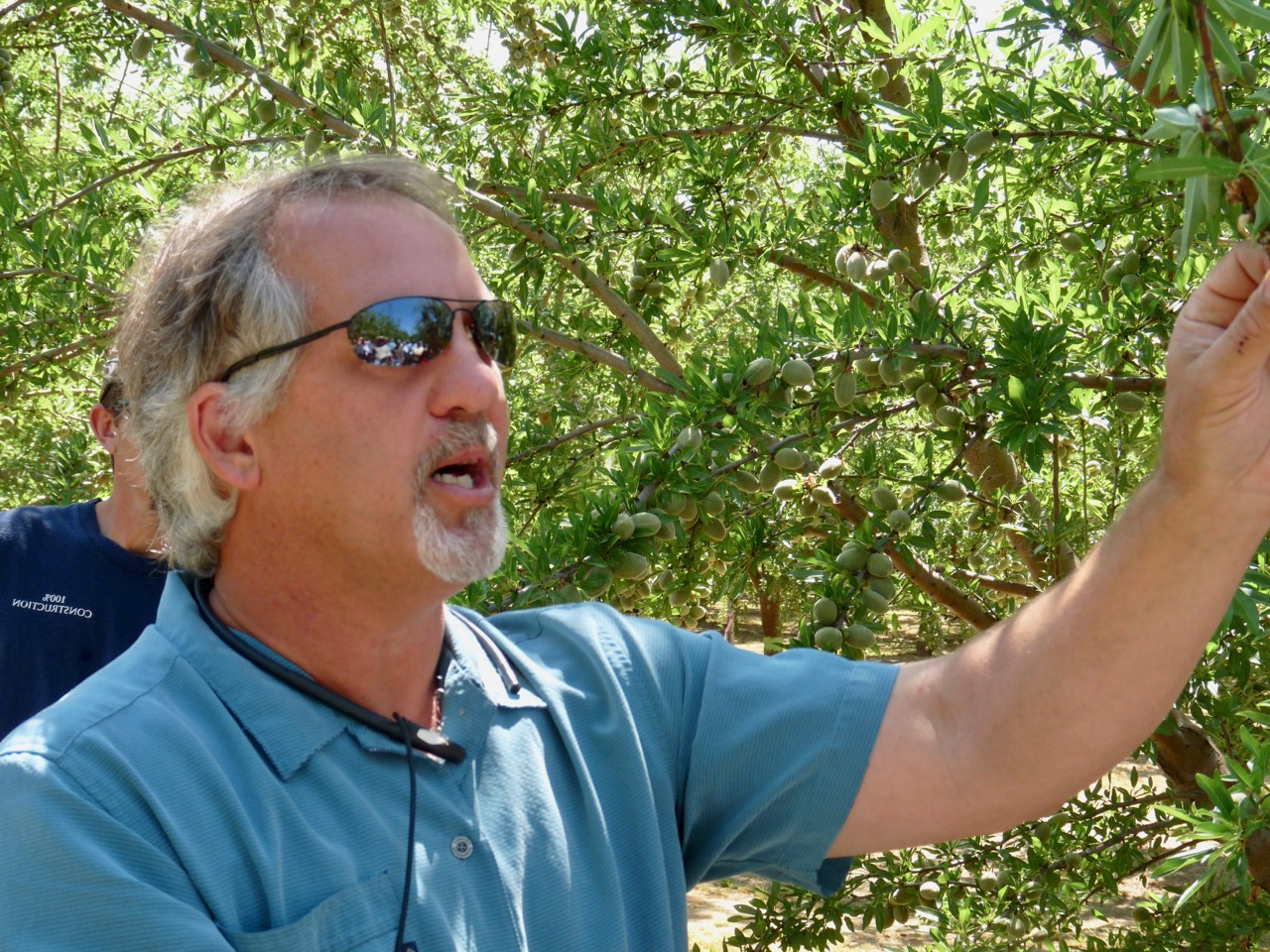
Brent Holtz is a UC cooperative extension Pomology Farm Advisor for San Joaquin County. He recently told California Ag Today about how the fungus band canker on almonds is becoming more prevalent in the San Joaquin Valley.

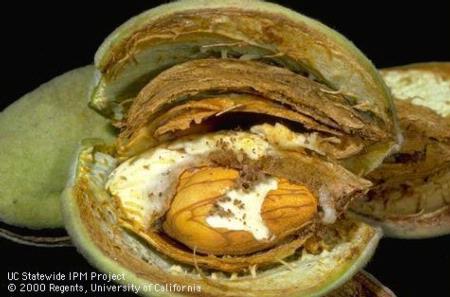
“I’ve seen a lot more band canker, which is caused by a pathogenic fungus, Botryosphaeria dothidea, and we’re seeing it on young orchards, especially in in San Joaquin county,” said Holtz.  “We’ve seen that a lot out in the delta and we’ve seen it in eastern San Joaquin county where the soils tend to be a little heavier, maybe old dairy ground and richer and we don’t really know why.”

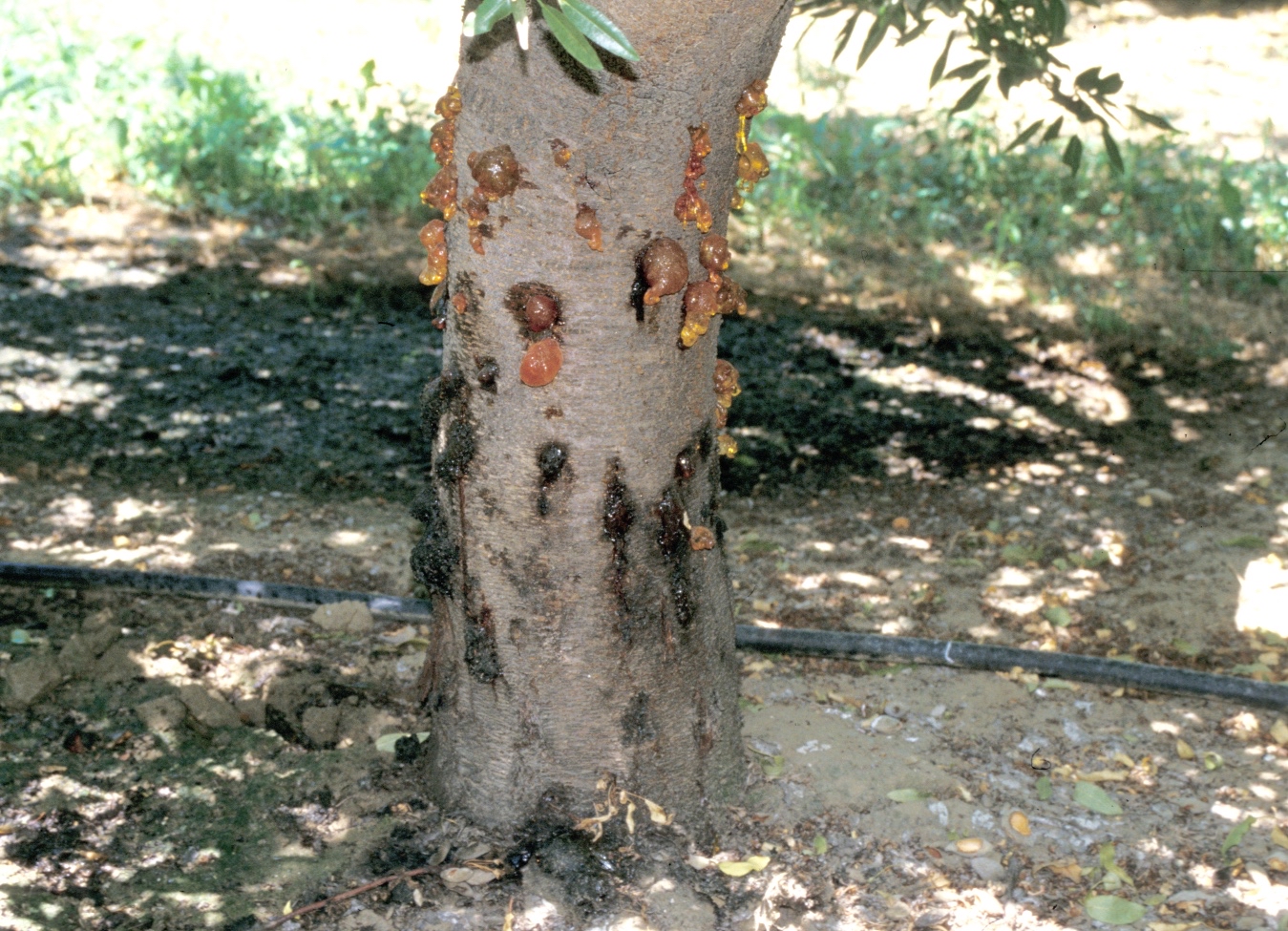
“We’re seeing so much more, but it’s a fungus that infects usually the trunk or the main scaffolds, and we call it band canker because sap balls will come out at the site of the infection and create a band that circles around the trunk or the scaffold,” Holtz explained. “That’s why we call it band canker.”

It’s starting to show up in the orchards that have not been shaken yet, as a wound needs to happen before the infection sets in.

“We think it’s showing up in a lot of orchards before we start shaking the trees and usually in most cankers, we would have to have a wound that would have to happen first before the infection would take place either through a wound or a wound from shaking the tree,” Holtz said.

“Some of these orchards with symptoms tend to be trees that are growing very vigorously, and we suspect maybe that they’re growing so fast, growth cracks are created that the fungus may have got in and caused the infection.”

Trees with band canker on the trunk may not survive. And band cankered scaffolds have to be removed, which affects the tree’s architecture and will reduce yields.

There is evidence that micro sprinklers hitting the trunk could also increase the start of an infection.

“It seems to be showing up a little higher concentration where it was on a micro sprinkler irrigation system, where the sprinkler was actually hitting the trunk,” Holtz said. “We don’t seem to see it as much in orchards with a drip irrigation, so we are advising growers to consider drip or to put a splitter in their micro sprinklers so it can avoid wetting the trunk repeatedly with each irrigation.”
2021-05-12T11:01:56-07:00January 24th, 2018|

My Job Depends on Ag Continues Growth

Decal Sales Go to Nonprofit

By Patrick Cavanaugh, Farm News Director

California Ag Today recently spoke with Steve Malanca, one of the founders of My Job Depends On Ag Facebook group, which he started alongside Erik Wilson. The page was inspired by an economic number that stated that California Agriculture is only two percent of the gross domestic product of the state.

Not want to sit still on what looked like very small contribution to the overall California economy, Malanca, a former equipment salesman, crafted a decal in 2013 with the message My Job Depends on Ag. The idea was to spread the word that agriculture contributes to millions of jobs in the state, including restaurants, banks, clothing stores, supply stores, almond candy manufacturers, tortilla factories and virtually every business in smaller farm communities.

The Facebook page was launched in April 2015.

“It continues to grow,” Malanca said. “It grows in increments of a thousand members every four to six weeks, and we’re reaching 78,000 members in the three-year existence, and the message continues to grow.”

“Our California decal sales are now more than 60,000, and for the third year in a row, through the Central Valley Community Foundation, our profits are going to add more than $20,000 to a nonprofit account in order to continue giving out scholarships for kids.

Malanca’s job definitely depends on ag. He now works at West Valley Almond Huller in Mendota. And he told us about research trying to find a way to use of excess almond hulls. It’s called bio-solarization, which targets the use of almond hulls in row crop applications.

“The idea is to add 10 to 12 tons of hulls per acre on row crop beds, which come in various widths of 60 inches to 80 inches,” Malanca said. “By incorporating a huge amount of hulls over the top couple of inches of that soil, they can then cover it with plastic and create an environment that’s conducive to fumigant application, which kills soil pathogens. The idea is to substitute a chemical fumigant for hulls and accomplish the same goal.”


2018-01-17T16:41:07-08:00January 17th, 2018|

Walnut Blight Protection is Important

Disease Prevention in Walnut Orchards

By Brianne Boyett, Associate Editor

California Ag Today recently spoke with Jim Adaskaveg, professor of plant pathology at UC Riverside. He’s a plant pathologist, microbiologist and epidemiologist. He discussed the importance of protecting walnut trees from walnut blight.

Adaskaveg explained how walnut blight is problematic due to the higher rainfall in the northern part of the state.

“We’ve been working on this for a number of years, and overall, the northern part of the state is always higher at risk because of the higher rainfall in Glenn County,” he said. “There is much higher risk for disease in Northern California, so a lot of the growers have planted later blooming varieties such as Chandler to avoid the blight infections.”

“Rick Buchner [at UC Cooperative Extension] Tehama County and his group called that the prayer stage, which is when the female flower becomes exposed as it emerges from the bud. Those two timings would be for high disease pressure. If you had a history of the disease and you know that the disease is in your orchard, then we would suggest that timing,” Adaskaveg said.

“If you don’t have disease, and you still want to protect yourself, we say just spray at the pistillate flower emergence or the prayer stage. That sets a good way to initiate the spray program,” Adaskaveg explained.

Growers must keep in mind canopy expansion when applying materials.

“Walnuts are big trees, and as they go through bloom, all the leaves started emerging almost weekly. The tree canopy in that first three weeks of the season is doubling in size. By the time you get three or four weeks after that, the catkin flowering trees in full canopy will require a reapplication of materials,” Adaskaveg said.

2021-05-12T11:01:57-07:00December 29th, 2017|

Almond Band Canker has No Cure

Almond Band Canker Creeping up Again

By Patrick Cavanaugh, Farm News Director

Themis Michailides, a UC Davis Plant Pathologist based at the Kearney Agricultural Research and Extension Center, recently told California Ag Today that almond band canker is becoming a big problem.

“This was a very old disease, and almost forgotten, but now we have major problems, particularly in the young orchards, first leaf, second leaf, third leaf, and it can also be found in six year old trees,” Michailides said.

Band canker is a fungal disease caused by a group of Botryosphaeria fungi that are very common in major crops like grapes, almonds, pistachios, walnuts, avocados, citrus and other crops, so they have a large range.

Band canker establishes itself as a spore inoculum that resides outside and also inside of orchards and waits for the right conditions, which are wetness and also high temperatures.

“It develops first like a ring, a canker that is a horizontal canker on the trunks of the trees and decays the wood and produces sap. It’s a disease that can kill young trees in the orchards,” Michailides said.

“Once you have the cankers developed in the trunks of the trees, there’s no cure, but we can prevent it by managing irrigation, trying to keep the trunks of the trees dry,” he said. “We need to develop protective sprays in order to avoid the development of the disease in young trees.”

“Once we have the water and the temperatures rise above 50 degrees Fahrenheit, the conidia – the spores of this fungi – will germinate and infect vigorous varieties we have now through the growth cracks,” Michailides said.

“It’s getting more serious, especially now, because we see that the disease is uniformly distributed throughout the orchard, which indicates to me perhaps that the inoculum is in the trees and not coming from the outside sources. We don’t see the patterns we saw years ago, where we had the source and then a center of disease close to the source,” Michalides explained.


2021-05-12T11:01:57-07:00December 26th, 2017|

Orchard Sanitation is Critical This Season

Orchard Sanitation to Push Back on NOW Underscored

By Mike Stevens, Associate Editor

We are completing our coverage of the importance of orchard sanitation to push back on Navel Orangeworm (NOW) pressure for 2018.

We recently spoke with David Haviland, UC Cooperative Extension entomologist and farm advisor for Kern County. He spoke about how sanitation is the most important practice that needs to be implemented.

David Haviland on Pyrethroid Review

David Haviland

“Yes, 2017 was a really interesting year on NOW. It was a bad year overall. Several things led up to that. The first one was sanitation was an issue,” Haviland explained. “There is not much of an excuse in the southern half of the almond industry, but with all the rain up north and the flooded orchards, yes, it was very difficult to get in and do sanitation, and we know that that is the absolute backbone of navel orange worm programs.”

Pistachios were also a concern when it comes to NOW.

NOW was right on schedule in pistachios. The pistachio crop was a little behind and so it was common to do a normal monitoring, normal spray program, and set up for a normal harvest. But then the crops sat out there for another 10 days or two weeks, which, of course, makes it very vulnerable to NOW worm damage.

“The longer you get away from your insecticide sprays, the more damage that’s going to occur, and a lot of the crop was harvested after the fourth flight occurred,” Haviland said. “When you put in the concerns with sanitation this year, and with the increased degree day accumulation, there were plenty of moths and then the crop got delayed. The overall effect was that this was a worse than normal year.”

At the same time, the industry is full of examples of growers that had very acceptable damage.

“Growers that did follow in greater pest management practices … did get their sanitation done. They documented that those things are really important, they are very effective, and the growers that weren’t able to get that sanitation done hopefully got a case study, personal experience in the value of sanitation,” Haviland said.

Every grower needs to do their part by incorporating sanitation, noted Haviland. “Obviously, if you’re the only one sanitizing amidst a bunch of growers that aren’t, that’s a concern,” he said.

2021-05-12T11:01:57-07:00December 19th, 2017|

Cover Crops Help Bees and Soil

Flowering Cover Crops Stimulates Bees

By Patrick Cavanaugh, Farm News Director

California Ag Today recently interviewed Billy Synk, director of pollination programs for Project Apis m and manager of the Seeds for Bees Project. The Project Apis m mission is to fund and direct research to enhance the health and vitality of honeybee colonies while improving crop production. He spoke on the benefits of cover crops for honeybee health.

“It’s an amazing project and an exciting project to work on and manage because it’s doing two good things at once. It’s a win-win situation. It’s helping out the soil and helping out bees,” Synk said.

When Synk speaks to growers, he mentions those two good reasons.

“Do it to help the bees that are in your orchard become stronger, and do a better job pollinating, but then also help your soil with organic matter and improved water infiltration.”

There are about two million beehives, coming to California from every corner of the United States, and the bees are very hungry.

“Not only are they very hungry, they’re the hungriest they have been all year, and their most important job is to pollinate almonds. Well, if you can have a cover crop blooming before those almonds bloom, you can stimulate them a lot better and create a positive feedback loop,” Synk said.

Synk explained that as more pollen comes into the hive, they rear more bees.

“That brood has a pheromone that tell the adult bees to leave the hive and go collect pollen. That stimulation is just going to make that hive excited and strong and ready to go the day that those almonds bloom,” he said.

Contact Project Apis m for more information and to possibly get cover crop seeds to plant this season.

https://www.projectapism.org/


2021-05-12T11:05:14-07:00December 12th, 2017|

Measuring Crop Protection Material Tolerances

Biological Tolerances May Be Needed

By Patrick Cavanaugh, Farm News Director

California Ag Today recently spoke with Gabrielle Ludwig, Director of Sustainability and Environmental Affairs for the Almond Board of California, about the issue of crop protection in almonds. Almonds are the number one specialty crop export. Almonds also remain the number one nut in global production and are California’s number two agricultural crop.

Ludwig explained that pesticides are used and necessary in today’s almond production. Pesticide residue is a concern for not only domestic production, but also for international distribution. And with biological products such as friendly fungi and bacteria, the biological industry noted that they are safe and free of residue tolerance.

“I would say for this industry, there’s a couple of things going on in parallel, and they don’t have exactly the same problems. So one is you have the sector where it is still a chemical that you’re applying, but it may not have very much toxicity or the residues are, for whatever reason, vanished,” Ludwig said.

“In the United States, we can get an exemption from a tolerance, where EPA has looked at and said there’s no health risk, and there’s no need to set a maximum residue limit. For those products then the question becomes: Do you have the same standards in other markets?” Ludwig asked.

“And again, one example is that the EU does have an exemption for tolerance process, but they don’t always have the same standards so EU is more likely to set a number than United States. And we have also seen examples where the United States is setting a number and the rest of the world says there’s no need to set a number because it’s a natural occurring compound.”

“So if you look at a pheromone, which falls into a natural occurring arena, there, you’re not even spraying the trees so it’s a totally different ball game,” Ludwig said.

“With biologicals, again, it’s a different ball game. You still need to have someone say, look at it, say it’s safe; because it’s going to be exempt from a tolerance.”

“But currently, there’s no testing for it,” Ludwig said. “With DNA technology, it probably wouldn’t be that hard to start testing for biological products’ lack of residue, especially ones that go on the produce that is eaten.”

“So again, what we’re saying here is, don’t rely on the fact you can’t be tested for it because we did that in the conventional pesticide arena and it’s caught up with us,” Ludwig said.

2021-05-12T11:05:14-07:00December 11th, 2017|

New Aerial Images to Help Almond Farmers

Aerial Image Tools Help Almond Irrigation

By Patrick Cavanaugh, Farm News Director

Aerial images of orchards can effectively tell farmers which almond trees aren’t getting enough water, according to the preliminary results of a five-year study by almond researchers at the University of California Cooperative Extension (UCCE), with funding support from the USDA.

Researchers from the UCCE are confirming the utility of Ceres Imaging’s new-to-the-industry aerial views of farmland that helped the startup win a water innovation competition last year. The preliminary results follow four years of replicated research plots in a large commercial almond orchard.

Why does almond irrigation matter? California only recently emerged from a major drought, and for almond growers, water efficiency is a top priority. Since 1990, California farmers have increased the use of sprinklers and micro-irrigation systems from 33 percent to 57 percent of total acreage. But micro-irrigation, the method that usually offers the highest water use efficiency (crop per drop) is prone to clogging and other maintenance problems, which can stress crops and reduce yield.

“Water is the number one input for most growers and is managed carefully in terms of how much is used and when,” said Ashwin Madgavkar, CEO and founder of Ceres Imaging. “This study shows that Ceres imagery can be used with high confidence to monitor if your crop is getting sufficient water or if the crop is in a water-stressed condition, so you can make timely corrective actions. Ultimately, the tool can be used to help catch issues before they result in crop losses.”

Maintaining ideal irrigation levels is a huge challenge for farmers, as is predicting the final harvest tonnage, which is why the study examined the usefulness of Ceres aerial images in those areas. Detecting deficient irrigation quickly is one way Ceres images offer early warnings to growers.

“Findings over the last four years show that the average Ceres conductance measurement from their imagery over the season has provided the best correlation with applied water,” reported Blake Sanden, UCCE Farm Advisor for Kern County. “While there’s no perfect predictor of final yield, Ceres aerial sensing of canopy plant stress has a significant relationship with final yield.”

This UCCE study has been under way since 2013 and will end after results for 2017 are recorded.

2021-05-12T11:05:15-07:00November 30th, 2017|

Navel Orangeworm Control Critical

Orchard Sanitation is Critical This Season To Lower NOW Numbers

By Patrick Cavanaugh, Farm News Director

Emily Symmes is the area Integrated Pest Management farm advisor for the Sacramento Valley in the statewide IPM program. She recently spoke to California Ag Today about the high level of Navel Orangeworm (NOW) damage in nut orchards throughout California this past season.

“We had a lot of unique circumstances. The amount of rainfall we got in late 2016 into 2017 was pretty unprecedented and really led us into a really bad navel orangeworm year because we couldn’t get out and sanitize our nut crops,” she said.

Emily Symmes

“NOW is ubiquitous, and there is an increased nut crop footprint in California, with more than one million acres of almonds, plus pistachios and walnuts,” Symmes explained. “All play host to NOW, as well as a host of natural plants. This thing isn’t going anywhere. And it was pretty bad in 2017 in terms of harvest damage.”

One of the key factors for higher navel orangeworm damage was not being able to get into the fields because of the standing water.

“There were a couple of other factors as well. Typically, rainfall and moist conditions can help NOW mortality in the winter. We tend to think that it can help rot the nuts and do us some favors, but we have to be able to get out and get the nuts shaken or get pulling crews in and get those things on the ground. And then them being on the ground is not always a sure thing. Sanitation was huge in terms of NOW problems this year,” Symmes said.

Heat units also played a part in the development of more NOW pressure. There were a lot of moths flying around longer and laying eggs.

“It got hot in mid to late June, and it seemed to just not let up. What that meant was, in terms of our degree-day models or the heat unit that drive insect development, it ended up getting pretty far out ahead of what is typical, if there is anything such as typical. But certainly ahead of the last couple of years,” Symmes explained.

By September, we were about two weeks ahead in degree-days and that means that the moths were out earlier. They’re flying around. They’re laying eggs on the nuts when they’re still on the trees.

Symmes stressed that the importance of sanitation is to minimize the site where the NOWs mature.

“It’s really important to remember that sanitation efforts aren’t just directly killing any worms that are over-wintering in your orchard. Yes, it does that. But it also minimizes those sites where your first and second generations are going to develop next year,” she said.

2021-05-12T11:01:58-07:00November 29th, 2017|

California Supplies Thanksgiving

California Feeds the Nation on Thanksgiving!

By Patrick Cavanaugh, Farm News Director

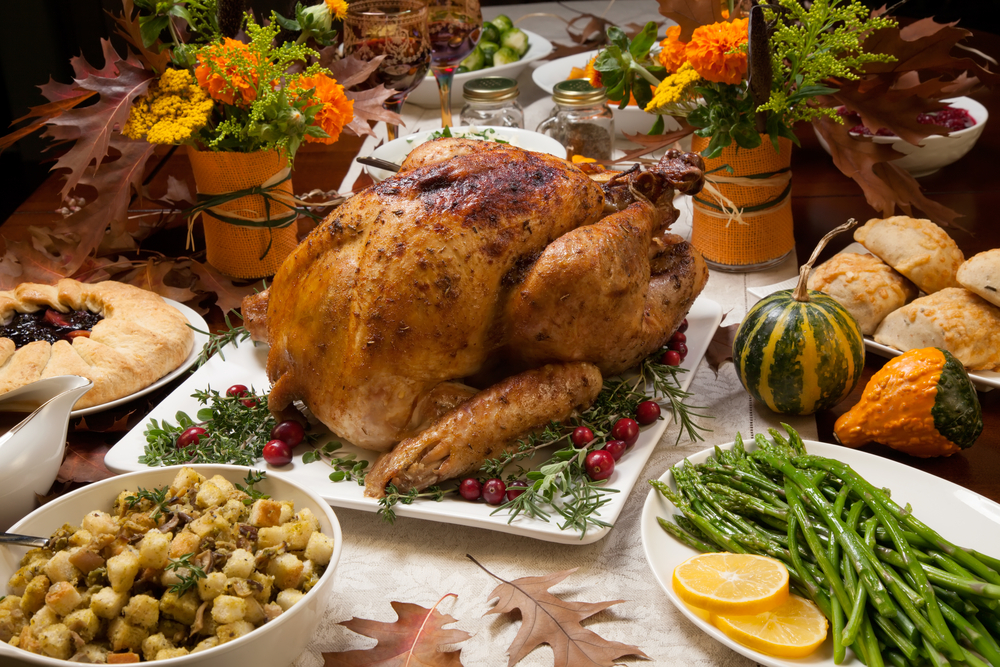
California ranks #8 in turkey production in the United States (2016), and we supply most of the western states from our poultry farms located in several areas in the state.

The famous Mrs. Cubbison’s Stuffing or “Dressing” originated from a ç, born in 1890 in the San Marcos area of San Diego County. In short, Cubbison graduated from California Polytechnical University in May 1920 with a degree in Home Economics having paid her way through school with the money she earned feeding the farm workers.

Cubbison created her popular stuffing in 1948 using broken pieces of the popular Melba toast and various seasonings. The factory in Commerce, California churns it out in mass quantities this time of year.

California farmers produce almonds, raisins, walnuts, prunes, figs, dates, apricots, pistachios, and pomegranates, right on up the food line.

These are all celebrated Thanksgiving foods.

Celery from the Oxnard and Ventura area completes the stuffing mix. Nutrient-dense carrots, lettuce and fresh spinach from Salinas now arrive, pre-washed and bagged, in your local produce department. Your Thanksgiving traditional green beans come from California growers.

An ample supply of freshly harvested oranges and kiwi fruit, table grapes, strawberries, and raspberries are shipped from many areas in the state. Seasonal features include sweet potatoes from the Merced, about an hour north of Fresno, plus all kinds and colors of potatoes and tomatoes, parsley, onions, and garlic—all crops are raised in California.

Nearly all the fruits, vegetables and nuts that are part of America’s Thanksgiving are sourced from California.

Don’t forget about the great varieties of wine grapes grown in the No. 1 agricultural state that are deftly crafted into delectable California wines.

Or the thirst-quenching Martinelli sparkling apple or grape cider from Watsonville California, near the Monterey Bay area. Local growers provide the tree-ripened fruit to the award-winning company that is still family-owned after almost 150 years and is managed by the founder’s grandson and great-grandson. Here’s something to discuss at your Thanksgiving meal:  the company won its first Gold Medal at the 1890 California State Fair in  Sacramento.

How about those heirloom and new apple varieties, plus those small round watermelons that we snack on or toss into a dessert fruit salad, topped with California pomegranate arils?

Of course, we raise poultry, and even California lamb, if you want to go that way. Here is a Did-you-know? challenge for your holiday meal:  What are the most recent Presidental Thanksgiving Turkeys from California pardoned by United States presidents? (Answers are below.)

And by the way, you know that food-safety pop-up turkey timer that indicates when the turkey has reached the correct internal temperature? Public relations genius Leo Pearlstein and a turkey producer in Turlock, a small town north of Fresno in Stanislaus County, invented this Thanksgiving fixture.

Back in the 1960s, they were sitting in a room trying to solve the undercooked poultry challenge, when they looked up and noticed ceiling fire sprinklers. The sprinklers sprayed water when the room temperature became hot enough to melt a tiny piece of metal alloy in the mechanism. This innovative team of two applied the same concept to the pop-up timer!

With the exception of cranberries, our national day of giving thanks for a bountiful harvest is really a California Thanksgiving.


Here are some friendly topics for discussion at your Thanksgiving Table:

  • What is the name of the famous Thanksgiving stuffing that originated in California?
  • What beverage company that is still operating won its first Gold Medal at the 1890 California State Fair?
  • How was the pop-up timer invented and by whom?
  • How does high does California rank in U.S. turkey production?
  • What are the most recent Presidental Thanksgiving Turkeys from California pardoned by United States presidents?

In 2010, President Obama pardoned Apple, a 45-pound turkey from Modesto, California-based Foster Farms; and alternate bird Cider. 

In 2015, President Obama pardoned Apple, a 45-pound turkey and an alternate 43-pound bird named Honest, again from Foster Farms.

The Presidential Turkey flock are Nicholas White turkeys, which originated in California’s Sonoma Valley in 1957. Today, the Nicholas White is the industry standard. (Foster Farms)

2021-05-12T11:17:10-07:00November 20th, 2017|
Go to Top