Despite Great Harvest, California Apple Growers Face Challenges

California Apple Growers Face Regulatory Disadvantage

By Patrick Cavanaugh, Farm News Director


Many California apple growers are in the midst of harvest season right now. Alex Ott, executive director of the Clovis-based California Apple Commission expects a 3% increase in production across the country. Ott foresees a 1% increase in California this season, where apples stand out because of their freshness.

“California is the fifth largest producer of apples in the United States,” Ott explained. “We are about the third largest exporter of apples in the United States. We like to pick, pack and ship. Unlike other states that like to store fruit and have that fruit around longer, California apple growers like to get in and get out,” Ott said.california-apple-commission-logo California Apple

“We have a small marketing window and we pride ourselves on fresh crops,” Ott elaborated. “So we try to get out of the market no later than December. Sometimes we go as late as January, but the idea is to [quickly] fill that niche window between the Chilean and the Washington state fruit.”

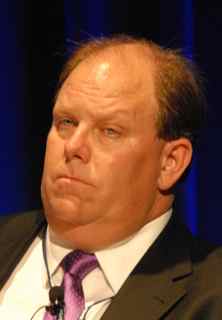
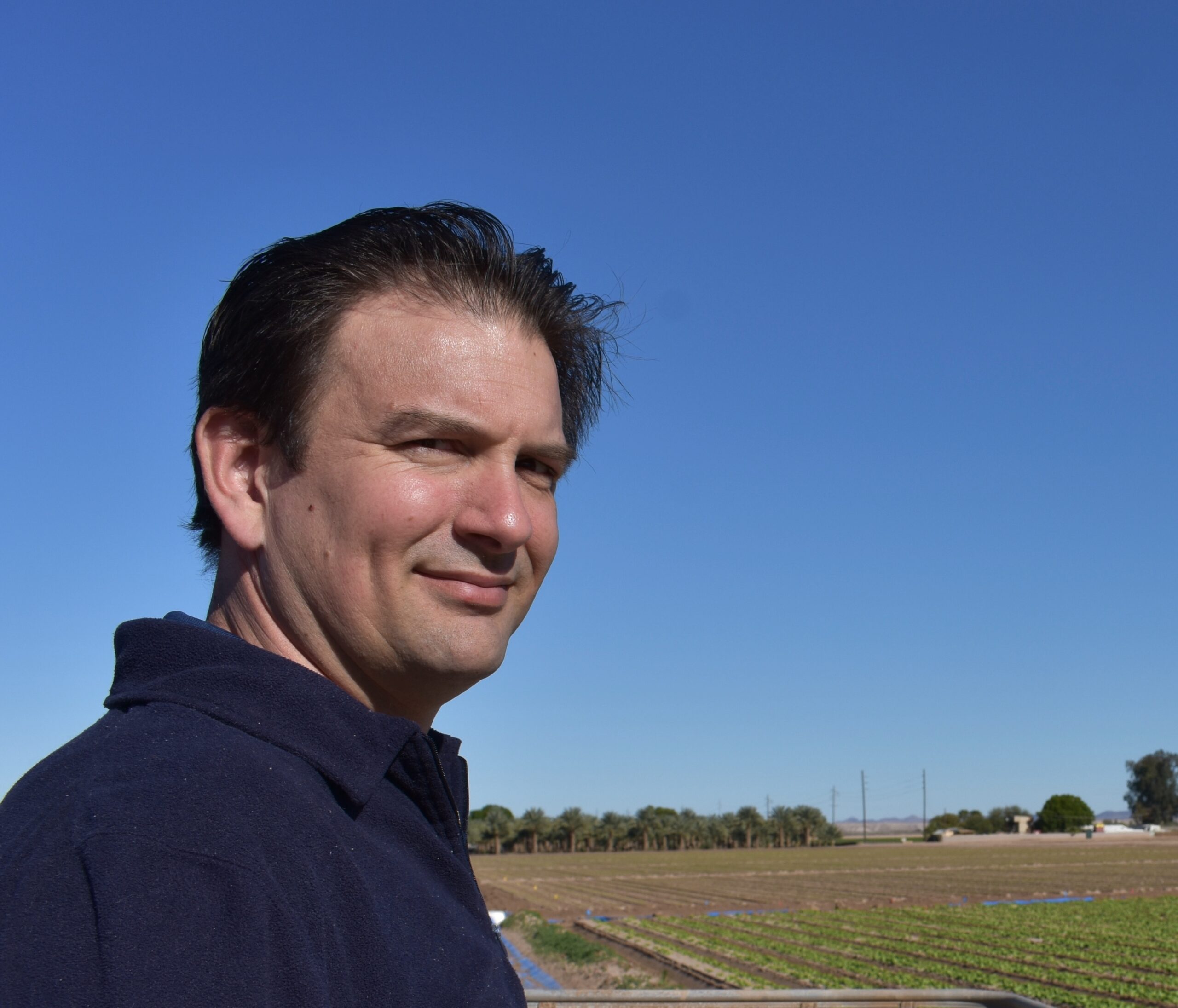
Alex Ott, executive director of the Clovis-based California Apple Commission

Alex Ott, executive director of the Clovis-based California Apple Commission

Yet, the California apple industry faces challenges going forward. Ott stated, “Over the last five years, California apple crop production has decreased by nearly 39%. A lot of that has to do with the changing of the crops. Any time you start to see an uptick in another crop, especially when it is not hand labor-intensive like apples, you will see a migration to those types of crops.”

Transitioning toward less labor-intensive crops may accelerate since Gov. Jerry Brown signed AB 1066. This bill will enable California farm employees to accrue overtime pay after working an 8-hour day, instead of a 10-hour day.

“It’s definitely going to be a challenge for California apple growers,” Ott said, especially given the labor shortage. “So apple production in the state will decrease.”

Ott lamented many countries already produce a lot of these other less labor-intensive crops. AB 1066 definitely puts us at a competitive disadvantage in keeping up with demand. The challenge is how can California apple growers compete with farmers in other state and countries who can do it faster and cheaper?
2016-10-14T18:26:24-07:00October 14th, 2016|

ACP Spread in Bakersfield Area, Ingenious Research Proceeds

Ingenious Research Effort to Fight ACP Spread with Natural Predators


By Joanne Lui, Associate Editor


beth_grafton-cardwell

Beth Grafton-Cardwell, Cooperative Extension specialist, University of California, Riverside Department of Entomology

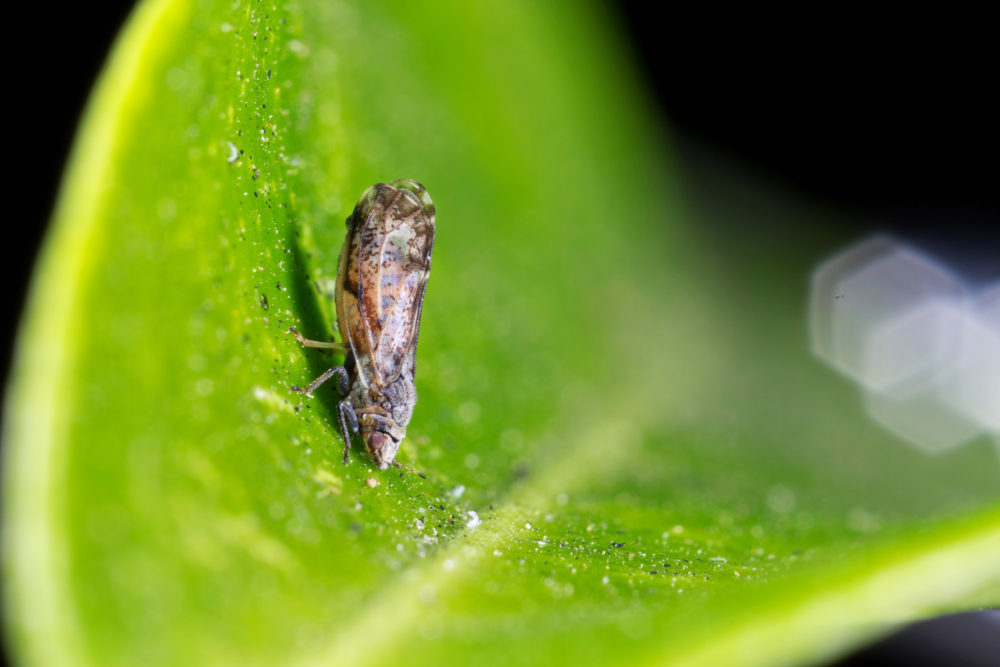
As we have reported in-depth before on California Ag Today, the Asian Citrus Psyllid (ACP) is a tiny, mottled brown insect that poses an ever-increasing threat to the state’s robust citrus industry, as well as to residential citrus trees. The pest can spread a bacterium known as Huanglongbing (HLP) that is fatal to citrus trees. The disease has nearly shut down Florida’s citrus industry.

Beth Grafton-Cardwell, cooperative extension specialist in integrated pest management, UC Riverside Department of Entomology, explained the significance of the recent ACP spread to Bakersfield. “That is really problematic because it’s mostly in the urban areas. It’s very difficult to find, to control and to stop that spread. It’s going to move out from that region into the local citrus orchards, and so there are lots of meetings and discussions right now to mobilize growers to get treatments to help protect their citrus orchards against the psyllid.”

#CitrusMatters

#CitrusMatters

To contain the ACP problem, Grafton-Cardwell stated, “There are traps everywhere, but the traps are not terribly efficient. So, we really need to carefully examine groves and flush [new leaf growth] for the nymph form,” she said.

According to Agriculture and Natural Resources, University of California’s Statewide Integrated Pest Management Program:

Adults typically live one to two months. Females lay tiny yellow-orange almond-shaped eggs in the folds of the newly developing “feather flush” leaves of citrus. Each female can lay several hundred eggs during her lifespan.

ACP UC IPM

ACP (Source: ACP UC IPM)

The eggs hatch into nymphs that are wingless, flattened, yellow or orange to brownish, and 1/100 to 1/14 inch long. Nymphs molt four times, increasing in size with each nymphal stage (instar), before maturing into adult psyllids. The nymphs can feed only on soft, young leaf tissue and are found on immature leaves and stems of flush growth on citrus.

Save Our CitrusThe nymphs remove sap from plant tissue when they feed and excrete a large quantity of sugary liquid (honeydew). Each nymph also produces a waxy tubule from its rear end to help clear the sugary waste product away from its body. The tubule’s shape—a curly tube with a bulb at the end—is unique to the Asian citrus psyllid and can be used to identify the insect.

Grafton-Cardwell and other experts are concerned because once the ACP becomes established in urban areas, it is difficult to eradicate. “It starts spreading into the commercial citrus, and we’re off and running,” she commented.

bayer-save-our-citrusIn a ingenious effort to control the spread of the psyllid, trained teams of entomologists have imported Tamarixia radiata, a tiny wasp that naturally preys on ACP, from Pakistan to research and release in California. A cooperative effort of the University of California Riverside, Citrus Research Board, United States Department of Agriculture and California Department of Food and Agriculture, researchers are also exploring the effectiveness of another beneficial insect called Diaphorencyrtus aligarhensis to assist Tamarixia with control of the Asian citrus psyllid. To see where Tamarixia and Diaphorencyrtus have been released, visit this University of California’s website map at, “Distribution of ACP, HLB and Parasites in California,” and turn on the parasite layers.

Grafton-Cardwell said, “They’re going to inundate that area,” with natural ACP predators, “so hopefully that will push back a little bit.”

2021-05-12T11:05:46-07:00October 10th, 2016|

Celebrating California Agriculture . . .  An Ongoing Series: Marketing

Marketing, Almond Board Style

A Rallying Cry for Ag PR on Billboards

By Laurie Greene, Editor


Celebrating California Agriculture is a refreshing perspective. In an ongoing series on CaliforniaAgToday.comPeterangelo Vallis, executive director of the Fresno-based San Joaquin Valley Winegrowers Association (SJVWA), shares his optimistic viewpoint on California agriculture. In our original article, “Celebrating California Agriculture . . .  An Ongoing Series,” published on September 13, 2016, Vallis offered this goal:

SAN Joaquin Valley  Winegrowers Association, (sjvwa) logo“This is basic, basic stuff because, realistically, we’re marketing the fact that we need help to make more food,” Vallis noted. “We’re making safe domestic food, but if we don’t engage with the people that are our customers, we’re never going to be able to get our ideas and our needs across, because we’re just not talking to the right audience.”

“They’re not enough people here in the valley to move the needle. We’ve got to figure out a way to get San Francisco and L.A. appreciating our position, loving what we do, and trusting that we’re doing the very best job possible,” said Vallis.

Vallis is urging California agriculture “to put some dollars together for a major billboard campaign in Los Angeles and in the Bay Area, celebrating our agricultural industry as part of a big PR campaign.”

Almond Board of California, marketing almond board style“Just imagine,” Vallis suggested, “the power of billboards with California farmers and the fruits, nuts or vegetables they produce. The billboard could be up in prime city areas for several months for less than a few million dollars.”

Vallis commended the Almond Board of California for their example of a great starting point. “You know, the Almond Board of California (Board), I think, represents the most progressive part of California agriculture today because the Board understands how much money it takes to penetrate the market. We’re not living in 1932; we need to spend money on this stuff. I mean what does a Super Bowl commercial cost—6-7 million dollars for 30 seconds? It’s an insane amount of money, but that’s what it takes to really move the needle.”

“Billboards around the California’s urban centers or even across the nation, could carry the message of the importance of the California

ALMOND SUSTAINABILITY ECOSYSTEM (Almond Board of California, AlmondSustainability.org), Celebrating California Agriculture

ALMOND SUSTAINABILITY ECOSYSTEM (Almond Board of California, AlmondSustainability.org)

farmer,” Vallis proposed. “We could campaign on every billboard in America for one month and call it, ‘Hey, We Like to Eat Month’ or ‘Your Stomach Depends On Ag,’” noted Vallis.

“The message must connect with people,” Vallis insisted. “It would probably cost 20 or 30 million just to make that happen, but if you look at the success the Almond Board has had, that is a perfect pathway—a perfect roadmap—for what all of us in California can do at pennies per pound,” he said.

“There are some commodities that don’t make pennies per pound; but on the whole, a couple pennies per pound, put in the right space and put in front of people … Guess what? They’re going to go nuts over the product. Look what almonds have done. If that isn’t a rallying cry for what could happen. . . it would be killer! And it would be killer for our industry,” Vallis said.

2016-10-04T18:38:02-07:00October 4th, 2016|

Fear-Based Messaging Reduces Produce Consumption – Both Organic and Conventional

New Study Finds Fear-Based Produce Safety Messaging Negatively Impacts Low Income Consumers’ Produce Consumption


New peer reviewed research, “Low-Income Shoppers and Fruit and Vegetables: What Do They Think?” published in Nutrition Today, shows fear-based messaging tactics used by activist groups and some organic marketers that invoke safety concerns about non-organic produce may be having a negative impact on produce consumption—fruits and veggies—among low income consumers, according to the Alliance for Food and Farming (AFF).Alliance for Food and Farming logo

Researchers at the Illinois Institute of Technology’s (IIT) Center for Nutrition Research surveyed low income consumers to learn more about what terms and information about fruits and vegetables may influence their shopping intentions. Among the key findings, misleading messaging which inaccurately describes certain fruits and vegetables as having “higher” pesticide residues results in low income shoppers reporting that they would be unlikely to purchase any fruits and vegetables – organically or non-organically grown.

illinois-institute-of-technology-institute-for-food-safety-and-health“We were surprised to see how informational content that named specific fruits and vegetables as having the highest pesticide residues increased the percentage of shoppers who said they would be unlikely to purchase any type of fruits and vegetables,” says Britt Burton-Freeman, associate professor of food science and nutrition, ITT’s Center for Nutrition Research. “The concern is that depending on the structure of the communication about pesticides and fruits and vegetables, this could turn people away from wanting to purchase any fresh produce.”

“Despite efforts by the health community, consumption of fruits and vegetables is stagnating,” says Elizabeth Pivonka, Ph.D, R.D. and president, Produce for Better Health Foundation. “This new study shows what we have been concerned about for some time, that safety fears may be another barrier to consumption of these healthy and nutritious foods. The impact of the fear-based messaging on low income consumers is especially troubling since many don’t have access or can’t afford non-Produce for Better Health, produce consumptionorganic produce.”

The findings are also concerning since the safety claims carried predominantly by groups like the Environmental Working Group (EWG) and Only Organic about pesticide residues have been repeatedly proven to be scientifically inaccurate. For the last 20 years, EWG annually releases a so-called “dirty dozen” list which urges consumers to eat only organic versions of popular produce items accompanied by misleading and unscientific claims regarding pesticide residue levels. A peer reviewed analysis of EWG’s list entitled, Dietary Exposure to Pesticide Residues from Commodities Alleged to Contain the Highest Contamination Levels and published by AFF showed that substitution of organic forms of produce for non-organic produce did not result in any decrease in risk because residue levels are so minute on these fruits and vegetables, if they are present at all.

“Their tactic clearly isn’t working and it’s actually backfiring since this research shows that consumers may react to their message by deciding not to buy any produce at all – organic or non-organic,” says Teresa Thorne of the AFF. “For the benefit of consumers, especially low income consumers, this study shows it is time for groups like EWG to rethink their strategy for promoting organics and move away from tactics intended to scare consumers from buying the more affordable and accessible produce items,” Thorne says.

john-hopkins-bloomberg-school-of-public-healthThis IIT research compliments the peer reviewed study by John Hopkins University’s Center for a Livable Future, They Just Say Organic Food Is Healthier”: Perceptions of Healthy Food among Supermarket Shoppers in Southwest Baltimore,” published in January 2015 [orig. Dec. 2014] in the journal, Culture, Agriculture, Food and Environment. Those researchers conducted interviews with study participants to learn more about the way organic food is understood within consumers’ definitions of healthy food. John Hopkins researchers also focused on low income consumers because “this group is particularly important demographically given the disparate burden of diet-related diseases they carry and the frequency of diet-related messages they receive.”

The study authors also found conflicting health and safety messages, including those about pesticide residues, were having a negative impact on consumers. Among their findings and recommendations: “The issue of organic can swamp or compete with other messages about nutrition, as evidenced by the data presented here. Perceiving that there is an overwhelming amount of sometimes contradictory information about healthy eating could make some consumers defeatist about trying to eat healthily. Given the potential implications of competing messages about healthy eating, it is important that those who want to improve food production techniques and those who want to improve nutrition cooperate to create consistent messaging about healthy eating.”

Dr. Burton-Freeman reached a similar conclusion. “Hearing that the majority of shoppers in this survey trust dietitians/nutritionists, scientists and physicians for health and safety information about fresh fruits and vegetables, this is an important opportunity for these professionals working in low-income populations. It is an opportunity to educate shoppers about organic and conventionally grown produce, particularly about best practices for washing, storing and preparing all fruits and vegetables to maximize their enjoyment and nutritional value and minimize their confusion and safety concerns.”

“Hopefully the peer-reviewed research from IIT and John Hopkins will have an impact on groups like EWG especially since the science clearly shows both organic and non-organic produce is very safe and can be eaten with confidence,” AFF’s Thorne says. “And, decades of nutritional research primarily conducted using non-organic produce shows that a plant rich diet leads to better health and a longer life. So choose either or both organic or non-organic produce, but choose to eat more every day.”


The Alliance for Food and Farming (AFF) is a non-profit organization formed in 1989 which represents organic and conventional farmers and farms of all sizes.  Alliance contributors are limited to farmers of fruits and vegetables, companies that sell, market or ship fruits and vegetables or organizations that represent produce farmers.  AFF’s mission is to deliver credible information to consumers about the safety of all fruits and vegetables.  AFF does not engage in lobbying nor does it accept any money or support from the pesticide industry.  In the interest of transparency, AFF’s entire 2011 tax return is posted on safefruitsandveggies.com.


See also:

Scared Fat: Are Consumers Being Scared Away from Healthy Foods?

Individuals May Consider Organic an Important Factor When Defining Healthy Food

University College of London: Eating 7 or More Servings Reduces Risk of Premature Death by 42%

2021-05-12T11:05:46-07:00October 3rd, 2016|

CULTIVATING COMMON GROUND: Water Use Efficiency Grants

Water Use Efficiency Grants: Beneficial or Double Jeopardy for California Farming? Or both?


By Patrick Cavanaugh, Farm News Director


Through a competitive joint pilot grant program, the Agricultural Water Use Efficiency and State Water Efficiency and Enhancement Program, the California Department of Water Resources (DWR) and the California Department of Food and Agriculture (CDFA) jointly intend to demonstrate the potential multiple benefits of conveyance enhancements combined with on-farm agricultural water use efficiency improvements and greenhouse gas reductions.

The grant funding provided in this joint program is intended to address multiple goals including:

  • Water use efficiency, conservation and reduction
  • Greenhouse Gas Emissions Reduction
  • Groundwater Protection, and
  • Sustainability of agricultural operations and food production
Agricultural Water Use Efficiency & State Water Efficiency and Enhancement Program – DWR/CDFA Joint RFP Public Workshops

Agricultural Water Use Efficiency & State Water Efficiency and Enhancement Program – DWR/CDFA Joint RFP Public Workshops

Are these competitive grants promoted by DWR and CDFA providing financial support for further compliance or insulting to farmers who have already met and exceeded these stockpiling regulations? Or both?

I would like to address each goal, one by one.

Water Use Efficiency

I challenge DWR and CDFA to find one California farmer who is using water inefficiently or without regard to conservation. Grant or no grant, many farmers in the state have lost most of their contracted surface water deliveries due to the Endangered Species Act, which serves to save endangered species, an important goal we all share, but does so at any cost.

In addition, DWR is now threatening to take 40 percent of the surface water from the Tuolumne River and other tributaries of the San Joaquin River from February 1 to June 30, every year, to increase flows to the Delta to help save the declining smelt and salmon. This will severely curtail water deliveries to the Modesto Irrigation District (MID) and Turlock Irrigation District (TID)—population centers as well as critical farm areas.

MID TID Joint LogoThis proposal, which disregards legal landowner water rights and human need, would force MID and TID to dedicate 40 percent of surface water flows during the defined time period every year, with no regulatory sunset, for beneficial fish and wildlife uses and salinity control. The proposal disregards other scientifically acknowledged stressors such as predatory nonnative non-native striped bass and largemouth bass, partially treated sewage from Delta cities, and, according to the Bay Delta Fish & Wildlife Office of the U.S. Fish & Wildlife Service Pacific Southwest Region, invasive organisms, exotic species of zooplankton and a voracious plankton-eating clam in the Delta from foreign ships that historically dumped their ballast in San Francisco waters.

While many farmers have fallowed their farmland, other farmers across the state have resorted to reliance on groundwater to keep their permanent crops (trees and vines) alive. The new DWR proposal to divert 40 percent of MID and TID surface water will force hundreds of growers in this region—the only groundwater basin in the Valley that is not yet critically overdrafted—to use more groundwater. 

In a joint statement, MID and TID said, “Our community has never faced a threat of this proportion. MID and TID have continued to fight for the water resource that was entrusted to us 129 years ago.”

The deadline for submitting public comments is September 30, 2016.

Greenhouse Gas Reduction

Have regulators forgotten Assembly Bill (AB) 32, the Global Warming Solutions Act of 2006, that requires the state to reduce its greenhouse gas emissions by 25 percent (back to 1990 levels) by 2050? Ag is already accommodating this regulation.

U.S. Greenhouse Gas Emissions (Source: EPA) https://www.epa.gov/ghgemissions/sources-greenhouse-gas-emissions

U.S. Greenhouse Gas Emissions (Source: EPA)

Now Governor Brown has signed SB-1383, “Short-lived climate pollutants: methane emissions: dairy and livestock: organic waste: landfills” into law that mandates a 25 percent reduction in methane emissions from cow burps, flatulence and manure from all dairy cows and other cattle to achieve the 1990 statewide greenhouse gas emissions level by 2020.

Now CDFA and DWR are asking for grant requests to reduce greenhouse emissions even further. Really?

The deadline for submitting public comments is September 30, 2016.

Groundwater Protection

Ironically, farmers want to reduce their groundwater needs because groundwater has always functioned in the state as a water savings bank for emergency use during droughts and not as a primary source of irrigation. But massive non-drought related federal and state surface water cutbacks have forced farmers to use more groundwater.

Golden State farmers are doing everything possible not to further elevate nitrates in their groundwater. Some nitrate findings left by farmers from generations ago are difficult to clean up.

But the DWR and CFA grant wants California agriculture to do more!

The deadline for submitting public comments is September 30, 2016.

Sustainability of Agricultural Operations and Food Production

Virtually, no one is more sustainable than a multi-generational farmer. Each year, family farmers improve their land in order to produce robust crops, maintain their livelihoods, enrich the soil for the long term, and fortify the health and safety of their agricultural legacy for future generations.

California farmers will continue to do all they can to improve irrigation methods and track their crop protection product use.

And so, I ask again, is this beneficial or double jeopardy for California farming? Or both?

The deadline for submitting public comments is September 30, 2016.

2021-05-12T11:17:12-07:00September 26th, 2016|

Eighteen New California Farm Academy Graduates!

Eighteen New Farmers Graduate from California Farm Academy


By Patrick Cavanaugh, Farm News Director


The California Farm Academy, a part-time, seven-month, beginning farmer training program run by the Land-Based Learning, graduated 18 new farmers on Sunday, September 18, 2016.


With more than 250 hours of classroom and field training behind them, these enterprising graduates were honored by notables such as Karen Ross, secretary, California Department of Food and Agriculture (CDFA); Craig McNamara, president and owner of Sierra Orchards, as well as president of the California State Board of Food and Agriculture; Sri Sethuratnam, director, California Farm Academy (CFA); and Mary Kimball, executive director, Center for Land-Based Learning, based in Winters California.

new farmers graduate from California Farm Academy beginning farmer training program run by the Land-Based Learning.

Eighteen new farmers graduated from California Farm Academy’s beginning farmer training program run by the Center for Land-Based Learning.


“The impetus of our program,” said Christine McMorrow, director of development for Land-Based Learning, “is the need for more farmers as the current ones age out. According to the USDA, over 700,000 new farmers will be needed in the next 20 years to replace those who retire.


CFA teachers, farmers, academic faculty and staff, and agricultural, natural resource and business professionals, teach CFA students basic production agricultural practices; crop planning; soil science; pest management; organic agriculture; irrigation and water management; marketing; ecology and conservation; obtaining loans, insurance and permits; farm financials; human resource management; risk management; farm safety; regulatory compliance and problem-solving.


McMorrow stated, “These folks have been with us since February, following a rigorous application process. A lot of these folks either have land they have dreamed of farming but did not know how to put it into production. Some of them come from farming families, but they wanted to get involved in the family business on their own. They may have been in a different career and now want to do something new or different. Perhaps they haven’t studied agriculture or they have not seen much agriculture other than what their family does, so this is an opportunity for them to learn and to explore a new business idea.


“We only take people who are serious about production agriculture. This is not a program for somebody who thinks, ‘I’ve got an acre in my backyard and I really want to grow something.’ While that’s a cool thing to do, the academy is not for those people.”


“Our graduating farmers, who range in age from their late 20s to early 50s, each wrote a business plan and presented it to folks within the agriculture industry,” said McMorrow. “They also planted some of their own crops on a farm in Winters.


McMorrow elaborated, “These new farmers have been able to create their own networks, having made contact with more than 40 different folks within the agricultural industry throughout the time they spent with us. These networks include local farmers around Yolo County, Solano County, Sacramento County, and other regions, and will help our graduates realize their dreams.”


California Farm Academy (CFA) We grow farmers

“This is the fifth class that has graduated,” explained McMorrow, “and mind you, these folks are doing lots of different things. Some of them already have their own land, some are going to work for someone who has land, some will work other farmers, and some will go into a food-related business.”


“Still others will stay and lease small plots of land from us,” McMorrow commented, “to start their own farming business. Beginning farmers face huge barriers to getting started, the biggest of which is access to land, capital and infrastructure. So, to get their farming businesses started, California Farm Academy alumni are eligible to lease land at sites in West Sacramento, Davis and Winters at a very low cost.”


The Center for Land-Based Learning exists to cultivate opportunity.

For the land.

For youth.

For the environment.

For business.

For the economy.

For the future of agriculture.
2021-05-12T11:00:49-07:00September 19th, 2016|

Governor Signs AB 1066 Overtime Bill for Farmworkers

Governor Signs AB 1066 With Good Intentions

By Patrick Cavanaugh, Farm News Director and Laurie Greene, Editor


TODAY, Governor Jerry Brown signed AB 1066, the overtime bill for farmworkers, despite pushback from agricultural groups and farmworkers in the state. Ian LeMay, director of member relations & communications of the Fresno-based California Fresh Fruit Association, anticipates that not only will farmers in the state lose, but farmworkers, exports, and possibly consumers will lose as well. 

For years, California farm employees accrued overtime pay only after working a 10-hour day, instead of an 8-hour day, like most other employees in California. AB 1066 changes the overtime rules for farmworkers by gradually lowering overtime thresholds in steps over the next four years so farmworkers will eventually earn overtime after an 8-hour day.

The California farm industry has appreciated the prior overtime policy, according to LeMay, because agriculture is not a typical 52-week type of job. The workload of farming ebbs and flows with the seasons, weather, cultural practices and tasks.Farmworkers

For instance, harvesting of crops such as strawberries, citrus and table grapes, normally occurs during short 2- to 3-week periods in the state and is accompanied by an increase in demand for labor. As one might expect, the need for labor declines during non-harvest and non-planting phases, to the extent that farmworkers may endure periods of no work, and hence, no pay. So farmworkers have appreciated the opportunity to work extra hours and earn overtime during busier phases.

Labor costs for California growers of all fresh fruit, avocados and many vegetable crops will be most affected by this change. “This is going to have a very, very big impact on crops that require a high degree of labor like our stone fruit, table grapes and the rest,” said LeMay, “It’s definitely going to change the way our members have to approach doing business,” he said.

“When you compare it to the other states in the union that we are going to have to compete with,” LeMay elaborated, “when you take into account recent changes in minimum wage, piece-rate compensation, increasing farm regulations and now overtime, it’s going to be very difficult to compete not only in a domestic market, but also internationally. That’s the disappointing part about this.”

LeMay also explained that over the last 40 years, the California legislature has crafted labor law to create the highest worker standards in the U.S. “California was the only state in the union that had a daily threshold for overtime of [only] 10 hours per day, and we were one of four in the union that had a weekly threshold for overtime of [only] 60 hours. So in terms of ag overtime, California was already the gold standard.”

And, although lawmakers intended AB 1066 to help farmworkers, LeMay noted, “ultimately, the measure will impact farmworkers the most because farmers in the number one Ag state will find a way to keep its bottom line from eroding any further.

“California farmers will need to solve the puzzle of how to achieve the same amount of work in fewer hours per day,” said LeMay. “They will consider hiring double crews, increasing mechanization in packing facilities, orchards and vineyards, and reducing farm acreage to match their workforce. Or, for those commodities that require increased labor, you could see a transition to commodities like nut crops that use less labor.”

LeMay explained that during down periods on the farm, farmworkers generally collect unemployment, which is based on gross annual income. Now, by giving the farmer an incentive to reduce worker hours, farmworkers’ unemployment compensation may decrease as well.

Furthermore, for the consumer who desires fresh local food from small farms, the phase-in schedule AB 1066 provides to smaller companies is actually a competitive disadvantage. “While AB 1066 allows small farmers—those with fewer than 25 employeesmore time to phase in changes,” LeMay asked, “why would a farmworker stay at small farm under the prolonged 60-hour per week overtime threshold rule, when he or she could work at a larger farm under the phased-in 40-hour per week threshold?”

ab-1066-provisions


Are consumers willing to pay for increased labor costs on the farm? “As the saying goes,” LeMay quipped, “generally farmers aren’t price makers, they are price takers. Consumers are usually unwilling to pay extra for their produce, so farmers usually have to absorb increased costs.”

“Economically,” LeMay summarized, “the legislature has taken us from high labor standards to economically disadvantaging farmers and farmworkers. Lawmakers are not paying enough attention to keeping California companies viable, sustainable and successful.”

2016-09-12T18:40:13-07:00September 12th, 2016|

Celebrate Labor Day With California Strawberries!

Add California Strawberries to Your Labor Day Event


By Laurie Greene, Editor


Many people will be out and about with an extra day off on Labor Day, trying to get that last swallow of summer. They’ll crowd beaches, lakes, parks and backyard BBQs. What better way to celebrate the achievements of American workers than to add fresh-picked California strawberries to the menu?

Carolyn O'Donnell

Carolyn O’Donnell, communications director, California Strawberry Commission


“Any holiday can be celebrated with strawberries as they are available year-round,” said Carolyn O’Donnell, communications director of the California Strawberry Commission in Watsonville. “Strawberries are one of the most popular fruits around. They are sweet but low in sugar, and they are quite nutritious. People are often surprised to find out that having just eight medium strawberries gives you more vitamin C than eating an orange,” she said.


“Grown year-round, right now strawberries are coming mostly from the Salinas-Watsonville area on the Central Coast and also in the Santa Maria area,” noted O’Donnell. “As we get more into the fall there will be less coming from the northern sections and more from the Ventura County area to the south. Eventually strawberries will come out of Orange County and Northern San Diego County. The crop will roll back up the coast again with the New Year. By next April or May, strawberries will be coming mostly from the Watsonville area again,” O’Donnell explained.

generational_small strawberries


O’Donnell said that strawberry growers are very dedicated to growing the best possible product they can for their customers. “Their strawberries are actually often a crop of opportunity. A number of our farmers started as field workers and were able to work their way up to owning a farm because you can produce a lot of fruit and make a good living on a small amount of land.”


O’Donnell said supplies should be plentiful in the grocery store. “We probably have more fruit this time of year than usual probably because rain this past winter delayed harvest, which was good news. Now we’re just working our way along. Folks in the Watsonville areas are also beginning to start preparing their other pieces of fallow ground so that they can plant around Thanksgiving and produce next year’s crop,” she said.


Photos: Courtesy of California Strawberry Commission

2016-10-06T16:04:28-07:00September 4th, 2016|

Tulare County Ag is Down But Strong

Tulare County Annual Crop Report is Down But Still Strong


By Patrick Cavanaugh, Farm News Director


The numbers are in for the 2015 Tulare County Annual Crop and Livestock Report.  Marilyn Kinoshita, Agricultural Commissioner/Sealer of Tulare County, reported, “We had an overall value of $6.9 billion, compared to last year, which was more than $8 billion,” which means the County led the nation in total crop value and dairy production, despite a decrease of nearly 14% in one year.

Tulare County’s top ten crops [crop value] in 2015 were:

  1. Milk
  2. Cattle & Calves
  3. Oranges- Navels & Valencias
  4. Grapes
  5. Almonds Meats & Hulls
  6. Tangerines – Fresh
  7. Corn – Grain & Silage
  8. Silage – Small Grain
  9. Pistachio Nuts
  10. Walnuts

Kinoshita explained, “Dairy is our number one industry here. Our milk production was off a little bit. We have fewer dairies in business now because of the low milk prices. Anytime your fresh market milk is off, that’s going to affect our overall value. A good 2/3 of that billion-dollar decrease came from the dairy industry. The price was low the entire year, as opposed to the year before.”

Marilyn Kinoshita, agricultural commissioner, Tulare County

Marilyn Kinoshita, Tulare County Ag Commissioner


Thus far, the reported 2015 county crop reports in the Central Valley are down this year. “Fresno County, for instance, was down 6.5% off its record $7 billion in 2014,” Kinoshita said.


“It has a lot to do with low water deliveries in Fresno and Tulare Counties,” she continued. “The smaller the water deliveries, the more efficient those growers have to be with that water. Anytime you’re pumping water out of the ground, it’s terribly expensive,” she noted.


“Some of our growers have had to decide, ‘All right, I’ve got this much water; I’m going to keep those blocks alive and I’m going to push an older block that isn’t producing as well.’ The returns aren’t as good as some of the newer plantings,” said Kinoshita.


Despite all of that, Kinoshita said agriculture does sit at the head of the table in Tulare County. “Yes, and we need a successful Ag industry to thrive here,” she said.


To view a video of the interview, click HERE.


Tricia Stever Blattler, executive director of the Tulare County Farm Bureau, noted the crop report demonstrates the strength of the agricultural industry. “I think every year when this crop report comes out, it is always a testament to the resiliency of this industry. This industry takes hard knocks, gets knocked down, then steps right back up to the plate and keeps swinging,” Blattler said. “The agricultural sector has a lot of outside challenges that impact the number that we see reported every year.”


Tricia Stever Blattler

Tricia Stever Blattler, executive director , Tulare County Farm Bureau

Blattler acknowledged the crop value numbers do not reflect net revenue for growers. “It’s always really important for our listeners to know that the crop value is a gross revenue number. When our Ag Commissioner steps to the microphone and speaks to our Board of Supervisors about this report each year, she’s reflecting values that are attributed to all of the gross revenue, and it’s not only the field value,” Blattler said.


“That gross number reported each year also represents our packing houses, our milk processing facilities—the creameries, the butter plants—the packing shedsall those other parts of our industry that [create] value in our industry,” said Blattler.


Blattler noted up or down, it’s all about the resiliency of farmers. “The industry has its years that are really blockbuster and it has its years when it falls back and we see a reduction acreage. We see reductions in surface water deliveries. The drought is still certainly playing a significant role in the numbers we’re seeing,” she explained.


With regard to surface water, Tulare County is in a bit of a unique position. “As an Eastside county, some of our water deliveries are not as subject to the situation that the Westside is in. In the same sense, we have some significant cutbacks that have been attributed to the San Joaquin River’s restoration and the biological opinions in the Delta—all have had an impact on the Central San Joaquin Valley [water] deliveries regardless of whether you’re Eastside or Westside.


“Also, as the exchange contractors either take greater deliveries of water or give up water, that also impacts the amount available to Eastside growers here in Tulare County,” she said.


In summary, 2015 Tulare Crop Report covers more than 120 different commodities, 45 of which have a gross value in excess of $1 million. Although individual commodities may experience difficulties from year to year, Tulare County continues to produce high quality crops that provide food and fiber to more than 90 countries worldwide.


Featured photo: Tulare County 2015 Crop Report

2021-05-12T11:17:12-07:00August 31st, 2016|

Overtime Bill AB 1066 Heads to Governor’s Desk

California Assembly Sends AB 1066 Overtime Bill to Governor

By Patrick Cavanaugh Farm News Director


The California Assembly voted 44 to 32, yesterday, August 29, in favor of a bill that would make California the first in the country to give farmworkers overtime pay after working 8 hours per day or 40 hours per week instead of current law that mandates agriculture workers earn overtime after 10 hours per day or 60 hours per week.


CFFA Logo

Because farmworkers are unable to work some days due to weather or harvest schedules, they have historically preferred to work as many hours as possible on any given day. Now farmers may be forced to restrict employees from working more than 8 hours per day to avoid the costly overtime payroll, which would severely hurt their financial bottom line.


The bill, which has already cleared the State Senate, now moves on to Governor Jerry Brown, who has until September 31st to sign or veto the bill.


George Radanovich, president of the Fresno-based California Fresh Fruit Association (CFFA) that represents many farmers who rely on hand labor, stated, “It’s a clear example of people who live on black top and cement and who never talk to people in the vineyards or in the fields. They think they are helping the farmworker, and they are not. They’re making it harder for the farmworker and for the farmer,” said Radanovich.


Roger Isom, president of the Western Agricultural Processors Association (WAPA) and the California Cotton Ginners and Growers Association (CCGGA), said AB 1066 just places additional burdens on the farmer. “When you combine this Ag overtime legislation with the minimum wage increase and all of the other labor issues—the workers comp costs that are imposed on growers—it makes us noncompetitive,” Isom said. “On top of that you add the regulatory costs from the different issues like the truck rule; we can’t compete.”

WAPA-Logo


“There isn’t anybody out there who wouldn’t want to pay the workers more than what they’re getting today, or even that overtime,” said Isom. “But consider that California is one of only 5 states that even pays overtime, and none of them pay it after only 10 hours. We already had the most stringent overtime regulations for farmworkers in the country before it was ever adopted. Now, we’ve made it worse; we are going to have the highest minimum wage of any farm state out there, so how do we compete?”


CCGGA logo

Isom commented, “This last week, U.S. Secretary of Agriculture Tom Vilsack was actually calling Assembly members in the State, urging them to support this bill. We were outraged,” Isom said. “When he was Governor of the State of Iowa, his own state had the lowest Ag wages and has no Ag overtime. The majority of our states, 45 states, have no overtime. You could work 16 hours, 20 hours, and not be paid any overtime.”


Isom noted that supporters of AB 1066 are very shortsighted. He predicts the law will only reduce the number of available working hours available for farm employees and thus decrease their earnings. Isom hopes Governor Brown will see this bill as an added negative impact tied to the recently passed increases to California’s minimum wage.


Agriculture leaders are calling for all concerned to put pressure on Governor Brown to veto AB 1066 by Emailing or phoning constantly.

Governor Jerry Brown
c/o State Capitol, Suite 1173
Sacramento, CA 95814

Phone: (916) 445-2841
Fax: (916) 558-3160

email: governor@governor.ca.gov


(Featured photo: Roger Isom, president of Western Ag Processors Association and the California Cotton Ginners Association)

2016-09-04T20:42:57-07:00August 30th, 2016|
Go to Top