Protecting California Citrus Industry

State’s Citrus Industry at a Crossroads

By Patrick Cavanaugh, Farm News Director

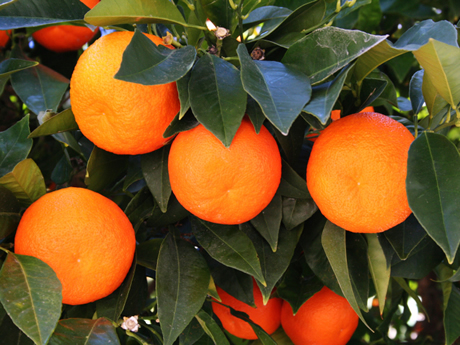
Karen Ross, Secretary of the California Department of Food and Agriculture, told California Ag Today recently that the fight to protect the California citrus industry from Citrus Greening is ongoing with many moving parts.

“We are working closely with both with USDA and county ag commissioners to protect our important citrus industry,” she said. “And funding from our federal agency partners is important in the fight.”

“There is a strong sense of urgency, and I honestly feel we’re at a significant crossroads because of the most recent Huanglongbing infected tree finds in Southern California that keep the infected Asian Citrus Psyllid numbers up,” Ross explained.

She noted that the biggest challenge is citrus in the state’s urban areas.

“The beauty of citrus is that nearly every Californian has a citrus plant of some kind. That’s also one of our biggest challenges right now, because we’re very dependent on our urban residential neighbors to allow inspectors to repeatedly go to their door, in order to take samples, and then possibly having to go back and pull trees.

Ross said that the state has dedicated full time leadership to help fight HLB. There’s a lot of moving parts in the program.

“It’s gotten very large, and we’re going do whatever we need to do to make sure California citrus has a long, long part of our history and our economy,” she said.

Ross noted that the Asian Citrus Psyllid isn’t the only pest concerning California agriculture.

“Besides our big Asian citrus psyllid program, we have ongoing medfly infestations, several fruit fly infestations, and light broth apple moth infestation, and we are working on Japanese beetle eradication programs,” she said.
2021-05-12T11:01:58-07:00October 31st, 2017|

Kiwi Growers Farming New Varieties

Great Harvest for CA Kiwi Growers

By Jessica Theisman, Associate Editor

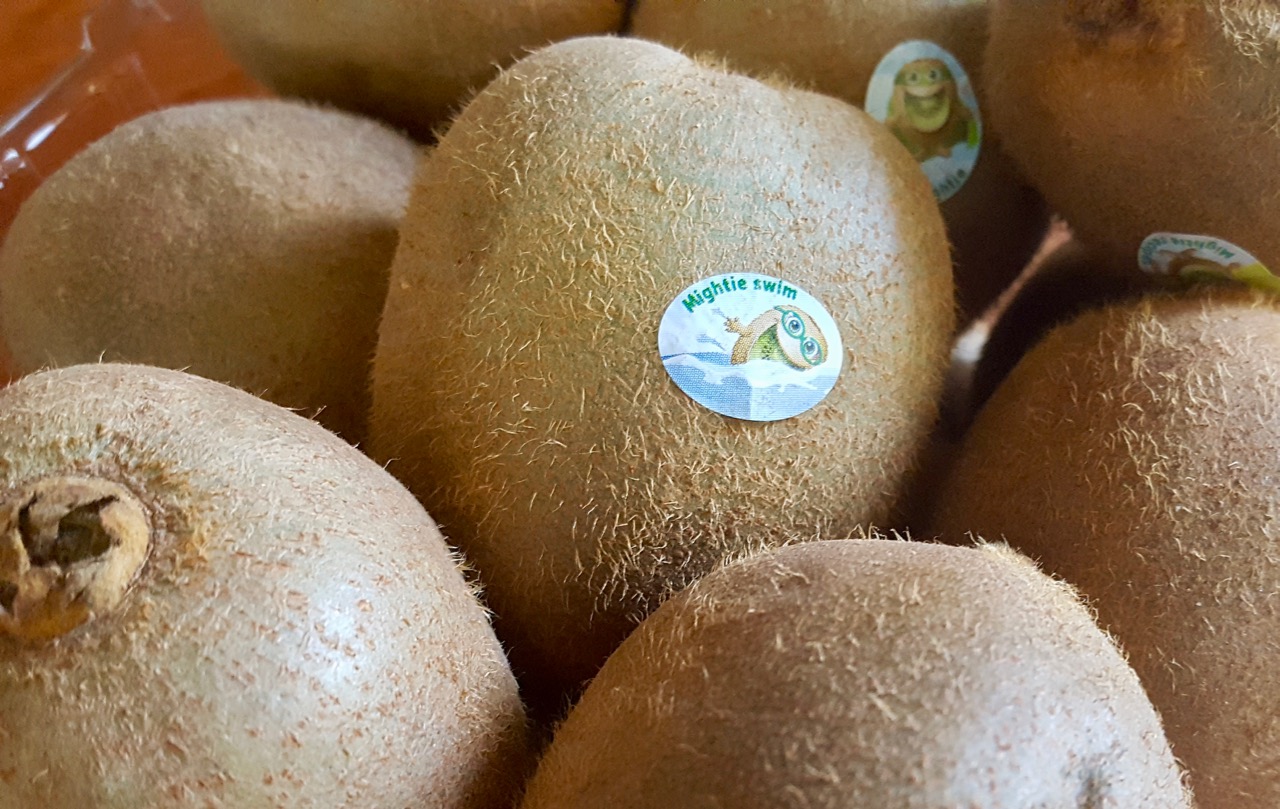
California kiwi growers are having a great season! California Ag Today recently spoke with Nick Matteis, Assistant Manager for the Kiwifruit Administrative Committee, based in Sacramento, about the harvest.

“The crop looks great! We’ve got a good distribution of sizes, so we’re excited about that,” Matteis said.

They have some new gold varieties that are increasing in production, and they hope to double their harvest from last year.

“Most of the new varieties globally are some type of gold, but there some other colors out there,” Matteis explained.

Red kiwi fruit and new varieties that look quite interesting are on the rise.

“We have one grower that’s testing some red, but it’s very early,” Matteis said.

There is also a new variety called the Megakiwi, which is exactly how it sounds.

Matteis also spoke with us about California Grown’s new social media outreach program called Farm 2 Fan. Farm 2 Fan offers a spotlight for farmers whose produce have plenty of fans.

“We are right in the middle of a promotional campaign that we execute in partnership with Visit California,” he said. “This is a video series and digital marketing campaign that introduces farmers producing different crops from all around the state of California.”

2017-10-30T15:06:02-07:00October 30th, 2017|

Who Safeguards Farm Worker Rights? – Part 8

Pick Justice, Gerawan Farm Workers Protest Forced Unionization


By Laurie Greene, Founding Editor


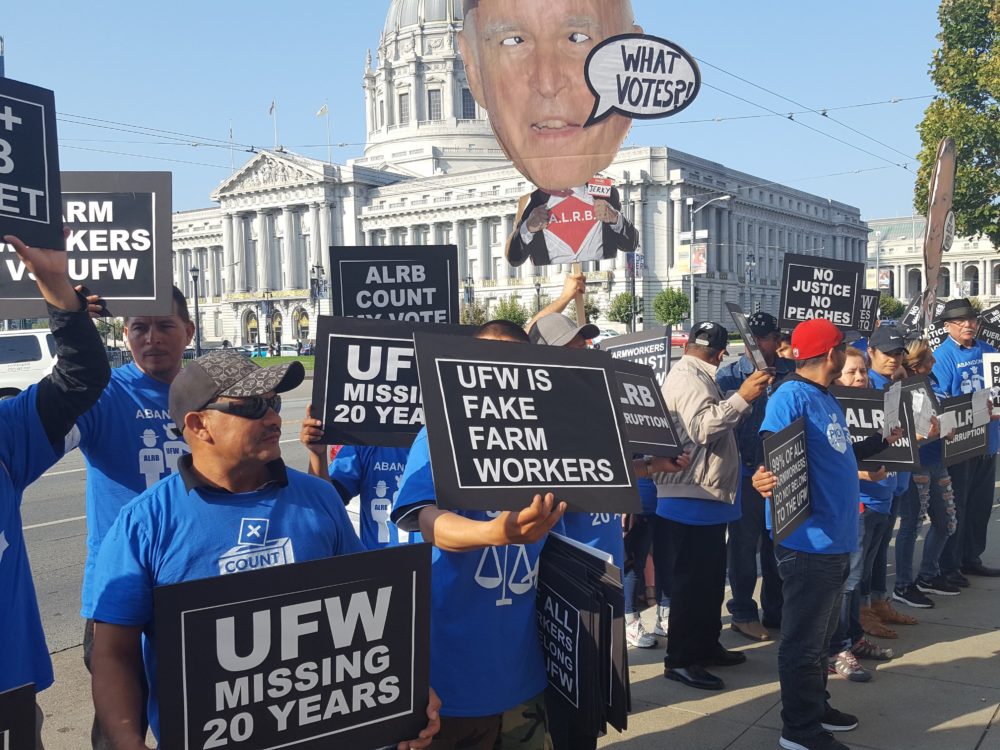
Jesse Rojas, spokesperson for Pick Justice, a farm worker rights group (not a union) organized a rally of farm workers last week at the California Supreme Court building in San Francisco to bring attention to the court hearing on the UFW’s effort to force unionization on farm workers at Gerawan Farming, Inc.—despite having abandoned the workers for nearly 20 years. Over 150 Gerawan workers traveled from the Central Valley to protest the UFW/ALRB team that is pushing for forced unionization of these farm workers via the justice system through Mandatory Mediation and Conciliation (MMC).

Jesse Rojas, spokesperson for Pick Justice (PickJustice.com)

Gerawan workers, dressed in blue Pick Justice t-shirts and armed with company ID cards and pay stubs to demonstrate authenticity, chanted at the UFW protesters who wore red UFW t-shirts. Rojas said the UFW individuals were apparently not Gerawan farm workers and were paid to be there. “All attending [in our group] are employees of Gerawan Farming,” he stated.

“I wish all 3,000 Gerawan workers could have come today like they’ve done in the past,” Rojas said. “But they actually have to work because they are real workers and they don’t get paid to come here. They miss days of work. A lot of them are going to get written up. They are going to get into trouble. They have had to find babysitters to take care of their kids; they are real workers.”

Rojas explained the focus of the demonstration is the need for these employees to choose their own future. “At this point, what is really important for them—not just them, but for all farm workers in the state—is simply to have the freedom to choosefreedom to vote.”

“Why would they have to be forced into a contract without reading it, without negotiating it, without approving it?” Rojas asked. “It’s not the American way. That’s not a democracy. The most fundamental civil right that all employees have is the right to vote if they want a union or not or if they want a contract or not.”

“But they are not getting those rights. Why not them? It is their right to vote and have their votes counted,” Rojas said.

If the Court imposes mandatory mediation, Rojas said the outcome “would affect about every farm worker in the state, almost 800,000 of them. The rights of the workers would be taken away.”

“The way mandatory mediation and conciliation works is the ALRB, the state government, has the right to write and impose a contract on employees without their approval,” Rojas explained. “In the Gerawan case, they will not have the right to strike or protest like they are doing today.”

“On top of that, this so-called contract will actually lower their take-home pay,” said Rojas, because mandatory UFW union dues totaling three percent of their paychecks would be imposed on the workers. If any of them refuse to pay the union as a condition of employment, they will be fired.

The justices of the California Supreme Court have until December 5th to make a ruling.

To see a video of Jesse Rojas speaking to California Ag Today, click here.


PickJustice.com celebrates freedom of choice for farm workers. As posted on their website:

We are concerned citizens who support the rights of workers to choose whether or not they want to have a union represent them. We are standing up for workers who are victimized by a politicized government agency.

Freedom of choice is a human right. People who are not educated are deprived of their freedom by those who are educated.

PickJustice.com exists to educate the public about the corrupt relationship between a once-noble union and the dishonest attorneys at the California Agricultural Labor Relations Board (ALRB). We want to help social change to show that, once a union has violated the trust of those it purports to represent, that union no longer votes for the workers.

As César Chávez himself said, “Once social change begins, it cannot be reversed. You cannot un-educate the person who has learned to read. You cannot humiliate the person who feels pride. You cannot oppress the people who are not afraid anymore.”

A generation ago, many farm workers were afraid of their employers. That isn’t the case anymore.

Thanks to organization against social injustice and a greater consciousness of producers and consumers alike, the plight of thousands of farm workers in America is over.

In César’s words more than three decades ago: “The very fact of our existence forces an entire industry – unionized and non-unionized – to spend millions of dollars year after year on improved wages, on improved working conditions, on benefits for workers.”


Who Safeguards California Farm Employees’ Rights? – Part 9  Court Allows UFW to Force Representation and Dues on Gerawan Employees


2019-12-25T15:48:07-08:00September 14th, 2017|

Sharing Secrets to a Successful Bowl of Cherries

Weather and Pruning Make Life a Bowl of Cherries

By Laurie Greene, Founding Editor

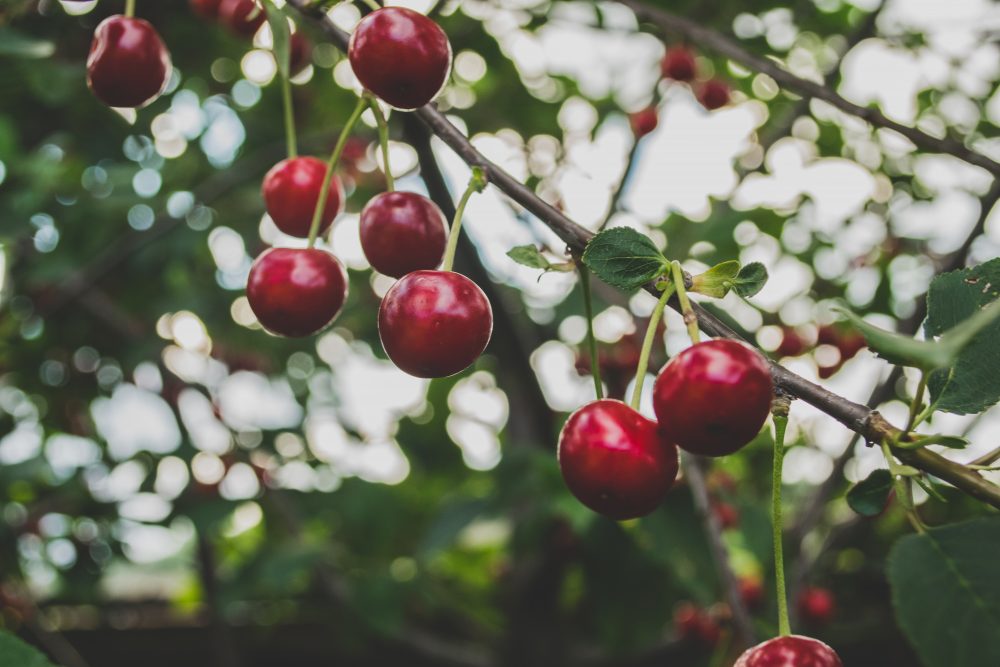
Clark Goehring, a third generation Kern County farmer, produces cherries and almonds. He summarized his cherry harvested as “good compared to the other years when we have had rain. Some people in our area still had rain during harvest, but we were able to harvest and bring our cherries to market in good condition.”cherry tree

“Of course, it rained a lot this winter and spring, but you do not want rain when cherries are maturing on the tree; they don’t like rain.”

Goehring explained that when it rains beyond the point when cherries start coloring, they split, making them unmarketable. “But while it may take some rained-on cherries off the market, the price of the marketable fruit goes up,” he said, benefiting those growers who had a quality crop, like him.

Goehring’s farm workers train the cherry trees to keep them low—approximately 8 feet tall. “We have tried to have them bush out instead of being more of a central leader. Actually, it’s called Spanish Bush style or, in modified form, KGB.”

Kym Green Bush designed the KGB training method in Australia to use multiple leaders and have them fruit on the leaders themselves. KGB simplifies pruning so less experienced farm workers can learn the skill more easily. The trees are replenished every five years.

Goehring said the method saves money on the farm, cuts labor and increases workers’ safety because it requires no ladders and the harvest is quicker. Harvesting without ladders also gives Goehring an advantage of attracting farm labor over other orchards that require ladders.

“In California, if farm workers have their choice of picking your cherries without using ladders, which is usually piecework, or someone else’s crop with ladders, they are going to want to come to you,” he explained.

2017-08-02T16:14:04-07:00August 2nd, 2017|

Prunes May Be Answer to Osteoporosis

Prunes May Help Fight Osteoporosis

By Melissa Moe, Associate Editor

California is the world’s largest producer of dried plums, producing about 40% of the world’s supply and 99% of the U.S. supply. Dried plums, also known as prunes, are considered to be a super food thanks to their valuable nutritional content. Recently, California Ag Today spoke to Donn Zea, the executive director of the California Dried Plum Board, about the prune industry and the nutritional benefits of prunes.

“The growers are doing well. Of course, we’ve lost acreage over the last decade. We’re at about 47,000 acres or so. We have a big crop this year; it looks like 105,000 tons. Last year was a short one because of the weather. We seem to be in a good place, Zea said. “I think acreage, certainly in California but even globally, is in balance with demand, and it’s our job now to make sure that we continue to keep California prunes at a high value profile. We like to think that we grow them better and that they taste better than any other prune in the world.”

Recent studies show that prunes are able to assist in aiding and even reversing osteoporosis, the process in which bones become fragile and brittle due to old age.

“We’re finding out a lot about the prune’s role in slowing or even reversing age-related osteoporosis and improving bone health in women so far, but we’re now doing research in men,” Zea said. “There’s a lot of exciting things going on there, especially for those that can’t eat dairy. It’s not the calcium. What we’re learning is that it’s a combination of polyphenols that are working together in prunes. The evidence seems to be clear, in the animal studies we’ve done and in the clinical trials that we’ve done, that these combinations of nutrients and micronutrients are working together to produce a defense against osteoporosis and bone loss and maybe even strengthening bone.”

2021-05-12T11:05:16-07:00June 29th, 2017|

Family Tree Farm Sees Good Season Despite Labor Laws

Family Tree Farm Rising to Meet Challenges

By Melissa Moe, Associate Editor

New state labor regulations continue to make daily operations more difficult for California farmers. With these increasing costs, it is difficult to stay competitive in a global market. Family Tree Farms is a family owned operation out of Reedley. Daniel Jackson of Family Tree Farms said that they’re doing well even, with the new labor laws that are making business more difficult for California farmers.

“The regulations grip us around the throat a little bit, and they’re getting tighter and tighter every year. We’re just trying to keep air in our lungs. To get creative, we have to find ways to be better farmers. To produce more yield and to do it more affordably with less labor. We have to be creative on our cultural practices and how we do that so that we can survive in the marketplace. We’re trying to make it work, but at the end of the day, it seems like every time you solve an obstacle three more pop up,” Jackson said.

Even with these new regulations, Family Tree Farms has been doing well. They have risen up to meet these new challenges, and the year ahead looks promising.

“The labor has been better this year, and I can’t really give the reason why. It wasn’t a great pollenization year, so crops are a little bit lighter as far as the fruits that are on the tree or actually having workers available. That could change as more crops start to come on as the blueberry harvest continues. Cherry seems like they’ll be wrapping up around here as grapes kick into gear later on in another few weeks, so we may run into those challenges as the season goes on, but right now, so far so good,” Jackson said.

2017-06-19T12:50:39-07:00June 19th, 2017|

Huanglongbing is causing concern in California

Increase of Huanglongbing in California Causes Concern

 By Brian German, Associate Broadcaster

Southern California has seen a concerning increase in the amount of trees that are infected with Huanglongbing, or citrus greening disease. California Ag Today discussed the news with Beth Grafton-Cardwell, an IPM Specialist and Research Entomologist for the UC Riverside Entomology Department stationed in the San Joaquin Valley.  She agreed that there is an increased concern surrounding HLB.

“It kind of exploded this fall, and it’s kind of continuing. And, that’s not unexpected. The Department of Food and Ag removes only the trees that are polymerase chain reaction – positive. And sometimes, it takes one to two years for a tree for you to be able to detect the bacteria using that method,” Grafton-Cardwell said.

Beth Grafton-Cardwell

There is no cure currently available for HLB, so once a tree is infected, it will eventually die.  Researchers continue working to find a possible cure for HLB, or at the very least, a more effective means of diagnosing infected trees. “Most of the techniques that are going to help us cure or prevent the disease from being transmitted are five to ten years away. Yet, I think we’re going to see a rapid expansion of the disease in Southern California in this coming year,” Grafton-Cardwell said.

Early detection is one of the most important things.  Grafton-Cardwell noted that many farmers are “helping to get the research accomplished and, for example, helping to get early detection techniques tested, and things like that so that we can try and stay on top of the disease.”

In California, production trees are not required to be screened, but many nurseries are now shifting towards putting all of their trees under screening in an effort to be more proactive in guarding against the spread of HLB.

Biological controls like Tamarixia are used as a means to reduce the number Asian citrus psyllids, which cause HLB, but that type of control method is not designed to completely eradicate insects.

“They’re starting to release the Tamarixia Wasps in Bakersfield. So we’re getting them up into the San Joaquin Valley so they can help out in those urban areas,” Grafton-Cardwell said.

Dogs are also used as a means to detect infected trees, but there is still a need for more effective techniques.  “A large team of dogs can do maybe 1,000 acres a day, and we’ve got 300,000 acres of commercial citrus. So I think we need a multitude of techniques,” Grafton-Cardwell said.

2021-05-12T11:01:59-07:00April 27th, 2017|

Citrus Referendum Coming Up

Citrus Growers to Vote on Referendum

News Release from Citrus Research Board

California citrus growers soon will receive a critical citrus referendum ballot from the California Department of Food and Agriculture (CDFA) asking them to vote on continuing the work of the Citrus Research Board (CRB) for the next five years.

The grower-funded and grower-directed CRB was chartered nearly 50 years ago to enable California citrus growers to sponsor and support needed research that industry members otherwise would be unable to individually fund or access on their own. The Board’s mission is to ensure a sustainable California citrus industry for the benefit of growers by prioritizing, investing in and promoting sound science.

Some key areas funded include general production research, a variety improvement research program, a quality assurance program on agricultural chemical residues, and pest and disease control activities. Currently, disease control is crucially important.

The California citrus industry is now in the fight of its life to prevent the spread of the devastating disease huanglongbing (HLB) from California’s orchards.

HLB already has decimated most other major citrus growing regions, including Florida.

In California, HLB so far only has been found in 40 residential trees in Los Angeles; however, unless researchers are able to find a solution, HLB could gain a foothold in the state’s commercial groves. Currently, the CRB is dedicating its primary research efforts to controlling the spread of HLB and eradicating the disease. The Board is beginning to see some promising results; but without the CRB, much valuable research will go unfunded.

“We urge all citrus growers to vote when they receive their ballots from the CDFA,” CRB President Gary Schulz said. “Citrus is important to our state’s economy, employment, health and positive identity. We are proud to proactively protect and sustain the world’s largest fresh citrus market. The work that our researchers are conducting is vital to sustaining the California citrus industry and ensuring its continued success.”

The CRB administers the California Citrus Research Program, the grower funded and grower-directed program established in 1968 under the California Marketing Act as the mechanism enabling the State’s citrus producers to sponsor and support needed research. More information about the Citrus Research Board may be found at www.citrusresearch.org.

2021-05-12T11:01:59-07:00March 30th, 2017|

HLB Detected Again in San Gabriel

46 HLB Positive Trees in California

News Release from Citrus Insider

CDFA routinely conducts HLB surveys throughout the state based on a risk model that considers factors that may make an area more likely to have a presence of the disease. CDFA has further fine-tuned this approach by increasing the number of samples pulled from citrus trees that are considered high risk. This strategic approach – developed by the CDFA lead diagnostician with input from the Citrus Pest & Disease Prevention Program and leading scientific researchers – has helped pinpoint infected trees.

State and local crews are building relationships with residents in the area, which not only helps gain access to properties, but also results in swift removal of trees identified as having HLB. While removal of diseased trees is mandatory, positive homeowner relationships encourage cooperation. Of the eight trees recently detected, seven have already been removed or been scheduled for removal by CDFA. Crews are contacting the property owner of the remaining citrus tree Tuesday, March 28, and will pursue quick removal.

In 2016, CDFA collected nearly 50,000 plant samples and nearly 80,000 Asian citrus psyllid samples to test for HLB. Since sample collection began in 2008, more than 400,000 plant and psyllid samples have been collected and processed. This diligent work has contributed to quick detection and eradication of diseased trees.

As a part of the Citrus Pest & Disease Prevention Program, CDFA will continue surveying and sampling the area for HLB and keep the industry abreast of finds as they occur.

2021-05-12T11:05:17-07:00March 29th, 2017|

Cherry Industry Hoping for Better Year

Cherry Growers Face Challenges in California

By Jessica Theisman, Associate Editor


The cherry trees in California are sitting dormant now, but they will be waking up soon, for what the industry hopes to be a better season than the last few years.

“Cherry trees will soon push bud and leaf out and produce a crop by late April. We’ve had, I think, a decent amount of what we call chill portions,” said Nick Matteis, a spokesperson for the California Cherry Board.

With_Nick_Matteis,_Cherry_Board.jpg

California Ag Today’s Farm News Director Patrick Cavanaugh, left, speaks to Nick Matteis.

Enough minimum temperatures will help the trees become more vigorous in the spring. “It’s one of the things that makes growing cherries particularly challenging in this state,” Matteis said. “By January, folks will know, and hence, based on that information, that’s when the rest-breaking materials are sprayed if needed.”  Rest-breaking sprays are used to compact and advance bloom and harvest in cherries.

Many consumers in California really hope that this upcoming season will be a good season for cherries. “The only thing that makes it worthwhile is that people still just love to have those cherries at the earliest chance possible,” Matteis said.

“Last year, we got rain at the wrong time. Then we had a lot of split cherries that just didn’t make it to the market. The year before that, anybody’s guess is as good as anybody else’s,” Matteis said.

The cherry growers this year need a break. The state of California did not have a very good crop set two years ago, though last year, they had the opposite. “That’s the story with cherries, we’re always trying to squeeze into a really tight window, whether it comes to growing conditions or markets,” Matteis said.

There are always multiple factors that could lead to a decline in production. “There was some speculation amongst the growers that it maybe had something to do with bloom and pollination. Some thought maybe the chill was a factor, too. Of course, when you talk about any kind of factorial statistical analysis, I’m sure there are many combinations that’d be impossible to simplify,” Matteis explained.

2017-01-12T19:39:57-08:00January 12th, 2017|
Go to Top