Curious of How Safe is Fresh Produce?

Residue Calculator Helps Public Understand How Safe Food Is

News Release

Recently, we have shared new government residue sampling results from the Federal Food and Drug Administration (FDA), United States Department of Agriculture (USDA) and the California Department of Pesticide Regulation (CDPR).  These programs consistently show that 99% of the foods sampled had no detectable residues at all or residues found were well below safety levels set by the Environmental Protection Agency (EPA).

For those who do not want to review these lengthy government reports, the Alliance for Food and Farming (AFF) created an easy-to-use “residue calculator” on safefruitsandveggies.com, which is based upon the USDA data.  We asked toxicologists with the University of California Personal Chemical Exposure Program to analyze this data.  Their findings: A child could literally eat hundreds to thousands of servings of a fruit or veggie in a day and still not have any health effects from residues.  This analysis shows how very minute residues are, if present at all.

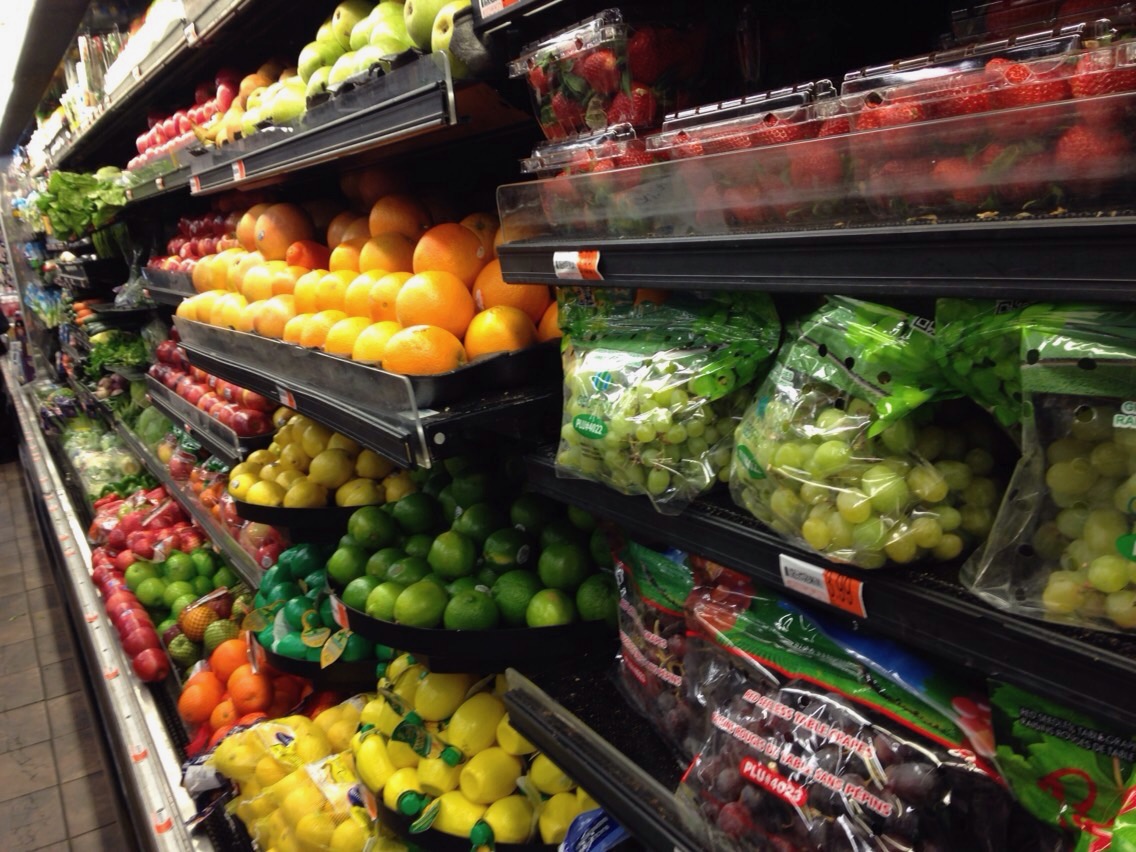
The residue calculator features 19 of the most popular fruits and veggies, and you can click on a man, woman, teenager, or child to see the number of servings one would have to consume.  For example, a child could eat 181 servings or 1,448 strawberries in a day and still not have any effects from residues.  Apples?  A child could eat 340 apples in a day.  Kale?  7,446 servings!

These government reports and the UC toxicological analysis underscore the diligence of fruit and vegetable farmers when it comes to the judicious use of pesticides approved for organic and conventional crops.

“… Growers and farmers are adept at following our comprehensive rules to ensure produce is grown to the highest pesticide standards,” said Brian Leahy, Director of the California Department of Pesticide Regulation.

“Based on the PDP data, consumers can feel confident about eating a diet that is rich in fresh fruits and vegetables,” concludes the USDA report.

Read, learn, choose but eat more organic or conventional fruits and veggies for better health and longer life.
2021-05-12T11:01:50-07:00January 11th, 2019|

California Crop Values for 2017 Released by CDFA

Full Statistics Now Available For the Crop Year 2017

News Release

The California Agricultural Statistics Review for crop year 2017 has been released. It reports that California’s farms and ranches received more than $50 billion in cash receipts for their output. This represents an increase of almost 6 percent in crop values compared to 2016.

California’s agricultural abundance includes more than 400 commodities. Over a third of the country’s vegetables and two-thirds of the country’s fruits and nuts are grown in California. California is the leading U.S. state for cash farm receipts, accounting for over 13 percent of the nation’s total agricultural value. The top producing commodities for 2017 include:

Dairy Products, Milk — $6.56 billion

Grapes— $5.79 billion

Almonds— $5.60 billion

Strawberries— $3.10 billion

Cattle and Calves — $2.53 billion

Lettuce— $2.41 billion

Walnuts— $1.59 billion

Tomatoes— $1.05 billion

Pistachios— $1.01 billion

Broilers— $939 million

Complete Report at this Link:

https://www.cdfa.ca.gov/Statistics/PDFs/2017-18AgReport.pdf

2019-01-10T15:52:42-08:00January 10th, 2019|

CDPR: 96% of Produce has No Residue Or Far Below EPA Levels

CDPR Releases New Residue Results

News Release

Recently, the California Department of Pesticide Regulation (CDPR) released its 2017 Pesticide Residues in Fresh Produce report. During its 2017 survey, CDPR found 96 percent of all samples had no detectable pesticide residues or residues were below levels allowed by the Environmental Protection Agency (EPA).

The CDPR report complements the recently released United States Department of Agriculture’s (USDA) Pesticide Data Program results which found 99% percent of the foods sampled had no detectable residues or residues were well below EPA tolerances. The Federal Food and Drug Administration (FDA) also conducts pesticide residue sampling.  FDA results mirrored the USDA’s.

The FDA, USDA and CDPR reports all concluded that these residue results should provide consumers with confidence about the safety of eating fruits and vegetables.

All three government reports garnered very little attention. However, this is reassuring food safety information that consumers should know. Instead, they often receive inaccurate assertions about residues carried by activist groups promoting one production method over another.

The Alliance for Food and Farming supports consumer choice by providing science-based facts to help them make the right shopping decisions for themselves and their families. Whether they choose organic or conventional produce, consumers should know that when it comes to residues, both production methods yield safe produce that can be eaten with confidence.


2021-05-12T11:05:06-07:00January 7th, 2019|

Citrus Growers Prepare For Sub Freezing Temps

Central Valley Citrus Growers Prepare for Cold Weather 

News Release

Central Valley citrus growers are anticipating subfreezing temperatures over the weekend. Forecasts show colder temperatures throughout the Valley Friday evening through Sunday morning, with the coldest areas expected to dip into the upper 20s and possibly the mid-20s.

Growers are prepared to implement frost protection measures if temperatures drop below freezing. This includes the use of irrigation water and wind machines to elevate grove temperatures by 3 to 5 degrees, thus mitigating the potential for frost to occur.

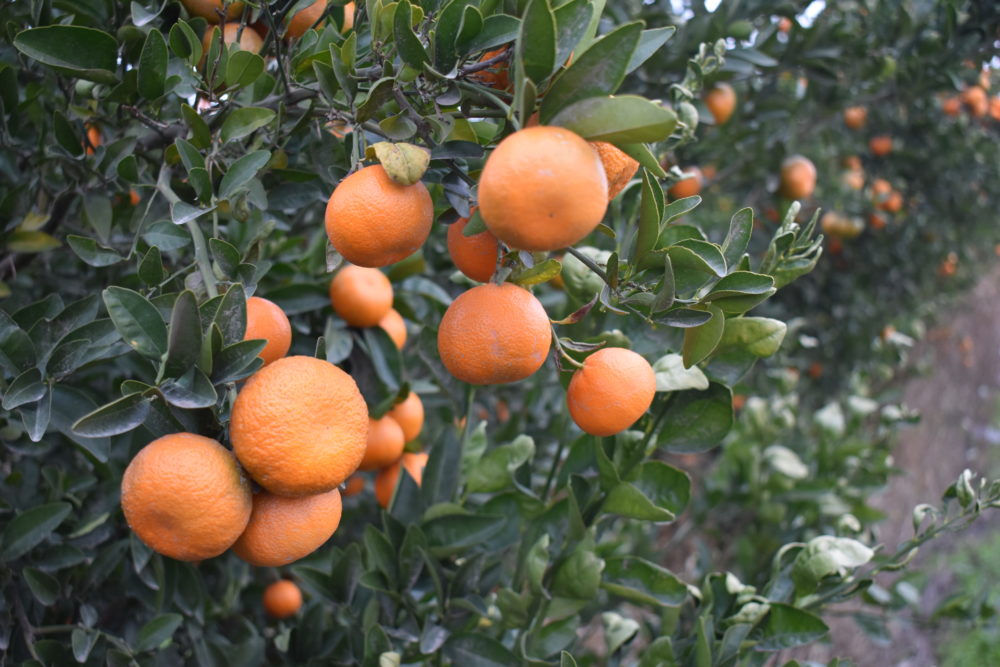
Generally, navel varieties can tolerate temperatures as low as 27 degrees without risk for damage, whereas Mandarin varieties tend to be susceptible to damage at temperatures below 32. The key factor is the duration of time at or below these thresholds. The potential for damage increases when cold temperatures persist for several hours.

At this time, forecasts do not suggest a critical freeze event will occur this weekend; however, growers will certainly be watching the temperature closely and activating freeze precautions as necessary.

According to the 2017 county crop report data, 90 percent of California’s commercial citrus crop is grown in Madera, Fresno, Tulare, and Kern counties. This represents a total crop value of $3.1 billion. Statewide, citrus is a $3.8 billion crop.

2018-12-28T16:41:22-08:00December 28th, 2018|

Table Grape Shipments Soar

California Table Grape Industry Continues Record-Breaking Shipping Season

News Release

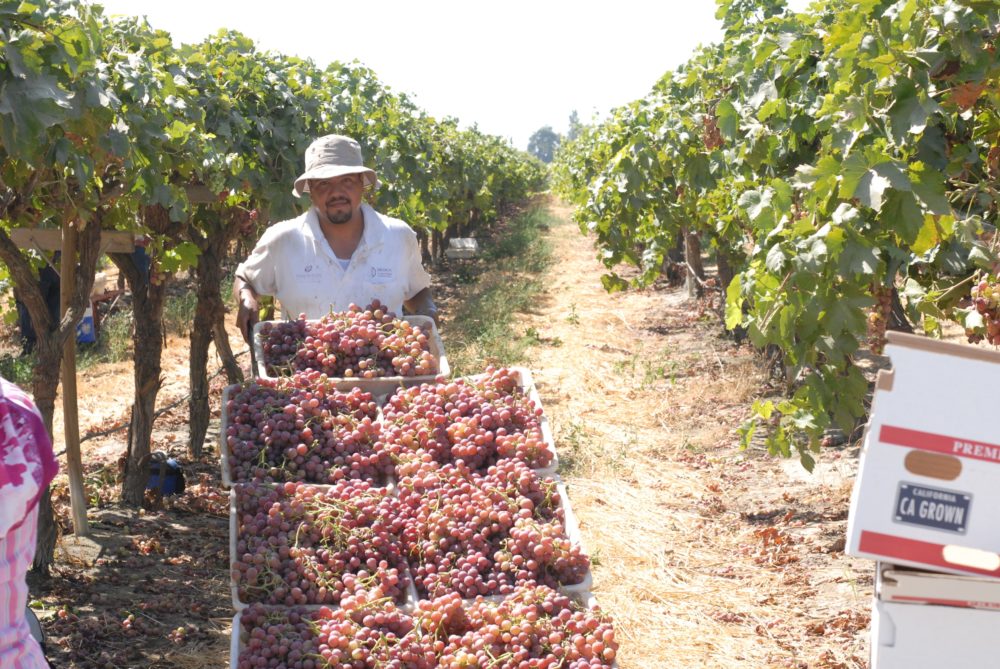
California table grape growers shipped more than 27.7 million boxes into the worldwide marketplace from October 13 to November 30, the highest amount ever for the time period, according to the United States Department of Agriculture (USDA).

The previous seven-week shipment record during the same time period was set in 2013. Earlier this season, the five-week shipping record for the time period between September 8 through October 12 was broken.

The three-month period of September 1 to November 30 set another record with over 55 million boxes of grapes shipped—an all-time high, according to USDA, beating the previous record set in 2013 for this time period.

According to Kathleen Nave, president of the California Table Grape Commission, an aggressive fall and winter promotion program continues, with shipments expected to continue through the end of January.

2018-12-14T15:40:18-08:00December 14th, 2018|

USDA Purchases More Than $10 Million in California Table Grapes

Food Banks, Other Food Programs to Get Grapes as Part of Tariff Mitigation Program

New Release Edited By Patrick Cavanaugh

The United States Department of Agriculture (USDA) recently completed a purchase of more than 450,000 boxes of California table grapes as part of its tariff mitigation program.

California table grapes were included in the USDA Food Purchasing Program for the first time as part of the mitigation program because of the 53 percent tariff imposed on U.S. grapes by China.CA Table Grapes

According to the most recent USDA data, shipments of California grapes to China are down 42.2 percent in volume and 41.2 percent in value in 2018 compared to 2017.

“The 2018 season has been a tough one for table grape growers,” said Kathleen Nave, president of the California Table Grape Commission. “The tariffs on table grapes have been painful, but the real harm has been caused by the fact that tariffs on multiple competing commodities, such as cherries, stone fruits, and apples, caused more fruit of all kinds to be sold in the domestic market. The USDA purchasing program comes at a good time for table grape growers and is appreciated.”

Table grape suppliers interested in participating in the food purchasing program had to go through a rigorous process to become a USDA vendor and then if approved, submit bids in a competitive process. Multiple Valley companies were awarded the opportunity to supply California grapes to customers across the country.

The grapes will be distributed to food banks and other food programs around the country, starting in December.

2018-12-07T15:46:23-08:00December 7th, 2018|

California Farm Bureau Federation Honors Paul Wenger

Former CFBF President Paul Wenger Gets Distinguished Service Award

News Release From California Farm Bureau Federation

Citing his passion for agriculture, his tenacity, and his decades of service to Farm Bureau, the California Farm Bureau Federation presented its Distinguished Service Award to former CFBF President Paul Wenger. Wenger accepted the award during the organization’s 100th Annual Meeting last night in San Diego.

A third-generation farmer who grows almonds and walnuts on a family farm in Modesto, Wenger served as CFBF president from 2009 to 2017, ending his term after serving the maximum eight years in office. He has been a Stanislaus County Farm Bureau member since 1980, serving as county farm bureau president before being elected to the CFBF board and then as a statewide officer beginning in 1997, when he was elected the organization’s second vice president. Wenger also served on the American Farm Bureau Federation Board of Directors.

Current CFBF President Jamie Johansson described his predecessor as “tireless” in his work on behalf of the farm bureau and California agriculture.

“In his speech to our Annual Meeting last year, Paul reminded us that those who work the hardest, the longest, and invest the most are probably going to be successful. Although he was referring to Farm Bureau, the words certainly apply to Paul himself. He has remained actively involved in Farm Bureau and agriculture, and we look forward to his continued contributions,” Johansson said.

In nominating Wenger for the award, the Stanislaus County Farm Bureau pointed to his “lifetime in leadership roles in agriculture,” starting as a state Future Farmers of America officer in 1973, and cited “his passion for the industry and his tenacity to resolve problems and get things done.”

The Distinguished Service Award has been presented annually since 1953 to dedicated Farm Bureau volunteers from California. In addition to the award to Wenger, CFBF presented the Distinguished Service Award to longtime Yuba-Sutter Farm Bureau leader James Marler.

The California Farm Bureau Federation works to protect family farms and ranches on behalf of nearly 36,000 members statewide and as part of a nationwide network of nearly 5.6 million Farm Bureau members.

2018-12-06T16:04:58-08:00December 6th, 2018|

Mexican Fruit Fly Quarantine in Portion of Los Angeles County

Three Flies Detected in Long Beach

CDFA News Release

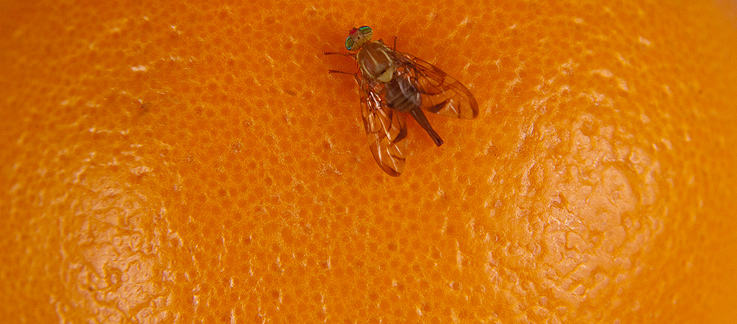
A portion of Los Angeles County, including the Los Angeles and Long Beach ports, has been placed under quarantine for the Mexican fruit fly following the detection of three flies, including two mated females, within the City of Long Beach. Mated females are significant because they indicate a breeding population that increases the risk of spread of this pest. CDFA is working collaboratively on this project with the United States Department of Agriculture (USDA) and the Los Angeles County Agricultural Commissioner’s Office.

The quarantine area measures 79 square miles, bordered on the north by CA-91; on the south by the Pacific Ocean; on the west by I-110; and on the east by Palo Verde Avenue. A link to the quarantine map may be found here: www.cdfa.ca.gov/plant/mexfly/regulation.html.

Sterile male Mexican fruit flies will be released in the area as part of the eradication effort. The release rate will be approximately 325,000 sterile males per square mile per week in an area up to 50 square miles around the infestation.  Sterile male flies mate with fertile female flies in the natural environment but produce no offspring. The Mexican fruit fly population decreases as the wild flies reach the end of their natural life span with no offspring to replace them, ultimately resulting in the eradication of the pest.  In addition, properties within 200 meters of detection sites are being treated with an organic formulation of Spinosad, which originates from naturally-occurring bacteria, in order to remove any mated female fruit flies and reduce the density of the population. Finally, fruit removal will occur within 100 meters of properties with larval detections and/or mated female detections.

The quarantine affects any growers, wholesalers, and retailers of susceptible fruit in the area as well as nurseries that grow and sell Mexican fruit fly host plants. Those businesses are all required to take steps to protect against the spread of the pest. At the Long Beach/Los Angeles ports, exports as well as imports may be impacted depending on specific circumstances. The quarantine will also affect local residents growing host commodities on their property. Movement of those commodities is not permitted. Residents are urged to consume homegrown produce on site. These actions protect against the spread of the infestation to nearby regions, where it could affect California’s food supply as well as backyard gardens and landscapes.

The Mexican fruit fly can infest more than 50 types of fruits and vegetables. For more information on this pest, please see a pest profile at: www.cdfa.ca.gov/plant/go/MexFly.  Residents who believe their fruits and vegetables may be infested with fruit fly larvae are encouraged to call the state’s toll-free Pest Hotline at 1-800-491-1899.

While fruit flies and other invasive species that threaten California’s crops and natural environment are sometimes detected in agricultural areas, the vast majority are found in urban and suburban communities.  The most common pathway for these invasive species to enter our state is by “hitchhiking” in fruits and vegetables brought back illegally by travelers as they return from infested regions of the world.  To help protect California’s agriculture and natural resources, CDFA urges travelers to follow the Don’t Pack a Pest program guidelines (www.dontpackapest.com).

2021-05-12T11:01:52-07:00November 7th, 2018|

EPA Blasts State’s Water Grab

EPA’s Acting Secretary Andrew Wheeler Visits The Valley With Congressman Denham

News Release Edited by Patrick Cavanaugh

Following his recent visit to the Valley, U.S. Environmental Protection Agency (EPA) Acting Administrator Andrew Wheeler sent a letter to the State Water Resources Control Board (SWRCB) in Sacramento, expressing concern over several aspects of the proposed Bay-Delta plan. A copy of the letter is available here.

In the letter, Wheeler questions the effectiveness of drastically increasing flows to improve native fish species when studies show several additional factors contribute to their dwindling populations—including predation from non-native species, which the Bay-Delta plan does not address.

“I’m pulling every available resource to stop the state’s dangerous water grab,” said U.S. Representative Jeff Denham (R-Turlock). “Both the Department of Interior and EPA have now directly weighed in against Sacramento’s plan to steal our water.”

Oakdale Irrigation District General Manager Steve Knell said: “Finally, EPA Administrator Wheeler’s letter has put common sense back on the table in addressing the State’s draconian Water Plan. Thank you Congressman Denham for your efforts in bringing Mr. Wheeler to our area to hear our concerns.”

“This State Water Plan will devastate water storage in our dams, drive river temperatures to lethal levels and destroy the very fish species we at the local level are trying to protect. Our rivers deserve better. We have the science to show this, we have provided it to the State, and they have ignored it. We continued to advocate that sending more water down the river and not addressing other stressors is not an answer, and the State has ignored that too.”

South San Joaquin Irrigation District General Manager Peter Rietkerk said: “On behalf of the South San Joaquin Irrigation District, I would like to thank you and your staff for bringing Acting EPA Administrator Andrew Wheeler to our region on October 11, 2018. The meeting was a success, and our message was clearly heard, evidenced by today’s letter from the EPA to the State Water Board. We’ve continued to lament the devastating impacts of State’s plan to local drinking and irrigation water supplies, and to protected fish species within our rivers, and it is great to know that the EPA has listened and will be looking for balance and accountability from the State Water Board if they choose to approve this outrageous plan.”

At Denham’s request, several key administration officials have visited the Central Valley and have been actively engaged in policies to fight Sacramento’s water grab and increase water storage for our farmers and residents. This is the latest result of many such actions.

On July 27, Bureau of Reclamation Commissioner Brenda Burman submitted a strongly worded comment expressing serious legal concerns with the latest Bay-Delta amendment. The comment followed a visit by U.S. Department of Interior (DOI) Secretary Ryan Zinke to our impacted reservoirs at request of Denham on July 20. Additionally, Zinke sent an internal memo to DOI agencies on August 17 requesting all Central Valley Project authorities be provided to him for disposal to combat the state’s plan.

Following Denham’s September 28 letter requesting executive action, the President signed a memorandum to bring more storage to the Valley and address hydroelectric relicensing at Don Pedro, requiring agencies to consider local plans like the Tuolumne River Management Plan developed by Modesto and Turlock Irrigation Districts. Denham previously released an animated video on NMFS Sacramento’s dangerous water grab.

As a follow-up to the presidential memorandum, Denham recently hosted a call with senior administration officials from the Bureau of Reclamation to discuss the details of the memorandum, next steps in the process, and allow irrigation districts and farm bureaus an opportunity to ask questions.

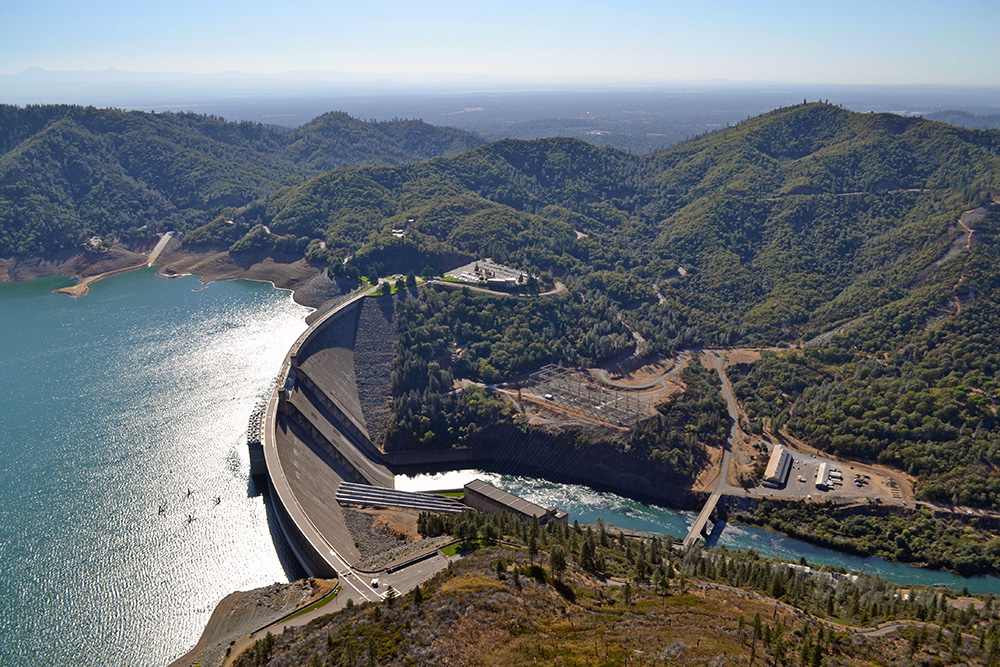
The president’s order supplements legislation authored by Denham to support innovative financing opportunities for water projects throughout the western United States. Denham’s New WATER Act (H.R. 434) passed and was signed into law as part of America’s Water Infrastructure Act of 2018 (WRDA). Eligible projects include new reservoirs, below ground storage projects, recycling and desalination projects. This legislation supports large projects like enlargement of Shasta Dam, construction of Sites Reservoir and Temperance Flat Dam, and expanding Los Vaqueros Reservoir.

2021-05-12T11:05:08-07:00November 5th, 2018|

President Signs Rep. Jeff Denham’s Water Storage Legislation

President signs Denham Water Storage Legislation

News Release Edited By Patrick Cavanaugh

 President Donald Trump signed into law recently legislation written by Rep. Jeff Denham (R-Turlock) to authorize financing of new water storage projects as part of America’s Water Infrastructure Act of 2018 (WRDA).

 “With the signing of this bill into law, we are bringing water home to the Valley,” Denham said. “I’ve been fighting since day one in Washington to build more water storage for our farmers and neighbors. Today, we celebrate future generations having access to the water they need and deserve.”

 Denham’s New WATER Act provides financing for water projects throughout the western United States, including new reservoirs, below ground storage projects, recycling, and desalination projects. For Sites Reservoir alone, this policy will save hundreds of millions of dollars in construction costs and significantly lower prices for water users.

Rep. Jeff Denham

In California and across the west, this means billions of dollars saved as we build the necessary infrastructure to capture the plentiful run-off from the Sierras, which can be used to irrigate the Valley and save for the dry years. During the rains of 2017, we saw how our inadequate storage quickly filled reservoirs, wasting water, and led to flooding and levee breaches—issues Denham secured language for in the WRDA bill.

Additionally, the bill enhances long-delayed and badly needed local flood protection for more than 50,000 Valley residents. Rep. Denham hosted the highest ranking civilian responsible for water infrastructure in the Army Corps of Engineers, Assistant Secretary of the Army for Civil Works Rickey “R.D.” James, in Manteca recently to ensure quick completion of ongoing construction and prioritization of the projects in the bill.

The Army Corps is responsible for managing these projects, and R.D. James saw firsthand how critical water infrastructure is in Stanislaus and San Joaquin County, including the levees near Manteca that were breached in 2017. These levees are currently being restored with federal funding.

To build upon these infrastructure improvements, additional Denham language in the WRDA bill makes additional levee authorizations in San Joaquin County eligible for federal resources to protect our communities. Denham also included language to expedite the feasibility study of the Mossdale Tract, or Reclamation District 17, which includes the French Camp veterans treatment facility.

2018-10-30T16:36:46-07:00October 30th, 2018|
Go to Top