Raley’s Wants More Fresh Produce

Raley’s Owner Mike Teel On California Farmers

By Patrick Cavanaugh, Farm News Director

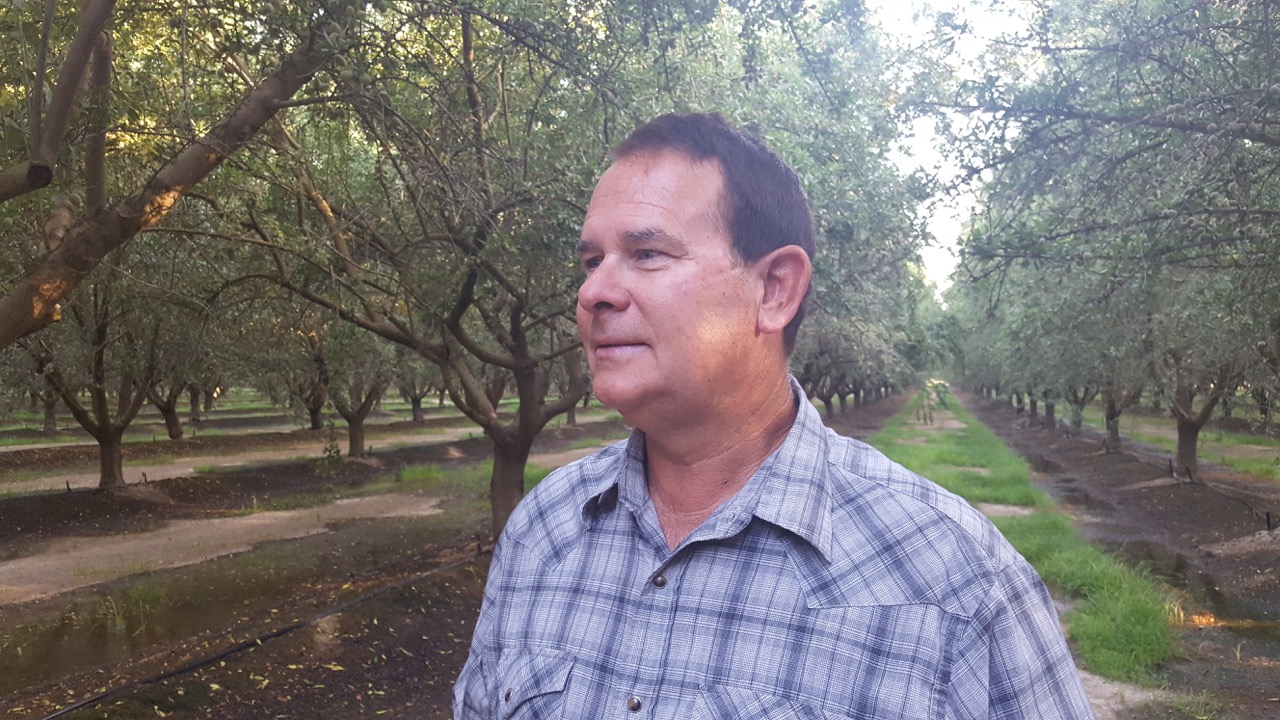
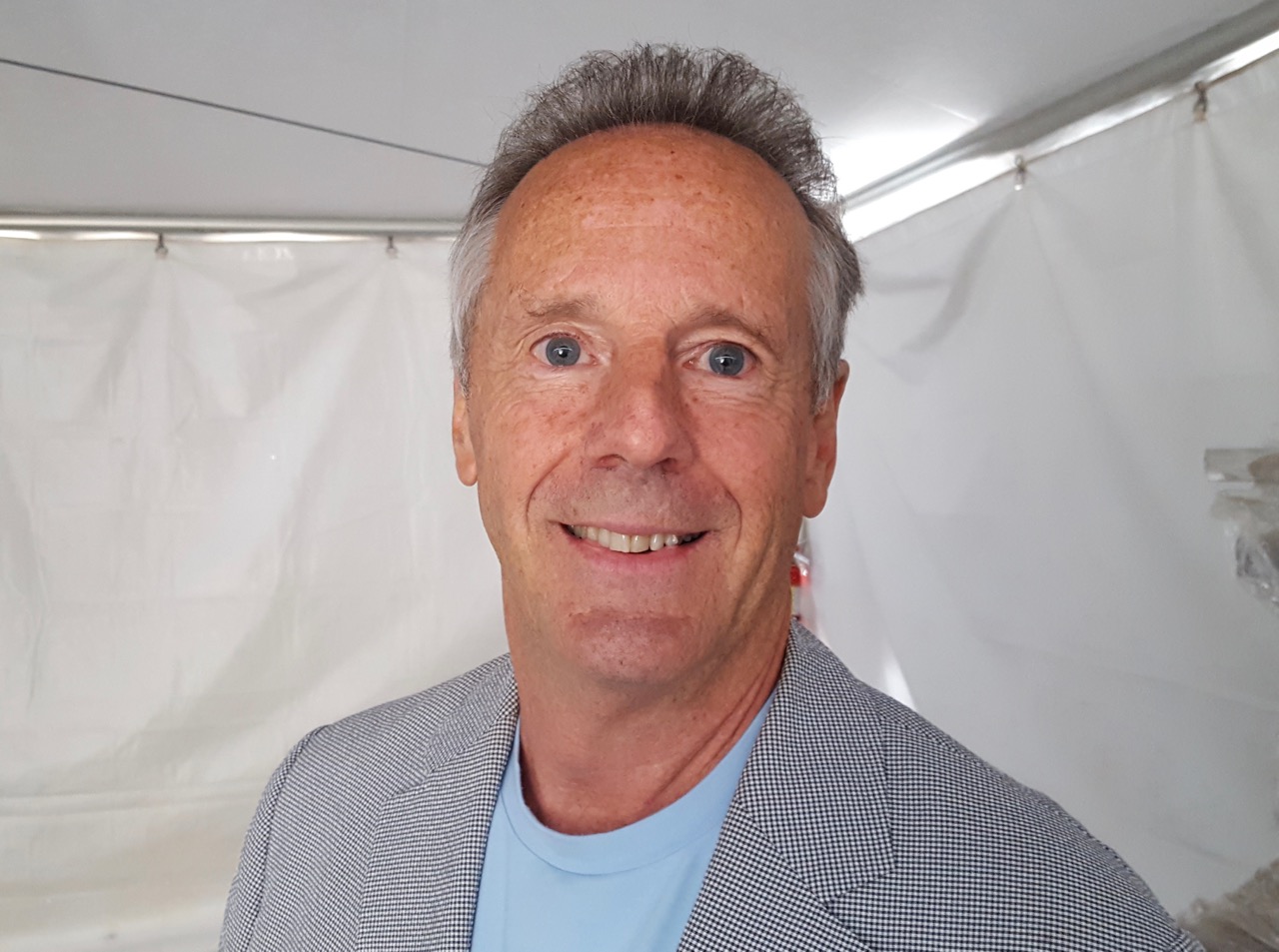
California Ag Today recently had an exclusive conversation with Mike Teel, the owner of the Raley’s Supermarket chain, which has 135 locations throughout California and Nevada. We asked him what he’s looking for in terms of the produce produced by farmers in California.

“We’re looking for fresh, and any new products that could be in development, because that’s what differentiates us from the rest of the competitors,” Teel said.

“You know, there are new products coming on, and while most of them are not in the produce and fresh arena, there are interesting ways to combine and bring fresh produce and different combinations for our consumers. We’re a great chain for that, because we’re not too big, but yet not too small,” Teel explained.

Teel told us that Raley’s being based in California does have an advantage in being close to the farming industry. “It does make it easier for us to get it into the market faster,” he said.

And Teel said that consumers want to know more about the produce they’re buying. “Today’s consumer wants to know where their food comes from, and who’s producing it,” Teel said.

“They want to have somewhat of a relationship, even if it’s just the knowledge of who they are, particularly if they’re a family business, and so we try and highlight that,” he continued. “We have great relationships with our producers.”

Teel added that consumers would like to see an image of the farmer on the package. “I think they want to see that. They want to have a connection with the source of their food, and so any way that we can convey that to our consumer, whether it is with photographs or information at point of sale, or highlighting them in an ad, where it be online or on television. I think it resonates with the consumer.”

2017-09-02T23:14:31-07:00August 18th, 2017|

BREAKING NEWS: John Duarte Settles TODAY Prior to Court Proceedings

By Patrick Cavanaugh, Farm News Director


Northern California farmer John Duarte spent years fighting the federal government after being fined for routine plowing on his wheat field which included protected wetlands. He attracted a nationwide army of conservative supporters who saw it as government overreach and hoped the Trump administration would order federal officials to back off.

But just before his trial was set to start Tuesday in U.S. District Court in Sacramento, Duarte settled, admitting no liability, but agreeing to pay $330,000 in civil penalty fines and another $770,000 for “compensatory mitigation,” in vernal pool mitigation credits.  

In a press release TODAY by John Duarte and Pacific Legal Foundation (PLF), John Duarte said, “This has been a difficult decision for me, my family, and the entire company, and we have come to it reluctantly. But given the risks posed by further trial on the government’s request for up to $45 million in penalties, and the catastrophic impact that any significant fraction of that would have on our business, our hundreds of employees, our customers and suppliers, and all the members of my family, this was the best action I could take to protect those for whom I am responsible.”

“John would have preferred to see this case through to trial and appealed the court’s liability ruling, which holds that plowing a field requires federal permission — despite the clear text of the Clean Water Act and regulations to the contrary,” said Tony Francois, senior attorney, PLF.  “John and his counsel remain concerned that legal liability for farming without federal permission undermines the clear protections that the Clean Water Act affords to farming and poses a significant ongoing threat to farmers across the nation.”

The court will hold a hearing in approximately 45 days to approve the settlement.  In the meantime, the trial that was to begin today has been canceled.

2017-08-15T19:24:36-07:00August 15th, 2017|

Supporting Temperance Flat to Increase Groundwater Recharge

Building Above Ground Water Storage Enables Groundwater Recharge

By Laurie Greene, Founding Editor

Dramatically helping to recharge groundwater storage is one of the major benefits of the proposal to build Temperance Flat Dam behind Friant Dam, located to the north and east of Fresno. The new dam would triple the storage that is currently available with Friant Dam. Mario Santoyo, the executive director of the San Joaquin Water Authority, is helping the organization prepare the package to submit to the Water Commission by the August 14 deadline.

“We will be making timed releases to various water districts and amenities that will have groundwater recharging basins,” Santoyo said. “First, we need storage and then some time to move above ground water to underground storage. This is a physics necessity and directly counters those who argue we should not build above ground infrastructure if we need only underground storage. Well, if you don’t have above ground water storage, you ain’t putting any below. It is as simple as that.”

Water in Friant-Kern Canal

Water in Friant-Kern Canal

“There are two water conveyances from Friant and [the proposed] Temperance Flat Dams: the Friant-Kern Canal – the longest of the two primary canals – and the Madera Canal. Friant moves water south to Bakersfield, and Madera conveys it north to Chowchilla.”

“We will have one of the strongest applications to receive monies,” said Santoyo, assuring that the water authority will receive the package on time.

Now this is important,” Santoyo stressed. “A new video, ‘Build Temperance Flat,’ is now on YouTube. The video aims to educate Californians on the importance of building Temperance Flat Dam.” Santoyo urges those who are on social media to send the URL: https://www.youtube.com/watch?v=f30o_dQNmn8  “to as many people as you can!”

2017-08-04T16:16:06-07:00August 4th, 2017|

Sharing Secrets to a Successful Bowl of Cherries

Weather and Pruning Make Life a Bowl of Cherries

By Laurie Greene, Founding Editor

Clark Goehring, a third generation Kern County farmer, produces cherries and almonds. He summarized his cherry harvested as “good compared to the other years when we have had rain. Some people in our area still had rain during harvest, but we were able to harvest and bring our cherries to market in good condition.”cherry tree

“Of course, it rained a lot this winter and spring, but you do not want rain when cherries are maturing on the tree; they don’t like rain.”

Goehring explained that when it rains beyond the point when cherries start coloring, they split, making them unmarketable. “But while it may take some rained-on cherries off the market, the price of the marketable fruit goes up,” he said, benefiting those growers who had a quality crop, like him.

Goehring’s farm workers train the cherry trees to keep them low—approximately 8 feet tall. “We have tried to have them bush out instead of being more of a central leader. Actually, it’s called Spanish Bush style or, in modified form, KGB.”

Kym Green Bush designed the KGB training method in Australia to use multiple leaders and have them fruit on the leaders themselves. KGB simplifies pruning so less experienced farm workers can learn the skill more easily. The trees are replenished every five years.

Goehring said the method saves money on the farm, cuts labor and increases workers’ safety because it requires no ladders and the harvest is quicker. Harvesting without ladders also gives Goehring an advantage of attracting farm labor over other orchards that require ladders.

“In California, if farm workers have their choice of picking your cherries without using ladders, which is usually piecework, or someone else’s crop with ladders, they are going to want to come to you,” he explained.

2017-08-02T16:14:04-07:00August 2nd, 2017|

Who Safeguards CA Farm Workers’ Rights? Part 4 – Motion to Disqualify ALRB Member Hall

ALRB Rejects Gerawan’s Motion to Disqualify Isadore Hall III

By Laurie Greene, Founding Editor

Our ongoing coverage of developments among United Farm Workers (UFW), Agricultural Labor Relations Board (ALRB), Gerawan Farming, Inc. and California farm workers chronicles the continuing, increasingly complex quagmire that masquerades as protecting California farm workers’ rights.

In short, after a series of legal volleys between Gerawan Farming and ALRB this past spring, the ALRB, again, refused to disqualify ALRB Member Isadore Hall III, former state senator (35th District, D-Compton), from participating in specific Gerawan legal cases on the basis of alleged pro-UFW bias.

In legal terms, ALRB issued an administrative order on June 9, 2017, denying Gerawan Farming, Inc.’s May 23, 2017 motion for reconsideration of request to disqualify Isadore Hall III from participating in specific case deliberations and decisions regarding Gerawan Farming, Inc.  Likewise, ALRB also denied Gerawan’s request for a stay of the proceedings pending resolution of Mr. Hall’s participation.

BACKGROUND

Condensed Early History

The UFW was certified as the bargaining representative for Gerawan’s agricultural employees in July 1992, after a 1990 election. After one preliminary negotiating session in February 1995, the UFW disappeared for almost two decades, having never collected dues, negotiated for a wage increase, attempted to bargain for a contract or filed a single grievance on behalf of Gerawan employees during their abandonment, according to an April 17, 2017, Gerawan news release.

In 2013, the UFW  invoked a controversial 2002 Mandatory Mediation and Conciliation (MMC) law that allows the ALRB to draft and impose a “contract” on the employer and employees against their will. UFW also proposed that Gerawan employees pay 3% of their wages to the UFW or be fired. Fewer than 1% of the current Gerawan workforce voted in the 1990 election, and many current employees were not even born when that election took place.

California Gerawan farm workers harvesting tree fruit

California farm workers harvesting tree fruit

The majority of employees twice asked ALRB for an election to decertify the UFW. At the ALRB’s request, the Fresno Superior Court intervened and supervised the decertification petition processthe first time in ALRB history that a court oversaw an ALRB election.

On November 5, 2013, thousands of Gerawan workers cast secret ballots to decide whether to decertify the UFW. The ALRB impounded the ballots, which remain uncounted to this date in an undisclosed (possibly insecure) location.


Current History – 2017

Appointment of Isadore Hall III to ALRB

In his January 13, 2017, letter of resignation to Governor Brown as ALRB Chairman, William B. Gould IV stated that the Agricultural Labor Relations Act [ALRA or “Act”] “is now irrelevant to farm workers, in particular, because, for the most part, they are not aware of the provisions, procedures, and rights contained in the law.”

“I have pointed out [in several speeches] that only one representation petition has been filed during the 34 months of my Chairmanship,” Gould continued. “More than 99% of the agricultural workforce appears to be unrepresented and the instances of unfair labor practice charges and invocation of the Mandatory Mediation and Conciliation Act (MMC) are few and far between.”

William Gould, IV, former ALRB chair

William Gould, IV, former ALRB chair

“Regrettably, though the Board adopted the proposed rule 14 months ago for worker education about the Act’s features, the rule has languished in the bowels of state bureaucracy for the past 14 months. My view is that this long delay is substantially attributable to the fact that the ALRB, unlike the NLRB, is not a standalone, independent administrative agency.”

Also on January 13, 2017, Governor Brown designated Genevieve Shiroma as Chair of the ALRB, where she had served as a member since 1999, an appointment that did not require Senate confirmation. Likewise, Governor Brown appointed Isadore Hall III, and the California Senate confirmed his appointment, despite Hall’s public history of pro-UFW activity and endorsements and allegations that he threatened farmers who opposed his nomination.


Agricultural Community Responds to Hall’s Appointment

In Farmers Deserve a Balanced Ag Labor Board,”a letter published in the Sacramento Bee on February 23, 2017 by George Radanovich, (president of the California Fresh Fruit Association), Joel Nelsen (president of California Citrus Mutual) and Tom Nassif (president of Western Growers Association), the authors explained, “The purpose of the Agricultural Labor Relations Act (ALRA) was to bring about a sense of justice and fair play during a tumultuous time in the farm fields of California in 1975.”

“When the ALRB was formed in 1975,” the authors stated, “it was with the understanding that membership would consist of two members representing labor, two representing agriculture, and one public or neutral member. Instead, the board has become one of the most contentious, lopsided administrative boards ever assembled by the state of California. The recent resignation of Chairman William Gould IV and his prompt replacement by former state Sen. Isadore Hall, D- Compton, only further illustrate this imbalance.”

Tree fruit farm worker in California.

Tree fruit farm worker in California.

In place of conducting outreach to all affected stakeholders, including agriculture, “in a matter of 48 hours, Gov. Jerry Brown appointed a termed-out state senator and failed congressional candidate who has no labor law background whatsoever but with strong ties to the UFW.”

Hall’s UFW ties were listed as “financial support by the UFW, personal ties with UFW President Arturo Rodriguez and raising the union banner while marching with the UFW. While a state senator, Hall was the principal co-author of two UFW-sponsored bills and voted in favor of two other bills that would make it easier to force ALRB-written contracts on farmers and workers. These close ties should disqualify him from the position where he will judge UFW issues almost daily.”

“There is no denying that the ALRB’S recent decision to prevent the disclosure of the November 2013 election results, from the high-profile decertification fiasco of Gerawan Farming of Fresno was to cover up the fact that most farm workers don’t want to unionize.”

“Today, California farm workers are protected by the strictest labor laws in the nation, and they decline to unionize because they value a good employer over a union. Brown should recognize this and rewrite the ALRA to guarantee employer representation on the board. California farmers deserve better than a lopsided Agricultural Labor Relations Board.” 


ALRB Decides Gerawan Negotiated “in Bad Faith”

On April 14, 2017, ALRB Administrative Law Judge (ALJ) William Schmidt issued an interim decision finding that Gerawan committed an unfair labor practice by refusing to negotiate “in good faith” with the UFW. Essentially Judge Schmidt contended, “Gerawan engaged in collective bargaining negotiations with the UFW with no intention of reaching an agreement covering the wages, hours, and other terms and conditions of employment for the employees in the collective bargaining unit.”

According to David Schwarz, counsel for Gerawan Farming, “This decision was riddled with legal and factual errors. The most glaring of these errors was the fact that ALJ Schmidt found that Gerawan failed to negotiate when it had already been ordered to [follow] a process [MMC] where traditional give-and-take negotiation had been replaced by government-imposed forced contracting.”

According to an April 17, 2017 Gerawan newss release, “The so-called MMC procedures are neither consensual nor voluntary. It is forced contracting. The ALRB tells the employer what wages to pay, what employees to hire, or fire, or promote, and what portion of the employees’ salary will be turned over to the union. The employer may not opt out and the employees are not given the choice to ratify or reject the so-called contract that will be forced on them, even if there are provisions detrimental to them.”

“There is a fundamental – and constitutional – difference between consensual bargaining and state-compelled contracting,” said Dan Gerawan, president and CEO of Gerawan Farming. “The ALJ obliterates this distinction.”

Gerawan added that MMC does not facilitate negotiations. Rather, it is an imposed agreement by force of law and Gerawan was compelled to abide by it.

Schwarz explained, “Per the ALRB’s own regulations, MMC kicks in only after the Board has certified that further negotiation between the parties would be futile.”

At that point, according to Schwarz, a government-appointed arbitrator steps in, hears evidence from each party, drafts a CBA (or collective bargaining agreement), which the Board approves and imposes on the parties by force of law. Since there is no place for negotiation in this process, Schwarz contends there is no logical or legal basis for ALJ Schmidt to conclude that Gerawan’s conduct during MMC could justify his finding that Gerawan failed to negotiate in good faith with the UFW.


Gerawan Files Motion to Disqualify Member Hall from participating in “Bad Faith” Negotiating Case
Isadore Hall III UFW flag ALRB

Isadore Hall III with UFW flag prior to his appointment to the ALRB.

On April 28, 2017, Gerawan Farming, Inc. filed a Motion to Disqualify Board Member Isadore Hall from participating in the deliberations in the case above based on documented “sweeping prejudicial” statements Member Hall made against Gerawan.

“Our DQ motion was very compelling,” Dan Gerawan said. “Hall marched specifically against us and our employees and received an endorsement from UFW in return. It’s ridiculous that he was assigned to a job where 90% of his work will be to adjudicate UFW-related issues, and half of his work will be Gerawan-related.”


ALRB Rejects Gerawan’s Motions to Disqualify ALRB Member Hall and to Request a Stay from Participating in “Bad Faith” Negotiating Case

On May 18, 2017, the ALRB rejected Gerawan’s motions to disqualify ALRB member Isadore Hall and to request a stay in order to resolve the motion to disqualify.

“Hall’s disqualification would leave the ALRB without a current valid quorum of three members to hear the case,” Schwarz said, “thus lacking the statutory power to act. The Governor can resolve this issue by simply doing what the ALRA requires him to do –  appoint two additional ALRB members, thus bringing the Board to its statutorily-requisite composition, which is five members.”


Gerawan Files Motion for Reconsideration of the Board’s Order Denying Motion to Disqualify Member Hall

On May 23, 2017, Gerawan filed a Motion for Reconsideration of the Board’s Order Denying Motion to Disqualify Member Hall, repeating its request for a stay of the proceedings pending resolution of the motion.

“Gerawan filed this motion for reconsideration both to correct serious legal errors in the Board’s initial decision,” Schwarz said, “and to bring to light new evidence regarding the identity of an individual who participated in a conversation with Mr. Hall in which Mr. Hall stated that he was going to ‘get’ Gerawan once he was a member of the Board. This individual, Mr. Shaun Ramirez, provided a declaration in support of Gerawan’s first motion to disqualify Member Hall. However, Mr. Ramirez and his employer, concerned that the Board (or Mr. Hall) might retaliate against them for speaking out, initially asked that Mr. Ramirez’s identity remain confidential.”

“The Board initially refused to consider Mr. Ramirez’s declaration – precisely because he asked that Gerawan not reveal his name for fear of retaliation. After the Board denied Gerawan’s motion to disqualify Mr. Hall, Mr. Ramirez allowed Gerawan to file an unredacted version of his declaration with this motion for reconsideration. This declaration set out in great detail Mr. Ramirez’s interactions with Mr. Hall and Mr. Hall’s statement, in reference to Gerawan, ‘I am going to get their ass.’”


ALRB Denies Gerawan’s Motion For Reconsideration to Disqualify Board Member Hall from Deliberations in this Case

On June 9, 2017, ALRB denied both Gerawan’s motion for reconsideration to disqualify Board Member Hall from deliberations in the case and Gerawan’s request for reconsideration of an immediate stay of the proceedings.

“As discussed,” Schwarz said, “Gerawan filed a motion for reconsideration with an unredacted version of Mr. Ramirez’s declaration. The Board again refused to consider Mr. Ramirez’s detailed account of his conversation with Member Hall. The Board took the position that it was under no requirement to consider such evidence in a motion for reconsideration, as the declaration was not ‘newly discovered’ or ‘previously unavailable.’ The Board discounted Mr. Ramirez’s reasons for desiring anonymity, and disregarded the merits of his sworn statement, without explaining why the revelation of his identity did not require it to reconsider the basis [the anonymity of the declarant] for disregarding it in the first place.”

“Of equal significance is that Mr. Hall participated in deciding his own disqualification motion,”  Schwarz added. “This violates a basic rule of due process and long-standing Board precedent that a member accused of bias cannot decide his own disqualification motion. Instead, Member Hall offered his own statement that he was not biased against Gerawan, albeit without denying or affirming the truth of Mr. Ramirez’s declaration.”

“Unlike Mr. Ramirez,” said Schwarz, “Member Hall’s ‘concurring’ opinion was not under oath.”

In the official ALRB Decision, Hall wrote, “I reject the claims of bias leveled against me by Gerawan and decline to recuse myself from participation in the deliberations in this case.”

Next Steps

In reaction to the Board’s refusal to disqualify Member Hall, Schwarz said, 
“Gerawan will appeal the Board’s decision. We are confident that this unprecedented and unconstitutional decision will not stand.”


Featured photo:  Isadore Hall III marching with UFW prior to ALRB appointment.

Who Safeguards CA Farm Workers’ Rights? Part 5


Resources

Farmers Deserve a Balanced Ag Labor Board,” by George Radanovich, Joel Nelsen, and Tom Nassif, Sacramento Bee, February 23, 2017.

Mandatory Mediation and Conciliation


2019-12-25T15:29:53-08:00July 21st, 2017|

Family Tree Farm Sees Good Season Despite Labor Laws

Family Tree Farm Rising to Meet Challenges

By Melissa Moe, Associate Editor

New state labor regulations continue to make daily operations more difficult for California farmers. With these increasing costs, it is difficult to stay competitive in a global market. Family Tree Farms is a family owned operation out of Reedley. Daniel Jackson of Family Tree Farms said that they’re doing well even, with the new labor laws that are making business more difficult for California farmers.

“The regulations grip us around the throat a little bit, and they’re getting tighter and tighter every year. We’re just trying to keep air in our lungs. To get creative, we have to find ways to be better farmers. To produce more yield and to do it more affordably with less labor. We have to be creative on our cultural practices and how we do that so that we can survive in the marketplace. We’re trying to make it work, but at the end of the day, it seems like every time you solve an obstacle three more pop up,” Jackson said.

Even with these new regulations, Family Tree Farms has been doing well. They have risen up to meet these new challenges, and the year ahead looks promising.

“The labor has been better this year, and I can’t really give the reason why. It wasn’t a great pollenization year, so crops are a little bit lighter as far as the fruits that are on the tree or actually having workers available. That could change as more crops start to come on as the blueberry harvest continues. Cherry seems like they’ll be wrapping up around here as grapes kick into gear later on in another few weeks, so we may run into those challenges as the season goes on, but right now, so far so good,” Jackson said.

2017-06-19T12:50:39-07:00June 19th, 2017|

New Estimates on Broccoli and Lettuce Production Costs

Broccoli and Lettuce Production Cost Studies Released by UC ANR

News Release

New studies with sample costs to produce and harvest iceberg lettuce and broccoli for fresh market in the Monterey, Santa Cruz and San Benito counties have been released by UC ANR Agricultural Issues Center and UC Cooperative Extension. Vegetable growers may find these useful for estimating their own production costs and potential returns on investment.

“These studies have an expanded section on labor, which includes information on California’s new minimum wage and overtime laws,” said Laura Tourte, UC Cooperative Extension farm management advisor in Santa Cruz, Monterey and San Benito counties, who co-authored the study.

The analysis is based on a hypothetical well-managed farming operation using practices common to the Central Coast Region. The costs, materials and practices shown in this study will not apply to all farms. Growers, UC ANR Cooperative Extension farm advisors and other agricultural associates provided input and reviewed the methods and findings of the study.

Both studies assume a farm operation of 1,500 non-contiguous acres of rented land. The hypothetical iceberg-lettuce farm has 250 acres planted to iceberg lettuce. The lettuce is hand-harvested into 42-pound cartons containing 24 film-wrapped heads. The hypothetical broccoli farm has 500 acres planted to broccoli. The broccoli is hand-harvested into 21-pound bunch cartons.  On each farm, the remaining acreage is assumed to be planted to other cool season vegetable crops. 

The authors describe the assumptions used to identify current costs for production material inputs, cash and non-cash overhead. Ranging analysis tables show net profits over a range of prices and yields. Other tables show the monthly cash costs, the costs and returns per acre, hourly equipment costs, and the whole farm annual equipment, investment and business overhead costs.

Free copies of “Sample Costs to Produce and Harvest Iceberg Lettuce in the Central Coast – 2017” and “Sample Costs to Produce and Harvest Broccoli in the Central Coast – 2017” and other sample cost of production studies for many commodities are available. To download the cost studies, visit the UC Davis Department of Agricultural and Resource Economics website at https://coststudies.ucdavis.edu.

The cost and returns studies program is funded by the UC Agricultural Issues Center and UC Cooperative Extension, both of which are part of the UC Division of Agriculture and Natural Resources, and the UC Davis Department of Agricultural and Resource Economics.

For additional information or an explanation of the calculations used in the studies, contact Jeremy Murdock of the Agricultural Issues Center University at (530) 752-4651, Richard Smith, UC Cooperative Extension advisor in Monterey County, at (831) 759-7357 or Tourte at (831) 763-8005.

2017-06-08T14:59:43-07:00June 8th, 2017|

Who Safeguards California Farm Workers’ Rights? Part 3 – Bargaining in Bad Faith

What Does “Bad Faith” Mean?

By Laurie Greene, Founding Editor

Our ongoing coverage of developments among United Farm Workers (UFW), Agricultural Labor Relations Board (ALRB), Gerawan Farming, Inc. and California farm workers chronicles the continuing, increasingly complex quagmire that masquerades as protecting California farm workers’ rights.

As previously published, ALRB Administrative Law Judge William L. Schmidt issued a decision on April 14 in favor of the UFW, finding Gerawan violated labor law by negotiating a collective-bargaining agreement with UFW “in bad faith—commonly called “surface bargaining”—in the eight-month period from January 2013 through August 2013.

“Candidly,” said Anthony Raimondo, president and owner of Raimondo & Associates and attorney for Silvia Lopez, the Gerawan Farming employee and petitioner to decertify the UFW from representing Gerawan farm workers, “it is not surprising to me at all that this type of decision went against the company, because this ALRB has been in the pocket of the [UFW] … this whole time.”

“This is very much what happened to the workers in the [decertification] election case,” Raimondo said, “when the ALRB refused to count the ballots. They slammed the workers for exercising their right to free speech—to protest. They attacked the workers for engaging in actions of civil disobedience, and they denied the workers the right to vote, essentially, by refusing to count the ballots.”

On March 20, the UFW filed a claim alleging that Gerawan violated the ALRA by “proposing and insisting on” the exclusion of the farm labor contractor (FLC) employees from the terms of any collective bargaining agreement the parties might conclude.

“What the union was claiming here,” Raimondo explained, “is that Gerawan had made a contract proposal, as I understand it, that said that the employees that it receives from farm labor contractors would be excluded from the terms of the collective bargaining agreement. According to both the UFW and the Agricultural Labor Relations Board, making such a proposal alone represents “bad faith bargaining.”

Raimondo Bad Faith“Bad faith bargaining is when you bargain without the intention to make an agreement,” Raimondo said. “In this case, for example, I don’t see how that could be possible in the Gerawan case because I’ve seen UFW contracts from the past that did exactly that—they agreed to exclude labor contract farm employees.”

“It is very common,” Raimondo explained. “I negotiate collective bargaining agreements all the time. It’s very common when you’re negotiating a collective bargaining agreement to look at other contracts in the same industry, with the same union, to get an idea of what they’ve agreed to in the past. I do not know how recently they’ve done it, but in past years, I have certainly seen contracts that the union has agreed to, where labor contractor employees were excluded.”

Among the mandates issued by ALRB Administrative Law Judge William L. Schmidt in his April 14 decision on Case 2013-CE-010-VIS is a requirement that Gerawan Farming cease and desist from persisting in its refusal to bargain with the UFW about the wages, hours and other terms and conditions of employment for those members of the above bargaining unit who are employed by farm labor contractors.

“I personally am very skeptical of this decision,” Raimondo commented. “It seems to me to be a stretch of the whole idea of bad faith bargaining, which is bargaining without the intention to reach an agreement, especially since what we’re talking about here is a proposal. But the fact that an administrative law judge of the ALRB made a decision in favor of the UFW does not shock me at all.”

“It’s difficult for me to see how proposing something that a union had agreed to in another contract, with another employer, would trigger an accusation of ‘bad faith bargaining.’ I would be surprised if this stands up an appeal, but to me, it’s most indicative of what we’ve seen from the ALRB over the last few years, and it’s likely to continue. The ALRB is no longer an objective, independent state agency that enforces the law. This is an arm of the United Farm Workers Union, whose mission is to save this obsolete union from the consequences of its own failures.”

“Biased as the original election decision was against the farm workers, the one thing that really stood out to me, even for this biased judge,” Raimondo said, “is even the ALRB admitted that the movement in favor of decertification of the UFW was not started by Dan Gerawan. It was a movement that started organically among the workers; they organized themselves to take the action that they wanted to take.”

“The fact is,” Raimondo continued, “these workers had their minds made up. They were disgusted by the UFW’s absence, they were disgusted by the union trying to force a contract on them, without even talking to them about it first. When they found out that this contract was going be shoved down their throats, they organized themselves and they fought back. The ALRB wants to discredit the entire movement that exists amongst the Gerawan workers.”

ALRB Notice to Gerawan Employees

ALRB Notice to Gerawan Employees

“When you have a law that is designed to grant farm workers their voice, and their right to self-determination, as we have with this agricultural labor relations act, it seems to me to be an abomination, when you can acknowledge that workers organize themselves to be heard, and then you deny them that voice because of something that their employer did. What control do the workers have over their employer? The workers are now responsible for things that the employer does, that cost them their right to vote?”

“There is no basis in the law for this idea that the entire process is somehow tainted in a way that invalidates the election,” Raimondo said. “If you read the Agricultural Labor Relations Act and the case law, the law is very clear that when an election is held, the only time that we reverse the outcome of an election, or ignore the outcome of the ballots, is when there has been misconduct by a party that actually affected the outcome of the election.

“You can go back to cases from the ’70s and ’80s,” Raimondo continued, “where the UFW had protestors out there at the polls, and employers complained that that affected or influenced the workers, or intimidated them in some way. Unless the employer could show that there was some actual effect on how the workers voted—that affected the outcome of the election—the election would be upheld.”

“No one in this case has ever produced the slightest shred of evidence that anything that Gerawan did or said ever affected how these workers voted, or how they felt about the union. This idea of a so-called ‘tainted election,’ is something that was invented in the last few years by ALRB judges. It doesn’t appear in the law. This whole process has been biased.”

“In fact, more than anything else, the thing that shaped how the farm workers felt about the union was the 17 years when the union wasn’t there. The union has never had to defend their absence from Gerawan employees because the ALRB never forces them to answer for it. The ALRB considers that to be irrelevant.”

“Yet, they slander Gerawan. They discredit the workers’ efforts to organize themselves. They want to discredit the entire movement that exists amongst the Gerawan workers. They deny the workers the right to vote, but they completely ignore the fact that the union failed in its most fundamental purpose, which is to represent workers.”

Featured Photo: Attorney Anthony Raimondo


Who Safeguards CA Farm Workers’ Rights? Part 4 – Motion to Disqualify ALRB Member Hall

2018-05-07T01:03:23-07:00May 26th, 2017|

Help Lobby To Veto SB1

SB1 Proposed Taxes & Fees Are Detriment to Farmers

By Jessica Theisman, Associate Editor

SB1 was recently passed by the legislature in California. This bill affects everyone in the state and increases several taxes and fees to raise the equivalent of roughly $52.4 billion over 10 years in new transportation revenues. It is not likely that the governor will veto the bill. We spoke with Anja Raudabaugh, CEO of the Western United Dairymen about how this bill will affect California’s agriculture.

This bill proposes a 20 percent increase in fuel taxes, which is something that farmers cannot afford, especially the dairy industry. “As you know, we cannot pass on our costs to our consumers, so adding another regulatory cost of production is incredibly hurtful and harmful,” Raudabaugh said.

Western United Dairymen continues to lobby on a nosb1.com campaign. They are asking the governor to veto it, although it is highly likely not to occur given that this is his bill. “This is his policy coalition, his desire to tax the constituents in California to their grave,” Raudabaugh said.

Starting November 1, SB1 will increase the excise tax on gasoline by 12 cents per gallon and the tax on diesel fuel by 20 cents per gallon. The bill also creates a new annual transportation improvement fee (TIF) beginning January 1, 2018. This is based on the market value of your vehicle. This fee will range from $25 to $175. SB1 also creates the road improvement fee of $100 per vehicle for zero emission vehicles starting in 2020 for model year 2020 and later.

Western United Dairymen are asking that if you have not filled out a nosb1.com petition that you do so, because they are using it to geo-track the information and essentially target the areas that are subject to vulnerability in the upcoming 2018 election. It is systemized so that when you enter your zip code, it goes directly to your legislator, either Assembly, Senate or both.

“We can actually see then which counties in California using some voter referencing material are more inclined to hate the gas tax,” Raudabaugh explained.

SB1 is not just targeting people who drive gas and diesel vehicles. Electric vehicles will also be targeted and will receive new fees.

“What’s more outrageous is that there are no guarantees that it will actually fix our roads. None whatsoever,” Raudabaugh said.

There is a ballot measure that was negotiated as a result of SB1 so that several key Silicon Valley Assembly members would vote for the bill. “To actually suggest that you would need a ballot measure to ensure that the funds do that, at least 20 percent of funds, seems really ironic,” she said.

2017-05-23T15:56:34-07:00May 23rd, 2017|

Developing On-Site Rescue Plans for Worker Safety

Western Agricultural Processors Association Seeks to Improve Worker Safety

By Melissa Moe, Associate Editor

Agricultural work can be very dangerous when working in confined spaces. If a worker was to receive an injury, such as a heart attack or even just a sprained ankle while down in a pit, they would be unable to climb a ladder to safety. It is important for workers to be aware of these dangers and have a plan to rescue others in times of emergency.

Roger Isom is the president and CEO of the Western Agricultural Processors Association, representing California’s almond hullers and cotton ginners. We spoke with Isom about the dangers of working in confined spaces, and what producers can do to keep workers safe.

“Confined spaces are basically just an area you’re not normally working in, where if something happened, it would be very difficult to get you out of that hole, or out of that silo, or out of that baghouse. It’s a permanent required confined space, difficult to get in and out of, like a pit,” said Isom.

In an ongoing effort to increase safety awareness, the Western Agricultural Processors Association is conducting specialized confined spaces training workshops.

“The training that’s going on involves recognizing when and where you have confined spaces, what kind of safety plan you need to have in place, and what kind of rescue plan you need to have in place, so in the event someone does get hurt or has an illness, you can rescue them,” he said.

Most confined spaced accidents are completely preventable and involve workers who do not have a well thought out, organized plan. It is important to have these plans in place so that everyone returns home to their families at the end of the day.

“Nine times out of ten, a confined space accident is where somebody goes in to rescue the person that’s down. Maybe you’ve got a gas leak. You see the guy laying down in the pit as you walk by and think, “Oh my gosh, I gotta go down there and get him.” Then you’re overcome. Then the next guy comes along and he’s overcome by the gas,” Isom said.

“This is why companies need a rescue plan,” he explained.

2017-05-22T15:14:29-07:00May 22nd, 2017|
Go to Top