About California Ag Today

This author has not yet filled in any details.
So far California Ag Today has created 2014 blog entries.

CDFA Requests Proposals on Increasing Export Trade

Request for Proposals for Calif. State Trade Expansion Program (STEP) Supporting Growth for California Small Business

The California Department of Food and Agriculture is accepting proposals for the California State Trade Expansion Program (STEP) – a federally funded grant program of the U.S. Small Business Administration to increase exports activities among small businesses.  Funding associated with this program will support trade development and enhancement activities that help small businesses enter or expand their exporting activity to foreign markets.

As the program administrator, CDFA is seeking project proposals from qualified entities to conduct export development activities in foreign markets to assist California businesses in trade expansion. Activities may include foreign trade missions and trade show exhibitions. Suitable promoted product categories include but are not limited to: aircraft /automotive parts; construction; manufacturing equipment/technology; medical devices; pharmaceuticals; health and beauty; food and agricultural products; and green/sustainable technologies.

Grant funds will not be awarded for projects that directly benefit or provide profit to a single organization, institution or individual. Federal funding is dependent on a competitive grant award by the U.S. Small Business Administration to the State of California. Total available federal funding for California activities is estimated at $900,000.

Applications must be submitted via email to grants@cdfa.ca.gov no later than March 6, 2020, 5:00 p.m. (PDT). Further information on the grant program, including timeline and application criteria, are available at https://www.cdfa.ca.gov/grants/.

Interested applicants are encouraged to attend the STEP webinar on February 26, 2020 at 1:30 p.m. (PDT).  There is not a cost to attend, however, space is limited, and applicants must register in advance. To register, email grants@cdfa.ca.gov with your name and contact information. Further details will be provided with confirmation of registration.

The STEP Program is a partnership between the Governor’s Office of Business and Economic Development (GO-Biz), the Inland Empire Center for Entrepreneurship, California State University, San Bernardino, the Los Rios Community College District Center for International Trade and Development and CDFA. The program brings together state, federal, private and non-profit trade promotion organizations to promote export activities among targeted industries. California STEP is funded in part by a U.S. Small Business Administration Grant.

 

2020-02-28T10:54:35-08:00February 28th, 2020|

March is National Nutrition Month

Celebrate National Nutrition Month – Eat More Produce!

March is National Nutrition Month!  And, what is the only food group health experts everywhere agree we should eat more of?  Fruits and vegetables of course. While there are decades of peer reviewed studies that show the benefits of a diet rich in these healthy foods, here are just a few examples as we head into March.

  • A study published in PLOS Medicinedetermined that “prescriptions” for healthy foods could save more than $100 billion in healthcare costs.  The healthy foods include fruits and veggies plus seafood, whole grains and plant oils.
  • A study published in Science Dailyfound that one in seven cardiovascular deaths could be attributed to not eating enough fruit while one in 12 of these deaths could be attributed to not eating enough vegetables. Put another way, low fruit and veggie consumption resulted in an estimated three million deaths from heart disease or stroke.
  • A University College of London studyshowed that people who ate seven or more servings of fruits and vegetables per day reduced their risk of premature death by 42%. Consuming that many servings of produce each day reduced the risk of death from cancer by 25% and heart disease by 31%.

A plant rich diet may also positively influence fertility.  A 2018 study in human reproduction found females under 35 undergoing in vitro fertilization had a 65% to 68% increased chance of success with a stronger adherence to the Mediterranean diet, which emphasizes eating lots of fruits and veggies each day.
Studies have shown that eating enough fruits and veggies has other positive benefits too like improving your mood, better sleep, shinier hair and whiter teeth.  It’s true!  Visit the Alliance for Food and Farming’s “A Dozen Reasons” section to learn more.

2020-02-25T19:33:35-08:00February 28th, 2020|

Different Weed Control Strategies

Glyphosate Alternatives for Weed Control in Winegrape Vineyards

By Tim Hammerich, with the Ag Information Network

For years, glyphosate has been a tool many grape growers have relied on to help manage weeds. What can managers do when glyphosate isn’t an option, such as when a winery doesn’t want to buy grapes where glyphosate was used for weed control. UC Cooperative Extension Advisor for Napa County, John Roncoroni, says growers have options.

“I know a lot of growers, once we found that we weren’t going to use glyphosate. Well their first thought was to just use different herbicides,” he said. “And it’s like, well, you can do that. But one of the other things is we really need to look at different strategies when we may not have, what I’ve called glyphosate the hammer.”

“If the hammer cannot be used anymore, you have to know which weeds you have. You want to get to them early, they’re much easier to control, but you also need to identify weeds at an early stage,” he noted. “And you can use a bunch of different kinds of techniques. Where you get in early with cultivation when the weather conditions are right. Or you use a flamer. Flamers are pretty efficient tools as long as the weeds aren’t big.”

Roncoroni said in addition to these techniques, cover crops can also be helpful.

“One of the old-is-new techniques, again, is looking at under-vine cover crops. Using something that won’t attract gophers, hopefully. But when we’re looking at something like that an annual reseeding crop such as Zorro fescue, which grows to be maybe eight to ten inches, will re-seed itself, and then you can cultivate,” noted Roncoroni.  “It takes two or three years to establish, so you have to be able to stick with it for a couple of years, but it competes with the weeds as it’s growing. It then leaves a dry duff, which does not need water once it goes dormant in the springtime, so it won’t interfere with irrigation.”

Contact your county extension agent for more information about integrated pest management practices.

2020-02-19T19:35:49-08:00February 27th, 2020|

Teaching Ag Technology in High School

Lemoore High School Launching Ag Technology Program

By Tim Hammerich, with the Ag Information Network

A new agricultural technology program is launching at Lemoore High School by Ag Teacher Shane Souza.

“The next level of maintenance mechanic or agricultural mechanic is going to be part welder, port electrician, part mechanic, and then part computer programmer, said Souza.So they’re going to have to deal with so many of the new technologies that we’re finding in ag nowadays.”

Souza would know. He spent the first part of his career working in industries such as dairy processing and energy. He pivoted his career to teaching ag after noticing how hard it was to find employees with relevant skills. Now he’s building a program that combines traditional ag mechanics with automation, robotics, and computer programming.

I teach Ag Mechanics 1 and Ag Mechanics 2, which is the entry-level intro class, and then the ag mechanics do is the intro to welding, just because those skills are so universal, no matter where you go. And then the students have a choice, noted Souza. They can either continue going on with welding and fabrication or they’re going to branch off and they’re going to go into the ag technology side.”

Souza plans to develop relationships with local employers looking for these skills to create post-graduation opportunities for students. One of his ag technology courses even allows for college credit through a dual enrollment program with West Hills College.

“Agriculturalists were the original engineers. You know, they found ways on farms to help make their lives easier or more efficient. And I push that hard with my kids that, you know, everyone’s an engineer, noted Souza. If you’ve ever found a way to make something easier, you need to find a way to do that. And agriculture is no exception to that at all.”

2020-02-20T08:01:16-08:00February 26th, 2020|

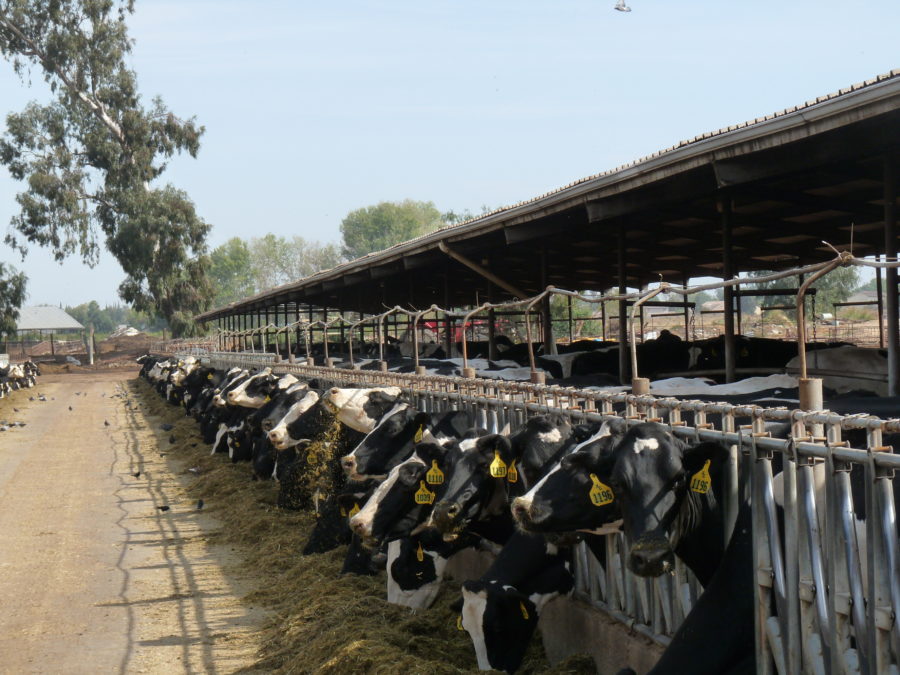
Dairy GHG Emissions Falls Dramatically

Dairy Greenhouse Gas Emissions Reduced by 45 Percent Over Last 50 years


By David Sparks, with the AgInformation Network

New research published in the Journal of Dairy Science finds the climate footprint of milk production in California has been significantly reduced over the past 50 years (1964 to 2014).

The amount of greenhouse gas emissions produced per unit of milk was reduced by more than 45 percent. Scientists at the University of California, Davis conducted a life cycle environmental assessment (cradle to farm gate) of California dairy farm production, using the latest scientific models and international research standards.

The study’s key findings are as follows:

The amount of greenhouse gas emissions per each unit of milk (e.g. glass or gallon) produced has decreased more than 45 percent, due to increased milk production efficiency, including improved reproductive efficiency, nutrition, comfort, and overall management.

The amount of water used per unit of milk produced has decreased more than 88 percent, primarily due to improved feed crop production and water use efficiency.

Dramatically improved feed crop production and utilization of agricultural byproducts have led to significant reductions in the amount of natural resources used to produce each unit of milk, including, land, water, fossil fuels, and energy.

Technology on the rise in the field–and the farm office

A recent agricultural-technology summit in Modesto focused not just on the flashy, but also the mundane. One farm-tech officer spoke of the need to use technology to track finances in real time, as a way to help farmers make more informed decisions about money. Getting the next generation interested in the business is the focus of one educator who helps teens find internships with equipment makers.

2020-02-19T19:26:43-08:00February 26th, 2020|

Bureau of Reclamation Official Announce on 15% Initial Allocation


15% Initial Allocation is based on Less Than Average Rain and Snow

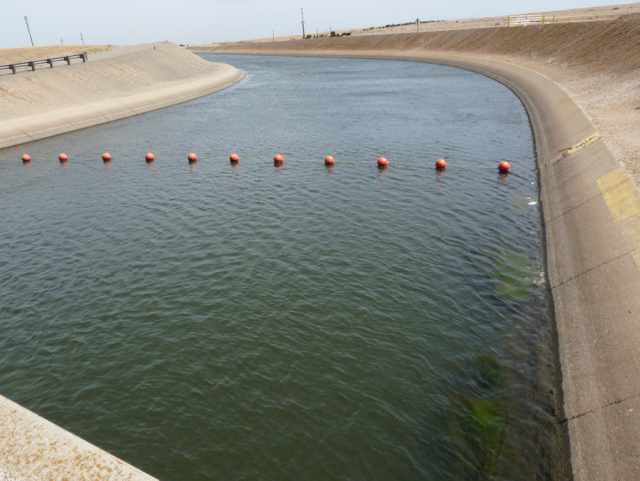
The Bureau of Reclamation today announced the initial 2020 water supply allocation for Central Valley Project contractors will be 15%. Allocation amounts are based on an estimate of water available for delivery to CVP water users and reflects current reservoir storages, precipitation, and snowpack in the Central Valley and Sierra Nevada.

“Today’s allocation comes on the heels of an operations plan signed last week, underscoring the Trump administration’s commitment to bringing a sustainable and reliable water supply to California’s Central Valley. While that operations plan is based on the best available science and maximizes water supplies, we still face significant uncertainty due to legal challenges,” said Reclamation Commissioner Brenda Burman. “Despite the hurdles brought on by litigation from the state and others, we remain committed to providing reliable water for families, farms, cities and the environment.”

California benefited from wet weather and significant snowpack in late 2019, but precipitation and snowpack have been below average so far in 2020. The California Department of Water Resources reports that as of February 24, statewide average snow water content in the Sierras was just 41% of the April 1 average. Current Northern Sierra precipitation is about 51% of the seasonal average.

“After a promising start to our precipitation season, January and February turned much drier than average,” said Reclamation’s California-Great Basin Regional Director Ernest Conant. “Fortunately, our project reservoirs are still hovering above average thanks to the wet winter last year, but with little precipitation in the forecasts, we must remain cautious with supplies and allocations this early in the year.”

Shasta Reservoir’s 4.5 million acre-feet capacity represents the majority of CVP water storage. Water from Shasta is used for many purposes, including contractor supply for north and south of the Sacramento-San Joaquin River Delta, as well as ensuring adequate temperatures can be maintained downstream of the dam throughout the summer and fall for threatened and endangered species. Currently, reservoir storage is above the historic average for this time of the year. However, runoff forecasts still predict that overall storage might be limited if typical spring precipitation does not materialize.

“While we’re constrained by the water nature provides, our new CVP operations plan will improve operations to maximize water supplies,” Conant said. “We recognize the importance of providing meaningful allocations early in the year, especially for our agricultural contractors’ planning needs.”

Given the low snowpack and low projected runoff this spring and summer, Reclamation is announcing the following initial allocations:

North-of-Delta Contractors (Including American River and In-Delta Contractors)

  • Agricultural water service contractors North-of-Delta are allocated 50% of their contract supply.
  • Pursuant to Reclamation’s M&I water shortage guidelines, M&I water service contractors North-of-Delta (including American River and In-Delta Contractors) are allocated 75% of their historic use or public health and safety needs.
  • The Sacramento River Settlement Contractors are allocated 100% of their contract supply.

Eastside Water Service Contractors

  • Eastside water service contractors (Central San Joaquin Water Conservation District and Stockton East Water District) will receive 100% of their contract total.

South-of-Delta Contractors

  • Agricultural water service contractors South-of-Delta are allocated 15% of their contract supply.
  • M&I water service contractors South-of-Delta are allocated the greater of 65% of their historic use or public health and safety needs.
  • The San Joaquin River Exchange Contractors and San Joaquin Settlement Contractors are allocated 100% of their contract supply.

Wildlife Refuges

  • Wildlife refuges (Level 2) North- and South-of-Delta, which also have allocations subject to pre-established Shasta inflow criteria, are allocated 100% of their contract supply of 422,000 acre-feet.

Friant Division

  • Friant Division contractors’ water supply develops in the Upper San Joaquin River Basin Watershed and is delivered from Millerton Lake through Friant Dam to the Madera Canal and Friant-Kern Canal. The first 800,000 acre-feet of available water supply is considered Class 1; and Class 2 is considered the next amount of available water supply up to 1.4 million acre-feet. Given the current hydrologic conditions, Reclamation determined that Friant Class 1 initial allocation will be 20% and Class 2 will be 0%.
  • For the San Joaquin River Restoration Program, Reclamation is currently forecasting a “Critical-High” water year type, providing for 70,919 acre-feet to be used for Restoration Program purposes.

In addition to the 2020 initial CVP water allocation, several South-of-Delta and Friant Division contractors are rescheduling unused water from 2019 supplies into 2020. That water is being stored in San Luis Reservoir and Millerton Lake. The option to reschedule (carry over) water in San Luis Reservoir and Millerton Lake from one contract year to the next has been available to the water service contractors since the early 1990’s. That carry over option was instituted after a series of dry years in the early 1990’s to encourage conservation and best water management practices.

Reclamation notified the Sacramento River Settlement Contractors, San Joaquin River Exchange Contractors, San Joaquin Settlement Contractors, and Refuge Contractors that the forecasted inflow to Shasta Lake is currently greater than 3.2 million acre-feet and we are not currently in a “Shasta Critical” year as that term is defined in their contracts.

As the water year progresses, changes in hydrology and opportunities to deliver additional water will influence future allocations. Water supply updates will be made as appropriate and posted at https://www.usbr.gov/mp/cvp-water/index.html.

2020-02-25T13:03:30-08:00February 25th, 2020|

Feds Initial Allocation is only 15 Percent

Westlands Water District Statement on 2020 Initial Allocation


Today the Bureau of Reclamation announced that the initial 2020 allocation for south-of-Delta Central Valley Project (CVP) agricultural water service contractors is 15%. Needless to say, Westlands Water District wishes it were higher, and the District is confident that Reclamation would have provided a higher allocation if existing conditions would have allowed it.

It is likely many people will question a 15% initial allocation considering President Donald J. Trump’s recent remarks concerning new biological opinions issued for coordinated operations of the CVP and State Water Project (SWP). Without question, those new biological opinions restore operational flexibility to the CVP and SWP, while at the same time providing more protection for listed species.

Indeed, if those biological opinions had been in effect in 2019, the projects would have been able to conserve more than an additional one-million acre-feet of water. That is enough water to irrigate 300,000 acres of land or serve more than 2 million households in urban areas served by the CVP and SWP. However, 2019 was a wet year, and unless California begins to experience significantly more precipitation, both in the form of rain and snow, 2020 will ultimately be classified as a dry or critical year. Even with the new biological opinions, Reclamation cannot allocate water that its operations forecast indicates will not be available.

Despite the lack of precipitation, it should be noted that the new biological opinions have benefited farmers in the San Joaquin Valley. The 2020 water year is shaping up to be very similar to 2009, a critically dry year. In 2009, south-of-Delta CVP agricultural water service contractors received a 10% allocation, and that allocation did not come until April. Comparatively speaking, a 15% allocation in February is good news.

Westlands staff will continue to work with Reclamation and other CVP contractors to analyze hydrologic and environmental conditions in hopes the allocation can be increased as early as practicable.


Statement by California Farm Water Coalition Executive Director Mike Wade  
on the Initial Allocation Announcement by the Bureau of Reclamation

“Today’s announcement by the Bureau of Reclamation of a 15 percent initial allocation for water supplies south of the Delta is clearly the result of the dry hydrology California is experiencing. February is shaping up to be possibly the first time in recorded history without any measurable precipitation. That alone is evidence that California may be on the leading edge of another drought.

“These dry conditions are similar to what we saw in 2009. For months farmers were not given an allocation amount and told they may get zero water. In April of that year, well past the time to make effective planting decisions, the allocation was set at 10 percent.

“The new biological opinions implemented last week are already making a difference by allocating 15 percent in February. We’re obviously hopeful that allocations will rise, but we’re pleased to be off to a better start than we were under the old operating rules.

“Had the new biological opinions been in place last year we believe an additional 1 million acre-feet of water could have been stored for use this year, delivering more water and offering better species protection, based on what we’ve learned over the past 10 years studying the Delta and its tributaries.

“That kind of operational flexibility is essential for California to remain the nation’s leading farm state and to continue to produce more than half of the fruits, nuts, and vegetables grown in the U.S. as well as vast amounts of dairy, beef and nursery products.”


2020-02-25T12:41:26-08:00February 25th, 2020|

Redd Group Hosts Important Management Seminar March 26 in Bakersfield

The Redd Group Presents Management Seminar to Help All Segments of Ag Industry Comply with Arduous Regs

By Patrick Cavanaugh, Editor

Jesse Rojas is the Founder and CEO of The Redd Group, LLC, based in Bakersfield. The Redd Group consults with employers to improve employee relations by using and implementing new methods of communication. Jesse and The Redd Group is presenting another important Management Seminar for many segments in the agricultural industry, and that half-day seminar will be on March 26, 2020, in Bakersfield at 4900 California Avenue, Tower B, Second Floor from 1 pm to 5 pm.

“I’m happy to present this seminar again in Bakersfield. Anyone from owners, operators, human resources team members, farm labor contractors, and administrators,” said Rojas. “We’re going to have specific presentations once again from Michael Saqui with the Saqui Law Group. He is the agricultural industry’s most powerful partner on labor issues. I’ve known Michael for several years, and his group recently became a division of Dowling and Aaron, so there are a lot of bigger in the State of California. He’s going to be focusing on a few new topics this year.”

“One of the topics of discussion is PAGA the Private Attorney General’s Act, which many companies have been affected by this frivolous law from the State of California and shark attorneys are suing in class action lawsuits suffocating companies. So, he will be giving a status on how do we attack and how do you protect your company from this PAGA fiasco.” Rojas continued.

“And one of the hottest controversial topics this year as well, as you might know, is AB-5, the Independent Contracting Bill. And really the consequences of AB-5 are going to affect agriculture as well because agriculture, like any other industry requires independent contractors, a lot of companies they need to move their product and they have independent truckers or they have other independent contractors they use in agriculture. And by affecting agriculture, I mean everything from growers, packers, shippers, FLCs, and, most importantly, the workforce. And how do you protect yourself from it?

What can you do to be in compliance with AB-5? As you might’ve heard with some of the pressure coming down on AB-5, they’re working in the legislature on introducing a few different bills to address some of these AB-5 broad consequences.” Rojas emphasized. So that’s going to be very interesting that we discuss AB-5 regardless of how big you are and what specific industry you are in, you need to be aware and know all the ins and outs of AB-5.” said Rojas.

And like in previous seminars, employee relations will be discussed as well. “Myself and Raul Calvo, we’re going to be focusing on, like you mentioned, employee relations. So leadership development for supervisors and managers, proper ways to resolve conflict within your company and your employees. And then strategies for effective employee relations, thinking outside the box to be on the cutting edge of your labor relations and labor management by implementing new methods of communication.” Rojas said.

And of course, with the labor shortages throughout the Central Valley, another hot topic at this seminar will be H-2A.

“As you know, with our labor shortage and changes in work culture in agriculture and farming, H-2A’s becoming one of the best methods to provide labor, efficient labor, high productivity. But it still comes with compliance and loopholes that you have to clearly understand to properly asses if H-2A is the right fit for your company. So we will be discussing H-2A as well.” Rojas explained.

You are encouraged to share the event flyer with the appropriate individuals in other companies who could benefit from the information. Again the event is going to take place on Thursday, March 26, 2020, from 1:00 to 5:00 pm, and registration at 12:30 pm. The location will be at the Cal Twin Towers, 4900 California Avenue, Tower B, Second Floor in the Cal King Room. The cost of the event is $50 per person, and seating is limited. You can register by calling or texting 844-946-7333 or email jesse@reddgroup.org.


2020-02-27T08:55:17-08:00February 25th, 2020|

AgTech Innovation Continue Advancement

AgTech Innovators Compete At Radicle Challenge By Corteva

Five Agtech Innovators Selected from Across the Globe to Compete for $250k in Funding at the Radicle Challenge by Corteva Pitch Day at World Agri-Tech

Innovators Across Water Risk Analytics, Genetic Detection, Early Disease Detection, Autonomous Robots and Soil Microbes Chosen as Finalists from the Largest Ever Pool of Applicants to a Radicle Challenge; to Pitch at the World Agri-Tech Innovation Summit

Radicle Growth, an acceleration platform for early-stage ag and food technologies, today announced the five entrepreneurs who have been invited to compete at the Radicle Challenge by Corteva Pitch Day competition taking place March 16, 2020 in San Francisco at the World-Agri-Tech Innovation Summit.

The Radicle Challenge by Corteva at World Agri-Tech called on entrepreneurs with technologies across the agricultural landscape who are solving problems with breakthrough technology solutions. The winner will be awarded a$250k investment, access to Radicle’s company-building platform, and the opportunity to engage with Corteva technology leaders to help shape, validate and refine their technology using virtual or actual on-the-farm assessments. It will also present on stage at the summit’s acclaimed Technology Showcase, to an audience of 1,500 agribusiness leaders.

“In just five weeks, we had our largest pool of applicants ever for a Radicle Challenge from across the globe. This confirms that entrepreneurs are hungry not only for the funding to advance the development of their technologies, but also for invaluable coaching and hands-on refining of their technology from some of the biggest names in agriculture,” said Kirk Haney, Managing Partner, Radicle Growth. “Where traditionally we see the highest concentration of applicants in digital ag technologies, we saw more entries than ever before in novel farm systems and biologicals and close to 65% from outside of the U.S. We look forward to having all of these rising stars in one room next month to pitch to our panel of judges.”


The finalists are:

  • Aquaoso: a SaaS water risk analytics company dubbed the “credit score for water,” which helps ag lenders, investors, growers and shippers understand the financial impacts of water risk on operators.


  • Holganix: a liquid soil treatment that contains a consortium of 800+ microbes to drive yield, soil health and reduce the need for pesticides and fertilizers.


  • Nanobio Designs: a handheld device that uses self-assembling nanoparticles to test for the presence of GMOs.


  • Scanit Technologies: An in-field platform (for indoor or outdoor growers) to detect plant pathogens when they are airborne and before they infect plants.


  • SwarmFarm Robotics: Commercially available robots for autonomous agriculture.


Companies will be evaluated by a panel of esteemed judges, including: Corteva’s CTO, Neal Gutterson, Nutrien’s Chief Corporate Development and Strategy Officer, Mark Thompson, Corteva’s Senior Vice President & Chief Information Officer Debra King, Microsoft’s Director of Agriculture, Claudia Roessler, Fall Line Capital’s Co-Founder and Managing Director, Clay Mitchell, DCVC’s Managing Partner, Kiersten Stead and Radicle Growth’s Managing Partner, Kirk Haney. The winner will be announced March 17th at the World Agri-Tech Innovation Summit, the day after the Pitch Day Competition.


For more information on the Radicle Challenge by Corteva at World Agri-Tech, visit www.worldagritechusa.com/radicle-challenge


2020-02-25T09:31:54-08:00February 25th, 2020|

The Power of Three in Walnuts

Power of Three Highlights Increasing Walnut Consumption Increase Heart Health

By Patrick Cavanaugh on the AgInformation Network

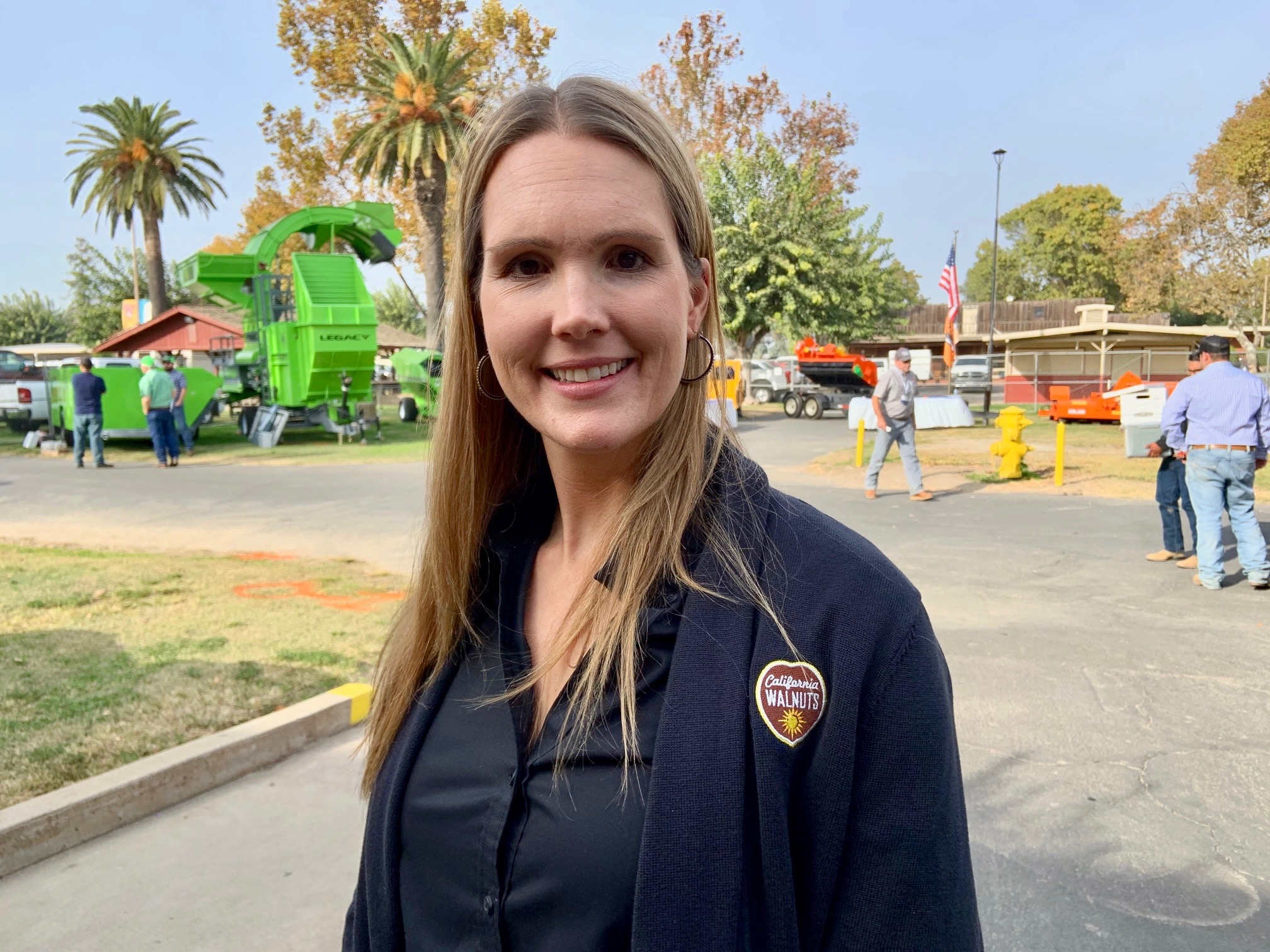
It’s called the power of three and it’s part of a big social media campaign by the California Walnut board and Commission. Jennifer Olmstead is marketing director for domestic public relations for the California Walnut board and commission.

“We have a lot of research backing up the heart health benefits of walnuts,” said Olmstead. “We’ve been researching it for approximately 30 years now and there’s a lot of data to support that and that’s the reason why we have the heart checkmark from the American heart Association

“The Omega 3 in walnuts is actually one of the key messages in our global power of three campaign. There are three different key points to the campaign. One is the Omega 3 in walnut,” said Olmstead. “The other is that we’re encouraging people to eat three handfuls a week, so something simple that they can remember to do to get them closer to better nutrition. And then we also want them to share that message with three people in their own life,” she said.

And because a robust public relations by the Walnut Board and Commission, most people already know that walnuts are good for their heart health.

“Yes, the heart healthy message is starting to resonate for walnuts. Health is one of the top reasons that people are buying walnuts in general, and we want to continue that momentum throughout the year,” noted Olmstead. “We want people buying walnuts all year and even-out that season and not just have this tremendous spike around the holidays. We want to encourage people to think about other ways to use walnuts throughout the year.”The Power

2020-02-17T19:36:41-08:00February 24th, 2020|
Go to Top