About California Ag Today

This author has not yet filled in any details.
So far California Ag Today has created 2014 blog entries.

Sonoma County Ag Produces Very Little GHG

Sonoma County Winegrowers Committed to Sustainability

By Tim Hammerich, with the Ag Infomation Network 

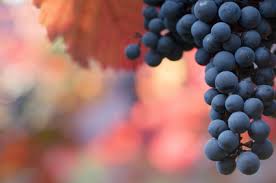
In 2014 the Sonoma County Winegrowers made the commitment to become 100% certified sustainable in all 1,800 member vineyards.

They’re now taking their commitment a step further by piloting a new Climate Adaptation Certification Program created by the California Land Stewardship Institute.

“Because of our sort of foundational work in sustainability, it really felt to us what a great opportunity to continue being leaders and also continue to kind of push the envelope on what we’re learning and what we’re doing and on our vineyards, “said Sonoma County Winegrowers President Karissa Kruse. “So we were super excited to partner with Laurel Marcus and her team at the California Land Stewardship Institute and really be this pilot kind of launch model for what could be done, not only in vineyards, but ag around the state and even across the U S.”

Kruse said through conservation tillage, cover crops, and other practices, ag can be part of the solution to offset carbon emissions.

“Ag is really in an interesting position. It really accounts for only 8% of the greenhouse gas emissions. But when you think about around the state, who has the most opportunity to sequester carbon, it really is our farmers.” noted Kruse. “I mean, they’re the ones with the land and the soil and it’s not paved over. It’s not in an urban environment. And so they have kind of a unique opportunity to almost be part of the solution for more than just offsetting their GHG emission, but also helping our cities and others in the urban environment offset some of their GHG emissions.”
2020-02-17T19:29:26-08:00February 21st, 2020|

New Biological Opinions Replaces Outdated Science

The Adoption of the New Biological Opinions

A Statement by California Farm Water Coalition Exec. Director Mike Wade 

For the first time in more than a decade, the federal rules known as Biological Opinions are being updated. These rules exist to protect threatened species in the San Francisco Bay-Delta region while also meeting the water supply needs of farms, businesses and people.


The new Biological Opinions, based on more than 10 years of scientific study, will allow California to manage water in real-time using the latest science rather than relying on an arbitrary calendar approach that takes years to recognize updated research.

The decade-old rules are based on outdated science and have failed to help Delta smelt, Chinook salmon and other threatened species. And to keep us from once again letting rules get outdated while struggling species suffer, the new Biological Opinions allow for ongoing scientific review as well as independent evaluation by outside experts.


Getting these rules right impacts the entire state. Water from the federally-run Central Valley Project delivers enough water to meet the needs of 1 million California households, over 3 million acres of some of the most productive farmland in the world and over a million-acre feet of water for fish and wildlife and their habitat, including state and federal wildlife refuges and wetlands.
The State Water Project serves the water needs of 750,000 acres of productive farmland and the domestic water supply for two-thirds of all Californians. We applaud the Trump Administration as well as California leadership including Representatives Kevin McCarthy and Devin Nunes for their part in making this a reality.


To be clear, this is just one piece of a very complicated puzzle that we hope includes new Voluntary Agreements on water. We support the Newsom Administration’s efforts to make water policy work better for all Californians.
2020-02-19T19:33:20-08:00February 20th, 2020|

President Trump: Feds Must Find a Way To Store More Water in California

President Trump: Its For Flexibility in State and Federal Water Project

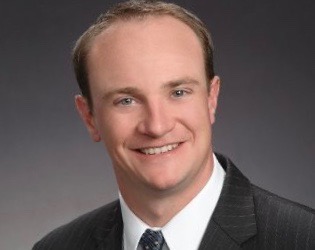
Wednesday’s signing of a record of decision coordinating federal and state water projects offers a hopeful sign, according to California Farm Bureau Federation President Jamie Johansson.

Johansson, who attended the ceremony in Bakersfield where President Trump announced signing of the document, said the action will add much-needed flexibility to operation of the federal Central Valley Project and State Water Project. He also thanked the president for signing a memo directing federal agencies to coordinate efforts to store more water, offer regulatory certainty and improve protection of protected species.

Jamie Johansson CFBF

“Farmers are optimists and this is a day for optimism,” Johansson said. “The federal agencies have taken a holistic look at the California water system and offered an alternative that promises to improve the health of the environment without devastating people whose communities and livelihoods depend on reliable water supplies.

“We should embrace this new approach and give it a chance to succeed,” he said. “We know all too well that the policies of the past 25-plus years haven’t worked.”

Johansson said better coordination and improved flexibility of federal and state water project operations would benefit people throughout California.

“Federal and state officials need to be pulling in the same direction to assure the most efficient use of California water for fish and people,” he said. “We hope people at all levels of government can cooperate on plans to enhance the environment, accommodate a growing population and maintain productive farms and ranches.”

Johansson expressed disappointment in reports indicating the state government will sue over today’s federal actions, and said solutions to California water problems will be found in constructive discussions, not in courtrooms.

“We have to get off the merry-go-round of endless litigation,” he said. “No one benefits from that. Fisheries continue to suffer. Productive farmland goes unused. It’s not a sustainable path for anyone. Farm Bureau will continue to advocate for practical, reasonable, cooperative ways to address California’s water supply needs.”

The California Farm Bureau Federation works to protect family farms and ranches on behalf of nearly 34,000 members statewide and as part of a nationwide network of nearly 5.6 million Farm Bureau members.

2020-02-19T19:42:47-08:00February 20th, 2020|

Almond Board of California Announces 2020 Election


Almond Board Nomination Petitions Due April 1 2020

The Almond Board of California (ABC) announced April 1, 2020 as the deadline for filing nomination petitions for one independent grower member position and one independent grower alternate position on the ABC Board of Directors.

To be considered for the position, each candidate must be a California almond grower and must submit a petition signed by at least 15 independent almond growers (verified by the ABC). The petition should state the position for which the candidate is nominated and be filed with Almond Board of California at 1150 9th Street, Suite 1500, Modesto, California 95354.

Additionally, two independent handler member positions and two independent handler alternate positions are available. Handlers must declare their candidacy, in writing, to the Almond Board no later than April 1, 2020, to be considered for these positions.

A cooperative grower member and alternate nominee and a cooperative handler member and alternate nominee will be selected through their cooperative association.

The Almond Board of California is the organization that administers the Federal Marketing Order for almonds. The Almond Board assures industry compliance with marketing order regulations and is responsible for administering all aspects of the marketing order. It also serves the almond industry in other major areas, including production research, global market development via advertising and public relations, and accumulation, compilation and dissemination of statistical information.

The ABC encourages eligible women, minorities and people with disabilities to consider running for a position on the Board of Directors as it believes this committee should reflect the diversity of the industry it serves.

For further information, please contact ABC’s Bunnie Ibrahim, senior analyst in Government Affairs, at (209) 343-3228.


2020-02-19T12:54:40-08:00February 19th, 2020|

World Ag Expo 3-day Show Had More than 106,000 Visitors.


The 53rd World Ag Expo Comes to A Close

Sunny skies, large crowds and optimistic attendees defined the 53rd edition of World Ag Expo. The world’s largest annual outdoor agricultural exposition came to a close on Thursday, February 13 and boasted 1,442 exhibitors on 2.6 million square feet of exhibit space. The three-day show hosted 106,357 attendees representing 46 states, the District of Columbia and 56 countries

Exhibitors reported high traffic, quality leads and a well-organized event. First year exhibitor Agland Management Consulting, Inc. was in the Hemp Education & Marketing Pavilion and their team was pleased with their first trip to World Ag Expo.

“It was great. We’re excited hemp was part of the show. We got multiple good leads and will be working with new counties on regulations,” shared Josiah Thomas of Agland. “The second day was the best and the show was better than we could have imagined.”

Attendees came from all over the world to network and learn about the newest ag equipment, services and technology. More than 130 educational seminars, demonstrations and workshops were held over three days and covered a variety of topics ranging from irrigation to hemp, livestock to international trade.

“What a fantastic show!” said Jerry Sinift CEO of the International Agri-Center. “There were 124 international business matchmaking sessions, hemp was included as a new option for farmers, new products were launched – there are just so many good things to say. Our exhibitors step up their game every year and it creates an even better business platform for our attendees.”

American Farm Bureau Federation President Zippy Duvall kicked off opening day with a well-received speech and took a tour of his first World Ag Expo that focused on technology, the international flavor of the show, hemp and dairy.

Other popular attractions at the 2020 World Ag Expo included the Ride & Drive areas, Wine and Cheese, and the Demonstration Pavilion.


2020-02-17T18:11:01-08:00February 19th, 2020|

Adam Borchard Joins California Fresh Fruit Assoc.

California Fresh Fruit Association Hires New Director of Government & Public Policy

The California Fresh Fruit Association (CFFA) is pleased to announce the hiring of Adam Borchard as its new Director of Government & Public Policy. Mr. Borchard comes to the Association after serving as a Regulatory Advocate at the Association of California Water Agencies (ACWA).

The Chairman of the Board for the Association, Randy Giumarra of Giumarra Vineyards Corp., stated, “We are thrilled that Adam has agreed to become a part of the team at CFFA. His personal background and education, as well as his extensive experience working on water resource issues on behalf of ACWA will bring great value to our membership.”

Association President Ian LeMay added, “I have had the privilege of knowing Adam over the past two years during his time as a part of Class 49 for the California Agriculture Leadership Program. We are extremely fortunate to have Adam join the CFFA team. Adam brings an extensive educational and professional background to this position and we are excited to see what he can accomplish on our members behalf. We believe that Adam is a natural fit, along with our current staff, to continue to bring value to CFFA members and to serve the California fresh fruit industry.”

Mr. Borchard is a graduate of University of California, Davis where he earned his bachelor’s degree in Environmental Sciences Management with a minor in Managerial Economics. He earned his Juris Doctorate with a Certificate in Public Law & Policy and Environmental Law from University of the Pacific, McGeorge School of Law. Additionally, he is a recent graduate of the California Agricultural Leadership Program, Class 49. Mr. Borchard’s first day at the Association will be Monday, March 9th .

2020-02-18T13:21:51-08:00February 18th, 2020|

Tulare County Farm Bureau’s Scholarships are due March 1

TCFB Scholarship Deadline, is Coming Up Soon! March 1st is the Deadline

This year, the Tulare County Farm Bureau will present Tulare County students with more than $18,000 in college scholarships. Applications for 2020 scholarships must be postmarked by March 1. Or physically received in the office by 5pm on Monday, March 2. (With March 1 falling on a Sunday, we will take them at the office on Monday).

The Tulare County Farm Bureau Education and Scholarship fund annually awards scholarships in a variety of categories. Some are directed to qualified applicants according to the wishes of those who provided the funds; others go to those seeking careers in agriculture; two are given to students whose parent(s) are a farm employee and others are simply based on merit.

Students will be publicly recognized for their achievements at Tulare County Farm Bureau’s annual meeting on May 5.

To apply, students must complete and return an application; submit two letters of recommendation; submit school transcripts and attend school currently or have graduated from a school in Tulare County to be eligible. Applications and a complete list of available scholarships can be found by visiting www.tulcofb.org.

Completed scholarship application and all required material must be sent to Tulare County Farm Bureau Scholarship Fund, P.O. Box 748, Visalia, CA 93279. Applications must be postmarked by March 1st. For more information about TCFB scholarships, visit www.tulcofb.org, email TCFB@tulcofb.org or call 732-8301.


2020-02-14T18:55:23-08:00February 18th, 2020|

APHIS Bird Health Awareness Week Coming

Help APHIS Celebrate Bird Health Awareness Week by Joining a Free Webinar on February 27

The United States Department of Agriculture’s (USDA) Animal and Plant Health Inspection Service (APHIS) invites you to join poultry health experts for a webinar on Thursday, February 27. We’ll be celebrating Bird Health Awareness Week by helping anyone who owns or handles poultry learn about the importance of biosecurity and ways to prevent the spread of infectious poultry diseases.

Whether you are just starting out raising poultry or have years of experience, practicing good biosecurity is the best way to keep flocks disease free. The “Defend Your Flock from Poultry Disease: Know the Signs and How to Respond” webinar will take place on Thursday, February 27 from 2:30-3:30 PM EST. Register for this FREE webinar today at bit.ly/APHISWebinar.

If you don’t already follow APHIS’ Defend the Flock campaign on social media, check out our Twitter and Facebook during Bird Health Awareness Week (February 24-28) to get daily tips and resources you can use to protect your flock’s health.

2021-05-12T11:17:08-07:00February 17th, 2020|

Urgent Help Needed—A Call To Action!

CALL TO ACTION! telltrump@gmail.com

By Kristi Diener with The CA Water for Food and People Movement

Call to Action! Last summer this group wrote more than 300 water letters to the U.S. Ag Secretary Sonny Perdue. He left the Los Banos water forum with the secret service, and our letters in his car! With President Trump coming to town next week, I think it’s a great time to beat that record and submit another stack! telltrump@gmail.com

California does not care about reliable or affordable water for its own people or their food producers. They prove that year after year when they dump billions and trillions of gallons of fresh drinking water out into the Pacific Ocean. Even when voters approved a $7.5 billion dollar water bond for surface storage in 2014, we still have not gotten any infrastructure for which we voted.

President Trump has proved he is listening and does care. He has already done more to secure CA water for food and people in three years, than CA has in 40 years. What Trump saved our country from becoming in 2016 with his victory over Hillary Clinton, is happening in concentrated form in California, and water is simply being used as a political tool to implement an agenda we don’t want. We need continued federal help. But you know the issues. telltrump@gmail.com

I have set up an email for you to use. Write a sentence, a paragraph, or a novel, and tell Trump what’s happening to our water, and what we need. Thank him for executing the Biological Opinions update, for allocating money to raise Shasta Dam, or for his administration’s recent infrastructure designation that will focus attention and resources to ensure our state’s federal dams are robust, maintained and safe. Or pick any issue you want! telltrump@gmail.com

The emails will come to me, I will print them up, and I will find a way to see that he gets them next week. telltrump@gmail.com

Stuck? Not sure what to write? Scroll this group. You have my permission to use anything I’ve written here as your own.

Maybe you just want to write, “WATER DAM IT!” or maybe you want to tell him how California’s water policies and rate hikes have affected your family?

Maybe you want a federal audit for the billions of water-bond dollars CA keeps taking in? What about how the lack of surface water deliveries is going to idle a million acres of America’s most productive farmland and impact our food supply? Or how losing our nation’s food independence creates a national security issue? I don’t read them. I just print, stack, package, and deliver…so have at it. telltrump@gmail.com

2020-02-15T16:24:23-08:00February 15th, 2020|

Automated Strawberry Harvest Still a Way Off

The Challenge of Automation in Strawberry Fields

By Tim Hammerich,with the AgInformation Network

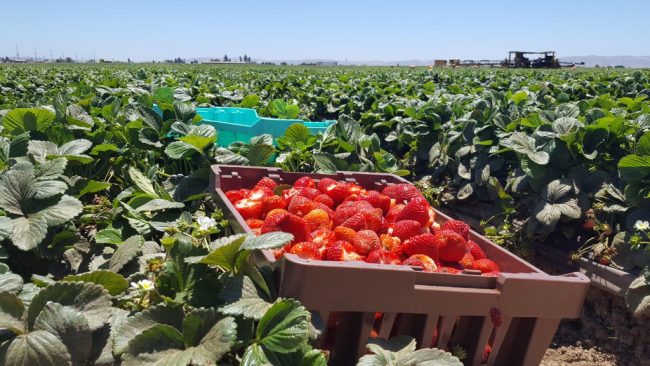
A few weeks ago, we were able to report that the strawberry crop outlook was very optimistic for California growers. While supply and demand both look strong, farmers are still wrestling with a big challenge: labor.

California Strawberry Commission Communications Director Carolyn O’Donnell said it will be a challenge.

“Labor is definitely one of the biggest concerns that they see is the ability to be able to plant, weed, and harvest to their crop, because all of those things are done by hand,” said O’Donnell.  “There are some efforts going underway to find different ways to use automation or mechanical ways to do this, but because it’s such a delicate fruit and it’s picked on the plant and packed directly into the clamshell where you buy it in the grocery store.

The goal is to find machinery that can mimic, not only the touch of a hand, which can adjust itself to how firm things are. But also something that doesn’t damage the plant because they’re harvesting from the same plants two, sometimes three times a week, over a number of months. So you want to keep the plants intact,”she said

O’Donnell said it’s not just the fact that human labor is more delicate with the fruit and the plants. It’s also the art of identifying and picking only those fruit that are ready for market.

“The other thing is that being able to judge. Is this berry ready and ripe to be picked? So having the optics that are able  to judge what’s right for picking,” she said.

The future is likely a combination of skilled labor and new technologies to help our strawberry growers remain competitive.

2020-02-12T19:10:19-08:00February 12th, 2020|
Go to Top