About California Ag Today

This author has not yet filled in any details.
So far California Ag Today has created 2014 blog entries.

Will Extra Water Storage Ever Become Reality?

Storage Reality!

Commentary from Families Protecting the Valley

Remember “The Water Quality, Supply, and Infrastructure Improvement Act of 2014”, otherwise known as Prop1? At last month’s meeting of the California Water Commission, staff updated the commissioners on the status of the projects in the Water Storage Investment Program (WSIP). Those are the storage projects in Prop 1. So, that was 2014, and it’s now 2020, and we’re still just talking, not building.

This process has gone on and on and on and on…So, here’s what’s happening. According to the California Water Commission in “2018, the Commission completed the application review process and made Maximum Conditional Eligibility Determinations or MCEDs for the eight projects under the Water Storage Investment Program.” Don’t know about you, but we love the bureaucratic lingo.

Since then the applicants have been moving forward with their projects to meet the statutory and regulatory requirements of the WSIP. So the applicants “submit quarterly reports to “summarize their activities as they move towards the final award hearing.

Click here for an article from the Commission the staff sho has put together an estimated timeline for the final award hearings and construction and operation of the projects. If you click on the link you will see projected construction will start on one project this year, one next year, and 3 in 2022. BUT the Program Manager noted that in 2018 when the conditional funding awards initially were made, the Commission made 9 determinations for each project and one of those determinations was that the projects appeared feasible. Appeared feasible? That doesn’t sound too good.

Here’s another thing. By January, 2022 the projects must have have a 75% commitment of non-public benefit cost share. So, they’re still trying to get funding. That’s a big maybe. If they get the funding and complete all the other requirements, the applicant will come before the Commission for the final feasibility finding.  That’ll be December 2021. Here is something they ask you to keep in mind: “there is no deadline in statute for the final award hearing, and some projects could take years to complete these items. This is a long-term program.”

Used to be we’d pass a bond and build a dam. But now, this is how bureaucracy works. Good luck with whatever storage project you’re rooting for.

2020-02-07T15:41:35-08:00February 11th, 2020|

Food Safety In the Produce Supply Chain

Food Safety is Paramount in Produce Industry

By Tim Hammerich, with The Ag Information Network of the West

Food safety is something everyone in the produce industry is concerned about, from growers all the way through the supply chain.

United Fresh Produce Association is a trade group that exists to empower produce industry leaders to join forces to shape sound government policy. California Ag Today’s Patrick Cavanaugh caught up with United Fresh President and CEO Tom Stenzel at the association’s Fresh Start Conference in Tucson.

“We’ve got to do a better job in traceability We’ve got to be able to get to the source of these issues right away. You know, our products are grown outside in nature,” said Stenzel. “There’s no kill step. We don’t cook our salads. So we’re probably never going to get to zero, but we’re going to keep getting better in prevention and then we’ve got to do better tracing it back.”

That traceability aspect can be a challenge in complex supply chains like those of some fresh produce. But Stenzel says their members are committed to finding innovative solutions.

“So the grower/shipper community, they’re trying to figure out how do I prevent food safety issues. And we’re learning a lot. Every time there’s an outbreak, as tragic as it is, we learn from it. And that’s really what the growers are trying to do right now, is to take every possible step of precaution in how they use water; or how they use compost,” said Stenzel. Making sure that we’re not contributing to contamination. Wholesalers, retailers, everybody’s got to work together on those things.”

Stenzel said just about every meeting they had around the Fresh Start Conference addressed some aspect of food safety.

2021-05-12T11:01:45-07:00February 10th, 2020|

UC Davis Will be at World Ag Expo!

Associate Dean Oberbauer to join UC Davis agricultural experts at World Ag Expo

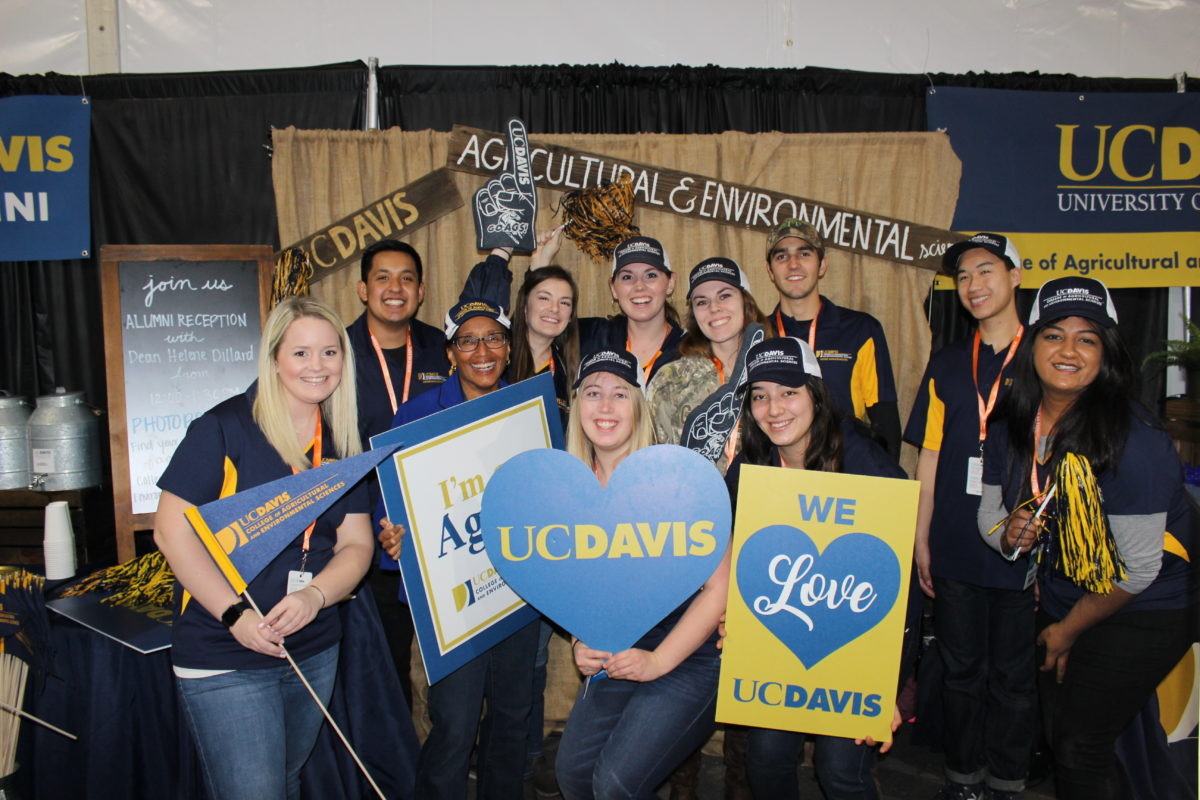
(Pictured are UC Davis Aggie Ambassadors, who will on hand to greet expo-goers.)

Associate Dean Anita Oberbauer with the UC Davis College of Agricultural and Environmental Sciences will gather with fellow scientists, staff and students at the World Ag Expo in Tulare, February 11-13, to chat with farmers, prospective students, alumni and leaders throughout the agricultural industry.

More than 100,000 people are expected to attend the 53rd annual event, where 1,400 exhibitors display cutting-edge agricultural technology and equipment over a massive 2.6 million square feet of show grounds.

“I’m delighted to take part in this incredible agricultural exhibition,” said Oberbauer, who is associate dean of agricultural sciences for the college and a professor in animal science. “I look forward to discussing the college’s latest development in agricultural research, meeting prospective students and reconnecting with alumni and friends from the Central Valley and beyond.”

Professor Oberbauer will be at the UC Davis booth—located in the Ag Career and Education Center—from 11 a.m. to 1 p.m. on Thursday, Feb. 13. She will be joined by Christopher Glick, associate dean for development and external relations, who will attend the expo all three days. The UC Davis booth has been expanded this year to provide extra space for alumni and others to gather.

Throughout the event, various college experts in livestock, nutrition, plant pathology, engineering, economics and more will be available to discuss agricultural issues and visit with attendees. Aggie Ambassadors and undergraduate student advisors will be on hand to answer questions about UC Davis majors and campus life.

“Prospective students can learn about our majors and the career paths they provide,” said Sue Ebeler, associate dean of undergraduate academic programs and professor in viticulture and enology. Ebeler will be at the UC Davis booth on Feb. 13.

In addition to Associate Deans Oberbauer, Glick and Ebeler, college experts attending the expo include:

  • Deanne Meyer, Cooperative Extension specialist in livestock waste management, who will be available all days
  • Rachael Goodhue, department chair and professor in agricultural and resource economics, who will be available Feb. 11
  • Florent Trouillas, assistant Cooperative Extension specialist in plant pathology, who will be at the expo Feb. 11
  • Farzaneh Khorsandi, assistant Cooperative Extension specialist in biological and agricultural engineering, will be available Feb. 11 and Feb. 12
  • Gerado Mackenzi, associate professor of nutrition, will be available Feb. 12
  • Patricia Oteiza, nutrition professor, will be available on Feb. 12.

UC Davis is ranked first in the nation for agriculture, plant sciences, animal science and agricultural economics. The College of Agricultural and Environmental Sciences enrolled more than 2,000 new students in the fall of 2019, many of them from California’s Central Valley. The college offers 28 majors—everything from agriculture to nutrition to global disease biology.

“The World Ag Expo is an incredible event,” Ebeler said. “We get to meet with leaders from around the world, as well as with the passionate young people who are the future of agriculture.”


2021-05-12T11:05:01-07:00February 7th, 2020|

California’s Trucking Industry Hurting with Regulations

Regulations Put Trucking Industry in Peril

By Patrick Cavanaugh, Editor

The trucking industry, moving California agricultural crops from processors to distributors around the country, is facing many uphill challenges.

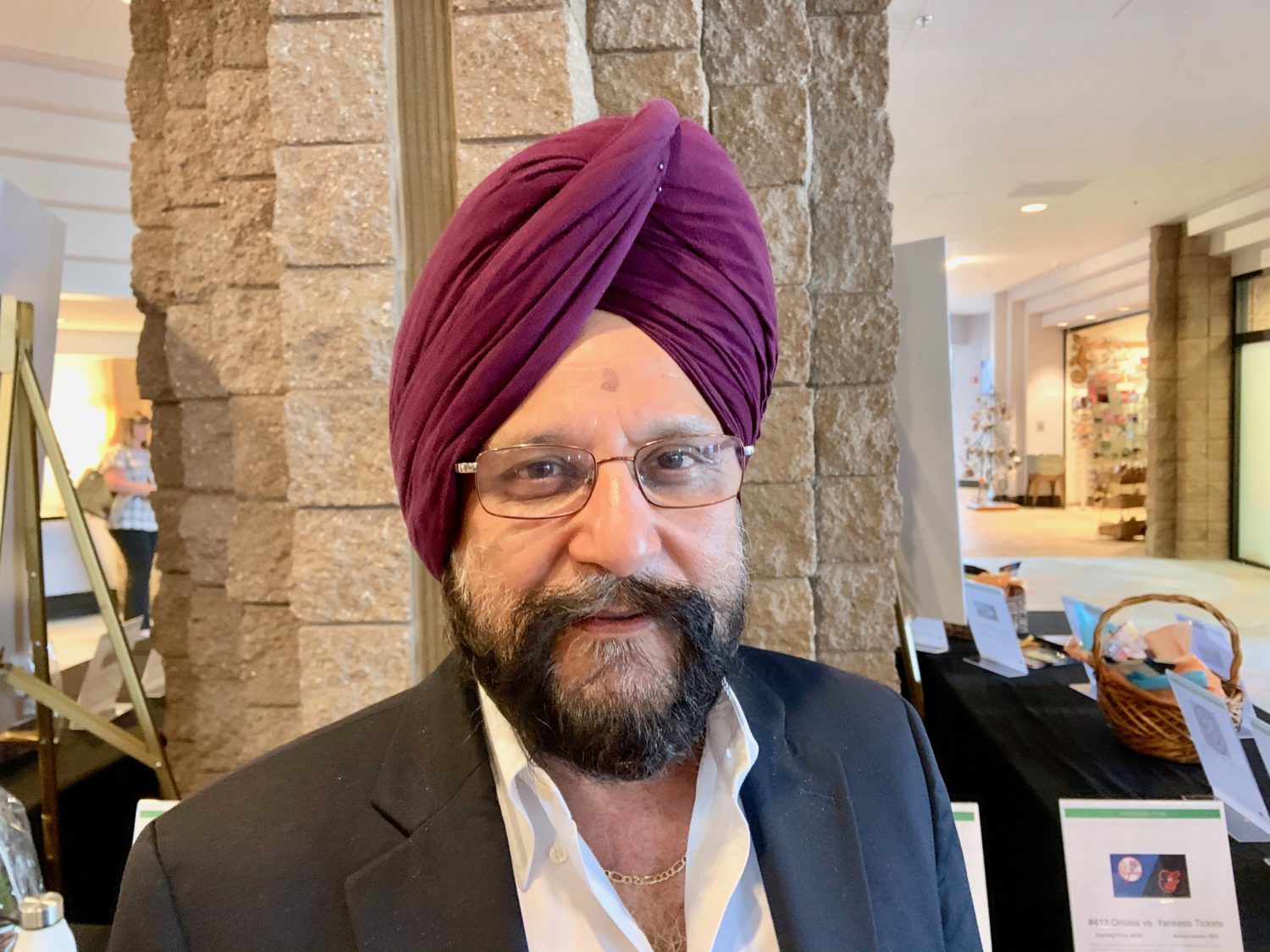
Tejinder Singh Mehta, also known as TJ, owns InTrade Industries based in Fresno. His company only focuses on a refrigerated fleet handling sensitive perishable commodities, and other refrigerated cargo from California, across the states, and also backhauls.

“The trucking industry is going through a lot of problems. The biggest problem that we are facing now is the extreme shortage of drivers, noted Mehta. “Even if we get drivers, they are not qualified enough to take the challenge, which includes safety regulations and timely deliveries. So that is the biggest issue right now

There is also AB5, which restricts independent contractors in California. “AB5 is affecting the trucking industry in a big way, because earlier small operators, could be hired by midsize fleet companies for outsourcing some freight jobs,” said Mehta. “Because if you have some business that needs to be taken care of, some contracts to be taken care of, you cannot hire independent contractors. They’re so hard to find. In the given situation, we cannot add on to more trucks on our own.”

“Because of the shortage of drivers, if we cannot hire independent contractors, it’s going to affect the industry in a big way,” he noted. “And since California has more trucks, it gets struck by these regulations, which can affect the whole nation in a big way.”

Another significant regulation is the Electronic Logging Device (ELD), which restricts drivers operating more than eight hours.

What happens is that a driver gets close to a destination, and his eight hours restrict any more driving time. The driver cannot continue for even 10 minutes or 15 minutes to go and deliver the load. “This is affecting the efficiency of the job. This is going to affect the actual time for the driver. This impacts the entire trucking industry across the nation, including shippers and receivers,” Mehta said.

Mehta said that the California trucking industry needs a good dialogue between the regulatory authorities, with the truckers at the table, and take on these problems head-on “before they snowball and paralyze the whole industry,” he said.


2020-02-05T08:41:14-08:00February 7th, 2020|

American Farmer Art at Temecula Valley Museum

Art Exhibit Honors the American Farmer

By Tim Hammerich, with the Ag Information Network of the West

We in agriculture are often looking for ways to connect with consumers removed from where their food comes from. The City of Temecula has decided to bring farming to their residents through photography in an art exhibit called “American Farmer”.

Tracy Frick is the Community Services Manager for the City of Temecula, and she oversees the Temecula Valley Museum.

“It’s a rented exhibit that we have rented from a company called Mid-America Arts Alliance,” noted Frick. “And it deals with the American farmer. I’m always looking for exhibits that relate to Temecula and Temecula Valley, but are also beautiful and also have an artistic component. And this exhibit does both.”

Frick said that the exhibit which contains both black-and-white as well as color photography, really captures the personality and the diversity of America’s farmers.

“Some of the select photographs have the story of the farmers and the farmer’s families,” noted Frick. “And the descriptions also tell a story about how being a farmer is embedded in the lives of them and their families, and how it’s not just about raising the crops. It’s, it’s a way of life. And it’s really just beautiful and interesting to see how they view what they do.”

The “American Farmer” exhibit at the Temecula Valley Museum opened January 31st and will be available until March 15th. Show up any time Tuesday – Sunday, 10am – 4pm.

2020-02-06T08:42:14-08:00February 6th, 2020|

The Impact of Regulations For Farmers

Regulations Affect California Farmers in a Big Way

By Tim Hammerich, with The Ag Information Network of The West

Most Californians will tell you they enjoy the local and diverse amounts of produce available in this state. High labor costs and other heavy regulations are encouraging some farmers to shift more focus on crops that are less labor intensive.

“So with a minimum wage going up, with the overtime rules ratcheting down, we’re kind of caught in a vice,” said Cannon Michael, President of Bowles Farming Co and the 6th generation of his family to farm the land near Los Banos.  “And to put one wage across an entire state where you really have different costs of living in different counties, it’s pretty drastic differences, really makes it difficult,” he added.

“And then when you couple that with the fact that the Federal minimum wage is much lower in a lot of other producing areas of the country that compete with us, don’t have even close to what the minimum wage that we have,” said Michael. “And they don’t have the overtime because they have the federal exemption for overtime.”

And then so not only that, but you look outside of the U S and there’s  Mexico and some of our close competitors there, which have no regulatory standards. “They do not have the standards that push up our fuel prices, chemical costs, really every single input that we have is a higher cost here.”

We are always looking for the right mix of crops that we can grow, that deliver the highest value while again, just not stretching our folks too hard, and too far. “Because it is hard as you diversify into a lot of different things, it gets to be challenging,” he said.

Even though the regulatory pressure is there, Michael said he is very committed to making it work, but the regulatory environment is certainly a challenge.

2020-02-04T17:19:41-08:00February 6th, 2020|

Meet Rose Tyron, New CWA President

California Women for Agriculture Welcomes 2020 with New President and Platform

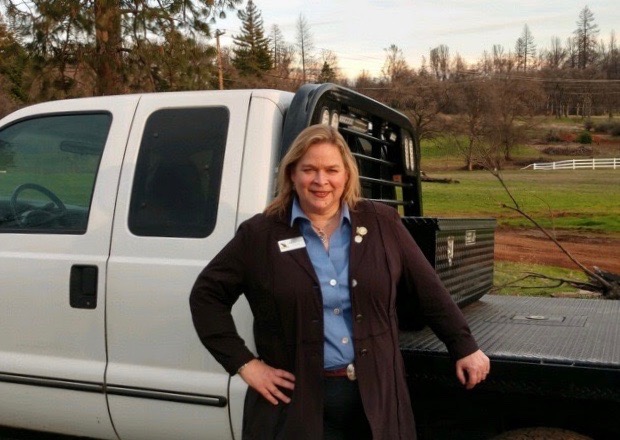
Del Norte County native, Rose Tryon is a passionate advocate for agriculture and has officially stepped into her new role as president of the California Women for Agriculture (CWA). This step up in leadership comes after a decade of involvement with both CWA and its parent organization American Agri-Women (AAW).

“As a young girl, I watched my father struggle to keep our family farm and could never understand why a profession so noble was so difficult to maintain,” stated CWA State President Rose Tryon. “Even as a child, I knew that something had to be done to help farmers, and that eventually led me to join CWA.”

A retired District Attorney Investigator, Tryon specialized in sexual assault and child abuse investigations. She currently resides in Paradise, California with her husband and two dogs and is working to rebuild her home after she lost it to the 2018 Camp Fire. Tryon eventually plans to reopen her business that assists farmers, ranchers and small businesses with business management and regulatory affairs. In addition, she also has her eyes set on executing several goals as CWA’s newest president.

“Rose is a visionary and is totally committed to the mission of the CWA,” stated Past CWA State President and current Federal Legislation Director Carol Chandler. “We are so fortunate to have such an outstanding leader for our all-volunteer advocacy organization.”

When asked about her plans for the CWA, Tryon noted that she’d like to connect members with the California State Women’s legislative caucus to help bridge the gap between the agriculture industry and our state legislators. She also plans to help educate urban neighbors about issues affecting agriculture, as well as continue to help CWA’s mission to uplift women in agriculture.

Over the last ten years, Tryon has served on the AAW Foundation Board for American Agri-Women, has served as a member of the CWA North Valley Chapter, and has taken on several roles within CWA’s State Executive Board. She credits the women she has met through the organization as the reason why she remains so passionate about agriculture and plans to continue to build her relationship with the members throughout her term as president.

“There’s a phrase that our members like to use whenever they describe their involvement with the CWA: we join for the cause, but stay for the friendships,” Tryon noted. “CWA is more than just an organization, we are a family that will fight tooth and nail for the industry we love, but even more so for the relationships we create.”

Tryon joins 12 other women as part of the 2020 CWA Executive Team and has already begun to lay the foundation for some of the change she wishes to implement throughout the next few months. Interested parties are encouraged to visit the CWA’s website at www.cawomen4ag.com to learn more about membership opportunities and community events.

2020-02-05T08:58:35-08:00February 5th, 2020|

UFW ACCUSED OF WAGE THEFT….AGAIN

UFW Employee  Claims Union is Keeping Phony Records To Cover Tracks

After having been found guilty of wage theft at trial once, the UFW has been accused once again of wage theft by one of its employees in a class action lawsuit. The UFW’s web site claims that the union is “Doing the right thing, even when no one is looking,” but the union apparently feels that doing the right thing does not include complying with their obligations to comply with California law.

UFW employee Gustavo Diaz claims that, even following the resolution of the first wage theft case against the UFW, the  farm worker union continued to violate its employees’ rights by systematically underpaying their wages. Mr. Diaz alleges that the union created phony records to cover its tracks and create the appearance of compliance while continuing to steal from its employees.

Mr. Diaz also claims to be the victim of a retaliatory termination, having been fired for blowing the whistle on the UFW keeping Dole Berry workers in the dark regarding impending layoffs that resulted from the closure of the Dole Berry farming operation. Mr. Diaz insisted that union leadership keep the workers informed, and when they silenced him and refused to do so, they fired him retaliation for objecting to the UFW’s illegal behavior.

For more information, please contact Mr. Diaz’s attorney, Gerardo Hernandez of Raimondo & Associates, ALC.

P: (559) 432-3000

2020-02-01T07:37:28-08:00February 4th, 2020|

Almond Board Announces 2020 Almond Leadership Program

17 Industry Professionals will Embark on a Year-Long Experience to Further Their Leadership Skills and Involvement in the California Almond Industry

The Almond Board of California (ABC) is proud to announce the Almond Leadership Program Class of 2020. These 17 promising leaders represent diverse backgrounds across multiple industries, from almond growers to processors, sales representatives to regulatory consultants, researchers to pest control advisors, and more.

In this year-long program, participants will grow in their roles as the future generation of California almond industry leaders, learning from volunteer mentors who will help equip them with the knowledge and experience necessary to improve their leadership skills, the industry and their communities. The class will also complete specialized training in a wide variety of topic areas, many of which are tied to ABC activities in global marketing, production and nutrition research, food safety and more. Through monthly seminars spanning topics across all aspects of the industry, participants will sharpen their communication skills while building lasting relationships with each other, ABC staff and others through networking opportunities.

“It is an honor to go through this program with so many intelligent and like-minded people who all have the same goal: to better the California almond industry and give back to our communities. I love that the main thing connecting all the participants is our drive to make an impact on this industry,” said participant Michelle Brasil of Olam Farming.

As a kickoff to the program, the Leadership class participated in a two-day orientation that included an address from ABC President and CEO Richard Waycott and Chair of ABC’s Board of Directors Holly A. King. Waycott and King highlighted the Almond Orchard 2025 Goals and the almond community’s roadmap to achieving them, two cornerstones of this year’s Almond Leadership Program.

As they progress through the program, Leadership participants will gain a stronger understanding of how social, economic and environmental issues — combined with the current political climate — affect the industry. They’ll also learn how all sectors in the almond supply chain work together to provide a safe, sustainable product to consumers worldwide.


“It’s important now more than ever before to help pay-it-forward by empowering the next generation of talented leaders to sustain and propel the tremendous benefits of modern agriculture, making a positive contribution toward feeding and nourishing our growing and connected world,” said program mentor Nassar Dean of Bayer Crop Science, the official sponsor of the 2020 Almond Leadership Program.

Participants are also required to pursue an area of interest as part of a yearlong self-directed project that they will present to fellow classmates, mentors and the ABC Board of Directors at the end of the program. The purpose of the project is to challenge participants to take a deep dive into a topic that interests them, try a new technology or innovative practice on their operation or explore a new or novel idea that advances the industry in some capacity.

These projects will all focus on ways to improve the California almond community, and some past projects have even led to important breakthroughs for the industry. At the end of the year, one participant will be selected to present their project at The Almond Conference 2020 in Sacramento.

“This program helps mold great people into even greater leaders — the leaders we will one day look toward to shape the future of the almond industry,” said Jenny Nicolau, senior manager, Industry Relations and Communications, ABC. “Each graduate from the Almond Leadership Program has gone on to be a leader of change in the industry or their community in some capacity, and this group will be no different. They are bright and talented, and obviously problem-solvers, and we are honored to be partners on this yearlong journey.”

Over the past eleven years, the Almond Leadership Program has graduated more than 160 participants and supported many key initiatives benefiting the industry. This year’s class will continue the tradition of raising funds for California Future Farmers of America (FFA) and has pledged to raise more than $25,000 in scholarships for high school students interested in pursuing agriculture in college.

Members of this year’s class include: Nicole Assali, California Grown Nut Company; Jason Bayer, Exact Corporation; Michelle Brasil, Olam Farming; Steve Dail, T.A.D. Farming, Inc.; Jason DeGraff, Mid Valley Ag Services; Angad Dhadda, Dhadda Farms; Stephen Dotta, Poythress Farms; Eric Lahargou, Campos Brothers Farms; Daniel Lawson, Treehouse Almonds; Kyle McClintock, IB Farming/San Joaquin Fertilizer; Chris McGlothlin, Western Agricultural Processors Association; Michael Navarrete, Protect Your Nuts; Nathaniel Roberts, Wonderful Orchards; Justin Rose, Redox Chemicals, LLC; Raj Samran, Samran Sons & Farming Co. Inc.; Haley Seeger, Blue Diamond Growers; Matthew Wilson, Bayer Crop Science.

2020-02-03T11:08:34-08:00February 3rd, 2020|

Produce Safety: Three Ways to Reassure Consumers

Facts Over Fear

Encouraging Consumers to Consumer more Fruit and Vegetables

By Elizabeth Shaw, MS, RDN, CPT, Nutrition Expert

We’re constantly bombarded with messages about what we shouldn’t be eating on a daily basis. Whether it’s avoiding gluten or nixing dairy from one’s diet, research is often cherry picked via the media to elicit fears in consumers to eat a certain way.

What’s disturbing as a healthcare practitioner is knowing individuals will receive these conflicting messages and not have the full story to make the best decision on how to feed themselves and their family. Case and point: the organic versus conventional produce discussion.

With less than one in 10 Americans eating the recommended amounts of fruits and vegetables a day, it’s no surprise that some of that gap is related to concerns over the safety of produce and pesticide residues. Research conducted in both 2014 and 2016 found that low income consumers were often so confused about the safety of produce based on messaging they heard surrounding pesticides that they would refrain from purchasing any produce at all – organic or conventionally grown.

As a result of these findings, the Alliance for Food and Farming (AFF) surveyed registered dietitian nutritionists to better understand the barriers faced in encouraging clients to feel confident about incorporating more produce into their diet.

After interpreting the results, the AFF then invited a group of dietitians (known as the RDN Action Committee) from various avenues of dietetics to come together to discuss these challenges faced within the profession. The goal of this committee was to identify a set of action steps to help other professionals feel confident about encouraging their clients to consume more produce regularly.

Given the challenges of reaching dietitians who practice in multiple areas of dietetics across the United States, the committee chose to focus on three ways dietitians could assure consumers about the safety of eating more produce that would apply to all.

Below you’ll find the three ways outlined, with not only a sample social media message to share, but also further research to support the tip and reinforce the safety of produce.

  1. Advocate for consumers to focus on a plant forward lifestyle using “food as medicine”.

No, we aren’t saying push vegetarianism or veganism on consumers. But rather moving the produce to the center of the plate and focusing on encouraging eating more plants from both the fruit and vegetable groups for the long-standing benefits for total health. From fighting off free radicals in the body to aiding recovery from a tough workout, we know very well fruits and vegetables contain important nutrients that promote optimal health.

Research Support:

Rest assured, peer-reviewed science continues to back up this message. Click here to review the two Tufts studies that support the concept of using “food as medicine” with the produce patch front and center!

Social Media Message: #FoodisMedicine Move produce to the center of your plate to improve health and prevent disease. Think #BlendedBurgers, #AvocadoToast, #VeggieChili & More! Checkout these 12 produce picks to incorporate today! (include infographic below) #AddOneMore

  1. Encourage washing of produce before consumption to minimize pesticide residues.

First off, washing produce doesn’t require any expensive sprays or washes. Just as the FDA says, all you need to do is rinse your fruits and vegetables (even those with skins) under cool, running water. Check out the infographic here for more information.

Now, if you are getting questions about the amount of pesticide residue that remains on produce, rest assured you aren’t alone. The AFF heard these queries and responded by creating the Pesticide Residue Calculator, a state of the art tool that helps identify the amount of produce a man, woman, teenager or child could eat in a day without experiencing any adverse effects from pesticide residue.

Research Support:

Not only did the California Department of Pesticide Regulation (DPR) 2018 report indicate the safety of produce stating that “95% of all samples tested had no detectable pesticide residues or were actually below levels allowed by the U.S. Environmental Protection Agency”, but similar findings were also made public in the USDA Pesticide Data 2018 Report as well as the FDA sampling data report as well. Bottom line: organizations across the board continually find both conventional and organic produce safe for consumption.

Social Media Message: #JustWashIt Research proves you can reduce pesticide levels on produce by just washing it! Plus, both the USDA and FDA agree both organic and conventional produce is SAFE! #AddOneMore

  1. Add one more fruit or vegetable to your daily diet. #AddOneMore

Seriously, this tip is that simple: ADD ONE MORE! Yes, informing consumers on the short and long term benefits of adding one more piece of produce to their diets is crucial to help increasing produce consumption overall and dispelling the fears around their safety. The committee encourages RDNs on social media to partake and show their followers how simple it is to #AddOneMore to their plates. Be it a serving of mushrooms blended into a burger or a side of carrots to go with dip, it’s all about moving the needle toward eating more produce through small changes.

Research Support:

It’s well known that adding more produce to one’s daily diet can help prevent diseases. Using the research on reducing premature death or the literature that supports 20,000 annual cancer cases could be prevented with the addition of one or more servings of fruits and vegetables a day, RDNs can show consumers the promise produce has in their lifelong health.

Social Media Message: DYK 20,000 cases of cancer could be prevented if we just #AddOneMore fruit or vegetable to our plates! Show us how you #AddOneMore by tagging us in your fruit and veggie centered meals!

Remember, the AFF is a non-profit organization, with the purpose of educating consumers using sound science and encouraging more produce consumption; something many (if not all) healthcare professionals can support as well! To help further explain the research and guide RDNs in educating consumers, the AFF launched a new section of their website “For Dietitians” to provide an easy to navigate space for professionals to access.


2020-01-30T20:56:06-08:00February 3rd, 2020|
Go to Top