About California Ag Today

This author has not yet filled in any details.
So far California Ag Today has created 2014 blog entries.

Shannon Grove In DC For USMCA Signing

Senate Republican Leader Grove Joins President Donald Trump for Signing of the USMCA

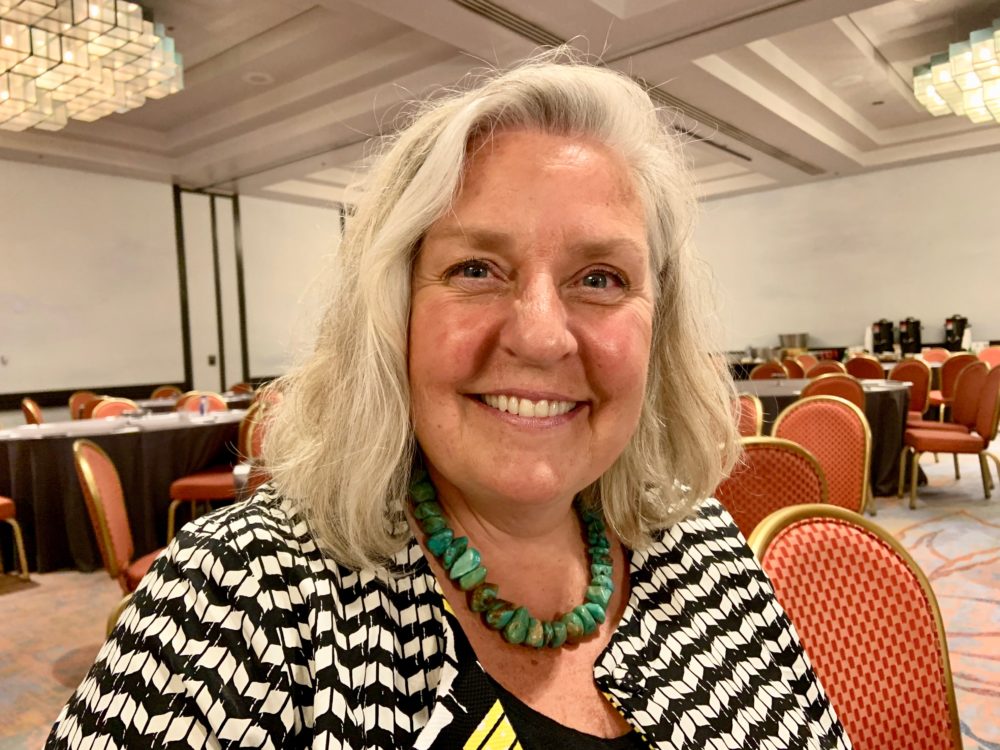
Senate Republican Leader Shannon Grove (R-Bakersfield) was in Washington, D.C. this past week to witness the signing of the United States-Mexico-Canada-Agreement (USMCA) and issued the following statement:

“This is a historic moment for the United States. It is such an honor to join President Trump and to witness the signing of this modern trade agreement. The Central Valley is home to the top three agricultural producing counties in the nation and this 21st century agreement is our country’s commitment to these hardworking farmers, farm workers, and agribusinesses.

“I am thankful for the President’s hard work and persistence on the USMCA. I have worked with his Administration to support the movement of this deal and I am grateful that this historic agreement has been ratified by the United States,” said Senate Republican Leader Shannon Grove.

In December 2019, Senator Grove was one of 26 state leaders from across the United States who signed on to a letter urging Congressional leaders to pass the USMCA.

In 2019, Senator Grove introduced Senate Joint Resolution 12 which requested the California State Legislature to support and urge Congress to approve the USMCA. SJR 12 passed out of the California State Senate with bipartisan support.

In an op-Ed published in The Fresno Bee, Senator Grove outlined the importance of the USMCA.
2020-02-01T07:55:20-08:00February 1st, 2020|

Naturipe Farms Produces Berries for Global Consumers

Naturipe Farms is Leading Growers of Blueberries in the World

By Tim Hammerich, with the Ag Information Network of the West 


Naturipe Farms is a brand most Americans have seen in the supermarket. What many may not realize is that the company is actually owned by growers. California Ag Today’s Patrick Cavanaugh recently spoke to Jill Overdorf, who is Naturipe’s Director of Business Development for Food Service & their Corporate Chef.

“Producing fresh berries since 1917, Naturipe Farms is unique to the produce industry with a partnership between four highly esteemed berry growers: Naturipe Berry Growers, MBG Marketing(Michigan Blueberry Growers), Hortifrut, and Munger Companies,” said Orverdorf.

Overdorff said Naturipe is the leading grower of blueberries in the world, second in strawberries, and also produce raspberries, blackberries, avocados, and cranberries.

“Our strawberry growers had a very challenging year, but they developed some great crops,” noted Overdorff. “We also have a good breeding program. Our blueberry growers, the Mungers, are the largest growers of blueberries in California. They had a phenomenal year, and they are branching out and are enormously innovative. They’re leading our value added program with their proprietary wash process, which enables 21 days on a fresh blueberry shelf life for a snack product,” explained Overdorff.

“Our blackberries and raspberries, we have a number of proprietary varieties, including the Centennial Raspberry and the Madeline Blackberry, both flavorful and non traditional berries because of their load seed count and they’re delicious flavor,” she said.

2020-02-01T08:07:49-08:00January 31st, 2020|

Coronavirus Precautions At World Ag Exp

World Ag Expo To Guard  Against Coronavirus

World Ag Expo is set to host attendees and exhibitors from across the country and around the world in just two weeks. Now they will also prepare to guard against the newest coronavirus emerging in China.

“The health and safety of everyone at our show is our top priority,” said Jerry Sinift, International Agri-Center® CEO. “We’re working with the right agencies to stay up-to-date on the status of coronavirus and how we can prevent the spread.”

Show officials are working with local, state and federal officials to monitor the situation and develop a plan on the show grounds. No government entity has suggested a change to the planned schedule.

“The HHSA Public Health branch is in close contact with the World Ag Expo in regards to health precautions all travelers and attendees need to be aware of. This includes precautions everyone should take at all times as this is also flu season. Precautions include hand washing, covering coughs, staying home if ill, and contacting a physician if symptoms arise. Travelers who become ill should contact the local health department where they are staying,” advised Dr. Karen Haught, Tulare County Health Officer.

The Tulare County Health department website recommends the following precautions to guard against coronavirus:

  • avoid contact with sick individuals
  • wash hands often with soap and warm water for at least 20 seconds
  • get a flu shot

Because washing hands with soap and water is one of the best defenses against illness, additional hand washing stations will be set up on World Ag Expo® grounds. For coronavirus updates, visit http://bit.ly/TCCoronaUpdate.

Show officials are also in contact with federal agencies monitoring international travelers. Show procedures will be updated as the situation dictates.

For a full schedule of events, more information about the show or to purchase tickets for the 2020 World Ag Expo®, visit www.WorldAgExpo.org.

2020-01-30T10:17:08-08:00January 31st, 2020|

Pick Justice Action Launches Sweepstakes with $5,000 Prize

Pick Justice Action Launches Sweepstakes with $5,000 Prize

Today, Pick Justice Action, an organization of concerned citizens who support the rights of farm workers, launched a sweepstakes to highlight the anti-farm worker record of Assemblywoman Lorena Gonzalez-Fletcher. Participants will have the opportunity to answer questions about how Gonzalez-Fletcher failed immigrant farm workers at truthaboutlorena.com and, if they get every question right, will be entered into the running for a chance to win $5,000.

“The people of California, particularly farm workers across the state, have a right to know about the anti-farm worker votes that Gonzalez-Fletcher has taken,” said Pick Justice Spokesperson Jesse Rojas. “Despite her rhetoric, she has constantly stood against farm workers, and instead favored big labor union bosses. This sweepstakes is another way Pick Justice Action is aggressively informing the hard-working people of our state about the real record of Gonzalez-Fletcher.”

The entry period of the sweepstakes is open until February 27th. Learn more about the sweepstakes and eligibility requirements at https://www.truthaboutlorena.com/.

###

Sponsored by Pick Justice Action, a 501(c)(4) social welfare nonprofit organization with the mission of educating the public about the rights and interests of farm workers and general laborers, and to promote policies that protect these rights.
2020-01-30T10:57:51-08:00January 30th, 2020|

DPR’s Dolcini to Focus on Three Pillars

Leadership, Collaboration, and People are the focus of Val Docini

Second of a series from DPR’s Director Val Docini. 
By Jesse Rojas, Editor

Val Dolcini, Director of the California Department of Pesticide Regulation, will focus on three pillars while leading DPR. The pillars represent organization and leadership principles that will allow DPR to continue to advance its mission of protecting public health and the environment through the careful and appropriate regulation of pesticides.

First Pillar: A Focus on IPM

“I’ll be using integrated pest management as a means of organizing the work of the department and as the foundation for closer collaboration with our stakeholders, such as the Almond Board. Using IPM principles, DPR can reinforce its role as a trusted leader in the regulation of pest management tools for urban and rural communities alike,” Dolcini said. “This will allow California to become significantly less reliant on chemical means as the first line of defense against agricultural and household pests.”

Dolcini stressed that the industry would continue to deploy appropriate chemical pesticides. “Chemical pesticides are an essential part of IPM, but we also need to include more biological controls, new cultural practices, softer chemistries, and safer alternatives into our arsenal,” he said. “To get there, we will continue to streamline our internal processes for approving these tools, and to create more demand for these tools in the value chain.”


“I realize that this is a tall order, but we’re at a pivotal point in the evolution of pest management in California. Changing pest pressures, increased urbanization, the desire for sustainably produced food, the need to seek and implement safer alternatives among many other issues all drive the demand to reexamined our views on pest management, Dolcini explained. “I think that we need to be in this conversation with the end in mind, and I commit to an ongoing dialogue about the future of pest management with folks from the agricultural, landscape, and structural pest community along with conservationists, worker health advocates, growers and others,”

Second Pillar: A Focus on Partnerships
“My second pillar focuses on partnerships with all stakeholder groups. DPRs work and mission must include the voices of all Californians. I want DPR to be a place where all stakeholders, ideas, and interests are welcome, not just to those who seek to register pesticides, but to those who are concerned about the impacts of those pesticides in their communities.

Dolcini is traveling to every corner of the state, to engage with Californians on pest management issues. “I’ll hold regular stakeholder meetings with anyone who seeks me out, and I look for opportunities to join my colleagues at DPR in initiatives that support our mission of protecting public health and the environment,” he said. “This is a dialogue that must be ongoing, and not just happen when a crisis occurs because trust is essential to successful engagement on pest management issues. Building trust takes time and effort. I believe that these partnerships, this engagement, this dialogue with agricultural groups will lead to stronger relationships and more creative solutions.”

Third Pillar: A Focus on the People of DPR.

“I believe that a department of government can only be successful in fulfilling its mandate when its employees are highly engaged. The leaders must be open, collaborative, and capable of articulating a vision that people can identify with; and where the workplace is known for mutually respectful and highly ethical behavior on the part of all of its employees,” explained Dolcini.

“I believe that the basis of DPR’s success is found in its employees. It’s my job to ensure that I’m responsive to their needs and concerns,” he said. “We need to provide more training opportunities for our future leaders and ensure that our internal and external recruitment efforts reflect the changing face of California.”

Dolcini said DPR also needs to be careful stewards of our resources, but at the same time manage the department’s affairs with an eye or the future. “We are investing in our people, our programs, and the systems that support them. Working towards these broad goals will lead to increased staff morale, bring more opportunities for professional development, and innovative, effective, and thoughtful public policy solutions,” he noted.

“In short, my vision for DPR is it a high-performing department of government that relies on a well trained and highly engaged workforce that relies on robust partnerships with a wide range of stakeholders, the best available science, sound management practices, and the ability to see around the corner at the possibilities that the future holds,” he said

“I have always believed in my career that when people of goodwill come together towards a common purpose, great things can and do happen,” said Dolcini.

2021-05-12T11:01:45-07:00January 30th, 2020|

Harder Bill for Nutria Invasion Passes

Harder’s Bipartisan Bill to Fight Giant Rodent Invasion Passes Committee with Unanimous Support

Over 800 Nutria Have Been Removed from California Since Being Spotted in 2017


Representative Josh Harder’s (CA-10) bill to combat the invasion of nutria, an invasive species of giant rodent, has passed the House Natural Resources Committee with unanimous support.

Josh Harder

Congressman Harder

The bill as amended would provide $12 million to nutria-impacted states, including California. Since the animal first reappeared in California in 2017, the California Department of Fish and Wildlife has removed over 800 animals from the Central Valley. Rep. Harder is joined on the bill by Republican Garrett Graves of Louisiana as well as fellow California Representatives Jim Costa, TJ Cox, John Garamendi, Barbara Lee, and Jimmy Panetta.

“I had a chance to see the great work California Fish and Wildlife is doing for myself, but it’s clear that we need some backup,” said Rep. Harder. “Our bipartisan bill would bring the federal support we need to states like California to end this invasion and send the swamp rats packing.”

“Nutria are an invasive species that have contributed to the 2800 square miles of the coastal wetlands loss in Louisiana,” said Rep. Graves. “Since our efforts to teach nutria abstinence have failed and they apparently taste like a car tire, we must expand our bounty program to eradicate these pests. The bill we passed today provides millions of dollars in funding to Louisiana and other states while allowing for the restoration of impacted lands. I appreciate Cong. Harder and our other partners working with us to pass this important legislation”.


“Nutria are wreaking havoc on our water infrastructure in the Valley, destroying canals, levees, wetlands, and crops,” said Rep. Costa. “I’m pleased Chairman Grijalva and the Natural Resources Committee voted to advance this legislation today and I am hopeful it will continue to move through the legislative process so we can deliver results for the Valley.”

“The Central Valley needs resources to fight this invasive species, so I’m proud to join my Valley colleagues in supporting bipartisan legislation that brings resources to California to help us turn the tables on the Nutria, protecting our crops and waterways,” said Rep. Cox.

“These invasive rodents are incredibly destabilizing for the local levees and flood control infrastructure that keeps our communities safe. Sacramento and the Central Valley are already flood prone regions, and we must do everything in our power to ensure nutria don’t exacerbate that risk,” said Rep. Garamendi. “We already know there’s a program with a proven track record of eradicating these pests, and our legislation would bring that program to the region and rid our communities of these rodents at a minimal cost. I’m pleased that this legislation has passed the Natural Resources Committee unanimously, and I applaud Congressman Harder’s leadership on this issue.” 

In June of 2019, Rep. Harder along with his fellow Central Valley representatives introduced a bill to reauthorize the Nutria Eradication and Control Act of 2003 and direct $12 million to programs in nutria-impacted states. The programs supported by the bill encourage habitat protection, education, research, monitoring, and capacity building to provide for the long-term protection of wetlands from destruction caused by nutria. Following today’s committee vote, the bill will next be considered on the House Floor.

Nutria were originally introduced to the United States as part of the fur trade in the late 1800s but were eradicated from California in the 1970s. They can devour up to 25 percent of their body weight daily and one female can lead to 200 offspring per year. These invaders threaten water infrastructure, certain crops, and indigenous wildlife.

Representative Harder has repeatedly pushed to pass the bill. In September, he brought a life-size taxidermy nutria to a Congressional hearing to illustrate the threat posed by the invader for his colleagues. In a separate hearing, he brought a graphic example of the invasion curve (colloquially referred to as a “#RatChart”) to demonstrate the need to act urgently.

2020-01-29T14:43:21-08:00January 29th, 2020|

President Trump Removes Undue WOTUS Burdens For Farmers

Secretary Perdue Statement on EPA WOTUS Rule

U.S. Secretary of Agriculture Sonny Perdue this week praised the Environmental Protection Agency (EPA) for defining the Waters of the United States (WOTUS) rule with the Navigable Waters Protection Rule:

“President Trump is restoring the rule of law and empowering Americans by removing undue burdens and strangling regulations from the backs of our productive farmers, ranchers, and rural land-owners. The days are gone when the Federal Government can claim a small farm pond on private land as navigable waters,” Secretary Perdue said. “I thank President Trump and Administrator Wheeler for having the backs of our farmers, ranchers, and producers and for continuing to roll back Federal overreach. With reforms and deregulation, Americans once again have the freedom to innovate, create, and grow.”

On January 23, 2020, the U.S. Environmental Protection Agency (EPA) and the Department of the Army (Army) fulfilled yet another promise of President Trump by finalizing the Navigable Waters Protection Rule to define “waters of the United States” (WOTUS). For the first time, the agencies are streamlining the definition so that it includes four simple categories of jurisdictional waters, provides clear exclusions for many water features that traditionally have not been regulated, and defines terms in the regulatory text that have never been defined before. Congress, in the Clean Water Act, explicitly directed the Agencies to protect “navigable waters.”


The Navigable Waters Protection Rule regulates these waters and the core tributary systems that provide perennial or intermittent flow into them. The final rule fulfills Executive Order 13788 and reflects legal precedent set by key Supreme Court cases as well as robust public outreach and engagement, including pre-proposal input and comments received on the proposed rule.

The Navigable Waters Protection Rule protects the environment while respecting states, localities, tribes, and private property owners. It clearly delineates where federal regulations apply and gives state and local authorities more flexibility to determine how best to manage waters within their borders. Assertions have been made that the new rule will reduce jurisdiction over thousands of stream miles and millions of acres of wetlands. These assertions are incorrect because they are based on data that is too inaccurate and speculative to be meaningful for regulatory purposes. The final rule along with state, local, and tribal regulations and programs provide a network of protective coverage for the nation’s water resources.


For more information on the New Definition of WOTUS Click here.

2020-01-28T11:19:53-08:00January 28th, 2020|

Former California Dairies CEO Is Honored

Andrei Mikhalevsky, Former President and CEO of California Dairies, Inc., Receives Inaugural IDFA Laureate Award


Andrei Mikhalevsky, former president and CEO of California Dairies, Inc., was greeted by a standing ovation and the acknowledgement of hundreds of his peers from across the dairy industry when he received the inaugural IDFA Laureate Award today during the association’s annual Dairy Forum in Scottsdale, Arizona.

Presented by the International Dairy Foods Association (IDFA), the IDFA Laureate Award is given to a leader in the dairy industry who has made significant, prolonged contributions to the development and growth of dairy. Candidates from across the dairy industry as well as suppliers and academics are eligible, and the awardee is chosen by a panel of industry professionals.

California Dairies Inc. (CDI) is the nation’s second largest dairy processing cooperative. Mr. Mikhalevsky was named president and CEO in November 2011 and began serving his term on Jan. 1, 2012, retiring at the end of 2019 after 8 years leading CDI.

Mr. Mikhalevsky’s career spans more than 40 years, and he has held a variety of leadership positions within the dairy industry. Previously, he served as the managing director of global ingredients and foodservices at Fonterra Cooperative Group Ltd., the world’s largest dairy exporter. Mikhalevsky built many of Fonterra’s global customer partnerships and oversaw the company’s research and innovation division and its branded business in Latin America. Prior to Fonterra, Mikhalevsky held executive positions at Campbell Soup Company, Georgia Pacific Corp. and Symrise Inc. He is a graduate of Stetson University where majored in finance and earned a Bachelor of Business Administration. In addition, he has attended the Food Executive Program at the University of Southern California.


Mr. Mikhalevsky currently serves as a director on the IDFA Executive Council and as chair of the IDFA Diary Ingredients Board.

“In selecting Andrei for this award, our panel recognized a true leader and innovator in the dairy industry, a professional who is respected by peers and competitors alike, and a partner and ally to anyone working on behalf of successful, sustainable dairy industry,” said Michael Dykes, D.V.M., president and CEO of IDFA.”

Dykes added, “For his service to our industry and to IDFA, we are proud to present Andrei Mikhalevsky with the very first IDFA Laureate Award.”

2020-01-26T20:14:46-08:00January 27th, 2020|

Glyphosate to Be Defended

Bayer Crop Science Will Always Defend Glyphosate Herbicide

By Patrick Cavanaugh, Editor

It is a cornerstone of weed control around the world and even though there are countless pending lawsuits against glyphosate herbicide, company officials vow that they will continue to fight for its continued use, as there has been no evidence that it has caused cancer anywhere in the world.
“The facts are still there, but in three cases that were as found against us, were all in Northern California,” said Steve Gould, a National Account Manager for Bayer Crop Science, speaking at the California Weed Science Society Annual Conference in Monterey “One was the Johnson trial, which was the first trial about the school district employee, the second one was a vineyard owner, and the third one was a consumer. A crop trial is set to start soon in St. Louis.”

Gould said all court case decisions are on appeal. “So, when you see this TV commercial about settlements, count on them continuing as they are funded by lawyers,” said Goud.  “My mother’s 84 years old, and she tells me every time I talked to her about how she’s seen this commercial more and more nowadays than she did a year ago. And I said, ‘Yeah, you’re going to see more and more of it until something more happens down the line with this situation,’” he said. “But nobody’s been paid any money, they’re all on appeal.”

Additionally, there were supposed to be several trials starting in the fall, but those were postponed. And currently, a jury is being selected in Contra Costa County for the next trial. “It’s interesting because there have been about five or six others that have been moved back. So, we were supposed to do some in the fall in St. Louis and they’ve been moved back, and even three of those are still been moved back again,” explained Gould. “These lawsuits are not a class action suit. This is one case at a time, and so far, there has not been any arbitration.”

“I want you to know I asked this question when I went to Scott’s almost two years I asked Monsanto if they are going to defend glyphosate? And the answer was, Yes, they were going to defend glyphosate. Then I came to Bayer and this year, and again, the first week I was in there, I asked, if they were going to defend glyphosate? Has anything changed? And they said, absolutely nothing has changed and that they were going to defend glyphosate,” Gould explained.

If anyone has seen the news/commercials that Monsanto or Bayer are arbitrating and close to settlement? “That’s not us saying that,” noted Gould. And I’ll just leave it at that. Again, that’s not Bayer saying that.

Gould said all the trial activity is not about glyphosate. “If anyone is still thinking that this is just a Bayer issue or just a glyphosate issue…. Wake up,” he said.

“Those who don’t like what we do, and have been fighting us for over 30 years, got a chink in our armor with IARC on the biggest, and safest pesticide, and they’re coming to get us, said Gould speaking from his own perspective.”

“That’s what’s happening folks. Has it affected my life? Yes. Has it affected you? Yes, but it’ll affect even more if we continue to let those who don’t know what we do or understand what we do, take away our tools. And if we continue to sit silently by and watch that, shame on you,” said Gould.

2020-01-24T12:50:39-08:00January 24th, 2020|

Reducing Food Safety Issues in Leafy Greens

Multiple Efforts Underway to Prevent Future Leafy Greens Food Safety Outbreaks

As public health agencies last week called an end to the latest E. coli outbreaks linked to romaine lettuce from Salinas, the leafy greens community, government regulators and the entire produce industry continue efforts on multiple fronts to prevent future outbreaks.

“Foodborne illness outbreaks have a significant and devastating impact on consumers who put their trust in our products,” said Scott Horfsall, CEO of the California Leafy Greens Marketing Agreement (LGMA). “Members of the LGMA take our responsibility to produce safe food very seriously and work to make improvements is well underway.”

Horsfall explained the LGMA has appointed industry experts to serve on a series of new Subcommittees to address specific areas involved in the production of leafy greens.

As an important reminder, when the LGMA makes changes to our requirements, they are implemented on thousands of farms that produce over 90 percent of the leafy greens grown in the U.S.  Government auditors will then verify growers are following the new practices through mandatory government audits. No other food safety program in the world has this capability.

Numerous additional efforts throughout the produce industry are underway to help understand how future outbreaks can be prevented and contained.

Click here for an action list of efforts underway to prevent foodborne illness outbreaks associated with leafy greens.

2020-01-23T21:38:51-08:00January 24th, 2020|
Go to Top