About California Ag Today

This author has not yet filled in any details.
So far California Ag Today has created 2014 blog entries.

Virtual Almond Conf. Attracted World Wide Audience

Virtual Almond Conference Was Big Success


By Patrick Cavanaugh, with the Ag Information Network

The recent virtual almond conference was a big success and people all over the world were watching and participating.

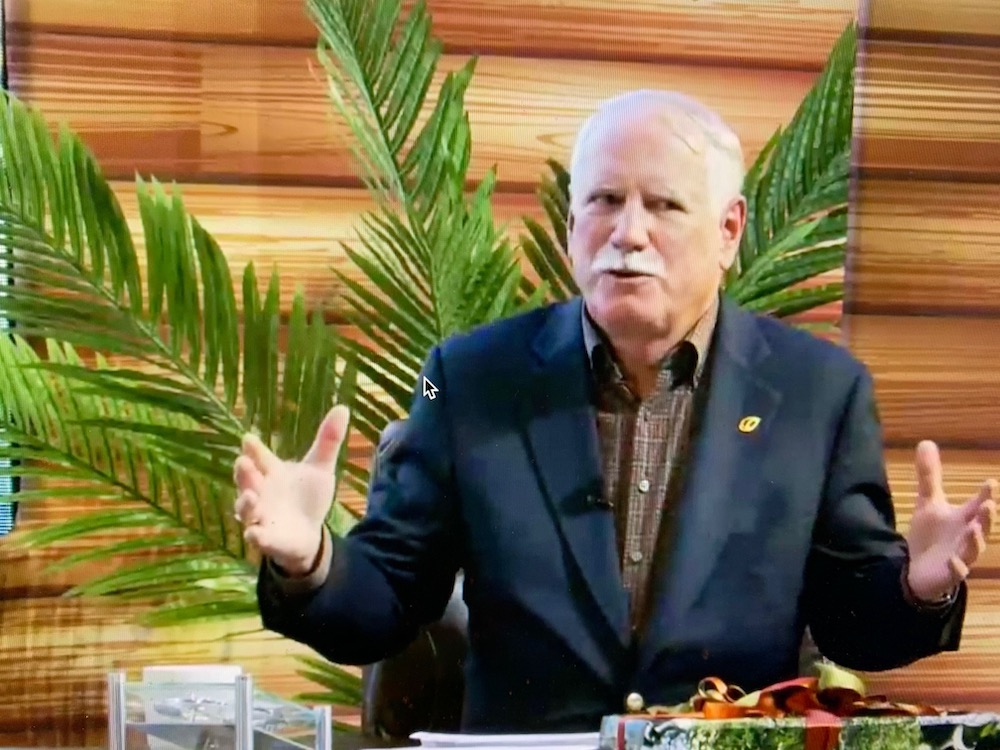
Richard Waycott is president and CEO of the almond board of California, with some details of the virtual conference.

“We have a few statistics. We had over 3,000 unique visitors and participants throughout the three days, we also had 149 exhibitors that partook in this year’s conference, and more than 40 countries from around the world participated as well. So, I think a pretty robust experience or the Almond Conference 2020,” said Waycott.

Waycott said, it always seems to go by fast, whether it’s a virtual or in- person conference.

“I know that usually when we’re in an in-person conference environment, we usually have a gala dinner on the second night and all the remains of the conference is sort of a half day on Thursday on the third day,” Waycott said. “And I always remark how, wow, how did those two days go by so quickly? And we’re almost over, you know?”

And it happened in the virtual conference as well. And Waycott is confident that we’re going to be meeting in person next year.

“It’s December 7-9 2021, we are going to be in Sacramento at the Convention Center. I will be there, come vaccines, whatever it takes but we will be there. And we look forward seeing you there,” Waycott noted.


2021-01-05T10:26:15-08:00December 22nd, 2020|

SGMA Resource for Growers

New SGMA Resource for Underrepresented Growers

By Tim Hammerich, with the Ag Information Network

Vicky Espinoza is a PhD candidate at UC Merced who is researching the impacts of the Sustainable Groundwater Management Act on agricultural land use. She noticed that there weren’t enough resources out there for underrepresented growers about SGMA, especially those who English is not their first language. So she developed a series of bilingual videos and posted them on a new YouTube channel: CaliWaterAg.

“Hopefully through CaliWaterAg, they can obtain what is SGMA, how does it impact them and how they can become involved. Because you know, our growers and communities can attend Groundwater Sustainability Agency meetings, and they could voice their concerns and any suggestions that they may have for developing solutions,” said Espinoza

Those videos are free on YouTube and can be found just by searching CaliWaterAg. Espinoza is also hosting a series of workshops on the topic next month.

“So it’s really a channel to inform, empower and encourage them to become involved in the conversation. And I will be hosting a workshop January 13th in English and January 14th in Spanish to talk to growers and community members, answer any questions they may have regarding the series, SGMA, land use or land re-purposing options that I go over in the fourth video of the series,” noted Espinoz.  “And to listen to them, to listen to their perspectives and what they think about land re-purposing options and to address groundwater overdraft.”

2020-12-21T18:02:01-08:00December 21st, 2020|

Dan Sumner on Almond Industry


Economics Of The Massive and Growing California Almond Industry

By Patrick Cavanaugh, with the Ag Information Network

Dan Sumner is a Distinguished professor in the Department of Agricultural and Resource Economics at UC Davis, as well as the Director of the UC Agricultural Issues Center at UC Davis.

“Of course, we’ve seen this coming for a decade. So, we’ve known that the bearings acreage was going to continue to go up because we’ve got the non-bearing acreage, and that’ always coming up,” Sumner said. “We don’t know for sure how many acres will be pulled, but nobody’s surprised that we have a massive crop.”almond crop

“The question is long-term demand. Do we get used to lower prices? There’s a million-dollar question. Actually, that’s a billion-dollar question, isn’t it? And nobody really knows the answer and I’m not going to pretend like I do either,” said Sumner.

“And we do know as well that even though you can’t grow almonds, very many places everybody’s trying to figure out whether the can expand outside of California. So,we know it’s a world crop and California dominates the world,” Sumner said. “It’s not just our additional size of crop, but it’s the rest of the world as well. And you can do a few almonds in Australia and you can do a few almonds here and there, and everybody’s going to try to figure out they can expand,” he said.

“And so, I don’t see any long-term disaster going on and almonds that is to say demand will continue to grow. But the real question is can demand keep up with the very rapid production increases. And the answer is maybe,” explained Sumner.

2020-12-17T18:01:07-08:00December 17th, 2020|

Blue Diamond Growers Love Cooperative

Growers are Loyal to Blue Diamond Growers

By Patrick Cavanaugh, with the Ag Information Network

Blue Diamond Growers, is the only cooperative in the almond industry, and it has loyal growers. Charles Crivelli is a Walnut and almond grower in the Stanislaus County area. He’s a member of Blue Diamond Growers and he loves being part of that Cooperative.

“Blue Diamond is the only cooperative and bit is the largest almond processor in the world. It’s been a real leader in the industry working along with the Almond Board of California and a dynamic organization— constantly developing new product lines, and they spend a lot of time on promotion marketing, truly been a leader in the industry,” said Crevelli.

“There’s about a 110- plus independent processors. And then there’s the Blue Diamond Co-op, with 3,000 members give or take. It’s a dynamic organization, and an organization that I have really enjoyed being a part of,” Crevelli said. “And the CEO Mark Jansen has done a fantastic job. Just doing a phenomenal job and leading the organization in the industry.”

And Jansen’s been heading up the co-op for more than 10 years.


Blue diamond Growers was founded in 1910, which means the Co-op is 110 years old this year.

2020-12-16T18:19:47-08:00December 16th, 2020|

Individual 24/7 Bee Monitoring Now Available


ApisProtect Has Launched in the US

More than ten years of research, decades of beekeeping, three years of validating and testing, over 15 million anonymized data sets and more than 20 million honey bees monitored. There have been a few challenges along the way but the day is finally here.

“We are delighted to launch our new technology now exclusively available in the United States. There are a limited number of monitors available now,” said ApisProtect VP of Sales Dennis Kautz.

“Watch our short video here to demonstrate just how quickly and easily our monitors can be installed in the hive,” noted Kautz

“Our science-based honey bee monitoring technology empowers beekeepers to manage their apiaries more efficiently, reduce labor and transport costs, and focus on cultivating larger and stronger colonies. Using ApisProtect, beekeepers can generate an additional $98 of value from each hive per year,” Kautz said.

Commercial beekeepers in the United States will now be able to drive operational improvements, including increased labor efficiencies of up to 50% and reduced transportation costs during pollination by up to 25%.

Deciding which hives to send to pollination is important and time-consuming. “We provide beekeepers with an instant condition report on each hive so they can identify strong hives to travel to the almond orchards. This ensures beekeepers can fulfill their pollination contracts, earn bonuses, and increase productivity for growers,” Kautz said.

ApisProtect works with the beekeepers to ensure they have the strongest hives to maximize revenue from the pollination season. “Critically, we give beekeepers control of their information and data, enabling them to maximize the value to their operation,” noted Krautz.


2020-12-15T18:44:03-08:00December 15th, 2020|

Agreeing on Water Needs

Sixth Generation Farmer and EDF Director Discuss Water Challenges

By Cannon Michael and Ann Hayden

Despite a seemingly endless era of upheaval – a surging pandemic, contentious election cycle and racial strife – we still have the responsibility to address pressing issues that cannot wait for calmer times. The future of California’s water is one of those issues.

While collaboration and relationship building have been made even more challenging due to distancing required by COVID-19, we believe that water is an issue where we can rise above party lines and entrenched perspectives.

Cannon Michael, Sixth Generation Grower

Water is the backbone of California’s agricultural economy, supports our iconic rivers, and of course, is essential to our survival.  Simply put, water is a lifeline that binds us together, and without it, we jeopardize our future and that of coming generations.

Could now be the time to collectively start down a better path for managing this precious resource and roll up our sleeves to make it happen? We think so.

For decades, fighting over water has stalled progress and sown deep mistrust across different water users.

We have forgotten that we are all stewards of California – a special place like no other, a rich connected tapestry of environmental beauty, diverse communities and productive agriculture.

We need to come together as Californians – not just farmers, environmentalists, rural community organizers and urbanites. We need to come together as Californians working for our children and future generations who are depending on us to leave them with a better California than we have today.

We need to come together to solve some admittedly difficult water challenges that affect the future of rural communities, cities, wildlife, farming in the Central Valley and consequently our country’s food supply. Drought and water scarcity are high on the list of these challenges. During our last major drought, the Sustainable Groundwater Management Act was enacted as one major piece of the solution to ensure we have enough water for future generations.

Looking forward, 2021 will be an important year for moving ahead on implementation of this sweeping change to water law. The state will be rolling out its first assessments of sustainability plans developed by regions with the most critically overdrafted groundwater supplies.

Balancing groundwater supply and demand, as required by the law, will no doubt be challenging: Some models say San Joaquin Valley landowners may need to take equivalent acreage to Yosemite National Park out of production to balance groundwater supply and demand.

To reach durable, fair solutions to such large challenges, we need to drop the baggage we’ve amassed over time. We need to come together as Californians to start collaboratively tackling problems – not just talking and arguing them. We need to come together and break the cycle of mistrust and take the time to truly understand how each side views the challenges and potential solutions.

It’s unlikely we will agree on everything – if we did California wouldn’t be the dynamic, diverse state it is today. But there is significant common ground we can build from. For instance, we all agree every single person in California should have clean and affordable drinking water when they turn on their kitchen faucet.

We also agree that replenishing groundwater is one of many solutions we will need to comply with the Sustainable Groundwater Management Act. But it’s not the only solution; it’s inevitable that we still will need to scale back some agriculture.

The question we need to address is, how can we make sure that agriculture can still thrive while some farmland becomes productive in new ways, whether it’s with less water-intensive ranching, low-impact solar projects, wildlife habitat or recreational areas for our families to enjoy on picnics and hikes?

Taking action to address these challenges may mean parts of our state and the very communities we live in will look different from how they look today. But if we can come together as Californians to get it right, California will evolve and endure as the special place it is today for generations to come.

We have decades of experience coming at water challenges from our silos. Let’s break down those silos, come together as Californians and see what happens. Isn’t it worth a shot?

Cannon Michael is a sixth-generation farmer and president and CEO of Bowles Farming Co., headquartered in Los Banos, cannon@bfarm.com

Ann Hayden is senior director of western water and resilient landscapes at Environmental Defense Fund, ahayden@edf.org

This document first appeared in WaterWrights.net


2020-12-14T11:32:24-08:00December 14th, 2020|

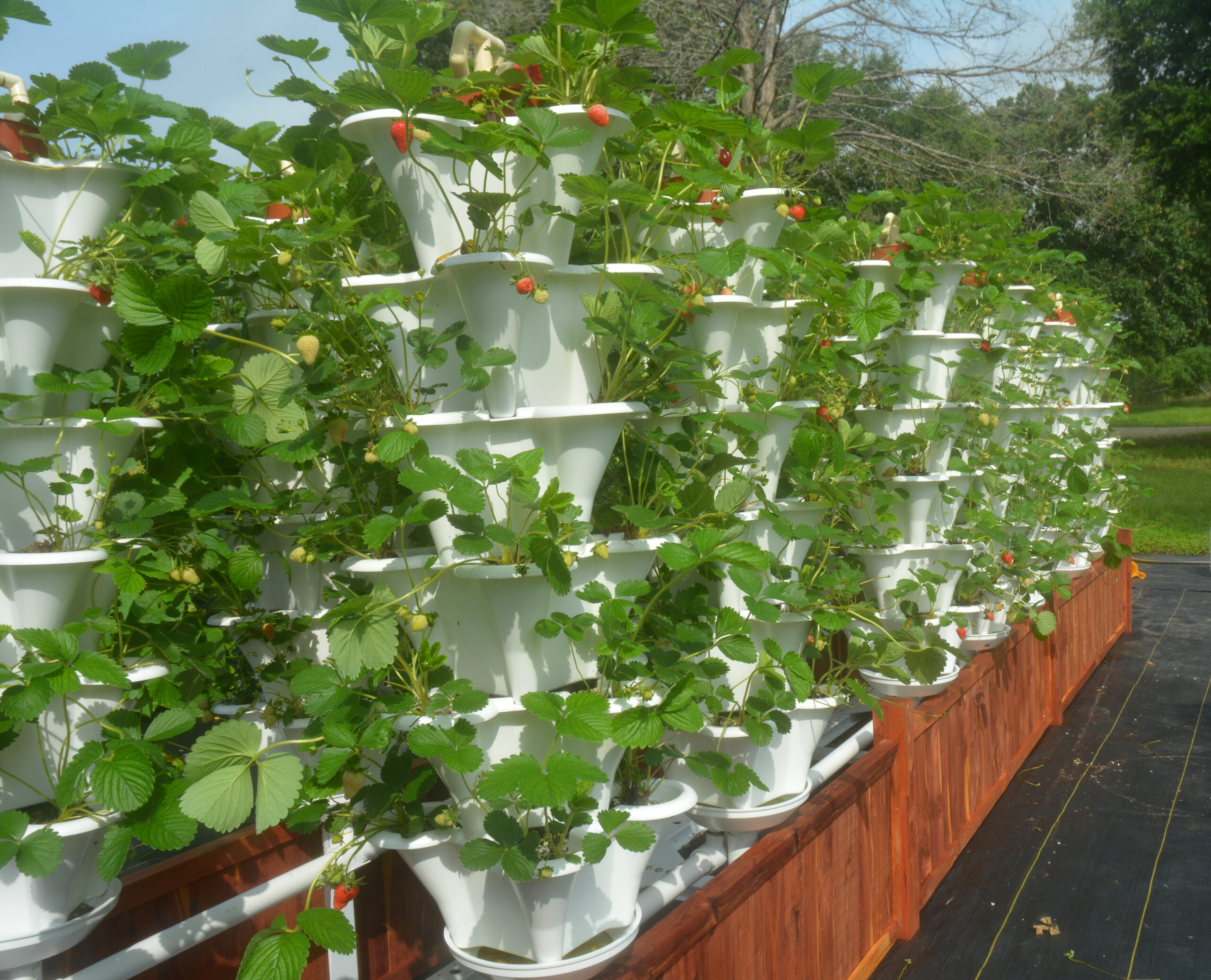
Driscoll’s Goes Vertical with Strawberries

(Featured photo courtesy of Tex AgriLife Today)

Driscoll’s and Plenty Team Up to Grow Strawberries Indoors

By Tim Hammerich, with the Ag Information Network

The concept of growing crops in vertical farms with plants indoors stacked on top of each other has been around for years. But this industry got some serious validation when Driscoll’s the global berry leader announced a partnership with Plenty – a San Francisco-based vertical farming company.

Plenty Chief Scientific Officer Dr. Nate Storey says this is a big deal for the evolution of vertical farming.

“It’s a big deal for several reasons. The first reason is, you know, people just need more delicious things – access to more delicious things. You know, that’s a source of excitement and joy and just part of the human experience. And the other thing is, I think it signals to folks that, you know, indoor ag is a thing,” said Storey. “It’s not a concept anymore-it’s a thing. And when you have people who know their business, who are serious about production, who have been in the space for a very long time and are kind of the best at what they do investing and engaging. You know, that’s a pretty big deal,” Storey.

Traditionally, one of the criticisms of vertical farming was it was somewhat limited commercially to leafy greens. Nate says this deal with Driscoll’s is exciting to expand their offerings into strawberries, and eventually, far beyond.

“At the end of the day, the number of crops that are going to move indoors, I think is going to surprise everyone. And, strawberries are just the first; definitely not the last,” noted Storey.

2020-12-11T18:11:39-08:00December 11th, 2020|

Lagrange is New Director of Dairy Innovation Center


Veronique Lagrange  Appointed Director of the California Dairy Innovation Center


The California Milk Advisory Board (CMAB), the marketing order representing California dairy producers, today announced the addition of Veronique Lagrange as the Director of the California Dairy Innovation Center (CDIC).

The CDIC was recently created to further product-oriented innovation and enhance productivity for the California dairy industry. Working closely with the CMAB and the California Dairy Research Foundation (CDRF), Lagrange will act as a liaison for researchers, educators, business development representatives, and processors interested in innovation efforts.

Most recently Lagrange held the position of Director of Business Development for the American Dairy Products Institute (ADPI), where she also chaired the Center of Excellence; as well as several industry taskforces. She also spearheaded The Strong Inside campaign, and served as a subject matter expert for business strategies, nutrition and scientific matters; in addition to the organizer of technical programs and conferences.

Lagrange previously held roles at the US Dairy Export Council (USDEC), which included Senior Vice President of Business Development, Strategies and Insights, and Director of International Marketing. Furthermore, she has conducted food technology programs for the California Raisin Advisory Board, Almond Board of California, and National Honey Board.

“Veronique will be a tremendous asset to California dairy innovation, as she brings a breadth of experience and skills to our team”, said John Talbot, CEO of the CMAB. “At both ADPI and USDEC, Veronique has had valuable experience with the research and development of dairy products and ingredients. She is extremely knowledgeable of their applications and functionality in manufacturing, as well as their vital role in the export business, which is very important to us.”

“It is truly an honor to have this opportunity for leadership of this unique program, which will be guided by the goals and priorities established by a cross-industry committee. I look forward to being an active partner and advocate within the dairy community to promote innovation and also to support the development of the workforce which will, in turn, ensure the global competitiveness of the California dairy industry in the future,” said Lagrange.

CDRF is pleased to welcome Veronique as the new director of the CDIC,” said Denise Mullinax, Executive Director of CDRF. “We look forward to collaborating with her in the expansion of research in the areas of innovation and development on behalf of the California dairy industry.”

Lagrange received her BS and MS degrees in Food Science from the University of Wisconsin, Madison. She also holds a degree in Nutrition from Ecole de Medecine, Paris, France, and a Doctorate degree in Engineering Management from George Washington University, Washington D.C. In addition to these accolades, Lagrange completed the Executive Program on Managing Technical Professionals and Organizations at the Massachusetts Institute of Technology, Sloan School of Management, as well as the Digital Marketing Program at the Yale University School of Management.

California is the nation’s leading milk producer. It also produces more butter, ice cream and nonfat dry milk than any other state. The state is the second-largest producer of cheese and yogurt. California milk and dairy foods can be identified by the Real California Milk seal, which certifies they are made exclusively with milk from the state’s dairy farm families.

2020-12-10T13:16:20-08:00December 10th, 2020|

Stop Use Order on Agro Gold Organic Fertilizer


CDFA Issues Stop Use Notice and Statewide Quarantine on Organic Fertilizer Agro Gold WS

Agro Gold WS was found adulterated with glyphosate and diquat and CDFA has issued a stop order for use on organic farms in the state of California.

The California Department of Food and Agriculture (CDFA)  announced recently a Stop Use notice and statewide quarantine have been issued for the organic fertilizer product AGRO GOLD WS to all organic operations registered in California. CDFA lab analysis of the product detected the presence of Diquat and Glyphosate, which are substances prohibited by the U.S. Department of Agriculture (USDA) National Organic Program for use in organic production. Continued use of this product in organic production may jeopardize an operation’s organic status.

Pursuant to authority under the California Food and Agricultural Code (FAC), Division 17, Chapter 10, CDFA’s State Organic Program (SOP) in coordination with the Fertilizer Materials Inspection Program (FMIP) issued a Stop Use notice today for AGRO GOLD WS to all organic operations in California registered with the SOP. CDFA’s FMIP also announced today that all California operations registered as organic in possession of AGRO GOLD WS must hold the product and contact CDFA for quarantine instructions on how to handle it.

AGRO GOLD WS is manufactured by Agro Research International, LLC. It has been distributed in a co-packaged box that also contains the product WEED SLAYER. CDFA continues to provide follow up to this investigation and is working with state and federal agencies. CDFA received a complaint about the AGRO GOLD WS product and program staff collected product samples from various locations to conduct lab analysis in CDFA’s Center for Analytical Chemistry. FMIP is an industry-funded program that ensures consumers receive fertilizing materials that meet the quality and quantity guaranteed on the product label. Investigators located throughout the state conduct routine sampling and inspections, respond to consumer complaints, and enforce the laws and regulations that govern the manufacturing and distribution of fertilizing materials in California. CDFA’s State Organic Program protects the organic label through enforcement, education and outreach.

If you are in possession of AGRO GOLD WS and seek additional information, please contact the Fertilizing Materials Inspection Program at FMIP@cdfa.ca.gov. Any appeal of the determination that this product violates the Food and Agricultural Code must be filed with the Fertilizing Materials Inspection Program no later than 15 days from receipt of the Stop Use notice and statewide quarantine. See Food and Agricultural Code section 14659.

2020-12-10T13:21:57-08:00December 10th, 2020|

Dairy Waste Turns To Electricity


Dairy Generates Electricity

By Tim Hammerich with the Ag Information Network

A lot of great things come from your local dairy: milk, cheese, and ice cream, just to name a few. But some dairy producers like Modesto-based Brian Fiscalini are also supplying their community with electricity.

“What we do is we collect the waste from our farm. So we collect all of the cow manure, we collect any spoiled feed, and then we also bring in a few waste streams from other industries that would normally either go into a landfill or would have to travel quite far for someone to be able to process,” said Fiscalini.

This waste is stored in concrete tanks and the lid captures methane gas.

“Then what we do is we convert that methane gas, with the help of an internal combustion engine, into electricity. So that electricity is used to power our facility as well as selling electricity to our local utility, which equates to enough power to take care of 300 homes in our community,” noted Fiscalini.

This is one more way that our California farmers are providing us with delicious food, and a whole lot more.

2020-12-09T18:24:14-08:00December 9th, 2020|
Go to Top