
About California Ag Today

This author has not yet filled in any details.
So far California Ag Today has created 2014 blog entries.

Mathesius is New UC Soil Scientist

Mathesius is New Agronomy Farm Advisor in Sutter-Yuba, Colusa Counties

By Patrick Cavanaugh, Farm News Director


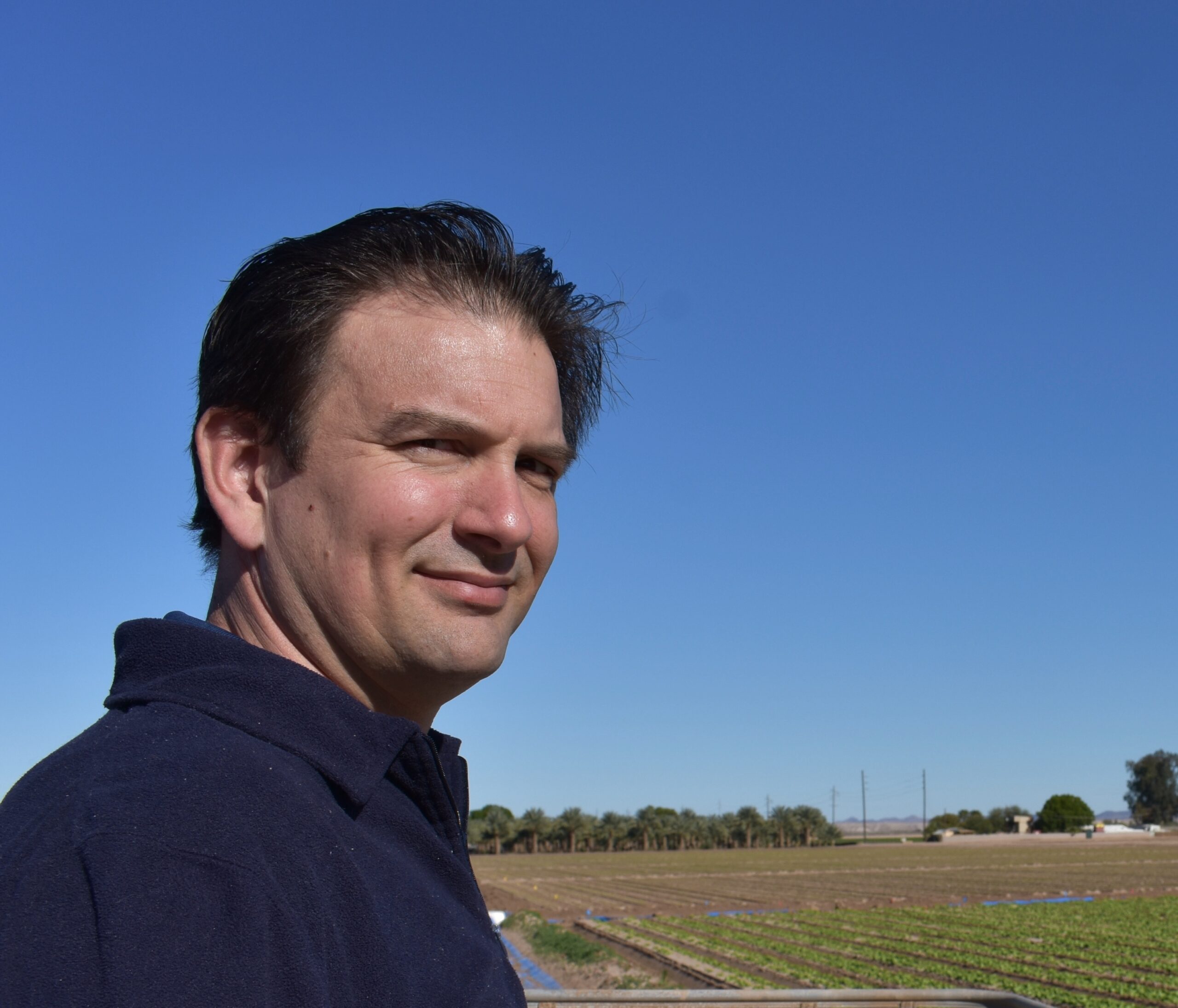
Konrad Mathesius is the new Agronomy farm advisor at the UC Division of Agriculture and Natural Resources Cooperative Extension, Sutter-Yuba, Colusa Counties. Mathesius first explained his unusual last name. “It means ‘mathematics’ in Latin. I guess we had accountants in our family lineage back there somewhere,” he said.

Mathesius completed his undergrad degree in political science at Utah State, followed by two master’s degrees at UC Davis in Soils and Biogeochemistry; and in International Agricultural Development (IAD)—a graduate group within the Department of Plant Sciences. “The IAD is flexible in its curriculum, which allowed me to take many plant- and soil- specific courses. I took the opportunity at IAD to specialize in soils,” he said.

California Safflower Field

California Safflower Field

“Through the years, we have learned a lot through the pioneers of soil science and it’s an exciting field because there is still a lot to learn,” said Mathesius. “And everything that comes out of soil science, in one way or another, is applicable to life on the planet.”

“Soils also tell a story, and that’s one thing I really enjoy about it. It’s especially evident in California because there is a remarkable combination of parent material that has created an abundance of different soils in the state,” noted Mathesius. “And it’s very relevant to agriculture, ecology, and environmental science. Differences in soils create a stark contrast in how crops grow and how they need to be managed,” he said.

Mathesius is responsible for the agronomic crops grown in his region, including dry beans, oilseeds such as safflower and sunflower, fresh market corn and silage corn, and small grains such as barley, wheat, and rye.

“I’m a soil scientist by trade, but ultimately I am a UC Cooperative Extension Farm Advisor and available to growers to figure out what their crop issues are—which include pests, diseases and soil fertility,” noted Mathesius. “I am a resource, and the UC system has many other resources and personnel who can thoughtfully consider solutions to crop problems.”

2021-05-12T11:05:51-07:00July 26th, 2016|

Breaking News: Cal Poly Opens New Greenhouse and Insect Rearing Facility

New Greenhouse Facility Opens to Save Citrus from Psyllids that Vector HLB

Facility to Rear Tamarixia Radiata, Natural ACP Predator

By Patrick Cavanaugh, Farm News Director


Scores of citrus industry leaders, citrus growers, scientists and CDFA officials attended the ribbon cutting event TODAY at the opening of a new greenhouse on the Cal Poly Pomona campus to rear Tamarixia radiata, a tiny parasitic wasp imported from Pakistan because it is an Asian Citrus Psyllid (ACP) nymph predator. ACP, in turn, is a serious nonnative citrus pest that can vector Huanglongbing (HLB)—a deadly citrus disease also known as Citrus Greening—that has devastated the powerhouse citrus Screenshot 2016-07-25 12.24.41.png

industry in Florida, threatens to ruin additional citrus economies, and is the biggest threat the California citrus industry has ever faced.

According to the United States Department of Agriculture Animal and Plant Health Inspection Service (USDA-APHIS), infected citrus trees “produce fruits that are green, misshapen and bitter, unsuitable for sale as fresh fruit or for juice. Most infected trees die within a few years.” ACPs have been detected in Alabama, American Samoa, Arizona, California, Florida, Georgia, Guam, Hawaii, Louisiana, Mississippi, Northern Mariana Islands, Puerto Rico, South Carolina, Texas and the U.S. Virgin Islands. Of those locations, the HLB disease has been detected in California, Florida, Georgia, Louisiana, Puerto Rico, South Carolina, Texas and the U.S. Virgin Islands.

ENTER:  Tamarixia radiata

Use of the ACP predator, Tamarixia radiata as a biological control for ACP was discovered by Mark Hoddle, biological control specialist and principal investigator, UC Riverside ( UCR), Department of Entomology. The first release of Tamarixia was in December 2011 after USDA-APHIS cleared the natural enemy for release from the Quarantine Facility at UCR.

Mark Hoddle UC Riverside Department of Entomology

Mark Hoddle UC Riverside Department of Entomology

“Tamarixia can kill ACP nymphs in two different ways,” explained Nick Hill, a Tulare County citrus producer and Citrus Pest & Disease Prevention Program (CPDPC) chair.  “The first is parasitism. In this instance, a female parasitoid lays an egg underneath a fourth or fifth instar—the larger and final developmental stage of the ACP nymph before becoming an adult—nymphs that are most preferred by Tamarixia for parasitism. When the egg hatches, the Tamarixia larva begins to feed on the under-surface of the ACP nymph. Eventually the larva completely excavates the body cavity of the ACP nymph and pupates inside the empty shell of its host.”

Hill explained the first releases of the tiny and harmless wasp will occur this fall in urban areas, “to help control ACP so that we do not have to do mitigations such as spraying in those areas. We hope to get to a point where we no longer need to go into people’s yards and ask if we can treat the trees.”

“The issue,” commented Valerie Melano, professor and chair, Cal Poly Pomona Plant Sciences and interim chair, Cal Poly Agribusiness & Food Industry Management/Agricultural Science, “is that we need to come up with the best possible ways to raise enough wasps for big releases to prey on ACP. We will have CDFA employees working in this green house, as well as student workers who have participated in our research program all along,” noted Melano.

Nick Hill, CPDPC chair

Nick Hill, a Tulare County citrus producer and Citrus Pest & Disease Prevention Program (CPDPC) chair.

Hill added, “The idea is to get enough Tamarixia out there so they start reproducing themselves and they become self sufficient. This is tough to accomplish, but researchers think if they can get big numbers of the wasp into the urban areas, they can put a big dent in lowering the populations of ACP.”

Cal Poly Pomona Greenhouse

The new Cal Poly 5,040-square-foot research greenhouse, built in collaboration with Citrus Research Board and constructed through a $400,000 grant from the Citrus Pest & Disease Prevention Program, will house the second Tamarixia production program in California. CDFA’s Mount Roubideaux facility in Riverside houses current production. Both facilities will support the CPDPC biological control program that oversees releases in urban areas with high ACP populations.

The new greenhouse should produce a 1-ACP Research Greenhouse1.5 million wasps. “It’s a very nice facility,” said Hill. “We are trying to boost the biological control program to produce four million Tamarixia a year.”

California Quarantine

The California Department of Food and Agriculture (CDFA) operates an extensive monitoring program to track the distribution of the insect and disease in both residential areas and commercial citrus groves. Results have determined quarantine zones, guided releases of biological control agents, and prioritized areas for a residential chemical control program. Nearly all of southern California is under quarantine for ACP, due to the fact that more than 15 residential trees have been discovered to be in infected with HLB.

The ACP quarantine in California includes parts of the following counties:  Fresno, Kern, Kings, Madera, Monterey, San Benito, San Joaquin, San Luis Obispo, San Mateo, Santa Clara, and Stanislaus; and the following entire counties: Imperial, Los Angeles, Orange, Riverside, San Bernardino, San Diego, Santa Barbara, Tulare County, and Ventura.

Asian Citrus Psyllid Cooperative Program California, Arizona, Baja California, and Sonora (USDA-APHIS)

Asian Citrus Psyllid Cooperative Program
California, Arizona, Baja California, and Sonora (USDA-APHIS). Visit our Citrus Diseases page to identify a plant infected by citrus greening, citrus canker, citrus black spot and sweet orange scab. If you detect an infected plant, report it  immediately.

2021-05-12T11:05:51-07:00July 25th, 2016|

Celebrate National Ice Cream Month!

Celebrate National Ice Cream Month with California Ice Cream and Flavors!

By Lauren Dutra, NAFB Summer Intern and Assistant Editor

Jennifer Giambroni, director of communications, California Milk Advisory Board

Jennifer Giambroni, director of communications, California Milk Advisory Board

First established in 1984 by Ronald Reagan, the 40th President of the United States, National Ice Cream Month was scheduled for the month of July, with the third Sunday of the month designated as National Ice Cream Day.

Jennifer Giambroni, director of communications, California Milk Advisory Board, explained why Californians, in particular, have so much to celebrate during National Ice Cream Month. “As the number one ice cream state,” she said, “we produce 126 million gallons of ice cream a year.”

“That’s a lot of scoops!“

California also leads the nation in milk production, and 99 percent of dairies in the state are family-owned. Including milk production on farms and milk processing, the California dairy industry, supports about 190,000 jobs in the California economy and contributed about $21 billion in economic value added in 2014, according to “Contributions of the California Dairy Industry to the California Economy,” by the University of California Agricultural Issues Center (May 14, 2015). 

Blueberry Ice Cream Float

Blueberry Ice Cream Float (Source: California Milk Advisory Board, Kristina Vanni Blogger, 2012)

Ice cream, being both timeless and innovative, has evolved in flavors and varieties over the years, according to Giambroni, while still holding true to the traditional treat you grew up with as a kid. “Ice cream is an important category that represents a lot of the milk produced on California’s more than 1,400 family dairy farms and carry the Real California Milk seal,” she noted.

“We’re seeing adult-friendly milkshakes with the addition of spirits, ice cream sandwiches made with more than cookies, and sundaes with everything from balsamic vinegar reductions to red bean paste,” Giambroni elaborated. Other new ice cream trends include hyper-indulgent flavor combinations, including nuts and fruits grown in California, and “better for you” versions with probiotics, varying levels of fat and sugar, added calcium, lactose-free, and different kinds of oils. “We’re loving the olive oil and walnut oil ice creams for their subtle flavors,” Giambroni noted.


Approximately 12 pounds of Real California Milk are used to make just one gallon of California ice cream.


Watermelon Chill Ice Cream (California Milk Advisory Board)

Watermelon Chill Ice Cream (California Milk Advisory Board)

The California Milk Advisory Board works with bloggers on how to incorporate ice cream into events for children of all ages:

TomKat Studio – DIY Ice cream Sandwich Bar

Hostess with the Mostess – Healthy Milkshake Bar

Hostess with the Mostess – How to Set Up a Cocktail Milkshake Bar

Hostess with the Mostess – Kids Sundae Party


Check it out:

Ice Cream Sandwich (California Milk Advisory Board)

Ice Cream Sandwich (California Milk Advisory Board)

Rick’s Ice Cream–Blue Moon-A fruit loops tasting ice cream with super-secret natural ingredients

McConnell’s Boysenberry Rosé Milk Jam–Central Coast, grass-fed milk & cream and cane sugar, slowly-simmered to a thick, rich and decadent milk jam – then churned into house-made, boysenberry & rosé wine preserves. 

Breyer’s Strawberry Ice Cream-packed with sun-ripened California strawberries picked at the peak of happiness!

Gilroy Garlic Festival Garlic Ice Cream-July 29-31, 2016

The Orange Works‘ Orange Ice Cream and Chili Mango Ice Cream

Where Is the Best Ice Cream in California? (PBS, 2014)

2016-07-23T17:33:15-07:00July 22nd, 2016|

Poultry Industry Doing Well, for Now

Poultry Industry Shines, Like a Canary in a Coal Mine

By Patrick Cavanaugh, Farm News Director


Bill Mattos, president of the California Poultry Federation, based in Modesto, reported the state’s poultry industry is doing well despite new regulations and wage increases. “First of all,” he explained, “it looks like chicken has taken over as the [category of] highest meat consumption now in the United States. It’s getting more and more popular, so that’s good,” Mattos noted.

“Also, the best thing is the industry seems to be weathering the Highly Pathogenic Avian Flu (HPAI) A (H5N1) storm,” he continued. “In California, we’re doing our due diligence with biosecurity. We don’t have any Avian Influenza. We’ll knock on wood for that.”

California Poultry Federation logo“The industry is also enjoying lower feed costs. That’s 60% of our cost, so that’s good news,” he added.

And, poultry industry employees have job security. “It doesn’t look like there will be fewer employees in the industry over the next few years, and we’d like to have more,” he said.

Notwithstanding the good news, challenges loom on the near horizon. “The Air Quality and Water Quality Control Boards are regulating a lot of different industries,” Mattos observed. “They’re starting to look at the poultry industry now that they have completed the dairy rules. We’re very concerned about those issues, so we are trying to work with the boards to explain to them what we do and how our business runs,” noted Mattos.

The updated minimum wage requirement may hurt the California poultry industry, another big concern of Mattos. “We supply half the chicken consumed in California. The other half comes from out of state. Without the same minimum wage requirements, we’re going to be at a disadvantage. We’re looking into the different possibilities—what we can do—to offset that.”

“You will be seeing some new things coming out from the poultry industry as we look at the ramifications of the new minimum wage,” explained Mattos. “We can’t compete with that. They are going to be taking a lot more percentage away from us, which may cost us some jobs if we don’t work this out.”

“With the minimum wage hike, California lawmakers are trying to appease workers. But it really affects businesses. Ours happen to be mostly in the Central Valley, which is the hardest-pressed area for unemployment. It isn’t a good place to have to follow wage requirements like you’re seeing in San Francisco and Los Angeles. It frankly makes no sense in the Central Valley,” said Mattos.

2021-05-12T11:17:13-07:00July 21st, 2016|

Pushing for Immigration Reform

The Unrelenting Push for Immigration Reform

By Laurie Greene, Editor


Tom Nassif, president and CEO of Western Growers Association is frustrated with the lack of immigration reform. “In 2013, we finally got a bill passed in the United States Senate. The reason we got it passed in the Senate is because we supported the pathway to citizenship; the other things we could work out,” Nassif said.

Tom Nassif

Tom Nassif, president and CEO of Western Growers Association

“However, in the United States House of Representatives,” Nassif continued, “they didn’t want a pathway to citizenship. They weren’t even sure if they wanted a pathway to legalization,” he noted.

“Most people didn’t even want a border security bill coming to the floor for a vote in the House because they didn’t want any immigration reform—whatsoever,” said Nassif. “They were part of that ‘send them home crowd.’ Anything you did, even if it was putting them on probation or fining them—whatever we did—was still considered amnesty. That is not amnesty. What we have today is amnesty because we’re not doing anything about it,” he argued.

Nassif had a mixed opinion on the recent Supreme Court of the United States’ 4-4 ruling against President Obama regarding his expansion of the Deferred Action for Childhood Arrivals (DACA) and Deferred Action for Parents of Americans and Lawful Permanent Residents (DAPA). “In a way, it disappointed us; in a way, it didn’t,” Nassif commented.

Western Growers logo“The reason it didn’t disappoint us is because there was no requirement that the people working in agriculture who might qualify for DACA or DAPA would remain in agriculture. Under the Senate bill, to get a pathway, you had to stay in agriculture for a certain number of years. In this case, they could have gone to work in any industry. If you have the choice of working in industry, why would you work on the farm? The choice adds adversity and affects other American jobs,” said Nassif.

Immigration reform should not be done by executive order, according to Nassif, as President Obama was trying to do. “It should be done by the legislature. They have the responsibility and the duty to pass immigration reform,” he said.

2016-07-24T15:22:12-07:00July 20th, 2016|

Lt. Governor Newsom Supports Calif. Agriculture

Calif. Lt. Governor Newsom Says Ag is at a Hinge-Moment in History

By Patrick Cavanaugh, Farm News Director


In an exclusive interview with Gavin Newsom, Lieutenant Governor of California, during the recent Forbes AgTech Summit in Salinas, Newsom declared, “It’s interesting about California—outside of Hollywood—no two more iconic industries exist than Silicon Valley’s technology, and the agricultural industry.

“It seems self-evident to everybody here that we have a unique opportunity to collaborate,” Newsom said about the event which joined the Silicon Valley high tech industry with the state’s farming industry to create digital solutions for agriculture. “We have the unique opportunity based on proximity and based on history. It is also a cultural opportunity as it relates to relationships that have been formed over the course of generations to begin to build bridges and connect some dots.”

Newsom said he believes in bottom-up inspiration, not top-down. “I don’t think you can sell down your vision from Sacramento. It’s about regions rising together and creating conditions for just these type of collaborations,” he said.

Newsom particularly appreciated comments about innovation. “I wrote a book, [“Citizenville”] and I’m not here to promote that book,” said Newsom, “but the whole idea was about platform thinking. The concept is the federal government, state government, and even local government cannot prescribe a federal, state or local pill for every problem,” he said.

“The point is,” he continued, “if we’re going to solve the big problems of the day, we have to create an environment—a platform—to engage folks like yourselves to deliver the applications, literally and figuratively, to solve big problems. It’s self-evident to anyone who lives here in California, that we’ve got some big problems.”

Citizenville, by Gavin Newsom

Citizenville, by Gavin Newsom

“We have regulatory challenges in this state, and I say this as a business person with many businesses. I have a sense of kindred connection in spirit to the entrepreneurial ways that are here today,” he commented. Owner of three wineries, several restaurants and hotels, Newsom stated, “I am in the Ag business, of sorts. My point is, we could do a lot better to make a point that [agriculture] matters and we care,” he said.

“At the same time,” he added, “Silicon Valley is center-tip of the spear—all the innovation and discovery, and the change in the way we live, work and play,” Newsom said.

“We’re here on a hinge-moment in history where we are going from something old to something new, a world of mobile, local, and social; and cloud and crowd. It’s a moment of anxiety for a lot of people, a moment of merger—the detonation of globalization and technology coming together. Again, there’s a lot of anxiety,” he noted.

Newsom suggested this is an opportune time to try to connect dots and address challenges, not just on the regulatory side and on the economic development side in this state, but also on the self-evident issues of water scarcity in this state. “You may have different opinions about climate change, global warming or violent disruption,” said Newsom, “but, as a guy who told me the other day up in Dutch Flat, Placer County, ‘I don’t care about all you folks from San Francisco talking about climate change, but something just ain’t right.’ Which is another way of describing a connection that things have changed,” Newsom explained.

Newsom said that kind of predictive nature, in terms of how we construct a water system for a world that no longer exists, and for a population that is twice the size; self-evidently, we have to do things differently. “We’ve got to be more creative and we’ve got to be more strategic,” he noted.

“It’s a long way of saying we are grateful for the work [California farmers] are doing. The goal for us in California is to make these conversations sustainable. ‘Not just situational and not just one annual conversation, but these are dialogs that must continue every day in this state,” Newsom said.

“I’m one of those people who believes in the combination of nature and technology, bringing cross-disciplines together,” Newsom said. “Cross-pollinating, literally and figuratively, ideas and people—values. “I think we have an incredible opportunity here in California, not just to survive in the agricultural industry but to truly thrive in a growing, competitive environment.”

2021-05-12T11:05:51-07:00July 20th, 2016|

RECYCLED WATER PROJECT FOR WATER STABILITY, PART 4

Recycled Water Project for Water Stability: Takes Shape, Part 4

By Brian German, Associate Editor and Broadcaster

As part of our ongoing coverage on the North Valley Regional Recycled Water Program (NVRRWP), we spoke with Anthea Hansen, general Manager of the Del Puerto Water District. Over the next few months the project will start to take shape following the U.S. Bureau of Reclamation signing the Record of Decision last month, the high level of cooperation taking place among all the different entities, and positive public response.

Del Puerto Water District dpwdHansen commented, “I can’t speak enough about our good experience thus far. The cities, partners and consultants on the project have come together to really advance this concept—which was all it was seven or eight years ago —into something that will become a reality.

When demands are low in the Del Puerto water district, specifically in the winter months, water deliveries can flow to storage facilities or the San Luis Reservoir for later usage when demand is high. While many areas have already been using recycled water for agricultural needs, the progress by the North Valley program has inspired some communities to improve their own water policies.

Recycled water has long been used in agriculture in other areas of the state, most notably the Salinas Valley and in the south, maybe a little bit up in the north in the winegrape country. The Del Puerto Water District currently relies on water delivered through the Central Valley Project, which had zero deliveries for the previous two years, and are only providing 5% this year. This new program has the potential to produce more than 30,000 acre-feet of water per year as soon as 2018.

NVRRWP map recycled water

NVRRWP map (Source: www.nvr-recycledwater.org/description.asp)

Among an estimated 100 recycled water projects in various stages of development throughout the state, Hansen stated, “For the Central Valley, I think this is definitely a big first. We received about 14 public comments on the joint environmental document. Of those 14, three or four were letters of support, and we received some broad support from the environmental community. 

A project of this magnitude to deliver needed water stability could also be accomplished in other dedicated communities, according to Hansen. “We believe this project to be a model for other municipal and agricultural agencies in ways to regionally solve issues together, and hopefully, it will be a model for the nation.”

Anthea_Hansen

Anthea Hansen, general Manager of the Del Puerto Water District

“Hopefully,” said Hansen, “people are looking at this as a good example of ways to think outside the box and use available technology to solve problems locally and regionally, which is what we have been forced to do here on the Westside.

“With all the complexities of California’s plumbing,” explained Hansen, “it would be impossible for a small district like Del Puerto to really affect any of the big picture changes, but we certainly do have the ability to affect how we act locally and regionally. I also think the Central Valley has not historically been a magnet for a lot of assistance, programs or changes that work to our benefit, so we have to devise these for ourselves or we’ll be out be of business. I’m very thankful that the two cities—Modesto and Turlock—on the east side of the river in our county, were willing to work with us, and I think we have a good partnership going forward.”


AAEES logo Leadership and Excellence in Environmental Engineering and Science


The North Valley Regional Recycled Water Program (Phase 3) won the 2015 Excellence in Environmental Engineering and Science™ Competition – Honor Award – Planning from the American Academy of Environmental Engineers & Scientists.

2021-05-12T11:05:52-07:00July 19th, 2016|

Solving Central Valley Water Salinity

Mizuno on Water Salinity Solutions

By Laurie Greene, Editor


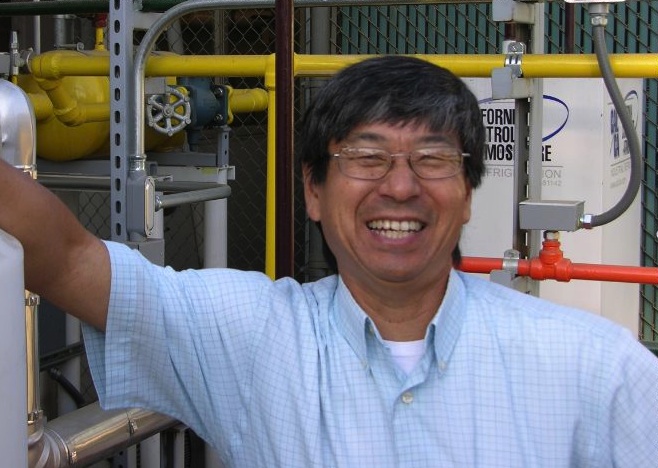
According to a Central Valley Salinity Alternatives for Long Term Sustainability (CV-SALTS) report, rising salt levels in the soil and groundwater threaten the potable water supply and agricultural productivity for the entire region. Walter Mizuno, longtime lecturer in mechanical engineering at Fresno State and director, Valley Industry Partnership for Cooperative Education (VIP) Program, researches increasing salinity conditions in Central Valley soil and groundwater, as well as methods of desalination.

Mizuno explained, “As the salt level rises, and if the soil salts aren’t leached out periodically, the ground becomes unsuitable for cultivating several crops. Growers either shift to high salt-tolerant crops or essentially idle that land.”CV Salts

Central Valley salinity conditions are serious, according to Mizuno. “Growers have already taken a lot of land out of production on the Westside,” he said, “and they’ll continue to do that until the salt mitigation measures have been implemented. Essentially, we need to get back to where we can currently sustain the amount of farming we have with the type of water that we have.”

“We are looking at desalination of agricultural drainage water,” Mizuno stated. “We’re trying to reclaim water that’s suitable for even human consumption; but right now, we’re looking at reclaiming water that is suitable for Ag use through a desalination process called vapor compression distillation, which takes drainage water from the Ag fields, distills it to make it pure and recovers some of the salts on the backside.”

Mizuno explained salt recovery would enhance the economic viability of this project by eliminating the cost of trucking or disposing the resulting brine and by possibly converting it into a revenue stream. “We’re trying concentrate that brine to a point, using solar evaporation, where we can find other uses for the highly concentrated form or maybe even sell it to a chemical processing company. We are also focusing on minimizing the energy cost to distill the water, to make the process more efficient.”

“We’re trying to combine multiple technologies, using ion exchange as our front end process,” Mizuno explained, “to get rid of some of the hardness in the water. We get rid of calcium and magnesium in the water, which helps the distillation process and protects the equipment for a longer period of time before requiring cleaning or eventual replacement. We’re using the brine stream of the distillation process to actually regenerate, upfront, the ion exchange units—similar to a home water softener.”

Pipe without waterMizuno explained, “When you look at the reasons why desal isn’t used more often—just the cost of energy makes the cost of the water expensive. So, we do a lot of energy recovery. Just take the basic process of distillation in which you heat up the water solution, boil it off, and condense the residue. A lot of that water you use, or a lot of the energy used to boil off the water, is lost; so we recover the heat from that steam to save energy. In other words, we don’t discard that energy; we try to reuse it.”

“We have been conducting studies on some Westside ranches,” he continued, “with our pilot plant that processes only one thousand gallons per hour. A series of ditches on those ranches collect the drainage water to be purified. Now, we have moved everything back to the Fresno State Center for Irrigation Technology (CIT),” said Mizuno, “because we’re building a brand new redesigned unit, which should be operating by the end of this year.

“The second phase of the project,” Mizuno commented, “is to move the unit out to Panoche, and conduct field testing out there. We will evaluate the energy efficacy and also the economics of the unit and process, and we will field-test to determine how rugged and dependable it is out in the actual service area.”

“This is actually a research project,” Mizuno clarified. “We’re still fairly far away from commercializing it. Basically, we will evaluate the scalability of these units so that depending on the size of the farm and everything else, you can either put multiple units out there or design a single-unit system very similar to ours. You could size the system to meet whatever the demands are, but you need a reservoir or holding area, and you’d like to be able to operate 24/7.”

“We are considering using solar to power this,” Mizuno mentioned. “The issue with solar is, obviously, it tends to work during the daylight hours but doesn’t do much during the evening hours. We’re looking at using batteries, electricity, natural gas or some other energy source to keep the process running when the sun goes down, but it’s a matter of economics.”

Mizuno said the research team is optimistiCIT Logoc about the process itself, but he does not anticipate it will be a cure-all. “It is a research project,” Mizuno reiterated, “and we’re trying to see if we can drop the energy cost, and lower the water cost. I think the economics will change though. Water will cost more for everybody in the next few years. As that changes, I think some of these technologies are going to become feasible from an economic standpoint.”

The entire state shoud be aware of these water issues, according to Mizuno. “I think there are still a lot of issues that the common person isn’t aware of and how they fit in, and Ag is no exception. I would like people to understand that we are working to stretch the available amount of water supplies we have and we are working on technologies that are yet unproven. But some of these technologies will require a few more years—to many years to solve. Others are not economically feasible today, but they may be in the future as water supplies get tighter.”

Mizuno has observed that farmers are already doing a lot to conserve water, particularly employing the use of new technologies such as drones to evaluate water stress and nutrient stress in plants. “Right now,” he offered, “we are looking at another piece of the puzzle; we’re trying to stretch the amount of water supply we have, utilize it in multiple-use scenarios, and use it more intelligently to make some waste streams into revenue streams.”

Mizuno urges the general population to just be aware. “Conservation is the first step for a lot of people,” he said. “That’s the easiest way to stretch water supplies, and so I think people need to understand that water is a finite resource in the state of California. The water situation is not likely to get better anytime soon, even if we have normal rainfall and so forth. We are in an overdraft situation with our water supply.”


CV-SALTS participants collaborate to develop a workable, comprehensive plan to address salinity, including nitrates, throughout the region in a comprehensive, consistent, and sustainable manner.

Center for Irrigation Technology (CIT) celebrates 35 years!


2021-05-12T11:05:52-07:00July 18th, 2016|

Wilson Vineyards Fully Mechanized

Mechanization is Future for Winegrapes

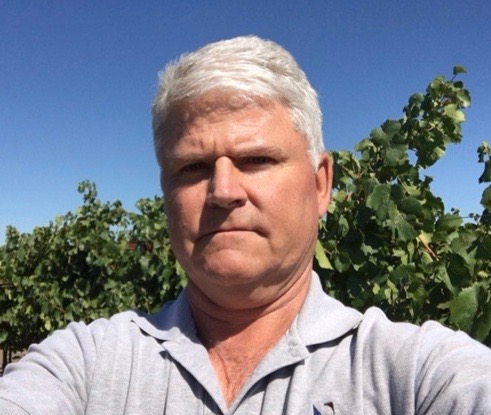
Ken Wilson, winegrape grower and owner of Wilson Vineyards in Clarksburg, just south of Sacramento, farms 12 different winegrape varieties and has been enjoying a productive season despite hot weather. Wilson’s top winegrape varieties are Chardonnay, Petite Sirah and Pinot Grigio (Italian), also known as Pinot Gris (French), and Chenin Blanc.

Presently, Wilson’s winegrapes are past veraison, a stage of ripening in the physical grape maturation cycle in which the berry starts to soften and take on sweetness and color. Veraison is an excellent phase for the winegrapes to be in at this point in the season.

Wilson elaborated, “Pinot Noir and Pinot Gris are probably the furthest ahead, then Pinot Noir at 50 to 60%, and finally, Chardonnay around 30%. We’re getting good color and size now.”

Despite hot weather this year, Wilson says, “it hasn’t been too bad.” Most of his grapes are already contracted, and he anticipates a good vintage. “There are a couple of tons here and there, but [the winegrapes] have been pretty much sold out since early spring,” Wilson commented.

Wilson warned the higher cost of labor due to the recent minimum wage increase in California from $10 per hour currently to $15 in 2020. “We get pretty good winegrape prices. I’m not speaking for the district. I don’t know how some of these guys are going to survive,” he explained.

“We’re going to be forced into mechanization, and the wineries are just going to have to accept it. I think they are going to accept it, if they don’t want to pay [labor increases] anymore,” Wilson said.

Nevertheless, Wilson is more fortunate than some other growers because his vineyard is completely mechanized. “We’re 100 percent machine—other than a couple of special jobs where the winery who wants the grapes will pay for workers for hand harvest.

In comparison to Wilson Vineyards, vineyards in the Napa and Sonoma regions will experience significant wage increases because their winegrapes are hand-harvested. “The only hand harvesting we do amounts to less than one percent,” Wilson said.

Though Wilson evaluated this year’s crop as better than last year, “I think, overall, it is probably not much better than an average harvest, and yields may even be a little lighter than the average. I would say overall about 7.5 tons of winegrapes,” Wilson noted.


2016-08-08T20:06:08-07:00July 18th, 2016|

Family Tree Farms Enjoys Exceptional Tree Fruit Year

Tree Fruits and Hybrids Are Bountiful and Delicious This Season

By Emily McKay Johnson, Associate Editor

Tree fruits this year for Daniel Jackson, a seventh-generation farmer and partner, Reedley-based Family Tree Farms, are thriving and delicious. “The quality is just exceptional right now,” Jackson said. “I think the industry is taking a little bit of a lull in volume right now for the last two days, but it looks like it’s going to pick up again. The fruit coming off late season is going to be exceptional from an eating quality standpoint,” he indicated.

Family Tree grows various tree fruit hybrids, as well as blueberries and grapes—everything from plumquats (a hybrid between an apricot and a plum) and apriums (a similar hybrid that is more apricot than plum) to fresh white peaches and nectarines, yellow flesh peaches and nectarines, and apricots.

Daniel 1

Daniel Jackson, seventh-generation farmer and partner of Family Tree Farms in Reedley, Calif.

Although hot weather can be challenging to growers, trees in the Central
Valley have evolved to adapt to the heat. “Tree fruit genetics here in the Valley are used to that heat,” Jackson elaborated. “Other than a mid-season apricot that may get some tip burn, we’re not seeing too much damage,” he explained. “We may see some sunburn here and there; but for the most part, as long as you have a good leaf ratio on your tree, everything seems to be looking good. We’re happy with the way things are turning out.”

Jackson also reported some minor labor shortages, but their numbers are staying pretty strong. “It was short early on; now we’re pretty stout,” he commented. “I think our crews are up 25 guys, which is a good full crew. We may run into some challenges as we enter the table grape season, but right now things are looking good. We’re staying positive.”

Family Tree Farms has an optimistic attitude about their labor crews. “We just want to be able to provide a consistency of work out there so that people are happy and can stick around with us. I think most farmers are trying to do that same thing,” he said.

Springtime, this year, gave them an early bloom but a cool and mild spring, conditions that can impact the size of produce, come harvest season. “I don’t think we gathered enough heat units to grab the size that we typically have,” Jackson explained, “but I think we’re catching up now. A lot of times, that’s what happens in a season; the size may be a little bit off [early on], but it catches up and becomes more of a normal year,” he said, and other growers have experienced the same problem with their commodities,

“We were probably about a half size to a size off early on in the season, but are seeing sizing come back a little bit and we’re happy about that,” Jackson described. He attributed this impact on fruit size experienced by most California fruit growers, “because we lost a couple of early season growing days that are so important in the early-season varieties.”

The Family Tree crew remains positive; they take pride in the exceptional color of their fruit and picking has stayed consistent. “I think color has been one of the best years we’ve had. Especially with plumcot varieties, we see the ripening happening a little bit more evenly, so are able to pick more consistently as well.”

Jackson handles the fluctuating challenges in farming with stride. “There are a lot of positive things going on,” he commented. “There will always be challenges every year but we don’t let those slow us down. Farmers are more resilient than that.”

2016-07-15T12:32:37-07:00July 15th, 2016|
Go to Top