About California Ag Today

This author has not yet filled in any details.
So far California Ag Today has created 2014 blog entries.

Cannabis Growers May Be Using Illegal Materials

Illegal Pest Control by Cannabis Growers

By Patrick Cavanaugh Farm News Director

Big problems are arising in the cannabis growing areas of California.

John Fournier runs Acadia Regulatory Consulting in New York State. He on an EPA list of registration consultants. And because his company is high on the alphabetical list, he gets calls from cannabis growers in California who are looking for help in dealing with pests and diseases on their crops. Because cannabis production is federally illegal and the registered crop protection material products fall under federal guidelines, there are essentially few materials that growers can use.

“The biggest pressures for cannabis growers are powdery mildew, fungus gnats, and mites. If a grower had a bad spider mite outbreak, they would want to protect a super valuable investment. The question is, what are they willing to do to protect that investment? And in a situation like that, maybe you’ll go buy a miticide off the shelf somewhere,” Fournier said.

“As long as it’s not restricted use, anyone can buy it and use it on your crop. In that situation, that’s going to be a product that’s not approved for cannabis use on the state approved lists, difficult to control legally. There are also fungus gnats, which are a problem with plants that are overwatered.”

A lot of growing happens underground, and growers will have a soil mixture that is overwatered, which is one of the most common problems in cannabis.

“When the soil is overwatered, algae will start growing in the soil, and fungus gnats will find the crop and start feeding on the algae,” Fournier explained. “And then they’ll start feeding on the fine root hairs of the crop itself so they can actually kill the crop, if the outbreak is bad enough. Fungus gnats can be controlled by either an insecticide to kill the gnats, or you can use a biocide to kill the algae. Again, the materials must be registered for cannabis.”

According to Les Wright, Fresno County Agricultural Commissioner, illegal cannabis farms have been raided and officials have found empty containers of rodenticides, nematicides, insecticides, and miticides, all illegal for use on cannabis. “We always find illegal crop protection materials and many of them had labels in Spanish, most likely from Mexican syndicates.

Again, there are no conventional materials registered.

Now here’s the part where it gets dangerous. According to Fournier, “In states where recreational cannabis has been legalized, I have spoken to people who have said they’ve discovered through some means or another … dangerous levels of pesticide residues on cannabis, where a grower had obviously used hundreds of times more than the labeled rate of an insecticide to save their crop, and obviously this could be dangerous to consumers.”
2021-05-12T11:01:56-07:00January 26th, 2018|

Seek out CalAgJobs for Opportunities

Job Possibilities in Agriculture

By Jessica Theisman, Associate Editor

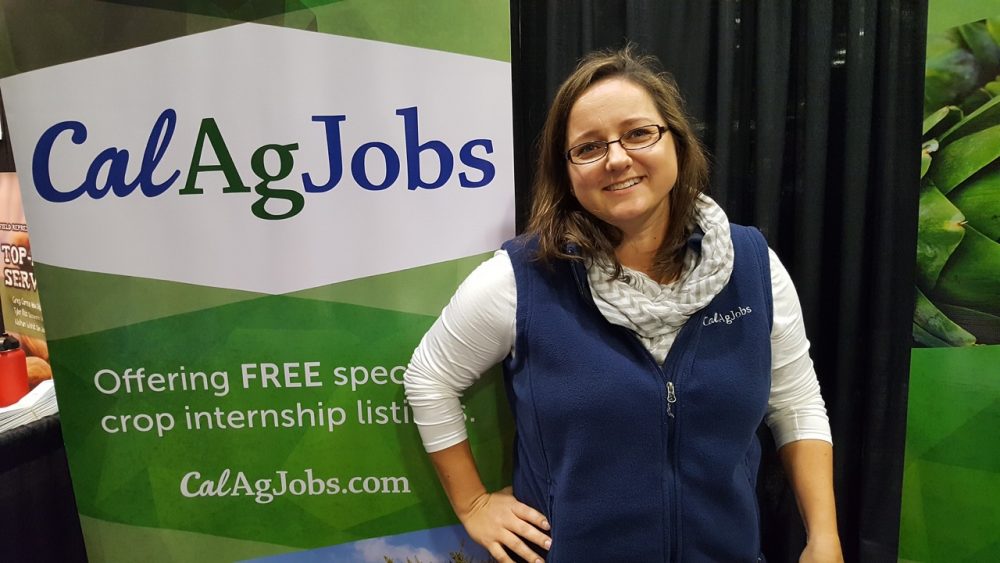
California Ag Today recently spoke with Shannon Douglass, co-owner and recruiter for CalAgJobs. She spoke about the job possibilities in agriculture and the vast amount of positions.

“There are a ton of great jobs in agriculture, especially for people coming right out of school or even those high school students right now that are thinking about what their career options might be after college,” Douglass said.

CalAgJobs wants all to consider the opportunities available in agriculture. Technology is now a huge part of agriculture that is being implemented all over.

“There is a lot of opportunity for people who want to work in food production, that in some ways, that aren’t necessarily in the field. There are a whole lot of people supporting the farmer these days,” Douglass explained. “Not all high paying agricultural jobs require a college degree. It all depends on the goal of the company and the variety of jobs. There is a lot of work in the technical trade field, from welding to any type of mechanist experience. There is also opportunities for those who have production experience but do not have a degree.”

Although you do not need one, having a degree is beneficial for a variety of positions.

“There is a lot of opportunities to people that do have a degree somewhere related to crop or soil science or agronomy,” Douglass said. “All across the spectrum, we have opportunities for people in agriculture with great long-term career opportunities.”

For more information: https://calagjobs.com/

2018-02-06T16:26:41-08:00January 25th, 2018|

Band Canker Affecting Younger Almonds

Almond Band Canker Becoming a Big Problem

By Patrick Cavanaugh, Farm News Director

Brent Holtz is a UC cooperative extension Pomology Farm Advisor for San Joaquin County. He recently told California Ag Today about how the fungus band canker on almonds is becoming more prevalent in the San Joaquin Valley.

“I’ve seen a lot more band canker, which is caused by a pathogenic fungus, Botryosphaeria dothidea, and we’re seeing it on young orchards, especially in in San Joaquin county,” said Holtz.  “We’ve seen that a lot out in the delta and we’ve seen it in eastern San Joaquin county where the soils tend to be a little heavier, maybe old dairy ground and richer and we don’t really know why.”

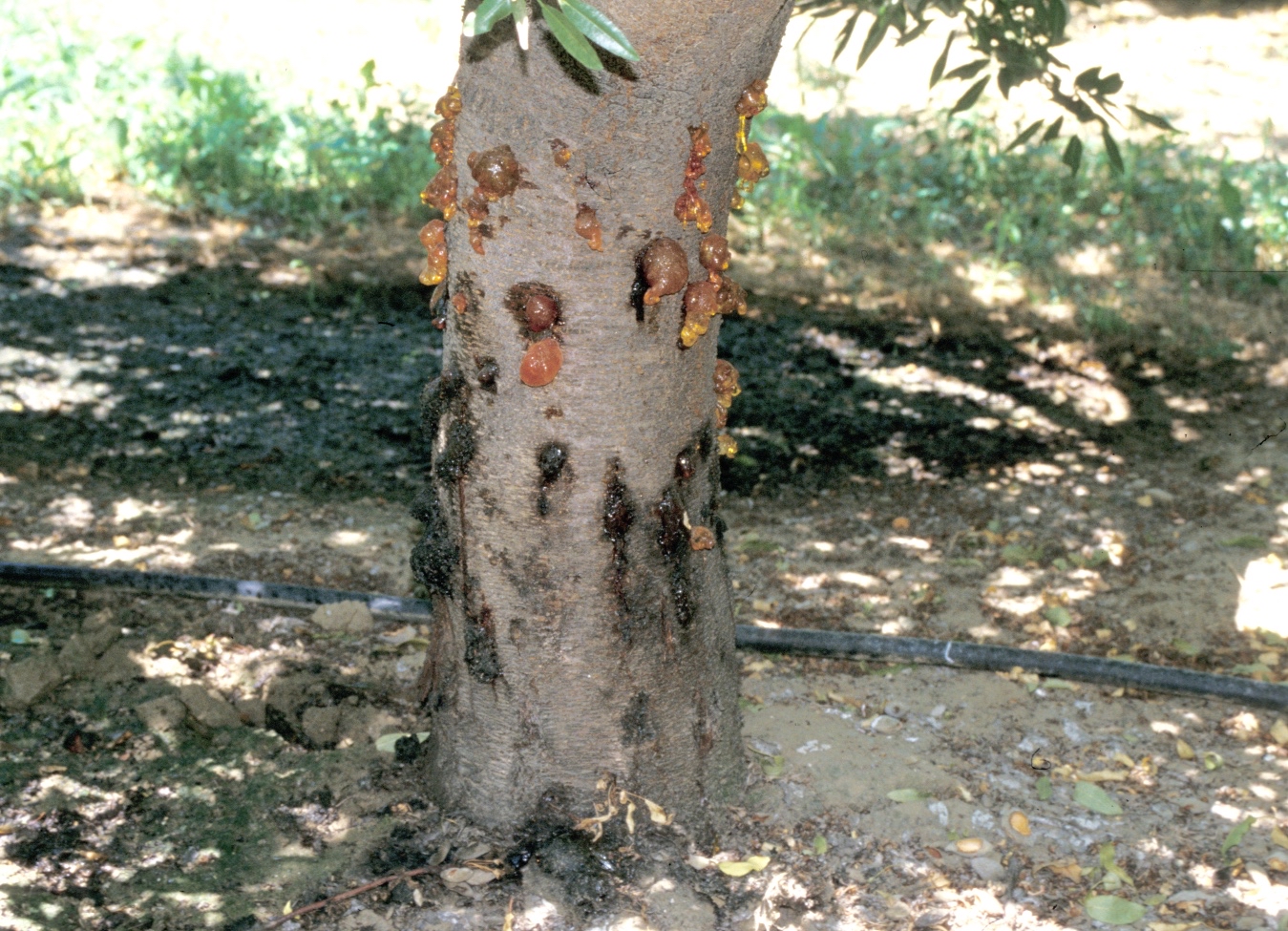
“We’re seeing so much more, but it’s a fungus that infects usually the trunk or the main scaffolds, and we call it band canker because sap balls will come out at the site of the infection and create a band that circles around the trunk or the scaffold,” Holtz explained. “That’s why we call it band canker.”

It’s starting to show up in the orchards that have not been shaken yet, as a wound needs to happen before the infection sets in.

“We think it’s showing up in a lot of orchards before we start shaking the trees and usually in most cankers, we would have to have a wound that would have to happen first before the infection would take place either through a wound or a wound from shaking the tree,” Holtz said.

“Some of these orchards with symptoms tend to be trees that are growing very vigorously, and we suspect maybe that they’re growing so fast, growth cracks are created that the fungus may have got in and caused the infection.”

Trees with band canker on the trunk may not survive. And band cankered scaffolds have to be removed, which affects the tree’s architecture and will reduce yields.

There is evidence that micro sprinklers hitting the trunk could also increase the start of an infection.

“It seems to be showing up a little higher concentration where it was on a micro sprinkler irrigation system, where the sprinkler was actually hitting the trunk,” Holtz said. “We don’t seem to see it as much in orchards with a drip irrigation, so we are advising growers to consider drip or to put a splitter in their micro sprinklers so it can avoid wetting the trunk repeatedly with each irrigation.”

2021-05-12T11:01:56-07:00January 24th, 2018|

“Measure To Improve” Gathers Data

“Measure to Improve” on Measuring Sustainability

By Jessica Theisman, Associate Editor

Sustainability is important in today’s agricultural fields. California Ag Today recently spoke with Nikki Rodoni of Measure to Improve in Salinas about the topic. Measure to Improve aims to help growers credibly promote their sustainability efforts.

“It takes about a year before I really earn the trust from the growers because we are collecting data that is very intimate to their operation, such as production data, waste data, fuel data and energy data,” Rodoni said.

There are plenty of benefits in becoming more sustainable, such as, “a company morale improvement when employees know that they are working for a company that takes this seriously and really doing the right thing,” she explained.

It is always good when people are proud of where they work, and sustainability can really help improve business strategy.

“We have to start with a good business case that translates into environmental benefits. It does not mean being warm and fuzzy just for the sake of trying to build a brand image,” Rodoni said.

Measure to Improve does strives to do things that make good business sense. They aim to help collect data to support decisions to help farmers improve.

“For instance, when you are thinking about a capital investment, finding out water can be conserved is really high regarding sustainability. It is all about data tracking and practices and telling your story,” Rodoni said.

For more informtion:

https://www.measuretoimprovellc.com/

2018-01-23T16:34:34-08:00January 23rd, 2018|

Survey Coming To Gauge Nitrogen Fertilizer Use

Understanding How Growers Are Using Nitrogen Fertilizers

By Brianne Boyett, Associate Editor

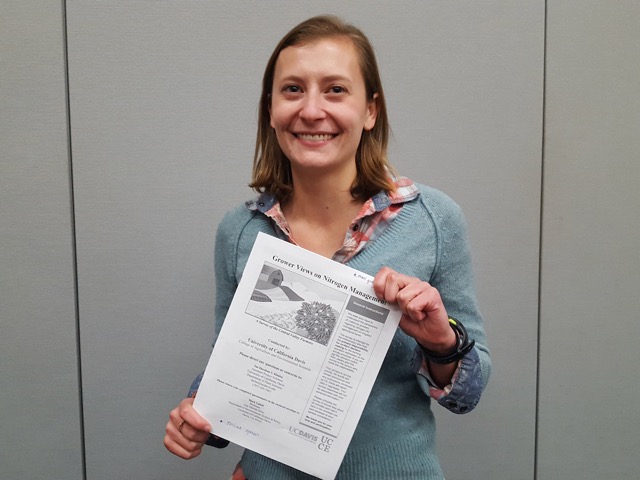
Nitrogen fertilizer applications are an important topic for growers. They’re expensive, and farmers only want to give crops what they need. UC Davis researchers want to know more about how growers are using nitrogen, and they’re sending out a survey to growers throughout the state at the end of January.

Jessica Rudnick is a third year Ph.D. student in the Graduate Group of Ecology at the UC Davis Center for Environmental Policy and Behavior, and she is overseeing the survey.

“UC Davis is sending out a survey to about 8,000 growers in the Sacramento and San Joaquin Valley [areas]. We’re asking about perspectives and attitudes on nitrogen management. This is really to understand what the education and outreach resources that are available around nitrogen, how people are understanding the new policies that are coming down the pipeline and how we can optimize both the extension and outreach around nitrogen,” Rudnick said.

“They’re looking for ways to optimize infield use of nitrogen, which is increased efficient production and protection and stewardship of the land and water resources,” Rudnick explained.

Of course, all this stems from new nitrogen regulations and the nitrogen budgets that growers are forced to put together. UC Davis wants to find out how growers feel about all this.

“ I frequently hear from growers that nitrogen regulations are a lot of paperwork. They’re taxing for their valuable time. I know that there’s file cabinets full of paperwork for various pesticides, nitrogen and farm employee information. The list goes on, and from a regulatory burden perspective, it’s another piece of paper that everyone hates filling out.

“However, we are trying to tighten up our systems so that we’re spending resources in the most efficient way, and that we’re producing food efficiently, saving money where we can, cutting costs and not overly applying fertilizer,” Rudnick said.

These surveys will be arriving in the growers’ mailboxes later this month. Please take the time to fill it out and send it back. It’s all self-stamped for growers so that these researchers can find out just how growers are using these regulations.

2021-05-12T11:05:14-07:00January 22nd, 2018|

Protecting California Ag Production

U.S. Farmers and Ranchers Focus on Ag Production in California

By Patrick Cavanaugh, Farm News Director

Brad Greenway, Chairman of the U.S. Farmers and Ranchers Alliance, and Allison Garriga, Vice President of Strategy & Operations, recently spoke to us about some of the conflict going on in California between those who support modern agriculture in California ag and those who don’t.

“It’s hard to find anywhere on the planet that’s more important than California relative to not only food production, but of course the folks that are advocating against modern agriculture, against the technologies that we use on a farm today … a lot of it’s a lack of understanding. And there is that core food movement that’s in the Los Angeles and San Francisco area,” Greenway said.

“There’s some very, very strong voices out there that are opposed to the production that’s happening in the San Joaquin Valley, and we just have to find a way to continue to talk to those folks,” Greenway said.

The U.S. Farmers and Ranchers Alliance is promoting films in hopes of counteracting these anti-agricultural movements.”

“We’re promoting a film right now—it’s called Food Evolution–which explores the controversy surrounding GMOs. And it helps viewers understand the true story of science used in agriculture,” Greenway said.

The film is narrated by Dr. Neil deGrasse Tyson, the American astrophysicist and science communicator. Tyson closes the film by saying: “The good thing about science is that it is true, whether you believe it or not.”

“We need to do more and more, getting that out to more and more consumers across the country and especially the West Coast. Part of it is that we have to also find a way to put money behind some of those issues in social media,” Garriga said. “When we do see something that maybe has a viral capability that may take off on Facebook or Twitter, we’ve got to be ready to put a little money behind it. That’s what we have to do.”

“That’s what the people are doing against us. That’s what we have to do to counter some of this activity,” Garriga explained.

For more information on the Alliance:  http://www.fooddialogues.com

Watch the Food Evolution trailer here.

2018-01-19T16:43:55-08:00January 19th, 2018|

Reaching Consumers with Film and Social Media

Brad Greenway: Reaching Consumers in a Different Way

By Patrick Cavanaugh, Farm News Director

Brad Greenway is Chairman of the U.S. Farmers and Ranchers Alliance. California Ag Today recently spoke with him and Allison Garriga, Vice President of Strategy & Operations, about the importance of communication between farmers/ranchers and consumers, and how his organization is bridging that gap.

“We’re a true alliance, so we’re made up of 105 different agricultural organizations and a few corporations who are largely funded by farmers and ranchers. Some of the funding comes through checkoff dollars,” Greenway said.

“Our focus is to talk to consumers in a way that perhaps agriculture hasn’t done before,” he explained. “We try to go through pop culture. We try to go through the entertainment industry. We want to take advantage of the trust that consumers have in farmers and ranchers, but of course the lack of understanding on how we grow and raise food, so we’re trying to bridge that gap, and we are using the farmer’s voice to do just that.”

The Alliance is working through film initiatives, documentaries and their food dialogue efforts to bring all voices and all opinions about agricultural production to the same table. The film Farmland was done through the efforts and funding of the Alliance.

“That’s the focus as we generally believe. We’re not listening to the folks that are against modern agriculture; they’re not going to hear us. That’s because our goal is to have an open communication,” Greenway said.

It’s important that everyone does their part in making sure that farmers get their voices heard.

“Whether you’re on social media, wherever you are, it’s getting consumers to hear our voice,” Garriga said.

“So there’s always people that say, ‘Well, all my friends on Facebook are agriculturalists.’ Actually, they’re probably not, and so we’ve all got to do what we can do. And what we do as an organization ourselves is try to focus on the coasts,” Garriga said.

“You kind of think of the smile geography of the country. If you drew a big smiley face across the forty-eight states. That’s where we focus our efforts,” she explained.

For more information on the Alliance:  http://www.fooddialogues.com

View the Farmland film trailer here: https://youtu.be/Uu3BOK5yN5o

2018-01-18T15:13:20-08:00January 18th, 2018|

My Job Depends on Ag Continues Growth

Decal Sales Go to Nonprofit

By Patrick Cavanaugh, Farm News Director

California Ag Today recently spoke with Steve Malanca, one of the founders of My Job Depends On Ag Facebook group, which he started alongside Erik Wilson. The page was inspired by an economic number that stated that California Agriculture is only two percent of the gross domestic product of the state.

Not want to sit still on what looked like very small contribution to the overall California economy, Malanca, a former equipment salesman, crafted a decal in 2013 with the message My Job Depends on Ag. The idea was to spread the word that agriculture contributes to millions of jobs in the state, including restaurants, banks, clothing stores, supply stores, almond candy manufacturers, tortilla factories and virtually every business in smaller farm communities.

The Facebook page was launched in April 2015.

“It continues to grow,” Malanca said. “It grows in increments of a thousand members every four to six weeks, and we’re reaching 78,000 members in the three-year existence, and the message continues to grow.”

“Our California decal sales are now more than 60,000, and for the third year in a row, through the Central Valley Community Foundation, our profits are going to add more than $20,000 to a nonprofit account in order to continue giving out scholarships for kids.

Malanca’s job definitely depends on ag. He now works at West Valley Almond Huller in Mendota. And he told us about research trying to find a way to use of excess almond hulls. It’s called bio-solarization, which targets the use of almond hulls in row crop applications.

“The idea is to add 10 to 12 tons of hulls per acre on row crop beds, which come in various widths of 60 inches to 80 inches,” Malanca said. “By incorporating a huge amount of hulls over the top couple of inches of that soil, they can then cover it with plastic and create an environment that’s conducive to fumigant application, which kills soil pathogens. The idea is to substitute a chemical fumigant for hulls and accomplish the same goal.”


2018-01-17T16:41:07-08:00January 17th, 2018|

Tom Stenzel Says Produce Safety Critical

California Ahead of the Curve on Food Safety

By Patrick Cavanaugh, Farm News Director

Tom Stenzel, President and CEO of the United Fresh Produce Association, a lobbying group in Washington D.C., recently spoke with California Ag Today about new developments in food safety as well as some recent issues in regards to labor.

“Our industry’s been revolutionized in the commitment to food safety over the last ten years. Everybody from the ground up through the processing facilities … it’s our number one priority. The same time, the feds have these new rules and regulations that are coming out with some compliance states starting now in 2018, so we’re just trying to make sure that it is reasonable enforcement that the Feds understand as they’re looking at farms, looking at processing facilities, that we’re in this together. Ultimately, all of us just want to make sure that consumers have safe food,” Stenzel said.

Stenzel said many producers in California are already ahead of the curve when it comes to food safety.

“I mean, you look at the leafy greens industry on the Central Coast: They’ve been ready for a good while with very high produce safety standards,” he noted. “But … there’s some areas across the country where it’s going to be a little bit more challenging. But that’s OK, too, because everybody wants to raise their game. They want to make sure that we’re doing everything we possibly can to deliver safe food.”

Stenzel noted that labor is a big issue, especially in California.

“The number one issue I’m hearing across the country from fruit and vegetable agriculture is the shortage of labor. Now for us, the solution – it’s going to be two parts. It’s got to be a new future guest worker program, and for that, we really thank U.S. Congressman and Chair of the House Judiciary Committee Bob Goodlatte for raising the issue [and] pushing a bill. It’s not everything we want to see, but at least he’s raising his head on that issue,” Stenzel said. “However, we need to deal with the current workforce.”

“We also need to have a bigger commitment to get legal status for those who are already here. These are men and women who’ve been here for twenty years,” he explained. “This is their home where they have raised their families, they’ve got children who are U.S. citizens and they’re working in our fields. We can’t deport them. That doesn’t make sense as a country and certainly not as an agricultural industry.”


2018-01-16T17:42:29-08:00January 16th, 2018|

Water Storage Is Big Issue

ACWA Supports Storage for Entire State

By Patrick Cavanaugh, Farm News Director

Water storage is a big issue in California. Tim Quinn, the Executive Director of the Sacramento-based Association of California Water Agencies (ACWA), which represents water agencies throughout the state, recently spoke with us about California water and the importance of water storage in the future as well as his experience working with water agencies in such diverse parts of the state.

“My association strongly supports the notion of a comprehensive plan, and they want it to work for everyone,” Quinn said. “In my world, I do not have the northern wanting to sell the southern route or the ag areas wanting to sell to urban dwellers or the reverse.”

Tim Quinn

But Quinn does describe some tension in the state. “There is a lot of east-west tension in this state. It use to be north and south water, and it’s still there, but not as much as east-west, the coastal demographic,” Quinn said. “It’s the coast versus inland and conservative agricultural California, and so we’re working on building bridges in that regard, but my association represents professional water managers and their boards of directors in the state of California, and they are united in wanting a comprehensive plan to move forward that works for everyone.”

Quinn said that one comprehensive plan that’s beneficial to everyone is water storage. The Association of California Water Agencies doesn’t necessarily promote the building of one specific dam, but instead it promotes improving water storage as a whole.

“If you look at the list, it doesn’t say Temperance Flat and doesn’t say Sites. It definitely says storage, and we strongly support the process that’s going on with the California Water Commission to find the best storage projects for California,” Quinn explained.

“I don’t think we’ll build just one or just two or three storage projects; I think will build four or five or six projects and will build below the ground projects as well,” he said. “My organization is strongly supportive of that comprehensive plan moving forward representing the entire state. I’m not going to say do Temperance Flat and don’t do this one, but projects like the Temperance Flat are part of our future, and I think you’ll see them moving forward.”

2018-01-11T16:40:44-08:00January 11th, 2018|
Go to Top