About California Ag Today

This author has not yet filled in any details.
So far California Ag Today has created 2014 blog entries.

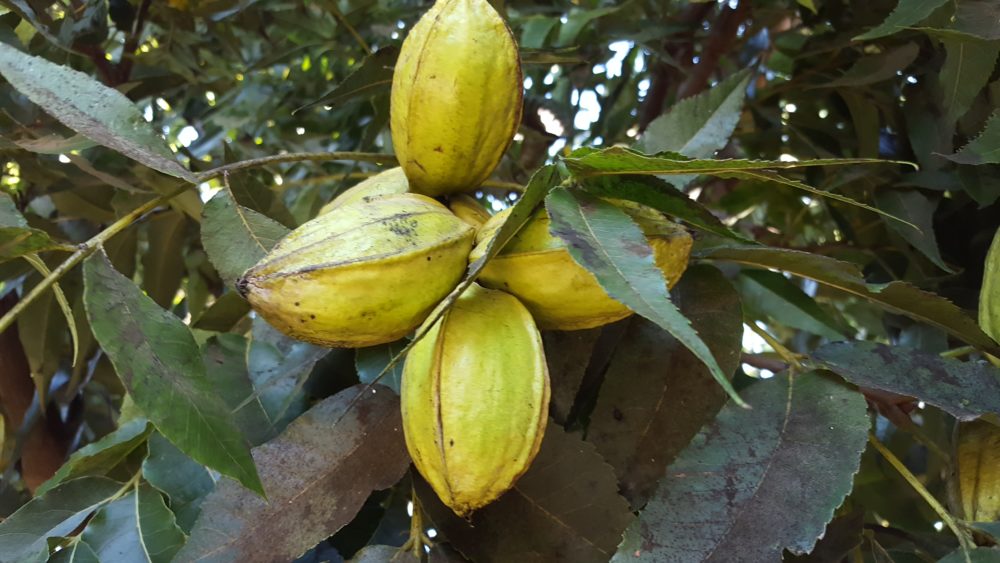
Nationwide Promotion Will Move Pecans

American Pecan Promotion Going Well

By Patrick Cavanaugh, Farm News Director

The Federal Marketing Order for Pecans was voted on by the nationwide industry one year ago, and already six million dollars of assessments have been raised; an advertising firm has been hired; and the promotion of health, versatility and the heritage of American Pecans to consumers has begun.

California Ag Today spoke to Mike Adams, a central Texas pecan grower and the chairman of the American Pecan Council that oversees the Federal Marketing Order for Pecan, about the order.

“In fact, the USDA/ AMS said that the pecan marketing order was the first in more than 10 years,” he said.

“The referendum for the marketing order was in March of 2016, and again, only growers vote, so when we went to the industry with a referendum, again, in accordance with the law, 77% of our individual growers were in favor, and 88% of the volume of our growers were in favor. We got an overwhelming vote from what had been heretofore a pretty fractured industry, you know, growing pecans across 15 different states,” Adams explained.

“2016 was the first year that the FMO began collecting assessments, and we’re seeing the industry believing in the effort,” Adams said. “The assessments have come in, and we have met our goal in what we thought would come in this first year.”

“This is all brand new. In other words, all the rules are new, the forms are new, the idea is new,” he said. “So instead of being skeptical and holding back, the industry—and I will give credit to the handlers—came through.”

Adams said that growers have been very cooperative, and have met the first year goal so that there is a budget.

“We’ve got a national office. We’ve got a marketing firm engaged and on account, so a number of things are happening this first year, but honestly, much faster than some of us thought it could happen. But without the support of the industry, it couldn’t have been done,” Adams said.

The assessment is three cents per in-shell pound of improved variety pecans, and two cents per in-shell pound of natives. Also, substandard—which is a nut that has commercial value but may not be a number one—is two cents per in-shell pound.

The rule that actually is law now was published in the Federal Register in mid-September 2017.

“I have been so encouraged and gratified that the industry said we believe in what you’re doing, so we’re not going to wait on the law. We’re going to go ahead and assess ourselves last year,” Adams said.

And Adams said that the 2016 assessment sets the industry up for the 2017 crop.

“Quite honestly, because we were very frugal in what we spent this first year … we’ll have some carryover into 2017. It really gives us a springboard or a head start on all the things that the council wants to pursue,” he said.

And part of the money has already been put to good work. A national office has been open in Fort Worth, Texas.

“We’ve got an executive director. Up until that staff came on board, the pecan industry had never had a single entity that went to work every day for the industry. We’ve got regional associations, we’ve got state organizations, but we’ve never had one entity or one staff that works every day for the pecan industry, so we’ve got that now,” Adams explained.

“Weber Shandwick, out of their Chicago office is going to be doing our marketing and public relations for us. In fact, in July they launched a very informative website that focuses on the health aspect of pecan consumption, as well as the American heritage of the pecan. That website is americanpecan.com.”
2018-02-09T17:03:37-08:00February 9th, 2018|

Industry Serious About Produce Safety Rule

CDFA Announces New Produce Safety Program

By Scott Horsfall, CEO of Leafy Green Marketing Agreement

Reprinted from the LGMA Website

CDFA announced recently the creation of a new unit within its Inspection Services Division which will be responsible for educating California produce farmers about new Produce Safety Rule regulations under the Food Safety Modernization Act and for conducting routine on-farm inspections of California produce farms to verify they are in compliance.

Scott Horsfall

According to a CDFA press release, this new unit, called the Produce Safety Program, will spend 2018 educating California’s produce industry about the requirements of the Produce Safety Rule. On-farm inspections will not take place until 2019. At that time, the Produce Safety Program will begin conducting inspections of California produce farms on behalf of the U.S. Food and Drug Administration. Produce Safety Program inspectors are employees of CDFA, but are credentialed by the FDA and thus have special training and education. The CDFA is working collaboratively with FDA to implement Produce Safety Rule regulations, as are State Departments of Agriculture throughout the country.

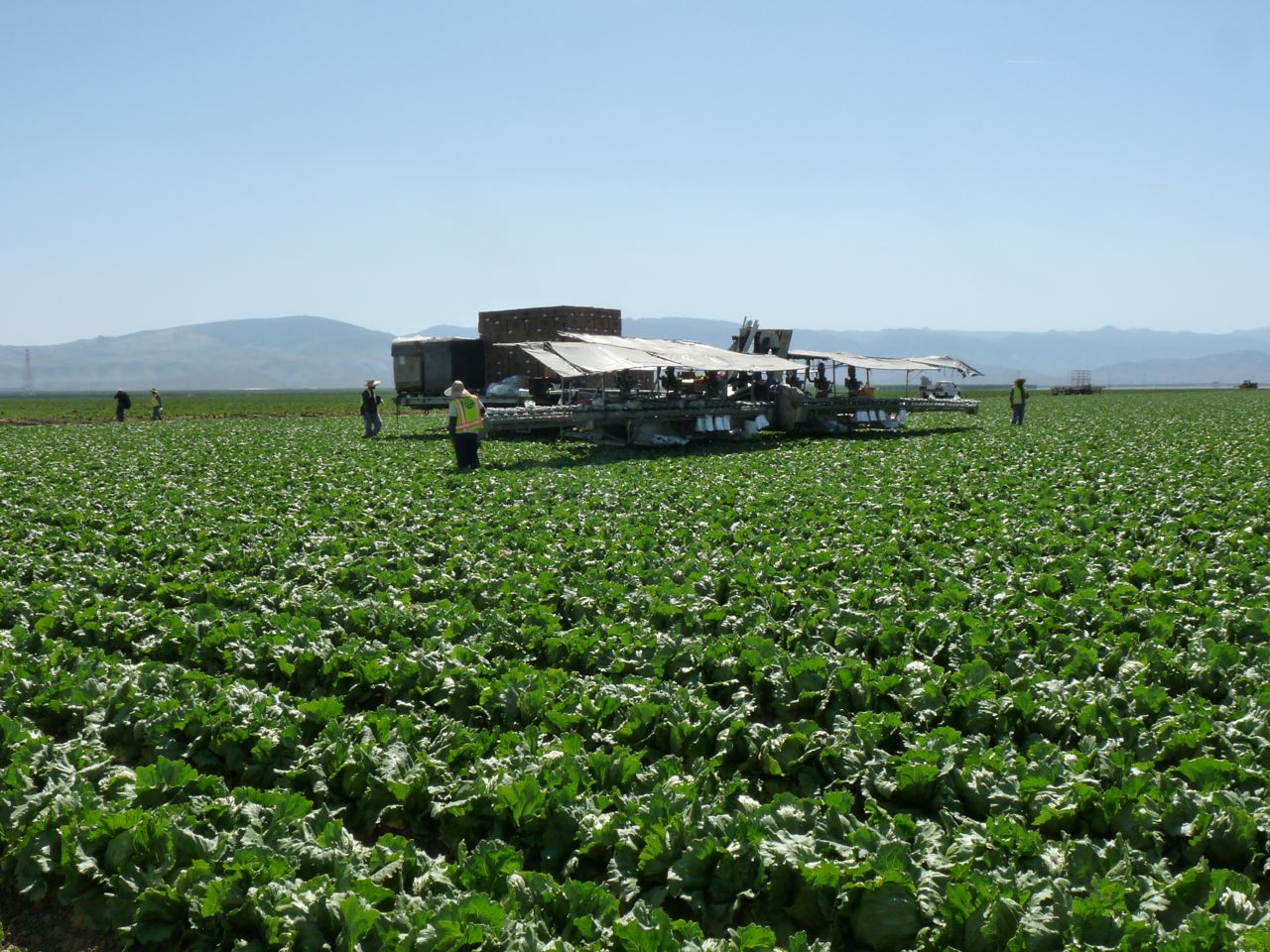
The new requirements of the Produce Safety Rule became mandatory throughout the nation on January 26th for farms designated as “large” which means they have $500,000 or more in annual sales. Most farms who grow leafy greens under the LGMA would be characterized as large under this definition. Smaller farms will be phased in over the next few years. In total, it’s estimated there are some 20,000 fruit, vegetable and nut farms in California that will fall under the Produce Safety Rule.

CDFA emphasizes it will be a big job and has stated it will need to work closely with the California produce industry to achieve its goal of 100% compliance with the Produce Safety Rule on California Farms.

The LGMA has been working closely with both the U.S. FDA and CDFA to ensure our food safety program works in conjunction with efforts to enforce the Produce Safety Rule.

Last August, the LGMA Board approved revised metrics so that our required food safety practices are in full compliance with the Produce Safety Rule. We have since received confirmation from FDA that these revised metrics do indeed align with the requirements of the new regulations. In many cases, the LGMA metrics continue to go beyond what is required by FDA. Working from the revised metrics, CDFA will begin using an updated audit checklist that is Produce Safety Rule-compliant checklist for all LGMA government audits beginning April 1.

Because of these actions, CDFA has informed us that California farms who grow leafy greens for certified LGMA members will be considered compliant with the Produce Safety Rule.

More details will be coming as we get closer to April 1, when the LGMA’s new compliance year begins. In the meantime, we want LGMA members to know that FDA will be able to validate compliance with the Produce Safety Rule on farms who grow your leafy greens without the need for additional and duplicative inspections when Produce Safety Program begins inspecting farms in 2019. CDFA has recognized the efforts of the LGMA to establish a culture of food safety on the farm and they acknowledge that mandatory government audits are already taking place on California leafy greens farms who operate under the LGMA.

As a reminder, under the LGMA program, every handler-member continues to be audited by the government an average of five times over the course of the year—with one unannounced audit—and every farmer is audited at least once per year.

This recognition by government agencies at FDA and CDFA is welcome news to the LGMA, our members and produce buyers. The LGMA is pleased to see the addition of this new unit at CDFA to provide government inspections throughout California’s produce industry. And we look forward to additional oversight provided by the Produce Safety Program to further validate that leafy greens are being farmed safely.

2018-02-08T17:54:24-08:00February 8th, 2018|

World Ag Expo is Feb 13-15

UC Davis Engineers, Economists, Advisors gather at World Ag Expo

By Diane Nelson, College of Agricultural and Environmental Sciences dean’s office

UC Davis specialists in everything from grapes to livestock to irrigation management will join staff and students at the World Ag Expo in Tulare, February 13-15, to chat with farmers, prospective students, alumni and leaders throughout the agricultural industry.

More than 100,000 people are expected to attend the 51st annual event, where 1,500 exhibitors display cutting-edge agricultural technology and equipment over a massive 2.6 million square feet of show grounds.

“We’re thrilled to be taking part in this incredible agricultural exhibition and reconnecting with alumni from the Central Valley and beyond,” said Sue Ebeler, an associate dean for the UC Davis College of Agricultural and Environmental Sciences and professor of viticulture and enology. “Faculty will be in town and available to discuss current agricultural research and our Aggie Ambassadors can answer questions about our majors and campus life.”

The UC Davis team will be located in the World Ag Women’s Pavilion. In addition to Professor Ebeler, dean of undergraduate academic programs for the college, seven faculty experts will attend portions of the three-day event. They include:

  • Rachel Goodhue, professor and chair of the Department of Agricultural and Resource Economics,
  • Deanne Meyer, Cooperative Extension specialist in livestock waste management,
  • Samuel Sandoval Solis, associate Cooperative Extension specialist in water management,
  • Ali Pourreza, assistant Cooperative Extension specialist in agricultural mechanization and precision agriculture,
  • Matt Fidelibus, Cooperative Extension specialist in grape production
  • Anna Denicol, assistant professor and veterinarian who specializes in reproductive biology, and
  • Jeff Mitchell, Cooperative Extension specialist in conservation agriculture.

UC Davis is ranked number 1 in the nation for agriculture, plant sciences, animal science and agricultural economics. The College of Agricultural and Environmental Sciences enrolled more than 2,000 new students in the fall of 2017, many of them from California’s Central Valley. The college offers 29 majors—everything from agriculture to nutrition to global disease biology.

“Prospective students can learn about all our majors and the career paths they provide,” Ebeler said. “At the World Ag Expo, we get to meet with agricultural leaders from around the world, as well as so many passionate young people who will become tomorrow’s leaders.”


Media contacts:

Diane Nelson, College of Agricultural and Environmental Sciences dean’s office, 530-752-1969, denelson@ucdavis.edu

Sue Ebeler, College of Agricultural and Environmental Sciences dean’s office, 530-752-7150, seebeler@ucdavis.edu

2018-02-07T17:42:01-08:00February 7th, 2018|

Thomas Fire Assistance Needs Improvement

Thomas Fire Assistance is Slow

By Patrick Cavanaugh, Farm News Director

The Thomas Fire in Ventura County was the largest wildfire in California history. We recently spoke with Henry Gonzalez, the Agricultural Commissioner for Ventura County, whose own home was affected by the fire, about the ongoing fallout from the disaster.

“I could see from my kitchen window the flame just onto the hill there, and fortunately, we’re protected by some of the orchards. Also, the wind was blowing in a favorable direction, so we were part of a voluntary evacuation area, so we were very fortunate,” Gonzalez said.

Henry Gonzalez

“We were ready to flee,” he explained. “We packed up our most prized possessions and were ready to leave at a moment’s notice. I stayed up until 2:00 in the morning that night of the fire, monitoring to see what was going to happen and then in the morning we saw that there was indeed still fire very close to my home.”

Gonzalez said that disaster assistance for agricultural losses is in need of reform.

“It’s a bit frustrating because some of the disaster assistance that’s out there through FSA, the Farm Service Agency wouldn’t pay until 2019,” he said.

“Any farmers or ranchers that had losses from the fire needed to have the money up front to pay for things, and that’s really not acceptable,” he continued.

“We need to have a disaster assistance program that meets the magnitude of the disaster,” Gonzalez said. “With the drought, that disaster happened slowly so people could make adjustments accordingly. But with something like this fire, it was so quick and of such magnitude that the assistance needs to also be as quick and matched the magnitude of the disaster.”

“And that’s where we really need to rethink what the FSA is doing and how they are doing it. It’s just a bureaucracy that goes so slow that by the time we get the assistance here, there’s going to be a number of agriculturalist that have gone out of business,”Gonzalez said.

2018-02-06T16:45:34-08:00February 6th, 2018|

Latino Workers Appreciated on Dairies

Campaign Targeting Latino Community for Dairy Workers

By Patrick Cavanaugh, Farm News Director

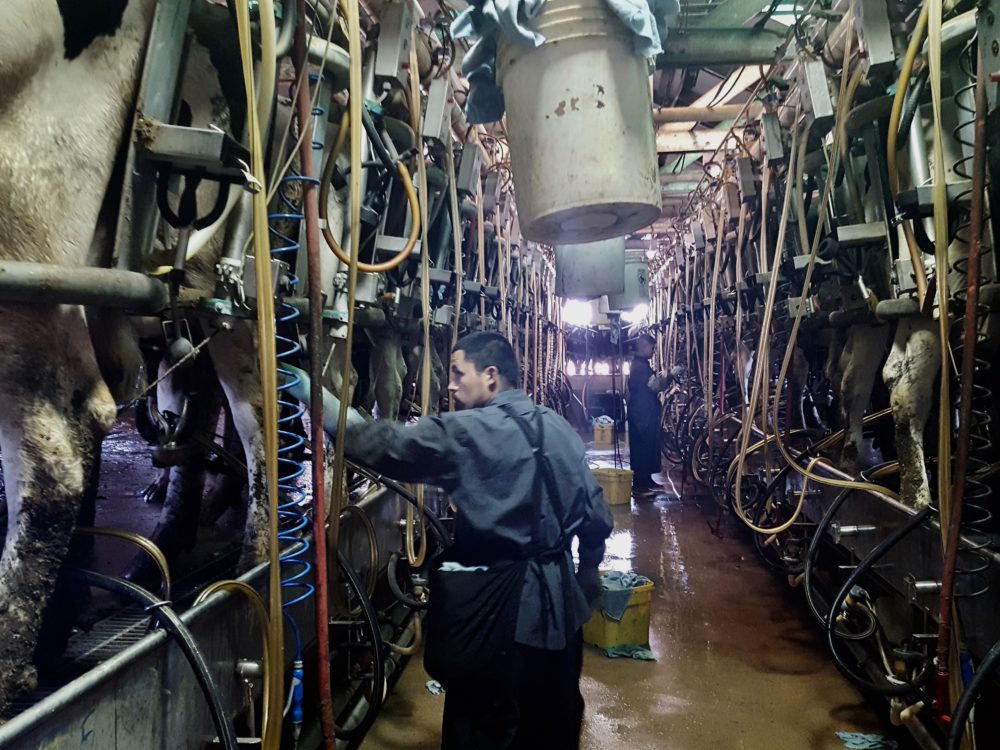
Western United Dairymen, based in Modesto, is launching a Spanish language campaign to educate the Latino community about working for California dairies, according to Anja Raudabaugh, chief executive officer of the organization.

“We’re basically going to be offering a lot of benefits for Latino employees and their families to stay working for dairies or to come to work for dairies,” she said. “We’re going to be doing quite a bit of immigration services, free of charge for those families. We want to elevate the status of women on the dairy farm because they tend to do really well with the cows and the calves.”

The campaign is known as Lecheros Unidos de California.

“We are really targeted and branding, with the dairy community and not just Western United Dairy,” Raudabaugh said.

The campaign will be heard throughout the San Joaquin Valley on Spanish radio and television. The California dairy industry compensates Latino workers well beyond minimum wage to get the work done.

“This is a effort to strengthen the connection that the Latino community has with the dairy industry,” Raudabaugh. “We want them to know that we care for the community and count on them to work in our industry.”


2018-02-06T17:03:01-08:00February 5th, 2018|

Rootstocks Offer Production Attributes

Tomato Rootstocks Grafting

By Jessica Theisman, Associate Editor

California Ag Today recently spoke with Brenna Aegerter, a UC Cooperative Extension farm advisor in San Joaquin County, about grafting rootstocks to tomato plants.

“Rootstocks are cut below the cotyledons, while the scions are cut above the cotyledons at an angle,” she said.

These two plants are then clipped together and go into a high humidity healing chamber for about one week.

Aegerter explained that, “In the beginning, there is no light. They gradually increase the light because they do not want to stress the plants, and so if those two angles match … then everything grows back together.”

Each tomato plant can differ depending on the rootstock that it has been grafted to. Different rootstocks have varying levels of resistance to disease and pests. Rootstock resistance does have an effect on crop yield. If all of the fruiting varieties had the nematode resistance gene, they could potentially improve their yields.

There is great success rate on grafting these tomato plants.

“We have had pretty good success, 90 percent and up,” Aegerter said.

The remaining 10 percent is because the angles were not matched up quite right and there is not enough contact between the two tissues.

“Rootstocks are for the most part, hybrids between our cultivated tomato and wild tomato species,” Aegerter explained.

Wild tomatoes are used often to bring in new genetic material due to their diversity and natural resistance. Depending on the type of tomato that is being used, the resistance can differ.

The fruiting varieties are resistant, but are resistant to a shorter list of diseases.

“These root systems are are bigger, the crown is bigger, and sometimes they aren’t even purely resistant to the disease, but just by virtue of the fact that they grow faster, they can outgrow it,” Aegerter said.

2021-05-12T11:05:14-07:00February 2nd, 2018|

Agriculture Created Buffer During Thomas Fire

Southern California Thomas Fire Hurt Agriculture

By Brianne Boyett, Associate Editor

The Thomas Fire that burned through Ventura County last December led to some major agricultural losses. California Ag Today spoke with Henry Gonzales, the Agricultural Commissioner of Ventura County, about the situation.

“There were 6,603 acres of avocados and then another 1,800 acres of lemons, about another 540 acres of oranges, and another dozen crops were affected,” Gonzales said.

“One of the things that we’ve seen is that these orchards actually provided a buffer between the fire and urban areas. They really saved us quite a bit. Some of the avocado orchards experienced significant losses; the very efficient irrigation systems that we have are sadly made out of plastic, and so they melted and we’re actually looking at two different disasters,” Gonzales explained.

“We’re still suffering from the impacts and effects of the drought … so everything was very dry, and then we had the Santa Ana winds, and it really created the perfect firestorm,” Gonzales said.

The rain this last year did help, but then it created more problems.

“It did help. No doubt. We didn’t get as much rain as many other areas. In Southern California, we were very happy to get the amount of rain that we did get,” Gonzales said. “But then it created mudslides that we’re now dealing with.”

2018-01-31T21:02:41-08:00January 31st, 2018|

Grain Crop Variety Trials Important

Grain Crop Variety Trials Ongoing in California

By Brianne Boyett, Associate Editor

Grain crop variety trials are taking place around the state in hopes of measuring productivity among a diverse range of environments. California Ag Today spoke with Mark Lundy, UC Cooperative Extension Specialist for grain cropping systems at UC Davis, about the topic.

“We’ve been doing statewide variety trials as an institution for decades, almost a century. The goal is to be consistent, as California is such a diverse environment and because there are different conditions from year to year,” Lundy said.

“We are conducting trials that we measure yield and crop quality, disease reactions, agronomic traits on small grains—which are predominantly wheat in California, but we also do trials on barley,” Lundy explained.

The goal is for producers to be able to utilize this data and apply it in their own management systems.

“We want to take that data and put it into a format that growers can use to make decisions about what to plant. Also, we want to make it so the breeders can use it to make decisions on what to advance in, what lines to make available for growers,” Lundy said.

These trials are widespread and take place in a variety of locations.

“We have trials as far north as Tule Lake in the intermountain region, as far south as the Imperial Valley. Trials are conducted on a combination of grower fields and also at research and extension centers where we can have better control over the variables. We want to get a little better understanding of not just the location and its inherent characteristics, but the management in terms of how much water or nitrogen it may need,” Lundy explained

For More information on Mark Lundy:

http://www.caes.ucdavis.edu/about/directory/fsd/mark-lundy


2021-05-12T11:05:14-07:00January 31st, 2018|

Bean Seed Moisture Content Important

Bean Seed Germination Issues

By Patrick Cavanaugh, Farm News Director

Statewide, there has been a problem with bean seed germination. In other words, when growers plant the seed, it does not germinate well. This is seed that is being grown to be planted as bean seed for a crop to be consumed.

Rachel Long—a UC Cooperative Extension Farm Advisor based in Woodland serving Yolo, Sacramento and Solano counties—is studying the problem.

“We had a big meeting last year with the California Dried Bean Advisory Board to discuss this, and one of the thoughts that came up is that maybe because of the drought that we’re letting the seed dry down a little bit too much, and then when it’s harvested, it’s getting internal injury by the combine and therefore that internal injury is causing these seeds to not germinate real well,” Long said.

“So I started a project to try to figure out, whether or not there’s some relationship between seed moisture at harvest and the quality of the seed,” Long said. “We are seeing some differences in particular if you do a harvest, certainly in the morning where you have a little bit higher moisture content, that you end up with better seed germination.”

“So even though they are planting seed for a seed crop, the seed is not treated any different than if it were being planted for consumption, and they are harvested in the same way,” Long explained.

“But what we think is that if you’re harvesting beans or seed stock, then you have to be much more careful and really watch the moisture content, so growers would want to harvest them in the morning rather than the afternoon, when there is more moisture content,” she said.

2021-05-12T11:05:14-07:00January 30th, 2018|

Produce Rule is Now Mandatory

Produce Rule Now In Effect

By Sonia Salas, Western Growers, Director of Science and Technology

It’s official: Since January 26, domestic and international produce farms designated as “large” (those with annual sales greater than $500,000) are expected to comply with most provisions of the Produce Safety Rule, a federal law created under the Food Safety Modernization Act (FSMA). Smaller farms will be phased in over the next few years.

The Produce Safety Rule is mandatory throughout the United States and applies to both domestic and imported produce. Any produce farm found to be out of compliance may be subject to regulatory action. The State Departments of Agriculture play a key role in education, outreach and enforcement activities.

The California Department of Food and Agriculture (CDFA) recently announced that it will be launching a new Produce Safety Program, which will operate as part of its Inspection Services Division. This program has been created specifically to conduct on-farm inspections on behalf of the U.S. Food and Drug Administration (FDA) and will be used to verify compliance with the Produce Safety Rule.

Additionally, the program will distribute educational information designed to assist California produce farms in understanding the requirements and how to comply with the rule. More information about CDFA activities can be found in their Produce Safety Rule Fact Sheet. The Colorado and Arizona Departments of Agriculture are likewise taking the lead to enforce this rule and educate growers in their respective states.

The focus in 2018 is on education and on-farm readiness. While on-farm inspections are not likely until 2019, Western Growers encourages members to meet compliance deadlines and has developed resources to help members get ready, including an implementation guide and self-audit checklist, available on our FSMA Portal.

Below is a list of Western Growers’ resources and upcoming training to help growers with the FSMA Produce Safety Rule:

FSMA Portal: Click here to access the portal.

Produce Safety Rule Resources Portal (a full Implementation Guide with audit checklist will be available for download tomorrow): Click here to access the portal.

Webinar on February 26: Are you FSMA Compliant?: Click here to register.

Industry Workshops: Click here to view dates and register.

2018-01-29T18:18:25-08:00January 29th, 2018|
Go to Top