About California Ag Today

This author has not yet filled in any details.
So far California Ag Today has created 2014 blog entries.

HR 4760 Must be Opposed

Nisei Farmers League Opposes Congressman Goodlatte’s Bill H.R. 4760

By Manuel Cunha, President of Nisei Farmers League

Nisei Farmers League strongly opposes HR 4760, the bill known as “Securing America’s Future Act of 2018.”

This amended legislation does not deal with the most pressing issues we had with it.  The legislation should not alone deal with agriculture production, but the other industries as well, that are working in our country, our states, our cities, as well as our rural communities.

Those are the people and families we should be trying to help, versus penalizing the employers, penalizing the people that work and provide the taxes, the social security and contribute economically to their communities. Congressman Bob Goodlatte of Virginia, the bill’s author, never worked with local communities and local elected officials, and did not receive input from organizations, such as ours.

The legislation does not adequately address the people and their families who are currently working here. Our workers are not criminals. They should not be involved in the touchback process and should not have wages withheld.

This bill has allotments for guest workers, but doesn’t adequately deal with DACA. Congressman Goodlatte is trying to appease the March 5th deadline on DACA with a half-hearted solution.

Until they sit down with the real people who deal with immigration every day, such as businesses, law enforcement, and churches, NO LEGISLATION LIKE THIS SHALL BE PASSED.

We will do everything in our power to STOP IT!!!!”

For comments and questions, call Manuel Cunha, Jr. at 559-251-8468.

See the Text of HR4760 at this link:

https://www.congress.gov/bill/115th-congress/house-bill/4760
2018-02-23T15:29:35-08:00February 23rd, 2018|

Mid-Kaweah GSA Is Unique with Three Members

Mid-Kaweah GSA Is Urban and Ag Partnership

By Patrick Cavanaugh, Farm News Director

California Ag Today recently spoke with Paul Hendrix, manager of the Mid-Kaweah Groundwater Sustainability Agency (GSA), about the members they serve and how unique the GSA is.

“The Mid-Kaweah GSA has got three members: the Tulare Irrigation District with large surface supplies and the two growing and larger cities here in Tulare county,Tulare and Visalia,” Hendrix explained. “So we are one of the more unique GSAs in that we have both, and urban and ag partnership on the Sustainable Groundwater  Management Area (SGMA) compliance. Other GSAs have a larger number of members.

Having local GSAs has long been considered better to serve an area.

“That was something we fought for— and really tried to stave off groundwater legislation for many years—is that we can manage this locally, but drought and other regulatory impacts were such that we couldn’t hold off this passage of SGMA, but they did grant us basically a 25-year period to manage this locally with local authorities and gave us some leeway to do that,” Hendrix said.

“But if we can’t do it locally in the end, the state will step in,” he explained. “Each GSA … there’s at least a hundred here in the San Joaquin Valley and they have been freshly formed, will decide their rules and they will work in partnership with their neighboring GSAs to make sure it’s all consistent, but it’s up to each one of those GSA boards to set up these rules and not Sacramento.”

2018-02-22T16:17:32-08:00February 22nd, 2018|

Farming Should Be Honored

National Policy Needed for Farming

By Jessica Theisman, Associate Editor

California Ag Today recently interviewed Peterangelo Vallis, our ambassador for agriculture, about changes needed for farming. He is also the executive director of the San Joaquin Valley Winegrowers Association.

According to him, the government has a track record on the inability to get things done, and that includes projects that impact agriculture.

“Now in America, we have huge problems getting things done, building buildings, building dams, building rails, building infrastructure and building anything,” Vallis said.

“There is no national day or any local goals and objectives. We are not hearing anything to meet those goals and objectives,” he said. “I’m suggesting that there needs to be a state and national policy for farming.”

2018-02-21T17:01:21-08:00February 21st, 2018|

American Society of Agronomy Meets

Plant Soil Conference Discusses Nitrogen Management

By Patrick Cavanaugh Farm News Director

Dan Munk is a UC California Cooperative Extension Fresno County Farm Advisor who specializes in irrigation, crop nutritional management and cotton production systems. He recently spoke about the California chapter of the American Society of Agronomy holding its annual plant and soil conference recently in Fresno. Attendance was great, and agronomic issues regarding water, irrigation and nutritional management were covered.

“[The] California chapter of the American Society of Agronomy convenes a annual meeting known as the plant and soil conference, which was held recently in Fresno for a day and a half. We had the CDFA Secretary Karen Ross address the group as well as some nutrient management experts from across the state and outside of the state,” Munk said. “And we discussed agronomic issues related to water irrigation, nutrient management in agriculture. And there was a pest management session as well.”

There were more than 220 top state agronomists, with many Certified Crop Advisors as well as some growers and industry affiliates attending that meeting.

Nutritional management plans for efficiency, especially for nitrogen, are being closely looked at and discussed.

“I think the nutrient management plans that we’re doing is something that we need to continue to get better information. We have an understanding now of where some of the limitations are now for efficiencies,” Munk explained. “I mean, we can’t always be 100 percent efficient in these things and when we are, that’s when you get into the situation where you have some yield losses. So there’s, there’s always going to be some nitrate movement out of the root system in agricultural systems. That’s just the nature of the beast.”

2021-05-12T11:05:13-07:00February 20th, 2018|

Food Narrative Should Trump Fish

Reframing Farming with a Food Narrative

By Patrick Cavanaugh, Farm News Director

Peterangelo Vallis is California Ag Today’s Ambassador for Agriculture. He’s also the executive director of the San Joaquin Valley Wine Growers Association. He spoke recently on the need for increased water conservation by growers and cities in a multi-year drought. He also noted the need for a food narrative.

“That’s what we have done. We had to do that over the last few years. I mean, it’s not uncommon for there to be a wet year in the middle of a multi-year drought,” Vallis said. “Let’s face it. We’re clearly in a multi-year drought, and fortunately, there are water supplies, so it’s probably not going to be as bad this year as it was a couple years ago, but that’s not going to feel great especially with permanent crop agriculture. You got make sure you have a consistent supply of water going year-round at a time.”

Vallis said the Delta area water situation needs to be reframed with a food narrative.

“Let’s stop blaming a small fish and let’s start putting the blame where it really belongs with the inability for all of us to come together and come up with some sort of solution,” Vallis said.

“I mean fish is a nice scapegoat, and it’s a great talking point, but it clearly hasn’t been doing better with water restrictions to growers. The problem is that we haven’t been framing the conversation in a way that really puts us in the best light, and we’ve got to do that because nobody is going to say that fish is more important than farmers,” Vallis said. “Realistically when someone insinuates that, they just look silly because everybody knows that we need to eat and we need to be able to provide food for people.”

“What the problem is when we start adding things to the conversation, yawn on facts and we start appealing to emotion. Everybody can figure out something that’s more important than something else. It’s just a form of what needs to happen in a normal society,” he said.

2018-02-19T16:50:27-08:00February 19th, 2018|

Groundwater Nitrates Due to Legacy Issues

Minimizing Groundwater Nitrates

By Patrick Cavanaugh, Farm News Director

Groundwater nitrates have been a concern over the last decade and growers have made much improvement to minimize the problem. But still, new regulations are requiring that growers not make the problem worse.

California Ag Today recently spoke with Dan Munk, a UC Cooperative Extension Fresno County Farm Advisor, about the topic. He specializes in irrigation crop nutritional management and cotton production systems. He explained that when water leaves the root zone, it takes away salts and nitrates.

The issue is that irrigated agriculture is always going to have some water leaving the root zone simply to leach salts.

“And when you leach salts, you take away with that water, along with something like nitrates. So that’s part of the system,” Munk said.

“And so what we can do in agriculture is limit those losses and try to be more efficient because it still makes us more efficient in that we spend less money on fertilizers that way,” he said.

“However, there’s always going to be some losses to … systems over time, and I think that’s the best we can do,” Munk said.

He said that many of the nitrates in the ground water are due to legacy issues. When growers had different irrigation systems or when growers had different access to water.

“Today, we’re applying a lot less water, much more uniformly and have been for many years. Things really have changed in terms of the amount of nitrates that are going below that root zone and into the groundwater,” Munk explained. “It is much less today.”

For more help in understanding the problem of nitrates in the groundwater: www.cvsalinity.org

2018-02-16T16:59:44-08:00February 16th, 2018|

Mycotoxins are Serious Business

Sanitation Fights Mycotoxin Infections

By Jessica Theisman, Associate Editor

In nature, there are fungal metabolites called mycotoxins, and some of them can infect crops. However, certain cultural practices can eliminate them. California Ag Today recently spoke with Bob Klein, manager of the California Pistachio Research Board, based in Fresno, about the topic.

“We see mycotoxins as a result of fungal infection that comes from the Navel Orange Worm. It is damaged predominantly, and if a crop is contaminated with possible mycotoxins, such as one known as Aflatoxn, it can hurt exports. Over 70 percent of our crop is exported, and some of our major markets are very sensitive to a mycotoxin contamination,” Klein said.

“The best programs start with orchard sanitation. Many growers are lax on sanitation or spend low amounts of money,” he explained. “Those who are frugal are spending $200-250 an acre on sanitation, and so growers need to be prepared for that.”

As far as insecticide applications, look at the growers’ data, not what is published in replicated field trials.

“More sprays are better than fewer sprays,” Klein said.

2021-05-12T11:01:56-07:00February 15th, 2018|

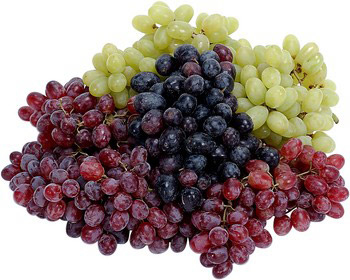
Offering Grapes in School Lunch Promotes Better Eating

Less Waste When Grapes Were Served

By Jeff Cardinale, California Table Grape Commission

Offering fresh grapes as part of the school lunch menu helped improve the school lunch eating behaviors of children in a pilot study conducted through Texas A&M University.

The study looked at the effects on plate waste when fresh grapes were offered compared to when they were not offered. The results show that when the school meals included grapes, consumption of healthier menu items increased, suggesting that grapes can serve as a “gateway” fruit to healthier eating.

The study was conducted in two elementary schools and two middle schools from one school district in Texas. Grapes were made available on “grape days” as an offered fruit choice. Non-grape days were defined as days when grapes were not offered.

Study results included:

  • When offered as a fruit choice, grapes were minimally wasted.
  • On grape days, lost dollars attributed to vegetable plate waste was significantly less than on non-grape days.
  • Intakes of effective calories, fat, sodium, protein, and fiber per serving of entrees, vegetables and fruits on grape days were higher than on non-grape days.
  • On grape days, the children consumed more of the school lunch, which is an overall goal of school lunch.

“Our study shows that offering grapes in school lunches is a smart strategy that goes beyond grapes’ status as a favorite fruit to grapes having a beneficial impact on the degree to which students make healthy choices, and on their consumption of the school lunch overall,” said Dr. Peter S. Murano, co-author of the study.

It is hoped that schools across the country take note of the benefits of serving California table grapes in an effort to help encourage good eating habits for the students.

2021-05-12T11:05:14-07:00February 14th, 2018|

ReTain Increases Yields

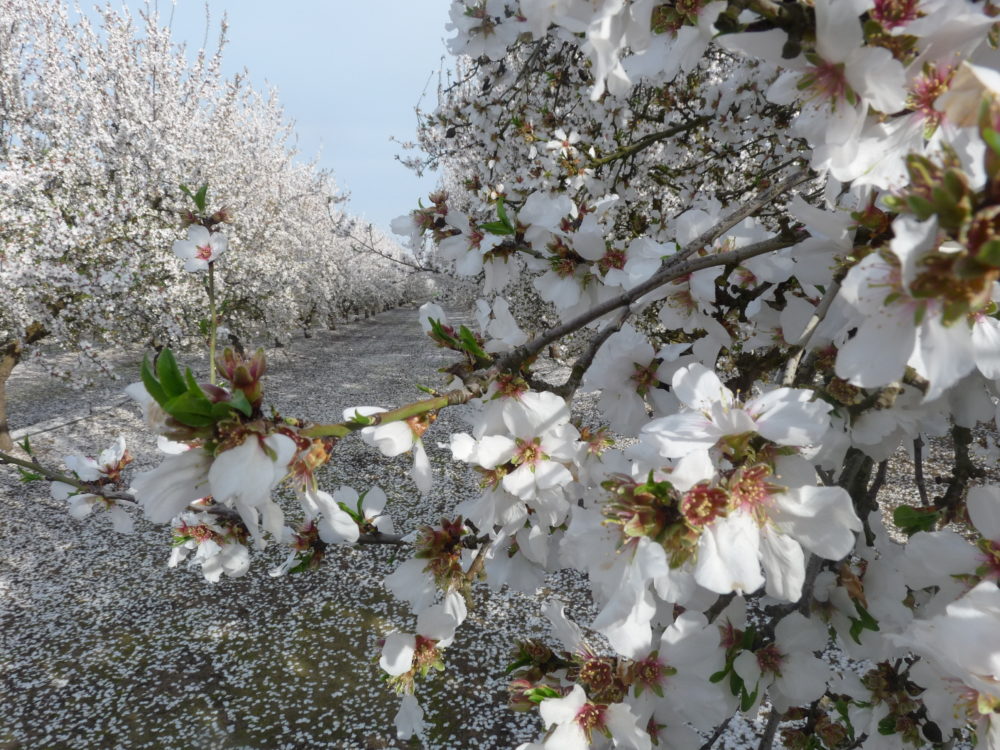
ReTain Now For Aerial Use in Almonds, To Extend Bloom Time

By Patrick Cavanaugh, Farm News Director

ReTain plant growth regulator from Valent is now registered for aerial use in almonds.

“ReTain was registered for use on almonds this past growing season, and this past winter, California Department of Pesticide Regulation registered it for aerial use, so now it can be applied by air as well as a ground applications,” said Pat Clay, a field development manager with Valent USA.

“It really helps with making a timely application across large acreage.  ReTain works best when applied at 30 to 60 percent bloom and being able to go by air allows for more ground to be covered as well as target those applications to that specific bloom time,” he explained.

ReTain extends the viable bloomed time in almonds.

“ReTain reduces ethylene production on the almond flower,” Clay said. “Ethylene is responsible for senescence (aging) of the floral organs, particularly the stigmatic surface. So by applying ReTain, it’s extending the viability of the flower by about a day-and-a-half to two days.”

“With aerial applications, we’ve seen the yield increase greater than 300 pounds per acre on Nonpareil almonds,” Clay said.

Other crops have been using ReTain with great results.

“It has been used in apples for harvest management and cherries for very similar use to what we’re using it for in almonds. It has also been used widely in walnuts for pistillate flower abortion,” Clay explained.

2021-05-12T11:05:14-07:00February 13th, 2018|

CropLife America Advocates For Crop Protection

#GiveACrop Campaign Helps Consumers Understand Importance of Crop Protection

By Patrick Cavanaugh, Farm News Director

California Ag Today recently spoke with Genevieve O’Sullivan, the Director of Communication and Marketing for CropLife America based in Washington, D.C. They’re advocates for crop protection companies.

“So every day, my job is to talk about why pesticides are necessary tools for farmers, and one of the ways we’ve done that is with a campaign called giveacrop.org, where we have 12 humorous videos on why farmers use pesticides. … Our most recent ones are focused specifically on the importance of pesticides as an important tool,” O’Sullivan said. “It’s all about The Talk—having a conversation about the importance of crop protection materials.”

“We help the average consumer understand the importance of crop protection tools,” she explained.

With the videos, CropLife America has chosen a of couple different occupations—like a chef, a hairdresser and carpenter—to feature.

“What we do is take away the main tool they need and then show how much harder it is to do your job or possibly [they’re] not even be able to do the job without the tools, and they are quite humorous,” O’Sullivan said.

“They feature our mascot, The Pest, and he is that guy that nobody can stand. But thank goodness farmers have pesticides to deal with the pests on their property,” she said.

The campaign also promotes #GiveACrop.

“It’s more than a hashtag. It’s the satisfying crunch of spreading the word about crop protection,” O’Sullivan explained. “Whether you’re a proud grower or a satisfied shopper, when you #GiveACrop, you’re saying that you’re not afraid to have the talk about the produce you love and the pests you don’t.”

“So go ahead, take a harvest selfie. Show us your bumper crop. And tag it like you mean it,” she said.

To see the videos, go to giveacrop.org, where you will also find facts versus myths.

2021-05-12T11:01:56-07:00February 12th, 2018|
Go to Top