About California Ag Today

This author has not yet filled in any details.
So far California Ag Today has created 2014 blog entries.

Helping Bees with Cover Crops Helps Orchards

Keeping Pollinating Bees in Almond Orchards

By Jessica Theisman, Associate Editor

California Ag Today recently spoke with Billy Synk, director of pollination programs with project Apis M, a group whose goal is to fund and direct research for the health of honey bees. Synk discussed bees and cover crops in almond orchards.

“They have a preference for the almonds bloom,” he explained.

Almond blossoms have 25 percent protein. The structure of the flower is also a lot more open, making it easier to get into than other flowers.

“UC Davis has done research on bloom competition. It really is not a valid concern as much as you want to keep bees on a specific crop or in a specific area. So if you’re able to provide that alternative flowers right underneath the trees, you’re just going to keep them from wandering off,” Synk said.

Cover crops are planted around almond orchards to stimulate honeybees. One of these mixes is called PAm mustard mix.

“That master mix has canola, three different species of mustard, and then daikon radishes,” he said. “The white daikon radish is not just for the honeybees; it benefits the soil as well. Its long taproot breaks up compacted soil and provides much needed organic matter when it decomposes.”

2021-05-12T11:05:13-07:00March 12th, 2018|

A Master Class On Drone Mapping

Learning About Drone Mapping

By Patrick Cavanaugh, Editor

Greg Crutsinger, a Drone Ecologist with Scholar Farms, recently spoke at the Bayer Crop Science AgVocate Forum in Anaheim. Crutsinger directs consulting and training services with a special emphasis on drone vegetation and aerial drone mapping.

He’s a professional ecologist and a former professor who left academia to join the Silicon Valley drone industry, where he has worked with some of the leading drone hardware and software companies. Scholar Farms’ core values are to consistently seek to provide best in class training experiences for their clients.

Their list is growing, with clients across a range of commercial industry interested in mapping plants with drones. They include agricultural, forestry, environmental consulting, local and state agencies, GIS Surveys, scientific applications, service providers, and much more. Crutsinger spoke of the upcoming master classes Scholar Farms will be hosting

“We are launching our master class. We’re still dialing in the pricing, but it will be couple hundred bucks,” Crutsinger said. “If you take the course, we’ll walk you through from zero to hero. It’s all online, so it’s a self-paced video series that will give you an example data sets; you don’t even have to have a drone and it will give you the complete background on drone imagery, all the sensors, all the hardware, and you can just take it at your own pace.”

People with a wide range of job in skill levels are welcome to take the class.

“We’ve made it broad so it’s really just a master class for mapping plants. So you could be a grower, you can be an agronomist, you could be a service provider, such as flying drones for farms, but you could also be an ecologist or forester or a public agency,” explained Crutsinger.

“The tools are pretty similar but it’s the interpretation that folks will have to do for themselves, for their farm, or for their crop,” said Crutsinger. “We can’t do it all, but it will get you started and get you out there collecting data. Folks can follow @ScholarFarms on twitter, and we’re excited to talk to folks. We are a new company and we’re happy to be in the state.”

2018-03-09T16:08:04-08:00March 9th, 2018|

Fighting Huanglongbing Is Job One

Citrus Health Program Protecting State’s Industry

By Patrick Cavanaugh, Farm News Director

Joel Nelsen, president and CEO of the California Citrus Mutual based in Exeter, spoke to California Ag Today about a recent trip to UC Riverside to discuss the Citrus Health Response Program and huanglongbing disease.

“For the last several years, the federal government and the California citrus industry had a wonderful partnership with some ideas, some regulation, and most importantly, with some funds,” Nelsen said. “So periodically, USDA comes to do an audit as to what we’re doing, how we’re doing it, and whether or not there needs to be some reevaluation.”

“The Citrus Health Response Program is the program we call a CHRP for a two-day evaluation. You had scientists and regulators from USDA; you had regulators from CDFA, along with a few scientists,” Nelsen explained.

“You had that entire stakeholder group and members from the scientific community and UC Riverside to evaluate what we’re doing and why, but eventually we did achieve one objective and that’s coming up with several action steps that we need to do as an industry in partnership with government,” he said.

The concern of Huanglongbing disease was discussed and game plans were presented.

“What was interesting is this was a friendly audit. They weren’t interested in taking money away, they weren’t interested in determining if we’re using dollars appropriately, but they wanted us to talk about why we were still spraying in the urban environment for the Asian Citrus Psyllid, which vectors Huanglongbing,” Nelsen said.

“They wanted us to talk about whether or not growers were doing what they were supposed to be doing and of course, they are doing what they need to do to keep the deadly disease out of commercial citrus orchards,” Nelsen said.

2021-05-12T11:01:56-07:00March 8th, 2018|

UC Estimates Costs and Returns for Growing Garbanzo Beans

By Pam Kan-Rice, UCANR

The UC Agriculture and Natural Resources’ Agricultural Issues Center has released two new studies on the estimated costs and returns of producing garbanzo beans, also known as chick peas, in the Sacramento and San Joaquin valleys.

“Although acreage is relatively small, garbanzos are an important crop because California growers produce the large, cream-colored seed that’s used for the canning industry, often used for garnishes for salads,” said Rachael Long, a UC Cooperative Extension farm advisor serving Sacramento, Solano and Yolo counties.

Chick pea seedlings in field.

The studies estimate the cost of producing garbanzo beans on 200 acres as part of a row crop rotation, using subsurface drip irrigation. A three-row bed tillage implement shallowly chisels, tills and reshapes the beds, avoiding disturbance of the buried drip tape left in place. Planting of seed treated for fungal and seedling diseases—Ascochyta rabiei, Rhizoctonia and Pythium—into residual soil moisture occurs in December. Seeding rates for the garbanzo beans are 85 pounds per acre.

Input and reviews were provided by UC ANR Cooperative Extension farm advisors and other agricultural associates. Assumptions were used to identify current costs for the garbanzo bean crop, material inputs, cash and non-cash overhead. A ranging analysis table shows profits over a range of prices and yields. Other tables show the monthly cash costs, the costs and returns per acre, hourly equipment costs, and the whole farm annual equipment, investment and business overhead costs.

Chick peas nearing harvest.

“The importance of these studies right now is that they are currently being used to help secure USDA crop insurance for garbanzo production, expected in 2020,” Long said.

The new studies are titled: “Sample Costs to Produce Garbanzo Beans (Chick Peas), in the Sacramento and Northern San Joaquin Valleys – 2018” and “Sample Costs to Produce Garbanzo Beans (Chick Peas), in the Southern San Joaquin Valley – 2018.”

Both studies can be downloaded from the UC Davis Department of Agricultural and Resource Economics website at http://coststudies.ucdavis.edu. Sample cost of production studies for many other commodities are also available at the website.

For additional information or an explanation of the calculations used in the studies, contact the Agricultural Issues Center at (530) 752-4651 or the local UCCE Farm Advisors; Sarah Light, selight@ucanr.edu, Rachael Long, rflong@ucanr.edu, Michelle Leinfelder-Miles, mmleinfeldermiles@ucanr.edu, or Nicholas E. Clark, neclark@ucanr.edu.

2021-05-12T11:05:13-07:00March 7th, 2018|

Tim Pelican Says Be Watchful When Spraying

Safety When Spraying

By Jessica Theisman, Associate Editor

California Ag Today recently spoke with Tim Pelican, Agricultural Commissioner for San Joaquin County, about spray safety.

“We want to make sure that we’re not spraying anywhere near water, especially standing water or running water, because then it could run off and eventually show up in our work reports of our local water coalition,” he said.

“One reason sprays could be getting into the water is due to drift. There could be large gusts when farmers do not turn off their rigs at the ends of their rows,” Pelican said. “These spray safety hazards have been coming from a variety of materials such as sulfur and copper materials.”

Bee safety is always important when it comes to spraying.

“In San Joaquin County, we have almonds and cherry crops that require them,” he said.

“One issue is the lack of communication between beekeepers and the farmers on where the bees are. We also suggest that growers not spray during the day when bees are active,” Pelican explained. “That’s even if the spray label says it is okay around bees.”

2021-05-12T11:01:56-07:00March 5th, 2018|

Billy Synk Manages Seeds for Bees Program

Cover Crops and Bee Health

By Jessica Theisman, Associate Editor

California Ag Today recently spoke with Billy Synk, director of pollination programs with project Apis m (the genus/species of European honey bee). We asked him about bees and the importance of cover crops in relation to bee health, and orchard soil health.

Early this year was difficult year with the lack of rain.

“Those almond growers that were on drip did not really have great cover crop stands,” he said.

The project Apis m mustard mix  is a combination of canola, musters, and daikon radish that will bloom before the almonds and give the bees a boost of nutrition energy before the almond bloom starts.

“All these colonies from everywhere in America that are at their hungriest or at the weakest are placed in almond orchards, and they’ve got their most important job to do: that’s pollinate almonds,” Synk explained.

These cover crops are important to get bees stimulated before almond bloom.

“If you can get them stimulated before the almonds bloom, they are going to have a lot more vigor and vitality and really attack those blooms when it is time,” Synk said.

The bees go after the almond blossoms in what is called a positive feedback loop.

“They are looking for signs of spring, day length, and temperature, but they’re also looking for the very first fresh pollen to come in that year,” Synk said.

Bees will lay more eggs inside their hive when the new pollen comes.

“That brood has a pheromone that cues the bees to  leave the hive to harvest more pollen to support more bees, and the whole cycle continues,” Synk explained.

2021-05-12T11:05:13-07:00March 5th, 2018|

Technologies for Spray Tank Mixes

Dave Cheetham on Game Changer

By Jessica Theisman, Associate Editor

California Ag Today recently spoke with, Dave Cheetham, Tech Marketing Manager with Helena Chemical Company. Cheetham said that technology has really been changing the game when it comes to spray tank mixes.

“With the materials that we are working with these days, they are much more powerful, a lot less active ingredients, and do a better job than traditional pesticides,” Cheetham said. “When you are looking at very complex mixes, results can vary from good to not so good.”

Water plays a big role in mixing. With water being the carrier source, it should always be in good condition.

“With the drought conditions that we experienced in California over the recent years, we saw some changes in our aquifers and we see a lot of salt, sodium and heavy metals,” Cheetham explained.

Keeping a mix consistent is the main goal.

“Formulation incompatibility can be a tough deal when you’re dealing with heavy ECs or wettable powders or dry flowable materials. Oftentimes, you can see some interactions occur and you’ll get precipitation, which can lead to active ingredient decomposition,” he said.

2021-05-12T11:05:13-07:00March 1st, 2018|

Kern County Ag Commissioner Notes Mild Winter

Weather and Pest Control this Season In Kern County

By Jessica Theisman, Associate Editor

California Ag Today recently spoke with Glenn Fankhauser, Agricultural Commissioner for Kern County. He let us know his thoughts about the weather in his county this season.

He said it has been a mild winter and it may affect future crop production. “We are not sure how it is going to affect fruit set. It could be negative for some of our stone fruits and cherries, but on the bright side, the mild weather allows farmers to plant certain field and vegetable crops earlier than normal,” Frankhauser said. “The little rain and shortage of water will challenge growers again this year.”

Fankhauser says that Kern County is doing what they can to stop Huanglongbing (HLB) disease, which is spread by the Asian Citrus Psyllid (ACP).  HLB is the number one disease in citrus because once a tree is infected with a bacterium, it is deadly to the tree.

“We have our traps set, we are monitoring the levels, and we have a treatment coordinator that helps the growers to maximize their effect on the Asian Citrus Psyllid,” Frankhauser said.  “By making sure the treatments are precisely coordinated, they are able to knock down more of the populations. There have not been any positive HLB trees in Kern County.”

Of course, any trees that become positive to the disease are immediately destroyed.

“We also have a group of citrus growers who are visiting homeowners and gaining voluntary removal of citrus trees at home,” he said. “They pay a nominal amount of money to allow a citrus tree to be removed. Once removed, they replace the citrus tree with a non-citrus shade tree.”

2021-05-12T11:01:56-07:00February 28th, 2018|

Grain Diseases Must Be Closely Monitored

Diseases are Always Evolving

By Patrick Cavanaugh, Farm News Director

Mark Lundy is a UC Cooperative Extension Specialist in grain cropping systems at UC Davis. Lundy runs trials on grain crops because California is such a diverse environment and there are different conditions from year to year so it’s important to be consistent in measuring yield and crop quality, grain diseases, and agronomic traits on small grains.

Lundy’s work is predominantly on California wheat, but there are many trials on barley.

“Improved varieties have been the mainstay of my work,” Lundy said. “I came at it from a water and nitrogen management background, and one of our goals is trying to disentangle the environment that you can’t control from the environment that you can control. But this is the second year where we have some of those gradients in there so we are trying to maintain the attributes we have, while also trying to add some value.”

And diseases have been closely monitored within the trial system, noted Lundy.

“We do try to keep track of disease, and so when there are diseases of concern such as stripe rust, which was historically a big problem for growers, it has been successfully addressed through breeding,” he said.

The breeding is spearheaded by Jorge Dubcovsky, a professor at UC Davis Department of Plant Sciences working on wheat genes.

“Stripe rust is still something we have to keep an eye on, and it’s certainly a disease that is always evolving,” Lundy said. “And because resistance is not permanent, we’re always looking for the big diseases that can be detrimental to the production system, such as stripe rust.”

“We also keeping track of leaf rust,” Lundy said. “I’m not a pathologist by training, so I’ve been learning on the job, and I’m grateful to the former UC Cooperative Extension Specialist Lee Jackson, who was a pathologist. He created a nice knowledge base for us to build on.”

2021-05-12T11:05:13-07:00February 27th, 2018|

Freeze Damage Could Be Wide Spread

Deep Freeze May Have Caused Significant Damage to Almonds, Tree Fruit

By Patrick Cavanaugh, Farm News Director

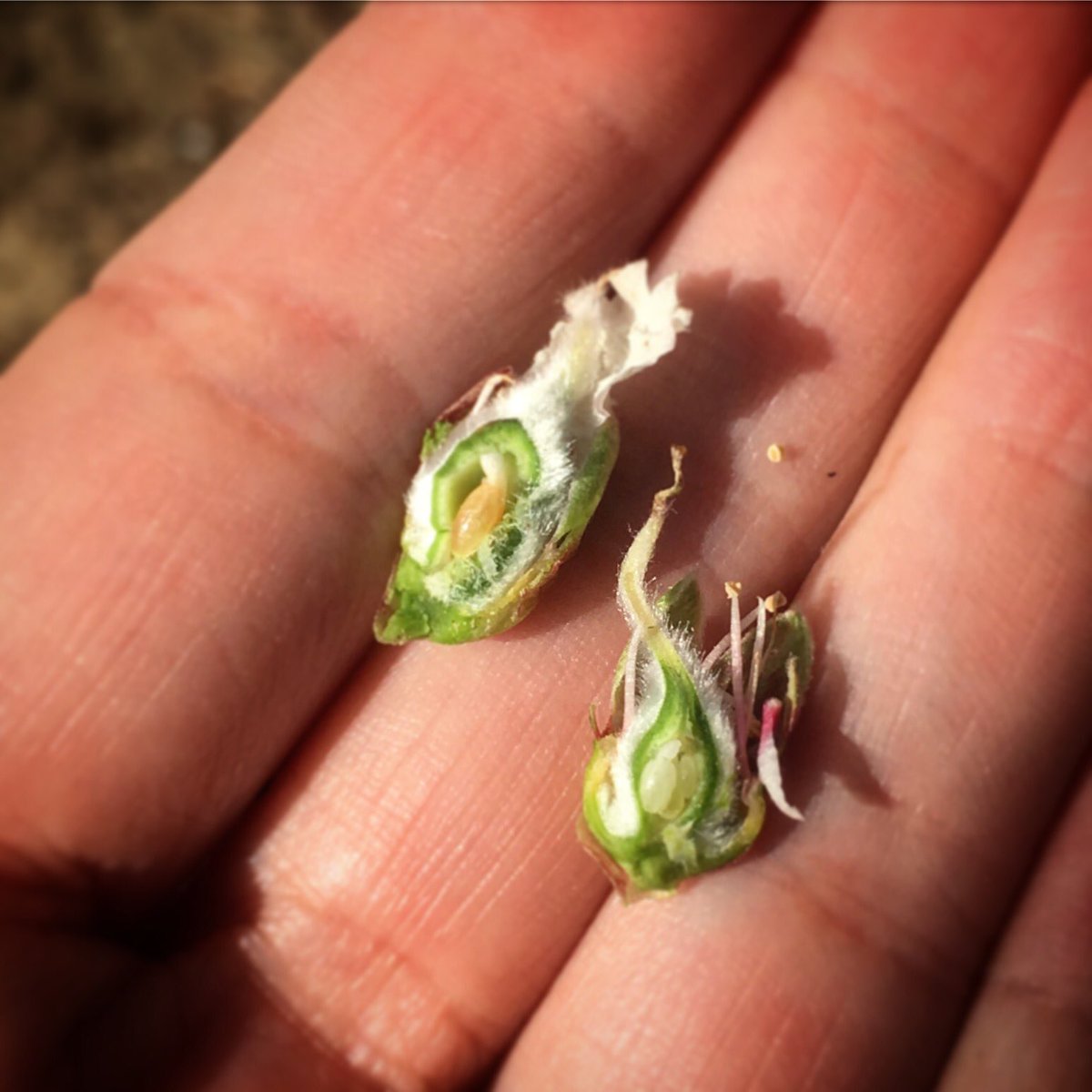
Editor’s note: Photo shows freeze damage to almonds ovule. On right is healthy ovule. On left, ovule died due to deep freeze. (Photo: Kern County Farm Bureau.)

While possible  freeze damage is still being calculated, we know that many areas of almonds and tree fruit have been damaged from recent hard freeze across the state, with temperatures as low as 23 degrees.

Daniel Jackson of Family Tree Farms, based in Reedley, reported that at least one block of peaches on sandy ground was lost.

“The sandy ground could not hold water to protect the roots from the freeze,” he said.

Jackson explained that the five-generation operation is waiting to see if more damage was suffered by the trees.

Significant almond damage could be widespread as the freezing temperatures struck the trees in full bloom.  If there is significant losses, it could result in higher almond prices around the world.

A report from Joel Nelsen, President 0f California Citrus Mutual, based in Exeter, noted no damage to the state’s citrus crops.

With California growers, ranchers, producers, and rural landowners experiencing recent freezing temperatures sweeping the state, the U.S. Department of Agriculture has multiple agencies that provide financial and/ or technical assistance to recover from natural disasters, such as freeze.

Listed below is an overview of applicable programs provided by the Farm Service Agency (FSA).

  • Tree Assistance Program: Provides financial assistance to replant or rehabilitate eligible trees, bushes and vines damaged by natural disasters. Forests are not eligible.
  • Non-Insured Crop Disaster Assistance Program (NAP): Provides compensation to producers who grow uninsurable crops and have purchased NAP coverage by the crop signup date.
  • For more information, visit http:// difsa.usda.gov

Please contact your local FSA County Office as soon as possible. Your local FSA specialists are available to assist you with the programs listed above and more.


2018-02-26T16:44:01-08:00February 26th, 2018|
Go to Top