About California Ag Today

This author has not yet filled in any details.
So far California Ag Today has created 2014 blog entries.

Helping Consumers Understand Ag Tech

Bayer Does Consumer Research on Ag Technology

By Patrick Cavanaugh, Editor

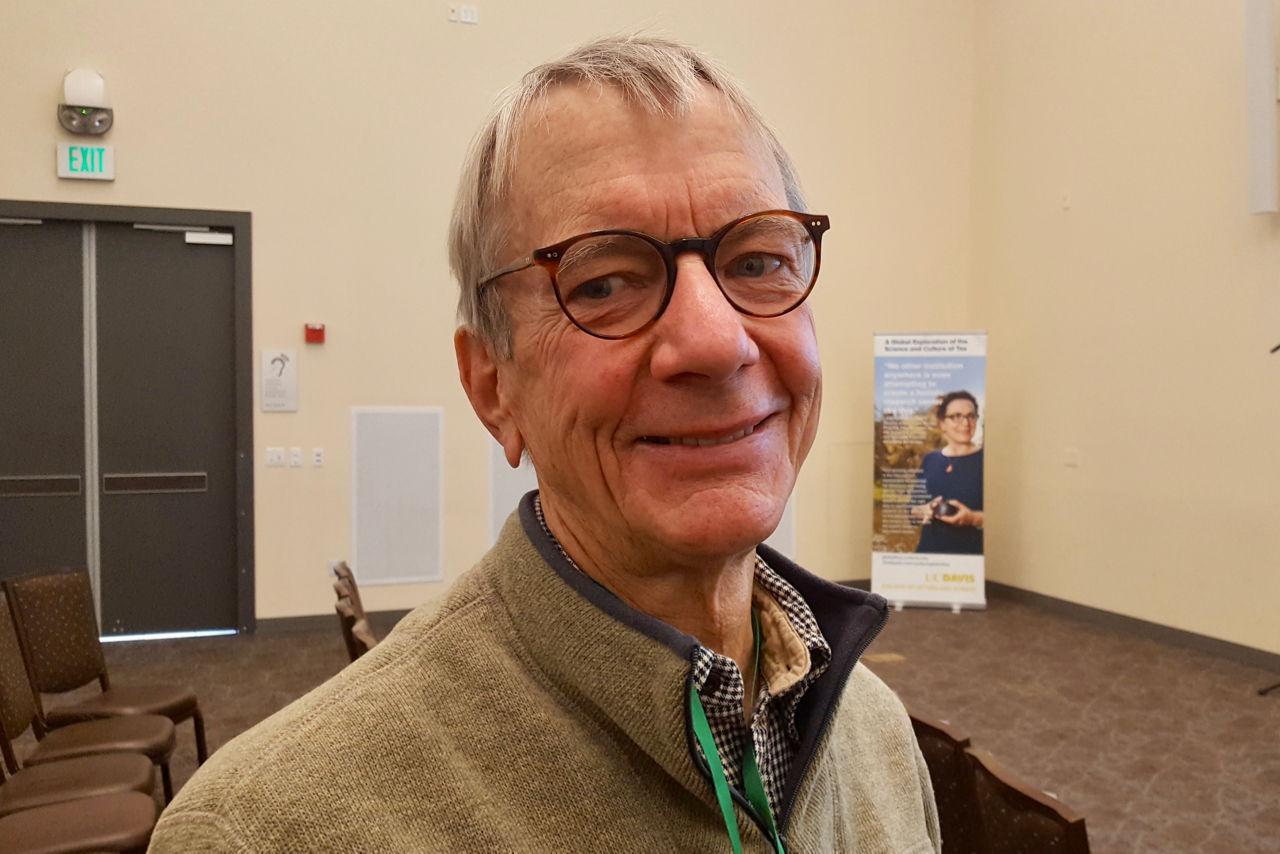
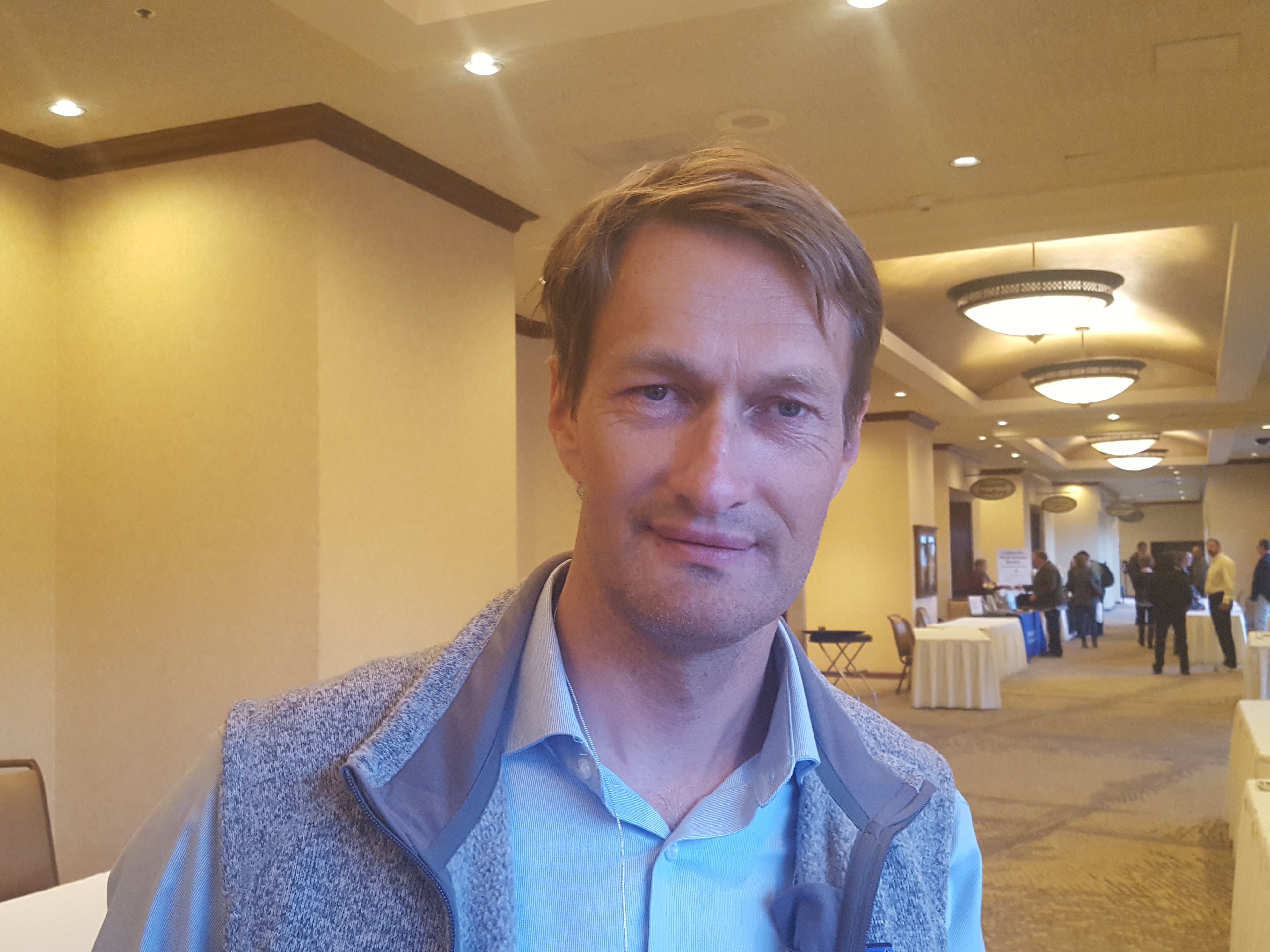
Adrian Percy, Global Head of Research and Development for the Crop Science Division of Bayer, recently spoke with California Ag Today about consumer opinions on agriculture and ag tech.

“The public trusts farmers. There’s a high degree of trust, and I think that comes from the fact that there is an emotional connection with food, the fact that growers are known to be trying to work sustainably,” Percy said. “Often times, farmers look from generation to generation in terms of passing the farm down, and I think that’s still understood by the public, even if some of the technologies we’re using … people have some reservations about.”

“I mean, it’s not just consumers in the U.S., it’s also in the European markets and South America and in Asia,” Percy explained. “We’re seeing a lot of questions coming up around agriculture, and as an agricultural input company, we think it’s our role to help understand that. And we hope to activate farmers or other folks in the industry to come out and talk about agriculture, enter into dialogue with consumers and explain what we do. I think that’s very important.”

Percy discussed a study that covered different topics, including consumer opinions on innovations in agriculture.

“We looked to a whole bunch of different aspects. One of the things that was also interesting is just asking the general questions about do you believe: that innovation in agriculture is actually important? People came back, ‘Yes, we do believe that we need to innovate. We do see that there’s a need to feed a growing population and that we need to help farmers farm more sustainably with better tools,’” Percy said.

“On the other hand, when we quiz them about the individual tools, that’s where there is a reservation,” Percy explained. “People don’t necessarily like the idea of chemicals on the farm or GM technology in certain cases and certain parts of the world. So those are the types of discussions that we need to really go into.”

2021-05-12T11:05:13-07:00March 26th, 2018|

Specialty Farms Grow for A Diverse Customer Base

Small Specialty Farms Specialize on Niche Crops

By Jessica Theisman, Associate Editor

Mark Gaskell UCANR Small Farms Advisor

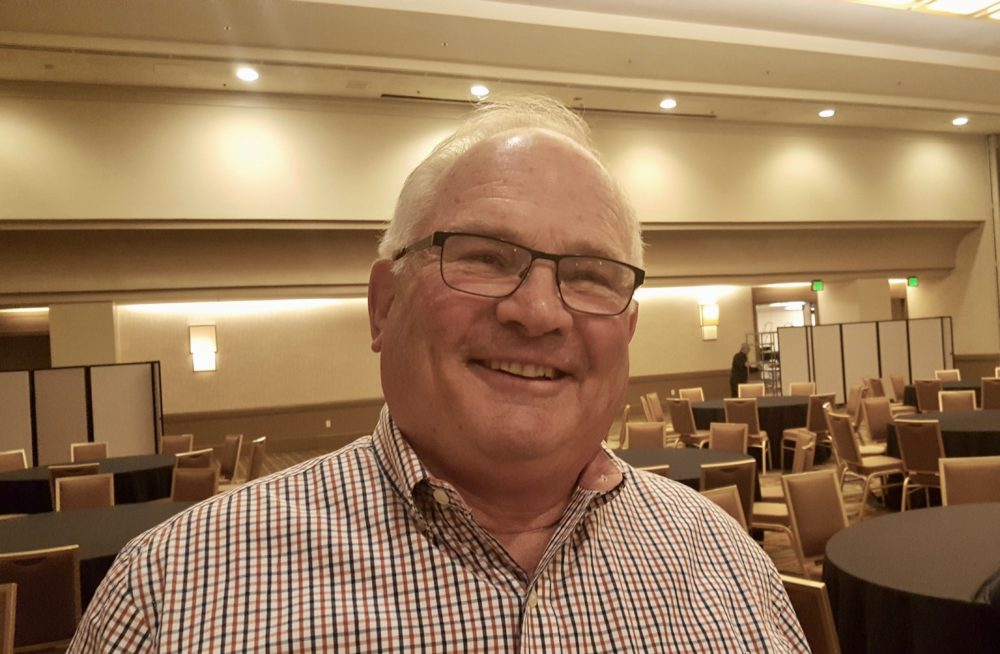
Cal Ag Today recently spoke with Mark Gaskell, a University of California Cooperative Extension Small Farm and Specialty Crop Advisor for San Luis Obispo County. He explained the definition of a small farm.

“I remember the USDA used to define a small farm as a $250,000 in gross income or a $350,000 in gross income,” Gaskell said.

Gaskell also works with specialty crops that are lower in volume but are high value crops.

“I don’t ask small farmers what their gross sales is by any means, but because of the emphasis on these specialized niche crops, I tend to see more small scale farming operations,” Gaskell said.

Blueberries are a perfect example of a specialty crop in California. With a large, diverse population, this pushes the growers to continue producing high-quality fresh crops.

Blueberries were originally grown in the eastern United States because they like the acidic soil. Of course California growers found a way to amend the soil to drop the pH.

“Because of California’s diverse population and appreciation for high-value, fresh market items, we tend to avoid more commodity-type crops. Small farms need to specialize in fresh market, high value crops for this diverse population base,” he said.

2018-03-23T16:58:35-07:00March 23rd, 2018|

Small Farms Must Include Marketing

Marketing Makes it or Breaks it

By Jessica Theisman, Associate Editor

Mark Gaskell is with the University of California cooperative extension as a small farm and Specialty Crop Advisor for San Luis Obispo County. Gaskell recently told California Ag Today about his work with growers and small farms in the county since 1995.

“Part of my job has to do with applied research and educational programs, and this case related to keeping small farms viable and successful,” Gaskell said. “These activities include troubleshooting problems, helping growers develop new crops and develop new market opportunities that make them more competitive.”

The big question is, what to plant and how to profit from the crops?

“I often tell growers, plan on spending half or more of your time on marketing because marketing is probably more important than growing,” he said. “Marketing is what will draw crowds. It is best to have a marketing plan for your crop before putting your seeds in the ground.”

“Some opportunities are direct sales via farmers markets or farm stand, but more often than not, those market outlets are full and there is a long waiting list,” Gaskell explained.

Growers have to then look at selling through specialized wholesalers and in some of the metropolitan areas, Gaskell said.

2021-05-12T11:05:13-07:00March 22nd, 2018|

Herbicide Limits Plantings Following Cilantro

Caparol Label Change Sought To Reduce Plant-Back Restrictions Following Cilantro

By Patrick Cavanaugh, Editor

Cilantro production is important in California and more growers are planting it. However, an herbicide used in cilantro has plant-back restrictions to other crops.

It’s easy to grow and works well as a rotation crop, explained Oleg Daugovish, a UCANR Cooperative Extension Strawberry and Vegetable Crop Advisor serving Ventura County.

“It’s an easy fit in our production systems. You can fit it between many crops,” Daugovish said. “It’s a quick crop and can be planted in a small planting window.”

To help minimize weeds, Caparol herbicide is labeled for use on cilantro. “It works very well and it’s all we need to control weeds in cilantro,” Daugovish explained.

“But the problem is that we have some plant-back restrictions. Some of the crops, we obviously have to rotate your cilantro with something,” Daugovish said. “You have to have a label that allows you to go back to the field with other crops such as peppers, lettuce, Brussel sprouts or spinach.”

That’s the biggest problem for growers, as they like how it works on cilantro, but need an allowance to go back in with different crops without worry.

Under the IR-4 program, Daugovish conducted research to see if other crops could safely be planted after a cilantro crop. The research indicated that crops following cilantro within the plant-back restrictions were safe for the most part.

“They treatments were similar to the untreated,” said Daugovish. “We are putting some numbers together and running statistics in different locations such as Salinas, Santa Paula, and Ventura.”

Daugovish said it appears that it is safe to follow cilantro without waiting for plant-back restrictions, and he plans to submit the data to the IR-4 program who can get it to the registrant who can amend the label.

“We need to make the change on the label so growers can use it without the plant-back restrictions,” said Daugovish. “We expect to have the data sets to support a label change so that growers can use it.”

“As far as herbicides, we may not have another option for a while, but if growers can use is safely with peace of mind it will be a major benefit,” he said.

2021-05-12T11:05:13-07:00March 21st, 2018|

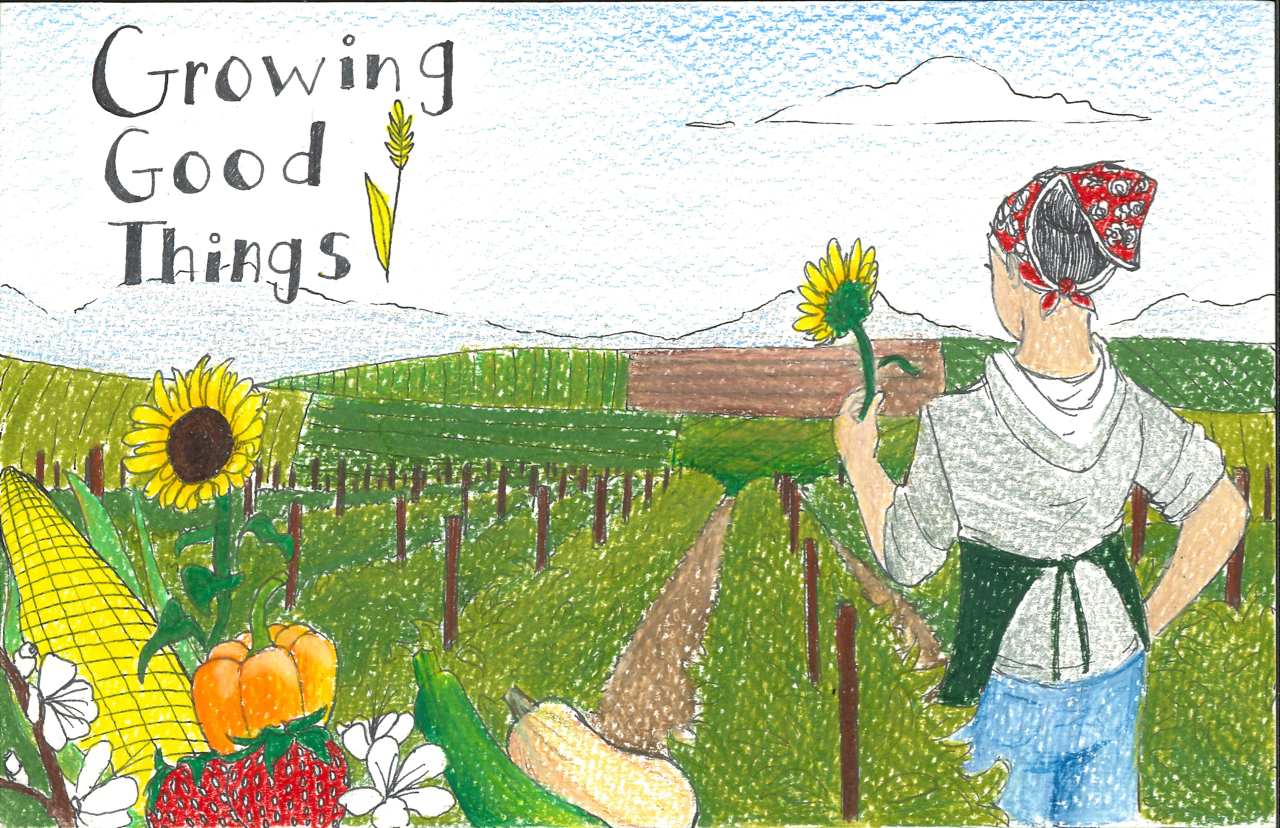
Tulare Calendar Highlights Growing Good Things

Calendar Art Winner Recognized on National Ag Day

By Tulare County Farm Bureau

Winners of the 2018 Calendar Art Contest hosted by Tulare County Farm Bureau (TCFB) with sponsorship from the Tulare County Office of Education were honored with a special presentation during a Board of Supervisors meeting on National Ag Day, Tuesday, March 20.  

Over 800 Tulare County students from 39 schools submitted entries for TCFB’s annual art contest by the February 15 deadline.  The goal of the contest is to promote awareness about agriculture in Tulare County and the importance of an abundant and healthy food supply. 

The students were asked to submit original artwork depicting this year’s theme, “Tulare County Agriculture…Growing Good Things.”  All entries were judged by a panel of representatives from the TCFB’s Education Committee.  Winning artwork was chosen based on the agricultural content, originality, neatness and reproducibility.  

Front Cover Winner by Joshua Talingo Garcia

Overall winner Joshua Talingo Garcia, an 11th grader from Orosi High School, is no stranger to the contest. He was the 2017 November winner and the 2016 back cover winner. This year, his artwork is featured on the cover of the calendar and he received a $50 cash award. Additional student artists, listed below, received a $25 prize and their artwork is featured inside the calendar as monthly winners.

Back Cover Winner by Branson Campbell

Each year, the 12-month calendar (April through March) is printed and distributed to schools throughout the county and is available to the public at no cost. For a copy of the 2018-2019 TCFB Agricultural Art Calendar, please contact the Tulare County Farm Bureau at 732-8301. The culmination of TCFB’s art contest is one way the organization celebrates National Ag Day.


Winners:
Cover Winner – Joshua Talingo Garcia, 11th Grade, Orosi High School
January – Michelle Park, 6th Grade, Hurley Elementary School
February – Fernando Garcia, 12th Grade, Orosi High School
March – Ashley Carrion, 6th Grade, Tipton Elementary School
April – Christian Carlos, 11th Grade, Orosi High School
May – Mia Machado, 3rd Grade, Sequoia Union Elementary School
June – Julie Castillo, 8th Grade, Alpine Vista School
July – Adyson Hensley, 5th Grade, Rockford Elementary School
August – Hannah Shackelford, 6th Grade, Golden Oak Elementary School
September – Mylee Primm, 8th Grade, La Joya Middle School
October – Phoenix Datig, 2nd Grade, Three Rivers Elementary School
November – Anthony Tamayo, 11th Grade, Orosi High School
December – Eveny Leon, 2nd Grade, G.L. Snowden Elementary School
Back Cover – Branson Campbell, 8th Grade, La Joya Middle School

2018-03-20T16:53:30-07:00March 20th, 2018|

Relentless Search for ACP and HLB Trees

Intense Inspections of Urban Citrus Trees Continue

By Patrick Cavanaugh, Editor

Joel Nelsen is president and CEO of California Citrus Mutual, based in Exeter. He told California Ag Today recently that there is an “active plan to look for trees harboring Asian Citrus Psyllids (ACP) infected Huanglongbing (HLB) trees in urban areas because we’re looking for nobody else across this country, let alone in the southern hemisphere, to look for infected trees in the urban area. Mexico and Brazil didn’t do it. We’re doing it.”

Huanglongbing

Joel Nelsen

The hope is that they find HLB and stop it there.

“Commercial growers are under tight testing programs to combat the Asian Citrus Psyllid. As far as it relates to commercial growers, we’re doing enough trapping that we’re not finding what we call hot spots of Asian Citrus Psyllids,” Nelsen said. “Secondarily and most importantly, we have a very strict clonal protection program, so growers are only allowed to access trees after they’ve gone through a rigorous testing program at both the nursery and the rootstock from the university.”

Nelsen said that the chances of a grower introducing the insect into an area is rather slim; it’s more often likely that the disease will be introduced to a grove.

Testing is random and more lab space is needed.

“Most of it’s been random because it is an intensive program. We’re analyzing roughly 20,000 leaves and twigs every month,” Nelsen explained. “We’re analyzing several thousand ACP every month. In fact, our lab capacity is capped, and one of the discussions that we’re having is to identify what labs can do what and whether or not we need to expand the number of labs doing business.”

“So we are looking at additional lab space, and in fact, we have already contracted with the University of Arizona Lab in Tucson  and maybe we’ll consider using private labs to do the initial work,” Nelsen said. “Now, they’re not going to be able to confirm whether or not an ACP is there, but they go in and evaluate that twig or green waste waste and if in fact there is a suspicion, then you send in the California Department of Food and Agriculture folks.”

2021-05-12T11:01:55-07:00March 19th, 2018|

Trade Must be Fair for America

Ray Starling, Special Assistant to Trump, on Trade

By Patrick Cavanaugh, Editor

Ray Starling is Special Assistant to President Trump for Agriculture Trade and Food Assistance. He was the keynote speaker at the 2018 Citrus Showcase hosted by California Citrus Mutual.

He spoke about addressing imbalance in trade.

Ray Starling, left, with Joel Nelsen of California Citrus Mutual.

“The thing that the president wants to do is to address some of the imbalance that we have. We go out and negotiate these agreements,” Starling said. “We say that we’re all agreeing to the rules of the road and then all of a sudden in the middle of trading, when we will have almonds on a boat or we’ll have pork on a boat or have fruit on a boat and all of a sudden, we find out the rules have changed. That is not the kind of trade we’re talking about. We want to sort of fix those inequities, if you will.”

NAFTA also needs to be looked at closely.

“There are a number of chapters in the agreement and a lot of the things that we need to fix on agriculture, we have worked out,” Starling explained. “Some of those are things that are never going to make the news. They are agreements and understandings about maximum residue levels of pesticides. Their understanding about what is the tolerance of foreign matter in material that we may be shipping to Mexico or Canada.”

“But on the big issues for ag that we’ve still got to make progress on: One of those is with Canada, and it deals with the dairy issues,” Starling said. “They supposedly have a supply management system where they limit the amount that they produce in the country to get a higher price, but yet a lot of their products still ends up on the international market, so our point is if you’re going to have a supply management system, it’d be great if you actually manage your supply and then didn’t dump that product out on the world market to compete with American product out there.”

Enforcement is also a concern, noted Starling.

“I wouldn’t say that it has to be a sequential process like that. I mean, we’re always going to look for new agreements and new opportunities, but I think that often when we look at the way we’re resolving disagreements about trade, it’s a very long process,” he said.

“It takes years to go to the WTO and to get a successful outcome, and we’ve gotten many successful outcomes at the WTO, which some would argue is actually a sign that that system is not that successful because notwithstanding the fact that we keep winning there, we keep having to go there to get these solutions,” Starling explained.

Photo Credit: Port of Oakland

2018-03-17T12:35:22-07:00March 16th, 2018|

More Cooperation Regarding Citrus Health and HLB Disease

Citrus Health Response Program Discussed at UC Riverside

By Patrick Cavanaugh, Editor

California Ag Today recently interviewed Joel Nelsen, president and CEO of the California Citrus Mutual. He spoke on his recent trip to UC Riverside about the Citrus Health Response Program. While speaking with USDA, they discussed the game plans that will be used to battle Huanglongbing (HLB) disease, which is vectored by an invasive insect called Asian Citrus Psyllid.

“We got into it, which I thought was an interesting discussion. What would growers do if in fact HLB was discovered in a grower’s orchard and what would the be obligated to do,” Nelsen said.

“And what came out of that discussion is that we are going to work with the USDA. We’re going to develop a war game scenario. We’re going to bring people into a room and start talking about it, just to see what the reactions were, and we’re going to challenge these individuals to do what needs to be done,” Nelsen explained. “We’re just going to have to figure out how best to address the industry and areas like this.”

Nelsen said that they discussed whether or not there was enough being done in that partnership with the homeowner. “We came to the conclusion that no, quite frankly the industry has been carrying that ball and that USDA and CDFA can do a little bit more in their role as government”

Tree removal and beneficial insects were also discussed.

“We talked about the continued trees being removed, and everybody was satisfied about that. We talked about whether or not beneficial insects can help in this situation. Surprisingly, the answer was pretty much no,” Nelsen explained. “Beneficial releases may help in an urban environment to a small extent, but from a commercial standpoint, it doesn’t help. So there were a lot of discussions, some debate, and most of all, some camaraderie that was developed as far as going forward.”

Nearly 400 trees in front and back yards of homes have been destroyed due to testing positive to HLB disease.

“They’re all in a clearly defined geographical area in Southern California,” Nelsen said. “So what we have is a lot of backyard adventures that bring in rootstock that unfortunately was diseased, and as a result of that, those individuals are the ones that are seeing problems associated with their own trees.”

2021-05-12T11:01:56-07:00March 15th, 2018|

Pedestrian Orchards Will Reduce Injuries

Pedestrian Orchards in the Making

By Jessica Theisman, Associate Editor

California Ag Today recently spoke with Becky Phene with the University of California out of the Kearney ag center. She’s working alongside Kevin Day, UC tree fruit advisor in Tulare County, on development of pedestrian orchards.

“My background is irrigation. I got asked to participate in the pedestrian orchard with Kevin because he wanted to demonstrate multiple technologies that would be beneficial not just now, but in the future,” Phene said.

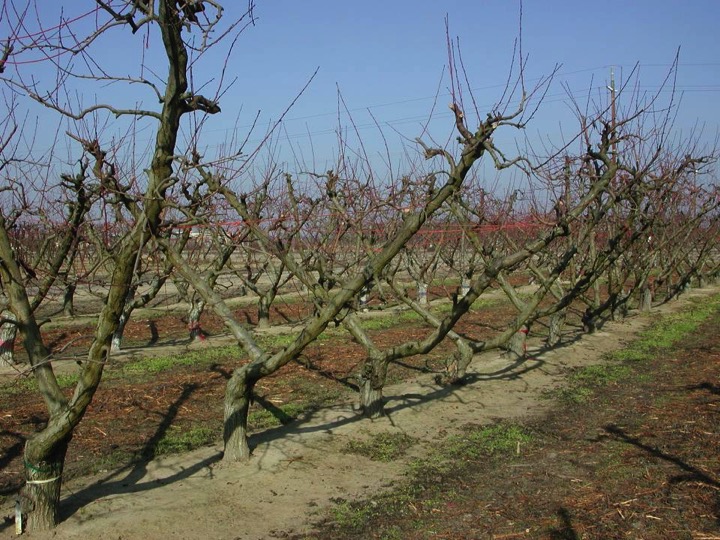
Day has combined his pedestrian orchard with subsurface drip irrigation. The pedestrian orchards are by design kept short so that there is no usage of ladders. Eliminating the usage of ladders can help prevent on the job accidents.

“The pruning lets the tree grow quickly and fill in as quickly as possible in the first couple of years, and then he develops the shape of the canopy and the shape of the leaders,” Phene said.

Photo by Kevin Day, UCANR Cooperative Extension Farm Advisor, based in Tulare County.

2021-05-12T11:05:13-07:00March 14th, 2018|

Elaine Trevino to Head Almond Alliance of California

Trevino Chosen After Big Search

By Patrick Cavanaugh, Farm News Director

The Almond Alliance of California (AAC) has named Elaine Trevino as its new President and CEO. Trevino will provide oversight of the organization’s operations, communications, government relations and overall advocacy efforts on behalf of California’s almond industry.

In addition, she will manage the organization’s various industry strategic partnerships, initiatives and memberships across the state of California. Based in Modesto, Trevino will report directly to Brad Craven, Chairman of the Almond Alliance of California, and general manager of Superior Almond Hulling of Cantua Creek, CA.

“We are excited to have Elaine be part of our team,” Craven said in a news release. “She brings a wealth of experience, statewide relationships, extensive community outreach, public policy, government affairs and strategic partnerships. We look forward to having her contribute to the continued advocacy efforts of California’s almond industry. In looking for a new president of the Almond Alliance, we knew that the almond industry has enjoyed a lot of success, making this position attractive to a large pool of candidates. In order to enjoy continued success, our organization will also need to take on any challenges or threats head-on, with integrity and confidence. This is what Elaine brings to the Almond Alliance.”

Most recently, Trevino was President of California Strategic Solutions, a consulting company focused in business development, community outreach and delivering comprehensive strategies for complex issues. Trevino has diverse experience in both the public and private sectors in the areas of agriculture, transportation, community development and technology. She is a recognized leader in the Central Valley and understands the importance of strong bi-partisan relationships. Equally important, Elaine understands the value of communication and outreach to all segments of the California almond community.

Chairman Craven praised Interim President Andrea York for her efforts over the past few months.

“The board deeply appreciates Andrea stepping up from her busy role as Government Affairs Manager and taking on the additional responsibilities as Interim President,” he said. “We look forward to Andrea working closely with Elaine on the broad range of issues vital to the almond community.”

2018-03-13T16:38:04-07:00March 13th, 2018|
Go to Top