About California Ag Today

This author has not yet filled in any details.
So far California Ag Today has created 2014 blog entries.

Safe Food Alliance Shines in Food Safety

CDFA Awards Contract to Safe Food Alliance for Grower Produce Safety Training

The California Department of Food and Agriculture (CDFA) has contracted with Safe Food Alliance, a division of DFA of California, to host 25 Produce Safety Training classes between January and June of 2018. The contract covers central and southern California counties beginning at Madera, Fresno, San Benito and Monterey counties along the north, to the border counties of San Diego and Imperial along the south.

CDFA received $450,000 from the U.S. Food and Drug Administration (FDA), to provide farmers with affordable access to food safety training courses which meet the requirements under the new Food Safety Modernization Act (FSMA) Produce Safety rule for growers, whose first compliance dates are January of 2018.

The Safe Food Alliance offers technical food safety services to assist growers, packers, processors, and manufacturers in meeting customer and regulatory requirements by understanding and applying recognized best practices for food safety and quality control management. Safe Food Alliance has approved trainers who are able to conduct the classes on behalf of the Produce Safety Alliance. The food safety team includes four Produce Safety Lead Trainers and four Produce Safety trainers, making them the largest Produce Safety training facility in California.

Safe Food Alliance conducted 17 Produce Safety trainings for 662 growers in 2017, including 250 walnut growers as part of a partnership with the California Walnut Board. Safe Food Alliance will be partnering with the California Walnut Board to host six trainings in the spring of 2018 to train 500 additional walnut growers.

Over 50,000 produce farms in California are expected to be covered under the Produce Safety Rule, one of several sections of the new FSMA law. As part of this Rule, these 50,000 farms must employ at least one individual who has completed a food safety training course which meets requirements laid out in the new regulation.

Attendees of this course are eligible to receive a certificate from the Association of Food and Drug Officials (AFDO) which verifies that they have completed the recognized training course. Along with the standard curriculum, Safe Food Alliance will provide additional resources to attendees such as materials to help determine how the regulation applies to their farm; templates for creating required records; a calculation tool to determine if a small farm is exempt; a list of allowable water treatment compounds; and tools for conducting water analysis calculations.

For more information about scheduled Produce Safety Grower Training Courses please contact foodsafety@safefoodalliance.com. More FSMA resources are available at https://safefoodalliance.com/resources/food-safety-resources/what-is-fsma/
 

2018-01-11T08:48:03-08:00January 10th, 2018|

Lunch To be Provided

San Joaquin County and Delta Field Crops Meeting this Friday Jan. 12

By Patrick Cavanaugh, Farm News Director

Cooperative Extension of San Joaquin County will host the San Joaquin County and Delta field Crops meeting this Friday, January 12 8:00 AM to noon. The meeting location will be at the Cabral Agricultural Center in Stockton. Lunch will be provided.

Among some of the items to be discussed at that meeting will be a Regulatory Update, with Tim Pelican, the San Joaquin County agricultural commissioner; Alfalfa Weevil Management, with Rachel Long UCCE Farm Advisor; California Farmer Voices on Nitrogen Management with Jessica Rudnick, UC Davis; Managing Weeds and Agronomic Crop Rotations, with Kurt Hembree UCCE Farm Advisor: and Tools for Selecting Small Grain Varieties.

There will also be a discussion on Sorghum Seeding Rates for optimum productivity. Michelle Leinfelder-Miles UCCE Farm Advisor has been running some trials

“So we tested five, six, nine, twelve and fifteen pounds per acre,” Leinfelder-Miles said. “I think growers in my region were recommended to plant on that higher side, maybe 12-15 pounds per acre. Feedback that I was getting from researchers including our UC Specialist is that we should probably be planting on the lower end, more like five or six pounds per acre—targeting a plant population of, maybe 85,000 plants per acre up to 100,000 plants per acre. But not overshooting 100,000.”

“The real take home message is that we didn’t see the higher seating rates yielding better. We saw basically even yield across the different treatments,” noted Leinfelder-Miles. “So what does this mean? It means that if you’re planting these larger seeding rates, you’re spending more money on more seed, but you’re not seeing a yield benefit from that extra cost of planting more seed.”

Find out more about these seeding rates and other items at that field day. Please RSVP for a Lunch count. (209) 953-6100.

2018-01-10T07:20:19-08:00January 10th, 2018|

Bettencourt Says Livestock Program Can Help

Aubrey Bettencourt: Emergency Livestock Assistance Program Available for Losses in CA Fires

By Jessica Theisman, Associate Editor

“It’s been a crash course for me,” said Aubrey Bettencourt, a third generation farmer in California. In November she was appointed by the trump administration to serve as the executive director of the United States Department of Agriculture’s California Farm Service Agency. She is speaking about certain FSA programs for livestock. It would be applicable to all states across the country.

“Whether we are dealing with the emergency livestock assistance program, ELAP,is what we call that,” she said. “ELAP provides financial assistance for eligible producers for certain diseases, adverse weather events, wildfires, and more. These are great programs that we need, especially with some of the disasters California is dealing with.”

She was very close to the situation in southern California with all of the fires, that did affect some cattle. “Any cattleman or woman who is having trouble should get a hold of the FSA office immediately to get into the system to be matched up to the programs such as ELAP,” she said.

“We also have a livestock indemnity programs, so if there is unfortunately a loss of livestock, we can definitely help you with that,” said Bettencourt. ELAP also has a forage program that helps if you have lost the ability to graze.

There are also other programs along the lines of secondary insurance for noninsurable crops that can be purchased ahead of time. “In case there is a disaster, we can help cover some of the costs if you are not able to graze or you are not able to care for cattle in some capacity because of the loss or a disaster of some sort,” she said.

“I would encourage you not only to reach out to our offices, but a lot of the really good trade associations have great information on this as well,” said Bettencourt.


For more information, please go to the link below:

https://www.fsa.usda.gov/programs-and-services/disaster-assistance-program/emergency-assist-for-livestock-honey-bees-fish/index

2021-05-12T11:17:09-07:00January 9th, 2018|

Paul Wenger Says Stay Involved

Farmer Paul Wenger on His Past Role as Farm Bureau President

By Patrick Cavanaugh, Farm News Director

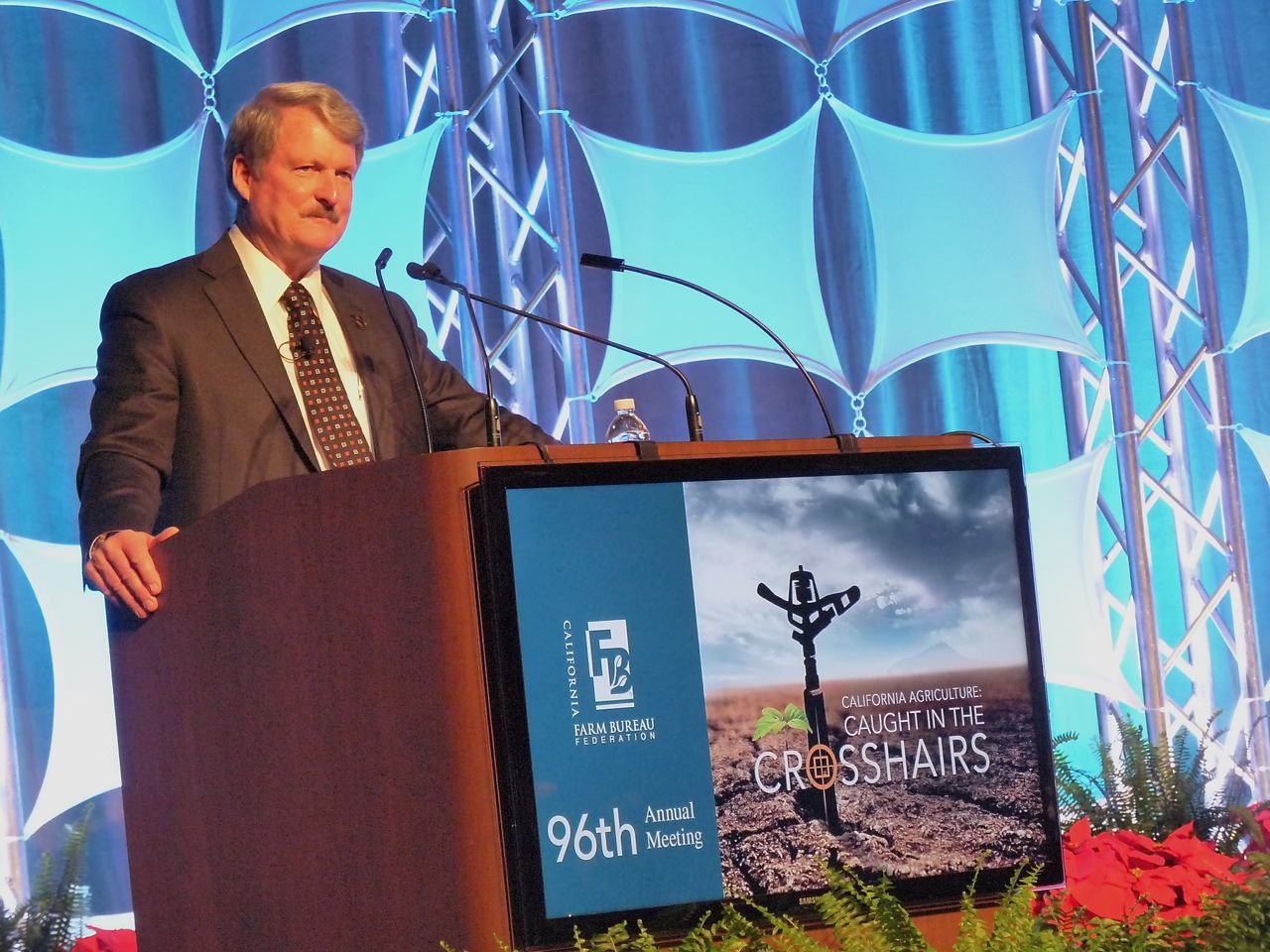
Paul Wenger is a third generation farmer producing almonds and walnuts in Stanislaus County, and he is the past president of the California Farm Bureau Federation. California Ag Today recently caught up with him and asked him about that tenure heading up the largest agricultural state’s farm bureau.

“It’s been a real honor and a privilege to represent California agriculture through the Farm Bureau,” Wenger said. “We are the largest general ag organization and certainly, we don’t replace any of our commodity groups or other organizations, but at times you need that organization that can consolidate the entire state.”

“The diversity of our crops, 250 different commodities north, south, central, east and west, and [to] be able to advocate in Sacramento and Washington, D.C., and bring everybody and consolidate that into a singular voice has been a challenge because sometimes we all like to look our own direction. However, we need to think holistically,” he said.

Wenger learned a lot on a trip to Australia.

“The growers there allowed themselves to be divvied up by region and by commodity. They lost control of their water and it was separated from their land, and we certainly can’t have that happen here,” he said. “So just having the ability to bring people together for a singular focus to advocate for agriculture has been a real high spot.”

Wenger said, of course, he’s still a part of farm bureau, but when he left that presidency, he had a message.

“The biggest message is we don’t have to accept what’s happening to us as being inevitable, and a lot of people say we can’t change things, and that’s apathy. With farm bureau, we have elected boards of directors in 53 counties representing our 58 counties,” Wenger said. “Trust those folks to have the same vision that you would have if you were sitting there. Even better, why don’t you get involved and get out there? So my message to farmers and ranchers is we can make a difference to just sit back and do nothing. We should not do that. We cannot do that.”

And Wenger said not having to do the day-to-day duties of the president of the California Farm Bureau, it leaves more time to farming.

“We’ve got some opportunities to expand the farming operation, and we do a lot of custom work, so I’m looking forward to getting back on the farm, but I can’t just shut it off either,” he said.

“When I read the paper and see the news, it makes you want to go to battle with some of these other groups that are always countermanding what we do or the legislature that is just not getting it right. Sometimes it’s kind of hard to say you have a lot of wins, but if we can just keep ourselves in the battle, that gets us farther down the road and maybe it gets better next year.”

2018-01-15T16:36:00-08:00January 9th, 2018|

Spray Regs Update

Spray Regs Providing Extra Measure of Protection to Schools

By Patrick Cavanaugh, Farm News Director

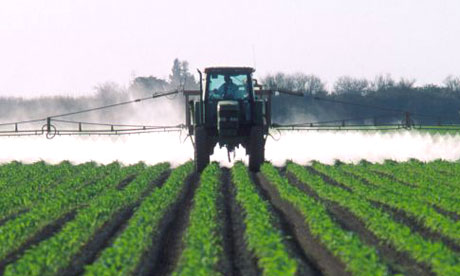
New regulations went into effect January 1, regarding the timing of applications or crop protection materials near school sites and licensed daycare facilities. The regulation provides an extra measure of protection to public K through 12 school sites and the daycare centers from the risk of short term pesticide exposure and help increase communication between grower and school and day care sites.

It prohibits many pesticide applications within a quarter mile of the school sites and daycare centers during school hours, Monday through Friday between 6:00 AM and 6:00 PM. This includes all applications by aircraft sprinklers, air blast sprayers, and all fume again, applications. In addition, most dust and powder pesticide applications such as sulfur will also be prohibited during this time.

Wayne Zipser is president of the Stanislaus County Farm Bureau. California Ag Today spoke with him concerning these new regulations. “Sometimes timing of applications is more critical for certain times, specifically fungicides, but also insecticides and herbicides applications, and these new regulations are going to effect the timing of these crop protection materials,” Zipser said.

Zipser said that growers have always been extremely careful around schools, but they do understand these new regulations. “It’s going to cause a bigger burden for them, but they understand it and as long as it’s clear along that’s as clear and understanding regulation, there’ll be able to deal with it,” Zipser said. “They’re going to be able to to a spray on weekends and they’re going to be able to spray between six and six, six at night and six in the morning, and so they can work through those as long as they understand what they are.”

The new regulation will affect about 3500 public K through 12 schools and licensed daycare facilities and involve approximately 2500 growers in California. While many counties in California currently have varying requirements for notifications of certain pesticide applications near schools. That proposed regulation is the first statewide standard.

Some commercial spray companies such as Hawk Ag Aviation, of Oakdale, Calif., which does aerial applications of materials, have even a higher standard. “We don’t apply material within a half-mile of schools,” said Shane Sperry with Hawk Ag. “That’s always been our policy.”


2018-01-11T17:20:03-08:00January 5th, 2018|

AgTech Increasing Production

Increasing Food Production with Technology Worldwide – and Locally

By Erika Kosina, Nevada County Tech Connection


California, which boasts more than its fair share of both techies and farmers, hosts several AgTech conferences, some of which attract more than 600 attendees. And these AgTech pioneers are making a difference.

Technology has allowed the inudustry to increase food production by leaps and bounds ever since our ancient ancestors graduated from the digging stick to the hoe. On today’s farm, smart phones and laptops are as common as combines and tractors. The 4th industrial revolution and the advent of the Internet of Things where the internet is connecting devices and things at an unprecedented rate is pushing agricultural technology even further.

Technology Helps Farmers Increase Efficiency

The average size of an American farm is now 434 acres, according to a 2012 United States Department of Agriculture (USDA) census. Farmers simply can’t monitor each plant on a farm of that size. Electronic sensors can gather information that allows farmers to monitor their fields from afar. Analyzing the data from these sensors gives farmers information about the plants, and allows them to make better decisions. According to the USDA, “Farmers no longer have to apply water, fertilizers, and pesticides uniformly across entire fields. Instead, they can use the minimum quantities required and target very specific areas, or even treat individual plants differently.” It’s a much more efficient way to grow large amounts of food.

Drones are another way for farmers to monitor their crops more efficiently. They fly over fields and gathering visual information better than an actual person could. “At the end of the day, drones can detect things the naked eye can’t like pests, disease, weeds, and fertility,” says Melissa Jun Rowley in her article “Farm Tech Revolution.” “If farmers play their cards right, they can use this information to cut costs and save time and resources—a couple of key reasons technology was invented.”

Bringing Farmers and Developers Together

Using technology to increase food production has its challenges. Sensors require internet connectivity to relay information, which is not widely available in rural areas. And farmers generally don’t get into farming because they love technology. Steve Davis is the CEO of Intelligent Wireless Networks, a company that provides rural WiFi networks as well as applications and software to support precision farming. He talks to a lot of farmers about how technology can help their business. “Technology has not been a part of farmers’ lives much,” said Davis. “They require some teaching and hand holding as they adopt these technologies. They are after all, farmers. They know soils and fertilizers. Bugs and crop disease. Water and nutrient content criteria to grow their products. How many Silicon Valley tech CEO’s grow their own food? How many could?”

A middle man like Davis is often needed to bring farmers and technology together. Agricultural Technology conferences can act as that middle man, providing opportunities for techies to pitch farmers and investors with their ideas for making farming more efficient.

Increasing Local Food Production

Nevada County is hosting our own AgTech Micro Conference on February 9, with support from the Economic Resource Council and Nevada County Tech Connection. The conference is happening in conjunction with Sierra Harvest’s Sustainable Food and Farm Conference, which presents world-renowned experts on innovative sustainable farming trends along with workshops and farm tours. Sierra Harvest is working to increase the number of young farmers in Nevada County – the average age of farmers in our county is 58 years old, and over 98% of those farmers do not have a plan to pass on their farm. Sierra Harvest has trained 30 farmers who are under 30, and placed many of them on local farmland. Since millennials are more comfortable with technology than any other generation, these younger farmers may be more open to incorporating technology into their farming methods.

Sierra Harvest hopes to increase local food production from 2% to 25% over the next ten years. Technology has a role to play in that increase, and the AgTech Micro Conference will connect AgTech developers with funders and local farmers to get the conversation started in our community. For more information or to register for the conference, visit http://nctechconnection.org/agtech18/.

2018-01-04T15:02:55-08:00January 4th, 2018|

Farm Service Agency Can Help with Livestock Losses

Emergency Livestock Assistance Program Can Help with Livestock Losses

By Jessica Theisman, Associate Editor

“It’s been a crash course for me,” said Aubrey Bettencourt, a third generation farmer in California. Last month, she was appointed by the Trump administration to serve as the executive director of the United States Department of Agriculture’s California Farm Service Agency. She recently spoke to California Ag Today about FSA programs for livestock losses, which would be applicable to all states across the country.

“Emergency Livestock Assistance Program … provides financial assistance for eligible producers for certain diseases, adverse weather events, wildfires, and more. These are great programs that we need, especially with some of the disasters California is dealing with,” Bettencourt said.

She is very close to the situation in southern California with all of the fires, which have affected a lot of cattle. Any cattleman or woman who is having trouble should get a hold of the FSA office immediately to get into the system to be matched up to programs such as ELAP.

“We also have a livestock indemnity programs, so if there is unfortunately a loss of livestock, we can definitely help you with that,” Bettencourt said.

ELAP also has a forage program that helps if you have lost the ability to graze, and there are also other programs along the lines of secondary insurance for non insurable crops that can be purchased ahead of time.

“In case there is a disaster, we can help cover some of the costs if you are not able to graze or you are not able to care for cattle in some capacity because of the loss or a disaster of some sort,” Bettencourt explained.

“I would encourage you not only to reach out to our offices, but a lot of the really good trade associations have great information on this as well,” she said.

2021-05-12T11:17:10-07:00January 3rd, 2018|

Overwinter Pests and New Pesticide Regulations Near Schools

A Focus on Overwintering Pests and New Spray Regulations Near Schools

By Patrick Cavanaugh, Farm News Director

California Ag Today recently spoke with Ryan Jacobsen, CEO and executive director of the Fresno County Farm Bureau, about pest pressures in Fresno county as well as new pesticide regulations that were put put in place around K-12 schools and licensed daycare centers beginning Jan 1.

“When you talk about pest pressure, the warmer temperatures that we saw last year because of the multiple storms that were rolling through helped help many pests get through the season and start in greater numbers earlier in the year, and that’s what we saw happen. We have had many warm days so far this winter, and it will be interesting to see if pests respond to that in the coming spring,” Jacobsen said.

“There definitely this time of year when it comes to so many of our different other crops that folks are doing all their different cultural practices to make sure that they are doing what they can in vineyards, orchards and open grounds to reduce those pest pressures for the upcoming year and hopefully you get through the season,” Jacobsen explained.

And there are new regulations that farmers will have to follow when spraying within a quarter mile of schools and licensed daycare centers between 6am and 6pm. But Jacobson says that this won’t be a big change for farmers, as Central Valley farmers had been following regulations like this for many years.

“Most of these have been in practice by these growers in south Joaquin Valley for years. Our kids are going to those same schools, and we’re trying to be the best neighbors and stewards of the land next to these schools as possible,” Jacobsen said. “Nevertheless, every time you get to government involved, obviously there’s going to be some difficulties and some paperwork or regulatory red tape that’s going to be added to the process there. And I think that’s what you’re seeing with these current rules here in Fresno County.”

“And I know where our agricultural commissioner’s office has worked hand-in-hand with local growers regarding spraying near schools,” he said. “But in anticipation of these rules, and just even before they were even discussed, the industry did what they could to make sure that these applications that were next to schools were done appropriately successfully and that there was no issue.

2021-05-12T11:01:57-07:00January 2nd, 2018|

Walnut Blight Protection is Important

Disease Prevention in Walnut Orchards

By Brianne Boyett, Associate Editor

California Ag Today recently spoke with Jim Adaskaveg, professor of plant pathology at UC Riverside. He’s a plant pathologist, microbiologist and epidemiologist. He discussed the importance of protecting walnut trees from walnut blight.

Adaskaveg explained how walnut blight is problematic due to the higher rainfall in the northern part of the state.

“We’ve been working on this for a number of years, and overall, the northern part of the state is always higher at risk because of the higher rainfall in Glenn County,” he said. “There is much higher risk for disease in Northern California, so a lot of the growers have planted later blooming varieties such as Chandler to avoid the blight infections.”

“Rick Buchner [at UC Cooperative Extension] Tehama County and his group called that the prayer stage, which is when the female flower becomes exposed as it emerges from the bud. Those two timings would be for high disease pressure. If you had a history of the disease and you know that the disease is in your orchard, then we would suggest that timing,” Adaskaveg said.

“If you don’t have disease, and you still want to protect yourself, we say just spray at the pistillate flower emergence or the prayer stage. That sets a good way to initiate the spray program,” Adaskaveg explained.

Growers must keep in mind canopy expansion when applying materials.

“Walnuts are big trees, and as they go through bloom, all the leaves started emerging almost weekly. The tree canopy in that first three weeks of the season is doubling in size. By the time you get three or four weeks after that, the catkin flowering trees in full canopy will require a reapplication of materials,” Adaskaveg said.

2021-05-12T11:01:57-07:00December 29th, 2017|

Temperance Flat to help with Above and Below Ground Storage

Water Storage is Needed, Above and Below Ground

By Jessica Theisman, Associate Editor

California Ag Today recently spoke with Ryan Jacobsen, CEO and executive director of the Fresno County Farm Bureau, about the importance of below ground and above ground water storage, and how Temperance Flat Dam will help.

“I am first and foremost to say we need both. They go hand in hand. You can’t capture all this water at one time and stick it in the ground. You’ve got to have above ground storage,” Jacobsen said. “The water has to be allowed to percolate back into the ground level.”

“We need both types to go hand in hand, and I think anybody that knows the success of what Temperance Flat Dam is going to bring to this area knows that this is good,” he explained.

Ryan Jacobsen, Fresno County Farm Bureau CEO

Farmers are trying to get their voice heard when it comes to new water policy. Jacobson says the best way is through personal letters. They are getting hundreds upon thousands of emails.

“If you get that handwritten letter or that personal letter coming from somebody through the old school snail mail, it makes a difference when it comes to the commissioners,” he said.

“The more the commissioners can hear about the support and potential successes of this project or in the local community, the more attention it will get. It’s important to our region,” Jacobsen said. “Because agriculture is a large portion of the San Joaquin Valley economy.”

Send your personal letters to the California Water Commission at PO Box 9428 Sacramento, California.

2017-12-28T16:30:46-08:00December 28th, 2017|
Go to Top