About California Ag Today

This author has not yet filled in any details.
So far California Ag Today has created 2014 blog entries.

Tracking Social Media To Understand Consumer Food Likes

Social Media is Helpful in Agriculture

By Jessica Theisman, Associate Editor

Reaching consumers is key to helping with food confusion. Tamika Sims, the director of Food Technology communications for the International Food Information Council Foundation, is using social media to aid consumers.

“We will follow what is happening in … social media—including Facebook, Twitter, LinkedIn and Pinterest—to get a feel for how consumers are talking about food,” Sims said.

Sims noticed that differences and similarities between organic and conventional crops are being discussed with consumers, emphasizing how safe both are.

“That’s the one that we can’t seem to get enough of,” she said.

They talk about the differences and similarities as far as organic and conventionally grown fruits and vegetables.

“We talk to consumers about how they’re equally safe and equally nutritious and that one is not superior to the other when it comes to food safety or nutrition,” Sims said. “If you have access to either, feel free to enjoy both in an equal way.”

Interested in learning more? You can go to the IFIC’s website to check out their resources.
2018-06-20T16:50:20-07:00June 20th, 2018|

Enjoy California Table Grapes Year-Round

Harvest Will Continue into December

By Jessica Theisman, Associate Editor

The California grape season is beginning, and the harvest will continue into the winter. California Ag Today recently spoke with Kathleen Nave, president of the Fresno based California Table Grape Commission, about table grapes.

The California Table Grape Commission was established by an act of the state legislature in 1967 and approved by a grower referendum in 1969. The purpose of the commission is to maintain and expand markets for fresh California grapes and to create new, larger interstate and foreign markets.

Kathleen Nave, California Table Grape Commission president

Kathleen Nave, California Table Grape Commission president

“We are just getting started with a California season. We will be picking grapes all the way into December,” Nave said.

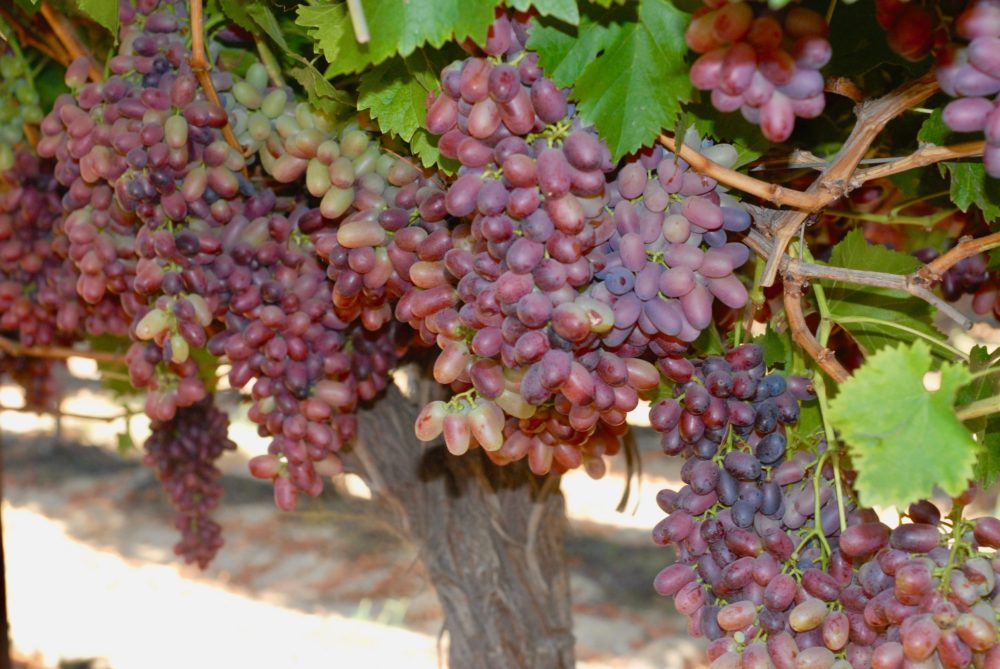
Grapes are a spring, summer, fall and early winter fruit. Sixty percent of the table grapes that are harvested in the state of California are harvested after September first.

“I would just ask people to remember that they can enjoy California grapes in the spring and the summer, in the fall and into the early winter,” Nave said.

There are new varieties of California table grapes. These grapes have been grown by and designed to provide more product for the customer.

“New varieties of grapes were created that would allow growers to continue growing and harvesting in the late October, November, and December time period,” Nave explained.

These varieties were created with the climate in mind. This way, they can thrive and be packed and shipped in November and early December.

“It takes a long time to develop new varieties of table grapes, get them out in the field, learn how to grow them and to get them to the marketplace,” Nave said.

2018-06-19T15:28:20-07:00June 19th, 2018|

Spotted Wilt Virus Impacting Tomatoes Again

Virus has Gotten Past Resistant Gene

By Patrick Cavanaugh, Editor

Tomato spotted wilt virus is becoming big in the central San Joaquin Valley, according to Tom Turini, University of California Cooperative Extension Farm Advisor in Fresno County for vegetable crops. The virus had earlier been spotted in lettuce, and this has caused some concern in this season’s tomato crop.

Tom Turini

“We had some concerns early in the season that we might be looking at a year where it’ll become a challenge, because we were finding it in lettuce back in February and March in the Huron area,” Turini said. “And then we notice that tomatoes were showing the virus symptoms. We had been managing tomato spotted wilt in processing and fresh market tomatoes largely with a resistance gene, and it seemed that the resistance was breaking.”

The virus is spread by thrips, and the gene in the tomato was the biggest deterrent in combating thrips.

“We were also talking about an IPM program, but the industry was leaning on this gene. This gene became a big part of their spotted wilt prevention program,” Turini said. “While sanitation of weeds was practiced, and there was some thrips management, it was really dependent upon this single gene resistance in the tomatoes, and as of 2016, we saw evidence that that gene was no longer performing.”

Because the virus can wipe out entire tomato fields, researchers are scrambling to find a new way to deter the thrip spreading the virus on tomatoes.

2021-05-12T11:01:55-07:00June 18th, 2018|

Research Nets Going Over Citrus Trees To Prevent Huanglongbing Disease

Blocking Psyllids Carrying Disease is Key

By Jessica Theisman, Associate Editor

Beth Grafton-Cardwell is the director of the Lindcove Research Extension Center in Tulare County and research entomologist based out of the University of California, Riverside. She recently told California Ag Today that there is work being done on installing a net structure to protect trees from Asian Citrus Psyllids, which spread the deadly Huanglongbing disease. Texas A&M researchers are installing net structures on the edge of groves to block psyllids from coming into an orchard.

Psyllids have a preference for borders. These nets could have yellow sticky strips of material with an insecticide on it, so there would be an attract and kill process.

Beth Grafton-Cardwell

Other research is looking at netted structures that will completely enclose the citrus trees.

“Researchers are going to construct a completely enclosed net structure to grow the citrus trees in a block at Lindcove,” Grafton-Cardwell said. “We will study how well one can grow citrus under the screen so there could be the ultimate protection against pests and diseases.”

“The mother trees and increased trees have to be grown under the screen, but the field trees do not necessarily have to be,” she said.

Cold temperatures in the winter to protect the citrus from the psyllid.

“The cold temperatures hardened off the tissue, which makes it hard for the psyllid to find any place to lay eggs, and they probably cost some mortality to the psyllid,” Grafton-Cardwell explained.

Most outbreaks are in Southern California. Los Angeles, Orange County, and a few trees in Riverside.

“Prevention is working and there are fewer outbreaks in the Central Valley,” Grafton-Cardwell said.

Dr. Mark Hoddle and Dr. Kelsey Schall (both from UC Riverside) have been monitoring backyard situations. They are researching the release of beneficials such Tamarixia and other generalist predators like Syrphid flies.

“They have been reducing psyllids by about 70 percent in the backyards, and that’s really good news,” Grafton-Cardwell said.

2021-05-12T11:05:11-07:00June 15th, 2018|

Safe Food Alliance Helps Keep Food Safe

Standard is Parts Per Billion Today

By Patrick Cavanaugh, Editor

California Ag Today recently spoke with Mark Mariani, executive chairman of the Mariani Packing Company in Vacaville and outgoing chairman of the Safe Food Alliance, which recently opened a new laboratory in Kingsburg to provide further research into food safety.

Mark Mariani

“We’ve been members since 1946, and the fact that the produce industry is self-policing is very unique,” Mariani said.

“The reason why we enjoyed the DFA and now the SFA is the fact that we are very concerned about food safety and so we are in a very unique industry in the sense that we self-police ourselves and so this is not something new. We’ve been doing it for over 100 years,” he explained.

“It’s not the new trend, and so being part of the DFA and SFA gives us the opportunity to not only look at the way we do our practices in our manufacturing practices, but also it gives us an opportunity to look at how we test our products,” Mariani said. “And back in the day, we used to be happy with one part per million detections of something. Today, we’re insisting on one part per billion.”

2021-05-12T11:05:11-07:00June 14th, 2018|

California Table Grape Commission is Raisin the Bar for a Fruitful Industry

Research is Huge for the Commission

By Mikenzi Meyers, Associate Editor

With grape season in full swing, there’s an abundance of fresh, local grapes in our grocery stores. While our farmers are hard at work, so is the California Table Grape Commission, and their president Kathleen Nave. They are not only making their presence known in the media but are constantly doing research to improve the industry as a whole.

The California Table Grape Commission has been doing viniculture research since 1972 and is funded by growers.

“The commission does a lot of research on ways in which to help growers grow more grapes more efficiently,” Nave said.

This is done by trying to figure out how to grow grapes with fewer inputs, an example being less water.

Nave also explained the research they do to find the benefits of eating grapes, saying, “We do a lot of health research on those 1,600 phytonutrients that are found in grapes to try to pin down the ways in which grapes are good for us, as it relates to various disease states.”

Kathleen Nave, California Table Grape Commission president

Kathleen Nave, California Table Grape Commission president

Although research is huge for the commission, Nave described their relationship with retailers in the U.S., Canada, and about 30 other countries as “the heart of the commission’s work.” This includes urging retailers to promote grapes by putting them on the shelf, offering multiple varieties, and carrying California grapes from May to January.

In addition, Nave talked about the major presence the commission is making in the media in order to reach consumers.

“We’re on The Food Network [on] television as well as The Cooking Channel, and then we do a lot on social media,” Nave said.

The commission is active on Facebook, Pinterest, and Instagram. In fact, Nave noted that their social media presence has quadrupled in the past two years.

Their goal is to showcase the beauty and versatility of California Grapes and make known the quality of work that the California table grape growers are doing every day.

2021-05-12T11:05:11-07:00June 13th, 2018|

The Need to Harmonize Maximum Residue Levels

Nearly All Produce Has Zero Residues of Crop Protection Products

By Mikenzi Meyers, Associate Editor

It can be tempting to grab a piece of produce right off the shelf and take a bite. We have the California Specialty Crops Council and the MRL Workshop to thank for this! MRL stands for the Maximum Residue Level on any agricultural produce.

Now, the words “residue level on produce” may be alarming, but it is important to note that we are talking about parts per billion that are far below the unhealthy level. In fact, nearly all produce has zero residues!

maximum residue level

Gary Van Sickle, Specialty Crops Council

The MRL Workshop is an event that has been held for the past 12 years in San Francisco, where experts from around the world come together to discuss new findings and challenges.

Gary Van Sickle, executive director of the California Specialty Crops Council, explained that a significant issue within the industry is the lack of harmonization amongst the countries.

“You’ve gone from a situation where many countries that used to use the Codex Food Safety Standard are now moving forward with setting their own, and every one of these standards is a little different,” Van Sickle said. “This creates problems for agriculture producers trying to export produce to countries with their standard.”

The MRL Workshop helps to identify these problems and recognize how to start solving them. According to Van Sickle, the keys are transparency and regulations that are reasonable.

When considering the number of specialty crops California exports across the world, the importance of this workshop becomes more and more evident.

2018-06-12T16:41:06-07:00June 12th, 2018|

Product Recall Awareness

Social Media Can Hurt a Company

By Jessica Theisman, Associate Editor

Product recall coverage has a publicity element. California Ag Today recently spoke with Caitlin McGrath, national product recall and contamination risk consultant with Lockton Insurance Brokers, about the importance of the topic.

Caitlin McGrath, with Lockton Insurance Brokers.

Product recall coverage’s publicity element can be adverse, with the accusation of contamination coming into play.

“The example I always use is a mom who puts online a food item that made her kid sick, and this gets shared 100,000 times. You get calls from your customers, supermarkets, and drug stores asking you to stop sending your product,” McGrath said.

If products are not selling, that can be a very significant loss.

“Most recalls are voluntary. They have to be reported to the FDA if they are going to cause bodily injury or property damage,” McGrath said.

She suggests having an internal communication and external communication setup. Be aware of what testing labs you are going to use, what PR companies you are going to use.

Many times, companies try to execute their recall and are not ready for the customer demands.

“Sometimes customers are coming to them and saying, ‘you owe us all this money,’ ” McGrath said. “It is important to have the plans for the whole logistics of the recall.”

2018-06-11T16:31:23-07:00June 11th, 2018|

Time for California Table Grapes

Buy Local: Make a Difference One Grape at a Time

By Mikenzi Meyers, Associate Editor

You might want to take a second look when reaching for fresh grapes in your local grocery store, said Kathleen Nave, president of the Fresno-based California Table Grape Commission.  She urged buyers to choose California table grapes when grocery shopping.

Kathleen Nave, California Table Grape Commission president

Kathleen Nave, California Table Grape Commission president

“It can be convenient to reach for the nearest bag in the store when turning to grapes for a healthy snack, but what if we told you those grapes could be from places as far as Mexico or Chile? What if we then gave you the option to have some right out of your backyard?” Nave asked.

“If you have the choice, please choose the California grapes, because those are the grapes that are supporting our rural communities here,” she said.

Nave explained that the California Grape Commission is pushing retailers hard to get their grapes up on the shelf, and they need consumers to support them. She said that if the bag says U.S., then it is from California, as California grows 99 percent of the grapes that are commercially produced in the United States.

Nave explained that the best way to make sure you are buying local is by asking.

“Ask your produce manager for U.S. or for California grapes. That’ll make a big difference,” she said.

2018-06-08T16:09:19-07:00June 8th, 2018|

Labor Contractor Fresh Harvest Deep in Vegetable Harvests

Fresh Harvest Relies on H-2A

By Jessica Theisman, Associate Editor

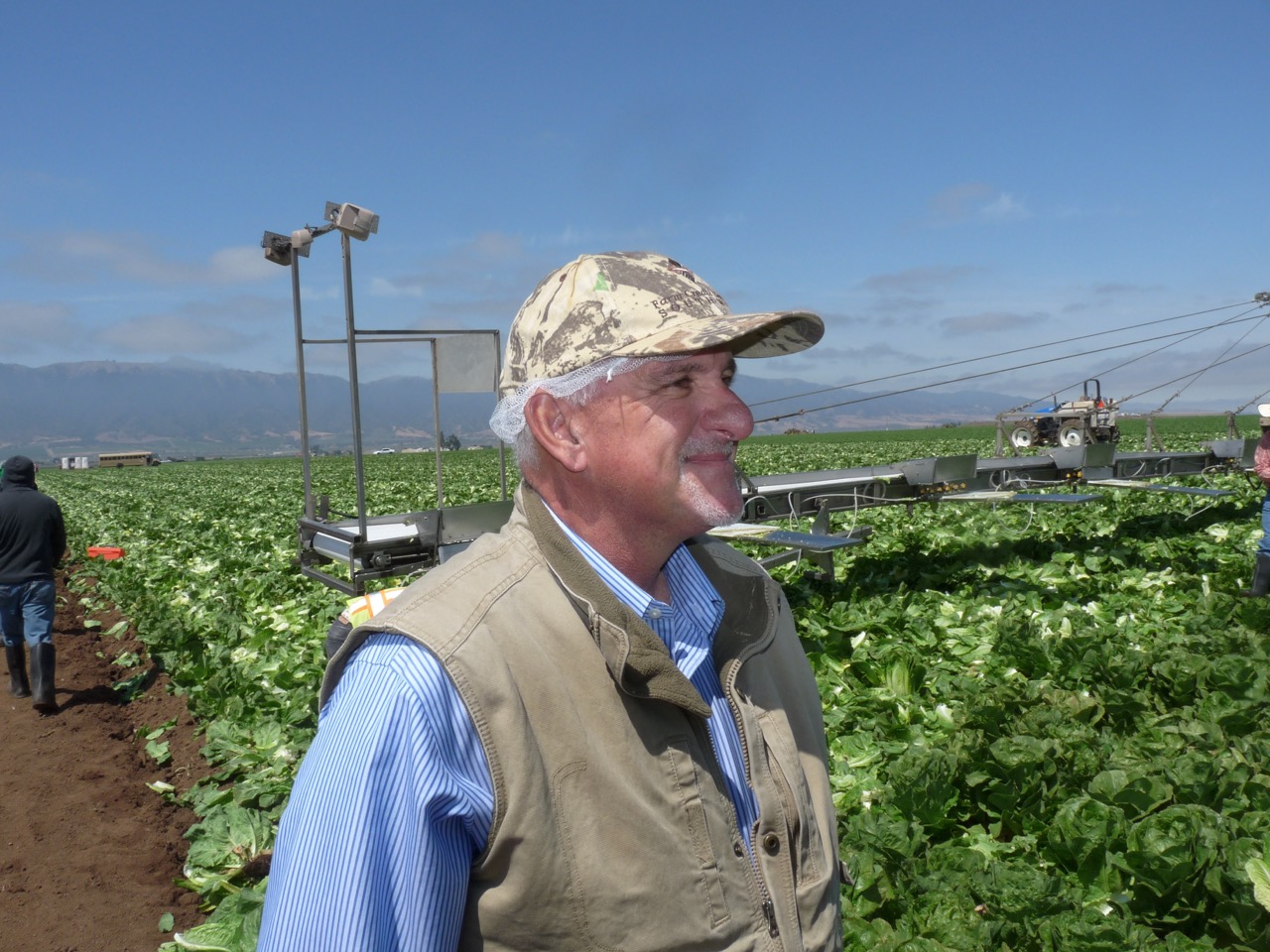
Steve Scaroni, along with his wife Brenda, owns Fresh Harvest, a premier labor provider, staffing and harvesting company for the agricultural industry in the western United States.

Steve Scaroni, with Fresh Harvest.

“Expansion for Fresh Harvest is coming, but the main emphasis is crops related to salads. They even expanded into citrus last year,” Scaroni said.

Fresh Harvest has also expanded into pears. Vegetables are the heart and soul of Fresh Harvest.

“Anything that goes into a salad, a lot of lettuce, romaine, broccoli; we touch a lot of salads every day,” he said.

The H-2A temporary agricultural program allows agricultural employers who expect a shortage in domestic workers to bring non-migrant foreign workers to the U.S. to perform agricultural services for a temporary or seasonal nature.

“If it wasn’t for H-2A, I wouldn’t be in business,” Scaroni said.

Scaroni explained that the H-2A gets legal workers to serve his customers demands for the services he offers. A majority of the demands are labor and harvesting, along with other farm services.

“We’re bringing up 100 irrigators this year to put throughout the Salinas Valley because our Salinas customers can’t get enough irrigators,” he said.

Laborers that show great work ethic will be able to work for a longer period of time. A worker could technically stay if moved from contract to contract.

“If the timing works, he gets up to three years, but then he has to go back for 90 days,” Scaroni said.

2018-06-07T15:50:41-07:00June 7th, 2018|
Go to Top