About California Ag Today

This author has not yet filled in any details.
So far California Ag Today has created 2014 blog entries.

California Fresh Fruit Association: Kroger Must Not Adopt Net 90 Payment Plan

Kroger’s Net 90 Payment Intention Will Hurt California Farmers

By Patrick Cavanaugh, Editor

The California Fresh Fruit Association told California Ag Today recently that they do not want to see any relaxation or easing of Kroger Supermarket Chain in what they announced as a 90-day payment intention for all vendors.

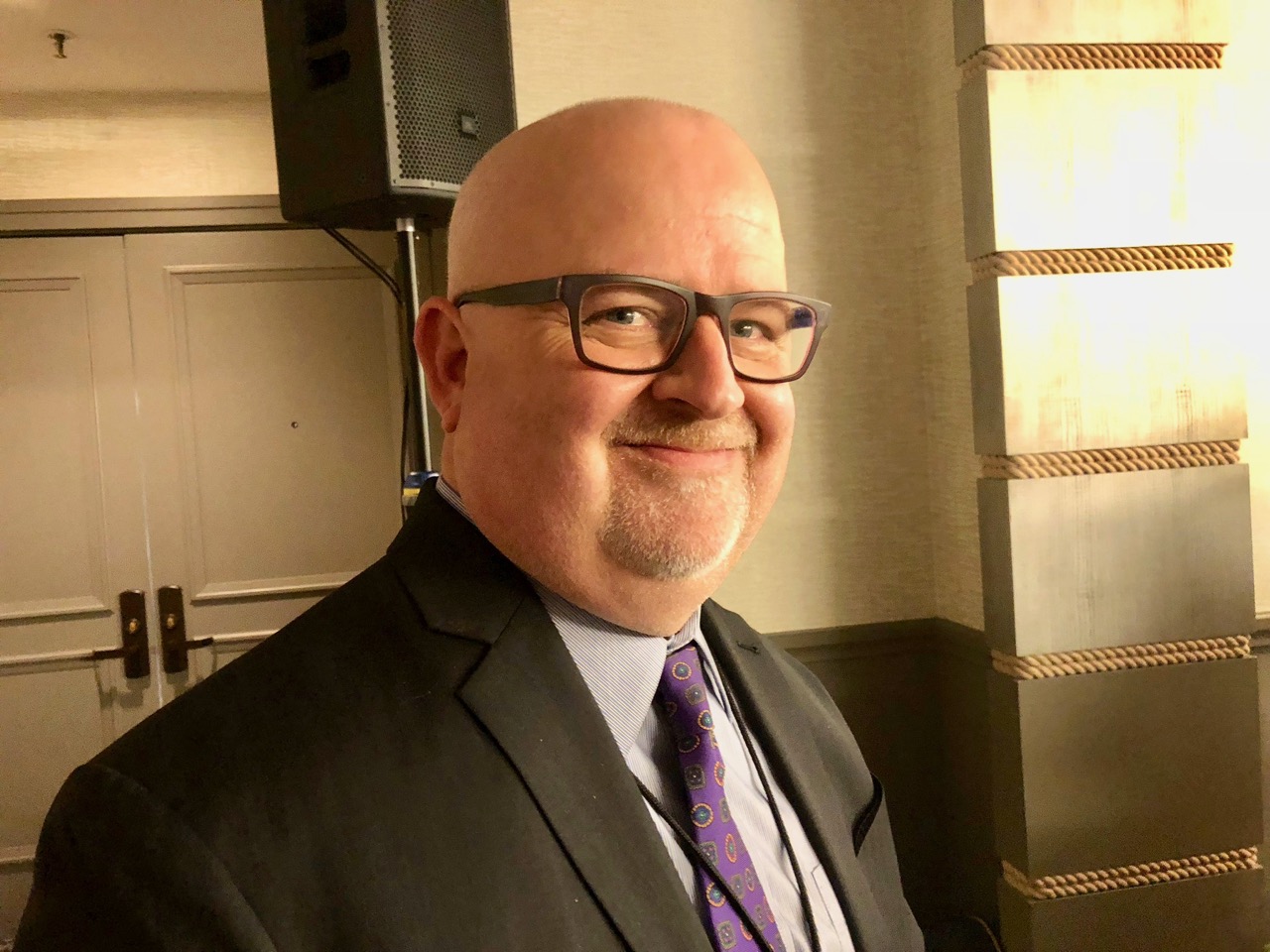
Ian LeMay

“What our industry wants to see is Kroger to withdraw this proposal and to go back to the 30 day payment period,” said Ian LeMay, Director of Member Relations and Communications with the California Fresh Fruit Association in Fresno.

Kroger is the largest supermarket chain in the U.S,. spanning the East, South, and Midwest, and they have stated that they want a net 90 day payment plan on all vendors, including the farmers in California, which provides up to 70% of the fruits and vegetables and 100% of the nut crops that consumers enjoy throughout the year.

As to why Kroger is going this way? It’s most likely to help on their cash flow.

“That’s not necessarily the prerogative or needs to be the interest of our shippers. The shippers have a payroll to make and other bills to pay and they don’t need to carry that credit for Kroger,” LeMay said. “It’s just not good business and not to mention, we’re dealing with multiple commodities with many of our commodities, with a harvest that does not last many weeks. I mean, cherries here in California are six weeks long, so they’re supposed to carry that credit longer than their own season? It just, that doesn’t make sense.”

And making matters worse is that Kroger is even asking farmers to forfeit their rights under the Perishable Agricultural Commodities Act, created by Congress to specifically protect the perishable fresh fruit industry. The act states that payments must be made in 30 days.

“Their answer to that … [is] that they’re partnering with Citibank and that … if you want an expedited payment, then you would have to basically pay upwards of .72 percent on the money you’re owed, so you’re actually going to have to pay money to get money back,” LeMay explained.

LeMay said he thinks when two people are doing business with each other, there’s an expectation that they will keep agreements between each other.

“This is not what California shippers agreed upon. Kroger wants to force this on then. We would like to see Kroger withdraw and hold true to PACA,” he said.

2018-07-02T01:46:36-07:00July 2nd, 2018|

Monsanto Seeds Transitioning to Bayer Crop Science

Bayer Seeds Going to BASF

By Patrick Cavanaugh, Editor

Sebastian Langbehn is the commercial lead for the Vegetable Division within Monsanto. California Ag Today spoke to him recently, and he is busy.

“We are right now in the process of integrating into Bayer Crop Science, and we’re pleased about the outcome of the whole regulatory process, where Bayer has purchased Monsanto,” Langbehn said. “We finally got the approval slightly more than a month ago, and there will be a clean cut.”

Langbehn said that the vegetable seed division from Bayer will be divested and will be acquired by BASF, and now the company is in the process for integrating the Monsanto vegetable division within Bayer.

“We see this as an amazing tool that will enable us to tap in with an integrated solution to farms so that we don’t restrict ourselves only to provide solutions through genetics, but through the entire portfolio that we will have within Bayer, as the company’s new vegetable division,” Langbehn said.

2021-05-12T11:05:10-07:00July 1st, 2018|

Researchers Take a Look into the Future of Strawberries

Survey Coming to Growers to Gauge Interests

By Hannah Young, Associate Editor

A strawberries survey connected to a project that looks at the future of strawberry genetics will soon be sent to strawberry growers.

Daniel Tregeagle, a postdoctoral scholar of agricultural economics at UC Davis, is working on the survey.

“This project is being run over the state of California, through a number of different institutions, different universities, including the state of Florida,” Tregeagle said. “Strawberry growers all over the country are trying to find out what we should be breeding in the next generation of strawberry cultivars.”Strawberries

The project is part of a Specialty Crop Research Initiative, which is considering what growers are looking for in the next generation of strawberries, Tregeagle said.

“Do they want better yields? Do they want more attractive features that the consumers are going to like? Do they need disease resistance?” Tregeagle asked.

However, growers can’t have everything, because when a cultivar is strong in one area, they tend to be less strong in other areas.

“So what we’re doing in the survey is asking growers what are the main diseases that they’re facing, how are they managing those diseases currently and what would they do differently if they had a better, more resistant strawberry cultivar that could resist those particular diseases,” Tregeagle explained.

Researchers are also interested in looking at fumigation and how they might change in the presence of a more resistance cultivar, Tregeagle added.

2021-05-12T11:05:11-07:00July 1st, 2018|

Agritourism in California

UC Davis Experts Help Farmers, Ranchers Profit  in Growing Trend

News Release Edited By Patrick Cavanaugh

Agritourism is growing in California, along with sales and production of much of the world’s fruits, vegetables, and nuts. More and more people are paying to enjoy the bounty and beauty of California’s farms and ranches by touring peach and cherry farms near Fresno, taking classes in beekeeping, attending festivals devoted to strawberries or attending a host of other activities offered by farmers and ranchers throughout the state.

Many farmers could benefit from agritourism and the added value it brings, but developing successful agritourism operations can be tricky. Experts at the Agricultural Sustainability Institute (ASI) at UC Davis are helping farmers and others in the agricultural community understand the regulations, permits, insurance, marketing and other considerations needed to succeed.agritourism

“Agritourism operations are more successful when they’re part of a supportive community of tourism professionals, county regulators, agriculture regulations and others,” says Gail Feenstra, ASI’s food, and society coordinator.

Feenstra and her team recently received a $73,000 grant from Western Sustainable Agriculture Research and Education, a U.S. Department of Agriculture program, to develop training, resources and peer support for farmers and ranchers considering agritourism. Feenstra is working with Penny Leff, ASI’s statewide agritourism coordinator and team project manager.

Leff led previous projects that offered agritourism education to groups of farmers, ranchers, and others involved in California agritourism. In this new project, Leff is providing comprehensive training to smaller, more targeted groups that will then offer training to others in their community.

“We’re helping farmers and ranchers assess their agritourism potential, whether it be U-pick farming, dinners on the farm, classes or even overnight lodging,” Leff says. “We help navigate everything from zoning ordinances to marketing plans.”

The project’s ultimate goal is to develop at least 24 clusters of vibrant agritourism operations in California that sustain producers, educate visitors and support the economic health of the entire community.

As Leff explained, “Agritourism is an exciting opportunity for farmers, and also for visitors who can learn about and enjoy what farm living has to offer.”

You can learn more about agritourism opportunities at the ASI agritourism website. For more information on upcoming workshops, contact Penny Leff at paleff@ucdavis.edu or call 530-752-5208.

2018-06-29T16:49:08-07:00June 29th, 2018|

Increased Chinese Tariffs Could put California Producers in a Tight Spot

There is Fear China Could Turn to Other Countries For Ag Products

By Mikenzi Meyers, Associate Editor

The ongoing threat of Chinese tariffs on American agriculture has recently been the topic of conversation for agriculturalists. With China posing a possible 25 percent tariff on U.S. soybeans back in April, it seems this conversation is here to stay. The added tariff could drive Chinese buyers to choose other markets on many California commodities, including walnuts, tree fruit and beef.

Matt Lantz, vice president of global access for Bryant Christie Inc., deals with international trade, and these issues on a daily basis. Bryant Christie is an international affairs management firm that is based in Sacramento and Seattle, where they help U.S. commodity groups and agricultural companies with their international trade issues in order to export their products.

Lantz explained that this new threat is a major concern for California agriculture.

“China is an incredibly important market for California fruit and vegetable exploiters, and any tariff or increased inspection makes it more difficult to export,” he said.

Making matters worse, Lantz pointed out that buyers are going to turn to the countries without the tariff—which can be bad news for producers.

2018-06-28T16:49:05-07:00June 28th, 2018|

Agriculture Grads in High Demand

Many Grads are Interested in Day-to-Day Farming

By Jessica Theisman, Associate Editor

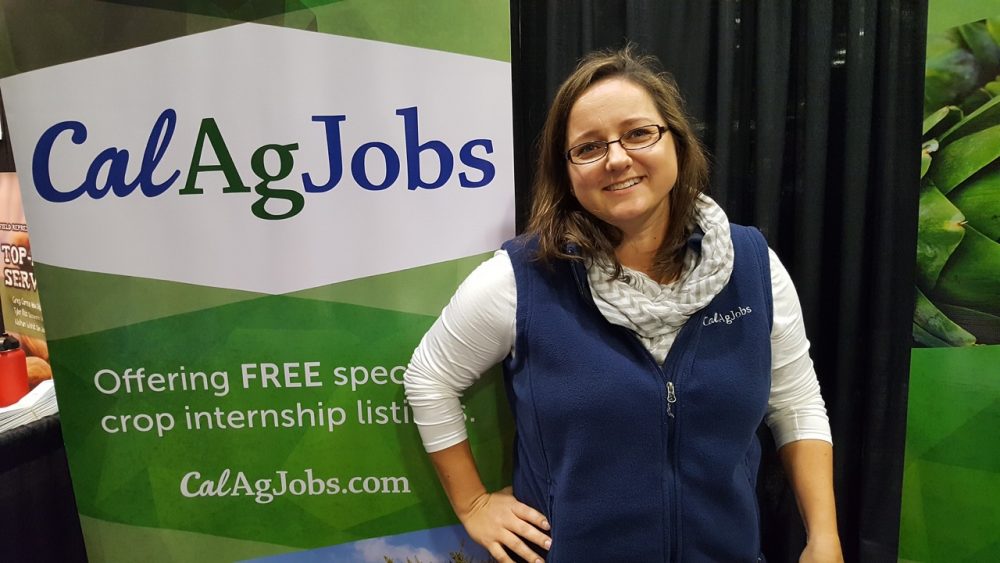
There is a big demand for college graduates with agricultural degrees, especially in plant and crop sciences. California Ag Today spoke with Shannon Douglass, first vice president of the California Farm Bureau Federation and a recruiter for CalAJobs, about the need for agriculture grads.

CalAgJobs

Shannon Douglass, First VP of California Farm Bureau Federation and recruiter for CalAgJobs

“I often encourage people to minor in crop science,” Douglas said.

If you are a business major, having some background in crop science is beneficial. As a farm manager, understanding the crops are going to be vital.

“I encouraged animal science majors to think about getting a minor in crop science to understand what we are feeding those animals that they are studying, because that is a huge piece of California agriculture,” Douglass said.

Everything from agronomy and soil science to irrigation and pest control management are vital. Many college graduates are interested in being involved in the day-to-day farming operation.

“I talked to a class at Chico State a couple of weeks ago, and there are a lot of young people that they really want to be in the farming,” Douglass said.

Many students do not want to be in sales, but a large majority would like to be the farmers themselves.

“I really encourage them that you can absolutely be a day-to-day farmer and not necessarily a farm owner,” she said.

Douglass is also a recruiter for CalAgJobs.

“It is a private company, and we work with internships as a grant-funded project. In fact, it is completely free for both the employer and the student to use,” she explained.

These internships are a tool in helping to get those that are in college to look at these ag careers, particularly in specialty crops and crop science overall. Internships can be a wonderful gateway into long-term careers.

“The second part of our website is a classified type job-posting service,” she said.

CalAgJobs uses social media and targeting along with a weekly email.

“Another part of our business is the recruitment services that we offer. We work with employers who need more help on some of these really tough to fill jobs,” Douglass said.

CalAgJobs does their best to help fill those employment opportunities to help others run their farms.

For more information on internships or job postings, visit CalAgJobs.com.

2018-06-27T16:27:37-07:00June 27th, 2018|

California Agriculture’s Future in the Hands of New Tariffs

There Is Worry that Some Companies May Lose Ground on Exports to China

By Mikenzie Meyers, Associate Editor

California growers are on edge due to newly imposed tariffs that could cause the state’s agriculture to suffer. After China recently retaliated against the United States’s steel and aluminum tariff by pushing its own on U.S. imports, they have good reason to be worried. California Ag Today recently spoke to Shannon Douglass, first vice president of the California Farm Bureau Federation, who is heavily involved in this conversation.tariffs

“No matter what you’re growing, so much of our products are exported, and so it’s a really vital concern to many of our farmers,” Douglass said.

She explained that it isn’t just a concern for those involved with fresh produce—which might be the first affected—but also any farmer who depends on sales to foreign markets.

One of the biggest concerns is losing the progress made in growing the foreign market, but Douglass seemed hopeful as CFBF has continued working with those driving legislation,

“We certainly don’t want to lose that ground that we worked so hard to develop,” she said.

Agriculture has always been a winner in the trade arena, and although the climate of foreign markets may be uneasy, Douglass and the California Farm Bureau Federation are continuing the conversation to make progress toward a hopeful future for all farmers.

2018-06-26T14:41:07-07:00June 26th, 2018|

Frank Zalom Named Editor-in-Chief of Journal of Economic Entomology

UC Davis Professor to Head Distinguished Publication

News Release Edited By Patrick Cavanaugh

Integrated pest management specialist Frank Zalom, distinguished professor of entomology, UC Davis Department of Entomology and Nematology, and a past president of the Entomological Society of America (ESA) is the newly selected editor-in-chief of the Journal of Economic Entomology, the largest and most cited of ESA’s family of scientific journals.

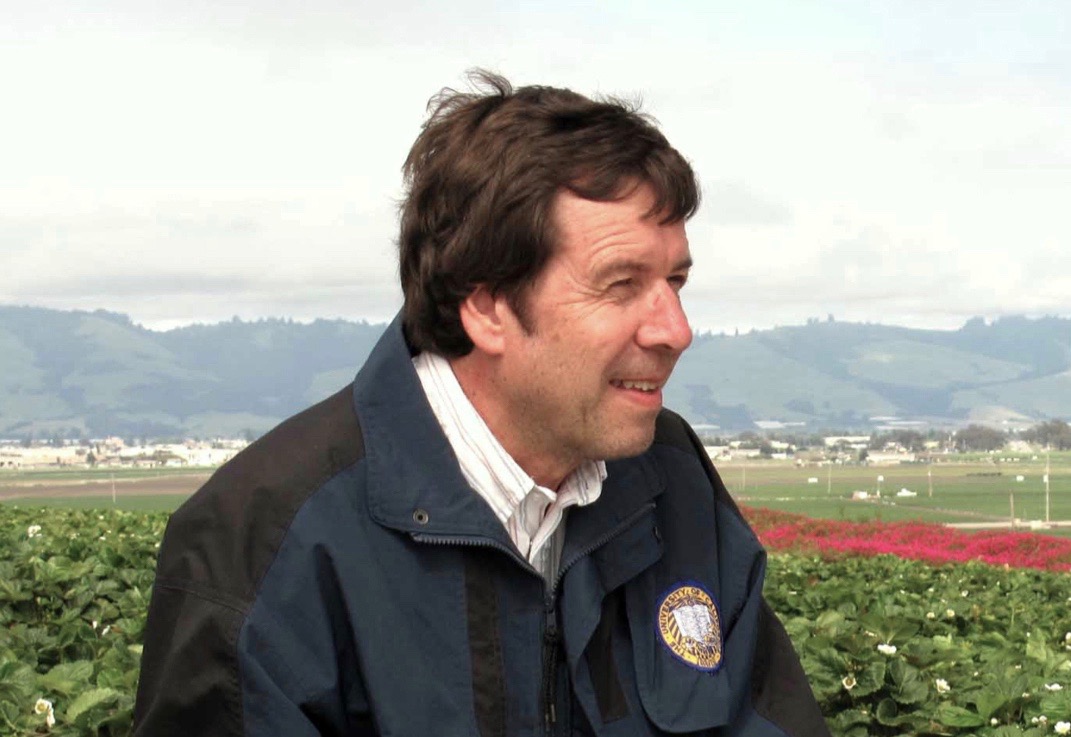
Frank Zalom

The ESA Governing Board today announced that Zalom will succeed John Trumble, distinguished professor of entomology at UC Riverside. Trumble, editor-in-chief for 20 years, informed ESA in late 2017 of his intent to leave the role in 2018. In January, the journal’s editorial board launched a widespread search for his successor.

A 43-member of ESA and the 2014 president, Zalom will serve a five-year term as editor-in-chief. The journal publishes research on the economic significance of insects. It includes sections on apiculture and social insects, insecticides, biological control, household and structural insects, crop protection, forest entomology, and other topics.

“Dr. Frank Zalom’s career can be viewed as a model of applied entomology derived from an understanding of basic biology, and he is an ideal choice to be the new editor-in-chief of the Journal of Economic Entomology (JEE),” said ESA President Michael Parrella in an ESA news release.

“His unparalleled and broad expertise will serve to continue the journal’s growth as the publication of choice for applied entomological research and to build upon the legacy of Dr. John Trumble,” said Parrella, who is also dean of the College of Agricultural and Life Sciences at Idaho State University and former professor and chair of the UC Davis Department of Entomology and Nematology. 

Zalom’s 40-year career intersects entomological research, teaching, and application. He served 16 years as director of the University of California Statewide Integrated Pest Management Program (UC IPM) and is the only entomologist in the UC system to receive a simultaneous appointment in teaching, research, and extension. He focuses his research on IPM of agricultural crops.

Editorial board chair Xuguo Zhou, associate professor of entomology at the University of Kentucky, said he and his colleagues are delighted to welcome Zalom as the next editor-in-chief. “We could not have asked for a better candidate in terms of vision, dedication, reputation, experience, and integrity,” Zhou said. “And we also express our deep gratitude to Dr. John Trumble, whose tireless work ethic and unerring leadership have driven JEE to such great success for so long.”

“I couldn’t be more pleased to be selected the next editor-in-chief of the Journal of Economic Entomology,” Zalom said. “I have spent the last 40 years of my career trying to solve economically important problems caused by arthropods using an IPM approach, and this journal, as well as ESA’s other journals, have always served as a primary foundation and outlet for research conducted in my lab. As I approach the end of my career, I hope to be able to dedicate my efforts to enhancing our Society’s influence on science and its application to addressing some of the most important entomological challenges that affect communities worldwide. JEE is uniquely positioned to do exactly that.”

Zalom joined the UC system in 1980, serving in roles ranging from extension IPM coordinator to professor to vice chair of the department to advisor of the UC Davis International Agricultural Development Graduate Group. He has authored more than 335 journal articles and book chapters. including “Food, Crop Pests, and the Environment” published by APS Press. 

His career includes serving as major professor for 12 Ph.D students and seven master’s degree students.

Zalom is a fellow of the California Academy of Sciences, the American Association for the Advancement of Science, the Royal Entomological Society, and ESA.  Among his numerous honors: a Fulbright Senior Research Scholarship (1992-93), the ESA Achievement Award in Extension (1992), the ESA Recognition Award (2002), the James H. Meyer Award from UC Davis for teaching, research and service (2004), the Entomological Foundation IPM Team Award (2008), the Entomological Foundation Excellence in IPM Award (2010), Outstanding Mentor Award from the UC Davis Consortium for Women and Research (2013) and the C. W. Woodworth Award (2011), the highest award given by the Pacific Branch of ESA (PBESA).

More recently, Zalom received a lifetime achievement award, presented at the 9th International IPM Symposium, held March 19-22 in Baltimore. Last month he played a key role in a U.S. Congressional briefing held in the Rayburn House Office Building to raise awareness for and increase understanding of areawide integrated pest management (AIPM) and the benefits of a comprehensive pest management policy, particularly as it relates to invasive species.

Zalom, who received his doctorate in entomology from UC Davis in 1978, holds two degrees in zoology and ecology from Arizona State University (bachelor of science, 1973, and master’s degree, 1974).

Founded in 1889 and headquartered in Annapolis, Md., ESA is the world’s largest organization serving the professional and scientific needs of entomologists and people in related disciplines.

2021-05-12T11:05:11-07:00June 25th, 2018|

Food Safety is Critically Important for Consumers

Safe Food Alliance’s Big Lab in Kingsburg Will Serve Ag Industry

By Patrick Cavanaugh, Editor

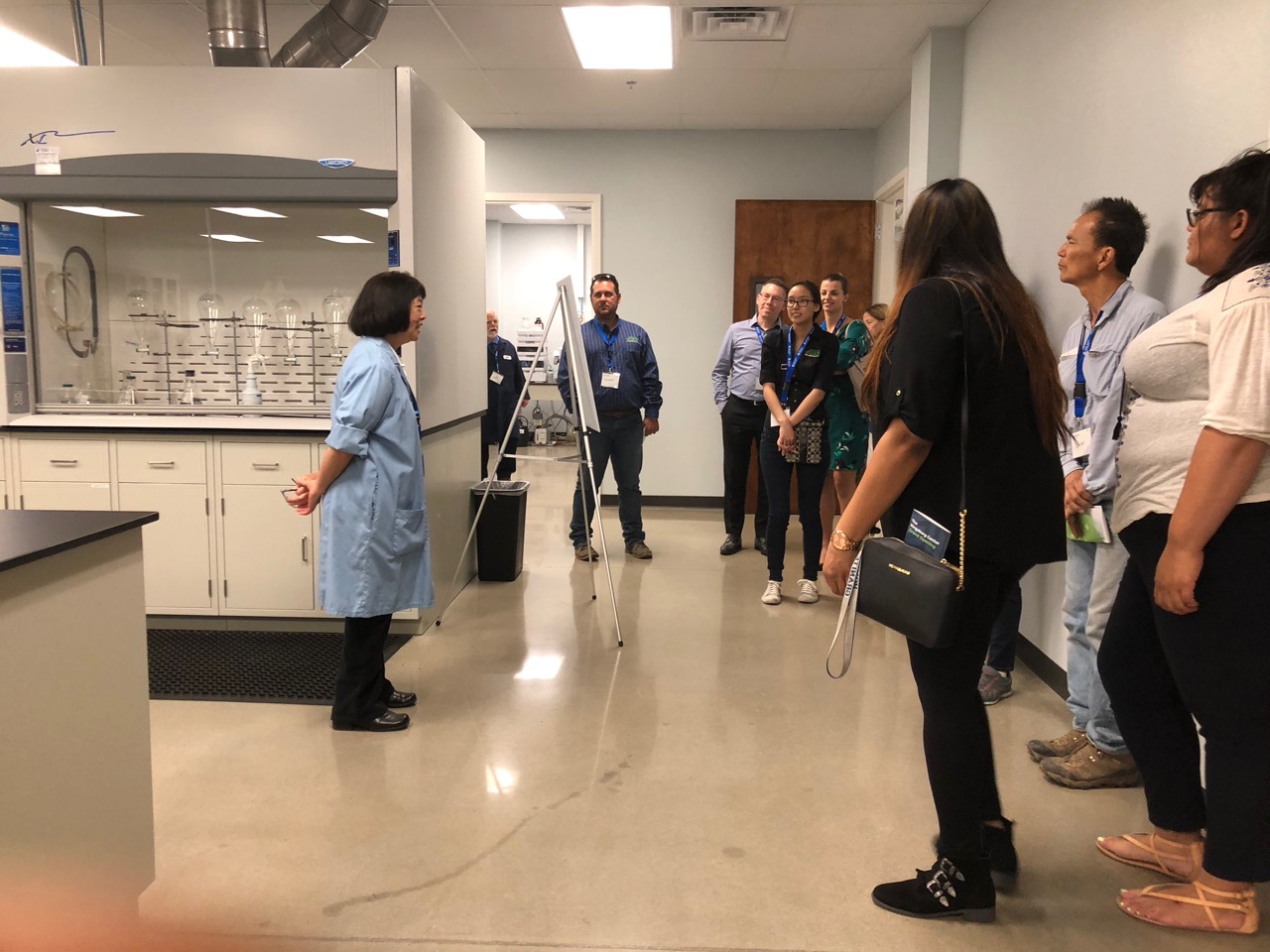
California Ag Today recently spoke with Tom Jones, senior director of analytical services with the Safe Food Alliance, about the new state of the art food safety lab in Kingsburg.

“We have laboratories, not only here but also in Kerman, Winters, as well as Yuba City,” Jones said. “But this is a big lab; our main lab that will provide plenty of space for research and testing.”

food safety

Tom Jones Sr. Director of Analytic Services for Safe Food Alliance

“We were in a laboratory in downtown Fresno that … was less than  8,000 square feet. We’re now in more than 20,000 square feet, and it’s made a tremendous difference—a lot more space and capacity for us to do our work,” Jones explained.

There is adequate room for additional sample storage, more instrumentation as the business grows and more people doing more work.

“We also have room for additional incubation of samples, so in the microbiological testing, that’s a big issue,” Jones said. “It is a much easier place to work in.”

“The first piece of instrumentation actually installed in the new lab before we officially moved in was our GC Mass Spectrometer Time of Flight system, and it’s a powerful system to be able to analyze for unknown compounds,” Jones said. “If you have a problem … you can take that sample, run it through the GC Mass Spectrometer and start getting data right away. Even if you don’t know what you’re exactly analyzing for, you can actually start the process there, so that’s really exciting.”

“You need qualified people to run that machine So, that’s a big part of the testing world as well. And the end goal of all of this new technology is to keep consumers safe,” Jones continued. “Our mission is to see a safe food supply from farm to fork, and we’re really excited to have this facility because we can test to a wider range of food products, using a wider range of analysis. We are here to help support our agricultural community as well as the food processing community as we export to the world.”

(Additional Photo is of the Open House at the new lab in Kingsburg.)

2021-05-12T11:05:11-07:00June 22nd, 2018|

UC Davis Student Maureen Page Speaks for the Bees

Maureen Page to Spread Flowers for Bees

By Jessica Theisman, Associate Editor
Maureen Page pollination

Maureen Page

California Ag Today recently spoke with doctoral student Maureen Page of the Neal William’s lab at UC Davis, Department of Entomology and Nematology. She is the recipient of a prestigious three-year fellowship for promoting food security by optimizing wildflower planting. She supports the wild and bee management. We asked her about the flowers that she plans on planting to help those bees.

“I do believe that in general, flowers are really important for bees. Planting flowers are generally good for them,” she said.

Although planting is good for the bees, there are some precautions that need to be made.

“Some flowers can be somewhat toxic to bees. Some do not actually provide bees with pollen and nectar resources,” Page said.

There are many ornamental plants that are bred to not have much pollen so that people do not sneeze as much.

“On top of that, if you are planting non-native species that are really weedy, it may be great for the bees, but might not be great for other plant species,” Page said.

2021-05-12T11:05:11-07:00June 21st, 2018|
Go to Top