About California Ag Today

This author has not yet filled in any details.
So far California Ag Today has created 2014 blog entries.

Farm Worker Serial Killer Juan Vallejo Corona Dies

“Machete Murderer” Juan Vallejo Corona Dies of Natural Causes

News Release Edited by Laurie Greene

California State Prison Corcoran inmate Juan Vallejo Corona, 85, died of natural causes Monday at an outside hospital, according to an online public statement by the California Department of Corrections & Rehabilitation. Corona was serving 25 concurrent life sentences for 25 counts of first-degree murder. His victims were all migrant farm workers.

In 1971 ,25 bodes buried in orchards along the Feather River in Sutter County were found—a record-setting number of murders in the United States at the time. All of his victims were men who had been seen with Corona or had been hired through Corona’s Sutter County labor contracting business.

Corona, referred to as “machete murderer” by the press, was tried in Colusa County, found guilty in January 1973, and sent to state prison one month later. He barely survived a stabbing attack in 1973 while at California Medical Facility in Vacaville that cost him the sight in his left eye.

In 1978, an appellate court overturned Corona’s conviction, and he was granted a new trial. In 1981, he was admitted to a Correctional Training Facility in Soledad as a safe-keeper commitment until the proceedings were moved to Alameda County. In 1982, Corona was again convicted of all 25 murders, sentenced to 25 concurrent life sentences, and began serving time for the Sutter County commitment.

One decade later, Corona was transferred from Correctional Training Facility to the Protective Housing Unit at California State Prison Corcoran, a unit that houses inmates whose safety would be endangered by general population housing. Corona was denied parole eight times, most recently in 2016.

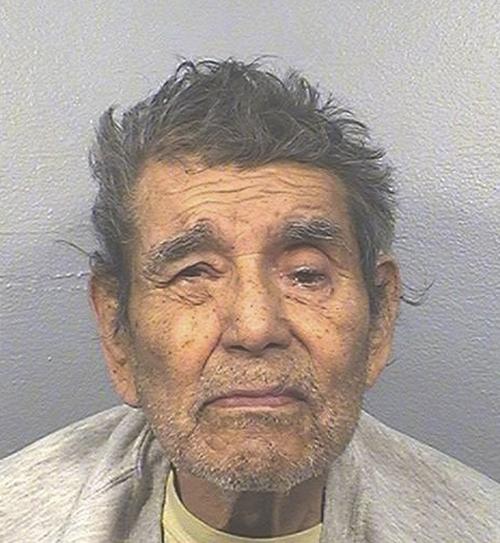
Featured Photo: Juan Vallejo Corona. Source: California Dept. of Corrections & Rehabilitation, March 23, 2018.

2019-03-05T16:50:40-08:00March 5th, 2019|

Funding for Friant-Kern Canal Repairs May Come

Senator Melissa Hurtado Introduces Bipartisan Bill to Fix Friant-Kern Canal

News Release

State Senator Melissa Hurtado (D-Sanger), representing the 14th Senate District in California, along with principal co-authors Senator Andreas Borgeas (R-Fresno), Assemblymember Devon Mathis (R-Visalia), Assemblymember Dr. Joaquin Arambula (D-Fresno), and Assemblymember Rudy Salas (D-Bakersfield), announced last week the introduction of Senate Bill 559.  The bipartisan-supported legislation will secure California’s water supply by investing $400 million in general funds towards the Friant-Kern Canal, one of the Central Valley’s most critical water delivery facilities.

Currently, the Friant-Kern Canal’s conveyance capacity has degraded due to several factors, including severe land subsidence caused by regional groundwater overdraft. A portion of the canal, roughly 20 miles long, has subsided twelve feet below its original design elevation, including three feet of subsidence from 2014 to 2017. As a result, the canal has suffered the loss of 60 percent of its carrying capacity—constricting the delivery of water to some of California’s most vulnerable communities.

“From 2012 to 2016, California experienced one of the most severe drought conditions. As a result, many of our farmers, families and entire communities within the Central Valley continue to experience limited access to one of their most fundamental rights—clean water,” Hurtado said.

“The Valley’s socioeconomic health depends on the conveyance of clean and safe water. Not only does this canal support nearly 1.2 million acres of family farms in California, but it provides one in every five jobs directly related to agriculture,” Hurtado continued. “For this reason, I am proud to stand with my colleagues to introduce SB 559. This legislation prioritizes our most disadvantage communities by restoring water supply in the Central Valley.”

“The Friant-Kern Canal has lost 60 percent of its carrying capacity in some locations. This problem threatens about 350,000 acres of highly productive farmland below the damaged portion of the canal, and also limit opportunities to maximize groundwater recharge projects that will be very important to helping the Valley comply with the Sustainable Groundwater Management Act,” said Jason Phillips, CEO of the Friant Water Authority. “On behalf of the farmers, businesses, and communities who rely on the Friant-Kern Canal, we very much appreciate Senator Hurtado’s leadership on this legislation.”

“Today, we are fighting for the future of the Central Valley, and I am pleased to join my colleagues in this bipartisan effort and support funding for the Friant-Kern Canal,” Borgeas said. “Valley farmers and our communities depend on this infrastructure to ensure a reliable supply of water. By restoring the canal to its fully operational state, we ensure the delivery of clean and reliable water supply to our communities and farmers. This investment in our water infrastructure is long overdue and critical for our valley.”

“California faces a stark reality when it comes to water,” Arambula said.  “Scarce water supplies, aging infrastructure and a growing population are some of the stressors on our state’s water system.  That is why we need real-time solutions to our long-term water challenges. Restoring the Friant-Kern Water Canal will help us protect our existing water supply while we work on reaching sustainable solutions that will get water out to our communities.”

“SB 559 is crucial to keep the Friant-Kern Canal, the largest artery for water on the east side of the Valley, afloat. This measure is extremely important to keep this economic engine which powers our economy and provides tremendous benefit locally, statewide and even nationally. Failing to fix the Friant-Kern Canal is not an option, simply because having water is never an option. I am proud to coauthor this measure with Senator Hurtado and look forward to bringing this funding to the Valley,” Mathis said.

“Water is the lifeblood of the Valley and the backbone of California’s economy.  Senate Bill 559 is a step towards bringing the Friant-Kern Canal to its full capacity and addressing the State’s critical water needs.  This measure will invest in our future by building water infrastructure projects and helping our local water districts fulfill their sustainable groundwater management plans,” Salas said.

“On behalf of the City of Porterville, I am very appreciative of our leaders’ efforts and support by introducing SB 559,” said Porterville Mayor Martha Flores.

“The Friant-Kern Canal is the lifeblood to the southeastern San Joaquin Valley, and the canal being fully-efficient with the ability to carry surface water to its designed capacity is essential, especially in consideration of the Sustainable Groundwater Management Act,” Flores continued. “The Friant-Kern Canal plays a valuable strategic role in the sustainability of Porterville as the city seeks to enhance its surface water recharge program and reduce its groundwater footprint.”

2019-03-04T17:05:32-08:00March 4th, 2019|

Dense Forest Floors Preventing Absorption

Forests Need Better Management, Despite Extreme Environmentalist Pushback

By Jessica Theisman, Associate Editor

Dense forest growth inhibits water saturation.  David Rogers, Madera county supervisor, explained to California Ag Today how less undergrowth will assist in water runoff in the forests.

“We have so much overgrowth in the forest that the snowpack wasn’t even making it to the ground,” he said.

The snow would sit on top of the vegetation and evaporate, thus never making it to the forest floor.

“Removing the vegetation is going to be an important component of restoring the health to the groundwater situation, because 60 percent of California’s water comes from the Sierra Nevadas,” Rogers said.

A 2013 study showed that 30 percent more water can be collected from the forest. This increase in water has been present in areas that have a healthy level of vegetation and not overcrowded. The overcrowded conditions have led to catastrophic fires, and it is important to manage those areas.

The burn areas of those fires are becoming a hazard.

“Not only does the soil runoff fill our reservoirs and mean dredging and all of those things, but what will return won’t be healthy vegetation,” Rogers said.

The vegetation that does return will be chaparral and absorb more water than the trees. The water would most likely be evaporated rather than absorbed.

“What was happening was there was no room for the snow to even hit the ground. It would sit on top like an ice sheet. It would evaporate from the top down and never get to the bottom,” Rogers explained.

Underground systems benefit from the forests; the runoff goes down through the rocks and crevices that in turn fill the rivers, streams, and wells.

“Our groundwater is dependent on that snowmelt going into the ground,” Rogers said. Filtered underground rivers are a result of the water absorbed into the ground; the forest floors need to be managed.” 

Editor’s Note: The image depicted in this article is exactly how a forest should be managed.

2021-05-12T11:05:05-07:00March 1st, 2019|

Modesto Irrigation District Offers Agreement Package in Lieu of Unimpaired Flows

Major Milestone Achieved in Continued Effort to advance Voluntary Agreements

Districts applaud Governor Newsom’s commitment to Voluntary Agreements

Today, the California Department of Fish and Wildlife and California Department of Water Resources submitted a package of voluntary agreements to the State Water Resources Control Board. The package

– supported by the Modesto Irrigation District, Turlock Irrigation District, City and County of San Francisco and more than 40 other water agencies, resource agencies and non-governmental environmental groups – is being offered as an alternative to the unimpaired flow paradigm adopted by the State Water Resources Control Board last December.

This historic step forward is the result Governor’s Newsom’s commitment to “cross the finish line on real agreements to save the Sacramento-San Joaquin Bay Delta” (State of the State, February 12, 2019). Under the leadership of Cal-EPA Secretary Blumenfeld and Natural Resources Agency Secretary Crowfoot, MID, TID, Sacramento Valley water users and non-governmental organizations finalized river-specific project descriptions and a planning agreement.

“Governor Newsom’s commitment to the voluntary agreement concept has been evident since the day he took office,” TID General Manager Casey Hashimoto said. “He’s dedicated significant amounts of his administration’s time and resources to work collaboratively with water users and environmental communities to advance the voluntary agreement framework that will serve as a durable and beneficial solution for all – our environment, our rivers, our water supply, and our communities.”

The agreement includes a proposed schedule and procedures for assisting the State Water Resources Control Board as it updates the Bay-Delta Plan. This includes the parties to the agreement – in coordination with the State Water Resources Control Board – conducting further analyses of the benefits and other effects of the project description. Work will continue throughout the year with a request that the State Water Board consider adoption of a comprehensive plan and proposed amendments consistent with the voluntary agreements by the end of this year.

The project descriptions and planning agreement submitted today integrate river flow and non-flow measures to establish water quality conditions that support the viability of native fisheries and achieve related objectives in the State Water Board’s Bay-Delta Plan.

The Tuolumne River project description included in the package will ensure water security and reliability, includes environmental improvements, are projected to enhance fish populations beyond what is projected in the State’s current plan and provides for timely implementation.

“We’ve done the science on the Tuolumne River; we’ve negotiated in good faith and now we’ve memorialized all of our work and progress to date,” MID General Manager Scott Furgerson said. “The Districts remain committed to advancing this historic water agreement as it is key to balancing the needs of our communities and our environmental resources.”

The full project descriptions and planning agreement can be viewed here.


2019-03-01T16:40:47-08:00March 1st, 2019|

Roger Isom: Probable Electric Rate Hikes Raise Concern for Ag

California Agriculture Concerned Over PG&E Increases, Overtime Rules

By Mikenzi Meyers, Associate Editor

Water, labor, and air quality issues in California keep growers’ plates full of challenges, but with probable PG&E rate increases in the future, it seems they can’t catch a break. Roger Isom, President and CEO of the Western Agriculture Processors Association and California Cotton Ginners and Growers Association, is among those wondering how the industry is going to compete.

“We’ve been paying for a lot of those safety upgrades. What happened? I mean, we’ve got to let the investigation take place, but to saddle rate payers with that amount of money, we just can’t do it,” Isom said of the threat of rate increases.

Roger Isom, president and CEO, Western Processors Association

Roger Isom, president and CEO, Western Processors Association (source: LinkedIn)

At the same time, the industry is still battling the effects of the Brown administration’s ruling on overtime.

“There are farm workers in 45 states that could work 20 hours a day, seven days a week, and never trigger overtime. We have to compete with that, and that’s just unacceptable,” Isom said.

Isom is optimistic about new appointments in California administration, though.

“You’ve got Jared Blumenfeld, who’s the new CalEPA Secretary. He was actually extremely helpful over there when we were working on incentives for replacing pumps and tractors,” Isom explained.

Isom also gave credits to Wade Crowfoot, who was on the previous administration and helped with port shutdowns.

“He’s going to hit up resources, which obviously with the water situation is a very critical agency for us. Seeing somebody over there that could be helpful is important,” he said.

2019-02-28T15:59:04-08:00February 28th, 2019|

CARB Seeking Participants for Agricultural Tractor and Mobile Equipment Survey

CARB Wants Inventory of Ag Equipment 

News Release

The California Air Resources Board (CARB) is seeking participants for an update to their Agricultural Tractor and Mobile Equipment Survey.  For those that remember, CARB conducted a similar survey in 2008, and partnered with Cal Poly in their review of the submitted surveys.

This survey effort is looking to inventory various mobile agricultural equipment, including tractors, combines, balers, agricultural use ATVs and forklifts, and many more.  This survey is extended out to producers in the field, custom operators, and first processing facilities, and covers equipment using any type of fuel or electricity and any horsepower.  Responses to the survey are completely confidential and are anonymized upon receipt.

The survey that was previously conducted in 2008 was utilized to help fund incentive programs for agricultural equipment turnover programs utilized throughout the state.  CARB’s goal upon completion of this upcoming survey round is to utilize the data in the exact same manor, to utilize results to determine the best usage of incentive monies in the agricultural sector.

The survey is being made available through the internet.  Please follow the link attached below to complete the survey.  If you have any questions, please feel free to contact offroadinventory@arb.ca.gov.  Paper copies will be available if you would like; feel free to contact Chris McGlothlin with the Western Agricultural Processors Association at chris@ccgga.org or by phone at (559) 455-9272.

Survey can be found online here.


2021-05-12T11:05:05-07:00February 27th, 2019|

Optimism Still Alive for Temperance Flat Dam

Hope on the Horizon, but Questions Still Unanswered for California Water Systems

By Mikenzi Meyers, Associate Editor

Funding awarded for the new Temperance Flat Dam may have fallen short, but hopes for construction are still very much alive. Jason Phillips, Director of Friant Water Authority and alumni of the San Joaquin Valley Water Infrastructure Authority, has insight as to why those involved with the project are still optimistic.

According to Phillips, the Temperance Flat project is being moved to a joint power authority (JPA), an action that was previously expected.

“Part of the process is to take the application that the water infrastructure authority submitted and move it to the implementing agency. So this is a really positive step moving forward for implementing the project,” Phillips explained.

He further added, “This is not the result of any kind of conflict. This is exactly what has been envisioned.”

Although progress is being made towards the Temperance Flat JPA, the question as to how existing water structures will be repaired still stands. After Californians failed to pass Prop 3, there has been much anticipation around issues like water supply and infrastructure restoration.

“We’re going to be working with this administration on whether another water bond might make sense or whether there are other mechanisms to help finance the infrastructure to keep farming viable in the valley,” Phillips said.

2019-02-26T15:41:20-08:00February 26th, 2019|

Fresno State Student Studies Palmer Amaranth

Sami Budhathoki Finds Palmer Amaranth Can Adapt to Saline Soils

By Jessica Theisman, Associate Editor

Palmer Amaranth

Sami Budhathoki is in the last semester of her undergrad degree at Fresno State. She spoke with California Ag Today recently about her research on how the Palmer Amaranth can adapt to saline soils in the San Joaquin Valley. Palmer amaranth as among the most troublesome weeds in agriculture because it is a very prolific seed producer and very tough to control due to widespread glyphosate escapes. It is found throughout California.

Her major advisor is Anil Shrestha, a professor in weed science at Fresno State. Budhathoki presented her research at a recent California Weed Science Society Meeting in Sacramento.

“I treated soils with five different salt levels, and I found out that the weed likes that higher salt levels, and they did fine, and they all germinated,” Budhathoki said.

Based on the pictures on Budhathoki’s poster, the Amaranth grew better in soils with higher salinities.

“That gives us the hint that Fresno is more resistant for the Palmer Amaranth plants because the west side has a lot of salt in its soil,” she said.

That is why it is hard to control in those areas, especially because they propagate so easily.

Budhathoki gave California Ag Today more insight on her research.

“Before treating the soil with salt, the plants were all the same height and same size. After the treatment, you can see the differences in how each plant reacted to the salt,” she said.

We asked Budhathoki what it was like working with such a troublesome weed in the ag industry.

“It was my first time working with Palmer Amaranth; it was a good experience,” she said.

Budhathoki says that she thinks there will be more research on this weed in the future so that farmers can find out how to better control it.

2021-05-12T11:05:05-07:00February 25th, 2019|

Unified Wine Symposium Showcased Trends

Wine Industry Gathered in Sacramento 

By Muriel Bañares Miller, Brown·Miller Communications

Every facet of the wine and grape industry, from science and technology to trends and markets, was examined and discussed at the 25th Unified Wine & Grape Symposium (Unified), which wrapped up Jan.  31

The largest wine and grape trade show of its kind in the Western Hemisphere, the Unified drew thousands of industry professionals from all over the world eager to hear about the impact of regulatory changes, trends, technology, research, and issues shaping their business decisions.

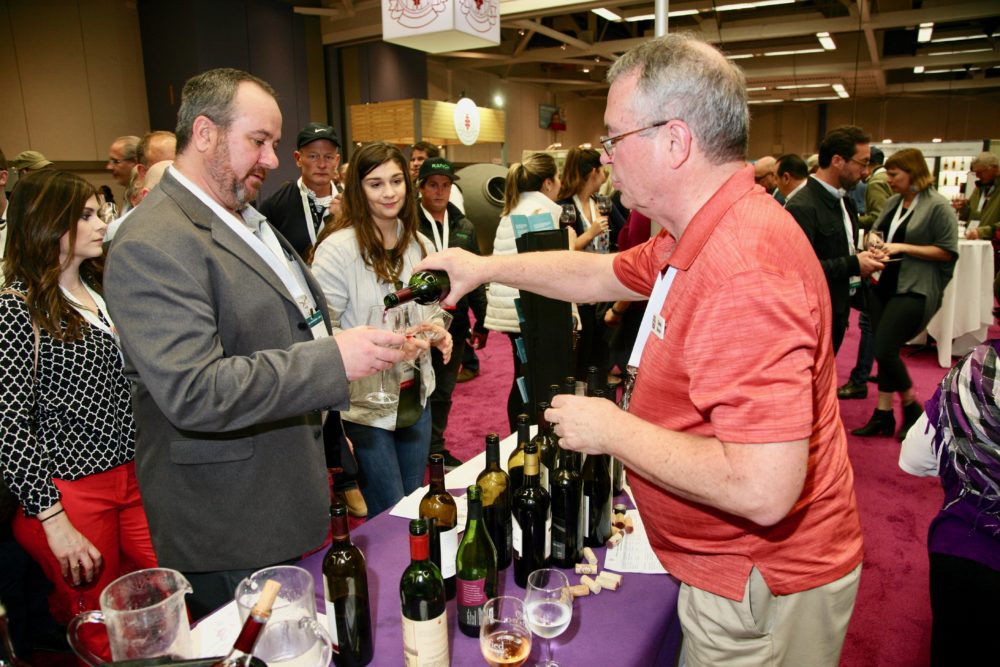
At Unified, the wine industry exhibits their products and services.

Presented by two nonprofit organizations, the American Society for Enology and Viticulture (ASEV) and the California Association of Winegrape Growers (CAWG), the Unified’s comprehensive format responds to the wine and grape industry’s critical need for information, discussion and connections.

“If you want to understand what’s happening in the industry and how to stay competitive, the Unified is the place to be,” said John Aguirre, CAWG president. “The Unified draws nearly 14,000 from all over the globe, including exhibitors from nearly 30 countries. For 25 years, the Unified is where industry leaders and professionals meet to discuss the latest news and share strategies for staying abreast of changing markets, technologies and regulations.”

Put on by the industry for the industry, the three-day conference draws on some of the most respected industry experts. The three days of sessions included 26 presentations and panel discussions organized by a diverse panel of volunteers who recruited nearly 100 experts to speak on topics ranging from digitalization in the vineyards to how cannabis is affecting the wine industry. Complementing those talks was a two-day, 170,000-square-foot trade show that housed nearly 700 exhibitors.

In 2020, the Unified will be at Cal Expo, a temporary host site, due to the Sacramento Convention Center’s large-scale renovation that will close it down starting this summer. With the Unified set for February 4-6, Cal Expo will provide an alternative to the Convention Center with ample space, parking and facilities for a conference of Unified’s size.

“Cal Expo, as a premier regional event facility, is excited to host the Unified Wine and Grape Symposium in 2020,” says Rick Pickering, CEO and General Manager of California Exposition and State Fair.  “We look forward to working with Unified and the City of Sacramento to make the transition extremely smooth and the 2020 show a huge success.”

The organizers of the Unified share that optimism.

“We are confident that, while the 2020 show will have a slightly different feel, the quality of exhibits, presentations and networking opportunities will again deliver an invaluable service to all of our guests and the industry,” says ASEV Executive Director Dan Howard. “We’re excited to return to the newly renovated Sacramento Convention Center in 2021. It will offer opportunities for expansion, including additional nearby hotels.”

2019-02-22T16:52:43-08:00February 22nd, 2019|

Big Goal for United Fresh: Promoting Produce to Consumers

Voice Search Idea Studied at United Fresh BrandStorm Event

By Mikenzi Meyers, Associate editor

Mary Coppola, Vice President of Marketing Communications at United Fresh Produce Assocation, is not just focused on selling brands of produce but improving marketing within the industry as a whole.

Mary Coppola, United Fresh

When it comes to promoting a brand, Coppola knows that people are more drawn to those they have background information on.

“We’ve certainly seen that when there is a brand association and there is a strong story shared with the consumer—that there are a trust, loyalty, and a desire to seek out that brand—in return, [that] means that the consumer is buying more of that product,” she explained.

Producers looking to create this kind of a connection should note that less is more, and consistently sending the same message is the best way to get consumers on board.

The marketing industry is also trying to capitalize on the consumer’s connection with technology. Coppola described new research into voice-activated search engines, called voice optimization.

“Consumers are, more and more, using a voice search to ask about products, what’s in season, and where they can buy such product,” she said. “There’s an opportunity for producers to start talking about their products, and their brands to be able to be the ones to answer those questions.”

Every year, United Fresh holds an event called BrandStorm that brings together produce marketers to update them on the latest trends and set the stage for the rest of their marketing activities throughout the year. They also hold a convention expo for professionals in the retail industry in order to educate them and give them the tools they need to help producers sell their products.

With an abundance of new technology and marketing research, the ultimate goal still remains the same.

“As an industry, I think we would all share the same sentiment: that we want consumers to eat more produce,” Coppola said.

2019-02-21T15:53:11-08:00February 21st, 2019|
Go to Top