About California Ag Today

This author has not yet filled in any details.
So far California Ag Today has created 2014 blog entries.

Big Exports Numbers Mean Big Responsibilities for California

California Exported $20 Billion in Food Products in 2016

By Mikenzi Meyers, Associate Editor

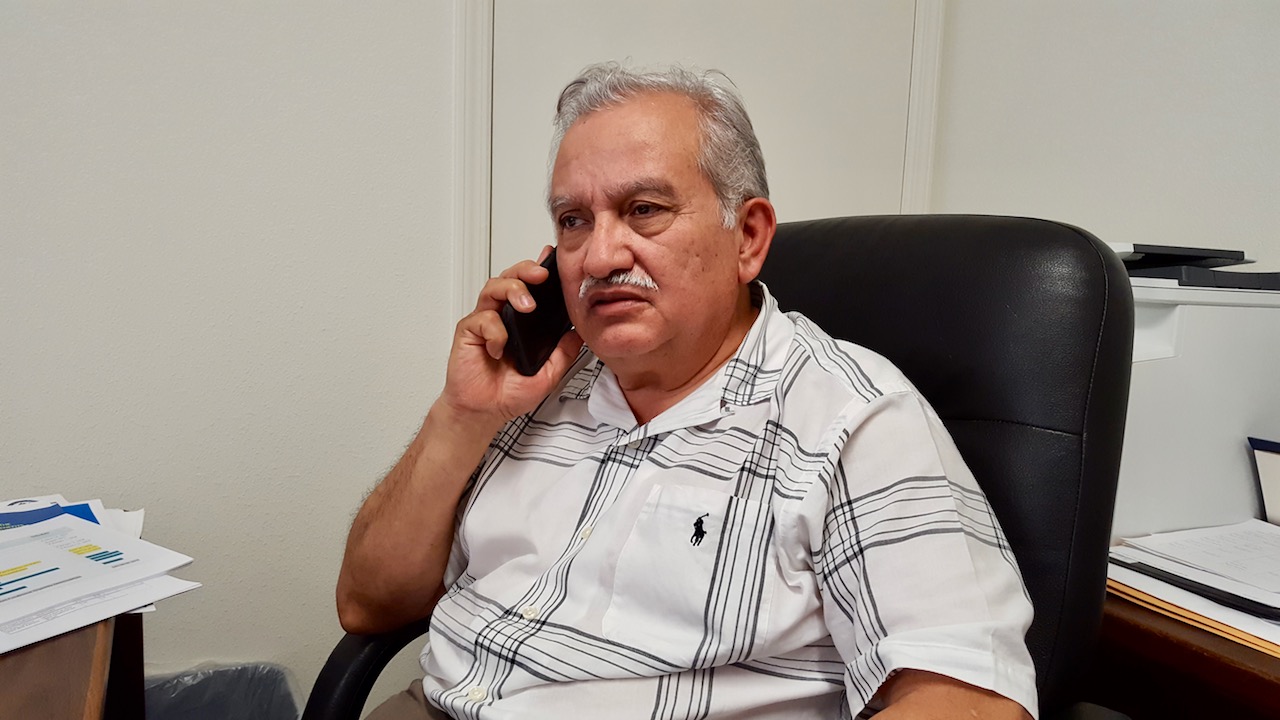
It’s no secret that California’s agricultural exports are a huge part of the state’s economy—but to put it in perspective, over $20 billion worth of food and agricultural products were exported in 2016 alone (the latest figures). With numbers like these, people like Glen Roberts of the U.S. Department of Commerce and International Trade Administration are kept busy.

Roberts, who is part of the Global Markets sector and based in Fresno, not only works with what he calls “easy” exports like Mexico and Canada, but other places across the globe, shipping anything and everything from food to machinery.

exports

Glen Roberts

When it comes to his role in California, Roberts explained, “Our office covers from the top of the Grapevine, Kern County, all the way up to Stanislaus County from San Louis Obispo over to Nevada.”

His sector, which handles more of the commercial side of things, acts as a gateway to other government programs that help out with international trade.

Although Roberts’ main focus is commercial, he’s still one of the go-to guys in agriculture exports.

“What happened when the almond prices dropped? I got the calls because Foreign Ag Service doesn’t handle contractual disputes,” he said.

Roberts further added, “I had to help out our local almond growers because the buyers didn’t want to pay the higher contracted price. They wanted to buy the new lower market price.”
2019-03-19T16:41:17-07:00March 19th, 2019|

Congressman McCarthy: Water Projects Needed Instead of High Speed Rail

McCarthy Introduces Legislation to Repurpose High-Speed Rail Funding to Water Infrastructure Projects

News Release

Congressman Kevin McCarthy introduced legislation recently that would repurpose recovered federal funding from the California High-Speed Rail project to critical water infrastructure projects in California and the West. McCarthy released the following statement on this legislation, H.R. 1600, the Repurposing Assets to Increase Long-term Water Availability and Yield (RAILWAY) Act:                                                                                   

“The California High-Speed Rail project is a boondoggle that California and American taxpayers must move on from. Since its inception, the project’s costs have ballooned while oversight and accountability within the California High-Speed Rail Authority has been nonexistent. Last month, Governor Newsom in his State of the State rightfully recognized these shortcomings and announced an end to the project as it was put to the voters.”

Congressman Kevin McCarthy

“The RAILWAY Act would end the Federal government’s involvement in this failed endeavor by repurposing up to $3.5 billion in recovered Federal funding for the California High-Speed Speed Rail project to water storage infrastructure projects as outlined in the bipartisan WIIN Act. Under the WIIN Act, five storage projects in California are advancing, and when completed, could provide 5 million acre-feet of additional water storage in our state. This is a far better use of taxpayer money that can address more important needs in our state.

 “California has experienced over five years of drought, and people across the state have felt the consequences, with entire communities on the brink of disaster due to lack of water. The RAILWAY Act would address this crisis head-on by providing significant funding for what California really needs: infrastructure projects that help our state capture and store water during wet years for use in dry ones. The RAILWAY Act builds on the success of the WIIN Act by continuing to increase California’s drought resiliency and helping ensure our communities, families, and farmers have access to life-sustaining water.” 

 Every Republican Member of the California Congressional Delegation joined McCarthy as cosponsors of the RAILWAY Act. Below are their quotes:

 “California farmers and families need a reliable water supply, not an extravagant high-speed rail line. This bill will redirect crucial funds and resources where they’re most needed—particularly in water infrastructure projects—to help ease the burden on Central Valley communities struggling through the water crisis.” –Congressman Devin Nunes (CA-22)

“The RAILWAY Act repurposes funding from the most wasteful project in California’s history and invests it into some of our most critical water storage projects. That’s a win for taxpayers and a win for California’s future. We know California experiences periods of droughts followed by periods of significant rainfall. The RAILWAY Act provides a common sense solution to this problem by building storage projects to capture more water in wet years in order to sustain California families and our economy through the dry years. Building water storage is long overdue. It’s time to stop watching water be diverted into the ocean and start acting to capture and store that water.” –Congressman Ken Calvert (CA-42)

“Years of drought in California brought entire cities within months of exhausting their water supplies. In extremely wet years, we have watched our dams spilling millions of acre feet of water to the ocean because of lack of storage. The infrastructure funding provided in the RAILWAY Act will begin to turn this tide in support of water abundance.” –Congressman Tom McClintock (CA-04)

“California’s high-speed rail project has been a very expensive disaster, with costs ballooning so much that voters are no longer getting anywhere close to what they were sold. I agree that all federal funding given to California for this project should be promptly returned and invested in commonsense projects people need, be it water storage or transportation. I have a bill, the High-Speed Refund Act, with a similar goal of reinvesting these funds into useful transportation infrastructure, such as widening Highway 70, three lanes for I-5, improving Highway 99 or 395, or many other real world projects that are actually useful to people in Northern California. Almost any type of infrastructure will be more beneficial and, one way or another, taxpayers deserve a stop to additional waste for this misguided pipedream of high-speed rail.”Congressman Doug LaMalfa (CA-01)

“The last major reservoir in California was built forty years ago. Since then, our population has grown significantly, and we’re ill-prepared to endure droughts. It’s time we take action to increase our water supply and modernize our water infrastructure. This bill makes good use of funds that were already going to be spent in California. I hope that Congress will pass this legislation quickly.” –Congressman Paul Cook (CA-08)

“Efficient water storage and management is California’s greatest need. The high-speed rail project is California’s greatest waste of time. The RAILWAY Act corrects this problem by implementing a common-sense plan to address a significant concern in our state by investing significant and critical resources to ensure we have water availability for the future. I am proud to be part of this effort and will continue working with my colleagues to lead on this important ongoing issue.”  –Congressman Duncan Hunter (CA-50)

Background

  • The Federal Railway Administration (FRA) made two grant awards to the California High-Speed Rail Authority for the High-Speed Rail (HSR) project totaling approximately $3.5 billion.
  • On February 12, the Governor of California, in his State of the State address summarized the reality that the HSR project costs too much, will take too long to build, and that “there simply isn’t a path to get from Sacramento to San Diego.”
  • On February 19, the FRA notified the California High-Speed Rail Authority it is de-obligating $929 million in unspent FRA grant funding for the HSR project after determining that the Authority “has materially failed to comply with the terms of the funding agreement and has failed to make reasonable progress on the HSR Project.”  The FRA also indicated it is “exploring all available legal options” to recover approximately $2.5 billion in Federal funds already expended on the HSR project.
  • To view the FRA letter click here.

The RAILWAY Act would accomplish three important things:

  • Ends the California High Speed Rail (HSR) Project: The RAILWAY Act would reflect reality and end Federal participation in the HSR project—consistent with the FRA notification of February 19—in the Central Valley and repurpose funds to critical water infrastructure projects.
  • Increases Drought Resiliency in California and the West: The RAILWAY Act would provide significant funding to the Water Infrastructure Improvements for the Nation (WIIN) Act program that the U.S. Department of the Interior (DOI) uses to design and construct various large-scale water infrastructure projects in California and the West, including expanding existing and building new reservoirs, thereby increasing drought resiliency in western states.
  • Helps Keep Federal Funds in California: By providing significant funding to the WIIN Act program that the DOI is using to advance the Shasta Dam and Reservoir Enlargement Project, the Sites Reservoir Storage Project, the Upper San Joaquin River Basin Storage Project, the Los Vaqueros Reservoir Phase 2 Expansion Project, and the Friant-Kern Canal subsidence correction project, all which are located in California, the RAILWAY Act would help ensure repurposed Federal funds remain in California to create jobs and build needed infrastructure.

The RAILWAY Act would also repurpose a portion of HSR project funds to the U.S. Department of Agriculture to award grants to projects designed to help small, rural communities by:

  • Developing new sources of water when residential wells run dry; and
  • Reducing or eliminating elevated nitrate levels in drinking water.
2019-03-18T14:40:31-07:00March 18th, 2019|

Yes, A Disappointing 55 Percent Water Allocation for Farmers

Statement from Westlands Water District on Bureau of Reclamation’s Water Allocation Announcement

News Release

Today, the Bureau of Reclamation announced that the water allocation for South-of-Delta Central Valley Project (CVP) agricultural water contractors has been increased from 35 percent to 55 percent. The increase is an improvement for the farmers and farmworkers in the Westlands Water District, but, given the healthy hydological conditions throughout the state, today’s announcement is a disappointment.

For years, we have been told that the farmers served by south-of-Delta ag service contractors received water allocation reductions due to water shortages. But this year, water is abundant, which is why today’s announcement is so frustrating. A 55 percent allocation, during a year with snowpack and reservoir levels well above average, further illustrates the extent to which California’s water supply system is broken and how important it is that we find long-term solutions to problems plaguing the water deliver system in California.

As of today, Lake Shasta is at 85 percent capacity and 111 percent of its historical average. San Luis Reservoir is at 99 percent capacity and 113 percent of its historical average. Yet, despite the availability of water, the rigid regulatory constraints imposed on operations of the CVP continue to prevent Reclamation from making common-sense water management decisions.

2019-03-15T16:46:14-07:00March 15th, 2019|

4-H Learning Model Helps Two Lost children Survive

Thankfully, Children Were Found


2019-03-14T18:48:46-07:00March 14th, 2019|

Solano County 4-H Members Go fo the Gold

4-H’ers Present Demonstrations, Educational Displays, Illustrated Talks, and Other Ideas

By Kathy Keatley Garvey, UCANR Communication Specialist

Seventeen Solano County 4-H members won gold awards at Solano County 4-H Presentation Day, and the Heritage 4-H Club of Vacaville won the plaque for the greatest member participation. In front (from left) are gold winner Darren Stephens, Sherwood Forest 4-H, Vallejo; William Parks, president of the Heritage 4-H Club (the club received the participation award for the greatest number of members presenting); and gold winners Daniel Taliaferro, Beau Westad, Grace Kimble and Irma Brown, all Suisun Valley 4-H. In back (from left) are gold winners Julietta Wynholds, Sherwood Forest 4-H; Zoe Sloan, Elmira 4-H; Braddison Beathem and Madisyn McCrary, both Tremont 4-H, Dixon; Miriam Laffitte, Vaca Valley 4-H; Celeste Harrison and Hannah Stephens, both Sherwood Forest 4-H; Jessica Carpenter, Pleasants Valley 4-H, Vacaville; and Alexis Taliaferro, Suisun Valley 4-H. Not pictured are gold winners Kailey Mauldin and Alissa Mauldin, both Elmira 4-H, and James George, Suisun Valley 4-H. (Photo by Kathy Keatley Garvey)

Solano County 4-H’ers Go for the Gold

They presented everything from “How to Take a Perfect Picture” to “The Secret Life of Bees” to “Anything is Pawsible: How I Trained My Doberman pinscher.”

When it was all over, 17 4-H’ers, including seven from the Suisun Valley 4-H Club, won gold medal showmanship awards at the annual Solano County 4-H Presentation Day, held recently at the Sierra Vista K-8 School in Vacaville.

The presentations included demonstrations, educational displays, illustrated talks, an interpretative reading, and a cultural arts offering.

Beau Westad of the Suisun Valley 4-H Club explains his project, “Reeling in Channel Catfish” at the Solano County 4-H Presentation Day. He won a gold award and is now eligible to compete in an area presentation.

The 4-H’ers followed a four-pronged process involving research, organization, graphics, and sharing of knowledge, said Valerie Williams, Solano County 4-H program representative. Adult evaluators, all involved with the Solano County 4-H Youth Development Program, asked the youths questions and scored them on their knowledge and presentation.

Twenty-six 4-H’ers, representing eight of the county’s 11 clubs, participated.

In the junior educational display talk category, ages 9 to 10, the gold winners, all from the Suisun Valley 4-H Club, were Grace Kemble, “How to Take a Perfect Picture”; Daniel Taliaferro, “Perfect Pizza Pans”; and Beau Westad, “Reeling in Channel Catfish.”

In the intermediate educational display talk category, ages 11 to 13, evaluators selected six  gold winners: James George of the Suisun Valley 4-H, “Event Planning”; Celeste Harrison of the Sherwood Forest 4-H Club, Vallejo, “Anything Is Pawsible: How I Trained My Doberman Pinscher”; Irma Brown, Suisun Valley 4-H, “Elements of a Movie”; Madisyn McCrary of Tremont 4-H Club, Dixon, “How to Shoe a Horse”; Alissa Mauldin, Elmira 4-H, for “This Little Piggy Has…” and Darren Stephens, Sherwood Forest 4-H, “Can Chickens Get Maggots?”

In the senior educational display talk category, ages 14 to 19, three took home the gold: Hanna Stephens, Sherwood Forest 4-H, “Living Life as a Guide Dog Puppy”; Jessica Carpenter, Pleasants Valley 4-H Club, Vacaville, “How to Trim Goats and Sheep Hooves” and Alexis Taliaferro, Suisun Valley 4-H, “College Tours: A Glimpse Into the Future.”

Grace Kemble of the Suisun Valley 4-H Club explains how to “take a perfect picture.” She handcrafted her display and won a gold award for her work and presentation at the Solano County 4-H Presentation Day.

In the intermediate illustrated talk category, ages 11 to 13, gold awards went to Julietta Wynholds, Sherwood Forest 4-H, for “The Basics of Animation”; and Braddison Beathem, Tremont 4-H, “Let’s Talk Tack: How to Tack a Horse in English Tack.”

Senior demonstration, ages 14 to 18: Zoe Sloan of Elmira 4-H, for “Bomb Voyage.”

Senior/Interpretative Reading, ages 14 to 19: Kailey Mauldin, Elmira 4-H, “The Secret Life of Bees” by author Sue Monk Kidd.

Intermediate Culture Arts, ages 11 to 13: Miriam Lafitte, Vaca Valley 4-H Club, Vacaville, “Total Improv.”

The winners are now eligible to compete in an Area 4-H Presentation Day, a qualifying event for the California State 4-H Field Day. Area Presentation Days will take place in Antioch, Jackson, and California Polytechnic Institute (Cal Poly), all on March 23. Other Area Presentation Days will be held in Siskiyou County on April 6, in Mariposa County on April 14; in Walnut on May 4; and in Tehama County on May 11.

Solano County 4-H Ambassador Natalie Greene of the Sherwood Forest 4-H Club served as the emcee.

The newly formed and soon-to-be-chartered Heritage 4-H Club of Vacaville won the participation award for having the greatest percentage of participants. The club is affiliated with the Heritage Christian Academy, Vacaville.

Celeste Harrison of the Sherwood Forest 4-H Club, talks about how she trained her Doberman pinscher during the Solano County 4-H Presentation Day. Evaluators (back to camera) are Helen Ritchey and Dan Turner.

Six 4-H’ers participated in the primary educational display talks category, ages 5 to 8. The primary group is not evaluated. Receiving participation certificates in that category were four Heritage Club members: Dale Harder, “The Perfect Picnic,” Sunny Harder, “Camping”; Christopher Parks, “Model Trains”; and William Parks, “Dog Man: My Favorite Book and How to Draw the Characters.” Certificates also went to Nevaeh Tiernan-Lang of Elmira 4-H, “How to Build a Christmas Tree” and Alia Wynholds of Sherwood Forest 4-H,“On the Trail.”

Receiving participant certificates in the junior educational display talk category, ages 9 to 10, were Addelyn Widmer of Suisun Valley 4-H, “Goldilocks and the Three Bears of Photography”; and Jonny Tiernan-Lang, Elmira 4-H, for “AKC Toy Breeds.”

In the intermediate educational display talk, ages 11 to 13, Heath Moritz of the Westwind 4-H Club, Fairfield-Suisun, received a participation certificate for “Watch Me Now.”

During the Presentation Day, attendees also had the opportunity to participate in hands-on activities, including designing and launching a paper rocket through the STEM activity; making slime at the Slime Station; and learning how to sew a blanket, “Cuddle Me Close,” for hospital patients.

Solano County has 11 4-H clubs, with a total membership of 400

Vacaville: Vaca Valley, Pleasants Valley, Elmira and Heritage
Fairfield-Suisun: Suisun Valley and Westwind
Dixon: Maine Prairie, Tremont, and Dixon Ridge
Rio Vista: Rio Vista 4-H
Vallejo: Sherwood Forest

The Solano County 4-H Youth Development Program, part of the UC Cooperative Extension Program, follows the motto, “Making the Best Better.” 4-H, which stands for head, heart, health, and hands, is open to youths ages 5 to 19.  In age-appropriate projects, they learn skills through hands-on learning in projects ranging from arts and crafts, computers and leadership to dog care, poultry, rabbits and woodworking. They develop skills they would otherwise not attain at home or in public or private schools. For more information, contact Valerie Williams at vawilliams@ucanr.edu.

2021-05-12T11:05:05-07:00March 13th, 2019|

ALRB/UFW Access Update Meeting March 21 in Bakersfield

Meeting March 21, 7 am -11 am at Hodel’s Restaurant in Bakersfield

By Patrick Cavanaugh, Editor

Jesse Rojas, the founder, and CEO of The Redd Group; Michael Saqui from the Saqui Law Group; and Raul Calvo from Employer Services are the presenters of an upcoming important seminar. It will specifically focus on agriculture and farm labor contractors,  growers, packers, and shippers, regarding ALRB and UFW access. Attendees will learn what to do when the United Farm Workers union is wanting to take access and speak with farm employees to try to unionize them.

Jesse Rojas, The Redd Group

“The reason why we wanted to do this now before the season started is that the UFW has been very active this year, said Rojas. “The union is trying to get out of the hole that they’ve been in after so many losses. They pulled a big PR stunt earlier this year at Wonderful in Delano, and we also heard that they’re continuing to hire multiple organizers, which indicates that they’re trying to get more active in our industry this year.”

The dos and don’ts will be discussed when it comes to the union trying to take access to your employees or trying to gain access in your fields. Saqui will be presenting his hot topics in labor and employment. He will also delve into the overtime pay in agriculture, which is confusing and ever-changing.

“Raul Calvo will speak about how to improve employee relations and communications with your employees out in the field and avoid having a third party attempt to step in and become the medium of communication between you and your employees,” Rojas said.

State Senator Shannon Grove will also be speaking at the event at 8:30 in the morning, and she will be focusing on some of the legislation—the good and bad law that’s currently happening at the capital that’s going to affect agriculture.

“She will also speak about the general overreach of state agencies such as the ALRB,” Rojas said.

The location of the meeting is Hodel’s Country Dining at 5917 Knudsen Drive, Bakersfield, CA 93308.

For more information and to register, RSVP at Jesse@reddgroup.org or call 844-946-7333. Seating is limited.


2019-03-12T16:32:12-07:00March 12th, 2019|

Water Rights Holders Must Measure Stream Diversions

UC Cooperative Extension Offering Water Measurement and Reporting Courses April 4

News Release

California water rights holders are required by state law to measure and report the water they divert from surface streams. For people who wish to take the water measurements themselves, the University of California Cooperative Extension is offering training to receive certification April 4 in Redding and Woodland.

At the workshop, participants will:

  • Clarify reporting requirements for ranches.
  • Understand which meters are appropriate for different situations.
  • Learn how to determine measurement equipment accuracy.
  • Develop an understanding of measurement weirs.
  • Learn how to calculate and report volume from flow data.

UC Cooperative Extension is offering a limited number of trainings in 2019. The next training will be held at Shasta College Farm and Yolo County Fairgrounds:

  • Yolo County Fairgrounds in Woodland – Register at http://cecapitolcorridor.ucanr.edu or by emailing Morgan Doran at mpdoran@ucanr.edu or calling the UCCE office in Yolo County at (530) 666-8143. Training will begin at 2 p.m. and should conclude by 5 p.m.

Background on the water diversion law

Senate Bill 88 requires that all water right holders who have previously diverted or intend to divert more than 10 acre-feet per year (riparian and pre-1914 claims), or who are authorized to divert more than 10 acre-feet per year under a permit, license or registration, to measure and report the water they divert. 

Detailed information on the regulatory requirements for measurement and reporting are available on the State Water Resources Control Board Reporting and Measurement Regulation webpage: https://www.waterboards.ca.gov/waterrights. For diversion or storage greater than or equal to 100-acre feet annually, the law requires approval of installation and certification of measurement methods by an engineer, contractor, or other approved professional.

To make it easier for farmers and ranchers to comply with the law, the California Cattlemen’s Association worked with Assemblyman Frank Bigelow on a bill that would allow people to get certified to take the measurements themselves. Assembly Bill 589 became law on Jan. 1, 2018.

Until Jan. 1, 2023, this bill allows anyone who diverts water and has completed an instructional course on measurement devices and methods administered by UC Cooperative Extension, including passage of a proficiency test, to be considered qualified to install and maintain devices or implement methods of measurement. The bill requires UC Cooperative Extension and the water board to jointly develop the curriculum for the course and the proficiency test.

2019-03-09T23:17:00-08:00March 9th, 2019|

First-Ever UC Cost Study for Primocane-Bearing Blackberries Released

Primocane-Bearing Extends Production Season

By Pam Kan-Rice, UC ANR

The first-ever cost study of primocane-bearing blackberries in California has been published by UC ANR’s Agricultural Issues Center and UC Cooperative Extension. With primocane-bearing, growers can extend the blackberry production season.

“What differentiates primocane-bearing blackberry from the traditional floricane-bearing is that it bears fruit in the first year rather than the second,” explained co-author Mark Bolda, a UC Cooperative Extension advisor.

“Which, of course, opens a world of opportunity for growers, since they are able to produce fruit in the first year rather than the second, as has traditionally been the case,” Bolda said. “That’s what makes this study so interesting to us.”

Primocanes are the green, vegetative stalks of the blackberry plant, generally the first-year cane. The second year, they become floricanes, flowering and fruiting. 

The study presents sample costs to establish, produce, and harvest primocane-bearing blackberries in the Central Coast region of Santa Cruz, Monterey, and San Benito counties.

The analysis is based on a hypothetical well-managed farming operation using practices common to the region. The costs, materials and practices shown in this study will not apply to all farms. Growers, UC ANR Cooperative Extension farm advisors, and other agricultural associates provided input and reviewed the methods and findings of the study.

This study assumes a farm operation size of 30 contiguous acres of rented land, with primocane-bearing blackberries for fresh market planted on 15 acres. The crop is hand-harvested and packed into 4.5 pound trays. During the establishment year, there is a four-month harvest: July through August. Primocane blackberries can produce fruit on first-year growth. There is also a four-month harvest for each of the four production years.

The authors describe assumptions in detail and present a table of costs and returns based on those assumptions about production, input materials, prices, and yields. A ranging analysis shows the impact on net returns of alternative yields and prices. Other tables show the monthly cash costs; the costs and returns per acre; hourly equipment costs; and the whole farm annual equipment, investment, and business overhead costs.

The study also has an expanded section on labor, which includes information on California’s new minimum wage and overtime laws.

“This work investigating the economics of a newer cultural system for our area came out of a close collaboration between UCCE academics and area growers,” said Bolda, who serves Santa Cruz, Monterey and San Benito counties, “so the level of detail and accuracy is outstanding.”

Free copies of this study and other sample costs of production studies for many commodities are available. To download the cost studies, visit the UC Davis Department of Agricultural and Resource Economics website at https://coststudies.ucdavis.edu.

The cost and returns studies program is funded by the UC Agricultural Issues Center and UC Cooperative Extension, both of which are part of the UC Division of Agriculture and Natural Resources, and the UC Davis Department of Agricultural and Resource Economics.

For additional information or an explanation of the calculations used in the studies, contact the UC Agricultural Issues Center at (530) 752-4651 or UC Cooperative Extension advisors Mark Bolda (831) 763-8025 or Laura Tourte (831) 763-8005 in Santa Cruz County.

2021-05-12T11:05:05-07:00March 8th, 2019|

Groundwater and Need for Temperance Flat Dam

To Deal with SGMA, Temperance Flat Dam Must Be Built

By Jessica Theisman, Associate Editor

The Sustainable Groundwater Management Act, also known as SGMA, is seen as dire for the future of farming as we know it in the San Joaquin Valley. One thing that could help reduce the threat of SGMA is more storage for surface water deliveries—increased storage such as the proposed Temperance Flat Dam.

Mario Santoyo is the executive director of the San Joaquin Valley Water Infrastructure Authority. For decades, Mario Santoyo has been pushing for the construction of Temperance Flat Dam.

“With this new groundwater sustainability law coming into play, it is going to basically shut down a lot of farming,” he said.

If farmers cannot prove that they are putting in as much water as they are taking out of the ground, they will lose their access to the groundwater pumps.

“Farming in the Central Valley is in for a world of hurt. The only thing that can help us won’t solve everything but can help us,” Santoyo said.

It is a major step in the right direction to be able to manage high runoff water that we are otherwise losing to the ocean—meaning millions and millions of acre-feet lost into the ocean.

“Building Temperance Flat, which would provide us additional storage opportunities up to additional 1.2 million acre-feet, will allow us to have carry over water from year to year,” Santoyo said. “This would come in handy when we hit dry years here in California. It would allow us to move water from above ground to below ground, stabilizing our groundwater condition.”

2019-03-07T16:21:59-08:00March 7th, 2019|

Roger Isom on New Legislation and PG&E

Big Question Marks for New Legislation and California Agriculture

By Mikenzi Meyers, Associate Editor

Californians are still trying to get a feel for new legislation, while agriculturalists wonder what they’ll be up against this year. According to Roger Isom, President and CEO of the Western Agricultural Processors Association and California Cotton Ginners and Growers Association, issues pertaining to water and PG&E are among the top concerns for Valley growers.

Last year, there was potential for a water fee and fertilizer tax combination that ended up not passing, but left growers to question what they will be faced with in the future.

“With the water situation the way it is, from a supply standpoint to the nitrate issue and drinking water, we know there’s going to be legislation on that,” Isom said.

Other than the continued concern of water, Isom added that perhaps one of the biggest question marks in California agriculture is how they will handle a potential PG&E bankruptcy. He explained that the state’s rates are already the highest in the country due to gas laws and renewable energy mandates, and he fears that an increase will only make a difficult situation almost impossible.

“We’re already looking at ratepayers being faced with huge liability from the fires last year. When you throw the Camp Fire on top of it, what does that mean for us?” he concluded

2019-03-06T16:41:30-08:00March 6th, 2019|
Go to Top