Water District Talks Low Water Allocation

Water District’s Water Allocation Disappoints

 By Brian German, Associate Broadcaster

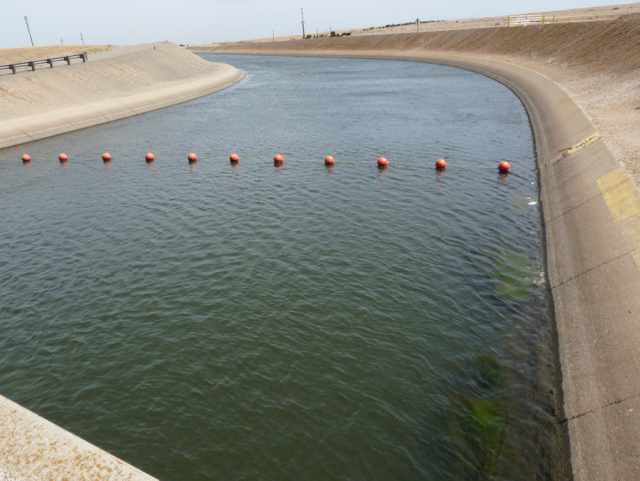
The Bureau of Reclamation announced an initial 2017 water allocation for the Central Valley Project, and it’s considerably lower than what was expected.  Despite a wet winter and a significant snowpack, the Bureau has only allocated 65 percent of their contract supply to South-of-Delta contractors.

Johnny Amaral is the Deputy General Manager for the Westlands Water District – the largest agricultural water district in the United States.  Amaral thinks the deck is stacked against area growers as a result of water policy. “There are laws on the books that were deliberately put into place that created this bottleneck in the CVP and have hamstrung the CVP. This is the outcome that you get when you purposely curtail project operations or pumping: You get shortages,” Amaral said.

San Luis Reservoir is full this season, yet the allocation is only 65 percent.

The 65 percent allocation is especially disheartening since the announcement was not released until well into the planting season, forcing farmers to make decisions about land use and labor without any assurance of water supplies.  Amaral thinks there’s a need for a serious policy discussion as to whether the government truly values what growers produce.  “Those laws are going to have to be changed if we’re ever going to restore water supply to a situation where the westside ag contractors get 100 percent,” Amaral said.

Westlands Water District is made up of more than 1,000 square miles of premier farmland in western Fresno and Kings counties and provides water to 700 family-owned farms, averaging about 875 acres in size.  Amaral believes that it is time for legislators to reevaluate their priorities.  “It really comes down to a very simple but more fundamental policy question about, ‘Do we value being able to grow our own food in a safe way? Does that matter to people?’ ” Amaral said.

During election season last fall, then-candidate Donald Trump vowed to fix the water problems in California.  Farmers are going to need to be patient in their desire to see some action on those promises. “The agencies that have direct influence over western water issues and western resources issues, it’s really the Department of Interior. The Secretary of Interior was just confirmed a couple of weeks ago. … There are a whole host of positions and people that need to be nominated and put into place for the Trump Administration to really have a day to day impact over how the decision’s made on water supply and project operations,” Amaral said.
2017-04-06T11:42:51-07:00April 6th, 2017|

Saving Fish May Have Caused Oroville Disaster

Were Fish Cause of Oroville Dam Disaster?

By Jessica Theisman: Associate Editor

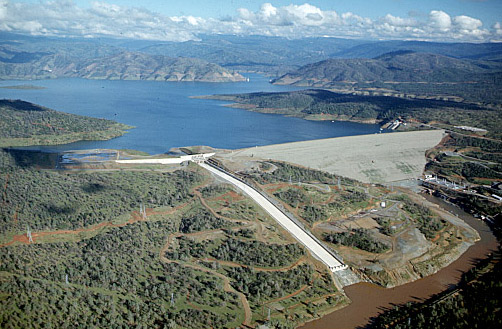
Reportedly, an effort to save millions of salmonoid fish below the Oroville dam may have caused a delay in releasing water from Oroville Dam on February 12. It set up the evacuation of at least 188,000 people in the area after authorities warned of an emergency spillway in the structure was in danger of failing and unleashing uncontrolled floods of water on towns below.

It was a near disaster and would have taken agricultural irrigation water with it, which has a lot of people asking questions. One person is Edward Needham. He provides agricultural services for growers throughout the state.

“I was trying to figure out what the missing piece was, why they could all of a sudden release 100,000 CFS and go from 65,000 to 100,000,” he said. Needham had spoken with a friend who worked at the refuge that day, who had told him he had been down at the fish hatchery, cleaning it out and saving all of the salmon.

“You’re telling me that they delayed the releases on the dam to save the four million salmon that were downstream?” Needham asked.

That may be correct! Many local news stations had reported that approximately 40 employees from the refuge were saving the salmon and loading them into trucks to be hauled away.

“That was two days before the dam nearly failed because of all the water it was holding back” Needham remarked.

2017-04-21T15:00:38-07:00March 21st, 2017|

Temperance Flat Could Control Floods

Association Calls for Flood Control through Temperance Flat

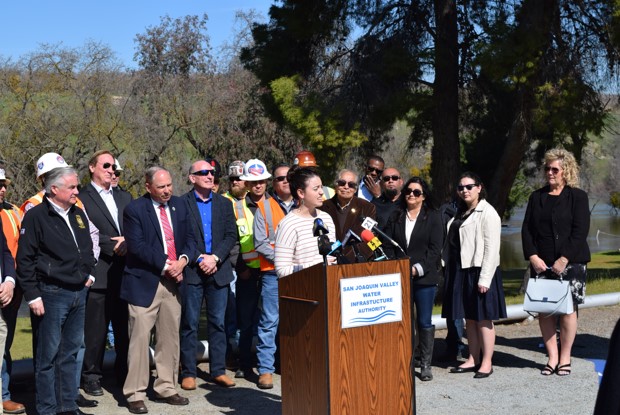
With the rising San Joaquin River in the background, board members of the San Joaquin Valley Water Infrastructure Authority (SJVWIA), assemblymen, city officials and stakeholders of the Temperance Flat project gathered recently to discuss the importance of flood control.

The Western Ag Processors Assocation (WAPA) Director of Regulatory Affairs Jodi Raley spoke at a recent news conference highlighting the impacts of flood damage as it relates to agriculture. Noting the acres of valuable agricultural land along the river, Raley expressed that while it is important for the future dam to capture water, this season, we are seeing how the project would play a critical role in flood control.

Many acres of orchards and fields have experienced saturation or an inundation of water during this heavy rain season. These conditions on an extreme not only lead to situations concerning crop health, but could also result in loss of jobs for ag workers in affected areas.

In addition, it was highlighted that the amount of water released from Friant, currently 9,000 cubic feet/sec (cfs), has very little to no demand. It is being said that with the rain received and the significant snow pack in the Sierras, Millerton Lake will receive enough water to be drained and refilled seven times over.

The SJVWIA and the Technical Advisory Committee, along with the large breadth of stakeholders, are calling upon Governor Brown to recognize the need for this project’s construction. Raley said that the association will continue to push and fight for the construction of Temperance Flat to bring more water not only to the Central Valley, but to the entire state.

2017-04-24T19:33:04-07:00March 9th, 2017|

Recharging Aquifer: Job One Today

Water Districts Recharging Aquifer

By Patrick Cavanaugh, Farm News Director

David Nixon, Deputy General Manager of the Arvin Edison Water Storage District

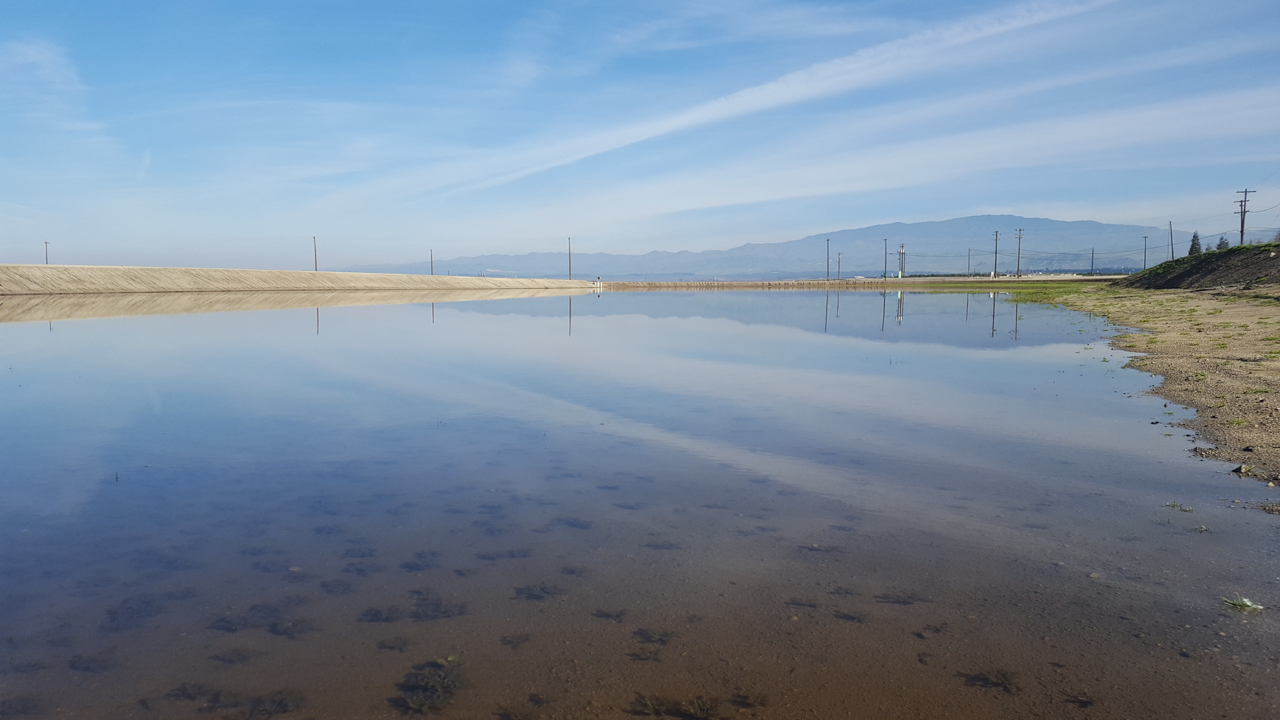
With the reservoir and all water district canals brimming, there is a great effort to move water into underground aquifer recharge ponds, said David Nixon, general manager of the Arvin-Edison Water Storage District in Kern County.

“Absolutely, we tried to get every acre foot of water in this district we possibly can,” he said. “With that water at this time of year, before it’s needed by agriculture, it’s all about water storage and rebuilding that underground aquifer.

“We have about 1500 acres of recharge ponds that we can use to refill the underground aquifer,” Nixon said.

It has been a great, wet year, with Middleton Lake filling in Fresno County, and water moving Southward in the Friant-Kern Canal all the way to Kern County, right where Arvin-Edison Water Storage District is located.

“It’s beautiful out there. Ponds are full, and hopefully, if everything works out with our water supply, they’ll be full all year long,” Nixon said.

“We take a wet year supply and turn it into dry year water. When we do not have ample water supply for the 53,000 acres that are under a long-term surface water contract with us, then we will run our wells,” Nixon said.

This year will not be one of those years.


2017-04-25T15:59:47-07:00February 20th, 2017|

Fresno County Growers Grateful For Rainfall

Rainfall Helps Water Cover Crops

By Brian German, Associate Broadcaster

The amount of rainfall the state has already received comes as a delight for many growers.  Joe Del Bosque, Commissioner of the California Water Commission, noted how appreciated the rainfall has been.  “It’ll help replenish the moisture in our fields. We also have some cover crops growing that need rain and some dry land wheat that we’re growing that needs some rain,” Del Bosque said.

Del Bosque is also the president and CEO of Empresas Del Bosque Incorporated, a diversified farming operation on the west side of Fresno County in Firebaugh.  He talked about a cover crop he’s got going for their organic melons. “We plant it in the wintertime. We don’t irrigate it because we can’t afford to buy water for a cover crop. We plant it in the wintertime so the rains will provide for it, then we mulch it in the spring and then plant our melons,” Del Bosque said.

That cover crop also helps to build tilth and adds important organic matter to the soils, really helping those organic melons grow.  The success of that cover crop depends largely on the amount of rain, which is much better this year than many years prior.  “It’s good for the trees to get wet, to get cold and go into dormancy. There have been years where we didn’t get hardly any rain in January. We couldn’t put on our dormant sprays because the bark was dry. This year we should be able to do that,” Del Bosque said.

It cab be a bit of gamble planting the cover crop, but it seems to have paid off for Del Bosque this year.  “Absolutely, yeah, if we don’t get rain, we don’t get a crop because we can’t afford to buy $1,000 water for our cover crop. We have to save that for our main crop,” Del Bosque said.

Del Bosque said they have laid about a third or more of their acreage fallow because they don’t have adequate water to grow anything on it; but idling farmland has its own set of consequences: “We found that laying land idle because of a lack of water for two or three years in a row starts to hurt that soil. So we decided recently to try putting in dry land grain just to keep something growing on that land and keep it alive.”

At the Empresas Del Bosque farm, they grow cantaloupes, almonds, asparagus, cherries and tomatoes on about 2,200 acres.  Del Bosque expressed his hopes that almond prices will stabilize after so much fluctuation.  “They came down a lot from 2015. They firmed up a little bit. We hope they don’t go down any further. … That’s the thing that, when we were selling almonds for $4 a pound and paying $1,000 water, we were coming out okay. Now that the almonds are $2 a pound, we can’t afford $1,000 per acre foot of water. We hope the cost of water comes down significantly this year so that it comes out all right.”

2017-01-26T20:48:25-08:00January 26th, 2017|

Recharging Aquifers Using Floodwaters


Floodwaters Could Recharge Aquifer

By Brian German, Associate Broadcaster

Last October, the Almond Board of California announced new partnerships with Sustainable Conservation, Land IQ and UC Davis researchers to look at ways floodwaters could recharge Central Valley groundwater aquifers. Daniel Mountjoy is the Director of Resource Stewardship for Sustainable Conservation, an organization helping to solve some of the challenges facing our land, air and, most importantly, water.

Mountjoy explained the idea behind the partnership: “The concept is, ‘Can we capture the available peak flows when they’re available from surface supply and recharge the groundwater so that it’s available during dry years when surface flows are under stress from environmental needs and other demands for it?’ ”

The thought is to use surface irrigation water during times of availability in order to flood almond orchards to recharge the aquifers.  This would not only help growers during times of drought, but also benefit those with limited access to surface irrigation.  Mountjoy has found some success in their research.  The initial focus will be on sandy soils, where the infiltration is really fast.

The concept behind the effort has already shown a level of success on a smaller scale.  “In 2011, Don Cameron at Terranova Farms in Western Fresno County captured 3,000 acre feet of water on 1,000 acres of sandy farm land. He infiltrated on pistachios, grapes and alfalfa fields in some fallow land during winter, as well as well into June and July on some of those crops,” Mountjoy said.

Partnerships like these are needed as California begins to fall under the full implementation of the Sustainable Groundwater Management Act.  “What we’re doing with the Almond Board right now is looking for sites in the Sacramento Valley, because there’s more likelihood that we’re going to have water supply there to test the concept. Both UC Davis and Sustainable Conservation are out working with growers,” Mountjoy said.

UC Davis will be working on the crop health aspect, while Sustainable Conservation will be looking into how much water can be put on different crops and what types of management compatibility there is with the crop.  Once a significant amount of data is collected, the next step in the process will be looking towards how to further incentivize the method for growers.  “Any time you recharge an aquifer, it becomes everyone’s aquifer. There’s still not a system in place to credit landowners for the benefit they are providing to their neighbors and to other irrigation pumpers,” Mountjoy said.

There are over one million acres of almonds stretching roughly 500 miles from Red Bluff to the south end of the San Joaquin Valley. Nearly two-thirds of that land is considered moderately good or better in its ability to percolate water into the underlying aquifers.  “We have to prove the viability that you can actually do this on farm land across extensive acres, because that’s really the cheapest solution, rather than buying land, dedicating it to recharge basins and managing it that way without production of crops,” Mountjoy said.

2017-01-24T15:09:38-08:00January 24th, 2017|

Water Board Plan Would Devastate Farmers

Bay-Delta Water Quality Control Plan Could Devastate Farmers


By Brian German, Associate Broadcaster

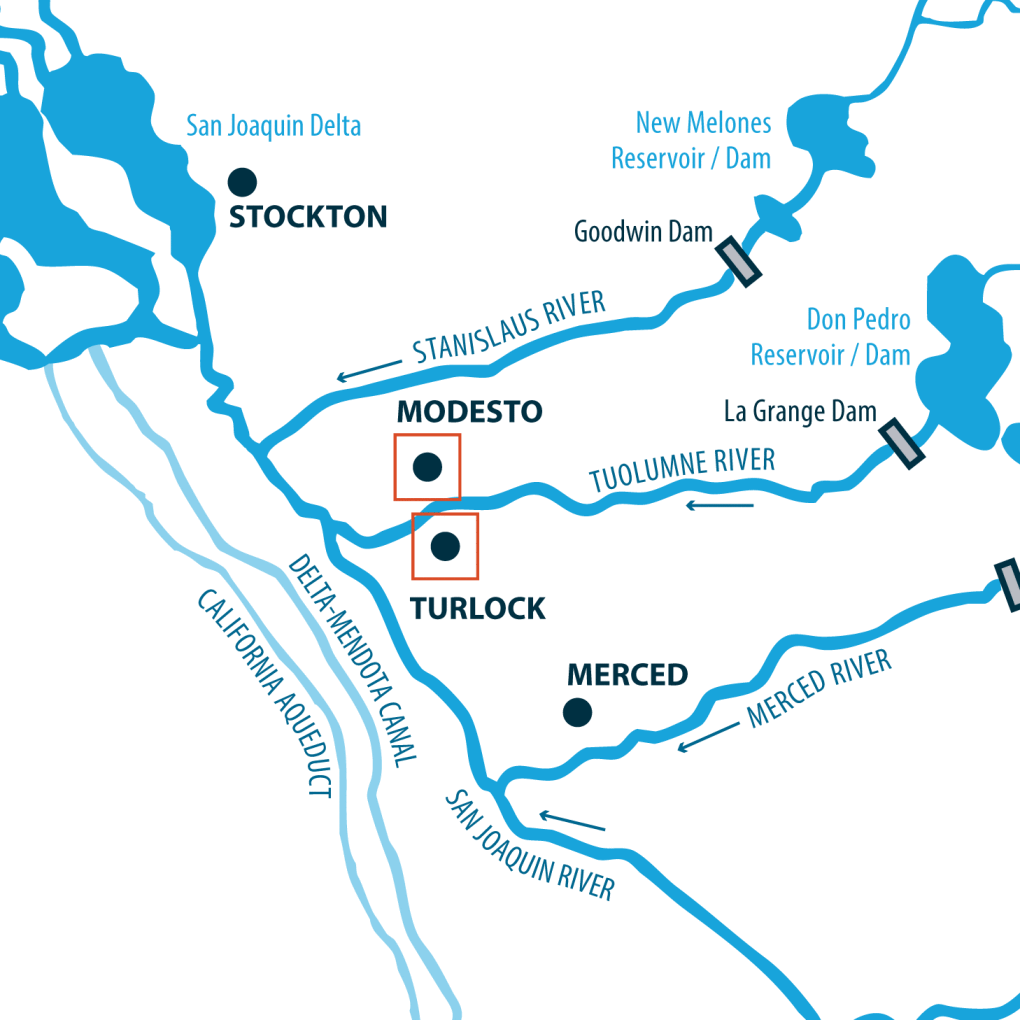
The State Water Resources Control Board held a public hearing recently to listen to input from the public on its Bay-Delta Water Quality Control Plan that would devastate famers around Modesto and Turlock.  Casey Hashimoto is the General Manager of the Turlock Irrigation District.  He was on hand to voice his doubts about the water board’s proposal.

Casey Hashimoto

Casey Hashimoto

“I just wanted to least give them a flavor of some of the big concerns that would impact TID in our region,” Hashimoto said.

The proposal calls for at least a 40 percent increase of unimpaired flows on the Tuolumne, Merced and Stanislaus rivers each year from February through June.  Hashimoto noted that one analysis indicates that if the proposed plan were in place during both the 2014 and 2015 irrigation seasons, Turlock farmers would have received zero water.  At the meeting, Hashimoto voiced some of the major concerns regarding the proposal.

“We’re an electric utility, so obviously the hydropower impacts us. … I only picked like three that are kind of high profile that really impact our area. Certainly, hydropower, greenhouse gas issues – there’s a whole number of things that we can go on and on about,” Hashimoto said.

The reason behind the specifics in the proposal is to provide “reasonable protection of fish and wildlife beneficial uses in the Watershed and its three eastside salmon-bearing tributaries” located in the Lower San Joaquin River.  However, the Water Board’s own research shows the average increase of Chinook salmon is a little more than one thousand fish each year. Because of this negligible increase, Hashimoto believes the proposal is neither reasonable nor beneficial.  It’s also important to note that most salmon, as much as 98 percent in some years, are being eaten by non-native species such as bass before they exit the Tuolumne River.

Hashimoto noted the types of commodities that will be negatively impacted if the Water Board’s plan comes into effect. “The biggest percentage wise of our 145,ooo irrigated acres is almonds right now, so it’s about a third of the acreage, but we also have a lot of forage crops … so we have corn, oats, alfalfa – that makes up a lot of big percentage of our acreage,” he said.

As a 30-year veteran of the District, Hashimoto was appointed to his current position in 2011 by the TID Board of Directors. Before becoming a part of the Turlock Irrigation District, Hashimoto was involved in a family farming operation along with other ag-related businesses, so he knows that family farms play a big role in Turlock agriculture.  “We have approximately 5,000 family farms in the district. And we’re not big corporate farms. We’re like less than 30 acres,” Hashimoto said.

2017-03-16T20:45:24-07:00January 20th, 2017|

Almond Irrigation Tips

 Leverage Winter Rain To Almond Irrigation

By Brian German, Associate Broadcaster

Earlier this month in Sacramento, the California Almond Board hosted their 44th annual Almond Conference.  As the largest event in the world for almond industry professionals, the conference offers the chance to connect with the people, the science and the products at the forefront of the global almond industry.

Terry Prichard is a retired Cooperative Extension Irrigation Water Management Specialist from UC Davis.  He was one of the speakers involved in the “Good Irrigation Water Management Practices” discussion.  Prichard noted the significance of choosing when to start irrigating in almond orchards.  “Irrigating too early when the soil profile is full can lead to all sorts of problems with saturated soils, disease problems and, in general, potential to lower production.” Prichard said.

The conference offered an opportunity to witness a live demo of a free tool available to all California almond growers that generates irrigation run-time schedules based on local evapotranspiration and information about your individual orchard and irrigation system.

Prichard mentioned that they have simplified the process into a single sheet of information for growers.  “What we’ve done is prepare a one-sheet method for utilizing your soil’s capabilities and then crossing that with the effective rainfall during the winter and how well it fills that profile, as well as how much effective rainfall falls in the spring,” Prichard said.

The one-sheet method essentially allows growers to delay irrigation by utilizing soil moisture that is stored, along with any effective rainfall in the spring, so growers can adjust their irrigation volume. “There are other ways to determine when to irrigate, but this was a method that is easy to use, requires no new technology and purchase, such as with a pressure chamber, which, that can be done. We intend to put another one pager together on using the pressure bomb,” Prichard said.

The one-sheet method Prichard and his team are continuing to develop should be applicable to growers throughout the state.  However, geography will play a significant role in how the method will be utilized.  “In areas of the state which receive a substantial amount of rainfall, it’s going to fill the profile. However, as you move farther south, that’s not the situation, and often times we do not fill the profile.  This is where we’re applying water during the off-season to charge the profile for the next season to start with the profile full of water, ” Prichard said.

The one-sheet method can also be used to accomplish leaching if there is excess salts contained in the water.  “You can leverage the winter’s rainfall and drip by irrigating when the trees are dormant so as to fill the wetted zone of the root zone so that any rainfall that occurs then the salts tend to move away from that root ball area that’s wetted and out away from the roots farther. That’s a very effective strategy when using drip irrigation,” Prichard said.

Prichard has an extensive background in soil salinity issues, crop response to limited water supplies and irrigation water management.  “No one wants to be behind on irrigation, but the goal of this particular one-pager is to keep that in check a bit until the soil has enough room in it to support the irrigation water that you’re applying without saturation,” Prichard said.


2016-12-30T13:00:22-08:00December 30th, 2016|

Water Diversion Plan for Fish, Part 2

Grober: It Won’t Help to Vilify People

Part 2 of 2-part Series 

By Patrick Cavanaugh, Farm News Director


California Ag Today conducted an extensive interview with Les Grober, assistant deputy director, State Water Resources Control Board (SWRCB, Water Board) Division of Water Rights. We published Part 1, “Water Board’s Point of View on Increasing San Joaquin River Flows,” on November 28, 2016.

http://yn2.000.myftpupload.com/increasing-san-joaquin-river-flows/

Grober explained the Water Board’s water diversion plan to adjust the flow objectives on the San Joaquin River to protect fish and wildlife. The plan, specifically, is to divert 40 percent of water flows from the Stanislaus, Tuolumne and Merced Rivers that flow into the lower San Joaquin River. 

California Ag Today: We asked Mr. Grober to explain how the Federal Water users on the Westside of Fresno and Kings Counties were granted a mere 5 percent allocation this year, and why many did not receive their full 5 percent.

Grober: The 5 percent allocation is due to the junior water rights of those growers and to the interconnections of so many things — priority of right, hydrologic conditions, and minimal protections or fish and wildlife. Anyone who thinks it’s all due to fish is simplifying a very complex situation. 

California Ag Today: Regarding the water hearings that are scheduled over the next few months, is the Water Board trying to give information to farmers and others would be affected by the decreased water should the Water Board’s proposal go through?

Grober: The ultimate goal is to make people even more prepared to provide comments to the Board at the scheduled hearings. It’s part of a public process where, if we did not get our economic figures right, we want [accurate] information from the stakeholder to make it right.

We thought we did a good job in an economic analysis on how we thought the proposed taking of 40 percent water would affect the communities and farmers. We clearly heard from many people who thought we did not do a good job, and my response is: Good, show us why, make a proposal and take it to the Water Board hearings, and then we can adjust it.

California Ag today: The Water Board has a 3,100-page report all about saving the salmon.

Grober: The reason we have a big report is because we are making a proposal and we’ve shown our work. Although it is work for people to look at it and review it, we have tried to make it easy so that people can see if we have made mistakes, if there are things that are left out or if we have made an incorrect assumption. That’s why we’ve shared it with everybody and here’s your opportunity for setting us straight.

It won’t help to vilify different people who are making good use of the water or to vilify or disparage the implementation of our laws and what we are required to do. We have a great process I think, as hard as it is, a public process where we can work these things out in the open, just to use it and deal with each other professionally.  
-Les Grober, assistant deputy director, State Water Resources Control Board (SWRCB, Water Board) Division of Water Rights


California Ag Today: We are sure you are getting a lot of information from farmers and city leaders about this not being a good use of the water.

Grober: These problems are not so simple that they could be reduced to a sound bite. I think we would have solved the salmon problems by now, but because we are in the drought situation, we are dealing with a precious resource, which is water. Everybody wants the water but there’s not enough to do all the things we would like to do with it. 

California Ag Today: But there are many people in California who feel that more water for fish instead of farmers is reprehensible.

Citrus Tree devastated by drought.

Citrus Tree devastated by drought.

Grober: It won’t help to vilify different people who are making good use of the water or to vilify or disparage the implementation of our laws and what we are required to do. We have a great process I think, as hard as it is, a public process where we can work these things out in the open, just to use it and deal with each other professionally. 

California Ag Today: But we’ve heard from experts that have been studying this, that the increased flows have not really helped these species. Do you have proof that they have?

Grober: It’s hard to show proof one way or the other because recently we have not increased flows to see what effect it would have. That seems to be a notion that is out there, that we have somehow done something to increase flows in recent years, and that’s simply not the case.

If anything, flows have gone down. And in the recent drought years, as I said, even the minimal flows that were required were adjusted downward. You would have to show me that evidence that flows have gone up and there has been no response to those higher flows. I do not believe that there is any.

California Ag Today: So, the Water Board wants 40 percent of unimpaired flows?

Grober: When we say the requirement is 30 percent to 50 percent of unimpaired flows, it is 30 percent to 50 percent of that amount, which means just the opposite. It means that 50 to 70 percent of [flows] for February through June would be available for consumptive use.

That is frequently misunderstood and turned around. That is still from February through June, so it means more than 50 to 70 percent since other times of the year this water is available for consumptive use.

California Ag Today: Is the Water Board looking at the fact that if the water is needed for the species, it is going to force these growers to use more groundwater? That is a direction in which we do not want to go, especially in a region that has not yet had critical overdrafts. How does the Water Board look at that domino effect forced on these growers in order to survive, stay in business and produce the food in this major Ag production region?

Grober: Implementing that 30 to 50 percent of unimpaired flows would mean less surface water available for diversion. So our analysis of the potential environmental effects and overall effects of the program, based on recent drought information and other information, shows we would see increased groundwater pumping.

California Ag Today: Is the increased pumping weighted at all in the proposal, because overdraft groundwater pumping is not sustainable?

Grober: By our analysis, the area is already in overdraft.

California Ag Today: What? Why would there be overdraft pumping in an area that has great irrigation districts such as Modesto and Oakdale Irrigation Districts delivering surface water? We did not think growers in those districts would be overdrafting.

Grober: Sure. Within those irrigation districts themselves, they are not overdrafting. That’s why the analysis we do goes into that level of detail. The irrigation districts that already have a source of surface water actually apply much more water than they need just for the crop, so they are recharging groundwater within those districts, and even with this proposal, would continue to recharge groundwater. It is all those areas outside of those districts that don’t have access to surface water that are pumping groundwater.

California Ag Today: There is a lot more pumping of groundwater on the east side near the foothills.

Grober: Based on the information that we have, the total area — not just the districts that have access to surface water — but the total area, is already overdrafting groundwater. And there are many areas on the east side of these districts now, up into areas that were previously not irrigated, converting now to orchard crops. So with the information we have, there are large areas of production using water from the basin. The entire area is to some extent pumping more groundwater than there is recharge.

California Ag Today: We’ve been concern about this.

Grober: That’s why the Sustainable Groundwater Management Act (SGMA) is going to be good, because the local areas are going to have to get on top of that information and on top of the management.

2016-11-30T10:25:24-08:00November 29th, 2016|
Go to Top