CDFA’s Karen Ross: Water and Labor are Big Issues for California

CDFA Secretary Says State has High Water and Labor Standards

By Patrick Cavanaugh, Farm News Director

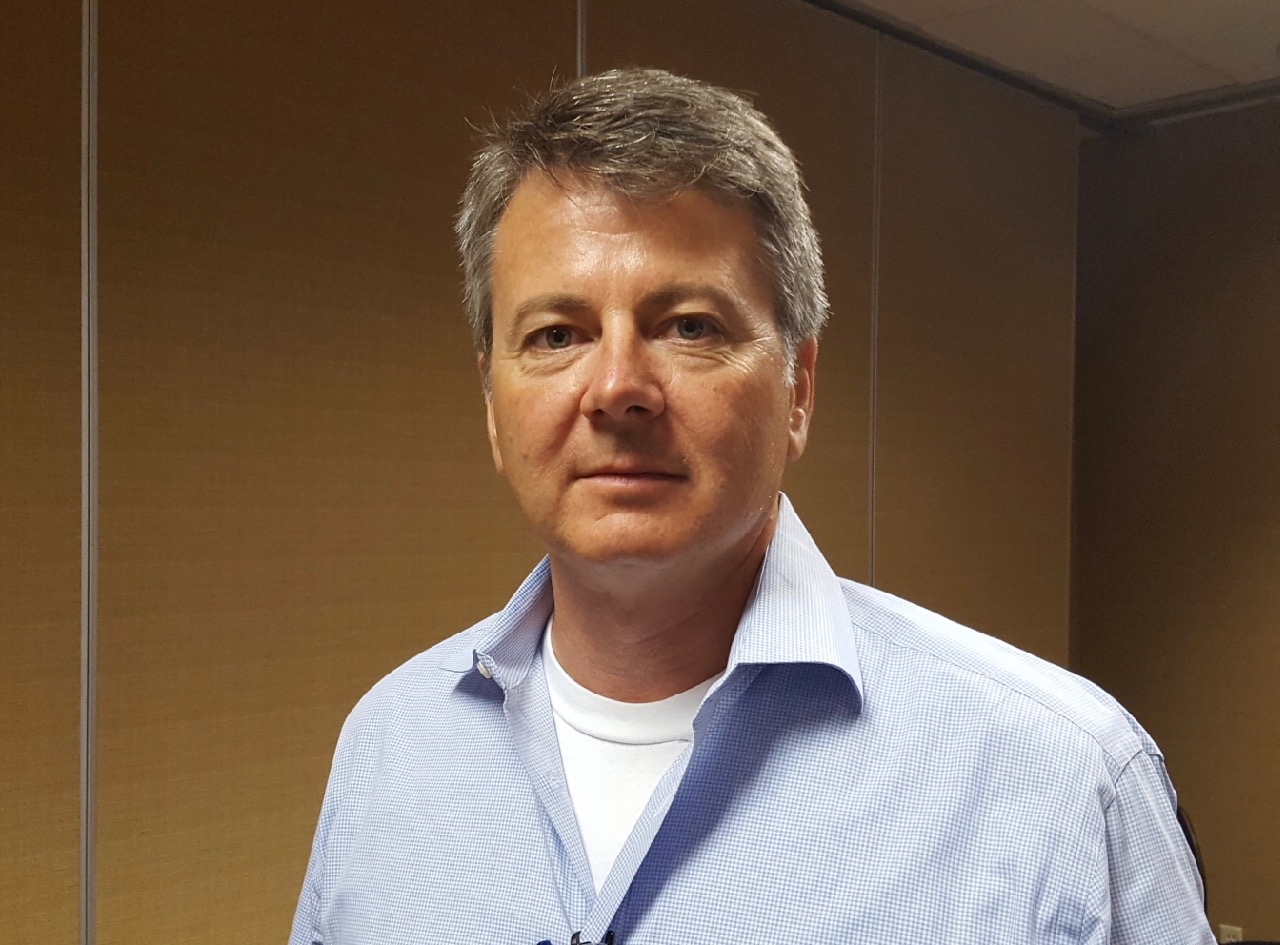
Karen Ross, secretary of the California Department of Food and Agriculture, spoke to California Ag Today recently about the two big challenges regarding California agriculture.

“[The] two biggest challenges we have are labor and water. Some days, labor’s number one and water’s number two, but they’re both always right up there,” she said.

Karen Ross

Ross spoke at the recent California Citrus Conference in Visalia.

“I think for the future, water is very key to how we’ll grow. I think it’s important for people to think about how we farm in this state,” she said. “We farm to extremely high environmental standards, and extremely high labor standards. Those are responsibilities that we have taken on. I certainly hope that people will continue to buy California to reward that kind of stewardship, because it comes with a price.”

Ross noted that investment is key with labor, automation and water.

“We just have to get through a couple of really big, challenging issues,” she explained. “Automation’s going to definitely be more of our future, and as we invest in that automation, we have to make sure we’re concurrently investing in the workforce skills development to go with it, because they will be different jobs.”

“When it comes to water, the renewed focus on how do we do intentional groundwater recharge as part of making the sustainable groundwater management actually work in our basins is going to be an exciting opportunity for us,” she said.
2017-10-19T16:00:01-07:00October 19th, 2017|

Farmers Frustrated Over SGMA

CA Department of Water Resources Rolls Out SGMA Regulations at Meeting

By Patrick Cavanaugh, Farm News Director

The California Department of Water Resources held a recent workshop in Clovis, CA, to lay out the key components and regulations for the Sustainable Groundwater Management Act, known as SGMA. It’s thought that SGMA could forever change the face of agriculture in the central San Joaquin Valley, as it will limit the amount of groundwater that can be pumped.

turlock irrigation canal

If surface water was available for growers, the SGMA law would not have been created.

This entire approach of the Department of Water Resources is not sitting well with most farmers. Keith Freitas, who farms lemons on the east side of Fresno County, was at that recent workshop. “How can you call a program fair, but the stakeholders you bring to the table, before they enter the room to negotiate the deal, you cut their legs off?” Freitas asked.

“That’s basically what we have. We have a foot race here, but our legs have been cut off before the race even starts,” he said

And here’s the problem – there’s six deadly sins: lowering ground water levels, reducing ground water storage, increasing sea water intrusion, causing unreasonable water quality degradation, causing land subsidence and depleting surface water supplies that would have a significant and unreasonable adverse impact on beneficial uses of the surface water.

“The reason there’s six deadly sins is ’cause they’re all about the sins of the farmer. Not one of those sins is environmental,” Freitas said. “You think about it. We already have a subsidence and they know it, they don’t blame the environmentalists for subsidence, they blame farming.”

Farmers feel that if environmental water restrictions were not in place, there would be no overdraft of ground water or subsidence.

“How do you think we’re going to sustain overdraft pumping,” asked Freitas, “if they don’t have surface water to recharge the ground basin?”

“My perspective is that like Westlands Water District, who decided to turn down the twin tunnels – that decision was made I think in parallel to the overall consensus of farmers saying that if it’s going to be this way, if these are the rules that you’re going to set and these are the game rules, then we have no choice but to fight back,” Freitas said.

2017-09-29T16:22:43-07:00September 29th, 2017|

Humboldt State Looks for Entrepreneurs to Save Energy & Water

BlueTechValley’s Northern-Most Hub Seeks Innovation

By Patrick Cavanaugh, Farm News Director

Humboldt State University is among the northern-most hubs of the BlueTechValley Innovation Cluster. It’s part of the interconnection of multiple incubators, or entrepreneurship programs spanning the state serving 39 counties. The solid goal of the BlueTechValley initiative was established at Fresno State, and it’s all about managing water and energy resources in agriculture and other industries.

Lonny Grafman

Lonny Grafman teaches in the Environmental Resources and Engineering Department at Humboldt State, and he’s also the Humboldt State managing director of the BlueTechValley hub there.

“It’s a new program, so that’s pretty exciting,” Grafman said. “BlueTechValley has had a lot of success in Fresno, and what we are is their far northern Californian north coast arm. So, we’re seeking to have the type of success that they’ve had in Fresno,” Grafman said. “Specifically, we’re looking for entrepreneurs, inventors, businesses that are working on agriculture, energy and water efficiency projects.”

The university is looking for entrepreneurs and startups that can address saving water and energy.

“Any start up that has the chance of saving California electric rate payers’ money, we want to talk to them and see if we have resources that could help them to bring their product to market. That is that sweet spot that we’re trying to fill, “Grafman said.

BlueTechValley’s all about entrepreneurs, startups, computer hackers.

“It can be an energy project, it can be an agriculture project, it can be a water project, and it can be something at the nexus of all those things. We love those types of projects,” Grafman said. “As long as we can bring it back to how it saves California rate payers’ money, then we’re excited to explore all types of innovative ideas.


2021-05-12T11:05:15-07:00September 27th, 2017|

Water Reductions Would Devastate Valley

Big Study Shows Loss to Central Valley Economy with Loss of Water

By Patrick Cavanaugh. Farm News Director

A new study entitled, “The Implications of Agricultural Water for the Central Valley,” by Dr. Michael Shires of Pepperdine University, shows the economic implications of water in the Central Valley, and the potential outcome of continued water reductions in agriculture.

Agriculture is a major part of California’s economy, and this study illustrates both the outcome of increased water allocation and the potential growth that would come with it, or what could happen to the economy if this decline continues. This continued loss of water would result in a huge increase in the unemployment rate. Fresno would require 6.2 billion in solar farm investment annually to replace agricultural jobs that would be lost.

Johnny Amaral is the Deputy General Manager of External Affairs of the Westlands Water District. We spoke with him about Dr. Shire’s study, and what it means for the Central Valley. Shires is an economics professor at Pepperdine.

“He’s been involved for years, and has done economic reports and studies for other organizations and other groups with a particular interest in how public policy affects the economy and certain industries,” Amaral said. “And a couple of years ago, we started working with Dr. Shires in this debate over public policy as it relates to water.”

A lot of false information circulates about water use and agriculture. Most of this misinformation leads to a general negative opinion about agriculture, especially when it comes to water use.

“We’re constantly dealing with misinformation, deliberate misinformation about water policy, about agriculture,” Amaral said.

“You hear all the buzz words all the time about ag uses 80% of the water, which is not true. We’re constantly dealing with misinformation, so we thought it would make sense to have a document put together, a study done to show just what agriculture means to the Central Valley and to the state,” Amaral said.

2021-05-12T11:05:15-07:00September 18th, 2017|

Dave Cogdill Will Be Remembered at Temperance Flat Dam

Dave Cogdill Remembered For His Water Priorities

By Jessica Theisman, Associate Editor

Dave Cogdill, a former state senator (2006 to December 2010) and the California State Senate Republican Leader from 2008-2009, has passed away at the age of 66. Cogdill was instrumental in getting Prop 1 through the state House and Senate and onto the ballot. Mario Santoyo, executive director of the San Joaquin Valley Water Infrastructure Authority, shared his thoughts on the late Dave Cogdill and his influence on California water.

The late Dave Cogdill

“Many thank Cogdill for the success that Temperance Flat Dam has been seeing,” Santoyo said. “He is the guy who made this happen, yet not enough credit has been given to him. Those of us who have been involved know what he contributed.”

“Senator Cogdill initiated some water bonds for water storage when he was in the Assembly. He wrote the water bond in 2009 and facilitated getting it across the table with both Republicans and Democrats. I can safely say Senator David Cogdill was a consistently strong proponent for water service storage and the one individual who had the most to do with the ability to have Temperance Flat built,” Santoyo said.

“Lots of folks could be characterized as being critically helpful; but if it wasn’t for Cogdill, nothing would have happened in terms of developing big water storage,” Santoyo said. “Many wish to memorialize him at Temperance Flat Dam, whether it is a plaque or some portion of it being called Cogdill, because he deserves it”.

OF NOTE:

Cogdill was awarded the Profile in Courage Award from the John F. Kennedy Library Foundation for his actions during the 2009 state budget fight for joining Governor Schwarzenegger in putting the people’s needs above party.

2017-09-11T16:11:56-07:00September 11th, 2017|

SGMA Workshop Features GSA Updates

SGMA Workshop Sept. 20

Clovis Veterans Memorial District

Join the Department of Water Resources (DWR) staff for an interactive workshop to discuss DWR Sustainable Groundwater Management Act (SGMA) implementation efforts and key components of Groundwater Sustainability Plan (GSP) development.

The workshop will feature groundwater sustainability agency (GSA) formation updates, assistance & engagement information; guidance, data, and tools overviews; interactive forums on Groundwater Sustainability Plan development; and information booths on the Proposition 1 Sustainable Groundwater Planning Grant Program (SGWP).

Don’t miss the opportunity to meet DWR’s SGMA Program and Region Office Staff! Information booths will open at 12:30 P.M.

The workshop will be held on September 20, 2017, from 1 PM to 5 PM at the Clovis Veterans Memorial District, 808 Fourth Street, Clovis, CA 93612.

Please RSVP for the workshop by clicking here.  Registration is not required but is appreciated to ensure suitable accommodations for all attendees. This workshop is free of charge and is open to all interested persons and the public.

2017-09-08T16:56:14-07:00September 8th, 2017|

BREAKING NEWS: John Duarte Settles TODAY Prior to Court Proceedings

By Patrick Cavanaugh, Farm News Director


Northern California farmer John Duarte spent years fighting the federal government after being fined for routine plowing on his wheat field which included protected wetlands. He attracted a nationwide army of conservative supporters who saw it as government overreach and hoped the Trump administration would order federal officials to back off.

But just before his trial was set to start Tuesday in U.S. District Court in Sacramento, Duarte settled, admitting no liability, but agreeing to pay $330,000 in civil penalty fines and another $770,000 for “compensatory mitigation,” in vernal pool mitigation credits.  

In a press release TODAY by John Duarte and Pacific Legal Foundation (PLF), John Duarte said, “This has been a difficult decision for me, my family, and the entire company, and we have come to it reluctantly. But given the risks posed by further trial on the government’s request for up to $45 million in penalties, and the catastrophic impact that any significant fraction of that would have on our business, our hundreds of employees, our customers and suppliers, and all the members of my family, this was the best action I could take to protect those for whom I am responsible.”

“John would have preferred to see this case through to trial and appealed the court’s liability ruling, which holds that plowing a field requires federal permission — despite the clear text of the Clean Water Act and regulations to the contrary,” said Tony Francois, senior attorney, PLF.  “John and his counsel remain concerned that legal liability for farming without federal permission undermines the clear protections that the Clean Water Act affords to farming and poses a significant ongoing threat to farmers across the nation.”

The court will hold a hearing in approximately 45 days to approve the settlement.  In the meantime, the trial that was to begin today has been canceled.

2017-08-15T19:24:36-07:00August 15th, 2017|

Embattled Farmer John Duarte Defends Farming in Federal Court

Farmer Must Defend Plowing His Wheat Field

By Patrick Cavanaugh, Farm News Director

John Duarte, a California farmer who gained national attention after the United States Army Corps of Engineers (USACE or Army Corps) sued him for plowing his Tehama County wheat field, will defend himself in a federal courthouse in Sacramento on Tuesday, August 15.

“Agriculture is at a very dire crossroads right now,” said Duarte, imploring all farming stakeholders and food consumers across the country “to get loud with their Senators, Representatives and USACE. And if you know how to get ahold of President Trump, give him a call.”

In February 2013, with no warning or opportunity to discuss the matter, USACE sent Duarte a cease and desist letter to suspend farming operations, claiming that he had illegally filled wetlands on his wheat field simply by plowing it.

“I am being prosecuted for planting wheat in a wheat field during a global food crisis,” Duarte said. “They’re claiming I should have pulled a [Clean Water Act] permit that nobody has ever pulled and conducted practices that nobody has ever conducted to grow wheat.”

Duarte who is also the owner of Duarte Nursery, argues that the Army Corps violated his constitutional right to due process. He said the agency came down on him hard and never gave him an opportunity to defend himself against the accusations before levying the fine. Duarte now faces $2.8 million in government fines.

“The Army Corps of Engineers is prosecuting us,” Duarte said, “and the Army Corps does not even have subject matter jurisdiction to conduct this prosecution.”

In a June 14, 2017, news release, Tony Francois, senior attorney for Pacific Legal Foundation, explained, “Prosecutors and bureaucrats are seeking to establish, for the first time, that farmers with seasonal puddles need a federal wetlands permit in order to plow their own private land—even though plowing is exempt from Clean Water Act (CWA) coverage.”

Duarte believes if he were to lose the upcoming trial, it would change the way farmers in America farm. “This battle may never be resurrected in court. Taking this battle to the Supreme Court on several fronts is the only way to give farmers the long-term security they need, the right to farm and property rights protections, to deliver food security to America.”

The American Farm Bureau Federation, the California Farm Bureau Federation, the farm bureau in Duarte’s backyard and farm bureaus across the country are behind him.

“The Butte County Farm Bureau has 1065 members,” Duarte stated, “and they donated a check for $10,650 to the Duarte Defense Fund at California Farm Bureau Federation. That’s $10 a member! Thanks to the challenge from Biggs, CA, farmer, Clark Becker (President of the Butte County Farm Bureau) that defense fund has already collected over $100,000 in support of our lawsuit. We are hoping to collect hundreds of thousands more.”

Duarte said, “Although this lawsuit for planting wheat in a wheat field has gained a lot of attention, we need more help to fight it.”

While Duarte is grateful for the political support in favor of Duarte Nursery’s position in this wetlands prosecution, he wants to settle this case before trial. “We need complete rights to appeal, and if necessary, to take it to the Supreme Court of the United States. We must protect food security as well as farmers’ right to farm.”

“My greatest nightmare is if Duarte Nursery is forced into settling this case without the right to appeal. If we cannot get such a release, American farming could be oppressed by federal agencies into the future, and there won’t be another fool to follow us and stand up to them again.”

“Any farmer can see the kind of abuse—the misstatements, the falsehoods, the misquoting of laws that the Department of Justice is using in this case against us—and the $2.5 to $3 million we’re spending to fight this battle. There won’t be another family to come along and fight like this in the future.”

2017-09-02T23:46:02-07:00August 12th, 2017|

Supporting Temperance Flat to Increase Groundwater Recharge

Building Above Ground Water Storage Enables Groundwater Recharge

By Laurie Greene, Founding Editor

Dramatically helping to recharge groundwater storage is one of the major benefits of the proposal to build Temperance Flat Dam behind Friant Dam, located to the north and east of Fresno. The new dam would triple the storage that is currently available with Friant Dam. Mario Santoyo, the executive director of the San Joaquin Water Authority, is helping the organization prepare the package to submit to the Water Commission by the August 14 deadline.

“We will be making timed releases to various water districts and amenities that will have groundwater recharging basins,” Santoyo said. “First, we need storage and then some time to move above ground water to underground storage. This is a physics necessity and directly counters those who argue we should not build above ground infrastructure if we need only underground storage. Well, if you don’t have above ground water storage, you ain’t putting any below. It is as simple as that.”

Water in Friant-Kern Canal

Water in Friant-Kern Canal

“There are two water conveyances from Friant and [the proposed] Temperance Flat Dams: the Friant-Kern Canal – the longest of the two primary canals – and the Madera Canal. Friant moves water south to Bakersfield, and Madera conveys it north to Chowchilla.”

“We will have one of the strongest applications to receive monies,” said Santoyo, assuring that the water authority will receive the package on time.

Now this is important,” Santoyo stressed. “A new video, ‘Build Temperance Flat,’ is now on YouTube. The video aims to educate Californians on the importance of building Temperance Flat Dam.” Santoyo urges those who are on social media to send the URL: https://www.youtube.com/watch?v=f30o_dQNmn8  “to as many people as you can!”

2017-08-04T16:16:06-07:00August 4th, 2017|

Sharing Secrets to a Successful Bowl of Cherries

Weather and Pruning Make Life a Bowl of Cherries

By Laurie Greene, Founding Editor

Clark Goehring, a third generation Kern County farmer, produces cherries and almonds. He summarized his cherry harvested as “good compared to the other years when we have had rain. Some people in our area still had rain during harvest, but we were able to harvest and bring our cherries to market in good condition.”cherry tree

“Of course, it rained a lot this winter and spring, but you do not want rain when cherries are maturing on the tree; they don’t like rain.”

Goehring explained that when it rains beyond the point when cherries start coloring, they split, making them unmarketable. “But while it may take some rained-on cherries off the market, the price of the marketable fruit goes up,” he said, benefiting those growers who had a quality crop, like him.

Goehring’s farm workers train the cherry trees to keep them low—approximately 8 feet tall. “We have tried to have them bush out instead of being more of a central leader. Actually, it’s called Spanish Bush style or, in modified form, KGB.”

Kym Green Bush designed the KGB training method in Australia to use multiple leaders and have them fruit on the leaders themselves. KGB simplifies pruning so less experienced farm workers can learn the skill more easily. The trees are replenished every five years.

Goehring said the method saves money on the farm, cuts labor and increases workers’ safety because it requires no ladders and the harvest is quicker. Harvesting without ladders also gives Goehring an advantage of attracting farm labor over other orchards that require ladders.

“In California, if farm workers have their choice of picking your cherries without using ladders, which is usually piecework, or someone else’s crop with ladders, they are going to want to come to you,” he explained.

2017-08-02T16:14:04-07:00August 2nd, 2017|
Go to Top