Salinas Valley SGMA Agency Progresses

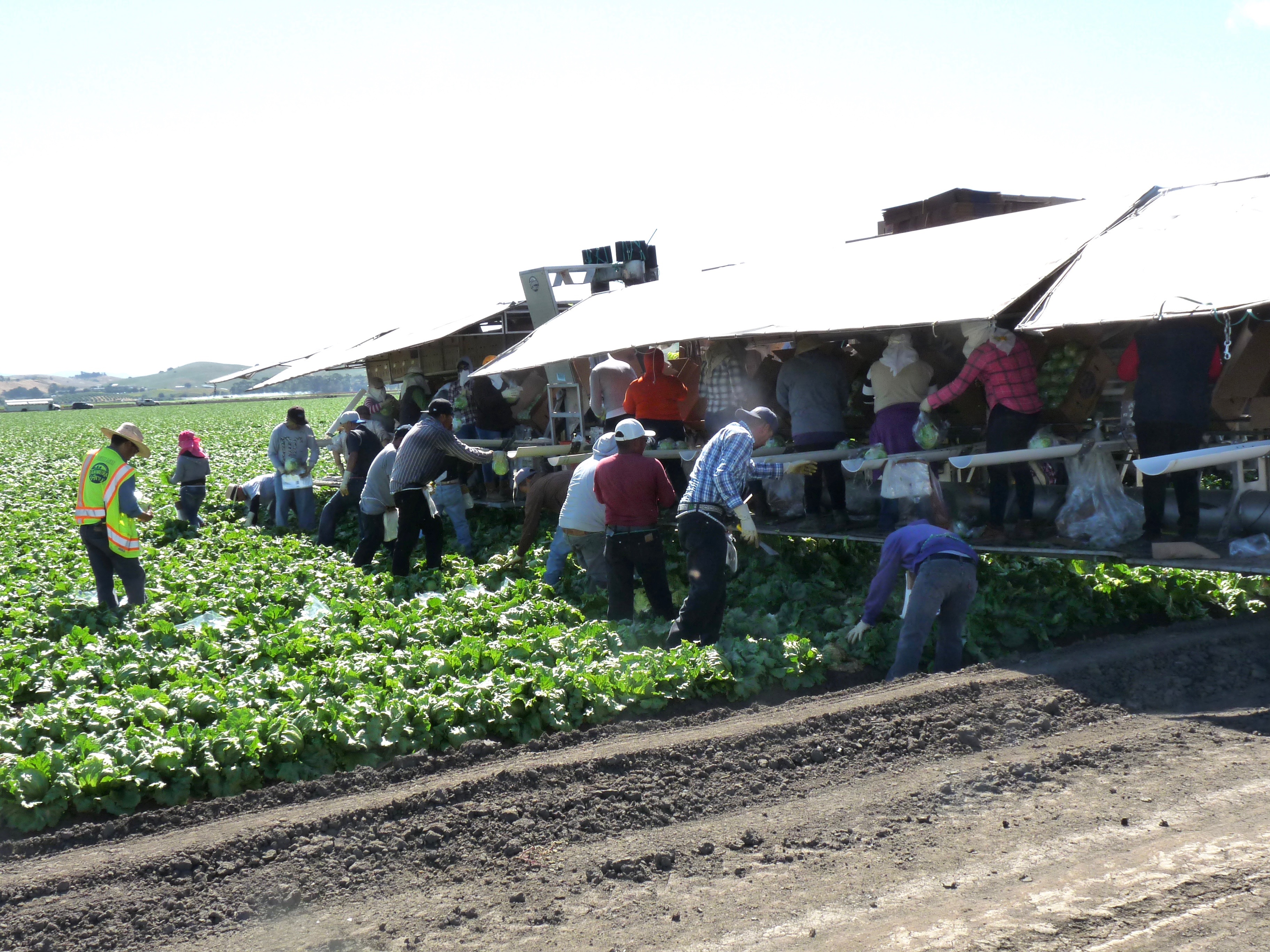
Salinas Valley SGMA Agency Development Makes Headway

By Patrick Cavanaugh, Farm News Director


The Sustainable Groundwater Management Act (SGMA) empowers local agencies to adopt groundwater management plans that are customized to the resources and needs of their communities. All such designated groundwater sustainability agencies (GSAs) in the State’s high- and medium-priority groundwater basins and subbasins must be identified by June 30, 2017.


A GSA is responsible for developing and implementing a groundwater sustainability plan (GSP) to meet the sustainability goal of the basin to ensure that it is operated within its sustainable yield, without causing undesirable results. The GSP Emergency Regulations for evaluating GSPs, the implementation of GSPs, and coordination agreements were adopted by DWR and approved by the California Water Commission on May 18, 2016.


“We’re coming down to the wire pretty quickly,” commented Norm Groot, executive director of the Monterey County Farm Bureau in Salinas. “We’re moving forward with our SGMA implementation and moving closer to a proposal for our groundwater sustainability agency. We hope to have something presentable to the public entities sometime this fall.”


“We are meeting with stakeholders in the Valley and hopefully we can move forward with some of the solidification of the proposals and get into the nitty-gritty details of how to work that particular agency through the process,” Groot continued. “We have options to either take an agency that we have here in our county and rework it legislatively, or perhaps create a brand new agency. It just depends on the complexities of that particular issue based on the proposal that we come up with,” said Groot.


Groot noted local agricultural leaders have proposals on the table and various different options are under consideration. “The complexity of reworking an existing agency through a legislative process is rather daunting,” explained Groot. “The complexity of creating a new agency from the scratch is also very daunting and probably very expensive.”


Certainly any of these proposals under scrutiny will not be approved overnight. “It’s going to take some thought; some time, effort, and energy; and definitely some money to do,” said Groot.

Resources:

2016-09-08T08:02:22-07:00September 8th, 2016|

Tulare County Ag is Down But Strong

Tulare County Annual Crop Report is Down But Still Strong


By Patrick Cavanaugh, Farm News Director


The numbers are in for the 2015 Tulare County Annual Crop and Livestock Report.  Marilyn Kinoshita, Agricultural Commissioner/Sealer of Tulare County, reported, “We had an overall value of $6.9 billion, compared to last year, which was more than $8 billion,” which means the County led the nation in total crop value and dairy production, despite a decrease of nearly 14% in one year.

Tulare County’s top ten crops [crop value] in 2015 were:

  1. Milk
  2. Cattle & Calves
  3. Oranges- Navels & Valencias
  4. Grapes
  5. Almonds Meats & Hulls
  6. Tangerines – Fresh
  7. Corn – Grain & Silage
  8. Silage – Small Grain
  9. Pistachio Nuts
  10. Walnuts

Kinoshita explained, “Dairy is our number one industry here. Our milk production was off a little bit. We have fewer dairies in business now because of the low milk prices. Anytime your fresh market milk is off, that’s going to affect our overall value. A good 2/3 of that billion-dollar decrease came from the dairy industry. The price was low the entire year, as opposed to the year before.”

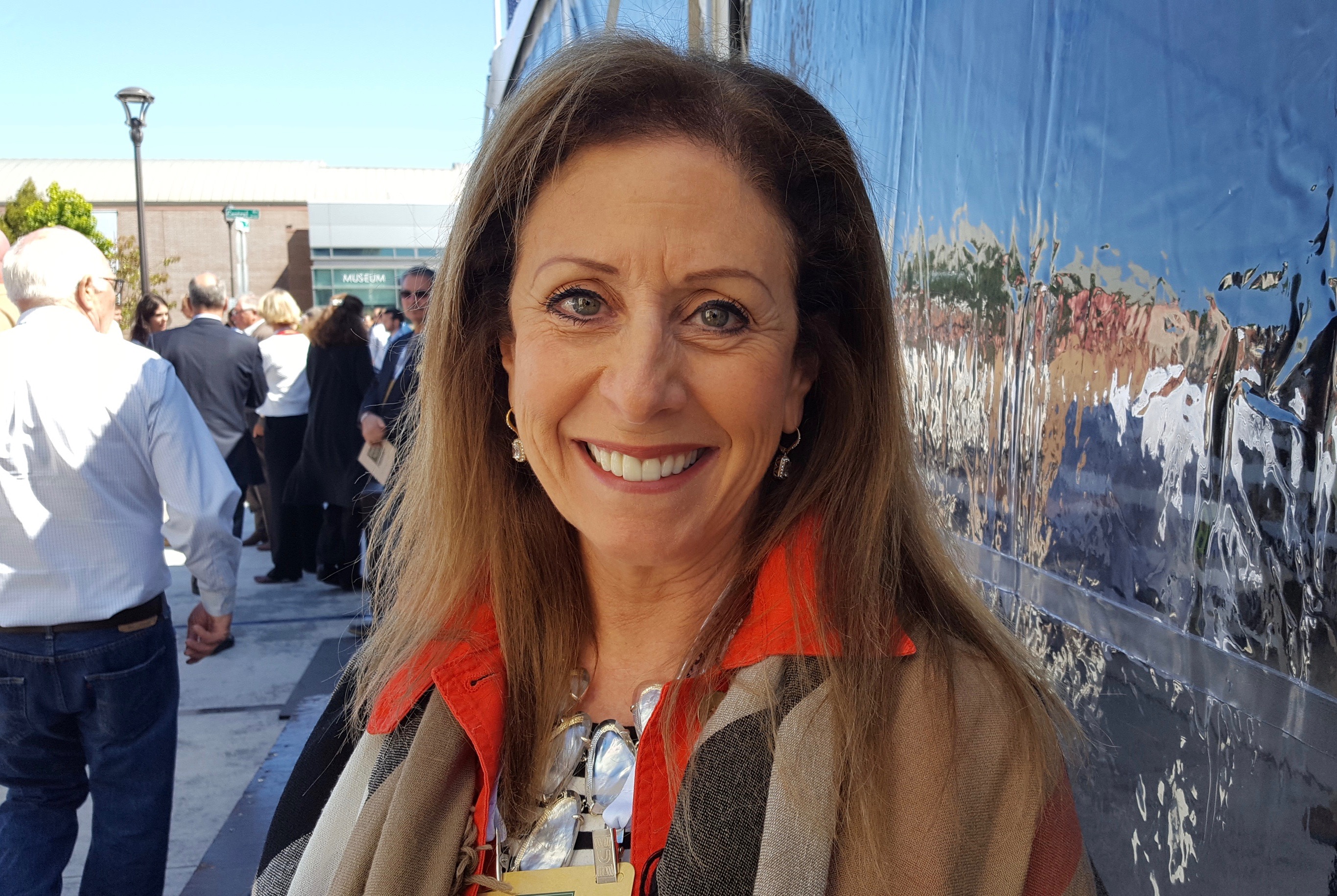
Marilyn Kinoshita, agricultural commissioner, Tulare County

Marilyn Kinoshita, Tulare County Ag Commissioner


Thus far, the reported 2015 county crop reports in the Central Valley are down this year. “Fresno County, for instance, was down 6.5% off its record $7 billion in 2014,” Kinoshita said.


“It has a lot to do with low water deliveries in Fresno and Tulare Counties,” she continued. “The smaller the water deliveries, the more efficient those growers have to be with that water. Anytime you’re pumping water out of the ground, it’s terribly expensive,” she noted.


“Some of our growers have had to decide, ‘All right, I’ve got this much water; I’m going to keep those blocks alive and I’m going to push an older block that isn’t producing as well.’ The returns aren’t as good as some of the newer plantings,” said Kinoshita.


Despite all of that, Kinoshita said agriculture does sit at the head of the table in Tulare County. “Yes, and we need a successful Ag industry to thrive here,” she said.


To view a video of the interview, click HERE.


Tricia Stever Blattler, executive director of the Tulare County Farm Bureau, noted the crop report demonstrates the strength of the agricultural industry. “I think every year when this crop report comes out, it is always a testament to the resiliency of this industry. This industry takes hard knocks, gets knocked down, then steps right back up to the plate and keeps swinging,” Blattler said. “The agricultural sector has a lot of outside challenges that impact the number that we see reported every year.”


Tricia Stever Blattler

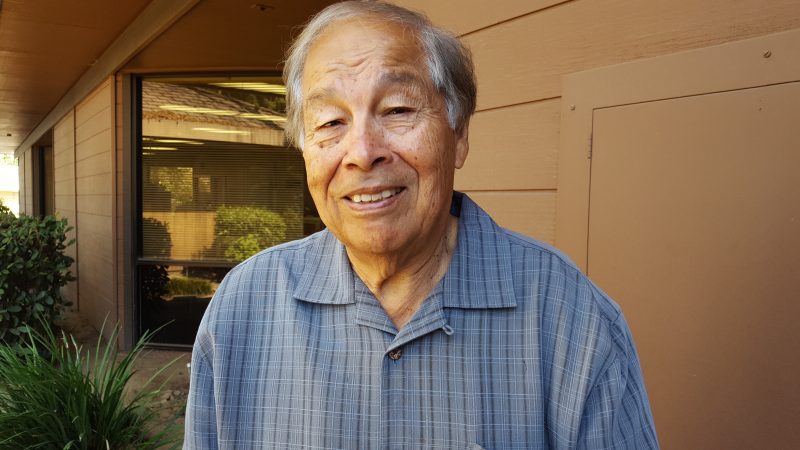
Tricia Stever Blattler, executive director , Tulare County Farm Bureau

Blattler acknowledged the crop value numbers do not reflect net revenue for growers. “It’s always really important for our listeners to know that the crop value is a gross revenue number. When our Ag Commissioner steps to the microphone and speaks to our Board of Supervisors about this report each year, she’s reflecting values that are attributed to all of the gross revenue, and it’s not only the field value,” Blattler said.


“That gross number reported each year also represents our packing houses, our milk processing facilities—the creameries, the butter plants—the packing shedsall those other parts of our industry that [create] value in our industry,” said Blattler.


Blattler noted up or down, it’s all about the resiliency of farmers. “The industry has its years that are really blockbuster and it has its years when it falls back and we see a reduction acreage. We see reductions in surface water deliveries. The drought is still certainly playing a significant role in the numbers we’re seeing,” she explained.


With regard to surface water, Tulare County is in a bit of a unique position. “As an Eastside county, some of our water deliveries are not as subject to the situation that the Westside is in. In the same sense, we have some significant cutbacks that have been attributed to the San Joaquin River’s restoration and the biological opinions in the Delta—all have had an impact on the Central San Joaquin Valley [water] deliveries regardless of whether you’re Eastside or Westside.


“Also, as the exchange contractors either take greater deliveries of water or give up water, that also impacts the amount available to Eastside growers here in Tulare County,” she said.


In summary, 2015 Tulare Crop Report covers more than 120 different commodities, 45 of which have a gross value in excess of $1 million. Although individual commodities may experience difficulties from year to year, Tulare County continues to produce high quality crops that provide food and fiber to more than 90 countries worldwide.


Featured photo: Tulare County 2015 Crop Report

2021-05-12T11:17:12-07:00August 31st, 2016|

Nisei Farmers League and African American Farmers of Calif in Sacramento TODAY to Oppose AB 1066

Nisei Farmers League and African American Farmers of California Discuss Disastrous AB 1066 in Sacramento Today


EDITOR’S NOTE: SEE TEDX TALK VIDEO BELOW OF WILL SCOTT, JR., PRESIDENT OF AFRICAN AMERICAN FARMERS OF CALIFORNIA.


TODAY, Manuel Cunha Jr., president of the Nisei Farmers League and Will Scott, Jr., president of the African American Farmers of California are meeting in Sacramento with members of the California Assembly to explain the disastrous consequences of AB 1066, referred to as Agricultural workers: wages, hours, and working conditions, on small and minority farmers.

African American Farmers of California logo


The effects of this legislation, particularly the Phase-In Overtime for Agricultural Workers Act of 2016,  will be detrimental not only to the farmworker who counts on the extra hours, but to the farmer who, with the increasing costs of regulations and the lack of water, will be forced to cut back on crops and their workforce, according to their joint press release.


Manuel Cunha, Jr.

Manuel Cunha, Jr., president, Nisei Farmers League

“The small and minority farmer will be adversely affected by this ill-conceived legislation,” said Manuel Cunha Jr. “The small farmer works hand in hand with their workforce in the fields and [is] in a better position —with direct input from the workers—to determine schedules rather than politicians in Sacramento looking for a soundbite,” he explained. “Without meeting with our small and minority farmers and farmworkers, these politicians pass legislation that will cost our workforce money, our farmers crops, and the residents of California the fresh fruits and vegetables they enjoy everyday.”


Both Manuel Cunha Jr. and Will Scott believe the Legislators need to consider the small and minority farmers when casting their votes. “We are confident that after we meet with the Assembly members,” said Will Scott, Jr., they will understand how harmful this legislation is to our farmers and farmworkers. It is our hope that by educating the members, they will understand the importance of this bill and vote No on AB 1066.”


Nisei Farmers League

The League continues to inform grower members about ever changing regulations and policies providing legal assistance for labor and workplace related issues. Our leadership and staff maintains a close working relationship with local, state and federal agencies and legislators to assure grower interests are adequately understood and defended.

The NFL also collaborates with other grower and agricultural organizations in both California and other states to help provide a powerful, unified voice for the agricultural commNisei Farmers League logounity.

Grower members are kept informed through meetings, seminars, newsletters and special bulletins.

Strength, clear focus and growers looking out for growers and farm workers… that is what the Nisei Farmers League is all about.

African American Farmers of California


The Fresno-based African American Farmers of California organization has doubled its membership since it opened a 16-acre demonstration farm in Fresno County, which serves as a testing area where new farmers can get hands-on experience growing a variety of produce.

View Will Scott, Jr. present a TEDx Fruitvale Talk (Uploaded on Oct 20, 2011) Here.


One of Scott Family Farms primary goals is to reintroduce Southern specialty crops, part of the traditional African American diet, into black communities, to help stop the obesity and diabetes epidemics. Crops include: black-eyed peas, crowder peas, purple hull peas, field peas, collard greens, turnip greens, mustard, corn, tomatoes, okra and sweet potatoes.

2016-08-29T10:27:40-07:00August 29th, 2016|

Frieda’s Karen Caplan Fears No Fruit

Frieda’s  – A Legacy of Introducing Americans to Exotic Fruits & Vegetables


By Laurie Greene, Editor


Karen Caplan, CEO and president, Frieda’s Inc., the 54 year old family business that first introduced kiwi fruit to America in 1962, recounted, “We’ve probably introduced close to 200 exotic fruits and vegetables to American consumers, mostly through supermarkets, but also through restaurants. We continue to introduce new and exotic fruits and vegetables. You’ve got the kiwi fruit; you’ve got sun-dried tomatoes; you’ve got habanero chilies, spaghetti squash, alfalfa sprouts, hothouse cucumbers, shallots, purple sweet potatoes, and purple potatoes.

PurpleKiwiBook_Karen Caplan


Caplan knows consumers love to try new products and new foods. “We really credit the TV Food Networks,” she explained. “If you’re watching ‘Chopped’ one night or any of the other food shows and you see these exotic fruits and vegetables like our purple snow peas as a secret ingredient, and you watch a couple of chefs cook with them, you say, ‘Wow that’s really exciting. I never would have picked that up at the grocery store.’ Consumers go to their local grocery store and find those products. It works in a synergistic way, but we continue to have new varieties of fruits and vegetables to introduce.”


Caplan continued, “It is wonderful that American supermarkets seem to realize consumers are passionate about trying these new foods. I think they realize that if they don’t offer the exotic fruits and vegetables, like tropical fruits, different varieties of citrus fruits and some of the peppers, consumers are going to go online and either order them as meals through Blue Apron or purchase the products on Amazon Fresh.”

Fear No Fruit, The Frieda Caplan Documentary

Fear No Fruit, The Frieda Caplan Documentary


At Frieda’s, we represent about 1,000 different suppliers, mostly farmers. About half of them are in California; the rest are outside of California and around the world. I think the biggest challenges shared by all our farmers, are first of all—water and how to use it efficiently, and then number two—how do we find the labor to pick our products.


When asked how farmers are doing, Caplan replied, “I in awe of farmers. I heard a peach and plum and grape grower speak this morning about his passion. He said, ‘I love this business. I could stop growing this product right now and make more money by putting in nuts, which I could harvest automatically.’”


Caplan continued, “I think what’s so admirable about farmers is they do have a passion for the land and for their products. We’re seeing resurgence in young people wanting to come into the business because everyone has to eat of course; but they love the lifestyle that goes along with it and the work-life balance.


Frieda Rapoport Caplan, Ph.D., founder & chair of the Board, Frieda’s Inc. established Frieda’s Finest/Produce Specialties Inc. in 1962, in the male-dominated Los Angeles Wholesale Produce Market. One of very few women in the produce industry at the time, and the first to own and operate a U.S. produce business, Frieda debuted with a purple sign, which later became the company’s signature color, and her premier product was fresh brown mushrooms – an unusual specialty at that time. She quickly developed a reputation for buying and selling new and unusual produce specialties.

Frieda’s two daughters, Karen Caplan and Jackie Caplan Wiggins, head up the family company and the third generation, Karen’s eldest daughter Alex Jackson, has linked in too. 


2016-08-25T12:32:20-07:00August 25th, 2016|

City of Mendota Recovers from Drought

Mendota Resilience and Pride

By Emily McKay Johnson, Associate Editor


For many small San Joaquin Valley cities that have relied on agriculture to support their local economies, the four-year drought in California has dramatically increased unemployment and decreased business revenue. Mendota, a city west of Fresno, hit hard with a 45% unemployment rate, has constructively made calculated adjustments by residents and farmers to recover to its pre-drought economic level, according to Robert Silva, mayor of this resilient city.mendota logo


“As we have been going through the drought the last four years,” Silva   explained, “Mendota [nicknamed Cantaloupe Center of the World] has been in the spotlight for its high unemployment, and a lot of our farmers are having a rough time. We have had a lot of bad publicity.”


“In the laMendota Muralst year or so we have weathered all this,” he stated, “and things are positive now. Our farmers are really understanding how to use every drop of water. We have a lot of new business coming into the community. We have a housing boom that continues to grow, so things are definitely on the rise and we’re standing very proud.”


“A few years ago, high unemployment forced many people to move away, suddenly creating school classrooms with very few students; however, that has changed too,” said Silva. “Student enrollment is growing and we have added on another school. It is very positive in Mendota; the doom and gloom of a few years ago has gone. Really, it’s gone.”


“Financially we’re in good shape and businesses are prospering,” Silva summarized. “It’s good for our city, good for our citizens, and good for business.”

2016-08-24T16:13:22-07:00August 24th, 2016|

CULTIVATING COMMON GROUND: Economic Analysis of Drought on California Agriculture

Editor’s note: We thank Aubrey Bettencourt for her contribution to California Ag Today’s CULTIVATING COMMON GROUND commenting on the report, “Economic Analysis of the 2016 Drought for California Agriculture,” released this week. Lead UC Davis author Josué Medellín-Azuara’s response can be read below. 


By Aubrey Bettencourt, executive director, California Water Alliance (CalWA)


Josué Medellín-Azuara, Duncan MacEwan, Richard E. Howitt, Daniel A. Sumner and Jay R. Lund of the UC Davis Center for Watershed Sciences, ERA Economics and the UC Agricultural Issues Center reported their views on the economic impact of California’s continuing drought on agriculture this week. The study, “Economic Analysis of the 2016 Drought For California Agriculture,” proved to be uncommonly riddled with errors, questionable metrics and inaccuracies; it’s a continuation of a disturbing recent trend.

CA Water Alliance logo


The authors claim that about 78,800 acres of land might be idled due to the drought, but a quick Google search shows a single water district that had more than 200,000 acres of fallowed land in 2016. There are more than a hundred other water districts throughout the state, and most are reporting idled acreage.


In another irrigation district in Yuba County, more than 100 agricultural users have been cut off entirely, leaving their nearly-mature crops and fruit and nut trees without water.   [North Yuba Water District (NYWD)]


This year the federal and state water projects announced they would provide agriculture with 55% of their water. Two months ago, they reduced the estimate to 5% south of the Delta, and they are struggling to even deliver that amount.


Across the state, water prices have increased dramatically, whether pumped from the ground or bought on the faltering water-exchange market. Water that costs less than $250 per acre foot in 2012 now costs up to $750 or more.


It doesn’t take a doctoral or economic degree to understand that when the price of water goes up, the cost to produce food also goes up. Farmers may be getting more money for the produce they grow, but they are watching their bottom line shrink because it costs more to grow it. Even water from their wells isn’t free; pumping takes energy, and energy costs money too.


Adding to rapidly increasing costs are the new minimum wage, capped work hours, and hundreds of regulatory mandates from the 80+ local, state, and federal agencies that oversee every aspect of California farming and bury farmers in paperwork and red tape. Compliance takes time away from growing food, and it costs money.


Take a look at rice farmers. Growing rice today is a losing proposition. After the labor, cost of rice plants, fuel, fertilizing, care, harvesting, drying and milling, growers pay substantially more to grow rice than they can charge for their crop. Many have converted rice paddies to other uses, and some sell their water or take money from federal agencies and conservation groups to create wildlife habitat in order to simply stay afloat. Some are selling off their land to developers, a lose-lose decision affecting everyone.


On main street, consumers are another group taking a second, alarmed look at their grocery, water and sewage bills. All are rising far faster than inflation. Whether you are talking about the price of fruit, bread and eggs or the cost of taking a shower, all have been increasing over the past five years because of the drought.


To really understand what’s happening, take a drive out of the city and into the countryside where your food is grown. Stop at a roadside produce stand or park your car and strike up a conversation with some ranchers and farmers in a small town cafe.


After you hear their stories, you may realize that almonds and pistachios are not as labor intensive as strawberries, tomatoes, cucumbers, grapes, beef, lamb or many others out of the nearly 450 crops grown in California. Some crops are thirstier than others, too. This doesn’t diminish the value of these fruits, nuts, vegetables, and proteins. The value of water is what it provides us: in this case, safe, local, and hopefully affordable food.


But commonsense interviews and case studies of actual operations — once the heart of any competent agricultural economic study — are virtually missing from the report’s statistical models built on university computers, research hypotheses and tables of statistics.


The drought has hurt California farmers, and it is hurting Californians wherever they live. Gross income may be up, but net profits are down, and the rate of decline hasn’t hit bottom yet. 


Aubrey Bettencourt is the executive director of the California Water Alliance (CalWA), a leading educational voice and authority on California water. CalWA advocates for the water needs of California families, cities, businesses, farmers and the environment.


Editor’s note: California Ag today thanks Josué Medellín-Azuara, senior researcher, UC Davis Center for Watershed Sciences, and lead author of “Economic Analysis of the 2016 Drought For California Agriculture,” published this week, for his response to several claims made by Aubrey Bettencourt (above).

UC Davis Center for Watershed Sciences
Josué Medellín-Azuara told California Ag Today, “I will not go over debating the comments which I very much welcome and respect, but I would like to provide some thoughts instead.”


1)  “Through remote sensing,” Medellín-Azuara said, “we estimated summer idle land in Westlands by the end of the irrigation season to have been 170K acres in 2011 and just above 270K acres in 2014,” based on NASA data. The difference can be explained by some drought effects and other conditions, according to Medellín-Azuara, “so idled land differences should be taken with a grain of salt. As a point of interest, most of the fallow land we estimated was on the Westside of the south San Joaquin Valley.”


2) In addition, Medellín-Azuara clarified, “My understanding is that there is a cost issue and a cutoff issue. We estimated about 150 TAF (Thousand Acre-Feet) of [water] shortage in the Sacramento Valley in our study. At current conditions for North Yuba Water District (NYWD) agriculture is no more than 3 TAF from my reading of the attached document. I am not saying the cutoffs are not hard for the more than a hundred users, but [I] also want to put numbers into perspective.”


3) “From what I’ve heard and read,” Medellín-Azuara stated, “the timing [of] more than quantity of the projected releases is unfortunate. One of the things we highly encourage in this and past reports is easing of low environmental impact water transfers among users.”
2021-05-12T11:05:48-07:00August 22nd, 2016|

UC Davis Researchers Point to Government as Culprit for Fallow Land

Government Policies—not Drought—Blamed for Fallow Land


By Patrick Cavanaugh

“Neither snow nor rain nor heat nor gloom of night stays these couriers from the swift completion of their appointed”¹ water deliveries.

Not even drought can be blamed for land fallowing due to lack of water deliveries to Central Valley federal water users.


Jason Peltier, manager of the Federal water district, San Luis and Delta-Mendota Water Authority, said, a UC Davis study released this week, “Economic Analysis of the 2016 Drought For California Agriculture,” has confirmed that failed government water policiesnot a lack of rainfall and snow pack—are responsible for the widespread water shortages and the fallowing of more than 300,000 acres of land in the federal water districts on the Westside of Fresno and Kings Counties.

San Luis & Delta-Mendota Water Authority

“It raises this question,” Peltier asked, “When do we get honest and start talking about the regulatory drought—the man-made drought, the policy-induced drought, the policy-directed drought? We can’t even have an honest conversation about that.”


“That our opponents want to deflect and obscure that whole conversation is telling,” he continued, “because we have a tremendous story of adverse economic impact as a result of failed policies. When they tried to protect the fish, they took our water away and they made the supply unreliable. ‘Just a huge failure and they don’t want to address it; they don’t want to deal with it. The same agencies are fixated with their false confidence or their false certainty, their false precision, in terms of how to help the fish.”


Peltier explained the regulators failed to deliver all of the 5% allocation [née water delivery reduced by 95%] to growers california drought fallow landin the federal water districts south of the Delta. “It’s nonsense,” he reiterated, that part of the insufficient 5% was never delivered this season. “It’s avoidance of the reality that the regulators have constricted the heck out of the water projects and made it so—even in wet years, and like this year, a normal to wet year—we’ve got huge amounts of land out of production,” Peltier said, adding that almond growers in the federal water districts are not getting a late, post-harvest irrigation, which can hurt next year’s production.


¹Inscription on the James Farley Post Office in New York City

2021-05-12T11:05:49-07:00August 19th, 2016|

Breaking News: The 5 Percenters May Not Receive All of Their Water Allocation

5 Percenters and Endangered Fish May Both Lose 

By Patrick Cavanaugh, Farm News Director


Will the 5 Percenters—the Federal water users in California who were restricted by a 95% water allocation reduction this year—actually receive the promised 5% allocation? This scenario follows a more-than-average winter rainfall and snowfall throughout the state.

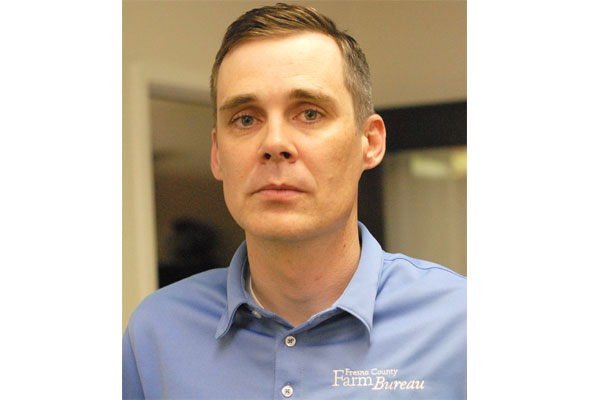
Ryan Jacobsenexecutive director and CEO of the Fresno County Farm Bureau, said, “arguably it’s turned out to be much worse. Right now, for the initial 5% allocation to even be questionable right now is just absolutely insane. It all boils down to the amount of water being held up in Lake Shasta for fish purposes, which has put a major stranglehold on what’s happening down here at this point,” noted Jacobsen.

Central Valley Project (CVP) Water

Central Valley Project (CVP) Water

At Shasta Reservoir, a keystone reservoir of the Central Valley Project, the U.S. Bureau of Reclamation essentially discharged flood releases earlier this year just to make room for the water that was expected to come in.  Shasta now stands at a above average full for this time of year, because the Feds are holding all the water for release for salmon later.

This is part of the plan to have cold water available to release for the salmon. And Shasta actually has 30 percent more cold water than what they thought, and water leaders are pushing hard to get the Feds to release it for agriculture.

San Luis Reservoir dead pool

San Luis Reservoir at Dead Pool Status

And San Luis Reservoir is  at a dead-pool status, which insures no more water can be sent south from that reservoirDead pool means no more water can be drawn from San Luis Reservoir, which does not bode well.

Jacobsen said, “This means our federal contractors’ 5% is in question. And that’s the irony: we were looking at such a strong year—or at least an average year [of precipitation]—and ending up now where our meager water supply is in jeopardy. This is incomprehensible and inexcusable from the federal side.”

Shasta has both federal and state water, and the federal side is essentially nothing at this point, explained Jacobsen. “Farmers rely upon San Luis Reservoir water for July and August irrigation, “and the water is essentially gone at this point,” he said. “It just shows you the major mismanagement we’re seeing from the federal side and the inability to capture water even when it is available, and not at the demise of any of these species.”

Jacobsen reiterated, “Back when the precipitation was falling [last winter], water was available at some extraordinarily high levels; yet, we never saw the increase in pumping that we would have expected under the normal conditions. “Of course, we’ve seen less pumping this year for the farmers and the cities south of the Delta,” noted Jacobsen. “During the times of the rainfall this year, it was essentially excuse, after excuse, after excuse. Some newer excuses pertained to why the pumps were not operating or operating at a very reduced capacity,” explained Jacobsen.

“The situation has been frustrating for a couple of years, but the anger continues to build because right now, this is not a ‘Mother Nature’ issue. It is completely a man-made regulatory drought that is, again, just incompetency at its best.”

“When we talk about the water stored behind Shasta [Dam] right now, really it is for the fish,” noted Jacobsen. “The most-watched fishery, at this point, is the salmon fishery. We’re in year four of this drought, but when it comes to the critical side of fish, the salmon essentially operates in three-year cycles. The last two years have been arguably two of the worst years on record for them, and this potential third year is a kind of make-it-or-break-it for salmon fisheries in the Delta region.”

Unfortunately, per Jacobsen, many decisions have been based on guesstimates. “There are a lot of folks who think we need to reserve all of this cold water for a fishery that may or may not be responding to what has been done in the past for this [contracted irrigation] water that has been given up for those purposes,” Jacobsen explained. “Right now, I think we’re doing a lot of experiments at the cost of jobs and employment, and most importantly, the farms here in the San Joaquin Valley. The frustration is that science is really not playing a big part in it. A lot of decisions are just simply, ‘We think we should be doing this versus what the science actually says we should be doing.’”

Jacobsen’s leading frustration is that all that water taken from farmers and given to fish has not helped the fish at all. In fact, the smelt and salmon numbers continue to decline. “I talk about growing frustration and anger from so many folks in the last couple of years… specifically because it hasn’t made a difference,” said Jacobsen. “An exorbitant amount of water has been given up for these fisheries, [endangered fish populations] continue to decline and crash, and as we’ve been saying for years, it is beyond time to look at just the water exporters,” he added.

Jacobsen maintains other stressors should be seriously investigated. “Many other issues taken place in the Delta should be pulled into play here, but again the regulators and the environmentalists continue to look only at the exporters as the sole issue for fish decline. There are so many other factors out there that need to be looked at,” he said.


Highly recommenced reading: “We are the 5 percenters, stretching our water supplies to get by,” by Joe Del BosqueContributing writer, The Orange County Register, July 14, 2016.

2021-05-12T11:05:50-07:00August 3rd, 2016|

Lt. Governor Newsom Supports Calif. Agriculture

Calif. Lt. Governor Newsom Says Ag is at a Hinge-Moment in History

By Patrick Cavanaugh, Farm News Director


In an exclusive interview with Gavin NewsomLieutenant Governor of California, during the recent Forbes AgTech Summit in Salinas, Newsom declared, “It’s interesting about California—outside of Hollywood—no two more iconic industries exist than Silicon Valley’s technology, and the agricultural industry.

“It seems self-evident to everybody here that we have a unique opportunity to collaborate,” Newsom said about the event which joined the Silicon Valley high tech industry with the state’s farming industry to create digital solutions for agriculture. “We have the unique opportunity based on proximity and based on history. It is also a cultural opportunity as it relates to relationships that have been formed over the course of generations to begin to build bridges and connect some dots.”

Newsom said he believes in bottom-up inspiration, not top-down. “I don’t think you can sell down your vision from Sacramento. It’s about regions rising together and creating conditions for just these type of collaborations,” he said.

Newsom particularly appreciated comments about innovation. “I wrote a book, [“Citizenville”] and I’m not here to promote that book,” said Newsom, “but the whole idea was about platform thinking. The concept is the federal government, state government, and even local government cannot prescribe a federal, state or local pill for every problem,” he said.

“The point is,” he continued, “if we’re going to solve the big problems of the day, we have to create an environmenta platformto engage folks like yourselves to deliver the applications, literally and figuratively, to solve big problems. It’s self-evident to anyone who lives here in California, that we’ve got some big problems.”

Citizenville, by Gavin Newsom

Citizenville, by Gavin Newsom

“We have regulatory challenges in this state, and I say this as a business person with many businesses. I have a sense of kindred connection in spirit to the entrepreneurial ways that are here today,” he commented. Owner of three wineries, several restaurants and hotels, Newsom stated, “I am in the Ag business, of sorts. My point is, we could do a lot better to make a point that [agriculture] matters and we care,” he said.

“At the same time,” he added, “Silicon Valley is center-tip of the spear—all the innovation and discovery, and the change in the way we live, work and play,” Newsom said.

“We’re here on a hinge-moment in history where we are going from something old to something new, a world of mobile, local, and social; and cloud and crowd. It’s a moment of anxiety for a lot of people, a moment of mergerthe detonation of globalization and technology coming together. Again, there’s a lot of anxiety,” he noted.

Newsom suggested this is an opportune time to try to connect dots and address challenges, not just on the regulatory side and on the economic development side in this state, but also on the self-evident issues of water scarcity in this state. “You may have different opinions about climate change, global warming or violent disruption,” said Newsom, “but, as a guy who told me the other day up in Dutch Flat, Placer County, ‘I don’t care about all you folks from San Francisco talking about climate change, but something just ain’t right.’ Which is another way of describing a connection that things have changed,” Newsom explained.

Newsom said that kind of predictive nature, in terms of how we construct a water system for a world that no longer exists, and for a population that is twice the size; self-evidently, we have to do things differently. “We’ve got to be more creative and we’ve got to be more strategic,” he noted.

“It’s a long way of saying we are grateful for the work [California farmers] are doing. The goal for us in California is to make these conversations sustainable. ‘Not just situational and not just one annual conversation, but these are dialogs that must continue every day in this state,” Newsom said.

“I’m one of those people who believes in the combination of nature and technology, bringing cross-disciplines together,” Newsom said. “Cross-pollinating, literally and figuratively, ideas and people—values. “I think we have an incredible opportunity here in California, not just to survive in the agricultural industry but to truly thrive in a growing, competitive environment.”

2021-05-12T11:05:51-07:00July 20th, 2016|

RECYCLED WATER PROJECT FOR WATER STABILITY, PART 4

Recycled Water Project for Water Stability: Takes Shape, Part 4

By Brian German, Associate Editor and Broadcaster

As part of our ongoing coverage on the North Valley Regional Recycled Water Program (NVRRWP), we spoke with Anthea Hansen, general Manager of the Del Puerto Water District. Over the next few months the project will start to take shape following the U.S. Bureau of Reclamation signing the Record of Decision last month, the high level of cooperation taking place among all the different entities, and positive public response.

Del Puerto Water District dpwdHansen commented, “I can’t speak enough about our good experience thus far. The cities, partners and consultants on the project have come together to really advance this concept—which was all it was seven or eight years ago —into something that will become a reality.

When demands are low in the Del Puerto water district, specifically in the winter months, water deliveries can flow to storage facilities or the San Luis Reservoir for later usage when demand is high. While many areas have already been using recycled water for agricultural needs, the progress by the North Valley program has inspired some communities to improve their own water policies.

Recycled water has long been used in agriculture in other areas of the state, most notably the Salinas Valley and in the south, maybe a little bit up in the north in the winegrape country. The Del Puerto Water District currently relies on water delivered through the Central Valley Project, which had zero deliveries for the previous two years, and are only providing 5% this year. This new program has the potential to produce more than 30,000 acre-feet of water per year as soon as 2018.

NVRRWP map recycled water

NVRRWP map (Source: www.nvr-recycledwater.org/description.asp)

Among an estimated 100 recycled water projects in various stages of development throughout the state, Hansen stated, “For the Central Valley, I think this is definitely a big first. We received about 14 public comments on the joint environmental document. Of those 14, three or four were letters of support, and we received some broad support from the environmental community. 

A project of this magnitude to deliver needed water stability could also be accomplished in other dedicated communities, according to Hansen. “We believe this project to be a model for other municipal and agricultural agencies in ways to regionally solve issues together, and hopefully, it will be a model for the nation.”

Anthea_Hansen

Anthea Hansen, general Manager of the Del Puerto Water District

“Hopefully,” said Hansen, “people are looking at this as a good example of ways to think outside the box and use available technology to solve problems locally and regionally, which is what we have been forced to do here on the Westside.

“With all the complexities of California’s plumbing,” explained Hansen, “it would be impossible for a small district like Del Puerto to really affect any of the big picture changes, but we certainly do have the ability to affect how we act locally and regionally. I also think the Central Valley has not historically been a magnet for a lot of assistance, programs or changes that work to our benefit, so we have to devise these for ourselves or we’ll be out be of business. I’m very thankful that the two cities—Modesto and Turlockon the east side of the river in our county, were willing to work with us, and I think we have a good partnership going forward.”


AAEES logo Leadership and Excellence in Environmental Engineering and Science


The North Valley Regional Recycled Water Program (Phase 3) won the 2015 Excellence in Environmental Engineering and Science™ Competition – Honor Award – Planning from the American Academy of Environmental Engineers & Scientists.

2021-05-12T11:05:52-07:00July 19th, 2016|
Go to Top