Push Back NOW with Orchard Sanitation

Part One of a Series

Orchard Sanitation Critical This Season

By Patrick Cavanaugh, Farm News Director

We recently spoke with Emily Symmes, the UC Area Integrated Pest Management farm advisor for the Sacramento Valley in statewide IPM program. She told California Ag Today about few reasons as to why Navel Orangeworm damage was so devastating this year, costing tree nut growers at least $137 million.

UC Cooperative Extension Integrated Pest Management Advisor, Butte County

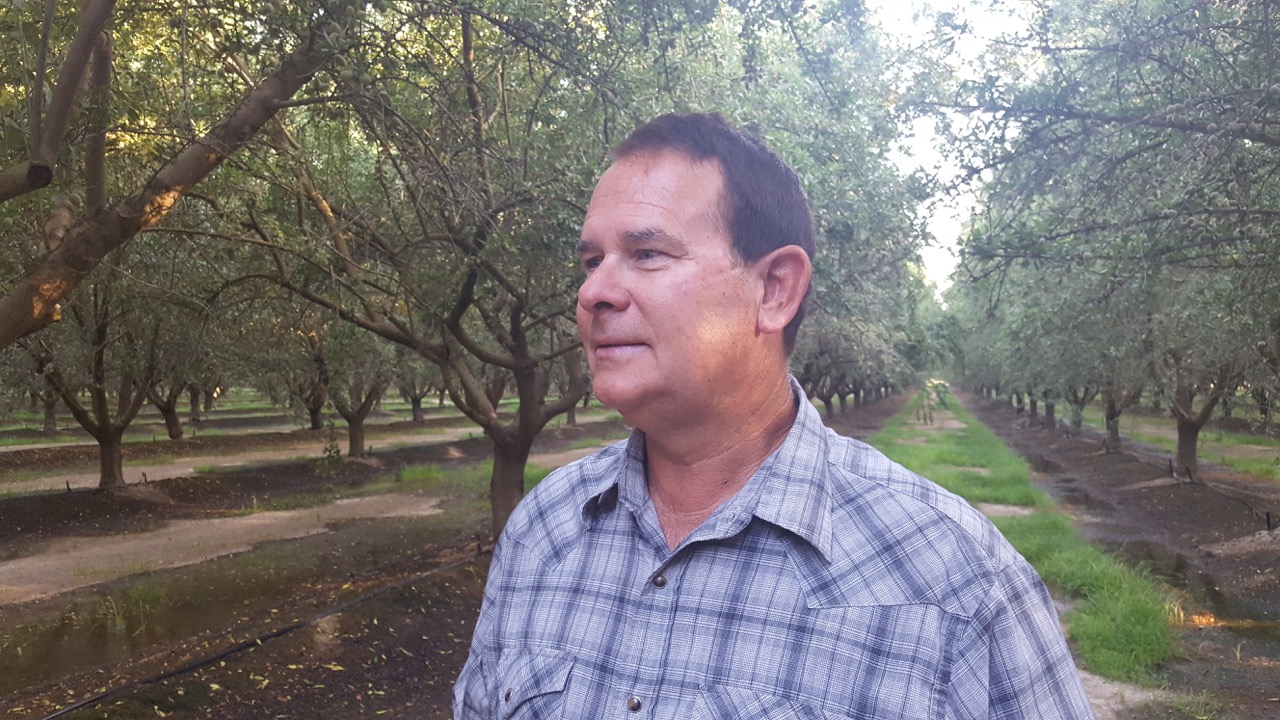
Emily Symmes, UC Cooperative Extension Integrated Pest Management Advisor, based Butte County.

NOW is ubiquitous. And the nut crop footprint in California is larger, with one million acres of almonds, along with pistachios and walnuts up and down the San Joaquin valley.

“The pest is not going anywhere,” Symmes said.

“We had a lot of unique circumstances. The amount of rainfall we got in late 2016 into 2017 was unprecedented and led us into a bad navel orange worm year because growers couldn’t get out and sanitize their orchards”

“Growers were not able to get into their orchards because of standing water,” Symmes explained.

Also, rainfall and moist conditions can help NOW mortality in the winter. “

We tend to think that it can help rot the nuts and do us some favors, but we have to be able to get the nuts shaken or get pulling crews in and get the mummies on the ground and destroyed,” Symmes said.

Heat units also played a part in the development of more NOW.

“It got hot. And it seemed to just not let up. Our degree-day models, or the heat unit that drive insect development, ended up getting pretty far out ahead of what is typical,” Symmes explained.

“By September, we were about two weeks ahead in degree-days, and that which meant moths were out earlier. They’re flying around. They’re laying eggs on the nuts when they’re still on the trees, and we are talking almonds, pistachios and to a lesser extent, walnuts.”

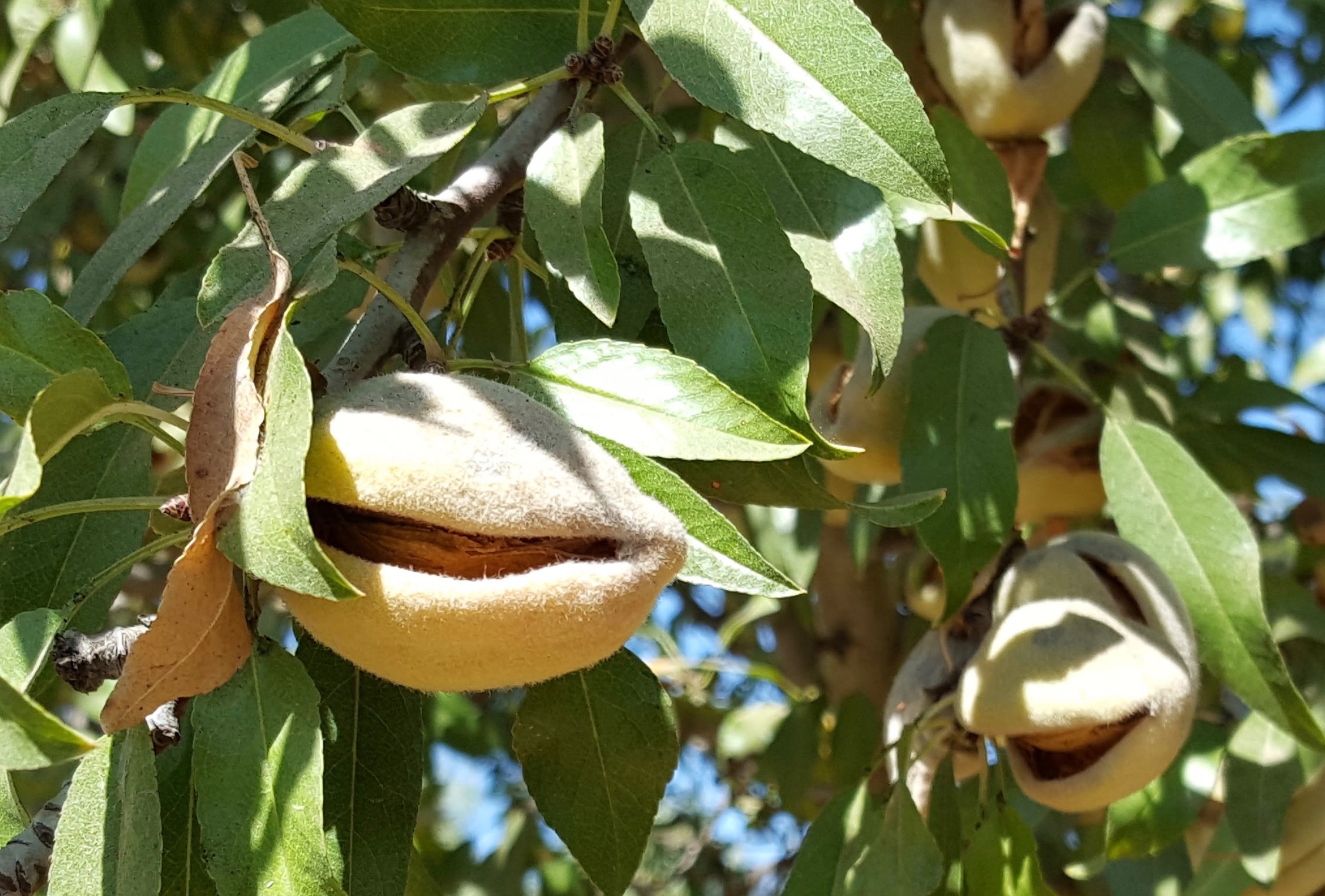
Symmes said the importance of sanitation is to minimize the site where the NOWs mature.

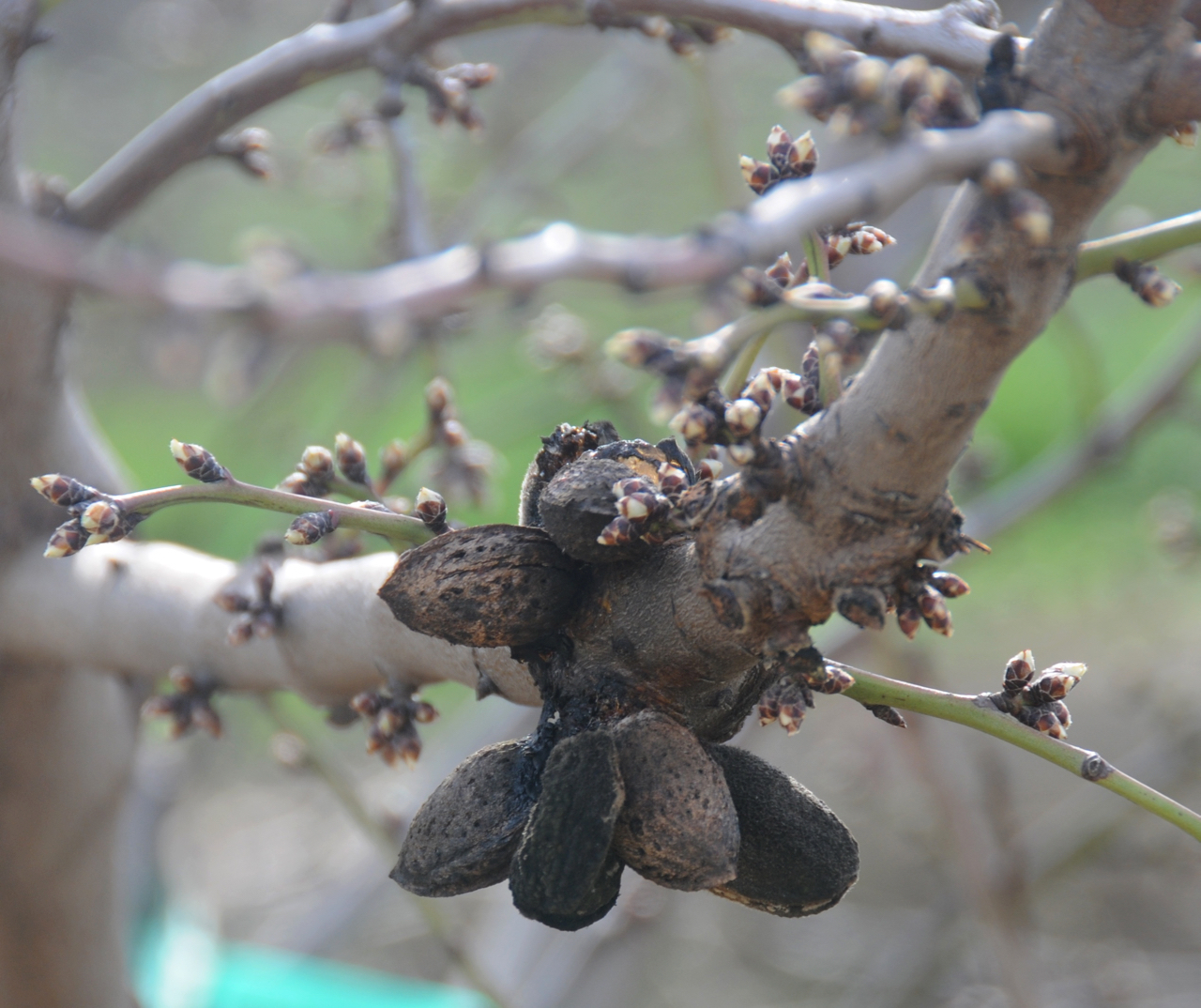
“It’s really important to remember that sanitation efforts aren’t just directly killing any worms that are over-wintering in your orchard. But the other thing that it does is it minimizes those sites where the first and second generations are going to develop next year,” she said.

Despite all these circumstances as to why NOW was serious this this year, it is critically important to start orchard sanitation as soon as possible. It may not be a good idea to wait for rain and fog to help loosen the nuts this season.
 

2021-05-12T11:01:58-07:00November 13th, 2017|

Pistachios Suffer Navel Orangeworm Damage

Overwintering NOW Population Must Be Reduced

By Robert H. Beede, UCCE Farm Advisor, Emeritus

The following is a special report by Robert H. Beede, UCCE Farm Advisor, Emeritus, on the state of the pistachio harvest and the fight against navel orangeworm damage.

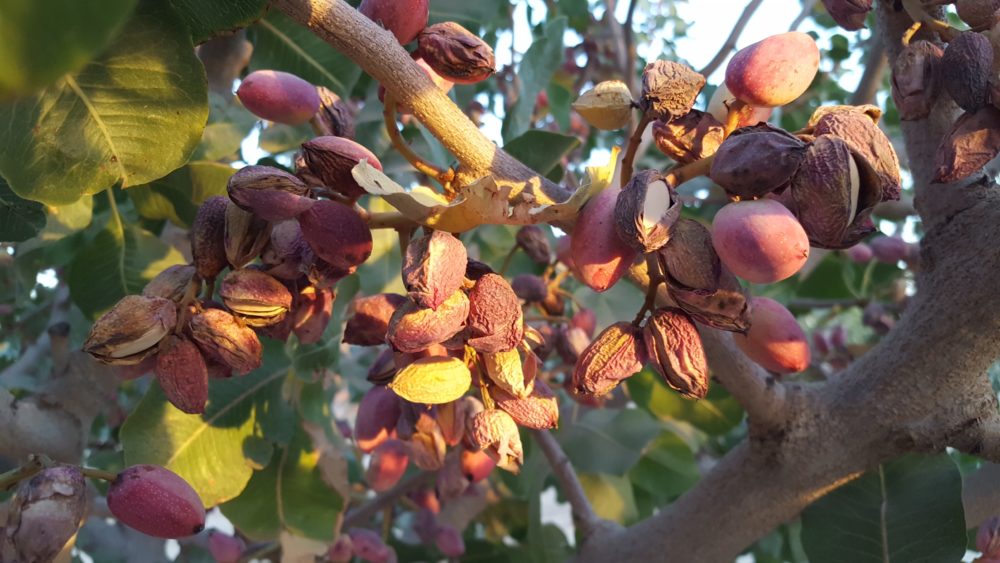
Season Wrap Up: It looks like we wound up with about 600 million pounds. Only God knows how many million navel orangeworm got, but you all know it was a bunch! Processors have their hands full delivering the quality nut California is known for. Many growers I speak to ask, “What happened?” From my discussions with many crop consultants, what DIDN’T happen was sanitation! This was not only true for the pistachio growers, but almond producers as well.

Growers barked at me about the wet weather making orchard access difficult to impossible, the size of the trees making sanitation cost prohibitive, and the difficulty in getting the nuts out of the trees. These issues are all true. So, if you decide that you cannot sanitize, then you had best figure out how you are going to run the ranch on pistachios that are 30 to 40 cents less valuable than those with low worm damage.

I know I sound like the donkey’s behind with all the answers, but the pistachio industry needs to join forces with the almond guys to determine what we can collectively do to reduce the overwintering NOW population.

There has been millions spent studying NOW, and I have NEVER waivered on the fact that sanitation is the cornerstone to controlling this beast! I also still think that once we get the kinks out of mating disruption, that everyone should use it as a means to SUPPRESS the population. Note that I did NOT say, “Control it as a stand-alone program,” just in case someone out there wants to stuff words in my pie hole!

We are in DESPERATE need of an effective adult monitoring tool for NOW mating disruption. I hope this comes soon, in order to give pest managers a method of knowing when the pheromone is not reducing mating sufficiently. We also need more research on the cultural and environmental factors affecting the number of early split nuts, which become the NOW link to the new crop at harvest.

Sanitation: Now is the time to begin winter sanitation by removing the nuts that did not come off during harvest. Many of these nuts are blank, but do not assume that all of them are. Research by many good scientists has proven that winter sanitation is the key to breaking the overwintering NOW population cycle, which looms ever greater when the winter is warm and dry. Beginning the season with a large overwintering population simply reduces the effectiveness of your in-season sprays. Although the research has not been done, to my knowledge, the TIMING of sanitation may be a factor in its efficacy.

Nut removal and destruction early in the fall may be more effective, because the percentage of NOW larva in the early instar stages should be greater. This is due to the large peak in egg laying that occurs during hull degradation. Thus, they may be more susceptible to desiccation or fungal attack because of their smaller size. Disturbing their overwintering site from the tree onto the ground early also places more environmental pressure on their survival. This is just my opinion; it may be worthy of investigation.

2021-05-12T11:01:58-07:00November 8th, 2017|

Walnut Farmer Talks Family’s Founding of Crows Landing

Walnut Farmer Norman Crow has Deep Roots in Stanislaus County

By Patrick Cavanaugh, Farm News Director

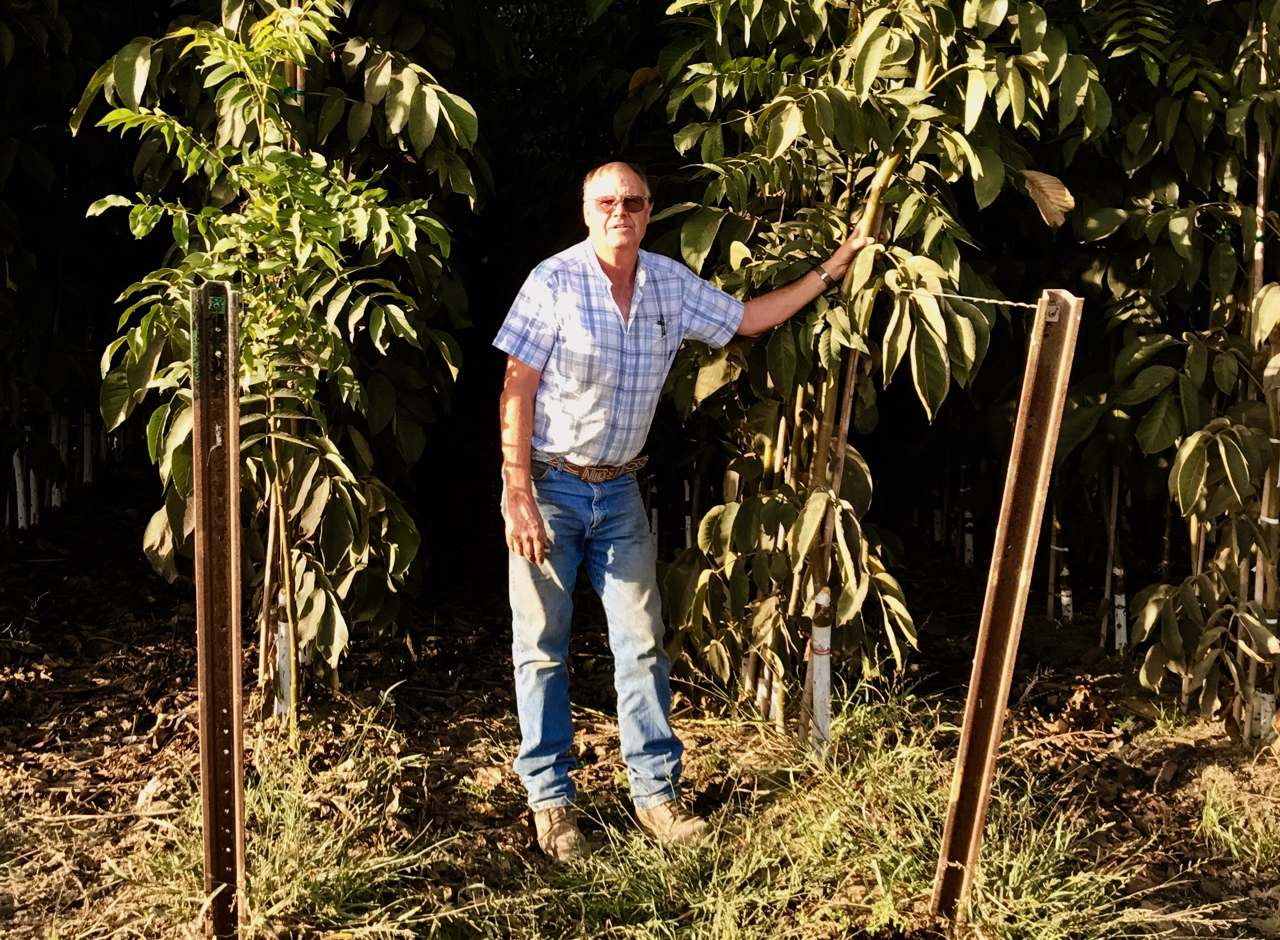
California Ag Today recently had the chance to interview Norman Crow a walnut grower and owner of Orestimba Walnut nursery in the Crows Landing area of Stanislaus County.

We asked him about his walnut harvest. “I think everything is going to be late this year. But it looks like a good crop,” Crow said.

“It’s very interesting because the market for the first time in several years is good. There’s no carryover from last year, so, we’re going to see maybe a 25% increase in price,” Crow said.

Crow explained that walnut plantings are not out of control compared to almonds and pistachios. “So we are very optimistic. Plus the dollar is weaker, there is no carryover and there is strong demand for walnuts

Crow is a descendant of Walter, Crow who came out to California from Missouri in 1849 – obviously, for gold. And he had eight children.

“I’m the descendant of one of his eight children, which is John Bradford,” Crow said. “He was my great-great grandfather.”

“And soon after arriving, my family bought Orestimba Rancho, which was a Spanish land grant. It was about 5,000 acres along Orestimba Creek that goes from the San Joaquin River, up the canyon, to the west of I-5.

Orestimba is a Yokut indian word for “the meeting place”.

“My family began farming barley, and they needed to get it to the buyer,” Crow explained.

The Crow’s built two riverboats, which pulled barges, loaded with sacks of barley. The landing was a warehouse on the San Joaquin River. That’s how it was eventually named Crow’s Landing.

“And then, a good family friend of ours, Jack Grisez took care of the ranch for many years, but they actually had a bean warehouse here that’s called Grisez Warehouse,” Crows said. “ Jack Grisez supplied all the dry beans to the GIs during WWII. He was one of the primary packers of beans. So, WWII came along and people started growing – there was a need and a demand and there was money to be made growing row crops. So some of them grew beans, tomatoes and other crops. And others operated dairies in the area.

In 1865, the Crow family began planting walnuts using seeds that the family brought from Missouri. They were from black walnuts, and today there are still may black walnut trees in the area.

And while walnut plantings were expanding throughout California, Norman Crow established a commercial walnut nursery on his ranch and named it Orestimba Nursery, which lies on Orestimba Creek.

Besides farming walnuts and operating a nursery, Crow noted that his family operates two walnut hullers in the area.

2017-10-16T13:07:31-07:00October 16th, 2017|

Almond Achievement Award Nominations Being Accepted

Deadline for Almond Achievement Award Nominations is Oct. 19

News Release

Since 2011, the Almond Achievement Award has honored an industry or allied-industry member who has added value to the California Almond industry through long-term service, contributions or innovations.

Nominations for the Almond Achievement Award are being accepted now. Winners must:

  • Be an individual with long-standing and direct involvement with the California Almond industry.
  • Demonstrate lasting impact on and commitment to the California Almond industry.
  • Have a record of proven service to the visibility and growth of the industry.
  • Contribute to California Almonds becoming a Crop of Choice and supporting California Almonds becoming the Nut of Choice.

Almond Board of California’s (ABC’s) Industry Services Sub-Committee will evaluate the candidates and make a recommendation to the Board of Directors. The 2017 recipient will be selected by ABC’s Board of Directors and recognized during the gala dinner at The Almond Conference by ABC President and CEO Richard Waycott.

The names of the award winners are placed on the wall of the Nonpareil Conference Room at the Almond Board of California office.

Nominating an almond industry professional for the 2017 Almond Achievement Award is easy. Simply email Jenny Nicolau (jnicolau@almondboard.com) and state your nominee’s name and company, as well as your reasons for the nomination. Applications must be received on or before October 19 for consideration.

2017-10-02T16:40:01-07:00October 2nd, 2017|

Almond Board CEO Talks About Group’s Mission

An Ongoing Series on the Value of the Almond Industry

By Patrick Cavanaugh, Farm News Director

Because it takes a while to harvest more than one million acres, the 2017 almond harvest is still going strong. The Modesto-based Almond Board of California is a federal marketing order charged to market those almonds both domestically and globally. A board composed of 10 grower members oversees committees focused on production research, almond quality and food safety, nutrition research and the environment, just to name a few.

Richard Waycott is president and CEO of the Almond Board. He noted that he’s proud to be part of this massively growing industry. “It’s just been a wonderful pleasure for me, and it’s such a great career opportunity to be part of this industry and try and have vision and work with my board of directors on agreeing on that vision and then with the great staff and all of the industry volunteers we have to implement the vision,” he said.

Waycott is suitably biased toward the almond industry. “We do see almonds as being a crop that should be grown in California. It’s producing a product that should be consumed more by humans,” Waycott said.

“Our efforts to farm more sustainably in the future, than we do today, and to provide for more automation in the industry and better grower practices, et cetera, is what our mission is. I think we’re very much on a road to executing that in a very responsible and an innovative way,” he said

This is part of a series on the big value of the California almond industry.

2017-09-25T16:30:34-07:00September 25th, 2017|

Farm Safety is Critically Important

Nut Harvest Safety – Part 3

By Jessica Theisman, Associate Editor

Farm safety is extremely important. The U.S. Department of Labor reported that the farming industry saw about 600 fatalities across the country last year. More than 200 laborers are injured in the U.S. on a daily basis. Many of these injuries result in permanent disability.

Paul Williams

Safety is not just important on the road; electrical safety is also a hot topic, noted Paul Williams, a senior loss prevention consultant for State Compensation Insurance Fund.

“We always talk about lock-out, tag-out, chocking and blocking tires, and before you make any repairs, making sure that equipment is shut off, and then doing repairs in the field,” he said.

Yet, many people are lost every year at harvest when they decide to make repairs in the field with just a quick adjustment.

“Sometimes people are in a hurry, they’re impatient, they’re tired, maybe fatigue sets in there; too easy to get caught in moving parts,” Williams said.

Although many ranchers have mechanics they go to, some choose to ‘fix’ the problem themselves.

“It’s the seasonal guys, the guys that aren’t trained, they’re trying to do good work but they try to do things they’re not trained to do. … This is why many ranchers stress that employees not be afraid to ask for help,” Williams said.

For more information on safety on the farm, go to: http://www.agsafe.org/

2017-09-02T23:48:01-07:00August 9th, 2017|

Seat Belts Important to Farm Worker Safety

Year-Round Nut Harvest Safety –  Part 2

By Patrick Cavanaugh, Farm News Director

Safety should be top priority on farms, especially during harvest. Most farm accidents and fatalities involve machinery and a busy atmosphere like harvest creates many opportunities for injury. However, farm worker safety is important year round. Paul Williams, a senior loss prevention consultant with the State Compensation Insurance Fund, talked to California Ag Today about the topic.

“Some things like wearing seat belts is critical. All the new farm equipment has seat belts, and workers should be encouraged to wear the seat belts because if they are unfortunate enough to get rear ended, that seat belt’s going to keep them in the equipment. You’re not going to get ejected out onto the road,” Williams said.

“A lot of it’s just simple common sense, but the whole idea of doing these before harvest is to remind people, that they are getting ready to enter a busy time of the year. And fatigue is always a factor when you’re working six days a week, 10-12 hours a day. It’s just natural that you get tired, and when you’re tired, you don’t always think clearly,” he said.

“Worker reaction times are slower so we just want to remind people, about safe work practices to follow. And they are good to follow year-round,” Williams noted.

It’s also important to consider safety when riding from one area of the farm to another.

“If there is not a seat and a seat belt, then there should not be a rider. And it does not matter if it is a tractor or bin trailer or a tractor pulling irrigation pipe,” Williams said.

“We’re all basically lazy; none of us like to walk any further than we have to. We don’t see any harm in hitching a ride, but we have a number of fatalities and serious injuries on California farms every year. We have way too many accidents occur where people are passengers on bin trailers and harvest, whether it’s in the vineyards or in the orchards.

“People jumping on a bin trailer where a tractor driver up front may be making a sharp turn to get out of a row. A lot of times there can be pinch points and that’s where people get pinched between that part of the trailer or that bin that they can’t always see. It’s a very dangerous place to be because all it takes is one bump, one hole in the ground or a rough spot to cause someone to be bounced off the tractor.

“The worst injury we see is not so much being bounced off, but just being caught in between row end or the poles at the end of a vineyard,” Williams said.

For more information on safety on the farm, go to: http://www.agsafe.org/

2017-09-03T00:23:27-07:00August 9th, 2017|

Worker Safety During Nut Harvest – Part 1

Nut Harvest Safety –  Part 1

By Patrick Cavanaugh Farm News Director

Safety is very important, especially when working with heavy machinery. As most farm accidents and fatalities involve machinery, farm safety begins with educating and preparing workers for emergency situations, and making them aware of hazards. California Ag Today interviewed Paul Williams, a senior loss prevention consultant with the State Compensation Insurance Fund, regarding nut harvest safety.

“The hazards are primarily with walnuts and almonds. They tend to stir up more dust in the harvest process,” Williams said. “There are respiratory issues that employees need to be protected from.”

“There’s also a need for hearing protection with any type of farm equipment. A lot of times, you’re sitting there all day at elevated levels of noise – there’s potential for hearing loss. Hearing loss is often overlooked because it’s slow acting, but it can have a huge effect on workers lives down the road,” Williams explained. “It’s important to be aware of it as a factor, and we talking about it as one season, probably not going to be any noticeable … you do that for 20 and 30 seasons, and you’re not able to understand your grandchildren when they talk to you. It’s one of those things that sneaks up on you.”

Williams said there are also a lot of safety issues with farm equipment and transportation. “You’re driving a slow-moving vehicle down a county road at 10 miles an hour, and you’ve got impatient drivers who want to pass you. Many drivers are not paying attention at all and they rear-end your equipment,” Williams said. That happened in Kingsburg a couple weeks ago.

This is always a danger whenever you’re transporting harvesting equipment or any kind of farm equipment on a county road. “It’s always nice if you have a pilot car; it’s always nice if you have a truck behind with their flashers on, trying to control traffic and periodically being a good neighbor and pulling over and letting traffic get by you when that’s possible,” Williams said.

For more information on safety on the farm, go to: http://www.agsafe.org/

2017-09-02T23:57:46-07:00August 7th, 2017|

Sharing Secrets to a Successful Bowl of Cherries

Weather and Pruning Make Life a Bowl of Cherries

By Laurie Greene, Founding Editor

Clark Goehring, a third generation Kern County farmer, produces cherries and almonds. He summarized his cherry harvested as “good compared to the other years when we have had rain. Some people in our area still had rain during harvest, but we were able to harvest and bring our cherries to market in good condition.”cherry tree

“Of course, it rained a lot this winter and spring, but you do not want rain when cherries are maturing on the tree; they don’t like rain.”

Goehring explained that when it rains beyond the point when cherries start coloring, they split, making them unmarketable. “But while it may take some rained-on cherries off the market, the price of the marketable fruit goes up,” he said, benefiting those growers who had a quality crop, like him.

Goehring’s farm workers train the cherry trees to keep them low—approximately 8 feet tall. “We have tried to have them bush out instead of being more of a central leader. Actually, it’s called Spanish Bush style or, in modified form, KGB.”

Kym Green Bush designed the KGB training method in Australia to use multiple leaders and have them fruit on the leaders themselves. KGB simplifies pruning so less experienced farm workers can learn the skill more easily. The trees are replenished every five years.

Goehring said the method saves money on the farm, cuts labor and increases workers’ safety because it requires no ladders and the harvest is quicker. Harvesting without ladders also gives Goehring an advantage of attracting farm labor over other orchards that require ladders.

“In California, if farm workers have their choice of picking your cherries without using ladders, which is usually piecework, or someone else’s crop with ladders, they are going to want to come to you,” he explained.

2017-08-02T16:14:04-07:00August 2nd, 2017|

Innovative Biomass Conversion to Help Ag

New Biomass Conversion Idea Could Help Ag Industry

By Patrick Cavanaugh, Farm News Editor

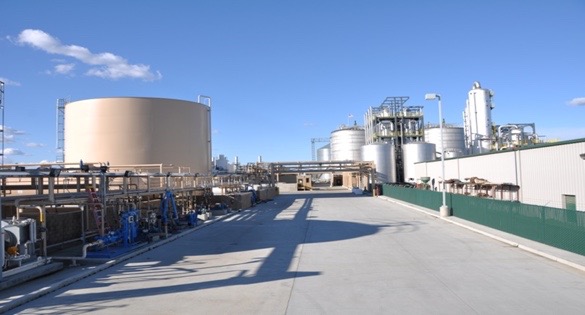
A new biomass process will convert woody ag waste, including almond hulls and shells, into ethanol, which has a demand and makes the conversion possible.

Eric McAfee is Chairman, CEO and co-founder of Aemetis Inc., a Culpertino-based industrial biotechnology company producing renewable chemicals and fuels using patented microbes and processes.

The current bio-generations and biomass plants are shutting down left and right because they have lost their profit due to low electricity prices.

Eric McAffee is Chairman, CEO and Co-Founder of Aemetis

“The fundamental problem that we have is that the biomass energy business makes electricity, and that electricity is being replaced by solar energy and wind energy, which is funded by a 30 percent federal tax credit,” McAfee said.

“When the cost of energy is 30 percent lower because the federal government has supports, of course the biomass energy producers are challenged to compete with that lower cost source of energy,” McAfee explained.

Data shows that about 70 percent of the plants in California are already shut down, and more are shutting down each month.

That’s where Aemetis steps in. “Our view is that biomass in the form of orchard waste, vineyard waste – even forest waste, actually – has a very valuable opportunity to become the fuels that could go directly into California automobiles,” McAfee said. “Converting the biomass into fuels rather than biomass into electricity has been the missing link.”

Doing all the conversion work is a proprietary microbe. “It’s a little organism that acts sort of like yeast in that it takes in these wood molecules, and it converts them into different molecules in its body, and then it excretes ethanol as one of the products it makes,” McAfee said.

It’s similar to the wine industry, where the yeast takes sugar from the grape juice and converts it to alcohol.

“We’re taking orchard wood, and we’re producing liquid fuels that are very valuable in California because they’re high in oxygen, so they burn more cleanly than gasoline, and they’re high in octane, so they make the engine perform sort of like a high performance racing engine would. It’s very valuable as a fuel and good for the environment. The plant that will do all this is currently being built in Keyes, CA. We’re actually in initial engineering right now. We expect to have it up and running in … approximately 18 months,” McAfee said.

And McAfee noted that the conversion process is not just a theory. “This technology has been actually produced in six different plants around the world. Over 200 million dollars of investments have been made in the development of the technology,” he said.

“We’re essentially taking an agricultural waste, and we’re adding the additional volume of ethanol that’s mandated under California law. It’s a 10 percent blend in California, but the federal government has approved a 15 percent blend. I do expect over time that California will be at not only 15 percent, but even higher blends,” McAfee said.

“There’s a lot to work with – literally hundreds of thousands of tons of agricultural waste produced every year in addition to the removal of the orchard wood itself after its useful life of 20 to 30 years,” McAfee said.

And while several UC Cooperative farm advisors are working on orchard chipping and leaving it in the orchard – as well as bringing almond shells and hulls back into the orchard, which could be beneficial to the orchard soil – McAfee noted that the industry will figure out a balance.

“What we’re going to see over time is the right balance of the biomass that needs to go back into the field verses really true waste biomass that needs to be removed,” he said.

“There’s about a million acres of almonds in California, and over a 20 to 30 year lifespan, it means 40,000 to 50,000 acres a year of almonds gets removed. That’s a tremendous amount of biomass that has to be put somewhere, and right now, turning it into electricity in these large plants has been a solution, but we certainly think that turning it into liquid fuels and supplying California motorists is going to be an exciting future for these farmers,” McAfee said.

Again, the conversion plant should be operating by mid-2018. “We’re excited about it. It’s very good for the air quality in the Central Valley, because we don’t want to go back to the 1960s and ’70s and end up with these farmers basically having very few choices, and deciding that paying an air quality fine is the best of worst choices,” McAfee said. “I would suggest that, frankly, turning it into fuel in a very clean process, such as what we run, could be a big part of maintaining improved air quality in the Central Valley of California.”


2017-04-06T03:48:06-07:00March 29th, 2017|
Go to Top