Fresno State Student Studies Palmer Amaranth

Sami Budhathoki Finds Palmer Amaranth Can Adapt to Saline Soils

By Jessica Theisman, Associate Editor

Palmer Amaranth

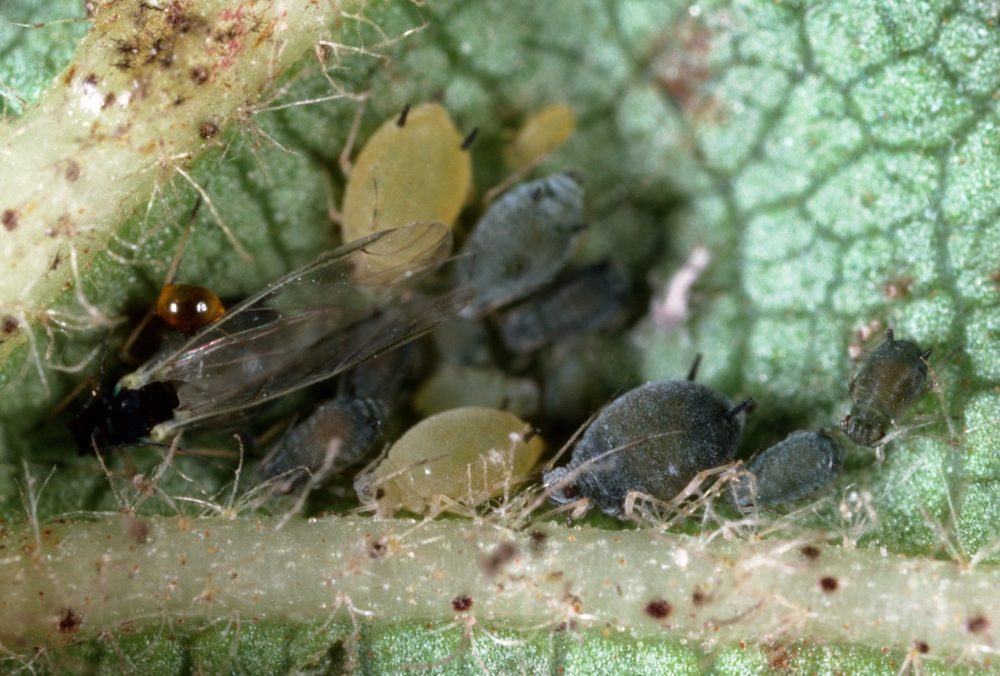
Sami Budhathoki is in the last semester of her undergrad degree at Fresno State. She spoke with California Ag Today recently about her research on how the Palmer Amaranth can adapt to saline soils in the San Joaquin Valley. Palmer amaranth as among the most troublesome weeds in agriculture because it is a very prolific seed producer and very tough to control due to widespread glyphosate escapes. It is found throughout California.

Her major advisor is Anil Shrestha, a professor in weed science at Fresno State. Budhathoki presented her research at a recent California Weed Science Society Meeting in Sacramento.

“I treated soils with five different salt levels, and I found out that the weed likes that higher salt levels, and they did fine, and they all germinated,” Budhathoki said.

Based on the pictures on Budhathoki’s poster, the Amaranth grew better in soils with higher salinities.

“That gives us the hint that Fresno is more resistant for the Palmer Amaranth plants because the west side has a lot of salt in its soil,” she said.

That is why it is hard to control in those areas, especially because they propagate so easily.

Budhathoki gave California Ag Today more insight on her research.

“Before treating the soil with salt, the plants were all the same height and same size. After the treatment, you can see the differences in how each plant reacted to the salt,” she said.

We asked Budhathoki what it was like working with such a troublesome weed in the ag industry.

“It was my first time working with Palmer Amaranth; it was a good experience,” she said.

Budhathoki says that she thinks there will be more research on this weed in the future so that farmers can find out how to better control it.

2021-05-12T11:05:05-07:00February 25th, 2019|

Cover Crops in Almonds Can Displace Annual Winter Weeds

Steve Haring Working With UC Davis on Cover Crops

By Mikenzi Meyers, Associate Editor

Depending on your location, cover crops can have a big impact on your fields. Steve Haring, second-year Ph.D. student in the Department of Plant Sciences at UC Davis, has been collecting research on how different climates influence the effectiveness of cover crops.

Almond Cover Crop Displacing Weeds

“As we try to design cover crops, there are a lot of different paths we can take, and it’s important to test these different things out and see what is best for the specific things we can use cover crops for in the Central Valley,” Haring said.

He further mentioned that for optimum weed control in the Valley, growers should plant in the early winter months in order to prevent annual winter weeds.

Haring worked with the UC Davis Cooperative Extension on three different sites across both the Central Valley and northern Sacramento Valley collecting data on growth rates for cover crops. He found that because the northern valley had more direct sunlight hit the ground, cover crops thrived, and as a result, weeds were minimized.

The research will not stop there, though, Haring ensured. “The study I’m working on is funded by the Almond Board, and it’s continuing for a second year and maybe a third, so we’re trying to repeat it and validate and then also sort and synthesize information because there are people working on weeds but also working on water, insect pests, pollinator health, nematodes, and call sorts of ecosystem services,” he concluded.

2021-05-12T11:05:06-07:00February 20th, 2019|

Pests and Diseases Cause Worldwide Damage to Crops

Pests and Pathogens Place Global Burden on Major Food Crops

By Pam Kan-Rice, UC Agriculture & Natural Resources

Scientists survey crop health experts in 67 countries and find large crop losses caused by pests and diseases

Farmers know they lose crops to pests and plant diseases, but scientists have found that on a global scale, pathogens and pests are reducing crop yields for five major food crops by 10 percent to 40 percent, according to a report by a UC Agriculture and Natural Resources scientist and other members of the International Society for Plant Pathology. Wheat, rice, maize, soybean, and potato yields are reduced by pathogens and animal pests, including insects, scientists found in a global survey of crop health experts.

At a global scale, pathogens and pests are causing wheat losses of 10 percent to 28 percent, rice losses of 25 percent to 41 percent, maize losses of 20 percent to 41 percent, potato losses of 8 percent to 21 percent, and soybean losses of 11 percent to 32 percent, according to the study, published in the journal Nature, Ecology & Evolution.

Viruses and viroids, bacteria, fungi and oomycetes, nematodes, arthropods, molluscs, vertebrates, and parasitic plants are among the factors working against farmers.

Food loss

“We are losing a significant amount of food on a global scale to pests and diseases at a time when we must increase food production to feed a growing population,” said co-author Neil McRoberts, co-leader of UC ANR’s Sustainable Food Systems Strategic Initiative and Agricultural Experiment Station researcher and professor in the Department of Plant Pathology at UC Davis.

While plant diseases and pests are widely considered an important cause of crop losses, and sometimes a threat to the food supply, precise figures on these crop losses are difficult to produce.

“One reason is because pathogens and pests have co-evolved with crops over millennia in the human-made agricultural systems,” write the authors on the study’s website, globalcrophealth.org.  “As a result, their effects in agriculture are very hard to disentangle from the complex web of interactions within cropping systems. Also, the sheer number and diversity of plant diseases and pests makes quantification of losses on an individual pathogen or pest basis, for each of the many cultivated crops, a daunting task.”

“We conducted a global survey of crop protection experts on the impacts of pests and plant diseases on the yields of five of the world’s most important carbohydrate staple crops and are reporting the results,” McRoberts said. “This is a major achievement and a real step forward in being able to accurately assess the impact of pests and plant diseases on crop production.”

The researchers surveyed several thousand crop health experts on five major food crops – wheat, rice, maize, soybean, and potato – in 67 countries.

“We chose these five crops since together they provide about 50 percent of the global human calorie intake,” the authors wrote on the website.

The 67 countries grow 84 percent of the global production of wheat, rice, maize, soybean and potato.

Top pests and diseases

The study identified 137 individual pathogens and pests that attack the crops, with very large variation in the amount of crop loss they caused.

For wheat, leaf rust, Fusarium head blight/scab, tritici blotch, stripe rust, spot blotch, tan spot, aphids, and powdery mildew caused losses higher than 1 percent globally.

In rice, sheath blight, stem borers, blast, brown spot, bacterial blight, leaf folder, and brown plant hopper did the most damage.

In maize, Fusarium and Gibberella stalk rots, fall armyworm, northern leaf blight, Fusarium and Gibberella ear rots, anthracnose stalk rot and southern rust caused the most loss globally.

In potatoes, late blight, brown rot, early blight, and cyst nematode did the most harm.

In soybeans, cyst nematode, white mold, soybean rust, Cercospora leaf blight, brown spot, charcoal rot, and root knot nematodes caused global losses higher than 1 percent.

Food-security “hotspots”

The study estimates the losses to individual plant diseases and pests for these crops globally, as well as in several global food-security “hotspots.” These hotspots are critical sources in the global food system: Northwest Europe, the plains of the U.S. Midwest and Southern Canada, Southern Brazil and Argentina, the Indo-Gangetic Plains of South Asia, the plains of China, Southeast Asia, and sub-Saharan Africa.

“Our results highlight differences in impacts among crop pathogens and pests and among food security hotspots,” McRoberts said. “But we also show that the highest losses appear associated with food-deficit regions with fast-growing populations, and frequently with emerging or re-emerging pests and diseases.”

“For chronic pathogens and pests, we need to redouble our efforts to deliver more efficient and sustainable management tools, such as resistant varieties,” McRoberts said. “For emerging or re-emerging pathogens and pests, urgent action is needed to contain them and generate longer term solutions.”

The website globalcrophealth.org features maps showing how many people responded to the survey across different regions of the world.

In addition to McRoberts, the research team included lead author Serge Savary, chair of the ISPP Committee on Crop Loss; epidemiologists Paul Esker at Pennsylvania State University and Sarah Pethybridge at Cornell University; Laetitia Willocquet at the French National Institute for Agricultural Research in Toulouse, France; and Andy Nelson at the University of Twente in The Netherlands. 

UC Agriculture and Natural Resources researchers and educators draw on local expertise to conduct agricultural, environmental, economic, youth development and nutrition research that helps California thrive. Learn more at ucanr.edu.

2021-05-12T11:05:06-07:00February 11th, 2019|

Jeff Mitchell Will Show The Benefits of Soil Building Practices

Researcher Invites Public to Visit San Joaquin Valley Soil Health Demonstration site in Five Points

News Release

UC Cooperative Extension cropping systems specialist Jeff Mitchell is issuing a standing invitation to the public to visit the site of an ongoing conservation agriculture research project and see for themselves the results of long-term soil building practices.  

“Every Friday morning from 9 o’clock till noon, beginning in February and going through June, I invite folks to come to the project site to see up close and personal just what soil health means,” Mitchell said.

The research site is at the University of California’s West Side Research and Extension Center, 17353 W. Oakland Ave., in Five Points.

“I promise to be out there every Friday morning from Feb. 15 through June 26,” Mitchell said.

The project, funded by the Natural Resources Institute, compares plots that have been managed for more than 20 years in an annual rotation of cotton, processing tomatoes and, more recently, sorghum, garbanzo beans and melons under four different treatments: no-tilled plus cover crops, no-tilled with no cover crops, conventionally tilled with cover crops and conventionally tilled without cover crops.

“What we’ve got at this site is a very long-term example of exactly what implementation of a small set of soil care, or soil health, principles really means for soil function and management,” Mitchell explained.

Mitchell said that the study site in Five Points is a valuable resource for the people of California because of its dedicated adherence to principles that are widely touted to improve production efficiencies, reduce dust emissions, sequester carbon and reduce inputs over time.

“I recently heard about the value of publicly showcasing long-term sites such as the one we’ve got in Five Points. It’s being done in several other places, including the Dakotas and in Europe,” Mitchell said. “It just seems to make sense to open up our field more widely to folks who might be interested in seeing the remarkable changes we’ve seen and monitored for a long time.”

According to Mitchell, the NRI Project field is already “the most visited research field in the state,” but with this new invitation, he is hoping to have still broader impact.

“We’ve got a simply amazing resource here and I want folks to see it,” he said.

The study has been selected as one of the monitoring sites of the North American Project to Evaluate Soil Health Measurements that have been initiated by the Soil Health Institute of Morrisville, N.C. More than 20 peer-reviewed scientific articles have been published based on work done in this study field.

2021-05-12T11:05:06-07:00February 7th, 2019|

Aemetis Building Major Plant To Handle Biomass

Synthesis Gas Plants Better Than Biomass Electrical Plants

By Jessica Theisman, Associate Editor

Biomass electrical plants are shutting down in California. Eric McAfee, Executive Chairman, CEO, President and Co-founder of Aemetis Inc., is a company using biomass technology to create ethanol. Due to government incentives, some forms of energy are less expensive to operate.

Aemetis is constructing a 45 million-L-per-year cellulosic ethanol facility outside Modesto. 

“The problem we have is that the biomass to energy business makes electricity, and that electricity is being replaced by solar energy and wind energy, which is funded by a 30% federal tax credit,” McAfee said.

The Biomass energy producers have a hard time competing with the reduced prices because the government has support.

Biomass electrical plants have closed, and more will follow.

“About 60% of the plants in California already shut down, and it’s estimated that over 70% are going to be shut down by the end of this year,” McAfee said.

Orchard and forest waste is very valuable.

“Biomass in the form of orchard waste, vineyard waste, even forest waste has a very valuable opportunity to become the fuels that can go directly into California,” McAfee explained.

What we have been lacking is turning biomass into fuel for automobiles rather than biomass into electricity.

Biomass can be synthesized into fuel. McAfee and his team were able to make the molecules in orchard wood and put them into a synthesis gas. They then put those molecules back together and fed them to a microbe that, in turn, produced ethanol.

“We are taking orchard woods, and we are producing liquid fuels that are very valuable in California because they are high in oxygen, so they burn more cleanly than gasoline, and they’re high octane, so they make the engine perform,” McAfee said.

2021-05-12T11:05:06-07:00February 4th, 2019|

Healthy Soils Initiative Looks at Cover Crops

Cover Crops Between Annual Veg Crops Studied

 By Patrick Cavanaugh, Editor

Research is under way to determine if using cover crops between two annual vegetable crops will improve the soil for future crops. It’s all part of the California Department of Food and Ag Healthy Soils Program—a statewide project.

Amber Vinchesi is a UCANR Vegetable Crops Farm Advisor in Colusa, Sutter and Yuba counties. She works mainly with processing tomatoes but also with growers farming vegetables for seed as well as fresh market vegetables such as honeydew and cantaloupe melons.

Vinchesi is collaborating with California’s Healthy Soils Initiative, a partnership of state agencies and departments led by the CDFA Healthy Soils Project. It’s a combination of innovative farm and land management practices that may contribute to building adequate soil organic matter that may increase carbon sequestration and reduce overall greenhouse gases.

“We have three sites, and the site that I’m working on is focused on winter cover crops between crops such as wheat, tomato or corn, to improve soil health,” said Vinchesi, who is being assisted by her colleague Sarah Light, the agronomy advisor in Sutter, Yuba, and Colusa counties

Other Healthy Soil sites are located in the Delta area, and overseen by Michelle Leinfelder-Miles, UCANR Delta Crops Resource Management Advisor in San Joaquin County. Brenna Aegerter, a UCANR Vegetable Crops Farm Advisor also in San Joaquin County, is working with Leinfelder-Miles. Additionally, Scott Stoddard a UCANR Vegetable Crops Farm Advisor in Merced County has a site.

The cover crop will be vetch, a legume.

“We hope that it will put nitrogen and biomass into the soil,” Vinchesi said. “We’re not sure what the results will be, but we hope it will help with aggregate stability, water infiltration, and even reduce weed density.”

She noted that the trial, which is in the first year of a three-year project, will include two different seeding rates, a high and low rate, and then an untreated control where there’s no cover crop.

“And we’ll do soil testing to see how things change in the soil over time,” she explained.

2021-05-12T11:05:06-07:00January 29th, 2019|

Sustainability is Focus of Solutions from the Land

Solutions From the Land Focuses on Sustainability

By Jessica Theisman, Associate Editor

Many California farmers are working toward a more sustainable future, according to Ernie Shea, president of Solutions From the Land.

“We are a North American climate-smart agriculture alliance that has come together with others,” Shea said.

Solutions from the Land, which has partnered with the California Department of Food and Agriculture, is the continental platform for farm and conservation groups that are looking at ways these landscapes can deliver solutions.

Solutions from the Land has been getting a lot of support from California.

“We’ve had the right enabling policy, and you’ve got a lot of that in California,” Shea said.

There have also been significant investments in technology and infrastructure that have allowed systems to deploy at scale. Solutions from the Land is producing wind, solar, geothermal, hydro, biofuels, or types of sustainable, domestically-produced energy sources.

“When we started, we were at about five percent renewables. Today, we’re in the twelve percent range. Twenty-five percent by 2025 is the new target that we established,” Shea explained.

Ernie Shea

“We have to be able to produce food and fiber with less water and with erratic conditions. There is a lot of conversation about how to adapt to these realities when you are right in the epicenter of drought, fire, and floods,” he said.

“Everything has become less predictable. Solutions From the Land is sponsoring state-level conversations around how to become more sustainable, resilient, and how to participate in the low carbon economy, biofuels, and renewable energy,” Shea added.

Carbon sequestration is one of the more exciting new areas of opportunity that are coming for agriculture. The focus is on farmers and what they care about.

“They care about resiliency, profitability, sustainability. An example of one of the pathways that we work on: initiatives like soil health programming,” Shea said.

This helps farmers realize that by improving the health of their soil and the organic content, the crops are doing a better job of soaking up whatever water does fall.

“They’re reducing the need to provide some inputs. They’re sequestering greenhouse gases. They’re delivering global solutions,” Shea explained.

2021-05-12T11:05:06-07:00January 24th, 2019|

William Bourdeau Speaks Out About SGMA

William Bourdeau: Surface Water Must Be Tied to SGMA

By Patrick Cavanaugh, Editor

William Bourdeau is Vice President of Harris Farms, a Director of Westlands Water District, and Chairman of the Board of the California Water Alliance. Bourdeau recently talked to California Ag Today about the Sustainable Groundwater Management Act (SGMA), which will force growers in 2040 to keep the water levels in their wells in balance and not allow over-drafting.

William Bourdeau

“It’s mostly about living and growing up in the community and hearing about what the people did when I was still young,” Bourdeau said. “I understand that we were over-drafting the aquifer in the early days of agriculture on the west side of the valley and some very innovative, pioneering individuals figured out how to solve the problem. They built the Central Valley Project and delivered surface water. And if you look at the statistics, the problem was nearly solved. It’s only started to become a problem when the surface water deliveries have been cut off as a result of the biological opinions.”

“I can’t understand why that we can’t solve this problem. And I do think surface deliveries need to be tied into SGMA,” he said.

Bourdeau said he believes that the problem can be solved and not be detrimental to the environment.

“But any solution must consider humans and our needs … surface deliveries need to be incorporated into the plan,” Bourdeau added. “We need to use sound science, and it needs to be peer-reviewed.

“We need to make sure that we’re doing everything we can to preserve a domestic food supply capability. I think it’s in our national interest. … It’s a national security issue,” he said.

Bourdeau believes that we need to get away from looking at these very narrow issues and look at the big picture.

“We must find a way to do what’s best, and not all the decisions are going to be desirable, but I do think we can. We can make decisions that solve the problem and don’t take this wonderful resource out of production.

As a director for Westlands Water District, Bourdeau said no stones will be unturned for compliance to SGMA.

“We’re doing everything we can to try to make sure that we manage this situation to the best of our ability and our growers are represented in a way that they will succeed in the long term,” he said.

2019-01-22T16:43:33-08:00January 22nd, 2019|

Curious of How Safe is Fresh Produce?

Residue Calculator Helps Public Understand How Safe Food Is

News Release

Recently, we have shared new government residue sampling results from the Federal Food and Drug Administration (FDA), United States Department of Agriculture (USDA) and the California Department of Pesticide Regulation (CDPR).  These programs consistently show that 99% of the foods sampled had no detectable residues at all or residues found were well below safety levels set by the Environmental Protection Agency (EPA).

For those who do not want to review these lengthy government reports, the Alliance for Food and Farming (AFF) created an easy-to-use “residue calculator” on safefruitsandveggies.com, which is based upon the USDA data.  We asked toxicologists with the University of California Personal Chemical Exposure Program to analyze this data.  Their findings: A child could literally eat hundreds to thousands of servings of a fruit or veggie in a day and still not have any health effects from residues.  This analysis shows how very minute residues are, if present at all.

The residue calculator features 19 of the most popular fruits and veggies, and you can click on a man, woman, teenager, or child to see the number of servings one would have to consume.  For example, a child could eat 181 servings or 1,448 strawberries in a day and still not have any effects from residues.  Apples?  A child could eat 340 apples in a day.  Kale?  7,446 servings!

These government reports and the UC toxicological analysis underscore the diligence of fruit and vegetable farmers when it comes to the judicious use of pesticides approved for organic and conventional crops.

“… Growers and farmers are adept at following our comprehensive rules to ensure produce is grown to the highest pesticide standards,” said Brian Leahy, Director of the California Department of Pesticide Regulation.

“Based on the PDP data, consumers can feel confident about eating a diet that is rich in fresh fruits and vegetables,” concludes the USDA report.

Read, learn, choose but eat more organic or conventional fruits and veggies for better health and longer life.

2021-05-12T11:01:50-07:00January 11th, 2019|

Alliance for Food and Farming Supports Industry

Alliance for Food and Farming Works Hard for the Produce Industry

By Patrick Cavanaugh, Editor

Since 1989, the Alliance for Food and Farming based in Watsonville has constantly been on guard for the national produce industry. They fight against misinformation on conventional farming, all while supporting organic production.

Teresa Thorne has been with the Alliance since it began and now serves as Executive Director. She is assisted in all aspects of running the non-profit organization by Rosi Gong. These two women share respect and admiration for the farmers who work diligently every day to bring healthy fruits and vegetables to our table.

Teresa Thorne

The Alliance is a nationwide organization representing growers and shippers in California, the Northwest, Texas, Florida, and other states.

Top of mind at the Alliance is the Environmental Working Group (EWG), which will soon release its Dirty Dozen list of popular fruit and vegetables that they deem the public should not eat due to crop protection material contamination. Furthermore, they recommend that consumers only eat organic food.

The EWG list has come out since 1995, and the Alliance has debunked it with facts.

“We work diligently to put factual information out, to help consumers make the right choices for their families in the produce aisle,” Thorne said. “For the EWG to call healthy and safe conventionally grown produce dirty is really unconscionable and has no scientific basis.”

The Alliance wants the consumer to choose what is affordable, choose what’s accessible and buy it where it’s most convenient but choose to eat more every day, for better health and longer life.

The EWG is incentivized to promote organics, and because they are a multi-million dollar organization, they are able to get to the press.

“We are not even close to the budget they have, and we are always puzzled and surprised when they constantly refer to us,” Thorne said.

In fact, the EWG always refers to the Alliance as a front group that represents big farmers who produce both organic and conventional fruits and vegetables.

“If you want to call us a front group for farmers, it’s okay. But to try and categorize us as this big organization, we’re not, but what we have on our side is science and experts in the areas of nutrition, farming, toxicology and risk analysis,” Thorne explained.

“It’s interesting that the EWG has never questioned our science, and they’ve never questioned any of the content on our website, www.safefruitsandveggies.com. And it’s largely because they can’t, so they’re only real road is to try and discredit the organization carrying it,” Thorne continued. “That’s why they make allegations of us being a front group. But they are very much incentivized to promote organics; there’s no doubt about it. And again, that’s why they’re a multi-million dollar organization, and has celebrities as their spokespersons, and we don’t.”

And of course it is okay to promote organic food, but not at the expense of conventionally-grown produce.

“EWG is one-sided. It promotes organically-grown produce, yet maligns conventionally-grown produce—outright saying it’s unhealthy. That’s the crutch of the Dirty Dozen list,” Thorne explained.

“We strongly advocate organic as well as conventional production. We’re advocates for all fruit and vegetable production,” Thorne said.

The Alliance is also an advocate for consumer choice in the marketplace for conventional or organic produce, whether you prefer to buy at your favorite warehouse store, small grocery store, or farmer’s market. The Alliance wants consumers to have the choice of fruits and vegetables no matter how it’s grown.

The Alliance also interacts with consumers on social media, and many are confused as what they should be eating.

“We see a lot of confused consumers in our social media, and many consumers go to our website and sign up for informational food safety emails from us,” Thorne said.

“And that’s why we try and provide information for consumers on our website from nutritionist about the importance of eating fruits and vegetables and from farmers about how they preserve food safety and really … [get] that message across,” Thorne said. “We want consumers to know that the farmer’s first consumer is their own family. So food safety is obviously a top priority for them.”

2021-05-12T11:05:06-07:00January 9th, 2019|
Go to Top