Regulations

Eighteen New California Farm Academy Graduates!

Eighteen New Farmers Graduate from California Farm Academy


By Patrick Cavanaugh, Farm News Director


The California Farm Academy, a part-time, seven-month, beginning farmer training program run by the Land-Based Learning, graduated 18 new farmers on Sunday, September 18, 2016.


With more than 250 hours of classroom and field training behind them, these enterprising graduates were honored by notables such as Karen Ross, secretary, California Department of Food and Agriculture (CDFA); Craig McNamara, president and owner of Sierra Orchards, as well as president of the California State Board of Food and Agriculture; Sri Sethuratnam, director, California Farm Academy (CFA); and Mary Kimball, executive director, Center for Land-Based Learning, based in Winters California.

new farmers graduate from California Farm Academy beginning farmer training program run by the Land-Based Learning.

Eighteen new farmers graduated from California Farm Academy’s beginning farmer training program run by the Center for Land-Based Learning.


“The impetus of our program,” said Christine McMorrow, director of development for Land-Based Learning, “is the need for more farmers as the current ones age out. According to the USDA, over 700,000 new farmers will be needed in the next 20 years to replace those who retire.


CFA teachers, farmers, academic faculty and staff, and agricultural, natural resource and business professionals, teach CFA students basic production agricultural practices; crop planning; soil science; pest management; organic agriculture; irrigation and water management; marketing; ecology and conservation; obtaining loans, insurance and permits; farm financials; human resource management; risk management; farm safety; regulatory compliance and problem-solving.


McMorrow stated, “These folks have been with us since February, following a rigorous application process. A lot of these folks either have land they have dreamed of farming but did not know how to put it into production. Some of them come from farming families, but they wanted to get involved in the family business on their own. They may have been in a different career and now want to do something new or different. Perhaps they haven’t studied agriculture or they have not seen much agriculture other than what their family does, so this is an opportunity for them to learn and to explore a new business idea.


“We only take people who are serious about production agriculture. This is not a program for somebody who thinks, ‘I’ve got an acre in my backyard and I really want to grow something.’ While that’s a cool thing to do, the academy is not for those people.”


“Our graduating farmers, who range in age from their late 20s to early 50s, each wrote a business plan and presented it to folks within the agriculture industry,” said McMorrow. “They also planted some of their own crops on a farm in Winters.


McMorrow elaborated, “These new farmers have been able to create their own networks, having made contact with more than 40 different folks within the agricultural industry throughout the time they spent with us. These networks include local farmers around Yolo County, Solano County, Sacramento County, and other regions, and will help our graduates realize their dreams.”


California Farm Academy (CFA) We grow farmers

“This is the fifth class that has graduated,” explained McMorrow, “and mind you, these folks are doing lots of different things. Some of them already have their own land, some are going to work for someone who has land, some will work other farmers, and some will go into a food-related business.”


“Still others will stay and lease small plots of land from us,” McMorrow commented, “to start their own farming business. Beginning farmers face huge barriers to getting started, the biggest of which is access to land, capital and infrastructure. So, to get their farming businesses started, California Farm Academy alumni are eligible to lease land at sites in West Sacramento, Davis and Winters at a very low cost.”


The Center for Land-Based Learning exists to cultivate opportunity.

For the land.

For youth.

For the environment.

For business.

For the economy.

For the future of agriculture.

2021-05-12T11:00:49-07:00September 19th, 2016|

Keeping the California Dairy Industry Afloat

The Necessity of Keeping the California Dairy Industry Competitive


By Brian German, Associate Broadcaster


Anthony Raimondo, an attorney with 15 years of experience working with farmers and farm labor contractors, is concerned the California government is placing the state’s agricultural industry at an economic disadvantage compared to other states. Raimondo used the California dairy industry as a prime example in which arbitrary in-state legislation is giving other states an advantage.
dairy cows


“The state government tells the dairy farmer how much they get to charge for milk,” explained Raimondo. “They have now raised minimum wage and overtime, with AB-1066 becoming law, but they do not tie any of that [added cost] to the milk price. Farmers will lose money,” he said.


“The California dairy industry is still fighting to be a part of the USDA’s Federal Milk Marketing Order (FMMO),” Raimondo continued. “But until that happens, the added costs are causing many California dairymen to weigh their options.”


Increasing government regulation is making it difficult for California dairies to compete with other states, Wisconsin in particular. Raimondo elaborated, “For many years, Wisconsin’s milk production was on the decline and California’s milk production was on the rise; that trend has now reversed. Wisconsin is now on the rise again and California is on the decline because our dairies can’t make it with the level of regulation and the level of cost,” he said.


“Some dairies have reduced hours to keep costs low,” said Raimondo. “Other dairies are closing either because they are going out of business or because they are moving to places like Idaho and Texas where the milk price is better and the cost profile is more favorable.”


The move to a FMMO would help even the playing field for California dairies. Raimondo warned there is a lot at stake if nothing is done to lower milk production costs in the number one Ag state. “We are going to lose a segment of agriculture that is 100% family farms. Family farming is one of those things that is precious to our state, and it can’t be brought back once it’s gone,” Raimondo said.

2021-05-12T11:17:12-07:00September 16th, 2016|

Ag Leaders Discuss AB 1066 Consequences

Ag Leaders on AB 1066 Consequences

By Patrick Cavanaugh, Farm News Director and Brian German, Associate Broadcaster

California ag leaders hoped that Governor Brown would see how the AB 1066 overtime bill would actually hurt farmworkers and veto it. Now that the Governor has signed it, the following ag leaders weigh in on AB 1066 consequences: Norm Groot, executive director of the Monterey County Farm Bureau; Bryan Van Groningen, field manager for Van Groningen & Sons Farms; and Anthony Raimondo, a Fresno-based attorney who has been representing farmers and farm labor contractors for over 15 years, among them.

Norm Groot

Norm Groot anticipated, “The end result of AB 1066 is a big move to mechanized harvesting, which probably means a change in some of the crops that we’re growing here simply because currently we can’t harvest lettuce or strawberries or some of the other vegetable crops by mechanized means. Lawmakers are forcing the hand of the growers to move into crops that are less labor intensive and thus, save the [labor] cost,” said Groot.

Groot noted the inaccurate AB 1066 assumption—that an increase in overtime hours and pay will result from its passage. “We will probably see their hours cut back to the eight hours a day and forty hours per week,” he explained, as stipulated in the law. “Growers will adjust their planning schedules to the amount of laborers that they think they have available for harvest. It’s not an automatic given that we’re going to see all these paychecks increase, simply because we’re putting overtime at more than eight hours a day or after forty hours a week,” Groot said.

Groot added that farmworkers are not in favor of losing 33% of their income at this point. “I think overall, the unions have been supportive of this particular change, but the unions do not represent the majority of the laborers or field workers at this point,” he said.

“I think if you were to ask the average field worker whether he wants to work ten hours a day and sixty hours a week, he would probably say yes. Field workers want that income. They know they work in a seasonal business; they have to earn their income when they can,” he explained.

Bryan Van Groningen

Bryan Van Groningen

Bryan Van Groningen

“Our farmworkers, our employees, love to put in the extra hours because this is the time that they’re making wages. Our company is accustomed to paying overtime if that’s what it requires,” said Van Groningen, “and the majority of our workers are already satisfied with the existing compensation structure.”

But Van Groningen noted the problem lies in what is considered overtime. With a shorter workday, overtime compensation rates will kick in much earlier than in the past, which will end up being a tremendous cost to the employer. “That’s going to cause our farm to mechanize a little bit more to try to get through the harvest more bit quickly because [the cost] is going to become too big of a burden,” he said.

Growers want to help their employees as best they can, but Van Groningen predicts reduced hours may become a necessity. “It’s just smart business. We don’t want to cut hours, but if we’re forced to because our bottom line is starting to become an issue, that’s what we’ll have to seriously consider,” he said.

Anthony Raimondo

Anthony Raimondo

Anthony Raimondo

Anthony Raimondo foresaw the effects of AB 1066 could put California at a disadvantage in the global marketplace. “At the very least,” Raimondo said, “employers will be forced to evaluate where they can cut production costs.”

“The increased overtime in some industries is going to drive automation,” said Raimondo. “So you are going to lose jobs because now it’s worth it for people to do the research and development to have more automation, more machine-harvested crops and less labor.”

Raimondo also expects some employers to add more H-2A temporary agricultural guest workers to make sure hours stay low enough to prevent their costs from increasing. “In the end, this is really going to cost farmworkers in terms of their real wages and it creates a massive economic disadvantage for California’s agricultural industry,” he said.

Policies like AB 1066 become increasingly problematic as the global agricultural industry continues to become more competitive. “Increasingly, agriculture has become a global marketplace in which we compete against countries that do not maintain the same labor standards nor the same environmental standards that we maintain, so our agricultural industry continues to remain at an economic disadvantage with the rest of the world,” noted Raimondo.


Featured photo: Norm Groot, Monterey County Farm Bureau executive director

2016-09-14T12:51:49-07:00September 14th, 2016|

Governor Signs AB 1066 Overtime Bill for Farmworkers

Governor Signs AB 1066 With Good Intentions

By Patrick Cavanaugh, Farm News Director and Laurie Greene, Editor


TODAY, Governor Jerry Brown signed AB 1066, the overtime bill for farmworkers, despite pushback from agricultural groups and farmworkers in the state. Ian LeMay, director of member relations & communications of the Fresno-based California Fresh Fruit Association, anticipates that not only will farmers in the state lose, but farmworkers, exports, and possibly consumers will lose as well. 

For years, California farm employees accrued overtime pay only after working a 10-hour day, instead of an 8-hour day, like most other employees in California. AB 1066 changes the overtime rules for farmworkers by gradually lowering overtime thresholds in steps over the next four years so farmworkers will eventually earn overtime after an 8-hour day.

The California farm industry has appreciated the prior overtime policy, according to LeMay, because agriculture is not a typical 52-week type of job. The workload of farming ebbs and flows with the seasons, weather, cultural practices and tasks.Farmworkers

For instance, harvesting of crops such as strawberries, citrus and table grapes, normally occurs during short 2- to 3-week periods in the state and is accompanied by an increase in demand for labor. As one might expect, the need for labor declines during non-harvest and non-planting phases, to the extent that farmworkers may endure periods of no work, and hence, no pay. So farmworkers have appreciated the opportunity to work extra hours and earn overtime during busier phases.

Labor costs for California growers of all fresh fruit, avocados and many vegetable crops will be most affected by this change. “This is going to have a very, very big impact on crops that require a high degree of labor like our stone fruit, table grapes and the rest,” said LeMay, “It’s definitely going to change the way our members have to approach doing business,” he said.

“When you compare it to the other states in the union that we are going to have to compete with,” LeMay elaborated, “when you take into account recent changes in minimum wage, piece-rate compensation, increasing farm regulations and now overtime, it’s going to be very difficult to compete not only in a domestic market, but also internationally. That’s the disappointing part about this.”

LeMay also explained that over the last 40 years, the California legislature has crafted labor law to create the highest worker standards in the U.S. “California was the only state in the union that had a daily threshold for overtime of [only] 10 hours per day, and we were one of four in the union that had a weekly threshold for overtime of [only] 60 hours. So in terms of ag overtime, California was already the gold standard.”

And, although lawmakers intended AB 1066 to help farmworkers, LeMay noted, “ultimately, the measure will impact farmworkers the most because farmers in the number one Ag state will find a way to keep its bottom line from eroding any further.

“California farmers will need to solve the puzzle of how to achieve the same amount of work in fewer hours per day,” said LeMay. “They will consider hiring double crews, increasing mechanization in packing facilities, orchards and vineyards, and reducing farm acreage to match their workforce. Or, for those commodities that require increased labor, you could see a transition to commodities like nut crops that use less labor.”

LeMay explained that during down periods on the farm, farmworkers generally collect unemployment, which is based on gross annual income. Now, by giving the farmer an incentive to reduce worker hours, farmworkers’ unemployment compensation may decrease as well.

Furthermore, for the consumer who desires fresh local food from small farms, the phase-in schedule AB 1066 provides to smaller companies is actually a competitive disadvantage. “While AB 1066 allows small farmers—those with fewer than 25 employeesmore time to phase in changes,” LeMay asked, “why would a farmworker stay at small farm under the prolonged 60-hour per week overtime threshold rule, when he or she could work at a larger farm under the phased-in 40-hour per week threshold?”

ab-1066-provisions


Are consumers willing to pay for increased labor costs on the farm? “As the saying goes,” LeMay quipped, “generally farmers aren’t price makers, they are price takers. Consumers are usually unwilling to pay extra for their produce, so farmers usually have to absorb increased costs.”

“Economically,” LeMay summarized, “the legislature has taken us from high labor standards to economically disadvantaging farmers and farmworkers. Lawmakers are not paying enough attention to keeping California companies viable, sustainable and successful.”

2016-09-12T18:40:13-07:00September 12th, 2016|

Salinas Valley SGMA Agency Progresses

Salinas Valley SGMA Agency Development Makes Headway

By Patrick Cavanaugh, Farm News Director


The Sustainable Groundwater Management Act (SGMA) empowers local agencies to adopt groundwater management plans that are customized to the resources and needs of their communities. All such designated groundwater sustainability agencies (GSAs) in the State’s high- and medium-priority groundwater basins and subbasins must be identified by June 30, 2017.


A GSA is responsible for developing and implementing a groundwater sustainability plan (GSP) to meet the sustainability goal of the basin to ensure that it is operated within its sustainable yield, without causing undesirable results. The GSP Emergency Regulations for evaluating GSPs, the implementation of GSPs, and coordination agreements were adopted by DWR and approved by the California Water Commission on May 18, 2016.


“We’re coming down to the wire pretty quickly,” commented Norm Groot, executive director of the Monterey County Farm Bureau in Salinas. “We’re moving forward with our SGMA implementation and moving closer to a proposal for our groundwater sustainability agency. We hope to have something presentable to the public entities sometime this fall.”


“We are meeting with stakeholders in the Valley and hopefully we can move forward with some of the solidification of the proposals and get into the nitty-gritty details of how to work that particular agency through the process,” Groot continued. “We have options to either take an agency that we have here in our county and rework it legislatively, or perhaps create a brand new agency. It just depends on the complexities of that particular issue based on the proposal that we come up with,” said Groot.


Groot noted local agricultural leaders have proposals on the table and various different options are under consideration. “The complexity of reworking an existing agency through a legislative process is rather daunting,” explained Groot. “The complexity of creating a new agency from the scratch is also very daunting and probably very expensive.”


Certainly any of these proposals under scrutiny will not be approved overnight. “It’s going to take some thought; some time, effort, and energy; and definitely some money to do,” said Groot.


Resources:

2016-09-08T08:02:22-07:00September 8th, 2016|

Will AB-1066 End Sunup to Sundown Farming?

Will Overtime Bill Kill Sunup to Sundown Way of Farming?

By Brian German, Associate Broadcaster


Newly approved by the California Assembly, AB-1066, which would effectively extend the payment of overtime compensation to agricultural employees after 8 hours of work in a day or 40 hours per week, instead of 10 hours per day or 50 to 60 hours per week, awaits Governor Jerry Brown‘s final decision this month. The theory behind the bill is understandable, but according to Bryan Van Groningen, field manager for Van Groningen & Sons, Inc.a California family farming business begun in 1922, agriculture works within a different timetable than other industries.


Because agricultural production is fundamentally nature-based, Van Groningen said there is an underlying need for non-traditional workdays. “Our crews, more or less, work from sunup to sundown,” he said. “That is what is required to get our harvest finished.”


Van Groningen & Sons employs different types of laborers, some who already work 8-hour days and others who work on a schedule that AB-1066 would  eliminate. “Our field workers—everybody is accustomed to a 10-hour per day and 50-hour per week system,” explained Van Groningen.


For Van Groningen & Sons, one of the largest producers of pumpkins for the West Coast, the period leading up to Halloween is naturally one of their busiest times of year. They have a short window of time to get their produce ready for its final destination, so putting an 8-hour limit on their employees would cause problems in meeting their deadline. “We have to get all of our crop in, harvested, transported, packed and shipped by a certain date. If we don’t,” he said, “the date comes and we’re pretty much finished.”

2016-09-05T21:44:31-07:00September 6th, 2016|

Weedy Rice Challenges Some Rice Growers

Weedy Rice Crops Ups Again in Northern Calif. Rice Fields


By Patrick Cavanaugh, Farm News Director


In Northern California, rice growers typically prepare to start harvesting in mid-September, but some growers have endured a lot of weed pressure from weedy rice (Oryza), also known as red rice, according to Whitney Brim-DeForest, a UC Cooperative Extension Rice Farm Advisor in Sutter, Yuba, Placer, and Sacramento Counties who focuses particularly on weeds. Red rice is actually the same species as cultivated rice, but it produces far fewer grains per plant and is therefore considered a pest.


Brim-DeForest said weedy rice is common in the Southeast, but not in California. “We’ve been pretty lucky in California in that we actually don’t have a big problem with it,” she said. “It’s a big problem down in the southern U.S. and they have been dealing with it in for a long time; but we have had it crop up. I think the last time was in 2006, and we managed to deal with it. It somehow popped up again in the last couple of years, so we’re dealing with it again.”


How weedy rice reached California is apparently a mystery. “We don’t really know the source of it, to be honest,” said Brim-DeForest. “We’re investigating that through research, hopefully starting this fall,” she said.


Brim-DeForest said growers have few choices to control weedy rice. “Growers that have it will either have to rogue¹ it out, pull it out by hand or sacrifice that field and spray it with Roundup,” she said, “which would kill the rice as well. And, if the rice grower doesn’t know he has weedy rice in the field, it could hurt him later at the rice mill,” explained Brim-DeForest.


“Once harvested, the rice goes to the mill. If a certain amount of red rice bran (the outer layer surrounding the rice grain) is discovered, the mill will not accept it and could reject the entire load,” she said.


¹rogue (verb) to remove inferior or unwanted plants

2021-05-12T11:05:48-07:00September 2nd, 2016|

Tulare County Ag is Down But Strong

Tulare County Annual Crop Report is Down But Still Strong


By Patrick Cavanaugh, Farm News Director


The numbers are in for the 2015 Tulare County Annual Crop and Livestock Report.  Marilyn Kinoshita, Agricultural Commissioner/Sealer of Tulare County, reported, “We had an overall value of $6.9 billion, compared to last year, which was more than $8 billion,” which means the County led the nation in total crop value and dairy production, despite a decrease of nearly 14% in one year.

Tulare County’s top ten crops [crop value] in 2015 were:

  1. Milk
  2. Cattle & Calves
  3. Oranges- Navels & Valencias
  4. Grapes
  5. Almonds Meats & Hulls
  6. Tangerines – Fresh
  7. Corn – Grain & Silage
  8. Silage – Small Grain
  9. Pistachio Nuts
  10. Walnuts

Kinoshita explained, “Dairy is our number one industry here. Our milk production was off a little bit. We have fewer dairies in business now because of the low milk prices. Anytime your fresh market milk is off, that’s going to affect our overall value. A good 2/3 of that billion-dollar decrease came from the dairy industry. The price was low the entire year, as opposed to the year before.”

Marilyn Kinoshita, agricultural commissioner, Tulare County

Marilyn Kinoshita, Tulare County Ag Commissioner


Thus far, the reported 2015 county crop reports in the Central Valley are down this year. “Fresno County, for instance, was down 6.5% off its record $7 billion in 2014,” Kinoshita said.


“It has a lot to do with low water deliveries in Fresno and Tulare Counties,” she continued. “The smaller the water deliveries, the more efficient those growers have to be with that water. Anytime you’re pumping water out of the ground, it’s terribly expensive,” she noted.


“Some of our growers have had to decide, ‘All right, I’ve got this much water; I’m going to keep those blocks alive and I’m going to push an older block that isn’t producing as well.’ The returns aren’t as good as some of the newer plantings,” said Kinoshita.


Despite all of that, Kinoshita said agriculture does sit at the head of the table in Tulare County. “Yes, and we need a successful Ag industry to thrive here,” she said.


To view a video of the interview, click HERE.


Tricia Stever Blattler, executive director of the Tulare County Farm Bureau, noted the crop report demonstrates the strength of the agricultural industry. “I think every year when this crop report comes out, it is always a testament to the resiliency of this industry. This industry takes hard knocks, gets knocked down, then steps right back up to the plate and keeps swinging,” Blattler said. “The agricultural sector has a lot of outside challenges that impact the number that we see reported every year.”


Tricia Stever Blattler

Tricia Stever Blattler, executive director , Tulare County Farm Bureau

Blattler acknowledged the crop value numbers do not reflect net revenue for growers. “It’s always really important for our listeners to know that the crop value is a gross revenue number. When our Ag Commissioner steps to the microphone and speaks to our Board of Supervisors about this report each year, she’s reflecting values that are attributed to all of the gross revenue, and it’s not only the field value,” Blattler said.


“That gross number reported each year also represents our packing houses, our milk processing facilities—the creameries, the butter plants—the packing shedsall those other parts of our industry that [create] value in our industry,” said Blattler.


Blattler noted up or down, it’s all about the resiliency of farmers. “The industry has its years that are really blockbuster and it has its years when it falls back and we see a reduction acreage. We see reductions in surface water deliveries. The drought is still certainly playing a significant role in the numbers we’re seeing,” she explained.


With regard to surface water, Tulare County is in a bit of a unique position. “As an Eastside county, some of our water deliveries are not as subject to the situation that the Westside is in. In the same sense, we have some significant cutbacks that have been attributed to the San Joaquin River’s restoration and the biological opinions in the Delta—all have had an impact on the Central San Joaquin Valley [water] deliveries regardless of whether you’re Eastside or Westside.


“Also, as the exchange contractors either take greater deliveries of water or give up water, that also impacts the amount available to Eastside growers here in Tulare County,” she said.


In summary, 2015 Tulare Crop Report covers more than 120 different commodities, 45 of which have a gross value in excess of $1 million. Although individual commodities may experience difficulties from year to year, Tulare County continues to produce high quality crops that provide food and fiber to more than 90 countries worldwide.


Featured photo: Tulare County 2015 Crop Report

2021-05-12T11:17:12-07:00August 31st, 2016|

Overtime Bill AB 1066 Heads to Governor’s Desk

California Assembly Sends AB 1066 Overtime Bill to Governor

By Patrick Cavanaugh Farm News Director


The California Assembly voted 44 to 32, yesterday, August 29, in favor of a bill that would make California the first in the country to give farmworkers overtime pay after working 8 hours per day or 40 hours per week instead of current law that mandates agriculture workers earn overtime after 10 hours per day or 60 hours per week.


CFFA Logo

Because farmworkers are unable to work some days due to weather or harvest schedules, they have historically preferred to work as many hours as possible on any given day. Now farmers may be forced to restrict employees from working more than 8 hours per day to avoid the costly overtime payroll, which would severely hurt their financial bottom line.


The bill, which has already cleared the State Senate, now moves on to Governor Jerry Brown, who has until September 31st to sign or veto the bill.


George Radanovich, president of the Fresno-based California Fresh Fruit Association (CFFA) that represents many farmers who rely on hand labor, stated, “It’s a clear example of people who live on black top and cement and who never talk to people in the vineyards or in the fields. They think they are helping the farmworker, and they are not. They’re making it harder for the farmworker and for the farmer,” said Radanovich.


Roger Isom, president of the Western Agricultural Processors Association (WAPA) and the California Cotton Ginners and Growers Association (CCGGA), said AB 1066 just places additional burdens on the farmer. “When you combine this Ag overtime legislation with the minimum wage increase and all of the other labor issues—the workers comp costs that are imposed on growers—it makes us noncompetitive,” Isom said. “On top of that you add the regulatory costs from the different issues like the truck rule; we can’t compete.”

WAPA-Logo


“There isn’t anybody out there who wouldn’t want to pay the workers more than what they’re getting today, or even that overtime,” said Isom. “But consider that California is one of only 5 states that even pays overtime, and none of them pay it after only 10 hours. We already had the most stringent overtime regulations for farmworkers in the country before it was ever adopted. Now, we’ve made it worse; we are going to have the highest minimum wage of any farm state out there, so how do we compete?”


CCGGA logo

Isom commented, “This last week, U.S. Secretary of Agriculture Tom Vilsack was actually calling Assembly members in the State, urging them to support this bill. We were outraged,” Isom said. “When he was Governor of the State of Iowa, his own state had the lowest Ag wages and has no Ag overtime. The majority of our states, 45 states, have no overtime. You could work 16 hours, 20 hours, and not be paid any overtime.”


Isom noted that supporters of AB 1066 are very shortsighted. He predicts the law will only reduce the number of available working hours available for farm employees and thus decrease their earnings. Isom hopes Governor Brown will see this bill as an added negative impact tied to the recently passed increases to California’s minimum wage.


Agriculture leaders are calling for all concerned to put pressure on Governor Brown to veto AB 1066 by Emailing or phoning constantly.

Governor Jerry Brown
c/o State Capitol, Suite 1173
Sacramento, CA 95814

Phone: (916) 445-2841
Fax: (916) 558-3160

email: governor@governor.ca.gov


(Featured photo: Roger Isom, president of Western Ag Processors Association and the California Cotton Ginners Association)

2016-09-04T20:42:57-07:00August 30th, 2016|

BREAKING NEWS: Historic Monterey County Farmworker Safety Initiative

BREAKING NEWS

Ag Commissioner & Farmworker Advisory Committee Announce Historic Pesticide Initiative for Farmworker Safety


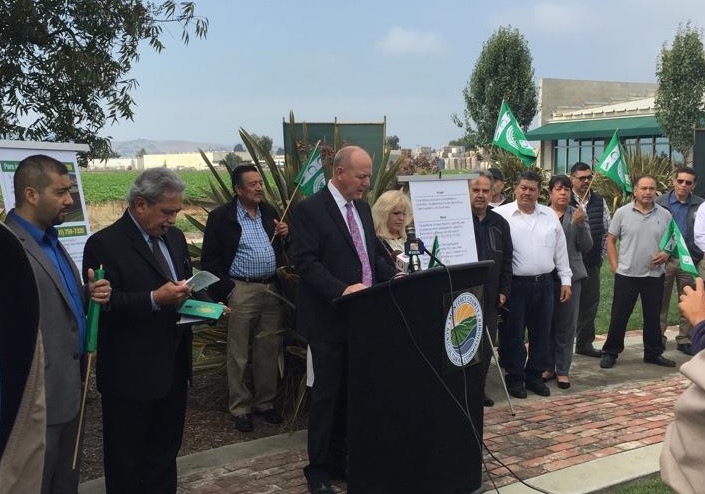
Monterey County Agricultural Commissioner, Eric Lauritzen and the Farmworker Advisory Committee, formed with the assistance of the Center for Community Advocacy (CCA), announced an historic initiative TODAY aimed at providing additional pesticide protections for farmworker safety. The initiative launches a pilot program with leading growers to enhance worker notification through warning signs when pesticides are used in the fields.


“California has the toughest farm pesticide restrictions in the nation, and Monterey County already imposes local rules that further protect farmworkers,” said Lauritzen at TODAY’s press conference. “But we are going to do even more to communicate our commitment to safety in the fields.”


“We are excited about this initiative that adds an additional element of protection for farmworkers by providing the time and date when it is safe to reenter the fields that require posting,” said Lauritzen. “Farmworkers are the backbone of Monterey County’s $4.8 billion Ag industry, and they are entitled to the highest standard of pesticide safety.”


Eric Lauritzen, Monterey County Ag Commissioner

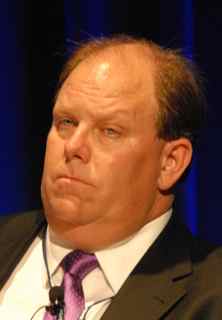
Eric Lauritzen, Monterey County Ag Commissioner, speaking at Press Conference TODAY on Historic Farmworker Safety Initiative

Intended to protect farmworkers, the initiate “has created a relationship between our office, the regulators and the farm worker community,” said Lauritzen. “And it’s really building trust and confidence with our office and the regulatory program there to protect farmworkers,” noted Lauritzen.


Additionally, every farmworker in Monterey County (approximately 50,000) will receive a business-card-sized information card (in Spanish) advising them to call the Agricultural Commissioner’s Office if they suspect violations of safety rules. The cards also advise employers that it is illegal to retaliate against farmworkers who seek the help of the Agricultural Commissioner’s Office.


The information card reads:

If you have questions or complaints on pesticides, the Monterey County Agricultural Commissioner’s Office will help.

The card includes phone numbers and advises workers that state law also protects them against retaliation if they report a pesticide problem.


Currently, regulations for posting pesticide warning signs do not require information indicating the date or time when it is safe for farmworkers to re-enter the fields. The pilot program will include the addition of one sign that will be prominently marked with a red flag and include the date and time that the law allows workers to safely reenter the field. Only the grower or his/her officially designated representative may remove the signs, after first showing the crew leader proof that the re-entry restrictions have expired.


Osvaldo Cisneros, a lettuce worker and member of the Farmworker Advisory Committee, feels that the change is very important. “Some farmworkers have been showing up for work and have been told by their mayordomos (supervisors) to re-enter fields even though warning signs are still up,” said Cisneros. “They have to depend on the word of the mayordomos even though they have no way to verify what they are told. This change will allow farmworkers, themselves, to tell when it is safe to enter fields.”


The posting and information card initiatives were developed in cooperation with the Farmworker Advisory Committee, a group formed jointly by Lauritzen and the non-profit Center for Community Advocacy. “Many farmworkers are unaware of their right to a safe working environment,” said CCA Executive Director Juan Uranga. “That’s why it is important to provide farmworkers with the information they need to both protect themselves and also gain access to the agencies, like the Monterey County Agricultural Commissioner’s Office, that exist to protect them.”


A second member of the Farmworker Advisory Committee, Maria Elena Andrade, added: “It is important for our community to know that the Agricultural Commissioner’s Office exists to serve us, as well as the other parts of the agricultural industry. We are trying to create that message through the Farmworker Advisory Committee, even as we work with the Ag Commissioner and his staff to improve safety for farmworkers.”


Growers involved with the initiative include Sea Mist Farms, Tanimura & Antle, Bayview Farms, Scheid Vineyards and Costa Family Farms. Lauritzen recognized these leading growers for their, support, innovation and dedication in their effort to provide additional protections for farmworkers.


Lauritzen briefed officials at the state Department of Pesticide Regulation (DPR) on the pilot warning sign program and the information card campaign. DPR Director Brian Leahy praised the Monterey County initiative. “We all know that farmworkers are the most vulnerable population in terms of potential exposure to pesticides,” said Leahy. “When we protect farmworkers more effectively, we also enhance protection for the environment and the community at large. This initiative represents an important step forward for farmworker safety, and it underscores California’s leadership in environmental protection.”


Historic Note:

The accord reached two years ago between the Office of the Monterey County Agricultural Commissioner, the agency that oversees pesticide regulations and other worker safety matters, and the Center for Community Advocacy (CCA), a farmworker advocacy group, established the Farmworker Advisory Committee for the Office of the Agricultural Commissioner of Monterey County—the first of its kind in the State Of California.


2021-05-12T11:05:48-07:00August 29th, 2016|
Go to Top