Recycled Water Project for Water Stability, Part 2

North Valley Regional Recycled Water Program Projected Completion

By Brian German, Associate Editor

In our continued coverage of the monumental North Valley Regional Recycled Water Program (NVRRWP), Anthea Hansen, general manager of the Del Puerto Water District, talked about the projected completion for the project.

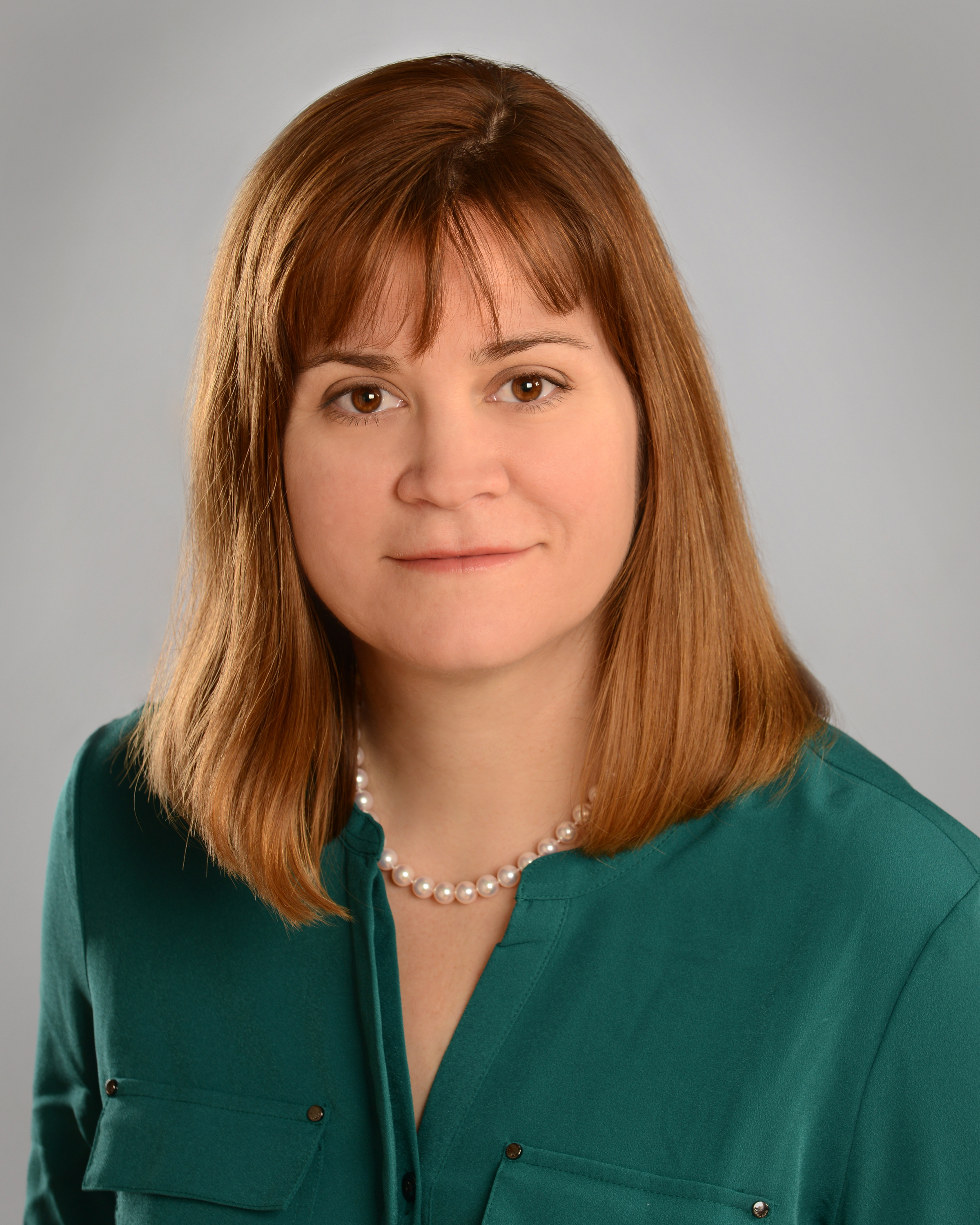
Anthea Hansen, general manager, Del Puerto Water District

Anthea Hansen, general manager, Del Puerto Water District

“We estimate the pipeline will be completed by December 2017—less than two years,” Hansen stated. “The first year’s combined quantities, if both cities (Turlock and Modesto) are online at the start date, will be somewhere between 25K and 30K acre-feet per year,” Hansen calculated.

NVRRWP will convey recycled water from Turlock and Modesto, currently being discharged into the San Joaquin River, instead to the Delta-Mendota Canal via pipeline for storage purposes and later use. “The sense that we all have here,” said Hansen, “is that this transaction and this accomplishment will change the future of the Del Puerto Water District for the better. It will give us some stability in our base [water] supply that we know will come year in and year out.”

After many years of working with various agencies and collaborating with  multiple cities, the project has passed all of its major hurdles and is set to break ground within the next few months. Using recycled water from treatment plants will reduce reliance on unsustainable groundwater supplies and also lower the amount of water pumped from the Delta.

NVRRWP map recycled water

NVRRWP map (Source: NVRRWP map)

“People use water in the cities every day, 365 days a year,” explained Hansen. “The reliability of the supply is so important to us because, for such a long time, we have not had reliability in our water supply,” Hansen noted.

“We have 40-year agreements in place with both cities,” she continued. “As a result of the program, even in the first years, each irrigable acre in the district will receive somewhere between one half to three-quarters of an acre-foot of guaranteed water supply, year in and year out.”

Hansen added the project will sustain a growing population. “Over time,” she remarked, “as the cites grow and the populations expand, the quantities of water are projected to grow over the build-out period for the project.”

______________________________

See Also: Recycled Water Project for Water Stability, Part 1, “North Valley Regional Recycled Water Program: A New Water Source for Valley Farmers,” June 14, 2015.

Additional Benefits of the North Valley Regional Recycled Water Program
2021-05-12T11:05:53-07:00July 5th, 2016|

Valley Fig Growers Have Rich History

Valley Fig Growers Foresees Bright Future

By Patrick Cavanaugh, Farm News Director

As the 2016 fig crop continues to ripen in Madera County orchards, the fig industry is finding a good balance between supply and demand. Gary Jue, president of Fresno-based Valley Fig Growers, said the association is last fig growers cooperative in the world. “Our growers, who are mainly in Madera County, produce only dried figs,”said Jue. “We do not handle any fresh figs.”

“Formed in 1959 by a group of growers,” explained Jue, “Valley Fig grower-members are our owners, and individuals like myself work at the pleasure of the board of directors and our owners. We are a very diversified dried fig company. We probably produce the largest quantity of dried fig products offered by any processor/packer.”

“Our goal is to provide innovative products to our customers,” Jue explained, “our industrial customers—food manufacturers, in particularas a way to enable them to use our products in their products. We want to be as user-friendly as we can, so we listen to consumer needs to get our product in their hands and make it easy for them to use. The more we can do that, the more successful we’ll be at with providing figs to the consumer,” he said.

Gary Jue

Gary Jue, president of Valley Fig Growers.

Fig popularity has grown over the last five to seven years, Jue said, including fresh figs in season. “That’s been very popular especially at the high-end restaurants,” noted Jue. “We’re starting to see more and more dried fig products used in entrees in high-end restaurants, and even in mid-sized-priced restaurants.”

“If you go to the renowned coffee supplier that you see in every port and city in the U.S. and abroad,” Jue said, “you’ll see our figs in a product they provide. It is great to see products like that on the shelf! Confectioners are also on the wagon, as we’re starting to see more confectionery products now made with dried figs that we had not seen in the past.”

Jue mentioned during the holiday season last year, one of the Valley Fig accounts provided a whole chocolate covered fig product that was great. “Now,” he said, “we’re looking to determine if this is going to be a seasonal item or a year-round item. That large wholesale supplier really did a great job of introducing this confectionery fig into the mainstream public marketplace. It’s not a high-end specialty item, but something that anybody can go to the retail shop everyday to buy and enjoy. That has been a great, great upshot,” Jue affirmed.

This is all good news for the fig industry because Americans tend not to be big fig consumers as the fig is not indigenous to the United States. More typically, figs are enjoyed with greater consumption throughout the Mediterranean region as they have been produced there since pre-biblical times. During Roman times, figs were given as prizes. “Through carbon dating studies,” Jue elaborated, “we have determined figs were the first cultivated food known to humankind.”

“Because the crop has been around for so long, figs are very well known in Europe. Europeans grow up eating figs, but Americans are starting to develop a palate for dried figs and fresh figs as well,” said Jue. “And for us in the fig industry, it’s great to see that occurring.”

2016-06-29T21:06:21-07:00June 29th, 2016|

Timorex Gold, Broad-spectrum Biofungicide

Biofungicide Timorex Gold to Help Western Vegetable Growers Fight Disease Pressure

By Patrick Cavanaugh, Farm News Director

The U.S. EPA has approved Timorex Gold, a new broad-spectrum reduced-risk biopesticide that is already a leading biofungicide in Latin America to control black sigatoka, a leaf-spot fungal disease on bananas, for various domestic crops such as tomatoes, strawberries, as well as other berries, cucurbits, grapes, tree nuts, and lettuce.

Stockton photo Strawberries & Blueberries beautiful!Timorex Gold is well positioned for American crops because it is known to be effective on powdery mildew and Botrytis on strawberries and tomatoes, plus bacterial blight on tomatoes.

Sarah Reiter, country manager of STK Stockton, an innovative Israeli company that opened its U.S. headquarters in Davis, CA. “We are very excited about the products performance we are seeing in areas where it is registered,” said Reiter. “We are happy with the label the EPA granted us. We still await registration in California and anticipate it next year or possibly late this season.”

Reiter noted the highly effective active ingredient in Timorex Gold, the plant extract Meluleuca alternifolia, or tea tree oil, gives growers a powerful new tool to control both bacteria and fungi diseases. “We know growers do not have a lot of choices for bacterial control,” said Reiter, “so any new active ingredient is a good thing. This product has the added bonus of being a fungicide too.”

“Timorex Gold has been established as a primary control product for sigatoka because it performs so well,” Reiter commented. “Growers use it because of its profile, and it’s easy to use. And while the product is a biopesticide, once the growers get it in their hands, they tend to forget it’s a biopesticide because it performs as if it is a synthetic material.”

timorexgold STK Stockton Group“As an industry we have been looking for this for quite a long time,” Reiter reflected. “While biologics have been around for a century, historically, growers would have to give up some levels of control in order to implement them into a conventional program. We do not see that loss when using Timorex Gold against sigatoka disease.”

“Our expectation in the U.S. is that growers will see that same high level of performance when they use the product here,” Reiter said. “And since Timorex Gold is a biological, there is no concern for Maximum Residue Level (MRL) data because there is no residue on the crop. The product will have very short re-entry intervals (REIs) and preharvest intervals (PHIs), as well as flexible application intervals, a strength that growers like because it gives them a lot of flexibility to implement the product into their program when they need to instead of having to manage REIs and PHIs.”

In addition, Timorex Gold has a very low designation of FRAC 7¹, which means the product has a unique mode of action that can be used in alternate succession with other fungicide modes of action to prevent the development of resistance.

Concurrently, STK Stockton continues to invest heavily in its new technology pipeline with the intention of bringing more innovative biopesticides into different markets. As part of these efforts, the company has recently announced the appointment of Shay Shaanan as the new vice president R&D, leading the company’s activities. The former global development manager of the fungicides division at ADAMA (formerly Makhteshim Agan), Shaanan has over 15 years of experience in research and commercialization of crop protection products.

“Having Shay join our team marks another significant milestone in our growth strategy. It reflects our commitment to advance our technologies and provide the agriculture industry with new solutions for sustainable agriculture.” explained Guy Elitzur, CEO of STK Stockton. “Shay will lead our R&D and will be of enormous value in moving our company forward. Additionally, we will be looking for in-licensing partners, including bio companies in the U.S. to broaden our product offerings.” said Elitzur.

The products of Stockton will be sold under the Syngenta brand for Botrytis and Powdery Mildew in ornamentals globally. The biofungicide technology complements the comprehensive fungicide portfolio of Syngenta and will help to provide its customers with innovative sustainable tools for disease resistance management.

“We are very excited about this agreement,” Elitzur commented, “as Syngenta is the perfect partner for our new products in ornamentals.”

________________________________

¹FRAC is a Specialist Technical Group of CropLife International (CLI) that provides fungicide resistance management guidelines to prolong the effectiveness of “at risk” fungicides and to limit crop losses should resistance occur.

The main aims of FRAC are to:

  1. Identify existing and potential resistance problems.
  2. Identify existing and potential resistance problems.
  3. Collate information and distribute it to those involved with
    fungicide research, distribution, registration and use.
  4. Provide guidelines and advice on the use of fungicides to reduce the risk of resistance developing, and to manage it should it occur
  5. Recommend procedures for use in fungicide resistance studies.
  6. Stimulate open liaison and collaboration with universities, government agencies, advisors, extension workers, distributors and farmers.
2021-05-12T11:05:54-07:00June 28th, 2016|

AgTech—The New Frontier for Farming

AgTech: Bringing Agriculture and Technology Together for Success

by Emily McKay Johnson, Associate Editor

Aaron Magenheim, an innovative leader in the AgTech movement, helps startups and investment companies understand production farming in California to bridge the disconnect between farmers and evolving technology. Enabling farmers to be on the cutting edge of technology has been key to the success of his company, Ag Tech Insight (ATI).

Aaron Magenheim, AgTech Insight founder

Aaron Magenheim, AgTech Insight founder

Magenheim grew up in a family agricultural irrigation business on the Central Coast, Signature Irrigation, and has supported growers his whole life. Four years ago he started Signature AgTech, a stand-alone agriculture technology company, which sells, installs and supports various technologies for growers on the Central Coast and in the Salinas Valley.

The turning point occurred when, according to Magenheim, “I started spending a lot more time in Silicon Valley, and about two years ago I saw a huge disconnect among bright people with great ideas, a lot of money coming into the market and the knowledge that many farmers have absolutely no clue there are solutions 50-100 miles away.”

“That’s when I started AgTech Insight,” Magenheim continued. “I had no clue what we were going to do with it. We have evolved through a number of different situations and built a great team. We started doing meet-ups about a year and a half ago, and we have done nine or ten of them now.”

“We’re at the point now where we are getting collaboration from the city of Salinas and other Monterey Bay economic entities coming together to work with us to build meet-ups and more activity in the area.”

Helping Growers Understand

“As we’ve talked with growers and helped them understand what technology can do to them,” Magenheim explained, “we have also raised money for some companies through grower funding to develop technology and installed in the field. Through that process, we have found growers are really interested in working with and helping early-stage companies. But the value proposition has changed; growers used to have a good value proposition to help an early stage company because they would get use for two or three years of a new technology in their operation before someone else did and profit from that.”

“We’re starting the AgTech Grower’s Alliance (ATGA) —a next generation, ag industry-backed ecosystem to advance the development of AgTech businesses,” Magenheim detailed. “From prototype to market expansion, ATGA, a catalyst for the adoption of technology in agriculture, is basically putting a fund together to allow growers to invest in early stage companies before they’ve put a million dollars into their product, and develop their idea from concept to a scalable point that attracts Silicon Valley [investment],” Magenheim said.

ATGA is growing, even outside of California. “We’re stamping out a satellite in the Turlock area,” Magenheim stated, “and I’m heading to Chicago tomorrow to meet with groups of growers to establish another satellite in that area. This can happen in a lot of different regions—bringing the technology together. It’s really a community effort bringing the growers together,” he said.

Field-level actions

Magenheim wants to track equipment and improve collection of in-field data. “I want to be able to go to a field and see when it was disced, when it was listed, when it was watered, when it was planted, when we should harvest, and what that projected harvest is going to be,” he elaborated. “We have a lot of companies working on software and big data and Internet of Things (IOT) and that’s great; but if you can’t get that information from the field, and you don’t have a place to pull the data from, then it doesn’t exist. We really concentrate on a lot of field-level actions.”

“People are coming from schools such as California State University, Monterey Bay (CSUMB) and Hartnell College in Salinas, and from all over the country at this point,” Magenheim said, “whether they are educators or students trying to understand where their opportunities are. Growers come to our events to learn and understand where technology is going and how their operations can benefit. Then you have a lot of technology people. We get people from Silicon Valley and from Western Growers Center for Innovation & Technology coming down to hear what the growers are talking about and looking for.”

_______________

Over the past 45 years, Ag Tech Insight (ATI) team members have been integrating the best ideas and advancements available to the agriculture industry, including designing, building, and implementing new tractor equipment; revolutionizing row crop irrigation by incorporating drip tape in Salinas Valley; and starting drip tape recycling programs and hydrostatic harvesting. AgTech has brought dozens of new software solutions to the market, from multiple GPS asset tracking systems to world-leading data collection and remote management. Recently AgTech diversified and significantly improved current monitoring and control systems for some of the largest names in the agricultural industry.

2021-05-12T11:05:55-07:00June 22nd, 2016|

Mohr-Fry Ranches Honored

Mohr-Fry Ranches is CAWG Grower of the Year

By Laurie Greene, Editor

The California Association of Wine Grape Growers (CAWG) has selected its 2016 Grower of the Year, Jerry and Bruce Fry of Mohr-Fry Ranches, who will be presented with the award at the CAWG Awards of Excellence Program in Monterey on July 20, 2016. The Grower of the Year Award is the highest honor given by the association to an individual, family, or company that represents an outstanding example of excellence in viticulture and management.

John Aguirre, president of the organization, offered some background on this year’s award winners. “Jerry and Bruce are icons of the Lodi wine grape growing community. They do not own a winery, but they are long-time vineyard agriculturalists and have a long history of community leadership, and involvement in agricultural organizations,” Aguirre said.

Mohr-Fry Ranches Logo, CAWG


Mohr-Fry Ranches was one of the original six Lodi growers to certify their vineyard under the Lodi Rules for Sustainable Wine Growing. Jerry Fry is the president and CEO, and Bruce Fry is the vice president of operations of the family-run Mohr-Fry Ranches. The father and son are two of the most respected growers in the Lodi wine grape community and also dedicate an enormous amount of time serving the industry in their community.

“Jerry was a past chairman of CAWG, and Jerry and Bruce have both been deeply involved not only with CAWG, but with the California Farm Bureau Federation, the Lodi District Grape Growers Association, and the Lodi Wine Grape Commission,” said Aguirre. “They really embraced the idea that working as a community is essential to the strength of agriculture.”

“Jerry was really visionary in terms of developing Lodi into the powerhouse that it is today. Arguably, Lodi occupies one of the most critical positions in the winegrape industry in its ability as a region to produce high-quality grapes that are sought by Napa winemakers to blend into Napa wines,” noted Aguirre.

2016-06-26T15:39:32-07:00June 21st, 2016|

FARMit Educates Farm Managers

FARMit Fills Educational Gaps in Farm Management

California Ag Today farm news director, Patrick Cavanaugh, learned about FARMit from expert Dan Whisenhunt, whose accomplishments include president and CEO at Agcom LLC, (An Agson Global, PVT, LTD Subsidiary); principal at Dan Whisenhunt Consulting, in Turlock; member of the Board of Directors for the California chapter of the American Society of Farm Managers and Rural Appraisers (ASFMRA); chair of the FARMit Education Committee (farm management); member of the Farm Management / Ag Consulting Education Committee on the national level of ASFMRA; and Accredited Agricultural Consultant (AAC) designee. 

Dan Whisenhunt, member, board of directors for the California ASFMRA and chair, FARMit Committee

Dan Whisenhunt, member of Board of Directors for the California chapter of the American Society of Farm Managers and Rural Appraisers (ASFMRA) and chair of the FARMit Education Committee (farm management)

CalAgToday: What is the scope of FARMit?

Whisenhunt: FARMit is a 14 one-day course education package designed to fulfill the education gaps in California agriculture. We held some focus group meetings throughout the state to identify the education gap in farm management areas and then designed the courses to fulfill those gaps. Now, we are offering California agriculture in general; which teaches valuable soft-skills that can enrich a company’s culture and also improve employee performance.

CalAgToday: Can you give us an example of these gaps?

Whisenhunt: The education gaps are mostly in the farm management area—our main target. But we’re seeing those same education gaps in all areas of agriculture, from farm managers and leads in the field, to executive farm managers and lenders.

These courses are aimed at all of those markets to enrich [management] knowledge and enable them to be better employees for their company. The focus group meetings basically surveyed the attending farm managers to identify what education they think is lacking for their profession here in California. And really, nobody offers farm management education here in California, or across the country, other than the ASFMRA.

CalAgToday: Are the courses required to fulfill the farm manager education curriculum?

Whisenhunt: No, not unless you hold a certification, an accreditation, from ASFMRA. The accredited members, either farm managers or ag consultants, are required to have 30 hours of education every two years in their discipline. But, there are no requirements for farm managers, and this is a real advantage to those companies that choose to in their employees, particularly in the form of education, to enhance their employees’ effectiveness. They’re going to be able to better communicate with their coworkers, better communicate with their employees, do a better job—on the job, and ultimately, make more money for the company.

CalAgToday: ASFMRA is a national organization, so is FARMit national?

asfmra FARMit logoWhisenhunt: These classes were designed and developed by the California chapter, but we have offered them in other states. We’re getting requests.In fact, one of our members traveled to offer one of these classes to the Illinois chapter, and they’ve requested that we facilitate two more classes for them in July. And the Michigan chapter is requesting a class to be facilitated in September, so we’re offering these all over the country.

CalAgToday: That’s great.

Whisenhunt: Yes, our aim is to work with the national ASFMRA, based in Denver, to offer education to other chapters across the country, but this is primarily for the agriculture industry here in California.

CalAgToday: How do we find out more about FARMit?

Whisenhunt: You can go to our California Chapter ASFMRA website, or call our chapter office in Woodbridge CA, at 209-368-3672.

__________________________

The California Chapter of the American Society of Farm Managers and Rural Appraisers, according to their website, was chartered in 1949 as an affiliate of the national organization. It is a non-profit mutual benefit corporation under California law.

Members of the American Society of Farm Managers and Rural Appraisers are uniquely qualified to meet the complex challenges of modern agriculture. ASFMRA is the nation’s premier organization of professionals who adhere to exceptionally high standards for education, ethics and performance in appraisal and management of agricultural properties, and consulting for agribusiness. The California Chapter is one of 38 chapters affiliated with the national organization.

2016-06-07T15:04:25-07:00May 17th, 2016|

Farmworkers Win One

Barry Bedwell: Court Decision Returns Constitutional Rights to Farmworkers

By Patrick Cavanaugh, Deputy Editor

Barry Bedwell, president of the Fresno-based California Fresh Fruit Association, discussed the implications of a unanimous decision on May 9, 2016, the California Fifth District Court of Appeal struck down as unconstitutional a 2002 law that stripped workers of their constitutional right to seek invalidation of unlawful Agricultural Labor Relations Board (ALRB) decisions in Superior Court.

Barry Bedwell, president of California Fresh Fruit Association

Barry Bedwell, president of California Fresh Fruit Association

According to a Gerawan press release:

This case arose after a Gerawan farmworker Lupe Garcia filed a lawsuit in Fresno Superior Court in which he claimed that the First Amendment was violated when the ALRB refused to permit him to silently observe the ALRB’s “on the record” proceedings concerning the terms of a contract to be imposed on him and all other Gerawan farm employees. Gerawan Farming supported Mr. Garcia in the Court of Appeal and in the Superior Court, and filed its own action seeking the same relief. The 39-page decision in Garcia and Gerawan Farming, Inc. v. ALRB, Case No. F069896, held that the California Constitution barred the California Legislature from stripping workers of the right to bring claims in Superior Court. In reversing the dismissal of Mr. Garcia’s lawsuit, the Court of Appeal directed the Superior Court to hear the employee’s case.

Bedwell said while this was good news for the farmworkers because they can’t be barred from secret meetings, “it’s even more technical than that. It says [ALRB] cannot deny [farmworkers] the right to sue to be there.” Previously, according to Bedwell, ALRB claimed farmworkers “could not sue in Superior Court on this issue of being denied access to the mandatory mediation hearing. This Court of Appeals has decided that was unconstitutional, that [farmworkers] can now move forward and sue under the theory that their First Amendment rights were denied.”

“I don’t think [the court decision] solves the entire issue,” Bedwell said, “but it clearly indicates the ALRB has really overstepped their boundaries, not only in the case of denying access to these farmworkers, but not allowing the ballots to be counted. What it really indicates is the ALRB is once again denying farmworker rights at a time they should be representing them. This is just more evidence that, unfortunately, the ALRB seems to be more directed towards protecting the union rather than the workers’ rights. This is a continuing pattern; it’s clear that the ALRB is not representing the farmworkers, they are representing the union, and that’s unfortunate.”

In terms of next steps, Bedwell thinks the ALRB may decide—as a policy—they won’t deny access. He commented, “It essentially may have accomplished what the farmworkers wanted in the whole question—of just being able to observe the mandatory mediation process. These were people who were going to be subject to the [union contract] terms, but the ALRB said, ‘Oh no, we don’t want you in. We only want the union representatives in.’ That’s pretty poor,” stated Bedwell.

“The system unfortunately is so biased and heavily weighted toward organized labor,” he continued. “I’m not sure what it’s going to take. I suspect that if we’re going to find justice for Gerawan employees, it’s not going to come through the agencies in Sacramento; it’s going to have to come through the courts.”

2016-05-31T19:24:04-07:00May 11th, 2016|

Connecting with Consumers

AgChat Reaches Out to Consumers


By Laurie Greene, Editor


Jenny Schwiegert, AgChat Foundation chief executive director, spoke to Laurie Greene, California Ag Today editor, at the recent Bayer AgVocacy Forum about one of the biggest challenges to agricultural advocacy. “We’ve got excellent bloggers out there,” Schwiegert said, “however, the audience they [reach] tends to be other growers and ranchers. We do not want to be singing to the choir. We need to find other ways to connect with non-ag consumers.”

Schwiegert elaborated on some of the resources for non-ag readers posted on the AgChat website, “There’s a page under “Resources” that talks about different non-agricultural hashtags people can use when they tweet or use Instagram or Snapchat. We also have a post about people with whom we need to connect on Twitter who are not necessarily in the agricultural industry.”

Jenny Schiegert, AgChat executive director

Jenny Schiegert, AgChat chief executive director (Photo Source: LinkedIn)

To [farmers and Ag bloggers] who are trying to determine who their audience might be, Schwiegert advised, “There is more to you than just farming and ranching. You know, I like to do renovations at my home; I like photography; and I’m a baseball mom. When I began blogging, which I don’t do as much recently, my strategy was always to be incognito and not say, ‘Hey, this is what I do.’ I would only talk about farming.”

However, Schwiegert discovered that when she talked about those other topics that are not necessarily related to farming, her posts attracted a lot more of a mom-based or photographer-based audience. She suggested, “Find that spark, the other part of your life that is not related to farming and ranching, and explore and talk about it. Connect with other people [consumers] who have that same desire to have a hobby or whose kids are also in baseball, or whatever it might be.”

While connecting with people via a distinctly different interest can be constructive, Schwiegert held that consumers do trust and want to hear about agriculture from farmers and ranchers. She referred to a recent finding that while the majority of people do not know how to get in contact with a farmer, farmers are the people they want to talk to and get their information from.

“We have also experienced this on a personal basis,” Schwiegert shared. “While our operation is very small, we like to take people, and not necessarily adults. Sometimes we will bring our children’s friends out, show them the sheep, and take them to my in-laws’ dairy. My younger two sons have an egg business, so we’ll show them that too.”

“Ninety-nine percent of the time,” Schwiegert said, “someone will say, ‘Oh these are so much better than the store-bought, and the store-bought has been sitting on the shelves for months.’ That’s where I stop and say, ‘that is not necessarily true. Let me connect you with Katy who is in Iowa or let me connect you with Greg in Oregon, whose egg farm is producing 1.5M eggs a day.’”

“I like to connect people,” she explained, “to help them understand what modern agriculture is all about because we tend to have a [rustic] romantic, idealistic view of what a farm is, and that is what people want.” But, she contends, that may not match what farming really is in today’s world. “I think people really do want to talk to the farmers and ranchers,” said Schwiegert. “They just don’t know how to go about connecting with them.”

Schwiegert does not know if there is a definite ‘disconnect’ between this romantic view of the rustic farm scene with antiquated tools, and consumers who use the latest devices and apps. She said, “I am not sure how to re-connect that. For instance, why is it ok to use an antibiotic if you have pneumonia, but it is not ok to use it in chicken? And I’m not sure how we mend that because consumers are not trustworthy of statistics and science, so I guess that it is one of the million-dollar questions out there. You know, how is it OK for them to have a Fitbit, but our farmers can’t use GPS or auto-steer in their tractors or precision Ag drones?

“That is a huge disconnect, and we need to address it as an industry,” Schwiegert reflected. “I think a lot of people in agriculture are intimidated and scared to share their stories because there are folks out there who are ready to pounce. And especially if you have small children, you do not want to have those types of people on your property. So people are hesitant to share their stories.

“I have the same fears,” Schwiegert stated. “I don’t want people like that on my farm. But the more that we can share our stories out in public, using different methods—whether through social media or a farm-to-table type of event with a commodity group at a public location—the more likely we are to mend that disconnect.”

2021-05-12T11:00:54-07:00May 3rd, 2016|

New FFA State Stars Honored

Halley Lauchland Wins FFA Star State Degree in Agriscience Award

By Charmayne Hefley, Assistant Editor

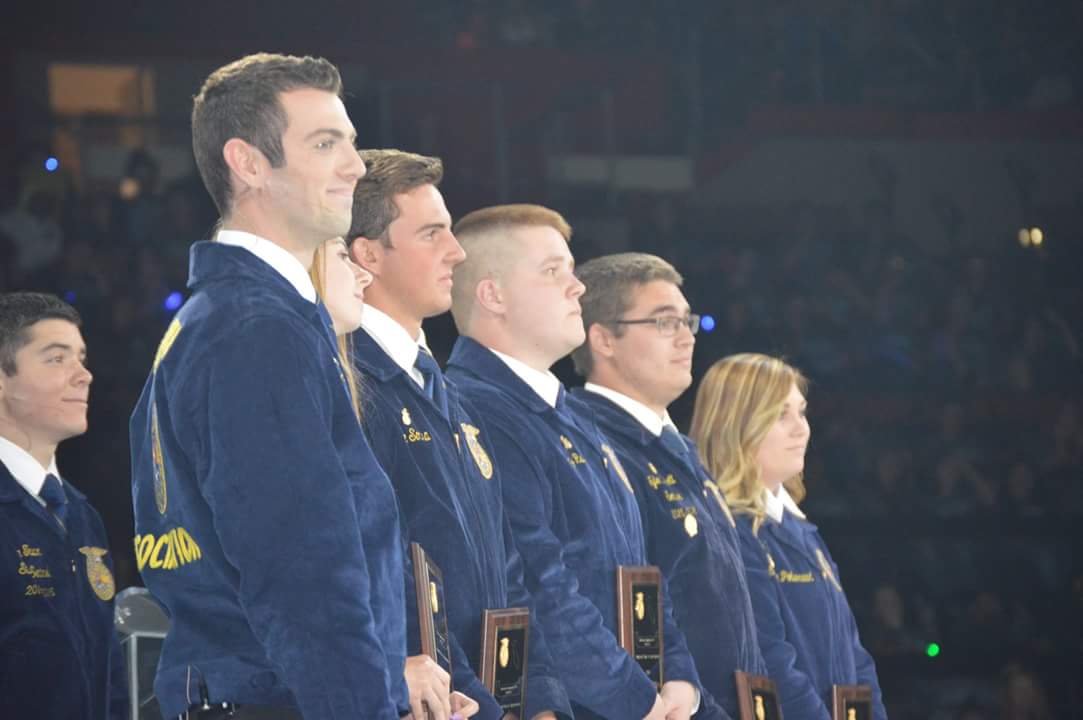
During the opening session of the 88th California Future Farmers of America (FFA) State Convention in Fresno last Saturday night, four California FFA members were honored with the top Star Awards during an onstage ceremony. As reported by the California FFA Association in a press release, each of them excelled in one of four areas:

Andrea Thomas from the Colusa FFA chapter was named the California Star Farmer state winner in recognition of proven leadership skills for an aspiring young farmer. Thomas raises and maintains hogs, cattle and hay.

Halley Lauchland, 2016 FFA Star State Degree in Agribusiness Award winner

Halley Lauchland, 2016 FFA Star State Degree in Agriscience Award winner (Photo Credit: California FFA)

Nitin Gupta from the Tulare FFA chapter was named the California Star in Agribusiness state winner, the highest achievement for a person pursuing a career in agribusiness. Gupta started the business Simple Sand three years ago in which he collects, markets and distributes sand from his family’s ranch to local businesses.

Paul Barcellos, also from the Tulare FFA chapter, was named the California Star in Agricultural Placement state winner, the highest recognition in the state for a young person excelling in job placement in the agricultural industry. Barcellos works alongside his dad at Cain Trucking as a Foreman in the Composting and Air Pollution Control Operations in recycling agriculture products and preventing air pollution.

Halley Lauchland, a high school junior from the Lodi FFA chapter received the 2016 FFA Star State Degree in Agriscience Award, the highest achievement for a person pursuing a career in agriscience.

“My project was cane pruning for the control of Eutypa Dieback in winegrapes,” A fifth-generation winegrape grower, Lauchland told CalAgToday, “The disease is commonly found in cabernet franc finds.”

Lauchland conducted her research in part to help her family’s 18-year-old vines with the Eutypa Dieback disease,  which she defined as “a fungal spore that enters the vine through pruning wounds. This will eventually kill the vine, causing the farmer to have to replant, which costs a lot of money and isn’t efficient.”

Lauchland tested cane pruning versus the commonly-used method of spur pruning to keep the disease at bay. “We tested two rows and found [cane pruning] was a more efficient way to do it, and it was going to save us more money in the long-run.” Spotting her research catching on in local vineyards, Lauchland said  “It seems people are going to the cane prune.”

Lauchland’s research was published in the Lodi District Grape Growers Association Update last year as, “Lodi High School Student to Compete in State FFA Agriscience Fair with Eutypa Dieback Research Project.” Lauchland stated, “That helped put out the word, what this [method] does and how it helps farmers.”

Overjoyed to have been selected to win the Star in Agriscience award, Lauchland said, “Words can’t really describe how I feel right now.”

The California Future Farmers of America (FFA) State Convention was sponsored by PG&E and the J.G. Boswell Foundation, as a special project of the California FFA Foundation.

2021-05-12T11:00:55-07:00April 27th, 2016|

California Women for Agriculture Anew

California Women for Agriculture Rebrands After Forty Years

By Charmayne Hefley, Associate Editor


Founded in 1975 in Coachella Valley to promote and develop the interest of women in a strong agriculture industry in California, California Women for Agriculture (CWA) marks its 41st year with a rebranding. Jeanette Lombardo, president of CWA, said, “The theme for this year is Innovate, Activate and Motivate. We are really taking a look at everything we do, and trying to change it for the better,” she said.

Lombardo said there are currently 20 chapters with 2000-plus members across the state. Guided by five principle objectives, CWA aims to speak on behalf of agriculture in an intelligent, informative, direct and truthful manner; to keep members informed about pertinent legislative activities; to collaborate in support of agricultural issues and challenges; to improve the public image of farmers; and to develop a rapport with consumers, educators, and governmental & business leaders in communities throughout the State.

The wonderful thing about our organization is the age range,” Lombardo said, “from very young to very old. And the older ladies are wiser ladies, as I like to say; they provide mentoring capabilities to the younger folks who are coming in. And the younger folks are seeking leadership, personal growth, and network and industry knowledge,” Lombardo said.

Likewise, Lombardo said, young CWA members have been reverse-mentoring mentors on matters such as social media, “It is a wonderful thing and my goal is to have chapters in every county,” she noted.

2016-05-31T19:24:06-07:00April 22nd, 2016|
Go to Top