ALRB Education Does Not Require Worksite Access

Barry Bedwell Says ALRB Education for Farmworkers is Okay, But Not Worksite Access

By Patrick Cavanaugh, Deputy Editor

Officials from the California Agricultural Relations Labor Board (ALRB) held a public hearing in Fresno TODAY to talk about their proposal for worksite access– private operating farms–to educate farmworkers about the ALRB, and that did not sit well with ag leaders. Barry Bedwell, president of the California Fresh Fruit Association based in Fresno and other ag leaders questioned the ALRB’s motives.

“The real proposal has to do with granting legal access to ALRB agents to agricultural worksites for the purpose of educating workers about the Agricultural Labor Relations Act,” Bedwell said. “Education alone is something that no one I’ve talked to is against, clearly. We want people to understand their rights under the law.”

The Act provides, encourages and protects collective-bargaining rights for agricultural employees, but as Bedwell explained, access to a private worksite is a totally separate legal issue.

“It’s really complicated, unfortunately, because ALRB’s staff has shown to a great degree over the recent couple of years, a distinct bias towards organized labor,” Bedwell said. “The Act is all about a worker’s right to get one or more people together to complain about work conditions and to ask for certain things. It doesn’t mean the employer has to grant them; it’s really about worker’s rights.”

Bedwell said the request from the ALRB is distinctly not about a union’s rights, and “it’s never been about the employer’s rights,” Bedwell said. “We know that. But in this case, we think it’s at best premature to talk about workplace access without first understanding the issue of knowledge [or the lack thereof] out there currently and the best ways to conduct that education.”

Pointing to heat illness prevention and Cal/OSHA as a great example, Bedwell said, “Cal/OSHA did not ask for access to go onto someone’s private property. Instead, they said, ‘We will create the information systems through various media and through seminars which agriculture helped to organize and fund.’ We think that’s a great model for educational services, and we could help.”

2016-05-31T19:28:05-07:00September 10th, 2015|

Super PAC Needed to Fight Extreme Enviromentalists, Part 3

Rachel Martin on Need for Super PAC to Fight Extreme Environmentalists

By Charmayne Hefley, Associate Editor

Part 3:

This is the third and final part of a three-part series with Rachel Martin, the national chairperson of Homeland Security for the National Federation of Republican Women, on the importance of creating a political action committee (super PAC) to combat extreme environmentalists in order to save forests, wildlife, and ag suffering from limited water allocations during this extensive drought.

Martin discussed how groups in addition to agriculture are suffering due to the limited water allocations and environmental regulations that prevent forest maintenance, such as logging, thinning of the forests and controlled burns, the lack of which leaves forests vulnerable to wildfires that burn thousands of acres and kill protected animals annually. “The Super PAC that I’ve been putting together since February is bringing together law enforcement and fire fighting agencies,” Martin explained. “We’re also bringing in animal organizations; we’re just waiting for their board approval.”

Through combined funding, Martin hopes the Super Pac will  begin to rival the environmentalists who have already joined together to lobby for what they want. “We’re looking for associations and unions to get together and pool their money,” Martin said, “because that is what has helped the environmentalists get to this point–which is having almost total control of California. It’s lobbying, having the money, and joining forces to fight and pave their way through Sacramento and Washington to get their laws and their amendments approved. Yet we have a lot more people who are suffering, a lot more groups, organizations and animals that are suffering and dying because of the lack of water.”

Martin said she has been appealing first to those outside of agriculture to form her Super PAC and hopes the ag community will join in. “I figured ag is already in the fight,” Martin stated, anticipating strength in combined numbers and funds.


2016-05-31T19:28:05-07:00September 8th, 2015|

Super PAC to Save Animals that Die in Wildfires, Part 2

Rachel Martin on Need for Super PAC to Save Forests, Wildlife, Ag

By Charmayne Hefley, Assistant Editor

Part 2:  Animals Needlessly Die in Fires

We are continuing our three-part series with Rachel Martin, the national chairperson of Homeland Security for the National Federation of Republican Women (NFRW), who is urging the creation of a political action committee (super PAC) to save forests, wildlife, and ag suffering from limited water allocations during this extensive drought.

“Agricultural agencies aren’t the only entities suffering from the lack of water allocations,” Martin explained. “Other agencies are also suffering due to the environmental regulations that prevent forest maintenance, such as logging, thinning of the forests and controlled burns. Curtailment of forest maintenance leaves thousands of acres of forest, as well as wildlife, vulnerable to larger, more numerous, and containment-resistant wildfires each year.

“When law enforcement evacuates homes, they have to force people out,” Martin said. “People fight to come back into get their pets—their dogs, their cats, their horses, livestock and any other animals they may have. But, oftentimes, residents don’t have the means to haul their animals with them; they may not have horse trailers. Sometimes, animals actually run free up into the mountains and can’t readily be caught. As I was specifically told by some law enforcement officials, those animals end up dying in the fires.”

Martin realized that once animal lovers learn of the suffering caused by the environmental regulations, they might consider joining the fight against the environmentalists. “I’ve been working with animal organizations and animal lovers. I’m one myself. I have quite a few pets, and I grew up around horses. Animal organizations and animal lovers alike can get in on this fight against the environmentalists.”

“Environmentalists are trying to protect species that actually aren’t even on the protected list yet; they’re almost on the protected list,” Martin stated. “Yet, in doing so, they just keep getting further and further away with from their original goal of protecting endangered species and pristine forests. They’re getting away with a lot more through politicians, too.”

2016-05-31T19:28:05-07:00September 8th, 2015|

Karen Ross on Ag Innovation

CDFA Secretary Karen Ross on Ag Innovation


The next big thing is always right around the corner. Karen Ross, secretary of the California Department of Food and Agriculture, said while that may be so, farmers should be consulted to help with ag innovation–the creation of the next big thing–so both farmers and innovators will benefit.

“Here’s what we need to go to the next generation of innovation, so come talk to us early; don’t just come and say ‘we’ve got your solution,’” Ross said. “We manage a vast biological system, a complex system on the farming side, that responds to fast-moving markets on the consumer side. So don’t divorce yourself from us in the industry. Truly understand what we need and how we put together all these complex moving parts to meet consumer needs and expectations in the marketplace.”

Ross said while farmers are always willing to listen to a new way of doing things, involving them in the process and providing access to the data that demonstrates the need for a new product would be more beneficial.

“Farmers are always open to ‘is there a better way?’” Ross said. “But they want the data. They like to see some demonstration of that data—which comes back to partnering with our academic institutions and Cooperative Extension. Don’t just come out and sell me something; show me the data; show me the demonstration projects. Let me kick the tires. Maybe, I’ll put in a few acres of that this year. It’s not just a sales job. You’ve got to partner with the farmer. And if you do, you’re going to come up with a much better product.”

2016-05-31T19:28:05-07:00September 3rd, 2015|

The Peril of Smoke Taint on Winegrapes

Wildfires Threaten Smoke Taint on Winegrapes

By Charmayne Hefley, Associate Editor

There are at least two dozen major fires burning in the wilderness of California. Many are now contained, while others are only minimally contained. One recent serious fire, known as the “Rocky Fire” in Lake, Yolo, and Colusa counties burned nearly 70,000 acres before firefighters extinguished it last month.

But smoke from that fire may yet cause problems for the wine grape industry in Napa, Sonoma, and Lake counties. James Kennedy, chair of the Department of Viticulture and Enology and director of the Viticulture and Enology Research Center at California State University Fresno, explained the threat of smoke taint on winegrapes. “Anytime you have wildfires near vineyards,” Kennedy said, “there is a concern about how that smoke might become associated with grapes, and as a result, become associated with wine.”

Kennedy said they learned a lot about this problem from the Australian wildfires in 2003 that tainted their wine. Kennedy explained,“grape growers are oftentimes not aware of the extent to which smoke can damage fruit. In a sense, it is a two-edged sword. When wine is made from smoke-tainted grapes, it will have characteristics reminiscent of ‘the morning-after ashtray’ that is quite obnoxious and certainly not desirable. The other side of the sword occurs when smoke compounds interact with the grapevine and grape berries, it is modified by the grapes. Like an iceberg in the ocean, the ice above the water suffers the apparent smoke taint; whereas, the massive chunk underneath the ocean, though not initially as obviously smoke-tainted, reveals obvious taint over time.”

Kennedy said, “Winemakers in Australia realized that while you can treat that initial smoke taint, you don’t resolve the long-term taint problem. We, as an industry, are trying to identify vineyards with smoke taint problems before their fruit is made into wine. By testing grapes in laboratories, we are trying to prevent those wineries from wasting significant investment in converting tainted fruit into tainted wine.”

The Napa Valley Vintners nonprofit trade association reported on its website yesterday, “So far no vineyards or wineries in Napa County have been threatened by any of this season’s wildfires. Most of the time the fires were burning, the smoke blew away from Napa County due to the typically prevailing winds from the southwest. The weekend of August 15/16, we did experience very hot temperatures and a wind shift that caused our air to be hazy and smoky as a result of the many fires burning throughout CA. However, there were no reports of smoke taint affecting Napa Valley wine grapes as a result.”

“Most reports on smoke taint indicate that it exists only after an extended period of close contact with smoke; conditions that have not, to our knowledge, existed within Napa Valley this summer. Furthermore, Napa Valley is known for the highest standards of fine wine production and our winemakers will be paying very close attention to this situation as they harvest grapes for the 2015 vintage.”

2016-05-31T19:28:05-07:00September 3rd, 2015|

Super PAC Needed to Save Forests, Wildlife, Ag, Part 1

Rachel Martin on Need for Super PAC to Save Forests, Wildlife, Ag

By Charmayne Hefley, Associate Editor

Part 1:

This is part one of a three-part series with Rachel Martin, the national chairperson of Homeland Security for the National Federation of Republican Women (NFRW), on the importance of creating a political action committee (super PAC) to save forests, wildlife, and ag suffering from limited water allocations during this extensive drought.

Martin said a super PAC must be created to combat the environmentalists who have been lobbying in Washington and Sacramento for years and to improve conditions for all constituencies. The resulting environmental regulations have prevented forest maintenance, such as logging, thinning of the forests, and controlled burns, which has increased the likelihood and severity of wildfires that burn thousands of acres each year and kill the animals environmentalists are trying to protect.

“I’ve been working with public safety as well as a lot of animal activists since ’99,” Martin said, “and I know that with ag, it’s been a fight for the last 30-plus years with the environmentalists and the Environmental Protection Act. Ag alone is not the only affected group of agencies or businesses. People don’t often think about how the lack of water significantly affects California Department of Forestry and Fire Protection (CAL FIRE), the U.S. Forest Service, and law enforcement agencies as well. We need to come together.”

“Law enforcement agencies and the U.S. Forest Service have told me the environmentalists are actually hurting and killing a lot of the creatures they stand to protect,” Martin said. “Other animals die during those fires, and they’re dying the most horrible deaths—which is death by fire.”

2016-05-31T19:28:06-07:00August 31st, 2015|

High Pricing Keeps Tulare County Ag #1

Tulare County Ag Tops all Counties

By Laurie Greene, Editor

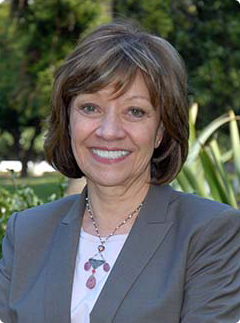
The 2014 crop report from Tulare County indicates another record-setting year. Marilyn Kinoshita, Tulare County Ag Commissioner, noted how well the dairy industry did, “30% of our overall value was actually milk, so dairy is incredibly important to our county. They had some good prices for most of the year. That is what brought up the value of milk to $2.5 billion. It is a significant increase over the prior year. A little bit more yield, but it is the price that kicked up well over two billion dollars.”

Tulare County Ag sales topped $8 billion in 2014, and the dairy industry overcame significant pricing obstacles to contribute to the County’s success.

Kinoshita continued, “We’ve got several classes of milk, and California producers are at a disadvantage to the other folks in Wisconsin or Nebraska, or wherever milk is produced. California producers feel singled out. They have their own system by the Secretary of Ag, so they have lobbied to get some hearings to be put under the federal system of pricing. California is lower than the federal standard.”

Citrus sales also played an important role in setting the new sales record, she said, “They had a really good year and went up considerably. So there is our number three crop. We are the nation’s number one citrus county. When our growers are having a good year, it benefits the county. We have 71 citrus packing sheds in our county and all the major juicing plants in California are right here.”

Kinoshita also mentioned some of the ways that citrus has become the number three crop, “It is sort of supply and demand, and great marketing. We ship to 90 different countries around the world. A portion of our production is exported.”

In 2014, livestock in general was up 40%, which also made an impact on sales in Tulare County, “You’ll find when you go to a grocery store that steaks, chicken, and turkey all cost more. So all of our species had an increase in price per unit for this crop reporting year.”

2016-05-31T19:28:06-07:00August 30th, 2015|

My Job Depends on Ag Update

My Job Depends on Ag Update

By Charmayne Hefley, Associate Editor

The “My Job Depends on Ag” Movement has more than just decals and a potential festival in the making. Erik Wilson, co-founder of “My Job Depends on Ag” with Steve Malanca, explained at the group’s meeting earlier this month, they hope to become a non-profit and use proceeds from decal sales to provide scholarships for students in agriculture. “We would like to keep young people connected to agriculture through scholarships and education,” Wilson said, “and foster their creative ideas about how their food is grown and processed.”

Erik Wilson

Erik Wilson

Wilson wants to see the movement grow to become an educational resource for agricultural topics directly from those involved in Ag. “I would really like to see anyone who is curious about how their food evolves from field to fork view our Facebook page as a open source of first-hand information—not from a news desk miles away from a field—but from the people in the field who are cultivating it. Because the people who do it and their kids, eat the same food and yet their stories haven’t been told.”

Wilson would like people to see that phrase My job depends on Ag, “and ask themselves if their own job depends on Ag. For me it would be a win-win for the public to grasp the value in growing food. I think growing food is the most honorable industry in the world.”

2016-05-31T19:28:06-07:00August 29th, 2015|

Chew on This Tour

Kyle Olguin and Sarah Weber on Chew On This Tour


By Charmayne Hefley, Associate Editor

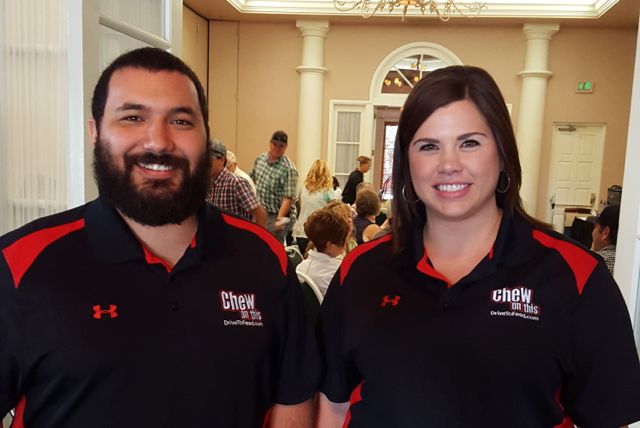
To counter the abounding misconceptions surrounding agriculture, companies are fighting back through education. Kyle Olguin, assistant operations manager for Nutra Blend LLC, a company that specializes in manufacturing nutrients for the feed industry, said that Nutra Blend began a program called “Chew On This Tour” to educate consumers about common farming misconceptions.

For the tour, Olguin said, “we drive trucks around the country, trucks turned into movie theatres, and educate people on where their food comes from, the misconceptions about farming, what we [farmers] do in America, and how we have one of the safest food supplies in the world.”

Olguin said that the perception of agriculture among the masses is that Ag is unnecessary because of the existence of grocery stores.

“We are constantly being attacked by non-ag promoting groups that agriculture is bad,” Olguin said, “and now the perception is out there that agriculture doesn’t really provide anything good or that agriculture doesn’t really need to exist. We have grocery stores, and the general public does not understand the link between agriculture and farmers and those grocery stores.”

“So we decided to start a campaign, and we kicked it off in Oregon driving this truck around the U.S. and showing people one simple video.” Olguin said, “We ask people questions, like: How many eggs does a chicken lay? How many pounds of bacon do you get from one cow?”

Sarah Weber, a sales representative for Nutra Blend, said the next step for the program was to raise money for backpack programs linked with food banks.

“The second movement is ‘Drive to Feed Kids’,” Weber said, “a nonprofit program with our suppliers and vendors to work with our customers, in their own communities, to raise money for student backpack programs that are linked in with the food banks.”

Weber said, “Our third stage in this movement is the ‘Ivy League Farmer’,” Weber said, “which is a movie that has been produced and will air on network TV pending this fall. It is a reflection on a dairy farm and the positive influence the farm has on the community. It is a way for us to reach out to the public with an emotionally positive connection to educate them.”


2016-05-31T19:28:06-07:00August 24th, 2015|

Trinity Reservoir Releases Water

U.S. Bureau of Reclamation Releases Shared Water From Trinity Reservoir Despite Making Claims Of “California’s Historic Drought”

The San Luis & Delta-Mendota Water Authority (Authority) along with Westlands Water District, according to their press release, has filed a lawsuit in federal court to stop the Bureau of Reclamation (Reclamation) from releasing Central Valley Project (CVP) water from the Trinity Division to the Klamath River.
The U.S. Bureau of Reclamation said releases started Friday from Lewiston Dam on the Trinity River, the Klamath’s primary tributary, and would continue into late September.SLDMWA logo
Yesterday, Reclamation announced the release of up to 88,000 acre-feet of CVP water from Trinity Reservoir in the hope of aiding returning non-listed Chinook salmon with the optimism of diminishing the effect of a naturally-occurring disease endemic known as “Ich” (pronounced “ick”) to the Klamath River system to which the Trinity River is connected. This action, which is outside of Reclamation’s authorized place of use, is a repeat of a similar action taken last year with the intention to help avoid an outbreak which has only been documented to have occurred once in 2002. Since 2000, a significant supply of water has been set aside each year from the Trinity Reservoir for fishery protection purposes. Specifically, over the past four years, this has equated to more than 200,000 acre-feet of water lost that was literally flushed down the Lower Klamath River.
“As our state is faced with a water supply crisis affecting every sector of people, businesses, and communities, an action like this is unthinkable. This will cause irreparable damage to drought-stricken communities already facing water restrictions,” said Dan Nelson, executive director of the San Luis & Delta-Mendota Water Authority.
The CVP and State Water Project (SWP) provide water for more than 25 million Californians who depend upon a reliable water supply. In the 50-year history of the Projects, water deliveries have never been lower–the CVP is experiencing its second year of a zero water allocation and the SWP sits at a mere 20 percent water allocation.
Reclamation is once again choosing to ignore the harms of its actions through the issuance of a “Finding of No Significant Environmental Impact” (FONSI) that hasn’t been properly analyzed. Further, Reclamation’s decision to release 88,000 acre-feet of CVP water for the Klamath River is a sad irony given that Reclamation is currently unable to meet its legally-mandated obligations within the CVP and SWP.
 Westlands Water District_logo
“The hardworking people of the State of California have been directed by state and federal agencies to conserve water in the form of dying lawns, fewer showers, unplanted fields, trees uprooted or turning brown, and community wells drying up. Yet Reclamation, which has been unable to deliver any water to farmers, has decided to release tens of thousands of acre feet in an arbitrary manner that the courts have previously held to be unlawful.” said Tom Birmingham, general manager of the Westlands Water District. “The fact that 88,000 acre-feet can be casually released without regard to the potential impacts on the environment, including at risk-species in the Sacramento River and the Delta, is a gross mismanagement of the state’s water supplies. The action filed today is intended to compel Reclamation to comply with its mandatory duties,” said Birmingham.
“During a time when we are experiencing the worst water management challenges in decades, when communities and agriculture throughout the state are suffering severe impacts that have negatively affected our economy, the labor force and the environment, the decision by the Bureau of Reclamation to repurpose precious Central Valley Project water resources to augment Klamath flows for non-endangered fish, an action that is of questionable benefit, is both irresponsible and incomprehensible. While the needs of cities, family farms, and endangered species that rely on CVP resources continue to go unmet, the reallocation of the Project’s limited supply of water defies all logic,” said Jeff Sutton, general manager of the Tehama-Colusa Canal Authority, an organization that represents seventeen Sacramento Valley water districts that hold CVP water service contracts, that are also highly critical of the action being undertaken by the Bureau of Reclamation.
The water planned for release is enough to farm 31,000 acres of food, or to serve the domestic needs of more than 175,000 families for an entire year. The devastating effects of the drought will be felt for decades to come especially if arbitrary decisions like these continue.
2016-05-31T19:28:06-07:00August 21st, 2015|
Go to Top