A Thought on Sustainability

Scott Steinmaus on Getting the Sustainability Message Out

By Charmayne Hefley, Producer and Associate Broadcaster

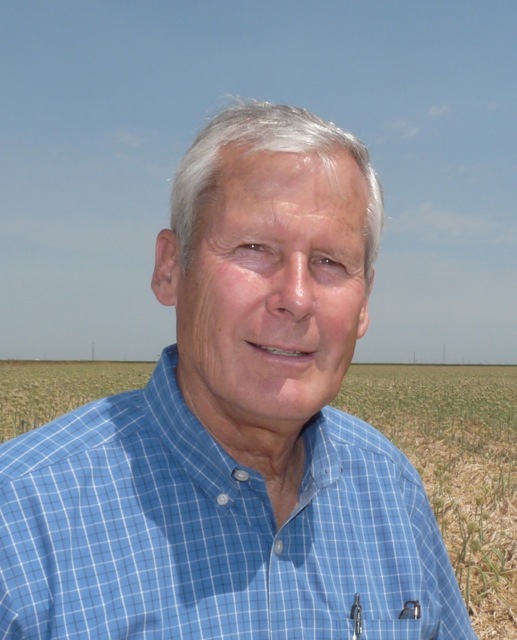
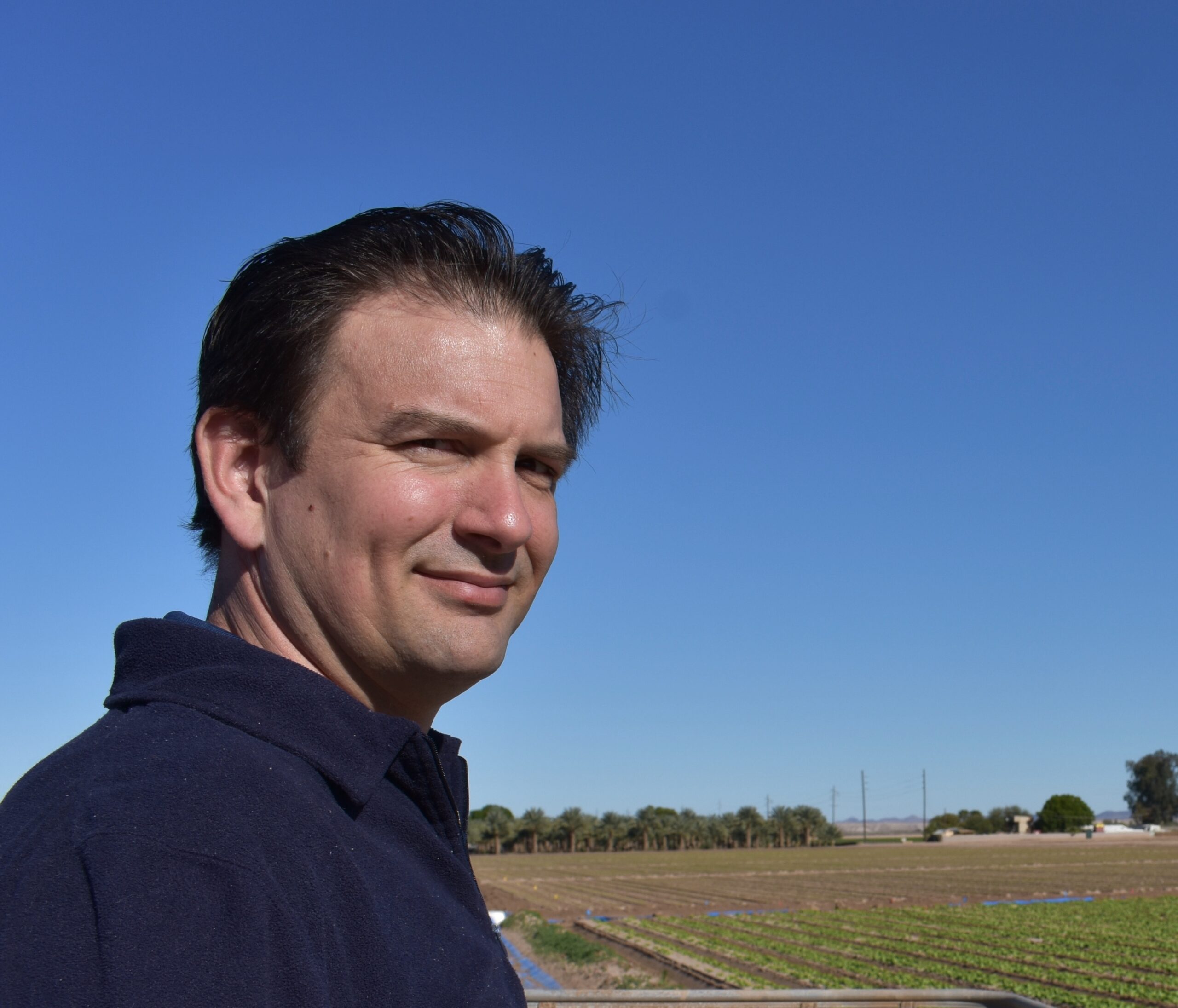
When considering the longevity of a farmer’s land, the question of the sustainability of modern day farming practices is often raised. Scott Steinmaus, professor and department head of the Horticulture and Crop Science Department at Cal Poly San Luis Obispo, said that it is important to get the message out to consumers that farmers are sustainable because their land is the future for their own children.

“Farmers are sustainable,” Steinmaus said, “even when the general public might say that unsustainable activities might include pesticide applications. There’s no farmer out there who wants to spray pesticides—it costs money. And they don’t want to hand off their land having exposed it to something that’s not sustainable. They have a piece of land, something they value and cherish, and they want to hand it off to their sons or daughters.”

Steinmaus said it is important for consumers to realize that farmers are humans too, and they care about the health of the planet in a way that more directly relates to their careers.

Steinmaus believes it is important for consumers “to understand that direct connection farmers have with the earth, to realize that farmers are humans too, with kids of their own, and to acknowledge that farmers care about the planet more than a lot of urbanites might do themselves. There’s nothing more important than sustainability—minimizing all farm inputs for safe, acceptable food production.”
2016-05-31T19:28:06-07:00August 20th, 2015|

Gladwin’s Final Year As A Farmer

Tonetta Simone Gladwin on Final Year as a Farmer

As the fourth-year drought continues, some farmers have conceded to the elements and the limited water allocations and have made the decision to make their final year in the farming business. Tonetta Simone Gladwin, the third generation owner of Passion Fruit Farms, a fig operation in Merced, Calif., said this year would be her last.

“As a third generation, I’m the last generation in my family. We’ve all farmed figs,” Gladwin said. “I don’t think Grandpa had any idea of the challenges we have to face today. Never did he think we’d have $10 per hour in labor wages, no water deliveries and some of the regulations we’ve had to face and overcome. These challenges are so different from those in his day.”


Passion Fruit Farms FBPassion Fruit Farms

2016-05-31T19:28:06-07:00August 18th, 2015|

Drip Irrigation is King During Drought

Terranova Ranch Surviving the Drought: Drip Irrigation

By Patrick Cavanaugh, Deputy Editor

As the drought continues to preside, farmers persist in their efforts to improve farming techniques to make the most out of what little water they have available. Don Cameron, general manager of Terra Nova Ranch, Inc., said the 7000-acre ranch in Helm, in Fresno County has managed to keep its 30 crops viable in the middle of the drought by changing its irrigation methods.

“We’ve been able to continue farming the acreage that we have, even in the fourth year of a drought,” Cameron said, “because we’ve changed all of our row crops irrigation to buried drip irrigation. We use every drop of water that we have.”

“We’ve also put in drip irrigation systems on all our trees and vines,” Cameron said. “We have irrigation scheduling. We use evapotranspiration data—we’re not putting on anything more than what we’re actually using.”

“So we’re able to find a solution just to get through these tough times,” Cameron said, “and we hope to have a wet winter and get a good snowpack so next year we’ll have more water. We’re farming like we’re in a drought every year. We’re never really going to go back to the ways that we used to farm.”

2016-05-31T19:28:07-07:00August 17th, 2015|

ALRB Pushes Worksite Access

ALRB Pushes Worksite Access in Upcoming Public Hearings

By Laurie Greene, Editor


Announced TODAY, The Agricultural Labor Relations Board ( ALRB) will be traveling to key agricultural areas in the state next month to hear comments from  farmworkers, employers and the public on the ALRB’s proposed rule to permit ALRB staff worksite access to educate farmworkers and field supervisors about the rights and responsibilities provided by the Agricultural Labor Relations Act (Act).


The public hearings will be held in Fresno, Salinas, Santa Maria and Oxnard, from 10 a.m. to 5 p.m. or until such time that all public testimony has been received.


Further information about the hearings appears at the end of this article.


THE PURPOSE OF THE ACT


The ALRB reports:

In 1975, the California State Legislature passed the Agricultural Labor Relations Act guaranteeing certain rights to California farm workers. The purpose of the Act is to “ensure peace in the agricultural fields by guaranteeing justice for all agricultural workers and stability in labor relations.” The Act states that it is the policy of the State of California to encourage and protect the right of farm workers to act together to help themselves, to engage in union organizational activity and to select their own representatives for the purpose of bargaining with their employer for a contract covering their wages, hours, and working conditions. The law prohibits the employers from interfering with these rights, protects the rights of workers to be free from restraint or coercion by unions or employers, and it prohibits unions from engaging in certain types of strikes and picketing.


The Agricultural Labor Relations Board is the agency which administers the Act and protects the rights of agricultural employees in various ways. For example, the Act creates a method by which workers may select a union or other representative to bargain with their employer if they wish. Agents of the Board conduct secret ballot elections to determine whether workers wish to be represented and if so, by whom. Also, the Act gives authority to the ALRB to investigate, process and take to trial employers or unions who engage in actions which the Act describes as “unfair labor practices” (ULPs). When Board employees conduct an investigation and obtain enough evidence to show that an unfair labor practice has been committed, a “complaint” is issued and a hearing is held at which each party has a right to present its side of the case. The Act guarantees the rights of employees to engage in, or to refrain from, union activities or “concerted activities,” such as acting together to help or protect each other in matters related to their employment.


ALRB HEARINGS AND LOCATIONS

  • Each facility will accommodate between 150-200 persons.
  • Spanish, Mixtec, Trique and Hmong interpreters will be available for language assistance. Other language services are available upon request.
  • The hearings will be recorded and an electronic copy of the transcript will be available.

FRESNO

Wednesday, September 9th

Doubletree by Hilton Fresno Convention Center 2233 Ventura Street, Salon C, Fresno (559) 268-1000


SALINAS

Monday, September 14th

Elks Lodge, 614 Airport Boulevard, Salinas  (831) 424-8039


SANTA MARIA

Tuesday, September 15th

Santa Maria Inn, 801 South Broadway Santa Maria (805) 628-7777


OXNARD

Wednesday, September 16th

Courtyard by Marriott, 600 E. Esplanade Drive Oxnard (805) 988-3600


You may contact the ALRB Executive Secretary’s Office at (916) 653-3741 or jbarbosa@alrb.ca.gov with any questions.

2016-05-31T19:28:07-07:00August 14th, 2015|

Appellations Beyond Napa . . .

Grower Andy Beckstoffer on Lake and Mendocino County Appellations

By Charmayne Hefly, Associate Editor

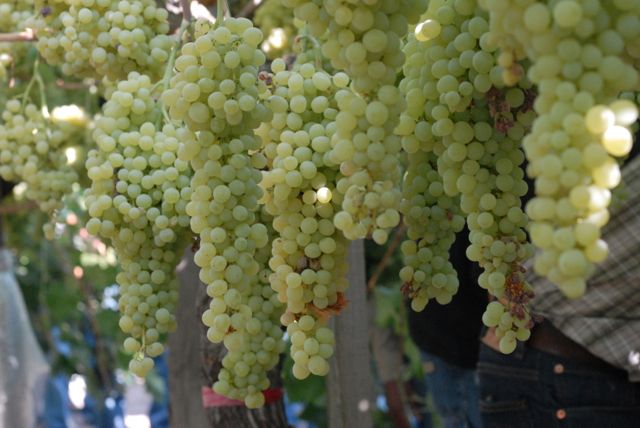
When people discuss California wine, they most commonly associate it as having been grown and produced in Napa. However, Napa isn’t the only northern county to grow grapes that become iconic California wines.Lake County Winegrape Commission

Andy Beckstoffer, owner of Rutherford-based Beckstoffer Vineyards, owns more than 3,000 acres of premium winegrapes. He began his own vineyard in the 1970s in Mendocino and Napa counties before expanding into Lake County as well.

Beckstoffer said that Lake and Mendocino counties were some of the most promising new wine districts in the new world of wine. He ought to know; the California Association of Winegrape Growers named Beckstoffer 2015 Grower of the Year last month.

“Mendocino County has consistently produced some of the best Chardonnay for years,” Beckstoffer said. “We started back in the 1970s, and they continue to do it in the Red Hills of Lake County. The appellation, Red Hills Lake County AVAis where we’re producing Cabernet at a reasonable price–North Coast Cabernet. It’s really the most promising new wine district in the new world of wine because it is encompassed by the vast North Coast AVA,” Beckstoffer said, “and the quality has been proven to be excellent.”

The North Coast AVA encompasses smaller appellations in six counties north of San Francisco: Lake, Marin, Mendocino, Napa, Sonoma, and Solano. Lake County AVAs


2016-05-31T19:28:07-07:00August 14th, 2015|

Bountiful Plant Transpiration

Guy Kyser on Plant Transpiration, Phytoremediation

By Patrick Cavanaugh, Deputy Editor

When plants get irrigated, not only do they provide food, but all plants transpire. Guy Kyser, a specialist at the UC Davis Plant Sciences Department, explained how plant transpiration transforms carbon dioxide into “food” for plants to grow.

“Water in the shallow soil is either going to evaporate, or it’s going to be transpired,” Kyser said, “which means it’s going to pass through a plant from the soil to the atmosphere. The transpiration process helps the plant fix CO2 and convert it into food or plant material. The plant is really a little solar powered machine that catches CO2 out of the atmosphere and turns it into something solid so it’s not a greenhouse gas anymore.”

Kyser also explained the phytoremediation* process that occurs in plants grown in less-than-ideal soil and water conditions, in which these plants take up polluted water from its roots while removing impurities from the soil, retain the impurities, and release pure water into the atmosphere. Kyser said, “So, with phytoremediation, you can use the plants to purify poor soil or water situations, then mow off the plant material when the process is done. All the toxins stay in the plant, and only the pure water goes through.” Despite being a slow process, phytoremediation is effective in toxin removal, environmentally friendly, and does not harm soil health.

*Phytoremediation: Ancient Greek for “plant” and Latin for “restoring balance”

2016-05-31T19:28:07-07:00August 13th, 2015|

SCOTUS Raisin Reserve Decision

Grower Reflects on SCOTUS Raisin Reserve Decision

By Charmayne Hefley, Associate Editor

The Supreme Court of the United States (SCOTUS) recently decided that California raisins held in reserve during heavy crop years belong to the government (under the Fresno-based Raisin Administrative Committee (RAC), a federal marketing order), and the government should pay growers for these raisins. Directly overseen by the United States Department of Agriculture (USDA), the RAC, created in 1949, is led by 47 growers and a public member.

Monte Schutz, a Fresno County raisin grower, as well as chairman of the executive committee of the RAC, said the recent decision by SCOTUS doesn’t make any sense. “The biggest problem I had with the decision is when Justice Roberts stated very clearly that the government took ownership of the raisins, and that was just not true—growers maintained ownership throughout,” Schutz noted. “And the committee, which is made up of growers and handlers, had complete control over when they sold the raisins and for how much. So I think they were mistaken that the government took control; while the government oversees our federal marketing order, we as a committee had control.”

Explaining how he thinks the Supreme Court got it wrong, Schutz said, “Personally I think it may have been the USDA lawyers who just didn’t explain it. The system is a little complicated, and I wasn’t in the courtroom, but I’m afraid they did not explain it properly. How they could conclude the government owned the raisins–is just completely wrong.”

“For the last five years, we haven’t used the reserve program at all because we are in a better balance right now than we were 13 years ago. At that time, the reserve was a tool to take care of the excess supply. We haven’t had to use it for the last five years, and we don’t intend on using it any time in the future. Although I would still like to keep that tool available, unfortunately, the Supreme Court has taken it away from us,” Schutz said.

“Now when we need to put the raisins in reserve, we have to consider, I assume, that the grower has to be compensated for them. But I do not know how the government can tell you at what price; the market dictates the price. That was the problem back then; the market was in a tough situation due to the oversupply, so we had to take less for those reserve raisins,” Schutz said. “Those raisin growers were paid less, but raisin prices did not spiral downward and the industry was kept in balance.”

“Without the reserve program, the raisin price would have crashed, ending in a bigger disaster than what occurred.”

The Supreme Court reached its decision at the end of a long fight by raisin grower Marvin Horne, who held that he did not have to give his raisins to the reserve without fair compensation.

2016-05-31T19:28:07-07:00August 12th, 2015|

European Farmland Under Pressure

European Farmland under Pressure Due to Regulation and Diversion

By Laurie Greene, Editor

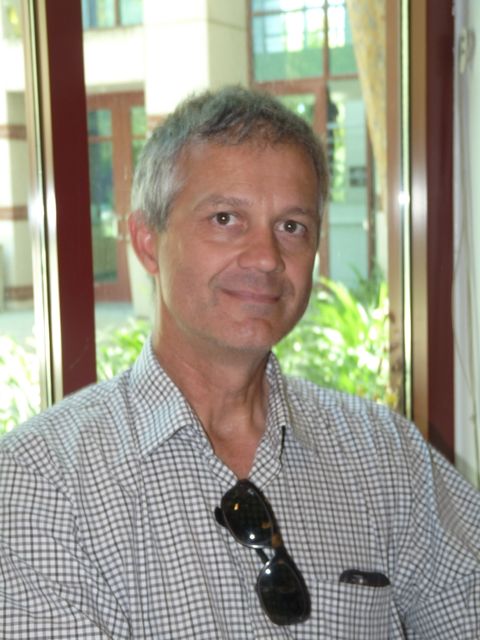
Jose Gomez Carrasco, executive sales manager for AGQ Labs and Technological Services based in Oxnard, is in charge of covering a large area that includes the U.S., Mexico and Central America. Noting global concern regarding how farmland is being used, particularly European farmland, Carrasco said, “There’s a growing population of around 150,000 or 170,000 new mouths every day to feed.” Carrasco said agricultural production on land designated for agricultural use in every country, worldwide, is being diverted to bio-ethanol, or bio-mass, or different renewable energy use, so the availability of agricultural products for food is diminishing.

Carrasco stated this progression needs to be moving in the opposite direction, “especially because there are other issues that are making production more challenging, such as water scarcity, soil erosion and the use and price of agro-chemicals, inputs and fertilizers, all of which are being controlled and monitored more and more.”

“The regulation of crop protection materials is intended to help everyone in the food supply chain,” he continued, “all the way from the grower to the consumer; however, sometimes these regulations can be quite burdensome.”

“In some cases regulations are not for the benefit of all,” Carrasco explained; “just for some. So in markets such as the European Union where the [maximum threshold] number of molecules registered has diminished from 1,000 to 300 or 400 in the last decade, we’re finding a lot of this regulation comes from Germany.” Carrasco said they are leaving a lot of farmers with no agro-chemicals in their arsenal, especially in Spain, Portugal, and Greece, all in southern Europe.

2016-05-31T19:28:07-07:00August 11th, 2015|

Fig Fest This Saturday!

Fig Fest This Saturday at Fresno State

Chef Fabio Viviani

Bravo TV’s Chef Fabio Viviani

The big annual Fig Fest is coming up this Saturday, August 15, from 9 am till 1 pm at California State University Fresno.

“It’s going to be bigger and better than ever,” said Karla Stockli, chief executive officer with the California Fig Advisory Board in Fresno. “Guests will be able to savor gourmet fig-inspired recipes, extraordinary wines and craft beer from California’s best chefs, food purveyors, wineries and breweries.”

CA Fig Fest Logo“And there will be an exciting new addition this year; celebrity chef Favio Viviani will headline the event. Viviani is a restaurateur (5 in U.S.) and a New York Times best selling cookbook author (3 successful cookbooks). But, he is best known as the Fans’ favorite in Bravo TV’s Top Chef and the winner of Cutthroat Kitchen with the Food Network.” Viviani also sells his own wine collection and popular line of cookware.

“Viviani will be center stage at a chef culinary demonstration and he will also tape an episode of his new PBS series, Global Bites,” said Stockli. “He will be interacting with people and signing books. And he is very passionate about all things fig and fresh ingredients.”

Tickets are available. Go to California Fig Fest for more information.

2016-05-31T19:28:08-07:00August 10th, 2015|

“My Job Depends on Ag” is Growing

Steve Malanca on the Future of “My Job Depends on Ag”

By Charmayne Hefley, Associate Editor

Three months ago, a grassroots effort to spread the word of agriculturalists began in the form of the movement, My Job Depends on Ag. The organization held its first meeting this week at Harris Ranch in Coalinga with 50 members in attendance to discuss the future of the group.

Steve Malanca, co-founder of the movement, said his hope for the organization is to educate the consumer, as well as to unite the ag community. Malanca also sells agriculture equipment for AGCO.

“We really feel that educating the non-ag community about who we are and where our food comes from is very important,” Malanca said.

“We want to unite the ag community so that we all are represented together,” Malanca continued. “We want to encompass everybody—the organic farmer, the commercial farmer, the trucking company, the logging industry. But everybody that’s involved in ag we want them to know that we all have a stake in this, and if we can all come together and be as one, I think that we’ll be able to hopefully give a message to the general public that we have a need for people knowing where their food comes from.”

Malanca hopes to host a My Job Depends on Ag Festival in the future. The group is considering Los Banos as a location for the potential festival due to its accessibility with an airport, several hotels and a nearby fairgrounds for the event.

“We’re considering a festival in order to bring everybody together,” Malanca said, “and we’re considering combining the Salinas Valley growers with the San Joaquin Valley growers in a town for example like Los Banos.”

“We want to, perhaps, have ag tours around the city of Los Banos,” Malanca suggested, “and have buses available for people who aren’t familiar with ag to take a ride and come see what kind of crops are grown and how they’re done.”

“An historical pavilion would be nice to show people the history of agriculture, and California—not just central California, but the entire state,” Malanca stated, “and we’d bring in some big time entertainment and food, of course. And we’d have a way for everybody to be proud of what they do and to show people where their food comes from.”

Malanca said he hoped the group’s decal could be an icon that symbolized the importance of agriculture.

“We’re grateful for the response we’ve had with our decals,” Malanca said. “We hope that little decal being shown on people’s vehicles and equipment will be a sign or a vision for people to see where they’re food comes from and know that we are a huge community and that we are good people. Ag is good, and ag is where you’re food comes from.”

2016-05-31T19:28:08-07:00August 7th, 2015|
Go to Top