Clinton’s Backdoor UFW Endorsement Deal Trumps Farmworkers’ Rights

Assemblyman Patterson Comments on Clinton’s UFW Endorsement vs. Farmworkers’ Rights


By Laurie Greene, Editor


As reported in, “Leaked Clinton emails include pledge to help UFW in fight with Gerawan Farming,” published by the Fresno Bee last Friday, presidential candidate Hillary Clinton, traded support for the United Farm Workers Union (UFW) endorsement and then conspired to undermine Fresno County-based Gerawan Farming and its farmworkers’ rights.

Jim Patterson

Assemblyman Jim Patterson (R-Fresno)


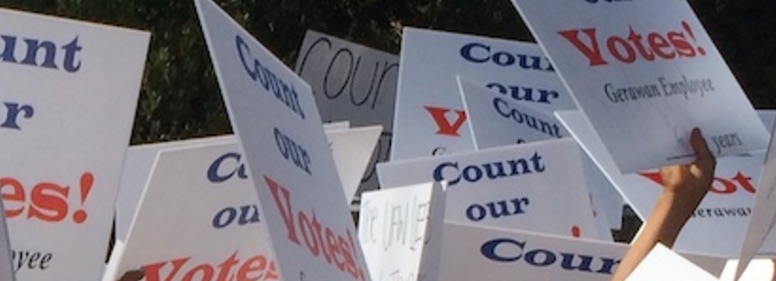
Assemblyman Jim Patterson (R-Fresno) has been supportive of the constitutional rights of farmworkers at Gerawan Farming whose votes cast in a sanctioned 2013 election to decertify UFW representation have never been counted. Under the jurisdiction of the California Agricultural Labor Relations Board (ALRB), the ballots were collected, sealed, and locked away. To date, election results and the location of the ballots are unknown.


In an exclusive interview, Assemblyman Patterson stated:

I think it’s the height of hypocrisy when a candidate for president of the United States goes behind closed doors and makes a backroom deal with an institution that is trying to deny the very privilege of having a free election to decide whether or not [farmworkers] want to be a part of the UFW.

Not supporting or recognizing the Gerawan workers’ right to an election to determine their own future—how they wish to organize, how they wish to value their labor and how they wish to conduct the relationship with their employer through elections—is to me, a slap in the face of the electoral process, of the fundamental constitutional right of everyone to be able to vote and to have a say in their labor and in their future.

alrb_ufw_fwr_logo_frIt also demonstrates just how deep and wide this intertwining web of deceitfulness really is. Of all things, for the democratic nominee for President of the United States to make a deal over something that is happening in Central California, with 3,000 workers who decided that they wanted to have elections?”

After the election, the ALRB took and hid the ballots. The ballots were never counted. Election results were never announced. The election was not the expression of individual farmworkers exercising their right to vote, but considered [by the ALRB] an unfair labor practice.

 [The Democratic nominee] decided to make a deal with the UFW over this. It tells me in no uncertain terms that the revolution that is happening with Silvia Lopez and the Gerawan workers—the independence, the thinking for themselves, the willingness to chart their own course with their employer—is frightening the UFW and the ALRB to its foundations.

To the degree that [the UFW] would literally go into a back room and get a pledge from the democratic nominee. . . Notwithstanding the facts—information about the election, the efforts of the ALRB and UFW to suppress [decertification] elections, and their choices for making decisions themselves. . . but to just simply decide to go low . . . and in this instance, go so low that she would be making a deal to abridgedestroythe fundamental right of an election. That is just unconscionable.
2017-05-10T16:28:50-07:00October 18th, 2016|

Unprecedented CAPCA Conference Attendance!

Agriculture Needs a Hero! Welcome to the Annual CAPCA Conference.


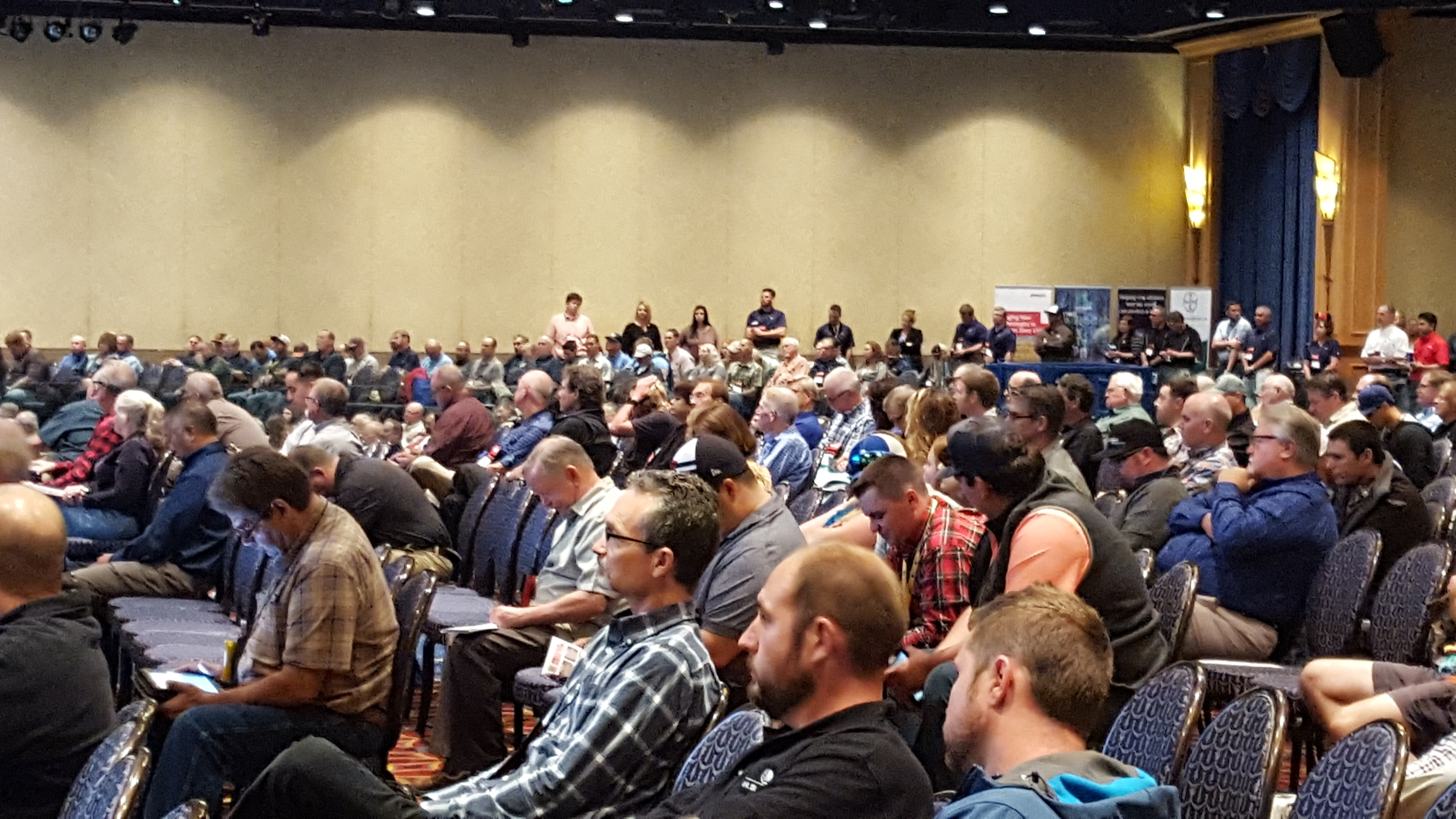
In an exclusive interview at the 42nd Annual California Association of Pest Control Advisers (CAPCA) Conference & Agri-Expo TODAY in Anaheim, CAPCA CEO and President, Ruthann Anderson, shared, “We have had an unprecedented response here at CAPCA.”

CAPCA CONFERENCE 2016 audience

Ruthann Anderson, CAPCA CEO and President

“Registrations are at an all-time high,” she continued. “We’ve actually sold out the entire show as well as registrations with 1600 attendees. There were just a handful of walkups that we unfortunately just couldn’t accommodate today. We are excited and looking forward to continuing to have a high professional continuing education program as well as an exhibit hall here today.”

“This year’s theme is ‘Fighting the Fear, Feeding the Nation,’ said Anderson, “so we’ll have Captain CAPCA as well as Doctor Foe here this morning.”

Click here to meet Captain CAPCA and Doctor Foe on this CAPCA ‘NEWS’ video!


Anderson reflected, “You know for us, CAPCA really represents the Pest Control Advisors (PCAs) for production ag and turf and ornamental. As a requirement for their continuing education, they need 40 hours in order to renew [their certification]. For us, bringing together continuing education as well as networking is so valuable for them as they move into the new year.”


Some “Top Gun” people speaking this year, according to Anderson, “are obviously some of our main sponsors. Bayer CropScience and FMC Corporation are both doing high-level presentations. We also have Kern County agricultural commissioner Ruben Arroyo talking about the new proposed regulations for buffer zones around schools, so that’s going to be a great conversation starter for all of our members.”


“We appreciate all of the support we receive,” Anderson stated. “It’s so valuable for us. We exist because of volunteers and we exist because of our membership. We are grateful for all of them.”


The California Association of Pest Control Advisers (CAPCA) represents more than 75% of the nearly 4,000 California EPA licensed pest control advisers (PCAs) that provide pest management consultation for the production of food, fiber and ornamental industries of this state.

CAPCA is dedicated to the professional development and enhancement of our member’s education and stewardship, which includes legislative, regulatory, continuing education and public outreach activities.

CAPCA membership covers a broad spectrum of the industry including agricultural consulting firms, U.C. Cooperative Extension Service, city, county and state municipalities, public agencies, privately employed, forensic pest management firms, biological control suppliers, distributors, dealers of farm supplies, seed companies, laboratories, farming companies and manufacturers of pest management products.

2021-05-12T11:05:45-07:00October 17th, 2016|

Despite Great Harvest, California Apple Growers Face Challenges

California Apple Growers Face Regulatory Disadvantage

By Patrick Cavanaugh, Farm News Director


Many California apple growers are in the midst of harvest season right now. Alex Ott, executive director of the Clovis-based California Apple Commission expects a 3% increase in production across the country. Ott foresees a 1% increase in California this season, where apples stand out because of their freshness.

“California is the fifth largest producer of apples in the United States,” Ott explained. “We are about the third largest exporter of apples in the United States. We like to pick, pack and ship. Unlike other states that like to store fruit and have that fruit around longer, California apple growers like to get in and get out,” Ott said.california-apple-commission-logo California Apple

“We have a small marketing window and we pride ourselves on fresh crops,” Ott elaborated. “So we try to get out of the market no later than December. Sometimes we go as late as January, but the idea is to [quickly] fill that niche window between the Chilean and the Washington state fruit.”

Alex Ott, executive director of the Clovis-based California Apple Commission

Alex Ott, executive director of the Clovis-based California Apple Commission

Yet, the California apple industry faces challenges going forward. Ott stated, “Over the last five years, California apple crop production has decreased by nearly 39%. A lot of that has to do with the changing of the crops. Any time you start to see an uptick in another crop, especially when it is not hand labor-intensive like apples, you will see a migration to those types of crops.”

Transitioning toward less labor-intensive crops may accelerate since Gov. Jerry Brown signed AB 1066. This bill will enable California farm employees to accrue overtime pay after working an 8-hour day, instead of a 10-hour day.

“It’s definitely going to be a challenge for California apple growers,” Ott said, especially given the labor shortage. “So apple production in the state will decrease.”

Ott lamented many countries already produce a lot of these other less labor-intensive crops. AB 1066 definitely puts us at a competitive disadvantage in keeping up with demand. The challenge is how can California apple growers compete with farmers in other state and countries who can do it faster and cheaper?

2016-10-14T18:26:24-07:00October 14th, 2016|

FFA Student is Great Reporter

Hughson FFA Student Thrives on Agriculture


By Patrick Cavanaugh, Farm News Director


California FFA Association, a high school youth leadership and career development organization, is very dynamic in the state. FFA chapters are located throughout the state’s agricultural areas. We had a conversation with Michelle Borges, a sophomore at Hughson High School. She is an active member of the Hughson FFA and serves as the 2016-17 FFA Chapter reporter.California FFA student

“My job is publicizing the FFA to everyone in the community. I write articles to the local newspapers. I’m in charge of the social media for Hughson FFA. Basically any radio broadcast, television broadcast, anything like that to get the word out about FFA,” Borges said.

Borges was also active in the 4-H starting at age five. She raised and sold goats, and she is devoted to California agriculture to this day. “One of the reasons why I love agriculture is because both my parents work in the agriculture industry. Both my brothers were super involved in the FFA, so I was kind of born into it,” she said.

Borges noted that while her family does not farm, they are involved in agricultural education. “My dad is the Dean of Agriculture at Modesto Junior College, and my mom used to be an agriculture teacher in high school, but now she teaches junior high,” she said.

While still in high school, Borges wants to continue pursuing her passion for agriculture. “When I grow up, I want to be an animal nutritionist. I’m really interested in nutrition for animals and I have also raised goats. . . ‘Seeing them grow up and then selling them. That whole project; it is really interesting to me. Also, with FFA, there’s a lot of public speaking competitions and I really enjoy public speaking in front of a crowd,” she said.

To hone her skills for that animal nutrition career, Borges plans to go to Cal Poly, San Luis Obispo, after she graduates from high school.

2021-05-12T11:17:11-07:00October 12th, 2016|

Initial Walnut Irrigation Can be Delayed

Walnut Irrigation Research Update

By Brian German, Associate Broadcaster


First springtime walnut irrigation can be delayed, according to a UC Cooperative Extension team in Tehama County working on some fascinating research regarding irrigation practices. Allan Fulton is an Irrigation and Water Resource Advisor who covers Tehama, Colusa, Shasta and Glenn counties. “We actually just finished one of our irrigation experiment harvests this weekend. It was looking at early season water management decisions, basically deciding when to begin the irrigation season,” Fulton said.

allan_fulton

Allan Fulton, UC Cooperative Extension Irrigation Specialist

Growers typically begin irrigating their walnuts sometime between late April and early May. In order to be as thorough as possible in their experiment, Fulton and his team have been pushing the limits beyond what most growers would ever consider. “We had some treatments that got no irrigation until almost the end of June,” Fulton explained.

Now in its third year, the research experiment is generating information that will provide a variety of benefits. “The whole motivation is to avoid possible injury to the trees from irrigating too much, too early, from lack of aeration and damage to the root system,” Fulton said. Delayed irrigation, while having no impact on yield or nut size, can also provide a bit of water savings. “We’re trying to look for the sweet spot,” with less intensive early season irrigation in favor of root health, tree health and disease prevention.

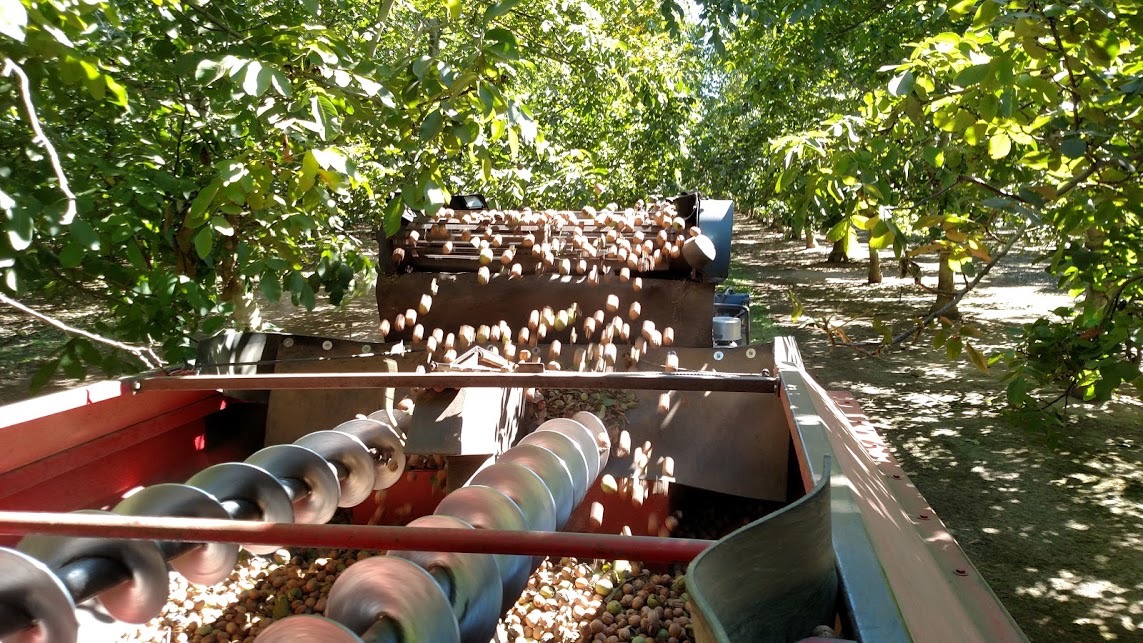
California walnut orchard, walnut irrigationThe research is being conducted in the northern Sacramento Valley primarily using the Chandler variety of walnut trees. Fulton has spent some time working in the San Joaquin Valley as well and understands different weather conditions can be a significant factor when applying their findings to other regions. “Our spring rainfall is quite a bit different than other walnut growing areas. Usually we’ve got an added source of water that sometimes you might not have in the southern San Joaquin Valley,” Fulton noted. From his experience, he suggested growers could usually wait until “the first week of May in most years, before really getting pressed for irrigation.”

The location of the research exposes groves to the opportunity to receive “more rain during the dormant season with a better chance at a deeper profile in moisture before you ever break dormancy,” Fulton said. More regional rainfall is possible in the spring as well, while the trees are growing.

The information gathered so far indicates growers should not jump the gun on springtime irrigation, particularly if there is still any kind of standing water issues. “The data is starting to suggest that you’ve got some room. You don’t have to irrigate at the first sign of heat; you can use a little bit of the stored moisture coming out of winter,” Fulton said. He also noted “It’s a lot more difficult to recover from a damaged tree with a sick roots system,” than it is to recover from a lack of early season irrigation.

2021-05-12T11:05:46-07:00October 11th, 2016|

ACP Spread in Bakersfield Area, Ingenious Research Proceeds

Ingenious Research Effort to Fight ACP Spread with Natural Predators


By Joanne Lui, Associate Editor


beth_grafton-cardwell

Beth Grafton-Cardwell, Cooperative Extension specialist, University of California, Riverside Department of Entomology

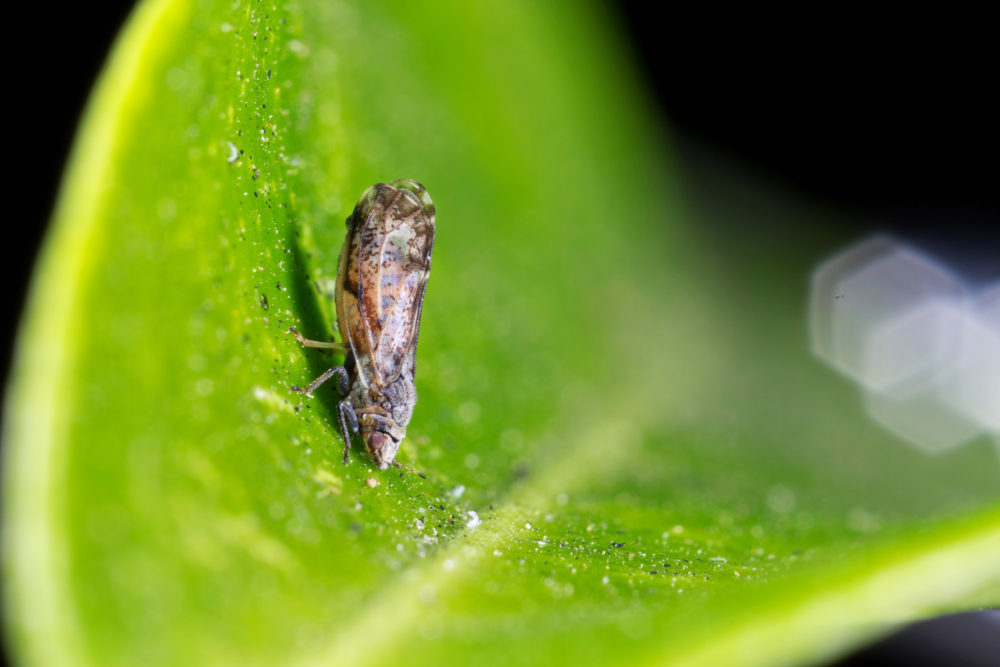
As we have reported in-depth before on California Ag Today, the Asian Citrus Psyllid (ACP) is a tiny, mottled brown insect that poses an ever-increasing threat to the state’s robust citrus industry, as well as to residential citrus trees. The pest can spread a bacterium known as Huanglongbing (HLP) that is fatal to citrus trees. The disease has nearly shut down Florida’s citrus industry.

Beth Grafton-Cardwell, cooperative extension specialist in integrated pest management, UC Riverside Department of Entomology, explained the significance of the recent ACP spread to Bakersfield. “That is really problematic because it’s mostly in the urban areas. It’s very difficult to find, to control and to stop that spread. It’s going to move out from that region into the local citrus orchards, and so there are lots of meetings and discussions right now to mobilize growers to get treatments to help protect their citrus orchards against the psyllid.”

#CitrusMatters

#CitrusMatters

To contain the ACP problem, Grafton-Cardwell stated, “There are traps everywhere, but the traps are not terribly efficient. So, we really need to carefully examine groves and flush [new leaf growth] for the nymph form,” she said.

According to Agriculture and Natural Resources, University of California’s Statewide Integrated Pest Management Program:

Adults typically live one to two months. Females lay tiny yellow-orange almond-shaped eggs in the folds of the newly developing “feather flush” leaves of citrus. Each female can lay several hundred eggs during her lifespan.

ACP UC IPM

ACP (Source: ACP UC IPM)

The eggs hatch into nymphs that are wingless, flattened, yellow or orange to brownish, and 1/100 to 1/14 inch long. Nymphs molt four times, increasing in size with each nymphal stage (instar), before maturing into adult psyllids. The nymphs can feed only on soft, young leaf tissue and are found on immature leaves and stems of flush growth on citrus.

Save Our CitrusThe nymphs remove sap from plant tissue when they feed and excrete a large quantity of sugary liquid (honeydew). Each nymph also produces a waxy tubule from its rear end to help clear the sugary waste product away from its body. The tubule’s shape—a curly tube with a bulb at the end—is unique to the Asian citrus psyllid and can be used to identify the insect.

Grafton-Cardwell and other experts are concerned because once the ACP becomes established in urban areas, it is difficult to eradicate. “It starts spreading into the commercial citrus, and we’re off and running,” she commented.

bayer-save-our-citrusIn a ingenious effort to control the spread of the psyllid, trained teams of entomologists have imported Tamarixia radiata, a tiny wasp that naturally preys on ACP, from Pakistan to research and release in California. A cooperative effort of the University of California Riverside, Citrus Research Board, United States Department of Agriculture and California Department of Food and Agriculture, researchers are also exploring the effectiveness of another beneficial insect called Diaphorencyrtus aligarhensis to assist Tamarixia with control of the Asian citrus psyllid. To see where Tamarixia and Diaphorencyrtus have been released, visit this University of California’s website map at, “Distribution of ACP, HLB and Parasites in California,” and turn on the parasite layers.
Grafton-Cardwell said, “They’re going to inundate that area,” with natural ACP predators, “so hopefully that will push back a little bit.”

2021-05-12T11:05:46-07:00October 10th, 2016|

Working with Agriculture to Meet Environmental Goals

Working with Stewards of California’s Farmland to Meet Environmental Goals

By Patrick Cavanaugh, Farm News Director


If you give a farmer a goal, they will most likely strive to meet it—even exceed it—as long as it fosters great stewardship of their land and allows them to sustainably farm into the future.

Environmental Defense Fund (EDF) logo

Eric Holst, associate vice president of the Environmental Defense Fund‘s working lands program, and an expert in developing strategies for environmental management on working forest, farms, and ranches, has an important view of the California Agriculture industry. “It’s an incredibly important industry. It’s greater than $56 billion net for California farmers. I think, even more important than the monetary value, is the land and the water that it touches,” said Holst.

Holst’s career has focused on improving livelihoods and environmental conditions in rural places in the U.S. and Latin America. Appointed as a member of the California Board of Food and Agriculture by Governor Jerry Brown for his ability to effectively communicate with a wide variety of constituents on difficult environmental issues, Holst elaborated, “Farmers and ranchers in California have a lot of influence on how we manage land, how we manage our landscapes, how we manage our waterways. It’s incredibly important to weigh in on policy issues that relate to agriculture in California.” california-farmland

Based in Sacramento, Holst knows how pervasive California agriculture is, spanning the state from the Mexican border to the Oregon border. “About 45% of California is in privately-held working lands—land managed by farmers, ranchers, and forestland owners,” Holst noted. Holst and his team interfaced with these private landowners to map a big part of it.

Holst, who also serves as director of the Forest Stewards Guild and American Wind Wildlife Institute (AWWI), explained, while these landowners have a lot of freedom about how to manage their land, “It’s probably the most highly regulated place in the world in terms of environmental performance.” Despite regulatory constraint on land management decisions, Holst believes, “there’s a lot of room to make decisions that can either help or harm the environment.”

Holst reflected, “It is really an important role that we have on the CDFA Board to weigh in and try to push California in the right direction.” Ultimately, in Holst’s experience, “If you set a goal and then allow farmer, rancher or forest landowner to figure out how to meet that goal, that’s probably the best way,” said Holst.

“Conditions are different on every farm, every ranch,” Holst stated. “I think it’s important to set standards high. I think California has higher standards than just about anywhere else. We want to develop policies and implementation of policies that will give a lot of flexibility to the individual operator. That tends to be, in my experience, the system that works best,” he noted.

2016-10-06T14:22:50-07:00October 6th, 2016|

Better Year for Western Cotton Growers

Western Cotton Growers See Market Improvement


By Patrick Cavanaugh, Farm News Director


Cotton growers throughout California and the West fared better this year compared to last year in terms of prices and exports, as reported at the Calcot, Ltd. 89th Annual Meeting last week in Tempe, Arizona. Jarral Neeper president and CEO of the Bakersfield-based Calcot, Ltd., the cotton marketing cooperative representing growers in California, Arizona, New Mexico, and Texas, announced, “Last year we produced about 13M bales. We should be a hair over 16M this year.”

California Cotton, Merced County, Sept 2016

California Cotton, Merced County

Neeper estimated, “We’re going to go from about 10.2 million bales in exports to 11.5 million based on a review of our historical shares of the marketplace and the world, the foreign production/consumption gap, our historical shares of filling that gap, and how much we should export.”

“One year ago at this time, cotton prices were at a very low $0.61 per pound,” said Neeper. “The market eventually fell. Prices rallied a little bit, and then fell down to $0.55. Then, the last month of the crop year, we had calcot-logothis unforeseen $0.10 rally—almost $0.12 rally.

In cotton marketing where there are highs and lows, Neeper acknowledged, you can’t always sell high; you have to sell when you can. “As a cooperative, in order to make progress payments to your membership, you do have to sell cotton and turn it into cash.”

“The cotton futures look good,” Neeper said, “even better for the coming year. We’re sitting at roughly $0.70 a pound, about ten cents higher than a year ago. And, generally, California cotton growers tend to get a $0.05 to $0.10 premium per pound because of our growing additions and high quality lint.”

Neeper believes the future of Calcot, Ltd. is “terrific.” He added, “89 years and still going strong; we’re looking for another 89 years.”


2016-10-05T13:14:34-07:00October 5th, 2016|

Celebrating California Agriculture . . .  An Ongoing Series: Marketing

Marketing, Almond Board Style

A Rallying Cry for Ag PR on Billboards

By Laurie Greene, Editor


Celebrating California Agriculture is a refreshing perspective. In an ongoing series on CaliforniaAgToday.comPeterangelo Vallis, executive director of the Fresno-based San Joaquin Valley Winegrowers Association (SJVWA), shares his optimistic viewpoint on California agriculture. In our original article, “Celebrating California Agriculture . . .  An Ongoing Series,” published on September 13, 2016, Vallis offered this goal:

SAN Joaquin Valley  Winegrowers Association, (sjvwa) logo“This is basic, basic stuff because, realistically, we’re marketing the fact that we need help to make more food,” Vallis noted. “We’re making safe domestic food, but if we don’t engage with the people that are our customers, we’re never going to be able to get our ideas and our needs across, because we’re just not talking to the right audience.”

“They’re not enough people here in the valley to move the needle. We’ve got to figure out a way to get San Francisco and L.A. appreciating our position, loving what we do, and trusting that we’re doing the very best job possible,” said Vallis.

Vallis is urging California agriculture “to put some dollars together for a major billboard campaign in Los Angeles and in the Bay Area, celebrating our agricultural industry as part of a big PR campaign.”

Almond Board of California, marketing almond board style“Just imagine,” Vallis suggested, “the power of billboards with California farmers and the fruits, nuts or vegetables they produce. The billboard could be up in prime city areas for several months for less than a few million dollars.”

Vallis commended the Almond Board of California for their example of a great starting point. “You know, the Almond Board of California (Board), I think, represents the most progressive part of California agriculture today because the Board understands how much money it takes to penetrate the market. We’re not living in 1932; we need to spend money on this stuff. I mean what does a Super Bowl commercial cost—6-7 million dollars for 30 seconds? It’s an insane amount of money, but that’s what it takes to really move the needle.”

“Billboards around the California’s urban centers or even across the nation, could carry the message of the importance of the California

ALMOND SUSTAINABILITY ECOSYSTEM (Almond Board of California, AlmondSustainability.org), Celebrating California Agriculture

ALMOND SUSTAINABILITY ECOSYSTEM (Almond Board of California, AlmondSustainability.org)

farmer,” Vallis proposed. “We could campaign on every billboard in America for one month and call it, ‘Hey, We Like to Eat Month’ or ‘Your Stomach Depends On Ag,’” noted Vallis.

“The message must connect with people,” Vallis insisted. “It would probably cost 20 or 30 million just to make that happen, but if you look at the success the Almond Board has had, that is a perfect pathway—a perfect roadmap—for what all of us in California can do at pennies per pound,” he said.

“There are some commodities that don’t make pennies per pound; but on the whole, a couple pennies per pound, put in the right space and put in front of people … Guess what? They’re going to go nuts over the product. Look what almonds have done. If that isn’t a rallying cry for what could happen. . . it would be killer! And it would be killer for our industry,” Vallis said.

2016-10-04T18:38:02-07:00October 4th, 2016|

Calcot Could Market 70 Millionth Bale this Year

Calcot Ltd. Chairman Talks California Cotton at 89th Annual Meeting

By Patrick Cavanaugh, Farm News Director

Calcot Ltd., a democratically-run cotton marketing cooperative owned by 1,200 select cotton growers in California, Arizona, New Mexico and Texas, held its 89th Annual Meeting in Tempe, Arizona, this week. 

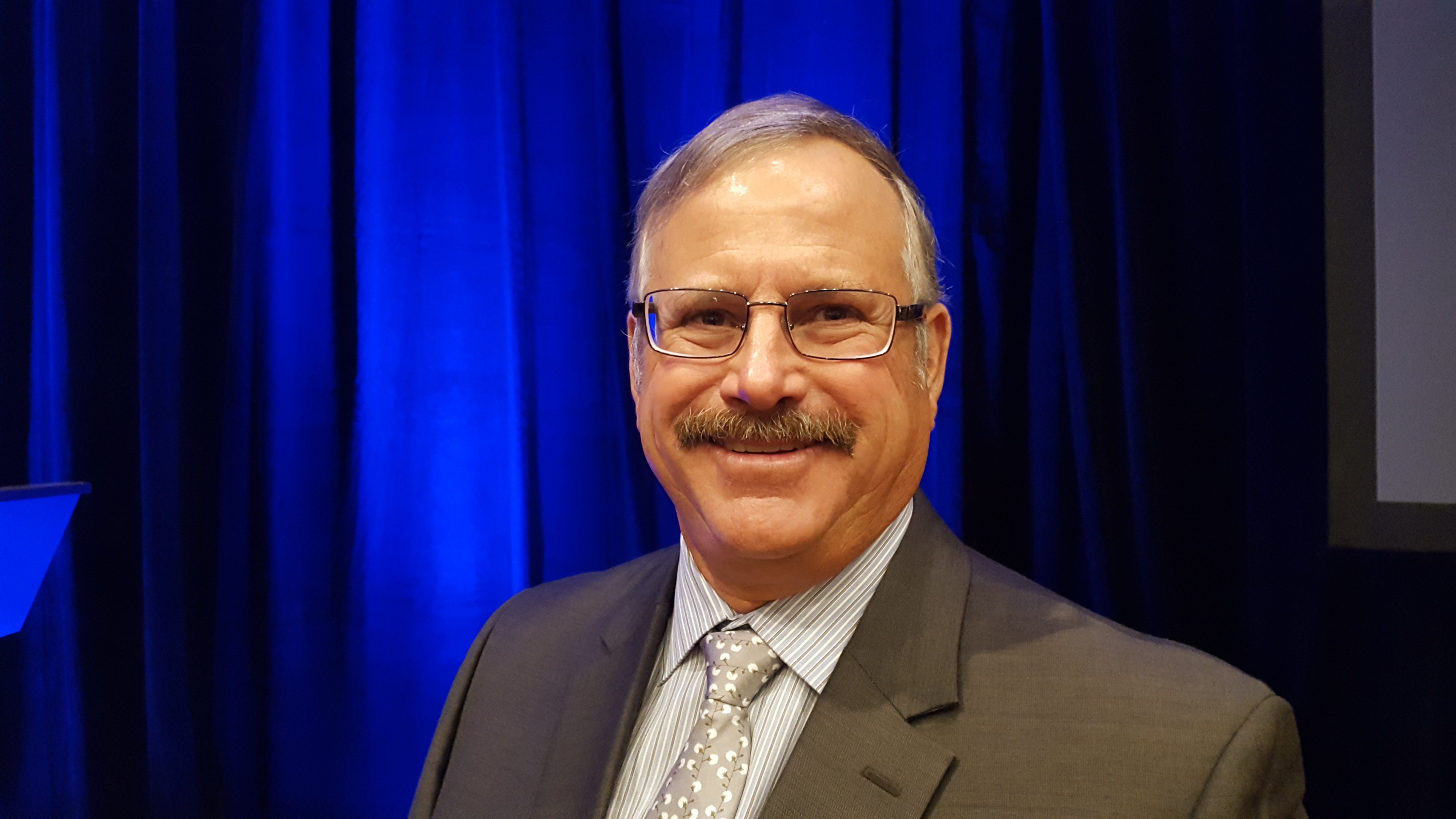
Gregory Wuertz, chairman of Calcot and an Arizona cotton grower, said, “The cooperative started in 1927, and it is just amazing to me that we will reach 70 million bales sometime this year.”

“That’s a lot of cotton if you think about it,” Wuertz said. “And it has a great effect on all the growers. A lot of money has been run through the organization, and we are still doing it.”

Wuertz said Calcot directors are in the field across the western cotton belt, interacting with the industry.

“We have Calcot personnel in each cotton region who are also out in the fields talking to people and bringing up questions. They just don’t stay in their office. We try to get great members, and we work really closely with gin managers and their staff. We want to be on a first-name basis,” he said.

Wuertz noted, “You have to love the lifestyle of cotton production. You get attached to the crop. You plant it in March and harvest it in November. It’s a long-term thing.”

Yet, Wuertz acknowledged, “There are ups and downs. There always are. There is always a new catastrophe because you deal with the weather and the water issues. I think you just build up a little bit of a strength and have tougher skin than maybe some growers have with other commodities.”

Many Calcot growers outside of California are in awe of California producers. 

“California has a lot more regulations,” Wuertz said. “They’re blessed with a really nice climate—just a perfect area. Our climate is a little harsher, but California people work with air quality, labor laws, and their water issues. They have to have a real sharp pencil to make all that work.”

However, Wertz says, California growers always enjoy a better per-pound price for their cotton.

“I think over the years they have developed markets, and because of their climate, they do grow a real [high] quality crop that just demands a higher price. Everybody says there’s no difference, but there is some kind of difference that is just a little better,” he said.

Wuertz explained that the Calcot cooperative is good for growers when it comes to the prices they receive.

“It is the classic cooperative idea,” he said. “It is too risky to try and peak these cotton markets. It is risky to just hold all your cotton and try to peak it at one time.”

“You have to be conservative,” he continued. “Like cotton growers are — very conservative. So you sell some and hold some and seek financing from banks for the short term. We have good tight covenants with the bank, and that’s part of our risk-management policy. We don’t want to speculate, so that is why we sell throughout the year, and we try and watch all those things.”

“We have a very strong relationship with mills and we can sell directly to them, which I think demands more of a premium for Calcot growers,” Wuertz said. “And while most cotton-spinning mills are offshore, we still have a good chunk of cotton going to some very good domestic mills, where they turn out top of the line sheets and higher-count shirts.”

2016-10-05T11:16:36-07:00October 1st, 2016|
Go to Top